
 Download PDF
 Download PDF
Market Overview
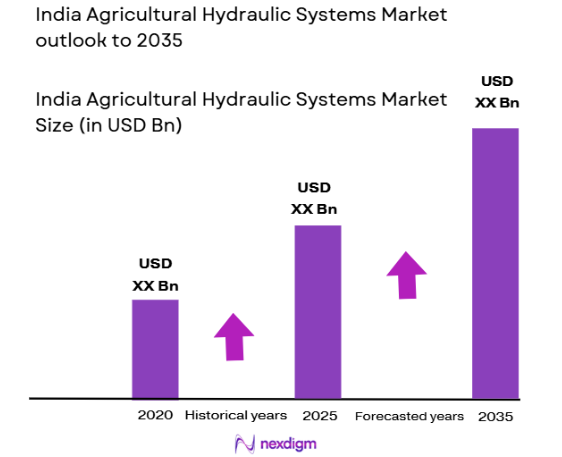
The India Agricultural Hydraulic Systems market, valued at approximately USD ~ billion, is primarily driven by the expanding agricultural mechanization and increasing demand for efficient farming solutions. The market is witnessing robust growth due to the increasing adoption of advanced hydraulic systems in agricultural equipment such as tractors, harvesters, and planters. Hydraulic systems’ ability to improve the efficiency and productivity of farming operations contributes significantly to this growth. Additionally, ongoing technological advancements and the integration of automation are boosting market expansion in recent years.
The Indian agricultural hydraulic systems market is dominated by regions with high agricultural productivity, such as Punjab, Uttar Pradesh, and Maharashtra. These areas have extensive agricultural practices, and farmers in these regions are increasingly adopting mechanized solutions to improve crop yield and reduce labor costs. The dominance of these regions is further fueled by the availability of better infrastructure, government subsidies, and support for agricultural machinery. Additionally, urbanization and the modernization of farming techniques are driving the demand for hydraulic systems in these regions.
Market Segmentation
By Product Type
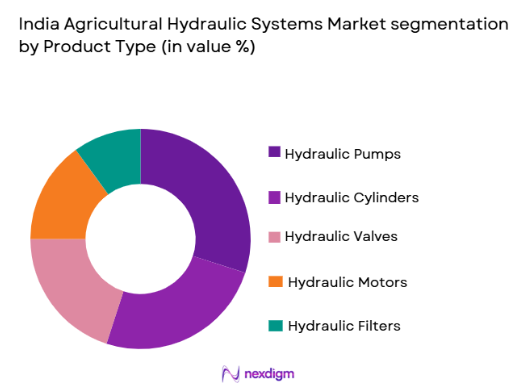
India Agricultural Hydraulic Systems market is segmented by product type into hydraulic pumps, hydraulic cylinders, hydraulic valves, hydraulic motors, and hydraulic filters. The hydraulic pumps sub-segment currently holds a dominant market share, driven by its wide applications in various agricultural machinery such as tractors and harvesters. These pumps are essential for ensuring the smooth operation of hydraulic systems, which are integral to the functionality of mechanized agricultural equipment. The high demand for pumps can be attributed to their versatility, energy efficiency, and cost-effectiveness. As a result, hydraulic pumps remain the preferred choice in the Indian agricultural sector.
By Platform Type
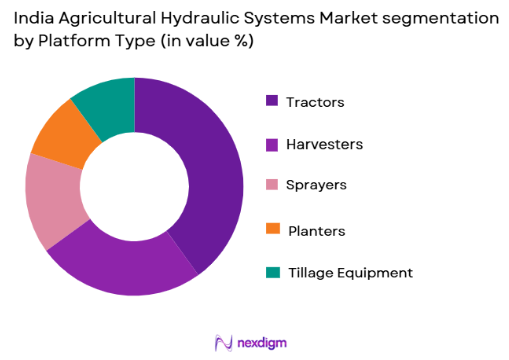
India Agricultural Hydraulic Systems market is segmented by platform type into tractors, harvesters, sprayers, planters, and tillage equipment. Tractors dominate the market as they are the backbone of modern farming in India. The demand for tractors has increased with the push for mechanization in agriculture, and hydraulic systems are critical for the effective operation of these machines. The adoption of advanced hydraulic technology in tractors has significantly enhanced their efficiency and reduced labor costs, which is why tractors lead the market in terms of platform type.
Competitive Landscape
The competitive landscape of the India Agricultural Hydraulic Systems market is characterized by the presence of several global and local players, leading to market consolidation. The major players are actively involved in strategic partnerships, acquisitions, and technological innovations to enhance their market position. Key players in the market are focused on product innovation, providing more efficient and cost-effective hydraulic systems. The presence of both large multinational corporations and local manufacturers contributes to a dynamic and competitive environment, with companies vying for market share by offering improved systems, better after-sales services, and enhanced customer engagement.
| Company Name | Establishment Year | Headquarters | Technology Focus | Market Reach | Key Products | Revenue |
| Mahindra & Mahindra | 1945 | Mumbai, India | ~ | ~ | ~ | ~ |
| Sonalika Tractors | 1996 | Hoshiarpur, India | ~ | ~ | ~ | ~ |
| Escorts Group | 1948 | Faridabad, India | ~ | ~ | ~ | ~ |
| John Deere | 1837 | Moline, USA | ~ | ~ | ~ | ~ |
| Kubota Corporation | 1890 | Osaka, Japan | ~ | ~ | ~ | ~ |
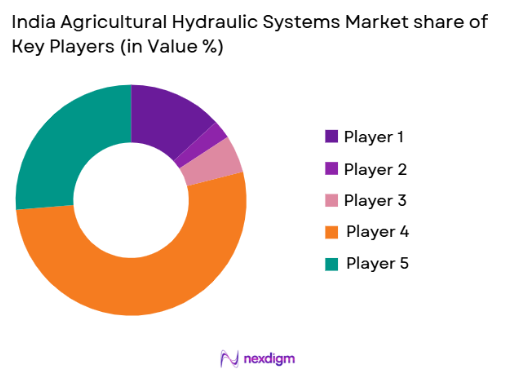
India Agricultural Hydraulic Systems Market Analysis
Growth Drivers
Technological Advancements in Hydraulic Systems
The growth of the India Agricultural Hydraulic Systems market is significantly driven by technological advancements in hydraulic systems, including the introduction of smart hydraulics and automation. The integration of sensors and microprocessors into hydraulic systems allows for real-time data collection and improved operational efficiency. These advancements enable equipment manufacturers to produce more energy-efficient and reliable machines that are capable of handling the increasing demands of modern farming practices. Hydraulic systems equipped with advanced features such as load-sensing capabilities, automatic pressure control, and optimized power management are becoming more prevalent in agricultural machinery. These features contribute to reducing fuel consumption, lowering maintenance costs, and enhancing the overall performance of equipment. Furthermore, the adoption of hydraulic systems in autonomous farming machinery is expected to propel growth in the market, as farmers seek to improve productivity while minimizing human labor. With the continuous evolution of technology, the demand for high-performance hydraulic systems is likely to continue its upward trajectory.
Government Support for Agricultural Mechanization:
The Indian government’s focus on enhancing agricultural productivity through mechanization is another major growth driver for the agricultural hydraulic systems market. Through various schemes and subsidies, the government is encouraging the adoption of advanced machinery, including tractors, harvesters, and sprayers, which rely heavily on hydraulic systems. The introduction of the Pradhan Mantri Krishi Sinchayee Yojana (PMKSY) and other agricultural schemes has resulted in a rise in the purchase of hydraulic-powered agricultural equipment. These initiatives are aimed at improving irrigation, increasing crop yield, and promoting sustainable farming practices. Additionally, state governments are increasingly providing financial assistance to farmers for the purchase of modern agricultural machinery, further boosting the market for hydraulic systems. As more farmers shift to mechanized farming to meet the growing demand for food production, the market for agricultural hydraulic systems is expected to experience steady growth, driven by favorable government policies.
Market Challenges
High Cost of Hydraulic Systems
A significant challenge in the India Agricultural Hydraulic Systems market is the high cost of hydraulic systems, which can be prohibitive for small-scale farmers. The expense involved in purchasing and maintaining hydraulic components, such as pumps, cylinders, and valves, is often a deterrent for farmers with limited financial resources. While larger agricultural operations may afford these costs, smaller farms struggle to invest in the latest technology, leading to slower adoption rates in certain regions. Although government subsidies and financing schemes are available, the initial high investment required for advanced hydraulic systems remains a significant challenge. This high cost restricts the penetration of hydraulic systems in underdeveloped areas and limits the ability of farmers to fully embrace mechanized farming practices. Overcoming this challenge will require manufacturers to focus on offering cost-effective solutions without compromising on performance, thereby making hydraulic systems more accessible to farmers across various regions.
Lack of Skilled Labor for Maintenance
Another challenge hindering the growth of the agricultural hydraulic systems market in India is the lack of skilled labor for system installation, maintenance, and repairs. Hydraulic systems require precise handling, and skilled technicians are needed to operate, troubleshoot, and maintain them effectively. However, there is a shortage of trained professionals in rural areas, where the majority of agricultural activities take place. The absence of proper training centers and limited access to technical education further exacerbates this issue. As a result, farmers face difficulties in maintaining their equipment, which leads to extended downtimes and increased operational costs. To address this challenge, there is a need for more vocational training programs and technical certifications to ensure a steady supply of skilled labor. Additionally, manufacturers and service providers should focus on offering easy-to-maintain solutions and localized support to enhance the accessibility of maintenance services in rural India.
Opportunities
Adoption of Smart Agricultural Solutions
One of the key opportunities for the India Agricultural Hydraulic Systems market lies in the adoption of smart agricultural solutions, which integrate Internet of Things (IoT) and Artificial Intelligence (AI) technologies with hydraulic systems. These smart systems enable better data collection, real-time monitoring, and enhanced decision-making capabilities for farmers. The rise of precision agriculture, which utilizes sensors and data analytics to optimize farm operations, is creating a demand for hydraulic systems that can be easily integrated with such technologies. By equipping agricultural machinery with IoT sensors and AI-driven controls, hydraulic systems can operate more efficiently, improving overall productivity. This trend is expected to gain momentum as farmers in India seek ways to boost crop yields while minimizing resource usage. The potential for smart hydraulic systems to improve the efficiency of irrigation, planting, and harvesting operations represents a significant growth opportunity for the market.
Rising Demand for Sustainable Farming Practices
Another opportunity for the India Agricultural Hydraulic Systems market is the growing emphasis on sustainable farming practices. With the increasing pressure to address climate change and environmental concerns, there is a growing need for more eco-friendly farming solutions. Hydraulic systems play a critical role in promoting sustainability by enabling the use of energy-efficient machinery and reducing manual labor. The demand for renewable energy-powered hydraulic systems, such as those powered by solar energy, is also on the rise. These systems help reduce the carbon footprint of agricultural operations, making them more environmentally friendly. As the Indian government and international organizations continue to push for sustainable farming practices, the market for hydraulic systems that support these initiatives is likely to see significant growth. Moreover, the global shift towards organic farming and low-impact agriculture presents opportunities for hydraulic systems that can help reduce soil erosion, conserve water, and improve overall farm sustainability.
Future Outlook
The India Agricultural Hydraulic Systems market is expected to witness steady growth over the next five years, driven by technological advancements, increased government support for agricultural mechanization, and rising demand for precision farming solutions. As hydraulic systems become more integrated with smart technologies, farmers will benefit from enhanced efficiency and reduced labor costs. Furthermore, the continued push for sustainable farming practices and eco-friendly solutions will likely contribute to the market’s expansion. In addition, efforts to improve the accessibility of hydraulic systems for smaller farms, through government initiatives and financing options, will play a crucial role in market development. As the market evolves, innovation in product offerings and improved customer service will be key factors in maintaining growth.
Major Players
- Mahindra & Mahindra
- Sonalika Tractors
- Escorts Group
- John Deere
- Kubota Corporation
- New Holland Agriculture
- CNH Industrial
- Tata Hitachi
- SDF Group
- Bharat Earth Movers Limited (BEML)
- Mitsubishi Heavy Industries
- Komatsu Limited
- Case IH
- Claas Group
- Doosan Infracore
Key Target Audience
- Agricultural Equipment Manufacturers
- Farmers and Agricultural Cooperatives
- Government and Regulatory Bodies
- Private Sector / Technology Firms
- Financial Institutions and Investors
- Large-Scale Agricultural Operators
- Machine Maintenance Service Providers
- Engineering and Technology Solutions Firms
Research Methodology
Step 1: Identification of Key Variables
This step involves identifying the key variables that influence the agricultural hydraulic systems market, such as technological advancements, government policies, and market demand patterns.
Step 2: Market Analysis and Construction
Market analysis is conducted through primary and secondary research, focusing on industry reports, market trends, and consumer behavior data to construct a clear market overview.
Step 3: Hypothesis Validation and Expert Consultation
We validate the hypotheses using expert interviews, surveys, and consultations with industry leaders to ensure the research data aligns with current market realities.
Step 4: Research Synthesis and Final Output
The data collected is synthesized to form a comprehensive report, which includes analysis of market size, segmentation, competitive landscape, and future growth projections.

- Executive Summary
- Research Methodology (Definitions, Scope, Industry Assumptions, Market Sizing Approach, Primary & Secondary Research Framework, Data Collection & Verification Protocol, Analytic Models & Forecast Methodology, Limitations & Research Validity Checks)

- Market Definition and Scope
- Value Chain & Stakeholder Ecosystem
- Regulatory / Certification Landscape
- Sector Dynamics Affecting Demand
- Strategic Initiatives & Infrastructure Growth

- Growth Drivers
Rising demand for efficient farming techniques
Technological advancements in hydraulic systems
Increase in mechanization in agriculture
Supportive government policies
Growth of the agricultural machinery sector - Market Challenges
High maintenance cost of hydraulic systems
Complexity in system integration
Inadequate awareness in rural areas
Shortage of skilled labor
Supply chain disruptions - Market Opportunities
Growth in precision farming
Emergence of smart hydraulic technologies
Increase in export opportunities for hydraulic components - Trends
Integration of IoT in hydraulic systems
Adoption of electric-powered hydraulic systems
Rise in the adoption of automation in agriculture
Growth in demand for sustainable farming solutions
Increase in global demand for agricultural exports - Government Regulations & Defense Policy
Government initiatives promoting farm mechanization
Standards for hydraulic systems in agricultural machinery
Policies supporting local manufacturing of hydraulic systems - SWOT Analysis
- Stakeholder and Ecosystem Analysis
- Porter’s Five Forces Analysis
- Competition Intensity and Ecosystem Mapping

- By Market Value, 2020-2025
- By Installed Units, 2020-2025
- By Average System Price, 2020-2025
- By System Complexity Tier, 2020-2025

- By System Type (In Value%)
Hydraulic Pumps
Hydraulic Cylinders
Hydraulic Valves
Hydraulic Motors
Hydraulic Filters - By Platform Type (In Value%)
Tractors
Harvesters
Sprayers
Planters
Tillage Equipment - By Fitment Type (In Value%)
OEM Fitments
Aftermarket Fitments
Remanufactured Components
Custom Fitments
Replacement Components - By End User Segment (In Value%)
Farmers
Agricultural Equipment Manufacturers
Government Bodies
Agricultural Cooperatives
Agricultural Contractors - By Procurement Channel (In Value%)
Direct Procurement
Online Procurement
Distributors
Dealer Networks
Third-party Suppliers - By Material / Technology (In Value%)
Steel
Aluminium
Carbon Composite Materials
Hydraulic Fluids
Microprocessor-based Hydraulic Systems

- Market structure and competitive positioning
- Market share snapshot of major players
- Cross Comparison Parameters (Price, Durability, System Complexity, Maintenance Costs, Performance Efficiency, Brand Reputation, Supply Chain Efficiency, Regulatory Compliance, Technological Advancements, After-Sales Service)
- SWOT Analysis of Key Players
- Pricing & Procurement Analysis
- Key Players
Mahindra & Mahindra
Sonalika Tractors
Escorts Group
John Deere
Case IH
Kubota Corporation
Bharat Earth Movers Limited (BEML)
AGCO Corporation
Linde Hydraulics
Caterpillar Inc.
Bosch Rexroth
Parker Hannifin
Eaton Corporation
Hitachi Construction Machinery
JCB India

- Demand for advanced hydraulic systems in agriculture
- Growth of small and medium-sized farms
- Increasing adoption of automated machinery
- Government policies for farm mechanization

- Forecast Market Value, 2026-2035
- Forecast Installed Units, 2026-2035
- Price Forecast by System Tier, 2026-2035
- Future Demand by Platform, 2026-2035


 Request a Sample
 Ask for Customization
 Get a Quote
 Enquire Now