

 Download PDF
 Download PDF
Market Overview
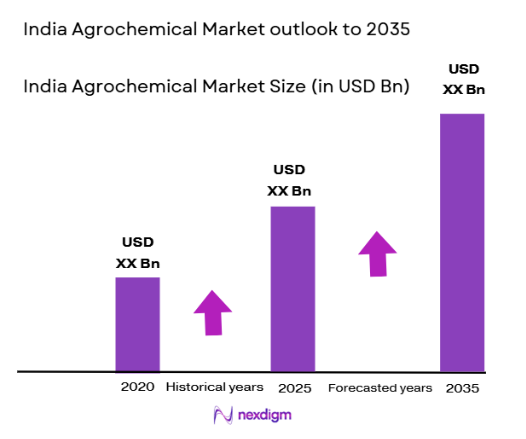
The India agrochemical market has seen significant growth and is estimated to be valued at USD ~ billion, driven by the increased demand for crop protection products and government initiatives promoting agricultural productivity. The market is supported by strong investments in the development of innovative agrochemicals, both chemical and biological, addressing the demand for sustainable farming practices. The growing adoption of modern agricultural techniques, combined with higher awareness of crop protection among farmers, also contributes to the market’s expansion.
India’s agrochemical market dominance is primarily concentrated in states with a strong agricultural presence, such as Punjab, Maharashtra, and Uttar Pradesh, due to their large-scale farming operations and favorable climatic conditions for crop production. These regions see high consumption of agrochemicals, especially herbicides and insecticides, driven by the growing need to increase crop yields and control pests and diseases. With evolving farming practices and better infrastructure, these regions continue to be key contributors to the market’s growth.
Market Segmentation
By Product Type:
India Agrochemical market is segmented by product type into herbicides, insecticides, fungicides, pesticides, and fertilizers. Recently, herbicides have a dominant market share due to factors such as the increasing demand for weed control in major crop fields like rice and wheat, coupled with growing awareness among farmers regarding the efficiency of herbicide use in reducing labor costs and enhancing productivity. With rapid growth in herbicide adoption, the product type continues to play a central role in addressing the challenges of weed resistance and the need for increased crop yield per acre.

By Distribution Channel:
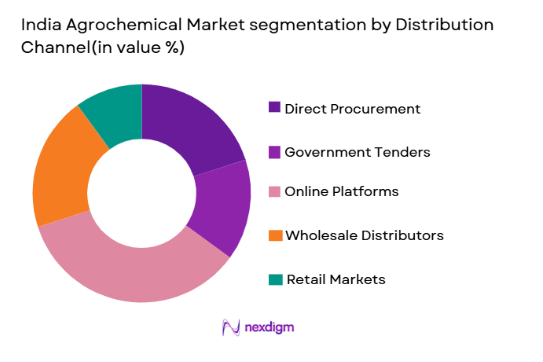
India Agrochemical market is segmented by distribution channel into direct procurement from manufacturers, government tenders, online platforms, wholesale distributors, and retail markets. Recently, online platforms have emerged as a dominant distribution channel due to the increasing shift toward e-commerce for the sale of agrochemicals, providing farmers with easy access to products and the ability to compare prices. The increasing availability of digital tools and services supporting e-commerce further strengthens the reach of agrochemical products to smaller, remote farming regions.
Competitive Landscape
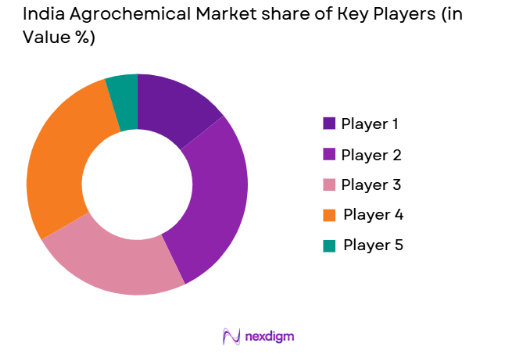
The India agrochemical market is highly competitive, with several global and local players consolidating their market presence through mergers, acquisitions, and innovative product offerings. These players are focusing on expanding their product portfolio, particularly in the bio-based agrochemical segment, driven by the growing demand for eco-friendly and sustainable solutions. The market’s competitive nature is influenced by the large number of local suppliers and the increasing focus on regional distribution channels.
| Company Name | Establishment Year | Headquarters | Technology Focus | Market Reach | Key Products | Revenue (USD Billion) |
| BASF India | 2003 | Mumbai, India | ~ | ~ | ~ | ~ |
| Bayer CropScience | 1994 | Hyderabad, India | ~ | ~ | ~ | ~ |
| Syngenta India | 2000 | Pune, India | ~ | ~ | ~ | ~ |
| UPL Limited | 1973 | Mumbai, India | ~ | ~ | ~ | ~ |
| PI Industries | 1946 | Udaipur, India | ~ | ~ | ~ | ~ |
India Agrochemical Market Analysis
Growth Drivers
Increase in Agricultural Demand:
The growing global population, combined with increased urbanization, has created an urgent need for higher agricultural productivity. In India, this demand is driving the agrochemical sector, especially with the government pushing for increased food production to ensure national food security. The introduction of hybrid seeds and advanced fertilizers in the market is further boosting crop yields, necessitating more effective crop protection products. As the need for high crop productivity intensifies, agrochemical companies are responding with more targeted and efficient solutions.
Government Policies Supporting Agriculture:
India’s government has introduced several policies to support the agricultural sector, including subsidies on agrochemical products, which directly drive the adoption of these products by farmers. The government’s focus on sustainable agriculture and its support for organic farming practices are also creating new opportunities in the agrochemical sector, particularly for bio-based solutions. Additionally, the expansion of irrigation and rural infrastructure has improved access to agrochemicals, further driving market growth.
Market Challenges
Environmental and Regulatory Issues:
The agrochemical market in India faces significant challenges related to environmental concerns, including the harmful effects of chemical agrochemicals on ecosystems, soil health, and biodiversity. Stringent regulatory frameworks are being imposed, and there is increasing public pressure to adopt sustainable practices. These issues are driving research and development into alternative, eco-friendly agrochemicals, but the transition to such products can be slow and costly for farmers. Regulations regarding pesticide residues and safe usage practices are also challenging for market players.
Resistance to Chemical Products:
The rising resistance of pests, weeds, and diseases to chemical-based agrochemicals has led to a decrease in the efficacy of conventional crop protection products. This resistance is becoming a significant challenge for the agrochemical industry as it pushes farmers to explore alternative solutions, such as bio-based products and genetically modified crops. However, such alternatives may come with their own set of challenges, including higher costs and slower adoption rates. The increased use of resistant strains also requires more frequent application of agrochemicals, which could have further environmental impacts.
Opportunities
Growth of Organic and Bio-Based Agrochemicals:
The increasing demand for organic farming and sustainable agriculture presents a substantial opportunity for the agrochemical market to diversify into bio-based products. The rise in consumer demand for organic produce and the government’s initiatives to encourage organic farming will drive the adoption of eco-friendly agrochemicals, providing a new revenue stream for market players. Companies that can innovate in the development of biological pesticides, fertilizers, and herbicides will gain a competitive edge.
Digital Transformation in Agriculture:
The rise of digital farming technologies, such as precision agriculture, drones, and IoT-based monitoring systems, is opening up new opportunities for the agrochemical market. These technologies allow for more precise application of agrochemicals, reducing waste and minimizing environmental impact. Precision agriculture also increases the efficiency of pest management and crop protection, further driving demand for targeted agrochemical products. The integration of digital tools in agrochemical applications will be a key growth area over the next several years.
Future Outlook
The future of the India agrochemical market is expected to see strong growth driven by increasing agricultural productivity, government support, and technological advancements. The market will likely shift toward more sustainable and environmentally friendly solutions, including bio-based agrochemicals and integrated pest management practices. Regulatory frameworks will continue to evolve, making eco-friendly products more attractive to farmers. Technological advancements, such as the application of drones and AI in precision agriculture, will further boost market growth by improving the efficiency of agrochemical usage and ensuring better outcomes for farmers.
Major Players
- BASF India
- Bayer CropScience
- Syngenta India
- UPL Limited
- PI Industries
- Sumitomo Chemical India
- Rallis India
- ADAMA India
- Insecticides India
- Koppert Biological Systems
- Arysta LifeScience
- Nufarm India
- Mahindra Agribusiness
- FMC India
- Dow AgroSciences India
Key Target Audience
- Investors and Venture Capitalist Firms
- Government and Regulatory Bodies
- Agricultural Cooperatives
- Crop Protection Retailers
- Agrochemical Manufacturers
- Fertilizer Distributors
- Crop Production Companies
- Rural Development Agencies
Research Methodology
Step 1: Identification of Key Variables
Identifying key market variables including product types, distribution channels, and customer preferences.
Step 2: Market Analysis and Construction
Analyzing market drivers, challenges, trends, and opportunities to understand growth patterns.
Step 3: Hypothesis Validation and Expert Consultation
Validating hypotheses with experts in agrochemical products and regional agricultural specialists.
Step 4: Research Synthesis and Final Output
Synthesizing findings from primary and secondary research into the final market report.

- Executive Summary
- Research Methodology(Definitions, Scope, Industry Assumptions, Market Sizing Approach, Primary & Secondary Research Framework, Data Collection & Verification Protocol, Analytic Models & Forecast Methodology, Limitations & Research Validity Checks)

- Market Definition and Scope
- Value Chain & Stakeholder Ecosystem
- Regulatory / Certification Landscape
- Sector Dynamics Affecting Demand
- Strategic Initiatives & Infrastructure Growth

- Growth Drivers
Rising Demand for Crop Protection Products
Technological Advancements in Agrochemicals
Government Support for Agricultural Growth
Increase in Global Food Demand
Expansion of Organic Farming Practices - Market Challenges
Environmental Concerns and Regulations
Resistance to Agrochemical Products
High Cost of Development and Production
Market Fragmentation
Price Fluctuations in Raw Materials - Market Opportunities
Expansion in Organic Agrochemical Solutions
Growing Adoption of Integrated Pest Management
Development of Biologically Derived Agrochemicals - Trends
Rise in Precision Agriculture Practices
Shift Towards Eco-friendly and Sustainable Solutions
Increasing Demand for Bio-Based Agrochemicals
Advancements in Nano-Technology for Agrochemicals
Digital Transformation in Agricultural Practices - Government Regulations & Defense Policy
Environmental Impact Assessments
Labeling and Certification Regulations
Incentives for Sustainable Agrochemical Practices - SWOT Analysis
- Stakeholder and Ecosystem Analysis
- Porter’s Five Forces Analysis
- Competition Intensity and Ecosystem Mapping

- By Market Value, 2020-2025
- By Installed Units, 2020-2025
- By Average System Price, 2020-2025
- By System Complexity Tier, 2020-2025

- By System Type (In Value%)
Herbicides
Insecticides
Fungicides
Pesticides
Fertilizers - By Platform Type (In Value%)
Chemical-Based Agrochemicals
Bio-Based Agrochemicals
Integrated Pest Management Solutions
Greenhouse Agrochemicals
Natural Pesticides - By Fitment Type (In Value%)
Field Crop Applications
Horticultural Crop Applications
Greenhouse Crop Applications
Forestry Applications
Livestock Applications - By EndUser Segment (In Value%)
Farmers
Agricultural Cooperatives
Agri-business Companies
Research and Development Institutes
Retailers - By Procurement Channel (In Value%)
Direct Procurement from Manufacturers
Government Tenders
Online Platforms
Wholesale Distributors
Retail Markets - By Material / Technology (in Value%)
Chemical Formulations
Biological Formulations
Nanotechnology-Based Agrochemicals
Sustainable Agrochemical Technologies
Integrated Pest Management Technologies

- Market structure and competitive positioning
- Market share snapshot of major players
- CrossComparison Parameters (System Type, Platform Type, Fitment Type, EndUser Segment, Procurement Channel, Material/Technology, Pricing, Distribution Channels, Technological Innovation, Market Penetration)
- SWOT Analysis of Key Players
- Pricing & Procurement Analysis
- Key Players
BASF India
Bayer CropScience
Syngenta India
UPL Limited
PI Industries
Sumitomo Chemical India
Rallis India
ADAMA India
Mahindra Agribusiness
FMC India
Dow AgroSciences India
Nufarm India
Insecticides India
Koppert Biological Systems
Arysta LifeScience

- Farmers’ Shift Towards Sustainable Practices
- Increasing Adoption of Digital Farming Tools
- Demand for High-Performance Crop Protection Products
- Government’s Role in Regulating Agrochemical Products

- Forecast Market Value, 2026-2035
- Forecast Installed Units, 2026-2035
- Price Forecast by System Tier, 2026-2035
- Future Demand by Platform, 2026-2035


 Request a Sample
 Ask for Customization
 Get a Quote
 Enquire Now