
 Download PDF
 Download PDF
Market Overview
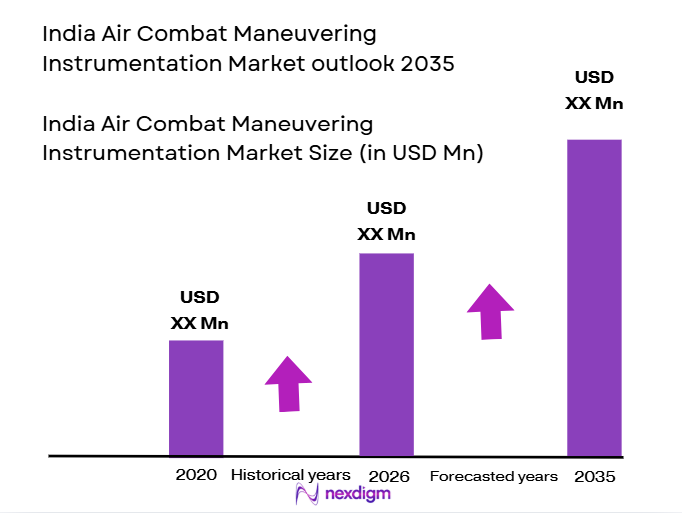
The India Air Combat Maneuvering Instrumentation (ACMI) market is valued at approximately USD ~ million, based on recent industry reports and a five-year historical analysis. The market is predominantly driven by the Indian government’s increased defense spending, particularly for modernizing air combat training facilities. The growth of this market is also attributed to the integration of advanced technologies like artificial intelligence (AI), machine learning (ML), and cloud-based analytics, which enhance the capabilities of ACMI systems. Moreover, the growing need for efficient training methods for air force pilots in the Indian Air Force (IAF) contributes significantly to the demand for ACMI systems.
India, specifically its defense hubs like New Delhi, Bengaluru, and Pune, dominate the ACMI market. These cities house major defense establishments, such as the Indian Air Force and defense technology companies, which drive the demand for ACMI systems. The dominance is further fueled by the government’s strategic initiatives for defense modernization, technological advancements in pilot training, and collaboration with global defense technology providers. Additionally, ongoing defense procurements and defense infrastructure investments in these cities contribute to the market’s strong foothold in India.
Market Segmentation
By Application
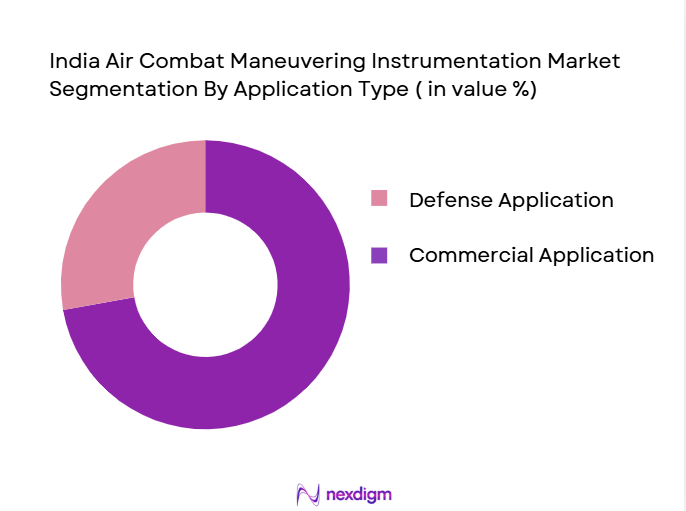
The India Air Combat Maneuvering Instrumentation market is segmented into defense applications and commercial applications. Within the defense application segment, a notable share of the market is dominated by air force training, which accounts for a significant portion due to the increasing need for efficient pilot training systems. The Indian Air Force is investing heavily in simulated air combat scenarios to better prepare pilots for real-world combat situations, which results in the higher market share for this sub-segment. The defense application segment holds the dominant share within the India ACMI market, primarily due to increasing demand from the Indian Air Force (IAF) and other defense sectors. These institutions prioritize realistic training experiences for pilots, using ACMI systems to simulate combat scenarios and improve pilot skills in various flight conditions. The growing need for advanced training systems within India’s defense modernization program, coupled with investments in high-tech training infrastructure, propels the growth of this sub-segment.
By Component
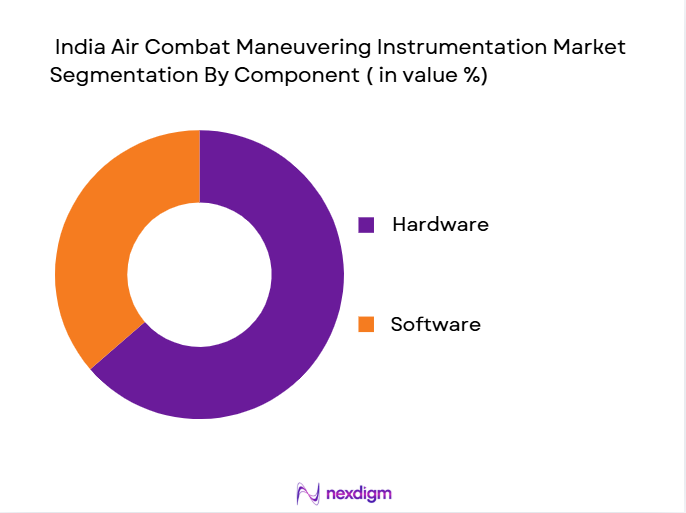
The market is segmented into hardware and software components. The hardware segment is the dominant segment, accounting for the largest share in the ACMI market. This is primarily because the hardware, including aircraft-mounted sensors, data recorders, and transmitters, forms the backbone of any ACMI system. With the advancement of sensor technologies, the demand for high-quality hardware is growing, especially in the Indian defense sector where high-performance systems are essential for combat training.The hardware segment of the ACMI market is experiencing a dominant share in India, driven by the necessity for advanced, reliable, and rugged hardware in the field of air combat training. The IAF’s demand for sophisticated hardware systems that can withstand harsh operational environments, combined with growing air force modernization programs, continues to fuel the demand for high-end sensors, transmitters, and data recorders. As military hardware gets more advanced and integrated with sophisticated software systems, the hardware segment is expected to maintain its dominant position.
Competitive Landscape
The India Air Combat Maneuvering Instrumentation market is characterized by the presence of a few key players who have established themselves as dominant providers of ACMI solutions. The market is consolidated, with companies such as BAE Systems, Thales Group, and Indra Sistemas leading the competition. These players focus on technological innovation, expanding product portfolios, and forming strategic partnerships with defense agencies to capture a larger market share. The competitive landscape in India’s ACMI market is concentrated around major global players, with few local entrants making headway. International companies such as BAE Systems, Thales, and Lockheed Martin dominate due to their advanced technology and longstanding relationships with defense agencies like the Indian Air Force. As India focuses on modernizing its defense training systems, these companies continue to benefit from large government contracts and high technological integration in the defense sector.
| Company Name | Establishment Year | Headquarters | Product Portfolio | Key Technologies | Market Focus | Strategic Initiatives |
| BAE Systems | 1999 | London, UK | ~ | ~ | ~ | ~ |
| Thales Group | 2000 | Paris, France | ~ | ~ | ~ | ~ |
| Indra Sistemas | 1985 | Madrid, Spain | ~ | ~ | ~ | ~ |
| Saab AB | 1937 | Stockholm, Sweden | ~ | ~ | ~ | ~ |
| Lockheed Martin | 1912 | Bethesda, USA | ~ | ~ | ~ | ~ |
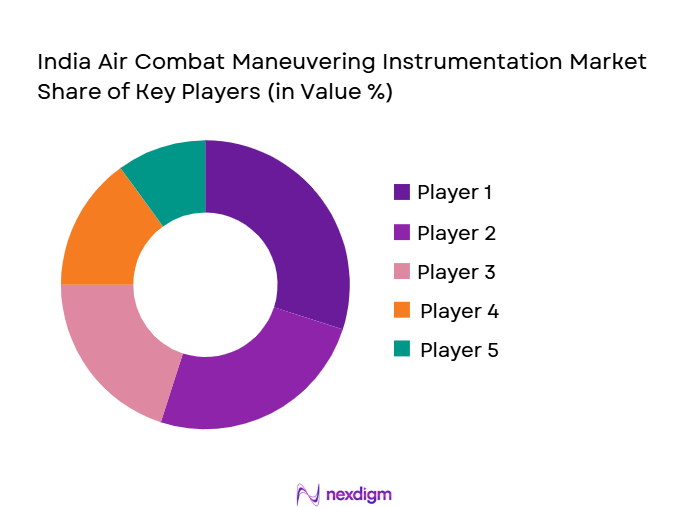
India Air Combat Maneuvering Instrumentation (ACMI) Market Analysis
Growth Drivers
Increasing Investment in Modernization of Defense Systems
India has been heavily investing in the modernization of its defense systems, focusing on upgrading its combat capabilities, including ACMI systems. The Indian government allocated a defense budget of approximately INR ~ trillion (USD ~ billion) for the financial year 2024-25, reflecting a continued focus on enhancing military infrastructure. This investment aims to improve operational efficiency, including better tracking and analysis during air combat training exercises, thus driving the demand for ACMI systems. The modernization includes procurement of advanced fighter jets, which increasingly rely on high-performance ACMI technology for enhanced training effectiveness and readiness. These efforts align with India’s goal of creating a self-reliant defense ecosystem under the ‘Atmanirbhar Bharat’ initiative, further spurring the demand for ACMI systems.
Collaborative Defense Programs with Global Partners (e.g., US, UK, Russia)
India’s defense collaborations with global partners such as the United States, the United Kingdom, and Russia are significant contributors to the growth of ACMI systems in the country. In 2024, India signed a major defense cooperation agreement with the US under the “Strategic Trade Authorization” agreement. This includes joint exercises, training programs, and the exchange of technologies, some of which directly benefit from ACMI systems. The collaboration with Russia is also pivotal, with India acquiring advanced Russian fighter aircraft that require compatible ACMI systems for effective training. These international defense collaborations create a strong demand for the integration of sophisticated ACMI systems to ensure interoperability and joint training operations, further expanding the market potential for ACMI solutions in India.
Market Challenges
High Integration and Setup Costs for ACMI Systems
One of the significant challenges in the adoption of ACMI systems in India is the high upfront cost involved in their integration and setup. The Indian Air Force’s investment in new technologies, such as the acquisition of Rafale fighter jets, highlights the need for costly infrastructure upgrades, including ACMI systems. As of 2024, the IAF’s operational readiness is heavily reliant on integrating sophisticated instrumentation in a networked environment, but this incurs considerable capital expenditure. The costs of installing the required infrastructure, including simulators and monitoring stations for the ACMI systems, can be prohibitive for the Indian defense sector, which is constrained by budget limits despite its overall military expenditure increases.
Interoperability and Standards Compliance for Multi-Nation Operations
As India expands its defense cooperation with global powers like the US, UK, and Russia, achieving interoperability between different countries’ ACMI systems presents a substantial challenge. The diverse nature of the ACMI technologies used by different nations creates difficulties in ensuring compatibility during joint training exercises. India is working on enhancing its defense communication standards, but full compliance with NATO and other international standards is an ongoing challenge. In joint exercises with the US and NATO, such as the “Cope India” series, the interoperability between Indian ACMI systems and those of other nations requires ongoing refinement, leading to challenges in seamless operation and data sharing.
Market Opportunities
Expansion of ACMI Applications to Unmanned Aircraft Systems (UAS)
As India enhances its unmanned aircraft systems (UAS) capabilities, the demand for integrating ACMI systems with drones is becoming increasingly evident. In 2024, the Indian Ministry of Defence unveiled plans to incorporate UAS into joint operations, which will require sophisticated instrumentation like ACMI for real-time tracking and debriefing of unmanned flights. The Indian Air Force, for example, is expected to deploy drones in both surveillance and combat roles, which necessitates the adoption of ACMI systems to track drone maneuvers and provide actionable intelligence during exercises. As UAS technologies continue to mature, there is considerable potential for ACMI applications to expand, offering substantial growth opportunities for the market.
Growth in Civil-Defense Hybrid Solutions
With the increasing need for versatile, hybrid solutions that serve both defense and civilian purposes, the market for ACMI systems is expanding to cater to these hybrid models. For example, the Indian Ministry of Civil Aviation has started to include defense-related technologies in civil aviation training. This includes the application of ACMI systems for simulating emergency scenarios and tactical maneuvers. As both sectors increasingly rely on simulation technologies, the demand for hybrid ACMI solutions will grow. This offers a significant opportunity for companies to provide dual-use systems that cater to both military and civilian aviation markets, thereby expanding the customer base for ACMI technologies in India.
Future Outlook
The India Air Combat Maneuvering Instrumentation market is poised for significant growth over the next decade. Driven by an increase in defense budgets, technological advancements in training simulations, and a greater focus on pilot preparedness, the market will see a substantial increase in demand. Government initiatives, coupled with partnerships with global defense technology providers, will create new growth opportunities. As India strengthens its defense sector and expands air combat training programs, the ACMI market will continue to expand, reflecting a progressive shift toward cutting-edge training solutions for air force personnel.
Major Players in the India ACMI Market
- BAE Systems
- Thales Group
- Indra Sistemas
- Saab AB
- Lockheed Martin
- Leonardo DRS
- CAE Inc.
- Elbit Systems
- Northrop Grumman Corporation
- Rheinmetall AG
- Rockwell Collins (Collins Aerospace)
- Arotech Corporation
- Cobham plc
- L-3 Communications
- Airbus Defence and Space
Key Target Audience
- Government and Regulatory Bodies (e.g., Ministry of Defence, Indian Air Force)
- Defense Contractors and System Integrators
- Military Equipment Manufacturers
- Air Force Training Institutes and Simulation Centers
- Aircraft Manufacturers
- Investments and Venture Capitalist Firms
- Aerospace and Defense Research Organizations
- Private Security Firms and Defense Service Providers
Research Methodology
Step 1: Identification of Key Variables
The first step involves identifying critical variables that influence the ACMI market in India. This process will involve an extensive desk study to gather secondary data on market size, trends, technologies, and key stakeholders. Research will be conducted using publicly available industry reports, government publications, and proprietary data sources.
Step 2: Market Analysis and Construction
In this phase, historical data on ACMI market growth, technological advancements, and defense sector requirements will be compiled. Market penetration, geographical breakdown, and the evolution of technology will be analyzed to project future growth.
Step 3: Hypothesis Validation and Expert Consultation
The market hypotheses will be tested through consultations with industry experts, including representatives from defense ministries, ACMI manufacturers, and training centers. Insights gathered from these consultations will validate initial assumptions and provide a more accurate picture of the market dynamics.
Step 4: Research Synthesis and Final Output
The final research report will be synthesized by incorporating all market insights gathered from primary and secondary research. Interviews with stakeholders will be complemented by financial analysis, product trends, and competitive landscape data to ensure a comprehensive overview of the market.

- Executive Summary
- Research Methodology (Market Definitions and Assumptions, Abbreviations, Market Sizing Approach, Consolidated Research Approach, Understanding Market Potential Through In-Depth Industry Interviews, Primary Research Approach, Limitations and Future Conclusions)

- Definition and Scope
- Market Genesis & Evolution of ACMI in India
- Timeline of Major Players in ACMI Deployment
- Business Cycle of ACMI Technology in Indian Armed Forces
- Supply Chain and Value Chain Analysis

- Growth Drivers
Increasing Investment in Modernization of Defense Systems
Collaborative Defense Programs with Global Partners (e.g., US, UK, Russia)
Rising Demand for Joint Force Training & Simulation Technologies - Market Challenges
High Integration and Setup Costs for ACMI Systems
Interoperability and Standards Compliance for Multi-Nation Operations
Challenges in Scaling ACMI Solutions for Legacy Platforms - Opportunities
Expansion of ACMI Applications to Unmanned Aircraft Systems (UAS)
Growth in Civil-Defense Hybrid Solutions
Rising Demand for Real-Time Data and Cloud-Based Debriefing Solutions - Market Trends
Increasing Use of Big Data Analytics for Real-Time Feedback
Move Towards Modular and Scalable ACMI Solutions
Integration of AI and Machine Learning for Pilot Performance Assessment - Government Regulations
Defense Procurement Frameworks and Compliance Guidelines
Impact of India’s “Make in India” Initiative on ACMI Deployment
Regulatory Policies on Data Security and Transmission in ACMI Systems - SWOT Analysis
- Stakeholder Ecosystem
- Porter’s Five Forces Analysis
- Competitive Intensity and Entry Barrier Assessment
- Regulatory & Reimbursement Framework
UAE Medical Device Registration Protocols
Digital Health Compliance & Data Governance
Reimbursement Policies Impacting RPM Adoption
Standards for Connected Medical Devices

- By Value, 2020-2025
- Volume, 2020-2025
- Average Price, 2020-2025

- By System Component (In Value %)
Hardware
Software & Mission Analysis Platforms
Services - By Mode of Operation (In Value %)
Non‑Autonomous Systems
Autonomous ACMI Systems - By Application Type (In Value %)
Pilot Combat Training
Live, Virtual & Constructive (LVC) Integration
Weapons & Tactics Development
Joint Force / Coalition Exercises - By Deployment Environment (In Value %)
Fighter Aircraft
Lead‑In Fighters / Training Aircraft
Ground‑Based Training & Debrief Facilities
Air Traffic Environment Simulation - By End User (In Value %)
Indian Air Force
Private Contractors & Vendors
Foreign Defense Agencies
OEM Manufacturers
Training Academies

- Market Share of Major Players
- Cross Comparison Parameters
(Company Overview, Business Strategies, Recent Developments, Strength, Weakness, Organizational Structure, Revenues, Number of Touchpoints, Distribution Channels, Number of Dealers and Distributors, Margins, Production Plant, Capacity, Unique Value Offering, and Others) - SWOT Analysis of Key Players
- Pricing Analysis Basis SKUs for Major Players in the ACMI Market
- Detailed Profiles of Major Companies
Cubic Corporation
L3Harris Technologies, Inc.
Elbit Systems Ltd.
Raytheon Technologies
Saab AB
BAE Systems
Leonardo S.p.A.
General Dynamics
Rockwell Collins
IAI (Israel Aerospace Industries)
Northrop Grumman
Thales Group
Prescient Systems & Technologies Pte Ltd.
SDT Space & Defence Technologies Inc.
ADCOR MAGnet Systems

- Market Demand and Utilization
- Purchasing Power and Budget Allocations
- Regulatory and Compliance Requirements
- Needs, Desires, and Pain Point Analysis
- Decision-Making Process

- By Value, 2026-2035
- Volume, 2026-2035
- Average Price, 2026-2035


 Request a Sample
 Ask for Customization
 Get a Quote
 Enquire Now