

 Download PDF
Market Overview
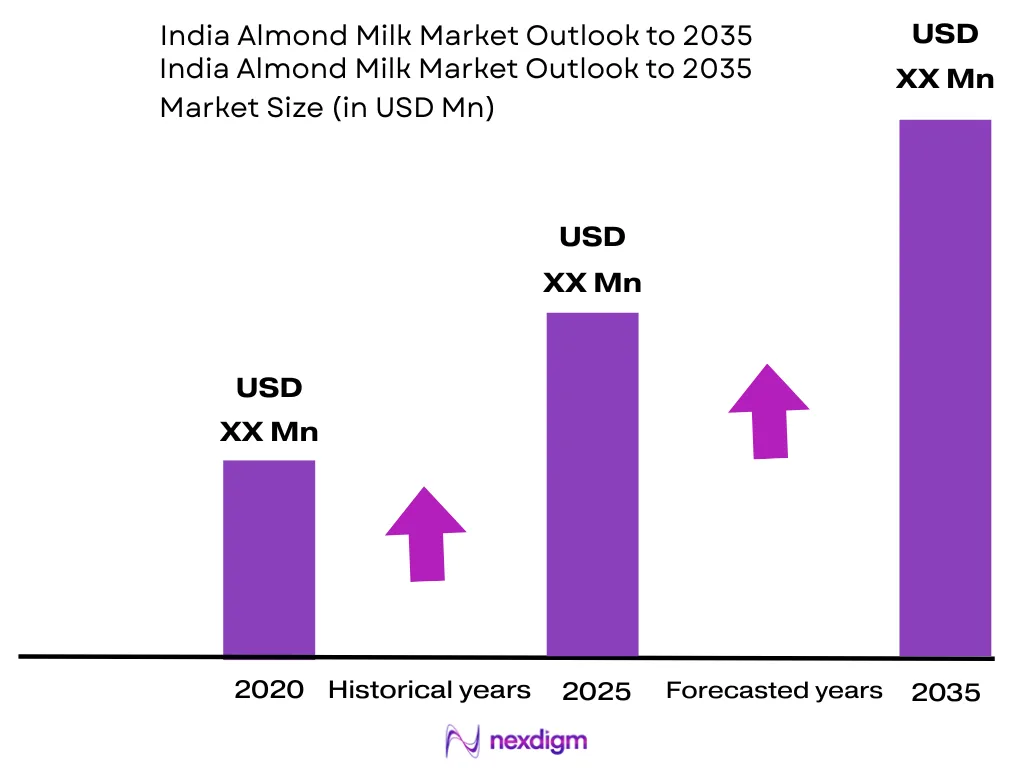
The India Almond Milk Market is valued at approximately USD ~ Million, supported by the rapid expansion of the plant-based dairy industry and increasing demand for lactose-free beverages. According to the Food Safety and Standards Authority of India (FSSAI), plant-based food categories witnessed substantial product registrations between 2023 and 2024, while India’s packaged health beverage sector continued expanding across metropolitan markets. Rising almond imports, increasing vegan product launches, growing gym memberships, and stronger retail penetration have accelerated almond milk adoption among health-conscious consumers. The market is further supported by increasing incidences of lactose intolerance and growing consumer preference for clean-label and cholesterol-free beverages.
Market Segmentation
By Product Type
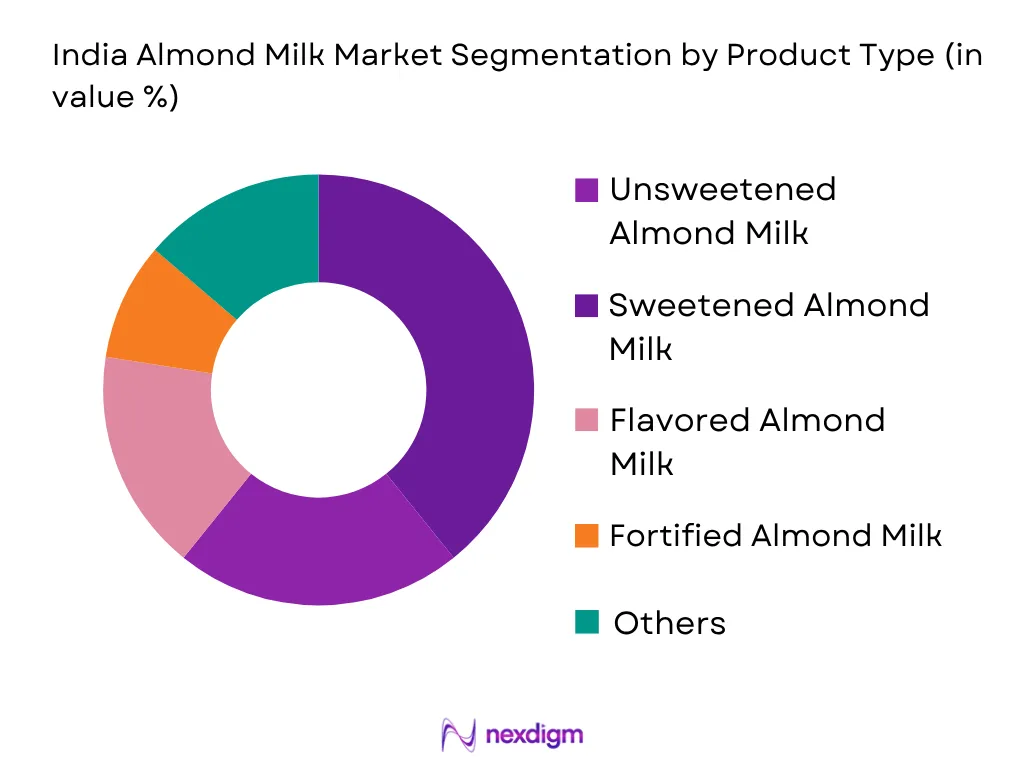
By Product Type, the India Almond Milk Market is segmented into Unsweetened Almond Milk, Sweetened Almond Milk, Flavored Almond Milk, Fortified Almond Milk, and Organic Almond Milk. Recently, Unsweetened Almond Milk has emerged as the dominant segment owing to growing consumer awareness regarding sugar consumption and lifestyle-related health conditions. Urban consumers increasingly prefer products with lower calorie content and cleaner ingredient labels. The segment benefits from strong adoption among gym-goers, diabetics, weight-management consumers, and individuals following keto or low-carbohydrate diets. Major brands have expanded their unsweetened product portfolios through fortified variants containing calcium, vitamin D, and vitamin B12. Furthermore, café chains and foodservice operators increasingly utilize unsweetened almond milk for coffee and smoothie applications, supporting sustained demand. The dominance of this segment reflects broader shifts toward functional nutrition and preventive healthcare consumption patterns among Indian consumers.
By Distribution Channel
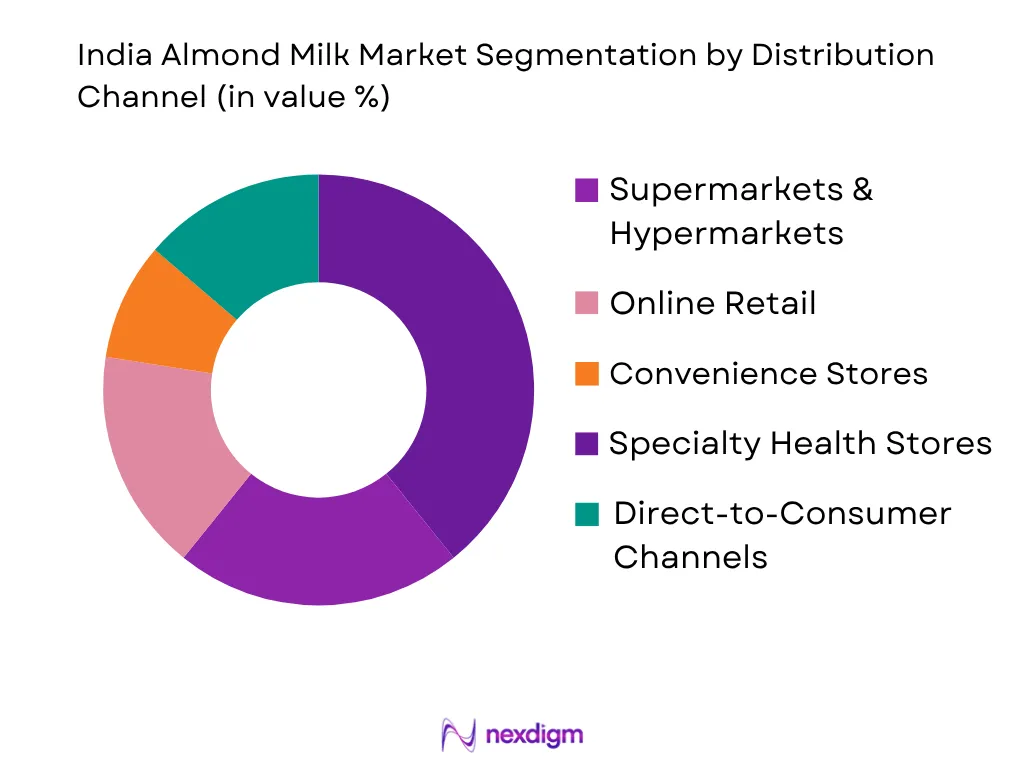
By Distribution Channel, the India Almond Milk Market is segmented into Supermarkets & Hypermarkets, Online Retail, Convenience Stores, Specialty Health Stores, and Direct-to-Consumer Channels. Supermarkets and Hypermarkets currently account for the largest market share due to extensive product visibility, wider SKU availability, and growing consumer preference for organized retail formats. Major chains such as Reliance Fresh, Nature’s Basket, Spencer’s, Star Bazaar, and DMart have expanded premium beverage shelves dedicated to plant-based products. Consumers often prefer purchasing almond milk through these outlets because they can compare brands, packaging formats, and nutritional profiles in one location. Promotional discounts, bundled offers, and sampling activities further support sales growth. Additionally, premium urban consumers continue to rely on organized retail stores for imported and specialized almond milk brands. The strong physical retail presence of leading manufacturers ensures continued dominance of this segment despite rapid online channel expansion.
Competitive Landscape
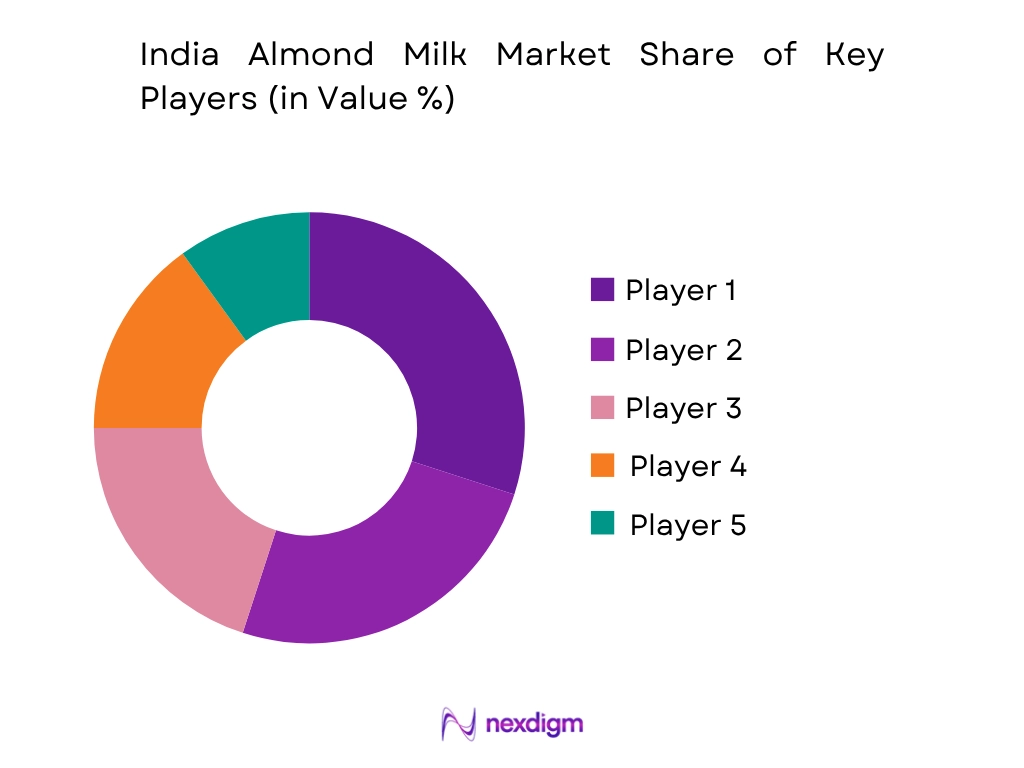
The India Almond Milk Market remains moderately consolidated, with competition driven by product innovation, retail partnerships, e-commerce expansion, and functional nutrition positioning. Domestic brands are increasingly competing with international plant-based beverage manufacturers through localized flavors, competitive pricing, and stronger distribution networks. Companies are investing heavily in fortification technologies, clean-label formulations, and sustainable packaging to differentiate their offerings. The competitive environment continues to evolve as consumer demand for dairy alternatives expands across urban and semi-urban markets.
| Company | Establishment Year | Headquarters | Product Portfolio | Distribution Reach | Fortified Variants | E-Commerce Presence | Packaging Formats | Foodservice Presence |
| Sofit (Hershey India) | 2016 | ~ | ~ | ~ | ~ | ~ | ~ | ~ |
| Raw Pressery | 2013 | ~ | ~ | ~ | ~ | ~ | ~ | ~ |
| Epigamia | 2013 | ~ | ~ | ~ | ~ | ~ | ~ | ~ |
| Only Earth | 2021 | ~ | ~ | ~ | ~ | ~ | ~ | ~ |
| Califia Farms | 2010 | ~ | ~ | ~ | ~ | ~ | ~ | ~ |
India Almond Milk Market Analysis
Growth Drivers
Rising Health and Wellness Consciousness
India’s growing focus on preventive healthcare and healthy dietary habits is significantly supporting almond milk consumption. According to the World Bank, India’s population exceeded 1.43 billion, creating a large consumer base for health-oriented food products. The IMF estimated India’s nominal GDP at more than USD 3.9 trillion, while per capita income crossed USD 2,700, supporting higher spending on premium nutritional beverages. The Ministry of Food Processing Industries reported continued expansion in the packaged food and beverage sector, supported by increasing urban incomes and changing lifestyles. India’s urban population exceeded 520 million, according to United Nations estimates, creating concentrated demand for functional beverages such as almond milk. Additionally, the International Diabetes Federation estimated more than 100 million adults living with diabetes in India, driving demand for low-sugar and dairy-free alternatives. Almond milk benefits from its positioning as a cholesterol-free and low-calorie beverage, aligning with consumer preferences for healthier food choices. The rapid growth of fitness centers, wellness clubs, and organized retail chains across metropolitan regions such as Mumbai, Bengaluru, Delhi NCR, Hyderabad, and Pune further enhances visibility and accessibility of almond milk products. Increasing consumer spending on health-focused packaged foods continues to strengthen the long-term growth prospects of the India Almond Milk Market.
Rising Lactose Intolerance and Dairy Avoidance
The increasing prevalence of lactose intolerance and changing dietary preferences are major drivers for almond milk adoption in India. Clinical studies published by healthcare institutions indicate that lactose malabsorption affects a substantial share of the Indian adult population, particularly in southern and eastern regions. India’s population surpassed 1.43 billion, creating a significant addressable consumer base for dairy alternatives. According to the Ministry of Statistics and Programme Implementation, private final consumption expenditure continued to expand alongside rising disposable incomes. The National Family Health Survey and multiple nutritional studies have highlighted increasing awareness regarding digestive health, food allergies, and specialized dietary requirements. Urban consumers are increasingly opting for plant-based beverages due to concerns regarding dairy digestion and lifestyle diseases. The food retail industry continues to expand through supermarkets, hypermarkets, and e-commerce channels, improving accessibility to almond milk products. Additionally, India’s internet user base exceeded 950 million connections, facilitating consumer awareness regarding plant-based nutrition through digital marketing and social media platforms. Growing vegan, vegetarian, and flexitarian communities in major metropolitan regions are creating sustained demand for almond milk. These demographic and health-related factors collectively support stronger penetration of almond milk across both retail and foodservice channels.
Market Challenges
High Import Dependency and Premium Pricing
One of the key challenges facing the India Almond Milk Market is its dependence on imported almonds, particularly from California. According to trade data from the Ministry of Commerce and Industry, India remains one of the largest almond-importing countries globally. Global supply disruptions, climatic challenges in almond-producing regions, and international logistics constraints can impact raw material availability. India imported agricultural products worth several billion dollars annually, highlighting continued dependence on overseas sourcing for specialty food ingredients. Since almonds are not cultivated at a commercially significant scale within India, manufacturers face exposure to exchange rate fluctuations and global commodity market volatility. The Reserve Bank of India reported continued movements in currency markets, affecting import-intensive industries. Premium raw material sourcing contributes to higher retail prices compared with traditional dairy milk. For price-sensitive Indian consumers, affordability remains a major barrier to regular almond milk consumption. Despite increasing health awareness, a large proportion of households continue to prioritize lower-cost beverage alternatives. The challenge is especially evident in tier-II and tier-III cities where purchasing decisions remain heavily influenced by product affordability and value perception.
Competition from Alternative Plant-Based Milks
The India Almond Milk Market faces growing competition from other plant-based beverage categories including soy milk, oat milk, coconut milk, and pea milk. India possesses one of the world’s largest agricultural sectors, with substantial production of soybeans, coconuts, and pulses that serve as alternative plant-based raw materials. According to the Ministry of Agriculture and Farmers Welfare, India produces millions of metric tons of oilseeds and pulses annually, creating opportunities for domestically sourced alternatives. Soy milk benefits from higher protein content, while coconut milk enjoys strong consumer familiarity, particularly in southern states. Oat milk has gained traction among urban consumers seeking sustainable and premium beverage options. Additionally, domestic manufacturers are increasingly introducing diversified dairy-free portfolios, intensifying category competition. India’s retail ecosystem includes more than 12 million retail outlets, providing shelf space for numerous plant-based alternatives. E-commerce platforms further increase product visibility and consumer choice. As a result, almond milk manufacturers must continuously differentiate through fortification, flavor innovation, clean-label positioning, and nutritional benefits. Maintaining brand loyalty and consumer preference amidst an expanding range of dairy-free beverages remains a significant challenge for market participants.
Market Opportunities
Expansion of Functional and Fortified Nutrition
The increasing demand for functional nutrition products presents a major opportunity for almond milk manufacturers in India. According to the Ministry of Health and Family Welfare, non-communicable diseases continue to account for a significant share of healthcare concerns, encouraging consumers to adopt healthier dietary practices. India’s healthcare expenditure continues to expand alongside growing awareness regarding preventive nutrition. Consumers increasingly seek beverages fortified with calcium, vitamin D, vitamin B12, protein, and antioxidants. The Food Safety and Standards Authority of India has established regulatory frameworks supporting nutrient fortification and functional food development. India’s young population, exceeding 900 million individuals below 45 years of age, provides a large target audience for wellness-oriented beverage products. Gym memberships, fitness applications, and health-focused consumer spending continue to increase across urban regions. Manufacturers have opportunities to introduce specialized almond milk variants targeting sports nutrition, weight management, diabetic consumers, and aging populations. Functional beverage innovation also aligns with rising consumer demand for clean-label and minimally processed products. As awareness regarding nutritional deficiencies increases, fortified almond milk products are positioned to gain broader acceptance among health-conscious consumers seeking convenient nutritional solutions.
Growth of E-Commerce and Premium Retail Channels
India’s rapidly expanding digital economy and organized retail sector create substantial opportunities for almond milk brands. According to government digital economy indicators, India hosts one of the world’s largest internet ecosystems, with more than 950 million internet connections. Unified Payments Interface (UPI) transactions exceeded 100 billion annual transactions, demonstrating the widespread adoption of digital commerce. E-commerce grocery platforms have expanded their reach beyond metropolitan cities into tier-II and tier-III markets, enabling broader distribution of premium food and beverage products. Organized retail development continues through supermarket chains, hypermarkets, and specialty health stores. The Department for Promotion of Industry and Internal Trade reported continued investments in food retail infrastructure and cold-chain logistics. Almond milk benefits significantly from online retail because consumers can access niche brands and compare nutritional attributes easily. Premium retail formats also provide opportunities for in-store sampling, product education, and category expansion. Rising household incomes, urbanization, and digital payment adoption support greater willingness to experiment with premium health beverages. As online grocery penetration continues to strengthen, almond milk manufacturers can leverage direct-to-consumer strategies, subscription models, and personalized nutrition offerings to accelerate market growth and consumer engagement.
Future Outlook
The India Almond Milk Market is expected to witness robust growth during the forecast period due to increasing consumer awareness regarding plant-based nutrition, lactose intolerance management, and sustainable food consumption. Expanding organized retail networks, increasing online grocery penetration, and rising disposable incomes are expected to support market development. Product innovation through flavored, fortified, and organic variants will continue attracting new consumer groups. Growth in café culture, fitness-focused lifestyles, and vegan dietary preferences is likely to create additional demand opportunities across metropolitan and tier-II cities. Manufacturers are also expected to strengthen local production capabilities to reduce dependence on imported finished products and improve affordability.
Major Players
- Sofit (Hershey India)
- Raw Pressery
- Epigamia
- Only Earth
- Goodmylk
- Alt Co.
- Urban Platter
- Borges India
- Plix Life
- Califia Farms
- Blue Diamond Almond Breeze
- Silk
- Oatly
- Pacific Foods
- Provamel
Key Target Audience
- Almond Milk Manufacturers
- Plant-Based Beverage Producers
- Dairy Alternative Product Companies
- Modern Retail Chains and Supermarkets
- E-Commerce and Online Grocery Platforms
- Foodservice Operators and Café Chains
- Investment and Venture Capitalist Firms
- Government and Regulatory Bodies
Research Methodology
Step 1: Identification of Key Variables
The initial phase involves mapping the complete ecosystem of the India Almond Milk Market, including manufacturers, importers, distributors, retailers, foodservice operators, and consumers. Extensive secondary research is conducted using government publications, trade databases, company reports, and industry associations. Key variables such as consumption patterns, distribution dynamics, product innovation, and pricing structures are identified and analyzed.
Step 2: Market Analysis and Construction
Historical market data is compiled and evaluated to understand industry evolution, category penetration, and revenue generation patterns. Market segmentation is developed across product types, distribution channels, packaging formats, and consumer groups. Bottom-up and top-down approaches are applied to estimate market performance while validating demand-side and supply-side indicators.
Step 3: Hypothesis Validation and Expert Consultation
Research hypotheses are validated through interviews with manufacturers, distributors, retail buyers, nutrition experts, and industry stakeholders. These consultations provide insights into operational trends, product innovation strategies, consumer preferences, and competitive positioning. Findings are cross-verified with secondary data to improve accuracy and reliability.
Step 4: Research Synthesis and Final Output
The final stage integrates quantitative and qualitative findings into a comprehensive market assessment. Data triangulation techniques are utilized to validate market estimates and forecast assumptions. The resulting report provides actionable intelligence regarding growth opportunities, competitive strategies, investment potential, and future market developments.

- Executive Summary
- Research Methodology (Market Definitions and Assumptions, Abbreviations, Research Framework, Bottom-Up Market Estimation, Top-Down Market Validation, Primary Interviews with Industry Stakeholders, Demand Side Analysis, Supply Side Analysis, Data Triangulation Methodology, Forecasting Assumptions, Limitations and Conclusions)

- Definition and Scope
- Market Evolution and Industry Genesis
- Timeline of Key Industry Developments
- Business Cycle Assessment
- Value Chain Analysis

- Growth Drivers (Rising Lactose Intolerance and Dairy-Free Consumption, Increasing Vegan and Flexitarian Population, Expansion of Modern Retail and E-Commerce Platforms, Growing Health and Wellness Consciousness, Rising Demand for Functional and Fortified Beverages)
- Market Challenges (High Import Dependency, Premium Pricing Compared to Dairy Milk, Limited Domestic Almond Production, Consumer Awareness Gaps in Tier-II and Tier-III Cities, Competition from Oat Milk and Soy Milk Alternatives)
Market Opportunities (Functional Nutrition Products, Organic Almond Milk Expansion, Foodservice and Café Penetration, E-Commerce and D2C Growth, Product Innovation through Flavors and Fortification) - Market Trends (Barista Almond Milk Adoption, Clean Label Formulations, Sugar-Free and Unsweetened Variants, Sustainable Packaging Solutions, Fortified Plant-Based Dairy Alternatives)
- Government Regulations (FSSAI Plant-Based Dairy Guidelines, Food Safety and Standards Compliance, Import Regulations for Almonds and Ingredients, Packaging and Labeling Requirements, Nutritional Claim and Fortification Standards)
- SWOT Analysis
- Stakeholder Ecosystem
- PESTLE Analysis
- Porter’s Five Forces Analysis
- Competition Ecosystem

- By Market Value (2020-2025)
- By Volume Consumption (2020-2025)
- By Average Selling Price (2020-2025)


- Market Share of Major Players (Value, Volume, By Product Type)
- Cross Comparison Parameters (Product Portfolio Breadth, Almond Milk SKU Count, Organic Product Availability, Fortification Portfolio, Retail Distribution Reach, E-Commerce Presence, Packaging Formats and Sustainability Initiatives, Foodservice and Barista Product Penetration)
- SWOT Analysis of Major Players
- Pricing Analysis by SKU and Pack Size
- Detailed Profiles of Major Companies
Sofit (Hershey India)
Raw Pressery
Epigamia
Only Earth
Goodmylk
Alt Co.
Urban Platter
Borges India
Plix Life
Califia Farms
Blue Diamond Almond Breeze
Silk
Oatly
Pacific Foods
Provamel

- Consumer Demographics and Consumption Patterns
- Urban vs Rural Consumption Trends
- Health and Wellness Purchasing Behavior
- Dietary Preference Analysis
- Brand Awareness and Loyalty Assessment
- Consumer Pain Points and Preference Mapping
- Average Basket Value Analysis
- Purchase Decision-Making Framework

- By Market Value (2026-2035)
- By Volume Consumption (2026-2035)
- By Average Selling Price (2026-2035)


 Request a Sample
 Ask for Customization
 Get a Quote
 Enquire Now