
 Download PDF
Market Overview
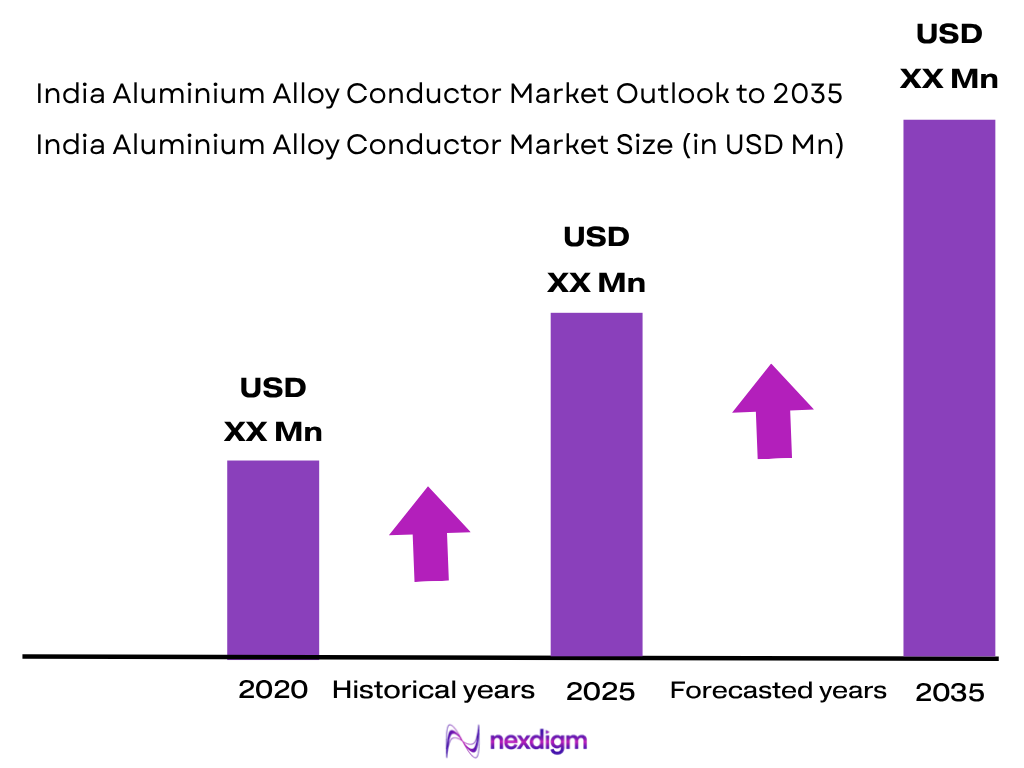
The India Aluminium Alloy Conductor Market is estimated at ~USD XX billion in 2024 and is projected to expand at a CAGR of ~XX% during 2026-2035. The market growth is supported by increasing investments in electricity transmission infrastructure, renewable energy evacuation networks, rural electrification programs, and replacement of ageing conductors. Aluminium alloy conductors are preferred in overhead transmission applications due to their lightweight properties, corrosion resistance, improved strength-to-weight ratio, and suitability for long-distance power transmission. India’s conductor industry is undergoing a transition toward higher-performance solutions, with advanced aluminium alloy conductors gaining adoption for high-capacity transmission corridors. India’s conductor market recorded significant demand from utilities, with ACSR remaining a major technology while AL-59 alloy and high-ampacity conductors continue gaining acceptance for modern grid requirements. Sterlite Electric
The India Aluminium Alloy Conductor Market is concentrated in regions with high electricity consumption, industrial development, renewable energy generation, and large-scale transmission infrastructure projects. States such as Maharashtra, Gujarat, Rajasthan, Tamil Nadu, Karnataka, Telangana, and Uttar Pradesh represent major demand centres due to expanding industrial clusters, renewable energy parks, and electricity network expansion. Gujarat and Rajasthan are important markets because of large solar and renewable energy projects requiring transmission connectivity, while Maharashtra, Karnataka, and Tamil Nadu generate demand from industrial and commercial electricity consumption. The Power Grid Corporation of India and state transmission utilities continue expanding transmission infrastructure to support renewable energy integration and increasing electricity demand. India’s transmission network expansion and modernization programs are increasing requirements for efficient aluminium alloy conductors across high-voltage and extra-high-voltage applications.
Market Segmentation
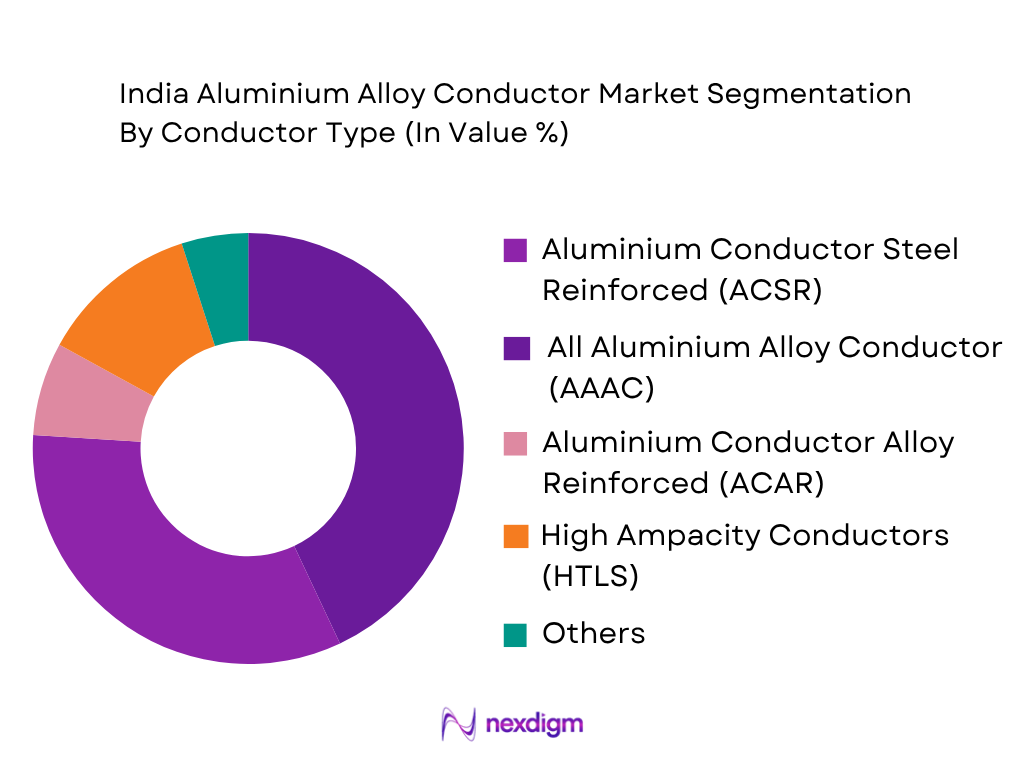
By Conductor Type
The India Aluminium Alloy Conductor Market is segmented by conductor type into ACSR, AAAC/AL-59, HTLS conductors, ACAR, and other advanced aluminium alloy conductors. ACSR remains the dominant conductor type because of its extensive historical adoption in India’s overhead transmission network, proven mechanical strength, and compatibility with existing infrastructure. However, aluminium alloy conductors such as AL-59 and AAAC are gaining momentum due to superior conductivity, improved corrosion resistance, and better performance in high-load and coastal environments. High ampacity conductors are also witnessing increasing adoption as utilities focus on reconductoring existing transmission corridors instead of developing new right-of-way infrastructure. The shift toward renewable energy evacuation and grid strengthening is encouraging utilities to adopt advanced conductors capable of carrying higher electrical loads while maintaining operational reliability.
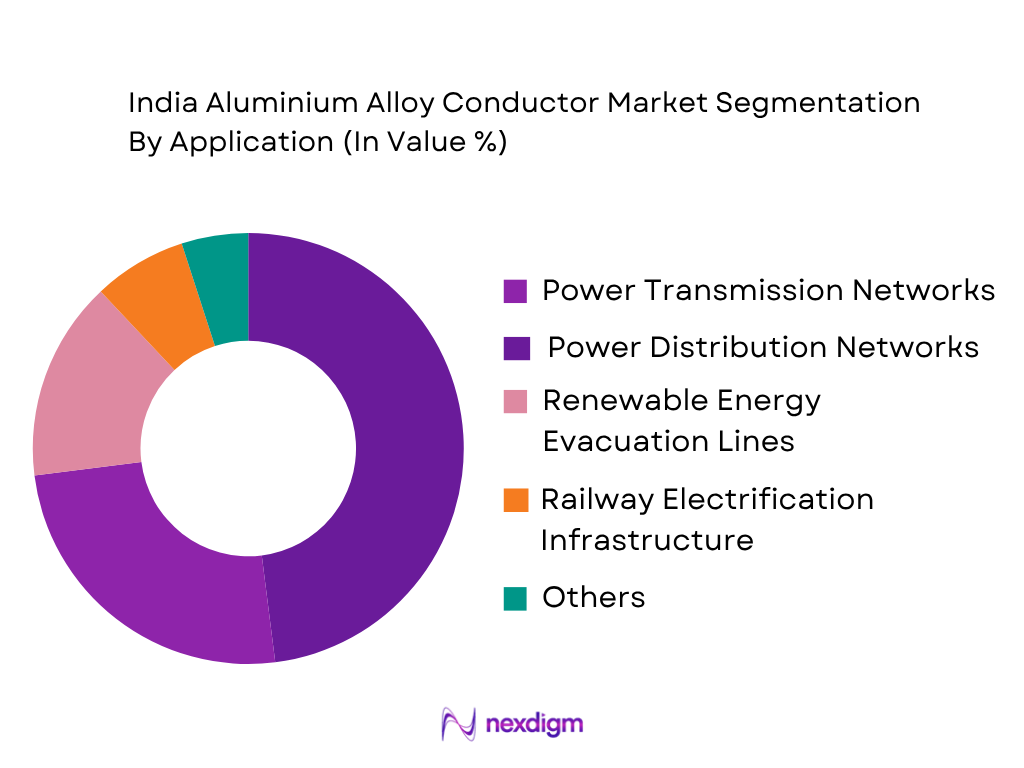
By Application
The India Aluminium Alloy Conductor Market is segmented by application into transmission networks, distribution networks, renewable energy evacuation lines, railway electrification infrastructure, and industrial power applications. Power transmission networks represent the leading application segment due to India’s continuous expansion of high-voltage and extra-high-voltage electricity infrastructure. Aluminium alloy conductors are widely deployed in transmission lines because they provide efficient electricity transfer, reduced structural loading, and improved resistance against environmental conditions. Renewable energy evacuation is emerging as a significant application area due to increasing solar and wind capacity development in states such as Rajasthan, Gujarat, Karnataka, and Tamil Nadu. Distribution networks are also creating demand due to rural electrification programs, urban power infrastructure expansion, and replacement of ageing conductors. The adoption of advanced aluminium alloy conductors supports utilities in increasing network capacity without extensive tower replacement or additional land acquisition.
Competitive Landscape
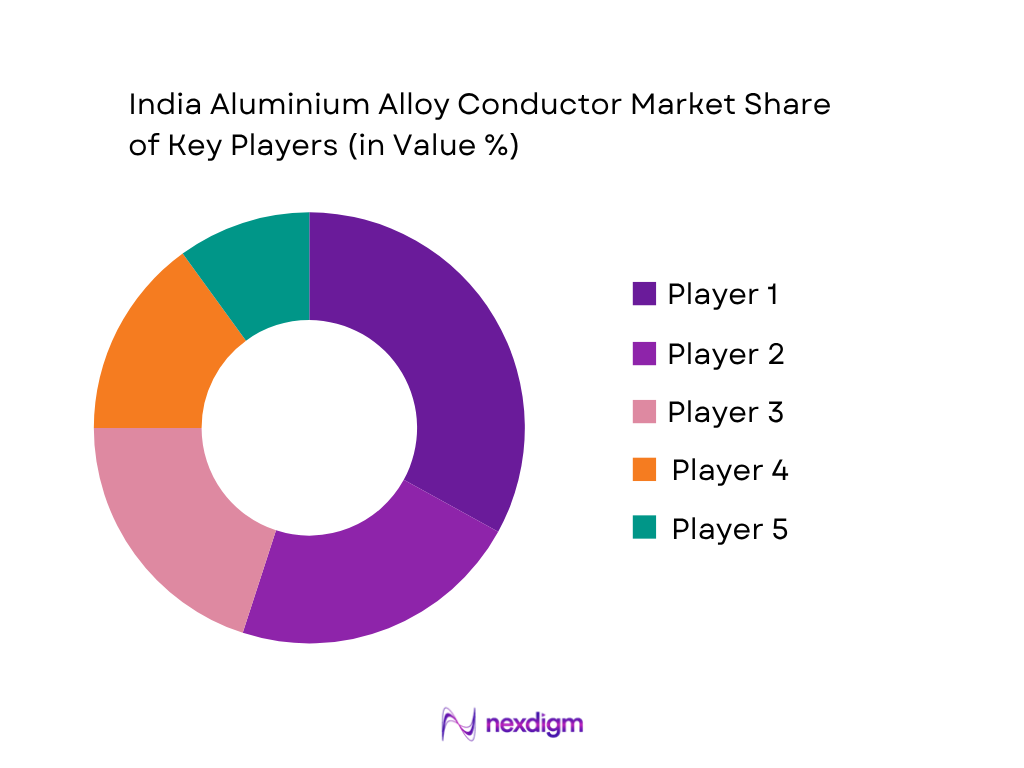
The India Aluminium Alloy Conductor Market consists of domestic manufacturers, integrated aluminium producers, and specialized power transmission solution providers. Competition is influenced by manufacturing capacity, aluminium sourcing capability, product quality certifications, utility approvals, technology portfolio, and ability to supply large-scale transmission projects. Companies are increasingly focusing on advanced conductors, high-temperature low-sag technologies, renewable energy transmission applications, and expansion of domestic manufacturing capabilities.
| Company | Establishment Year | Headquarters | Product Portfolio | Manufacturing Capability | Key Applications | Technology Capability | Utility Presence | Market Strength |
| Sterlite Power | 2006 | Mumbai, India | ~ | ~ | ~ | ~ | ~ | ~ |
| Hindalco Industries | 1958 | Mumbai, India | ~ | ~ | ~ | ~ | ~ | ~ |
| APAR Industries | 1958 | Mumbai, India | ~ | ~ | ~ | ~ | ~ | ~ |
| Vedanta Aluminium | 2001 | New Delhi, India | ~ | ~ | ~ | ~ | ~ | ~ |
| KEI Industries | 1968 | New Delhi, India | ~ | ~ | ~ | ~ | ~ | ~ |
India Aluminium Alloy Conductor Market Analysis
Growth Drivers
Expansion of Power Transmission Infrastructure
The expansion of India’s power transmission infrastructure is creating sustained demand for aluminium alloy conductors due to the requirement for efficient electricity transfer across long-distance networks. The Central Electricity Authority reported that India’s total transmission network exceeded 485,000 circuit km and transformation capacity crossed 1,200,000 MVA, supporting the need for advanced conductors for high-voltage applications. Aluminium alloy conductors are increasingly preferred in transmission projects because of their lightweight characteristics, improved mechanical strength, and suitability for large-span transmission lines. The country’s electricity demand is supported by economic expansion, with the World Bank reporting India’s GDP at approximately USD 3.9 trillion in 2024, increasing requirements for reliable power infrastructure. Renewable energy integration is also strengthening transmission demand, as India’s installed renewable capacity exceeded 200 GW according to government power sector data. Interstate transmission corridors, renewable energy zones, and high-capacity transmission projects require conductors capable of handling increased electrical loads while minimizing infrastructure upgrades. The government’s focus on strengthening the national grid, improving power reliability, and connecting renewable generation centres is encouraging utilities to adopt aluminium alloy conductor technologies across transmission applications.
Renewable Energy Capacity Addition and Grid Modernization Initiatives
India’s renewable energy expansion and grid modernization programs are major growth drivers for aluminium alloy conductors as new generation capacity requires efficient evacuation infrastructure. The Ministry of New and Renewable Energy reported that India’s renewable energy capacity exceeded 200 GW, including solar, wind, hydro, and bioenergy installations, creating demand for transmission networks connecting remote generation locations with consumption centres. Solar and wind projects concentrated in Rajasthan, Gujarat, Tamil Nadu, Karnataka, and Maharashtra require high-capacity transmission corridors where lightweight aluminium alloy conductors provide operational advantages. The International Energy Agency highlighted India’s increasing electricity demand driven by industrial activity, urbanization, and electrification trends. The World Bank reported India’s urban population exceeded 500 million, increasing pressure on electricity infrastructure in metropolitan and industrial regions. Smart grid initiatives, digital monitoring systems, and modernization of ageing transmission assets are encouraging utilities to replace conventional conductors with advanced solutions. Aluminium alloy conductors support these initiatives through improved current carrying capability, reduced structural loading, and enhanced performance in challenging environmental conditions. Green energy corridor projects and interstate transmission systems are expected to continue creating opportunities for advanced conductor deployment
Market Challenges
Fluctuation in Aluminium Prices and Dependence on Raw Material Supply
The India Aluminium Alloy Conductor Market faces challenges from fluctuations in aluminium prices and dependence on stable raw material availability. Aluminium represents the primary input material for conductor manufacturing, making manufacturers sensitive to changes in global aluminium supply conditions and energy costs associated with aluminium production. India produced approximately 4 million tonnes of primary aluminium according to government mineral production data, but domestic manufacturers remain connected to international aluminium market movements due to global trade dynamics. The International Monetary Fund reported continued volatility in global commodity markets, affecting industrial raw material planning across manufacturing sectors. Aluminium producers also face energy-intensive production requirements, creating cost pressures during periods of power price fluctuations. Supply chain disruptions, transportation constraints, and variations in aluminium alloy availability can influence conductor manufacturing schedules and procurement planning. For aluminium alloy conductor manufacturers, maintaining consistent alloy composition, electrical conductivity standards, and mechanical performance requires reliable access to quality aluminium inputs. These factors create operational challenges for manufacturers supplying large-scale transmission projects where delivery timelines and technical specifications must be strictly maintained. Long-term raw material agreements and integrated aluminium production capabilities are becoming increasingly important for reducing supply risks.
Competition from Traditional Conductors and Technical Specification Requirements
The adoption of aluminium alloy conductors is challenged by competition from established conductor technologies such as aluminium conductor steel reinforced (ACSR), which has been widely used in India’s transmission network for decades. Utilities often continue selecting conventional conductors because of existing technical standards, operational familiarity, established installation practices, and availability of trained personnel. The Central Electricity Authority maintains technical guidelines for transmission infrastructure, requiring conductors to meet specific electrical, mechanical, and safety performance criteria. Advanced aluminium alloy conductors must undergo utility approvals and compatibility assessments before large-scale adoption. India’s transmission sector includes extensive existing infrastructure designed around traditional conductor specifications, making replacement decisions dependent on technical feasibility and economic evaluation. The country’s transmission network expansion requires coordination among central and state utilities, EPC contractors, and equipment suppliers. Delays in project approvals, land acquisition, and infrastructure execution can impact conductor demand timelines. Additionally, installation of advanced conductors requires specialized expertise for handling, stringing, and maintenance procedures. Limited familiarity among field personnel and contractors can slow adoption of newer aluminium alloy conductor technologies despite their technical advantages.
Market Opportunities
Renewable Energy Transmission Expansion and Green Energy Corridor Development
The expansion of renewable energy transmission infrastructure provides significant opportunities for aluminium alloy conductors in India’s power sector. India’s renewable energy development requires large-scale transmission networks to connect solar and wind generation zones with major electricity consumption regions. Government data indicates that renewable energy capacity crossed 200 GW, with large renewable projects concentrated in states requiring extensive transmission connectivity. The Green Energy Corridor initiative is expanding transmission infrastructure to integrate renewable electricity into the national grid, creating demand for efficient and high-capacity conductors. Aluminium alloy conductors are suitable for these applications because they provide improved strength-to-weight performance and can support long-distance transmission requirements. The International Energy Agency identified India as one of the fastest-growing electricity markets due to industrial development, urban expansion, and increasing electrification. The World Bank reported India’s electricity access reached near-universal levels, increasing focus on improving reliability and capacity rather than only expanding connections. Renewable energy evacuation projects, interstate transmission systems, and renewable power parks require modern conductor technologies capable of supporting higher power flows. This creates opportunities for aluminium alloy conductor manufacturers supplying utilities, EPC companies, and renewable energy infrastructure developers.
Replacement of Ageing Conductors and Smart Grid Infrastructure Development
Replacement of ageing transmission conductors and development of smart grid infrastructure create opportunities for aluminium alloy conductor adoption across India’s electricity network. A significant portion of India’s transmission infrastructure was developed during earlier phases of electrification and requires modernization to support rising electricity consumption and renewable integration. The Ministry of Power has emphasized strengthening grid reliability through transmission upgrades, digital monitoring systems, and network efficiency improvements. Aluminium alloy conductors provide an opportunity for utilities to increase transmission capacity through reconductoring without requiring complete construction of new transmission corridors. India’s electricity demand growth, supported by industrial expansion and urbanization, is increasing pressure on existing power networks. The International Energy Agency has highlighted rising electricity consumption from industrial activities, cooling demand, and transport electrification. Smart grid development involving automation, real-time monitoring, and improved grid management requires reliable transmission infrastructure capable of handling variable renewable power flows. Advanced conductors such as aluminium alloy and high-temperature low-sag solutions can support these modernization efforts by improving network efficiency. Growing focus on domestic manufacturing under industrial development initiatives also creates opportunities for Indian conductor producers to expand production capabilities and supply advanced transmission solutions.
Future Outlook
The India Aluminium Alloy Conductor Market is expected to witness sustained growth during the forecast period due to expansion of transmission infrastructure, renewable energy integration, and modernization of electricity networks. Increasing electricity demand from industrialization, urban development, electrification of transport, and digital infrastructure will require efficient power transmission solutions. Utilities are increasingly adopting advanced aluminium alloy conductors to improve grid capacity, reduce transmission losses, and optimize existing infrastructure. Growth opportunities will emerge from reconductoring projects, renewable energy corridors, smart grid initiatives, and high-voltage transmission expansion.
Major Players
- Sterlite Power
- Hindalco Industries
- APAR Industries
- Vedanta Aluminium
- KEI Industries
- Polycab India
- RR Kabel
- Finolex Cables
- Universal Cables
- Diamond Power Infrastructure
- Gupta Power Infrastructure
- Madhav Cables
- LS Cable & System India
- Nexans India
- Arfin India
Key Target Audience
- Power Transmission Utilities
- State Electricity Transmission Companies
- Aluminium Conductor Manufacturers
- Aluminium Producers and Alloy Suppliers
- Renewable Energy Developers
- Engineering Procurement and Construction Companies
- Investments and venture capitalist firms
- Government and regulatory bodies (Ministry of Power, Central Electricity Authority, Ministry of New and Renewable Energy)
Research Methodology
Step 1: Identification of Key Variables
The initial phase involves developing a comprehensive ecosystem map covering aluminium alloy conductor manufacturers, aluminium suppliers, transmission utilities, renewable energy developers, EPC contractors, and infrastructure stakeholders. This stage uses secondary research from industry databases, government publications, electricity infrastructure reports, and technical standards to identify variables influencing market growth and technology adoption.
Step 2: Market Analysis and Construction
This phase involves analysing historical market trends related to aluminium alloy conductor demand, transmission network expansion, renewable energy evacuation requirements, and utility procurement patterns. Supply-side analysis evaluates manufacturing capacity, production capabilities, raw material availability, and competitive positioning of key market participants.
Step 3: Hypothesis Validation and Expert Consultation
Market assumptions are validated through discussions with industry participants including conductor manufacturers, utility representatives, transmission contractors, and infrastructure specialists. These interactions provide insights regarding procurement practices, technology preferences, installation requirements, and future demand expectations.
Step 4: Research Synthesis and Final Output
The final stage integrates quantitative analysis, industry insights, and market validation to develop a comprehensive assessment of the India Aluminium Alloy Conductor Market. Data triangulation is performed using supply chain analysis, infrastructure development trends, manufacturer information, and industry indicators.

- Executive Summary
- Research Methodology (Market Definitions and Scope, India Aluminium Alloy Conductor Market Classification, Conductor Technology Mapping, Aluminium Alloy Composition Assessment, AAAC Conductor Evaluation, ACAR Conductor Assessment, ACSR and Aluminium-Based Conductor Analysis, High Temperature Low Sag Conductor Assessment, Composite Reinforced Conductor Evaluation, Transmission Network Assessment, Distribution Infrastructure Assessment, Renewable Energy Transmission Assessment, Grid Modernization Analysis, Conductor Manufacturing Capability Assessment, Domestic Production Assessment, Import Dependency Assessment, Supply-Side Analysis, Demand-Side Analysis, Utility Procurement Assessment, Infrastructure Project Mapping, Primary Industry Interviews, Data Triangulation, Forecasting Framework)

- Definition and Scope
- India Aluminium Alloy Conductor Industry Evolution
- Aluminium Alloy Conductor Value Chain Analysis
- Aluminium Alloy Conductor Supply Chain Analysis

- Growth Drivers (Expansion of Power Transmission Infrastructure, Renewable Energy Capacity Addition, Increasing Electricity Demand, Grid Modernization Initiatives, Rural Electrification Programs, Interstate Transmission Corridor Development, Adoption of High Capacity Conductors, Electrification of Transport and Industrial Sectors)
- Market Challenges (Fluctuation in Aluminium Prices, Dependence on Raw Material Supply, Competition from Traditional Conductors, High Initial Investment Requirements, Transmission Project Approval Delays, Technical Specification Requirements, Limited Adoption of Advanced Conductors, Installation Expertise Constraints)
- Market Opportunities (Renewable Energy Transmission Expansion, Replacement of Ageing Transmission Conductors, Smart Grid Development, High Temperature Low Sag Conductor Adoption, Green Energy Corridor Projects, Rural Distribution Network Expansion, Digital Grid Infrastructure Development, Indigenous Conductor Manufacturing Growth)
- Market Trends (Higher Ampacity Conductors, Lightweight Transmission Solutions, Advanced Aluminium Alloy Development, Low Loss Conductors, High Temperature Operation Conductors, Sustainable Aluminium Usage, Utility Demand for Efficient Transmission, Automation in Conductor Manufacturing)
- Government Regulations and Standards (Central Electricity Authority Transmission Standards, Bureau of Indian Standards Conductor Specifications, Ministry of Power Grid Modernization Programs, Green Energy Corridor Guidelines, Power Transmission Safety Regulations, Quality Control Standards, Renewable Energy Integration Policies)
- SWOT Analysis
- Porter’s Five Forces Analysis
- PESTLE Analysis
- Stakeholder Ecosystem
- Competition Ecosystem

- By Market Value (2020-2025)
- By Installed Conductor Volume (2020-2025)
- By Conductor Length Installed (2020-2025)
- By Aluminium Consumption Volume (2020-2025)
- By Transmission Line Conductor Demand Volume (2020-2025)

- By Conductor Type (In Value %)
All Aluminium Alloy Conductor (AAAC)
Aluminium Conductor Alloy Reinforced (ACAR)
Aluminium Conductor Steel Reinforced (ACSR)
Aluminium Conductor Composite Reinforced (ACCR)
Aluminium Conductor Composite Core (ACCC)
High Temperature Low Sag Conductors (HTLS)
Specialized Aluminium Alloy Conductors - By Voltage Level (In Value %)
Extra High Voltage Transmission Conductors
High Voltage Transmission Conductors
Medium Voltage Distribution Conductors
Low Voltage Distribution Conductors
Ultra High Voltage Transmission Conductors - By Application (In Value %)
Inter-State Transmission Networks
Intra-State Transmission Networks
Renewable Energy Evacuation Lines
Rural Electrification Networks
Urban Distribution Networks
Industrial Power Transmission
Railway Electrification Infrastructure
Smart Grid Infrastructure - By End User (In Value %)
Power Transmission Utilities
State Electricity Boards
Private Power Distribution Companies
Renewable Energy Developers
Industrial Power Consumers
Infrastructure Development Companies
Government Power Projects - By Region (In Value %)
Northern India
Southern India
Western India
Eastern India
Central India
North Eastern India - By Manufacturing Process (In Value %)
Continuous Casting and Rolling Process
Wire Drawing Process
Stranding Process
Heat Treatment Process
Composite Reinforced Manufacturing Process

- Market Share of Major Players (By Revenue, Conductor Type, Production Capacity, Transmission Application, Utility Contracts, Manufacturing Location, Product Portfolio)
- Cross Comparison Parameters (Aluminium Alloy Conductor Portfolio, AAAC and ACAR Manufacturing Capability, HTLS Conductor Technology Capability, Transmission Voltage Range Capability, Production Capacity, Utility Approval and Certification Capability, Renewable Energy Transmission Project Experience, Domestic Manufacturing Network)
- SWOT Analysis of Major Players
- Detailed Profiles of Major Companies
Sterlite Power
Hindalco Industries
Vedanta Aluminium
Apar Industries
KEI Industries
Polycab India
RR Kabel
Finolex Cables
Universal Cables
Diamond Power Infrastructure
Gupta Power Infrastructure
Madhav Cables
RPG Cables
LS Cable & System India
Nexans India

- Transmission Utility Requirement Assessment
- Distribution Network Requirement Assessment
- Renewable Energy Developer Demand Analysis
- Infrastructure Project Requirement Analysis
- Industrial Power Transmission Demand Assessment
- Procurement Decision-Making Process
- Conductor Performance Preference Analysis

- By Market Value (2026-2035)
- By Installed Conductor Volume (2026-2035)
- By Aluminium Consumption Volume (2026-2035)
- By Transmission Network Conductor Demand (2026-2035)
- By Renewable Energy Transmission Conductor Consumption (2026-2035)


 Request a Sample
 Ask for Customization
 Get a Quote
 Enquire Now