
 Download PDF
Market Overview
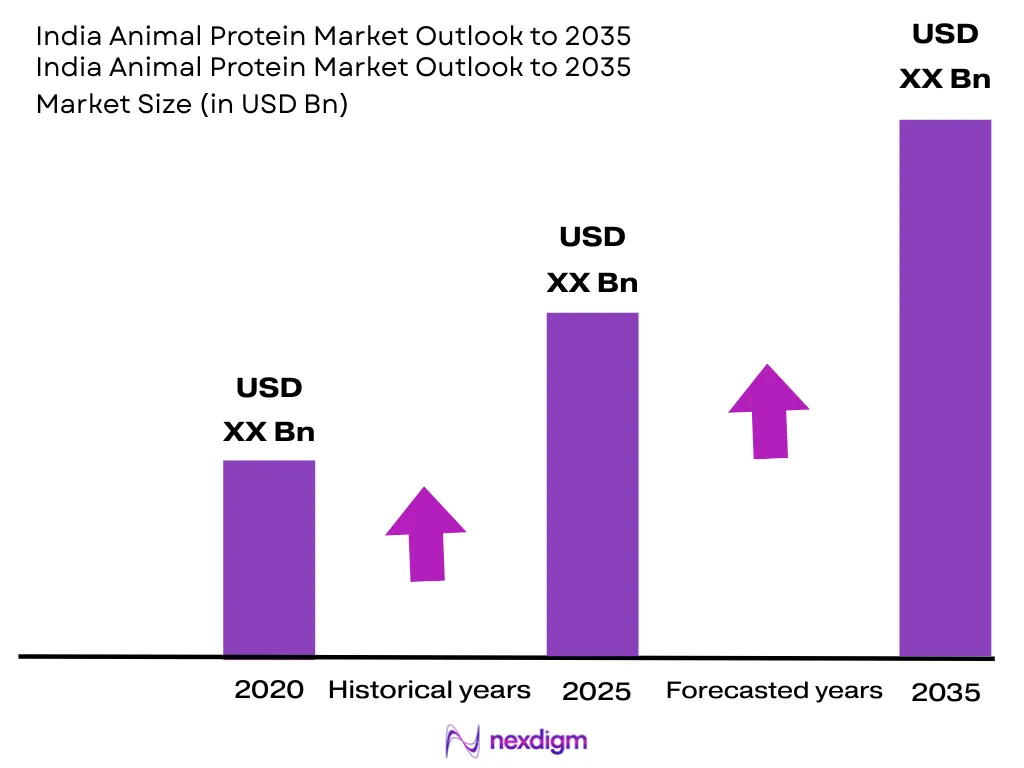
The India Animal Protein Market was valued at USD ~ Billion in 2024, based on historical production, domestic consumption, exports, and processing revenues across poultry, buffalo meat, goat and sheep meat, fish and aquaculture, and egg products. India produced approximately 9.8 million metric tons of meat and poultry during the latest reporting period, including approximately 4.8 million metric tons of poultry meat, over 4.2 million metric tons of buffalo meat (Carabeef), and around 0.8 million metric tons of goat and sheep meat, according to statistics published by the Department of Animal Husbandry and Dairying (DAHD), the Agricultural & Processed Food Products Export Development Authority (APEDA), and the Food and Agriculture Organization (FAO). India is also the world’s largest producer of milk and one of the largest producers of eggs, contributing significantly to the overall animal protein economy. The market continues to be driven by rising population, expanding urbanisation, growing middle-class incomes, increasing penetration of organised retail and online meat delivery platforms, and the country’s dominant position as the world’s largest exporter of buffalo meat.
Market Segmentation
By Protein Type
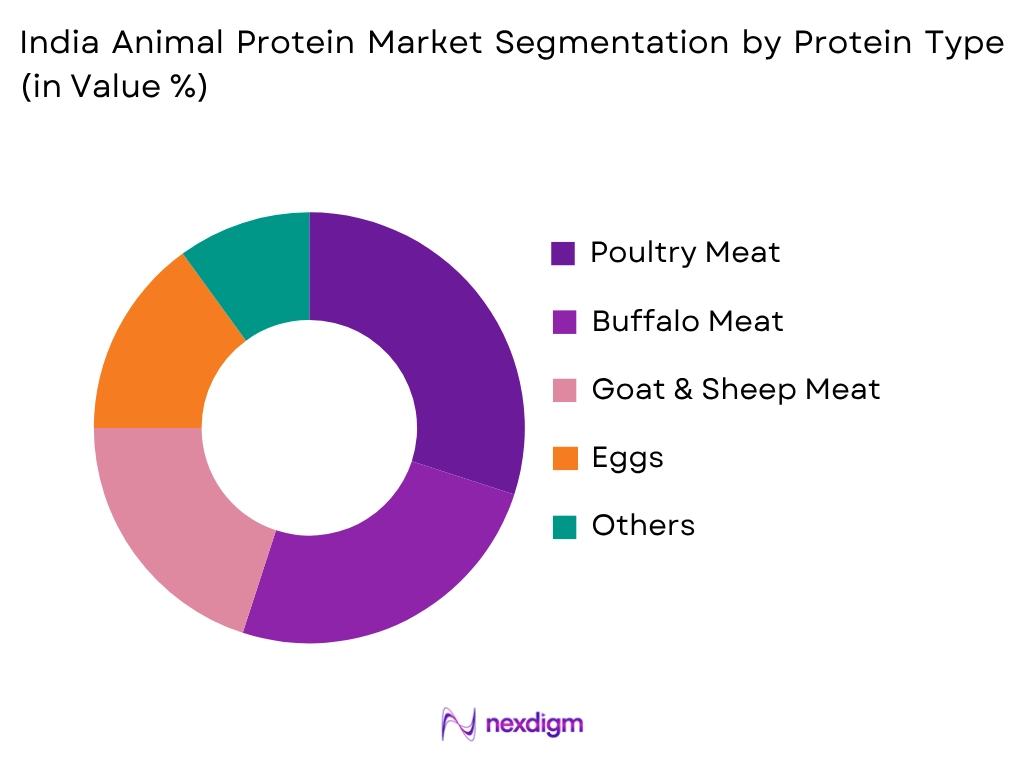
The India Animal Protein Market is segmented by protein type into Poultry Meat, Buffalo Meat (CED Beef), Goat & Sheep Meat (Mutton & Lamb), Aquaculture & Fish Protein, Eggs, and Processed Animal Protein Products. Poultry meat accounts for the largest and fastest-growing share of the organised market owing to its cost competitiveness, shorter production cycles, superior feed conversion ratio, and broad cultural acceptance across diverse religious and regional demographics. India’s broiler production has expanded significantly over the past decade, driven by the rapid growth of vertically integrated companies such as Suguna Foods, Venky’s, IB Group, and Godrej Tyson Foods, which operate comprehensive breeding, hatchery, feed manufacturing, contract farming, processing, and distribution networks. Additionally, India’s buffalo meat sector holds unique importance as the country is the world’s largest exporter of Carabeef (buffalo meat), with APEDA reporting exports valued at approximately USD 3.5 billion annually, primarily destined for the Middle East, Southeast Asia, and Africa. Eggs and aquaculture also represent substantial and growing segments supported by government schemes such as the National Fisheries Development Board (NFDB) Blue Revolution programme and the National Livestock Mission (NLM).
By Distribution Channel
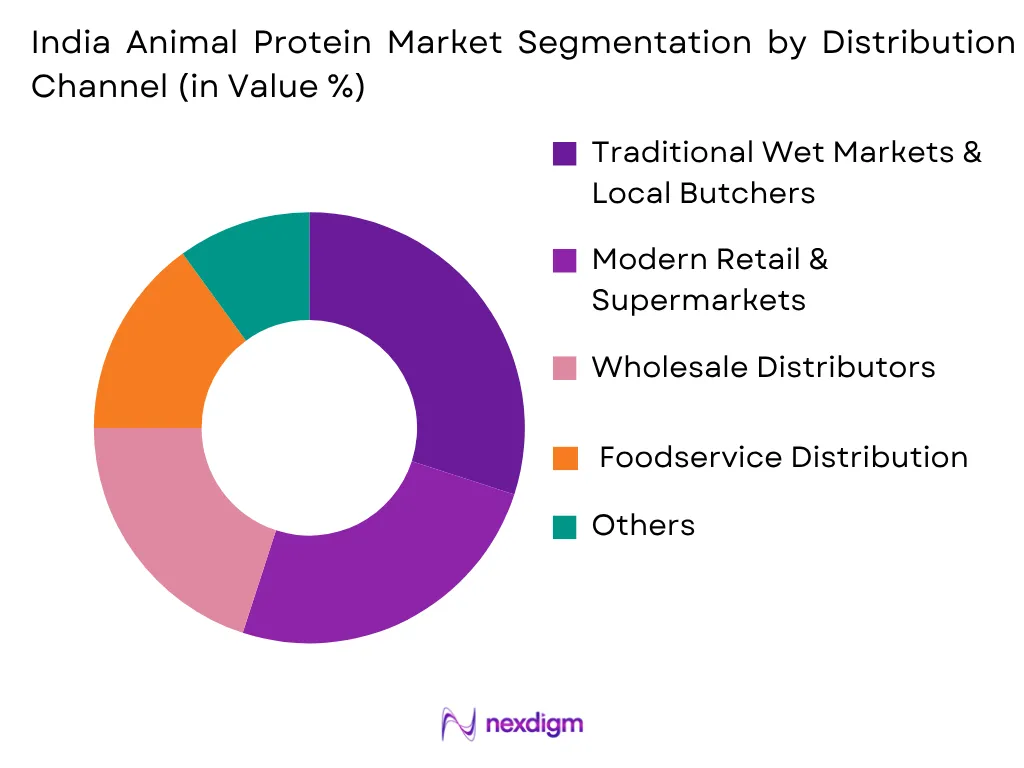
The India Animal Protein Market is segmented by distribution channel into Traditional Wet Markets & Local Butchers, Modern Retail & Supermarkets, Wholesale Distributors, Foodservice Distribution, Export Markets, and Online Grocery & Direct-to-Consumer Platforms. Traditional wet markets and local butchers currently dominate the distribution landscape, accounting for the majority of fresh meat and poultry sales owing to deep-rooted consumer purchasing habits, hyperlocal availability, negotiable pricing, and preference for freshly slaughtered product in urban and semi-urban centres. However, the channel mix is undergoing rapid transformation driven by urbanisation, rising food safety awareness, and the explosive growth of technology-enabled online meat delivery platforms such as Licious, FreshToHome, and Zappfresh. Modern organised retail including supermarkets, hypermarkets, and branded chilled counters is expanding steadily across Tier 1 and Tier 2 cities, offering consumers hygienically packaged, traceable, and branded animal protein products. The growing penetration of cold chain logistics, refrigerated last-mile delivery, and temperature-controlled retail infrastructure is expected to progressively shift consumption toward organised channels over the outlook period.
Competitive Landscape
The India Animal Protein Market is characterised by a highly fragmented structure, with a large unorganised sector of local butchers, wet markets, and small-scale producers coexisting alongside a growing organised segment of integrated processors, branded meat companies, and technology-enabled D2C platforms. Companies compete on production scale, cold chain reach, FSSAI and halal certifications, brand recognition, processing hygiene standards, and distribution network depth. Vertically integrated operations in the poultry sector, export-oriented buffalo meat processing infrastructure, and rapidly scaling online meat delivery models represent the three primary competitive clusters within the Indian market. Continuous investments in food safety compliance, automation, packaging technology, and consumer brand building are creating increasing differentiation between organised players and the traditional unorganised sector.
| Company | Establishment Year | Headquarters | Primary Protein Focus | Processing Facilities
|
Export Presence | Production Integration | Sustainability Programs | Value-Added Product Portfolio |
| Suguna Foods | 1984 | ~ | ~ | ~ | ~ | ~ | ~ | ~ |
| Venky’s (VH Group) | 1976 | ~ | ~ | ~ | ~ | ~ | ~ | ~ |
| Allana Group | 1865 | ~ | ~ | ~ | ~ | ~ | ~ | ~ |
| Al Kabeer Exports | 1979 | ~ | ~ | ~ | ~ | ~ | ~ | ~ |
| Skylark Hatcheries (IB Group) | 1987 | ~ | ~ | ~ | ~ | ~ | ~ | ~ |
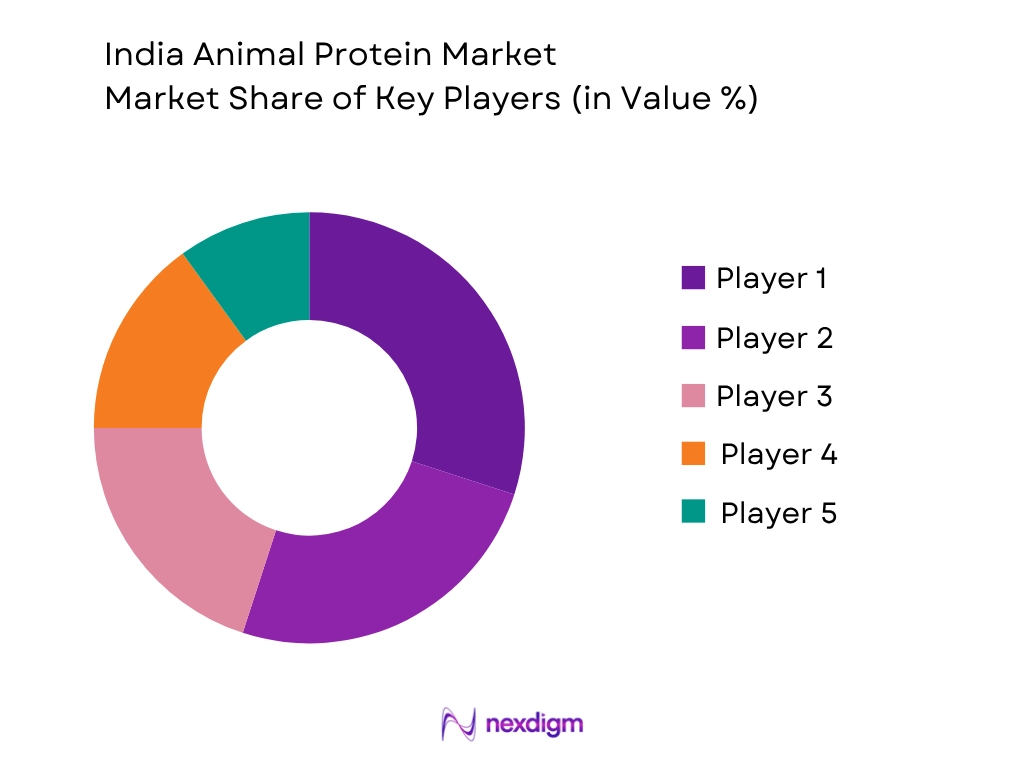
India Animal Protein Market Analysis
Growth Drivers
Rising Population, Urbanisation, and Expanding Middle-Class Protein Demand
India’s rapidly expanding population and ongoing urbanisation trajectory continue to be the most fundamental growth drivers for the animal protein market. According to the United Nations Population Division, India surpassed 1.44 billion people in 2024, overtaking China to become the world’s most populous nation, creating an immense and growing consumer base for food and protein products. The World Bank estimated India’s GDP at approximately USD 3.9 trillion in 2024, with per capita income rising steadily and an expanding middle class increasingly shifting dietary patterns toward higher protein consumption. The National Sample Survey Office (NSSO) has consistently documented a positive correlation between rising household incomes and increased expenditure on animal protein, including poultry, eggs, fish, and processed meat products. According to DAHD, annual per capita meat consumption in India remains relatively low compared to global averages at approximately 4–5 kg, indicating significant headroom for growth as incomes rise and cultural dietary patterns evolve, particularly among younger urban demographics. The International Monetary Fund (IMF) projects India to remain one of the world’s fastest-growing major economies through 2035, underpinning sustained expansion in domestic demand for animal protein across retail, foodservice, and institutional segments. Rapid urban expansion across Tier 1, Tier 2, and Tier 3 cities is also accelerating the adoption of modern organised retail, online grocery, and quick commerce platforms that are increasingly featuring chilled and frozen animal protein products.
India’s Dominance in Buffalo Meat Exports and Poultry Sector Integration
India’s structural position as the world’s largest exporter of buffalo meat (Carabeef) represents a defining competitive advantage for the animal protein market. According to APEDA, India exported approximately 1.2 million metric tons of buffalo meat valued at approximately USD 3.5 billion during the latest reporting period, with the Middle East, Southeast Asia, Vietnam, Malaysia, and African markets as primary destinations. India’s buffalo meat sector benefits from the country’s large working buffalo population, low cost of production compared to conventional beef markets, established halal slaughterhouse infrastructure, and competitive freight logistics to key importing regions. The USDA Foreign Agricultural Service has consistently recognised India as the world’s leading buffalo meat exporter by volume, ahead of Australia, Brazil, and the United States. In the domestic poultry sector, vertically integrated companies such as Suguna Foods, IB Group, and Venky’s have established comprehensive breeding, hatchery, feed manufacturing, contract farming, processing, and cold chain networks that service millions of broiler farmers across the country. According to the National Chicken Council of India and DAHD, India’s broiler production grew at a compound annual growth rate of approximately 8–9% over the past decade, reflecting the rapid scale-up of integrated commercial poultry systems. These structural strengths position India’s animal protein sector for continued export and domestic market expansion through 2035.
Market Challenges
Cold Chain Infrastructure Gaps and Fragmented Unorganised Sector
Despite significant progress, cold chain infrastructure gaps and the dominance of the unorganised sector remain critical structural challenges for the India Animal Protein Market. According to the National Centre for Cold Chain Development (NCCD), India has a cold storage capacity of approximately 37 million metric tons, but the majority of this infrastructure is concentrated in fruits, vegetables, and dairy products rather than meat and poultry. The absence of adequate temperature-controlled transportation, last-mile refrigerated delivery, and modern abattoir facilities across smaller cities and rural areas results in significant post-harvest losses, food safety risks, and distribution inefficiencies throughout the animal protein supply chain. The World Bank estimates that post-harvest losses in India’s meat and perishable food sectors remain significantly above global benchmarks, reducing overall market value realisation and export competitiveness. Furthermore, the unorganised sector comprising local wet markets, unlicensed slaughterhouses, and informal traders accounts for an estimated 70–75% of total meat retail transactions, making it extremely difficult for organised processors and branded meat companies to capture market share without substantial investment in consumer education, distribution infrastructure, and competitive pricing. Government initiatives such as the Pradhan Mantri Kisan Sampada Yojana (PMKSY) and the Production Linked Incentive (PLI) scheme for food processing aim to address infrastructure and modernisation gaps, but the pace of transformation remains uneven across different states and regions.
Animal Disease Risks and Regulatory Compliance Complexity
Animal disease outbreaks and complex multi-layered regulatory requirements represent ongoing operational challenges for India’s animal protein industry. According to DAHD, India has experienced periodic outbreaks of Highly Pathogenic Avian Influenza (HPAI), Foot-and-Mouth Disease (FMD), Lumpy Skin Disease (LSD), and African Swine Fever (ASF), each of which has resulted in significant production disruptions, culling programmes, and temporary restrictions on livestock movement across affected states. The Department of Animal Husbandry and Dairying continues to invest in national disease surveillance, vaccination programmes, and rapid response frameworks under the National Animal Disease Control Programme (NADCP), but the scale and diversity of India’s livestock base across diverse agroclimatic zones creates persistent biosecurity challenges. Additionally, the regulatory environment governing meat production, slaughterhouse licensing, food safety compliance, export certification, and environmental standards involves multiple central and state-level authorities including FSSAI, APEDA, the Ministry of Environment Forest and Climate Change (MoEFCC), and state Animal Husbandry Departments, creating administrative complexity for processors operating across multiple states. Variability in state-level policies regarding slaughterhouse operations, livestock transport, and meat retailing further complicates national-scale supply chain planning and investment decisions for organised industry participants.
Market Opportunities
Expansion of Aquaculture, Export Markets, and Branded Animal Protein
India’s aquaculture sector presents one of the most significant untapped growth opportunities within the broader animal protein market. According to the National Fisheries Development Board (NFDB) and the Ministry of Fisheries, Animal Husbandry and Dairying, India is the world’s second-largest fish producer and the largest exporter of shrimp, with seafood exports valued at approximately USD 7.3 billion annually. The government’s Blue Revolution programme and the Pradhan Mantri Matsya Sampada Yojana (PMMSY) have allocated significant resources toward expanding aquaculture infrastructure, improving fish seed quality, strengthening cold chain logistics, and developing new export markets across the United States, the European Union, Japan, and Southeast Asia. Rising global demand for traceable, sustainably farmed Indian shrimp and fish products presents major opportunities for integrated aquaculture producers to invest in processing infrastructure, certifications such as BAP and ASC, and value-added product development. Simultaneously, the domestic branded meat segment is experiencing rapid growth driven by direct-to-consumer platforms such as Licious, FreshToHome, and Zappfresh, which are redefining consumer expectations around hygiene, convenience, and traceability. These platforms are creating new demand for consistently graded, hygienically processed, and conveniently packaged animal protein products across urban markets, establishing a foundation for long-term premiumisation of India’s domestic protein sector.
Growth in Value-Added Processing and Online Meat Delivery Platforms
The rapid growth of value-added animal protein processing and technology-enabled meat delivery platforms represents a transformational opportunity for the India Animal Protein Market. According to the Food and Agriculture Organization (FAO) and FSSAI, consumer demand for hygienically processed, conveniently packaged, and ready-to-cook animal protein products is expanding rapidly across India’s metropolitan and Tier 2 urban markets, driven by changing lifestyles, nuclear family structures, and growing dual-income household penetration. The Indian food technology sector has witnessed significant venture capital investment in online meat delivery and D2C protein brands, with Licious raising over USD 500 million in cumulative funding and FreshToHome expanding its operations across 200+ cities. The government’s Production Linked Incentive (PLI) scheme for food processing is further encouraging large-scale investment in modern slaughtering, chilling, portioning, packaging, and value-added processing facilities. Rising investment in cold chain logistics, automated cutting lines, modified atmosphere packaging, and branded retail products enables processors to create differentiated offerings while improving food safety standards, shelf life, and distribution efficiency. These developments are progressively formalising India’s animal protein sector, enabling organised players to capture a growing share of domestic retail and foodservice demand while simultaneously building export-competitive value-added product portfolios.
Future Outlook
The India Animal Protein Market is expected to maintain robust long-term growth supported by increasing population, rising per capita incomes, rapid urbanisation, and expanding middle-class demand for diverse protein products. The continued scale-up of vertically integrated poultry operations, growth of branded and online meat retail, aquaculture sector expansion, and buffalo meat export competitiveness are anticipated to be the primary drivers of market value growth through 2035. Government investments in cold chain infrastructure, slaughterhouse modernisation, food safety compliance, and aquaculture development under schemes such as PMKSY, PMMSY, and PLI for food processing are expected to progressively formalise and professionalise the sector. Simultaneously, the rapid adoption of digital livestock management, precision farming technologies, and automation in processing will improve productivity and food safety standards. The market is also expected to benefit from growing halal-certified export opportunities, expanding seafood export markets, and rising domestic demand for convenient and premium animal protein formats.
Major Players
- Suguna Foods
- Venky’s (VH Group)
- Allana Group
- Al Kabeer Exports
- Skylark Hatcheries (IB Group)
- Godrej Tyson Foods
- Zorabian Chicken
- Licious
- FreshToHome
- Country Delight
- Hind Agro Industries
- PNR Foods
- MITS Envirocare
- Srinivasa Farms
- Kegg Farms
Key Target Audience
- Animal Protein Producers and Meat Processing Companies
- Livestock Producers and Integrated Farming Companies
- Food Processing and Packaged Food Manufacturers
- Retail Chains, Wholesale Distributors and Foodservice Operators
- Exporters, Importers and International Trading Companies
- Investments and Venture Capitalist Firms
- Government and Regulatory Bodies (Department of Animal Husbandry and Dairying (DAHD), Food Safety and Standards Authority of India (FSSAI), Agricultural & Processed Food Products Export Development Authority (APEDA), National Fisheries Development Board (NFDB), Ministry of Fisheries, Animal Husbandry and Dairying)
- Cold Chain Logistics, Storage and Distribution Companies
Research Methodology
Step 1: Identification of Key Variables
The research process begins by identifying the complete ecosystem of the India Animal Protein Market, including livestock producers, feed suppliers, meat processors, distributors, exporters, retailers, and regulatory agencies. Extensive secondary research is conducted using government publications, trade associations, customs statistics, company reports, and proprietary industry databases. This stage helps determine the major variables influencing production, consumption, trade, pricing, and investment trends across the market.
Step 2: Market Analysis and Construction
Historical market information is compiled and analysed to estimate the overall market size using both top-down and bottom-up approaches. Production volumes, domestic consumption, processing revenues, export statistics, livestock inventories, slaughter volumes, and pricing trends are evaluated to construct a comprehensive market model. Demand-side and supply-side assessments are performed to validate the consistency of market estimates across various industry participants.
Step 3: Hypothesis Validation and Expert Consultation
The preliminary market findings are validated through computer-assisted telephone interviews (CATIs) and structured discussions with executives from meat processing companies, livestock producers, exporters, distributors, industry associations, and regulatory authorities. These consultations provide valuable insights regarding production capacity, utilisation rates, investment priorities, pricing dynamics, and emerging market opportunities, ensuring that the assumptions used in the research accurately reflect current industry conditions.
Step 4: Research Synthesis and Final Output
The final stage integrates findings obtained from secondary research and primary interviews to develop a comprehensive market assessment. Market estimates are cross-verified using company financial reports, trade databases, production statistics, and industry publications. The resulting analysis provides detailed insights into market size, competitive positioning, segmentation, growth drivers, challenges, future opportunities, and strategic recommendations for stakeholders operating within the India Animal Protein Market.

- Executive Summary
- Research Methodology (Market Definitions and Assumptions, Abbreviations, Market Sizing Framework, Top-Down Analysis, Bottom-Up Analysis, Demand-Side Assessment, Supply-Side Assessment, Primary Industry Interviews, Trade Flow Validation, Data Triangulation, Forecasting Framework, Limitations and Future Conclusions)

- Definition and Scope
- Market Evolution and Industry Genesis
- Timeline of Major Industry Developments
- India Animal Protein Industry Ecosystem
- Supply Chain Analysis

- Growth Drivers (Rising Population and Urbanisation, Expanding Middle Class and Disposable Incomes, Growing Poultry and Aquaculture Sectors, Buffalo Meat Export Competitiveness, Government Agriculture Support Schemes, Increasing Modern Retail and Cold Chain Penetration)
- Market Challenges (Feed Cost Volatility, Livestock Disease Risks, Cold Chain Infrastructure Gaps, Fragmented Unorganised Sector, Religious and Cultural Dietary Restrictions, Regulatory Compliance Complexity)
- Market Opportunities (Premium Protein Products, Value-Added Meat Processing, Aquaculture Expansion, Export Market Diversification, Digital Livestock Technologies, Branded Meat and D2C Platforms)
- Market Trends (Organised Retail Penetration, Online Meat Delivery Growth, Animal Welfare Awareness, Precision Livestock Farming, Protein Product Premiumisation, Automation in Processing)
- Government Regulations (FSSAI Food Safety Standards, Agricultural & Processed Food Products Export Development Authority (APEDA), Prevention of Cruelty to Animals Act, Environmental Compliance, Export Certification, Slaughterhouse Modernisation Regulations)
- Trade Policy Analysis (Export Agreements, Tariff Structure, Import Restrictions, Veterinary Protocols, Market Access Requirements)
- Feed Industry Assessment (Maize & Soybean Availability, Feed Conversion Efficiency, Feed Cost Structure, Poultry Feed Manufacturing)
- SWOT Analysis
- PESTLE Analysis
- Porter’s Five Forces Analysis
- Stakeholder Ecosystem
- Competition Ecosystem

- By Market Value (2020-2025)
- By Volume Consumption (2020-2025)
- By Average Selling Price (2020-2025)

- By Protein Type (In Value %)
Poultry Meat
Buffalo Meat (CED Beef)
Goat & Sheep Meat (Mutton & Lamb)
Aquaculture & Fish Protein
Eggs
Processed Animal Protein Products - By Product Form (In Value %)
Fresh/Chilled
Frozen
Processed & Value-Added
Cooked & Ready-to-Eat
Marinated & Seasoned Products - By End User (In Value %)
Retail Consumers
Foodservice & HoReCa
Food Processing Industry
Institutional Buyers
Export Buyers - By Distribution Channel (In Value %)
Traditional Wet Markets & Local Butchers
Modern Retail & Supermarkets
Wholesale Distributors
Foodservice Distribution
Export Markets
Online Grocery & Direct-to-Consumer Platforms - By Production System (In Value %)
Conventional Backyard Production
Integrated Contract Farming
Intensive Commercial Farming
Smallholder Livestock Production
Certified Organic Production - By Animal Protein Grade (In Value %)
Commodity Grade
Premium Grade
Certified Sustainable
Halal Certified
FSSAI Certified - By Region (In Value %)
South India
West India
North India
East India
Northeast India

- Market Share of Major Players (By Value, Production Volume, Export Volume, Protein Category, Processing Capacity)
- Cross Comparison Parameters (Slaughter Capacity, Processing Capacity, Export Market Presence, Feed Integration Level, Cold Storage Capacity, Product Portfolio Diversity, Sustainability & Food Safety Certifications, Value-Added Product Portfolio)
- SWOT Analysis of Major Players
- Pricing Analysis (By Protein Category, Processing Level, Export vs Domestic Pricing)
- Detailed Profiles of Major Companies
Suguna Foods
Venky’s (VH Group)
Allana Group
Al Kabeer Exports
Skylark Hatcheries (IB Group)
Godrej Tyson Foods
Zorabian Chicken
Licious
FreshToHome
Country Delight
Hind Agro Industries
PNR Foods
MITS Envirocare
Srinivasa Farms
Kegg Farms

- Consumption Pattern Assessment (Per Capita Meat Consumption, Protein Preference, Meal Frequency, Household Penetration)
- Demographic Demand Analysis (Income Group, Age Group, Urban-Rural Split, Regional Preferences)
- Household Expenditure Analysis
- Protein Affordability Assessment
- Fresh vs Frozen Product Preference

- By Market Value (2026-2035)
- By Volume Consumption (2026-2035)
- By Average Selling Price (2026-2035)


 Request a Sample
 Ask for Customization
 Get a Quote
 Enquire Now