
 Download PDF
Market Overview
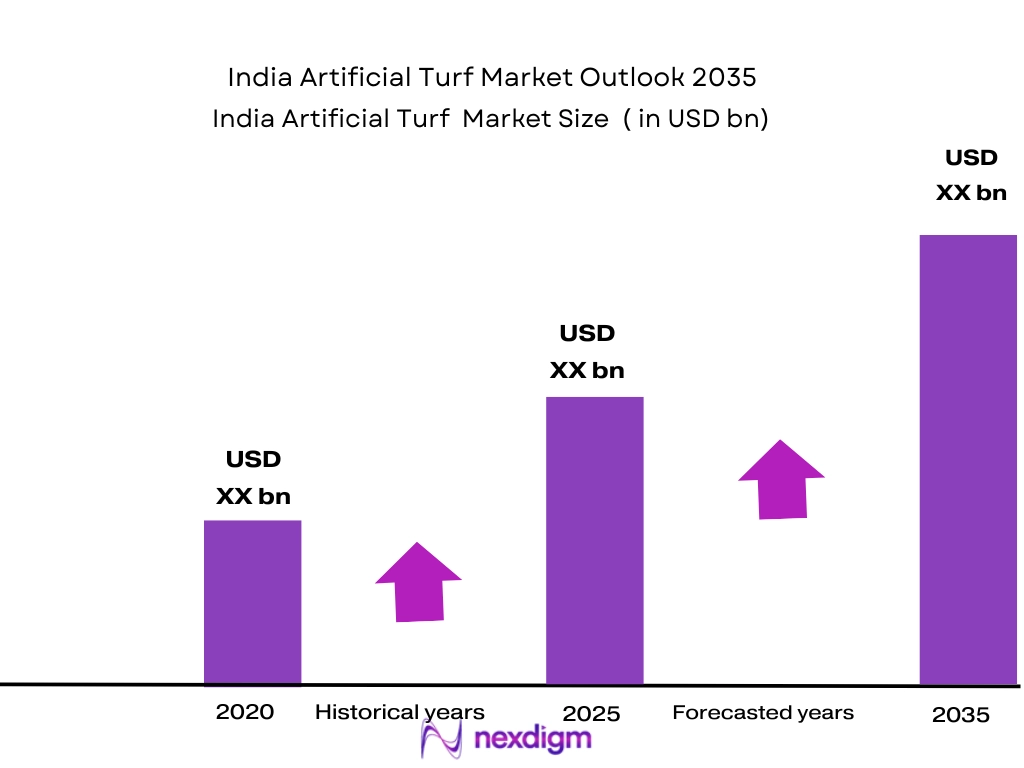
The India artificial turf market is valued at approximately USD ~ billion, driven by the increasing adoption of artificial turf for sports fields, recreational areas, and landscaping applications. Key drivers include the country’s expanding sports infrastructure, especially for football, hockey, and multi-sport facilities, along with rising urbanization. The demand for low-maintenance, eco-friendly, and water-saving products is also fueling growth, as artificial turf offers an efficient solution for areas facing water scarcity and high maintenance costs. Government support for infrastructure development and sustainability further propels the market.
Cities like Delhi, Mumbai, Bengaluru, and Pune dominate the Indian artificial turf market due to their rapidly growing urban infrastructure and sports facilities. These metropolitan areas are increasingly incorporating artificial turf in sports complexes, public parks, and residential developments. The demand is especially high in cities with a strong sporting culture, such as Bengaluru and Delhi, where football and other sports drive the need for high-quality, durable playing surfaces. Additionally, the growing number of commercial and residential landscaping projects in these cities contributes to the widespread use of artificial turf.
Market Segmentation
By Product Type
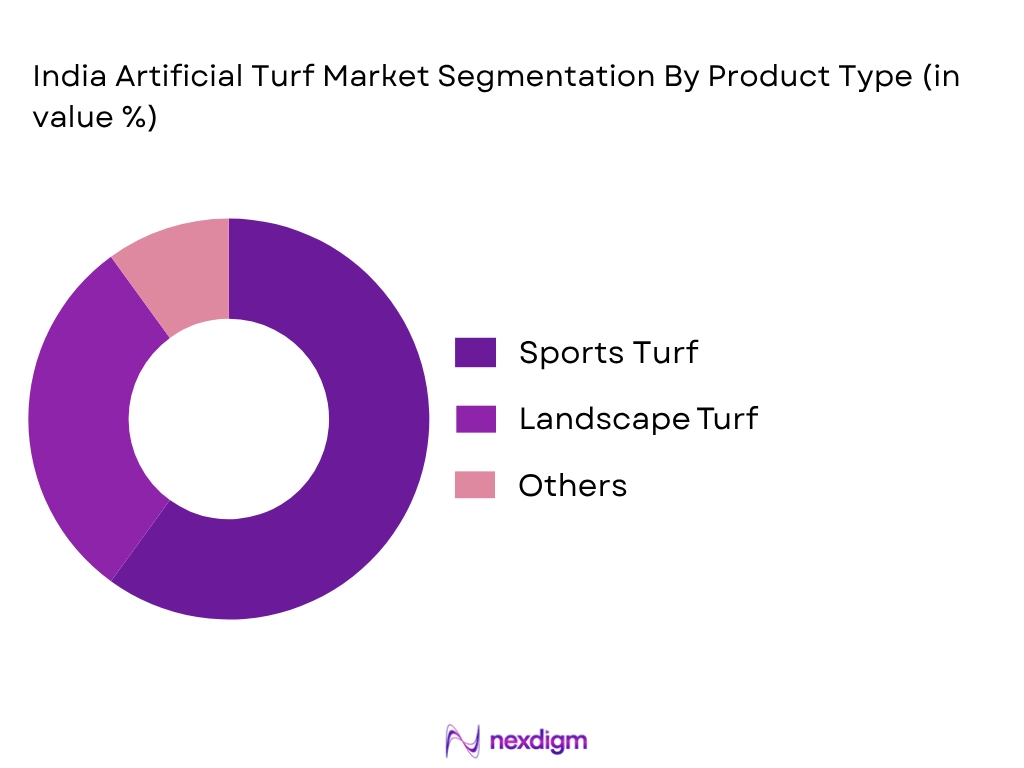
The market is segmented by product type into sports turf, landscape turf, and others. Sports turf is the dominant segment, primarily due to the growing need for artificial turf in sports fields, including football, hockey, and cricket grounds. The increasing popularity of football and the establishment of new sports facilities across India contribute significantly to the demand for sports turf. As these sports continue to grow in popularity, the demand for high-performance artificial turf that can withstand heavy use is expected to rise, further cementing the dominance of this segment in the market.
By Material Type
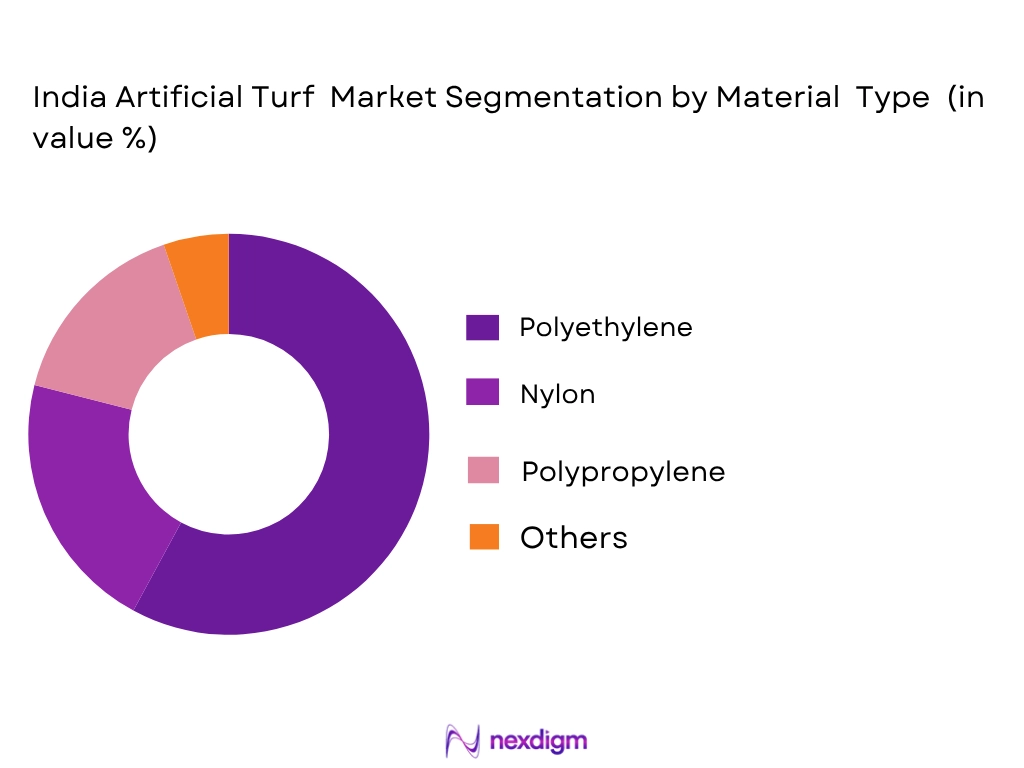
The market is segmented by material type into nylon, polyethylene, polypropylene, and others. Polyethylene-based artificial turf is the dominant material in India, owing to its durability, realistic look, and suitability for both sports and landscaping applications. Polyethylene turf offers a soft and comfortable feel, making it ideal for sports fields that experience high traffic. Additionally, its ability to withstand the Indian climate, which can range from hot and dry to wet, contributes to its popularity. As environmental concerns rise, the use of sustainable and recyclable polyethylene is likely to grow, further driving its dominance.
Competitive Landscape
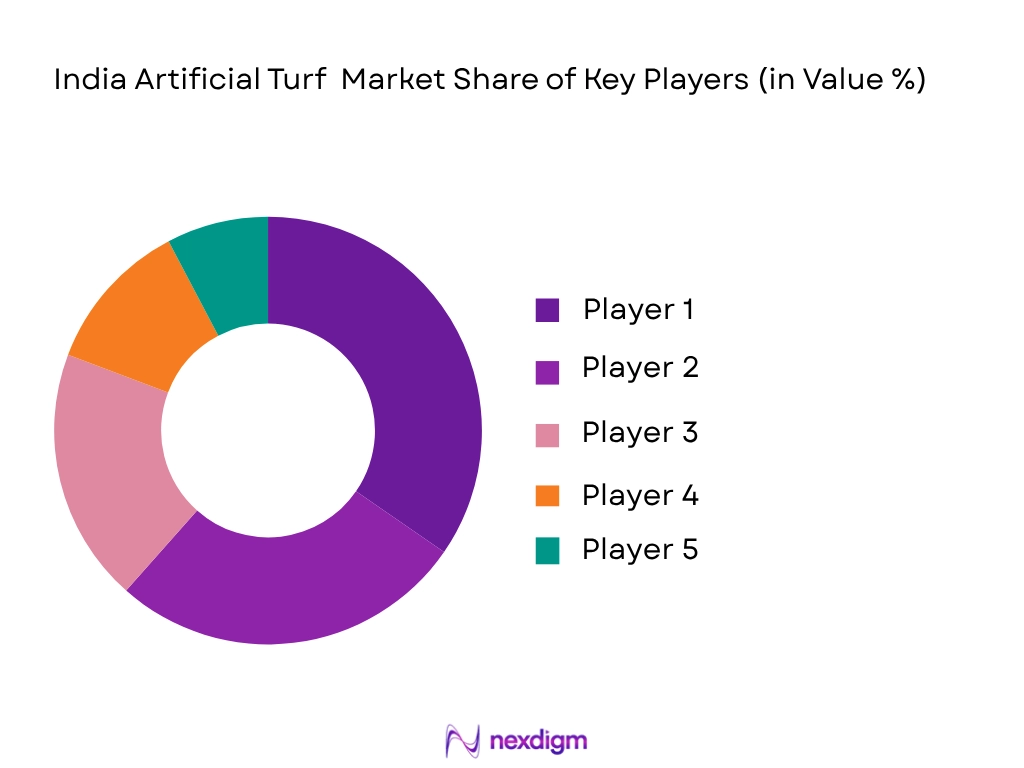
The Indian artificial turf market is characterized by a mix of global and local players. Key international brands like Tarkett and FieldTurf dominate, but local players such as SIS Pitches and Greenfields India are also gaining market share by offering competitive pricing and customized solutions tailored to the Indian market. These companies leverage advancements in manufacturing and distribution networks to cater to the growing demand from both sports and landscaping sectors.The market remains competitive due to continuous product innovations, such as the development of turf that is more eco-friendly, durable, and resistant to extreme weather conditions. Strategic partnerships with government bodies and sports organizations have also helped major players maintain a stronghold in the market.
| Company Name | Establishment Year | Headquarters | Market Focus | Key Products | Revenue | Distribution Channels |
| Tarkett | 1886 | France | ~ | ~ | ~ | ~ |
| FieldTurf (Tarkett) | 1988 | Canada | ~ | ~ | ~ | ~ |
| SIS Pitches | 1989 | UK | ~ | ~ | ~ | ~ |
| Greenfields India | 2000 | India | ~ | ~ | ~ | ~ |
| Edel Grass | 1980 | Netherlands | ~ | ~ | ~ | ~ |
India Artificial Turf Market Analysis
Growth Drivers
Increasing Investment in Sports Infrastructure
India is experiencing rapid growth in sports infrastructure, especially with a focus on football, cricket, and multi-sport facilities. As the country’s sporting culture strengthens and international tournaments increase, demand for artificial turf in stadiums and training fields rises. Government initiatives like the Khelo India program and investments in grassroots sports infrastructure drive the need for durable, low-maintenance, and weather-resistant surfaces. Artificial turf provides a consistent playing surface for year-round use, ensuring minimal downtime for sports facilities, further enhancing its appeal in the growing sports sector.
Rising Demand for Low Maintenance Landscaping Solutions
Urbanization in India has led to the growing popularity of artificial turf in landscaping projects. With limited natural grass spaces and increasing water scarcity, artificial turf is viewed as a practical, low-maintenance, and water-efficient solution for residential, commercial, and public spaces. In urban areas, where upkeep costs of natural grass are high, artificial turf offers a viable alternative. Its resilience to climate extremes, easy installation, and longevity make it a favored choice for landscaping in cities such as Delhi, Mumbai, and Bengaluru.
Market Challenges
High Initial Investment and Installation Costs
While artificial turf offers long-term savings in maintenance and water costs, the high upfront cost remains a significant barrier for many buyers in India. Installation requires specialized labor and equipment, adding to the overall expense. For government bodies, schools, and smaller commercial projects, these initial costs can be prohibitive, delaying or limiting the adoption of artificial turf. The high capital expenditure is particularly challenging in smaller cities or rural areas, where budgets are constrained.
Environmental Impact Concerns and Recycling Challenges
Artificial turf faces criticism for its environmental impact, particularly in terms of disposal and recycling. Most artificial turf products are made from synthetic materials like polyethylene and nylon, which are non-biodegradable. With growing concerns about sustainability, the lack of effective recycling solutions presents a challenge to the market. While there is a shift towards using eco-friendly materials, the overall recycling infrastructure for artificial turf remains underdeveloped in India, complicating efforts to make the product truly sustainable in the long term.
Opportunities
Growing Demand for Artificial Turf in Non-Sports Applications
While sports turf is a dominant application, the demand for artificial turf in non-sporting areas, such as residential lawns, commercial landscaping, and public parks, is rapidly growing. As urban spaces expand, natural grass becomes increasingly impractical due to water scarcity and maintenance costs. Artificial turf provides an aesthetically pleasing, low-maintenance alternative. With rising environmental awareness and a growing focus on sustainable development, artificial turf is gaining popularity in these non-sporting applications, offering a promising opportunity for the market to diversify.
Adoption of Eco-Friendly and Sustainable Turf Materials
The growing trend towards sustainability is pushing the artificial turf industry to develop eco-friendly materials. Manufacturers are increasingly focusing on producing artificial turf from recyclable materials and non-toxic chemicals. The adoption of these sustainable materials addresses growing environmental concerns and opens up new markets for eco-conscious consumers. In India, where water conservation and environmental awareness are becoming central to urban planning, eco-friendly turf is gaining traction as both a functional and responsible choice for sports and landscaping purposes.
Future Outlook
The India artificial turf market is expected to witness substantial growth in the coming years, driven by increasing urbanization, rising investments in sports infrastructure, and government initiatives promoting sustainable products. The expanding sports culture, especially in football, is expected to further boost demand for high-quality turf. Additionally, growing awareness about water conservation and the environmental benefits of artificial turf will continue to push adoption, particularly in residential and commercial landscaping. Technological advancements in turf manufacturing will also contribute to the market’s growth, offering products that are more durable, eco-friendly, and suitable for a variety of applications.
Major Players
- Tarkett
- FieldTurf (Tarkett company)
- SIS Pitches
- Greenfields India
- Edel Grass
- Sporturf
- Polytan
- Everlast Turf
- Synlawn
- GrassMaster
- Global Syn-Turf
- TenCate Grass
- GTR Turf
- Synthetic Turf International
- Act Global
Key Target Audience
- Investments and Venture Capitalist Firms
- Government and Regulatory Bodies
- Sports Facility Managers
- Landscaping Companies
- Real Estate Developers
- Commercial Developers
- Environmental Consultants
- Municipal Authorities
Research Methodology
Step 1: Identification of Key Variables
The first phase involves identifying and mapping the key stakeholders within the India artificial turf market. This includes manufacturers, distributors, and end-users, using a combination of secondary research from industry reports and proprietary data to ensure a comprehensive understanding of the market dynamics.
Step 2: Market Analysis and Construction
In this phase, we analyze historical data, assess market penetration, and evaluate the revenue generation potential of each market segment. Data is gathered from secondary research, sales figures, and consumer trends, allowing us to construct detailed market estimates.
Step 3: Hypothesis Validation and Expert Consultation
Market hypotheses regarding growth drivers, challenges, and trends are validated through interviews with industry experts. These consultations help refine assumptions and ensure the accuracy of the market analysis.
Step 4: Research Synthesis and Final Output
The final stage synthesizes all gathered data, including expert insights, sales trends, and market forecasts, to generate a comprehensive and actionable market report. This output serves as the basis for strategic recommendations and growth projections.

- Executive Summary
- Research Methodology (Market Definitions and Assumptions, Abbreviations, Market Sizing Approach, Consolidated Research Approach, Understanding Market Potential Through In-Depth Industry Interviews, Primary Research Approach, Limitations and Future Conclusions)

- Definition and Scope
- Market Dynamics Overview
- Market Genesis
- Major Players and Market Timeline
- Business Cycle and Trends
- Supply Chain and Value Chain Analysis

- Growth Drivers
Increasing Investment in Sports Infrastructure
Rising Demand for Low Maintenance Landscaping Solutions
Government Initiatives and Policies Promoting Sustainable Products
Technological Advancements in Artificial Turf Manufacturing
Urbanization and Expansion of Sports Facilities - Market Challenges
High Initial Investment and Installation Costs
Environmental Impact Concerns and Recycling Challenges
Competition from Natural Grass Alternatives
Lack of Standardization in Turf Products
Durability and Maintenance of Artificial Turf - Opportunities
Growing Demand for Artificial Turf in Non-Sports Applications
Adoption of Eco-Friendly and Sustainable Turf Materials
Expansion of Artificial Turf in Residential Landscaping
Increased Use of Artificial Turf for Public Parks and Recreational Areas
Technological Innovations to Enhance Turf Performance - Key Trends
Shift Towards More Realistic Turf Appearance and Performance
Increase in Customization Options for Turf Solutions
Growing Focus on Sustainability and Eco-Friendly Materials
Rising Popularity of Artificial Turf in School and Community Sports Facilities
Integration of Smart Technologies in Turf Systems - Government Regulations
- SWOT Analysis
- Porter’s Five Forces

- By Value, 2020–2025
- By Volume, 2020–2025
- By Average Price, 2020–2025

- By Product Type (In Value %)
Sports Turf
Landscape Turf
Others - By Material Type (In Value %)
Nylon
Polyethylene
Polypropylene
Others - By Application (In Value %)
Sports and Recreation
Landscaping
Commercial and Industrial
Others - By Distribution Channel (In Value %)
Direct Sales
Retail and Wholesale Distribution
Online Channels
Supermarkets and Hypermarkets
Specialty Stores - By Region (In Value %)
North India
South India
West India
East India
Rest of India

- Market Share of Major Players by Value/Volume
- Market Share of Major Players by Product Type
- Cross Comparison Parameters (Company Overview, Business Strategies, Recent Developments, Strength, Weakness, Organizational Structure, Revenues, Revenues by Product Type, Number of Touchpoints, Distribution Channels, Number of Dealers and Distributors, Margins, Production Plant, Capacity, Unique Value Offering and Others)
- SWOT Analysis of Major Players
- Pricing Analysis Based on Product Categories for Major Players
- Detailed Profiles of Major Companies
Tarkett
FieldTurf (Tarkett company)
Shaw Sports Turf
SIS Pitches
Edel Grass
Sporturf
GreenFields
Global Syn-Turf
Everlast Turf
Synlawn
GrassMaster
Polytan
GTR Turf
TenCate Grass

- Adoption Drivers and Usage Trends
- Investment Priorities and Financial Planning
- Consumer Preferences and Behavioral Shifts
- Barriers and Concerns in Product Selection
- Factors Impacting Purchasing Decisions

- By Value, 2026–2035
- By Volume, 2026–2035
- By Average Price, 2026–2035


 Request a Sample
 Ask for Customization
 Get a Quote
 Enquire Now