
 Download PDF
Market Overview
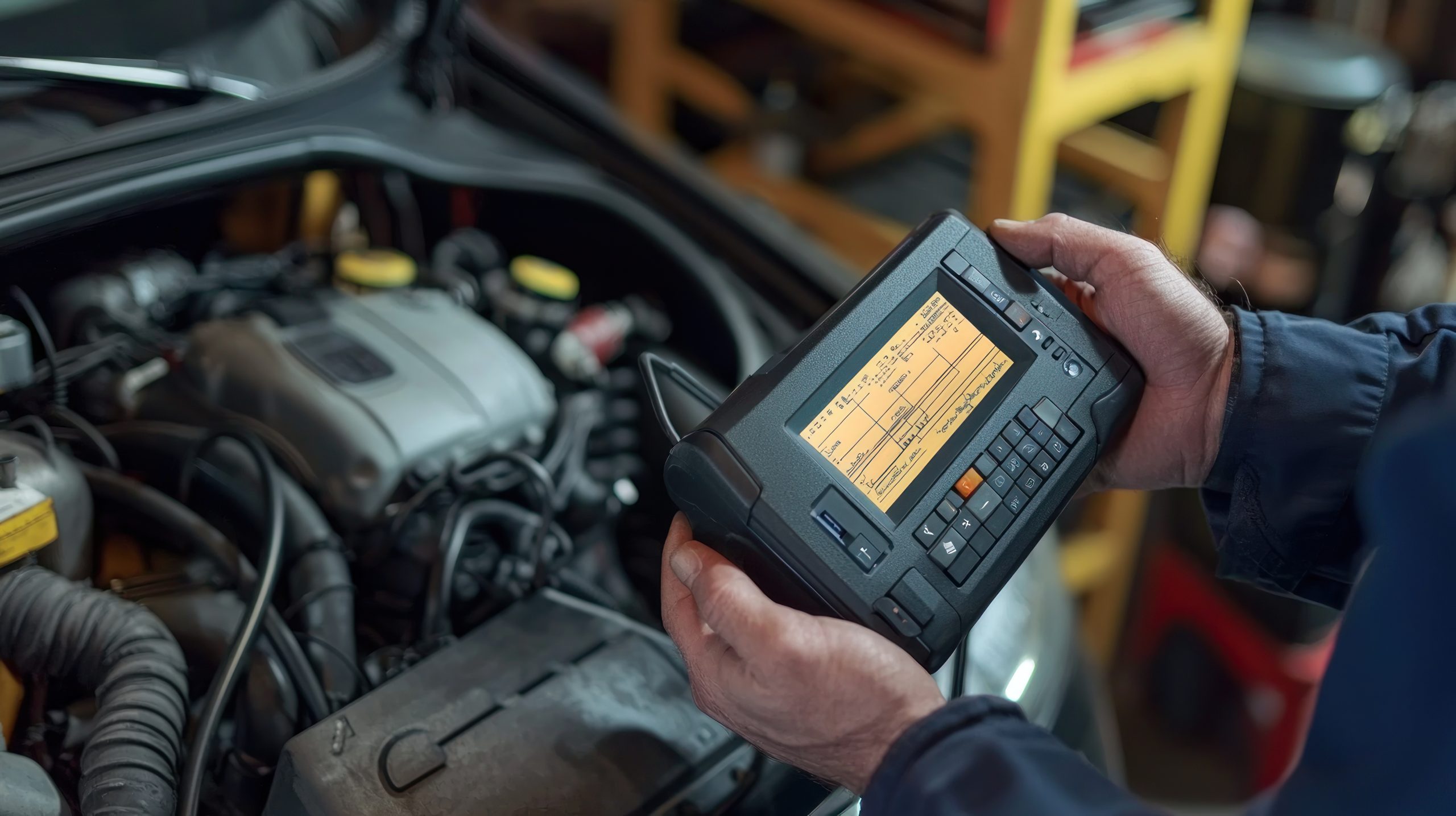
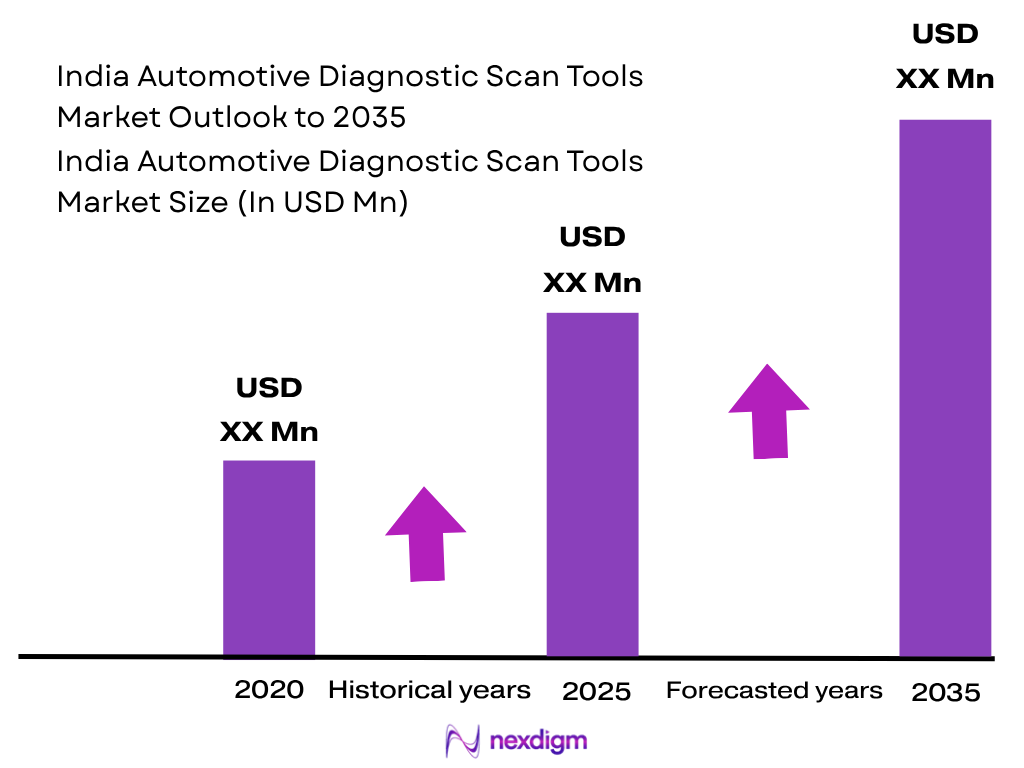
India’s automotive diagnostic scan tools market is supported by the rapid expansion of vehicle electronics, increasingly complex electronic control units, tighter emissions diagnostics, and the growing need for faster fault identification across authorized and independent workshops. The market is also benefiting from the transition from basic OBD code readers toward full-system scanners, bidirectional diagnostic platforms, ECU coding tools, and EV-specific diagnostic equipment. India’s very large installed vehicle base creates recurring demand for diagnostic equipment, software updates, replacement tools, and workshop modernization.
India’s automotive ecosystem provides a broad addressable base for diagnostic equipment because passenger vehicles, commercial vehicles, three-wheelers and two-wheelers collectively generate substantial service and maintenance requirements. SIAM recorded domestic sales of 42,18,746 passenger vehicles, 9,67,878 commercial vehicles, 6,91,749 three-wheelers and 1,79,74,365 two-wheelers during FY 2023-24. The subsequent reporting period recorded 43,01,848 passenger vehicles, 9,58,679 commercial vehicles, 7,41,420 three-wheelers and 1,96,07,332 two-wheelers. This vehicle population supports recurring diagnostics across powertrain, transmission, braking, airbags, body electronics, ADAS and electrical systems.
Market Segmentation
By Tool Type
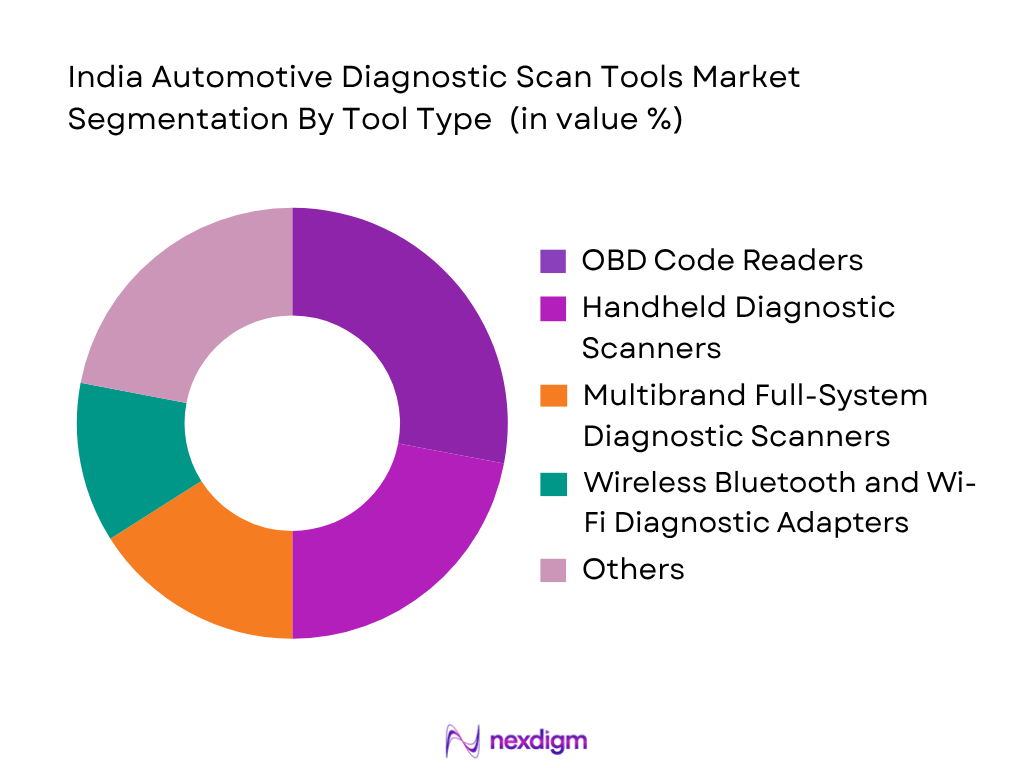
India Automotive Diagnostic Scan Tools Market is segmented by tool type into OBD code readers, handheld diagnostic scanners, multibrand full-system diagnostic scanners, wireless Bluetooth and Wi-Fi diagnostic adapters, ECU coding and programming tools, bidirectional diagnostic scan tools, heavy-duty vehicle diagnostic scanners, EV and battery diagnostic tools, ADAS diagnostic interfaces and oscilloscope-integrated diagnostic systems. Multibrand full-system diagnostic scanners are positioned as the leading segment because they address a substantially wider range of vehicle systems than basic code readers. Their ability to access engine, transmission, ABS, SRS, body-control and other ECUs makes them particularly relevant to independent workshops handling vehicles from several manufacturers. Bidirectional functionality and live-data analysis further increase their usefulness for troubleshooting intermittent faults and validating component operation. The increasing electronic complexity of modern vehicles is also shifting workshops toward equipment capable of deeper system-level diagnosis. India’s large passenger-vehicle and commercial-vehicle base creates a broad installed population requiring multi-system diagnostics, while expanding EV adoption is encouraging vendors to add battery and high-voltage diagnostic capabilities to professional platforms. SIAM’s latest industry data shows passenger-vehicle production reaching 5,539,115 units and two-wheeler production reaching 26,691,916 units in FY 2025-26, reinforcing the breadth of the vehicle ecosystem that professional diagnostic platforms can serve.
By End User
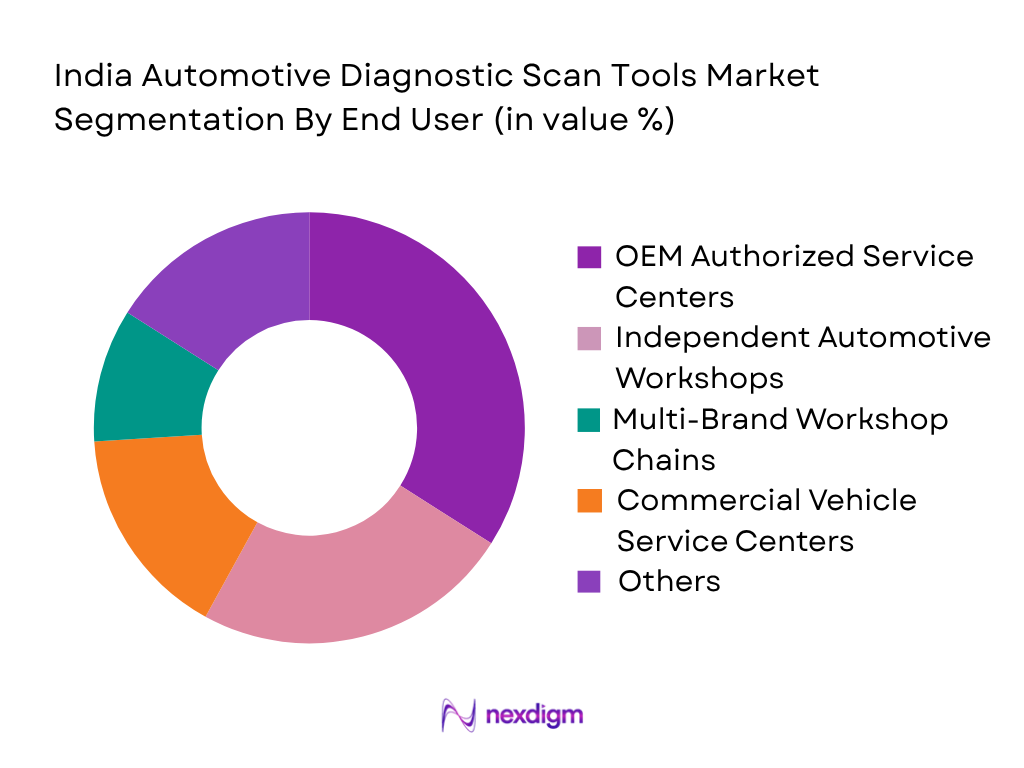
India Automotive Diagnostic Scan Tools Market is segmented by end user into OEM authorized service centers, independent automotive workshops, multi-brand workshop chains, commercial vehicle service centers, fleet maintenance centers, automotive dealership workshops, EV service centers, two-wheeler service workshops, automotive diagnostic specialists and mobile vehicle repair services. Independent automotive workshops represent a leading demand segment because India has a highly fragmented vehicle-service ecosystem extending beyond OEM dealerships. Independent workshops require multibrand tools capable of diagnosing different vehicle architectures without depending exclusively on manufacturer-specific equipment. Their requirements increasingly extend from basic fault-code reading to live-data monitoring, actuator testing, service resets, ECU coding and programming. The expansion of organized multibrand service networks is also encouraging greater adoption of professional-grade diagnostic equipment. Commercial vehicles create another important application because downtime directly affects fleet utilization, increasing the value of rapid fault identification. EVs are additionally introducing battery, motor-controller and charging-system diagnostics into the workshop environment. SIAM data indicates that India recorded 9,58,679 commercial-vehicle domestic sales and 1,96,07,332 two-wheeler domestic sales in FY 2024-25, creating extensive requirements for diagnostics across both professional and decentralized service networks.
Competitive Landscape
The India automotive diagnostic scan tools market includes global diagnostic-equipment manufacturers, automotive technology companies and specialist aftermarket tool providers. Competition is increasingly shifting from hardware specifications toward vehicle coverage, diagnostic software depth, ECU access, coding and programming, bidirectional capabilities, cloud connectivity, ADAS calibration and EV diagnostics. Companies with broad vehicle databases and strong workshop distribution have an advantage because diagnostic tools require continuous software updates as new vehicle models and electronic architectures enter the market.
| Company | Establishment Year | Headquarters | Diagnostic Portfolio | ECU Coding | EV Diagnostics | ADAS Capability | Connectivity | India Market Presence |
| Bosch | 1886 | Gerlingen, Germany | ~ | ~ | ~ | ~ | ~ | ~ |
| Autel | 2004 | Shenzhen, China | ~ | ~ | ~ | ~ | ~ | ~ |
| LAUNCH | 1992 | Shenzhen, China | ~ | ~ | ~ | ~ | ~ | ~ |
| TOPDON | 2017 | Shenzhen, China | ~ | ~ | ~ | ~ | ~ | ~ |
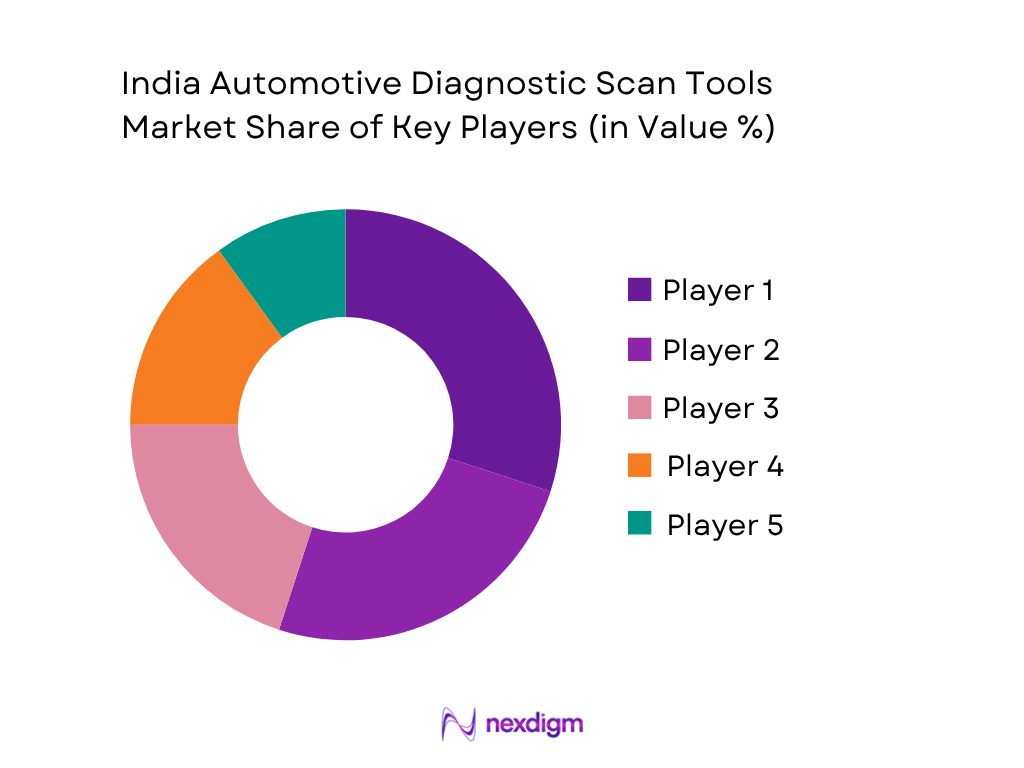
India Automotive Diagnostic Scan Tools Market Analysis
Growth Drivers
Expansion of Automotive Manufacturing and Vehicle Servicing Ecosystem
India’s expanding automotive manufacturing base and large vehicle-service ecosystem are supporting demand for electronic diagnostic equipment across dealerships, independent workshops, fleet maintenance centers and specialized repair facilities. The World Bank reported India’s GDP at USD 3,909.9 billion, while industrial activity accounted for 24.6% of GDP, indicating a substantial productive base supporting automotive manufacturing and component-related activities. The broader vehicle ecosystem requires increasingly sophisticated diagnostics because modern vehicles integrate multiple electronic control units, CAN networks, sensors, actuators and software-controlled functions. The scale of India’s economy also supports continued investment in organized automotive service infrastructure, including diagnostic scanners, ECU testing equipment and manufacturer-specific software. The World Bank recorded India’s GDP at USD 3,956.1 billion in the latest available annual data, while the country’s population exceeded 1.4 billion, creating a large potential base for vehicle ownership and maintenance services. The combination of manufacturing activity, vehicle utilization and workshop expansion strengthens demand for diagnostic scan tools capable of identifying electronic, mechanical and network-related faults. This structural development is particularly relevant as workshops increasingly transition from conventional mechanical troubleshooting toward computerized diagnosis, ECU communication, live-data analysis, actuator testing and system-specific fault identification across passenger vehicles, commercial vehicles and increasingly electrified vehicle platforms.
Rapid Digitalization Supporting Advanced Vehicle Diagnostics
India’s rapidly expanding digital infrastructure is creating favorable conditions for connected automotive diagnostic scan tools, cloud-based repair databases and software-enabled diagnostic platforms. World Bank data records more than 950 million internet users in India in the latest available digital-economy assessment, while mobile connectivity has reached a scale capable of supporting widespread wireless automotive applications. Fixed broadband subscriptions exceeded 45 million, providing additional infrastructure for workshops adopting cloud-connected diagnostic platforms and online technical databases. This digital foundation is relevant to scan tools because modern diagnostic equipment increasingly requires software updates, vehicle-coverage updates, cloud-based fault-code libraries, remote technical assistance and wireless communication with vehicle interfaces. India’s GDP also reached approximately USD 3,956.1 billion in the latest World Bank data, demonstrating substantial economic capacity for continued technology investment. Diagnostic equipment providers can therefore move beyond conventional code readers toward platforms incorporating Bluetooth and Wi-Fi connectivity, automated diagnostic reports, guided troubleshooting, ECU coding and remote support. Digitalization also facilitates centralized workshop management and technician access to continuously updated vehicle information. As vehicle architectures become increasingly software-intensive, connectivity becomes a practical requirement rather than merely an optional feature, strengthening the role of advanced diagnostic scan tools throughout India’s increasingly technology-oriented automotive aftermarket.
Market Challenges
High Technology and Skills Requirements for Advanced Diagnostic Systems
Increasing electronic complexity in Indian vehicles creates a significant challenge because sophisticated diagnostic scan tools require technicians capable of interpreting ECU communication, live parameters, actuator responses, network faults and software-related errors. India’s population exceeded 1.4 billion, creating a very large potential automotive-service workforce, but the workshop ecosystem remains diverse in technological capability and operating scale. The World Bank reports GDP of approximately USD 3,956.1 billion in the latest available annual data, reflecting considerable economic scale alongside substantial differences in purchasing capacity across businesses and regions. Advanced scan tools increasingly extend beyond basic OBD fault-code reading into ECU coding, programming, ADAS calibration, battery-management-system diagnostics and vehicle-network analysis. Consequently, equipment providers must address both hardware capability and technician usability. Training, technical documentation, guided diagnostic procedures and remote assistance become important components of successful deployment. The World Bank’s digital-economy assessment also records more than 950 million internet users, creating strong connectivity for digital training and cloud-based support, but connectivity alone does not ensure technical proficiency. Smaller independent workshops may therefore continue using lower-functionality equipment when advanced systems require greater investment in technician capabilities. This creates a market challenge for suppliers seeking widespread adoption of sophisticated diagnostic platforms across India’s fragmented automotive repair ecosystem.
Exposure to International Electronic Component and Technology Supply Chains
The India Automotive Diagnostic Scan Tools Market faces supply-chain exposure because advanced equipment incorporates processors, displays, communication interfaces, electronic components, vehicle communication modules, software databases and specialized hardware sourced through globally connected technology networks. World Bank trade indicators show India’s exports and imports of goods and services together represent a substantial portion of economic activity, demonstrating the country’s deep integration with international supply chains. The World Bank’s WITS database also records merchandise and services trade at hundreds of billions of dollars, highlighting the scale of cross-border technology and component flows. For diagnostic equipment manufacturers, disruptions in semiconductor availability, electronic-component logistics, software licensing or international freight can affect production schedules and product availability. India’s automotive industry is simultaneously moving toward increasingly sophisticated electronic architectures, increasing the importance of reliable access to communication chips and specialized diagnostic hardware. Equipment providers must therefore manage supplier diversification, inventory planning and technology localization while maintaining compatibility with rapidly changing vehicle communication protocols. The challenge is particularly relevant for professional equipment supporting ECU programming, ADAS calibration, EV battery diagnostics and advanced CAN-based troubleshooting, where specialized components and software are required. Strong domestic demand provides an important market base, but international technology dependencies remain a factor influencing product development, supply continuity and deployment across the Indian automotive aftermarket.
Market Opportunities
Expansion of Connected and Software-Enabled Diagnostic Platforms
India’s expanding digital ecosystem creates an opportunity for diagnostic-tool manufacturers to develop connected platforms combining scan hardware, cloud databases, remote technical support, software updates and automated diagnostic workflows. The World Bank’s digital-economy assessment reports more than 950 million internet users in India, while fixed broadband subscriptions exceed 45 million, establishing a substantial connectivity foundation for cloud-enabled workshop technologies. Mobile connectivity also operates at national scale, allowing wireless diagnostic interfaces to become increasingly practical for independent workshops and organized service networks. India’s GDP of approximately USD 3,956.1 billion in the latest World Bank annual data further demonstrates the scale of economic activity supporting investment in automotive service technology. Connected scan tools can provide technicians with continuously updated vehicle coverage, fault-code interpretations, wiring information, guided diagnostic procedures and software-supported troubleshooting. They can also generate digital vehicle-health reports that can be shared with customers or fleet operators. For equipment suppliers, this creates an opportunity to establish recurring software and database relationships around traditionally hardware-led products. Integration with workshop-management platforms can further expand functionality by linking vehicle diagnostics with repair orders, technician workflows and maintenance histories. As automotive electronics become more software dependent, connected diagnostic systems can provide greater value than standalone readers by combining vehicle communication, technical information and digital service infrastructure in a single platform.
Expansion of EV and Electrified-Vehicle Diagnostic Capabilities
Vehicle electrification is creating a new opportunity for diagnostic equipment providers because electric and hybrid vehicles require specialized diagnostic functions covering battery systems, power electronics, electric motors and high-voltage components. India’s electricity-access rate reached approximately 99.9% in the latest World Bank data, providing an important infrastructure foundation for electrified mobility and associated service operations. The country’s industrial sector accounted for 24.6% of GDP, demonstrating the scale of industrial and technical activity supporting the broader automotive ecosystem. EV-oriented scan tools can incorporate battery-management-system diagnostics, state-of-health evaluation, cell-voltage monitoring, inverter diagnostics, motor-controller analysis, charging-system fault detection and high-voltage system checks. India’s digital infrastructure also supports cloud-connected EV diagnostic platforms, with more than 950 million internet users reported in the World Bank’s latest digital-economy assessment. This enables suppliers to deliver continuously updated EV databases, guided repair procedures and remote technical assistance through connected equipment. The opportunity extends beyond dedicated EV workshops because conventional automotive service centers will increasingly require equipment capable of handling both internal-combustion and electrified vehicle architectures. Diagnostic suppliers that integrate conventional OBD functions with battery, power-electronics and high-voltage diagnostics can therefore address a broader vehicle population while helping workshops transition toward increasingly electronic and software-defined automotive service requirements.
Future Outlook
The India automotive diagnostic scan tools market is expected to move toward increasingly software-defined and connected diagnostic platforms as vehicle electronic architectures become more complex. Demand is likely to shift from simple OBD readers toward full-system scanners capable of ECU communication, active testing, coding and programming. EV adoption will create additional requirements for battery, inverter, charging and high-voltage system diagnostics, while ADAS adoption will increase demand for calibration-related equipment. Independent workshops, fleet operators and organized service chains should remain important purchasers as diagnostic capability becomes increasingly central to efficient vehicle repair.
The market’s future development will also depend on access to OEM diagnostic information, cybersecurity requirements, software update models and technician capability. Diagnostic providers that combine hardware with cloud-based databases, remote technical assistance, automated fault interpretation and regular vehicle-coverage updates are positioned to strengthen their relevance. Increasing deployment of CAN-FD, DoIP and other newer communication architectures will further require workshops to upgrade legacy diagnostic equipment.
Major Players
- Bosch Mobility Solutions
- Autel Intelligent Technology
- LAUNCH Tech
- TOPDON Technology
- Snap-on Incorporated
- TEXA
- AVL List
- ACTIA Group
- Continental
- DENSO Corporation
- ZF Friedrichshafen
- MAHLE Aftermarket
- Minda Corporation
- Lucas Indian Services
- Tata Technologies
Key Target Audience
- Automotive OEMs and authorized service-network operators
- Independent automotive workshop chains and garage networks
- Commercial vehicle fleet operators and fleet-maintenance companies
- Automotive aftermarket equipment distributors and importers
- Automotive diagnostic equipment manufacturers and technology providers
- Electric vehicle service networks and battery diagnostics providers
- Investments and venture capitalist firms (automotive technology, EV infrastructure and aftermarket mobility investments)
- Government and regulatory bodies (Ministry of Road Transport and Highways, Automotive Research Association of India, Bureau of Indian Standards)
Research Methodology
Step 1: Identification of Key Variables
The initial phase involves constructing a market ecosystem covering diagnostic equipment manufacturers, automotive OEMs, Tier-1 suppliers, workshops, dealerships, fleet operators, aftermarket distributors and diagnostic technicians. Key variables include tool deployment, vehicle coverage, diagnostic functions, ECU accessibility, connectivity protocols, software updates, workshop adoption and vehicle-electrification requirements.
Step 2: Market Analysis and Construction
Historical market information is compiled through automotive production and sales statistics, vehicle-service ecosystem assessment, company disclosures, product portfolios and diagnostic-equipment deployment analysis. The bottom-up assessment evaluates equipment categories, end-user adoption, replacement requirements and professional workshop utilization to establish the market framework.
Step 3: Hypothesis Validation and Expert Consultation
Market hypotheses are validated through discussions with automotive service professionals, diagnostic-equipment distributors, workshop operators, vehicle electronics specialists and industry participants. These consultations are used to assess tool adoption patterns, purchasing criteria, diagnostic software requirements, vehicle coverage and emerging demand for EV and ADAS diagnostic technologies.
Step 4: Research Synthesis and Final Output
The final stage integrates supply-side and demand-side findings into a structured market model. Company-level information, vehicle-sector indicators and workshop requirements are cross-checked to validate segmentation, competitive positioning and future market dynamics. The resulting analysis distinguishes conventional diagnostics from advanced ECU, EV, ADAS and connected diagnostic applications.

- Executive Summary
- Research Methodology (Market Definition and Scope, India Automotive Diagnostic Scan Tools Classification, OBD and OBD-II Architecture Assessment, Diagnostic Communication Protocol Mapping, ECU Diagnostic Function Assessment, Vehicle Electronics and Network Architecture Evaluation, Diagnostic Software and Database Classification, Bidirectional Diagnostic Capability Assessment, ECU Coding and Programming Evaluation)

- Definition and Scope
- India Automotive Diagnostic Scan Tools Industry Evolution and Development of Vehicle Electronics and Workshop Diagnostics Ecosystem
- Automotive Diagnostic Scan Tool Architecture, Hardware Configuration, Software Integration and Vehicle Communication Structure
- India Automotive Diagnostic Scan Tools Value Chain Analysis
- India Automotive Diagnostic Scan Tools Supply Chain Analysis
- OBD Code Reader, Full-System Scanner, Multibrand Diagnostic Platform, ECU Programming Tool, Battery Diagnostic Tool and ADAS Diagnostic Interface Ecosystem Analysis
- CAN, CAN-FD, DoIP, J1939 and OEM-Specific Communication Protocol Assessment
- Diagnostic Workflow Integration Across Passenger Vehicles, Commercial Vehicles, Electric Vehicles, Hybrid Vehicles and Two-Wheelers

- Growth Drivers (Expansion of Vehicle Parc, Increasing Electronic Content in Vehicles, BS-VI OBD Compliance Requirements, Rising Demand for Multibrand Diagnostics, Growth of Organized Automotive Aftermarket, Increasing EV Penetration, Growing ADAS Adoption, Expansion of Commercial Vehicle Diagnostics)
- Market Challenges (Fragmented Independent Workshop Ecosystem, Shortage of Advanced Diagnostic Technicians, High Dependence on Imported Diagnostic Hardware, Rapid Vehicle Software Architecture Changes, OEM Diagnostic Data Access Restrictions, Counterfeit Diagnostic Equipment, High Cost of Advanced Diagnostic Platforms, Frequent Software and Vehicle-Coverage Updates)
- Market Opportunities (EV Battery Diagnostics, ADAS Calibration Diagnostics, ECU Coding and Programming, Cloud-Based Remote Diagnostics, Connected Workshop Platforms, Heavy-Duty Vehicle Diagnostics, Two-Wheeler Electronic Diagnostics, Subscription-Based Diagnostic Software, Mobile Diagnostic Services, Advanced Vehicle Network Testing)
- Market Trends (Shift from Code Readers to Full-System Scanners, Growth of Bidirectional Diagnostics, Increasing Wireless Diagnostic Connectivity, Expansion of Cloud-Connected Platforms, Growth of ECU Programming Functions, Increasing EV-Specific Diagnostics, Integration of ADAS Calibration, Adoption of CAN-FD and DoIP Diagnostics, AI-Assisted Fault Detection, Software-Based Diagnostic Platforms)
- Government Regulations and Standards (Bharat Stage VI Emission Regulations, BS-VI OBD Stage II Requirements, Central Motor Vehicles Rules, AIS-137 Diagnostic Requirements, Automotive Industry Standards for OBD, Vehicle Fitness and Emission Testing Requirements, EV Safety and High-Voltage Service Requirements, Vehicle Type Approval Framework, Automotive Cybersecurity and Software Update Requirements)
- SWOT Analysis
- Porter’s Five Forces Analysis
- PESTLE Analysis
- Stakeholder Ecosystem
- Competition Ecosystem

- By Market Value (2020-2025)
- By Diagnostic Scan Tool Unit Sales Volume (2020-2025)
- By Professional Workshop Diagnostic Tool Deployment Volume (2020-2025)
- By Passenger Vehicle Diagnostic Tool Deployment Volume (2020-2025)
- By Commercial Vehicle Diagnostic Tool Deployment Volume (2020-2025)
- By Electric Vehicle Diagnostic Tool Deployment Volume (2020-2025)
- By Two-Wheeler Diagnostic Tool Deployment Volume (2020-2025)
- By Aftermarket Diagnostic Tool Replacement and Upgrade Volume (2020-2025)
- By Diagnostic Software Subscription and Update Deployment Volume (2020-2025)

- By Tool Type (In Value %)
OBD Code Readers
Handheld Diagnostic Scanners
Multibrand Full-System Diagnostic Scanners
Wireless Bluetooth and Wi-Fi Diagnostic Adapters
ECU Coding and Programming Tools
Bidirectional Diagnostic Scan Tools
Heavy-Duty Vehicle Diagnostic Scanners
EV and Battery Diagnostic Tools
ADAS Diagnostic and Calibration Interfaces
Oscilloscope-Integrated Diagnostic Systems - By Vehicle Type (In Value %)
Passenger Cars
Light Commercial Vehicles
Heavy Commercial Vehicles
Buses and Coaches
Electric Passenger Vehicles
Electric Commercial Vehicles
Electric Three-Wheelers
Two-Wheelers
Off-Highway and Specialty Vehicles - By Diagnostic Function (In Value %)
Engine and Powertrain Diagnostics
Transmission Diagnostics
ABS and Brake System Diagnostics
Airbag and SRS Diagnostics
Body Control Module Diagnostics
Battery and Charging System Diagnostics
ADAS and Safety System Diagnostics
ECU Coding and Programming
Emission and OBD Diagnostics
Live Data and Actuation Testing - By Connectivity Technology (In Value %)
Wired USB Diagnostic Systems
Bluetooth Diagnostic Systems
Wi-Fi Diagnostic Systems
Cloud-Connected Diagnostic Platforms
CAN-Based Diagnostic Systems
CAN-FD Diagnostic Systems
DoIP Diagnostic Systems
J1939 Heavy-Duty Diagnostic Systems - By End User (In Value %)
OEM Authorized Service Centers
Independent Automotive Workshops
Multi-Brand Workshop Chains
Commercial Vehicle Service Centers
Fleet Maintenance Centers
Automotive Dealership Workshops
EV Service Centers
Two-Wheeler Service Workshops
Automotive Diagnostic Specialists
Mobile Vehicle Repair Services - By Region (In Value %)
North India
Delhi NCR Automotive Service Cluster
West India
Mumbai-Pune Automotive Cluster
Gujarat Automotive Manufacturing Cluster
South India
Chennai Automotive Cluster
Bengaluru Automotive Technology Cluster
Hyderabad Automotive Service Cluster
East India
Kolkata Automotive Service Cluster

- Market Share of Major Players (By Revenue, Tool Type, Vehicle Type, Diagnostic Function, Connectivity Technology, End User, OEM Coverage, Aftermarket Presence)
- Cross Comparison Parameters (Multibrand Vehicle Coverage and Diagnostic Database Breadth, ECU Coding and Programming Capability, Bidirectional Diagnostic Functionality, OBD and Vehicle Network Protocol Coverage, EV and Battery Diagnostic Capability, ADAS Diagnostic and Calibration Capability, Diagnostic Software Update and Cloud Connectivity Capability, OEM and Independent Workshop Distribution Network)
- SWOT Analysis of Major Players
- Competitive Positioning Matrix
- Diagnostic Hardware and Software Portfolio Benchmarking
- Detailed Profiles of Major Companies
Bosch Mobility Solutions – ECU Diagnostic Testers, ESI[tronic] Software and Multibrand Workshop Diagnostics
Autel Intelligent Technology – Professional Diagnostic Scanners, ADAS Calibration and ECU Coding Solutions
LAUNCH Tech Co., Ltd. – X-431 Diagnostic Platforms, ECU Coding and Workshop Diagnostic Systems
TOPDON Technology – Professional Diagnostic Scanners, Battery Testing and ADAS Calibration Equipment
Snap-on Incorporated – Professional Diagnostic Scan Tools, Repair Information and Workshop Equipment
TEXA S.p.A. – Multibrand Diagnostic Systems, Commercial Vehicle Diagnostics and IDC5 Software
AVL List GmbH – Automotive Testing, Diagnostics and Vehicle Electronic Systems
ACTIA Group – Automotive Diagnostic Equipment, Vehicle Electronics and Workshop Solutions
Continental AG – Automotive Diagnostics, Vehicle Electronics and Workshop Diagnostic Systems
DENSO Corporation – Vehicle Diagnostics, Electronic Systems and Automotive Service Technologies
ZF Friedrichshafen AG – Commercial Vehicle Diagnostics, Electronic Systems and Workshop Solutions
MAHLE Aftermarket – Diagnostic Equipment, Workshop Solutions and Vehicle Service Technologies
MINDA Corporation – Automotive Electronics, Diagnostic Equipment and Aftermarket Solutions
Lucas Indian Services – Automotive Electrical Diagnostics, Workshop Equipment and Service Solutions
Tata Technologies – Automotive Engineering, Vehicle Diagnostics and Digital Vehicle Solutions

- End User Segmentation Assessment
- OEM Authorized Workshop Analysis
- Independent Automotive Workshop Analysis
- Multi-Brand Service Chain Analysis
- Commercial Vehicle Workshop Analysis
- Fleet Maintenance Operator Analysis
- Electric Vehicle Service Center Analysis
- Two-Wheeler Service Workshop Analysis
- Automotive Diagnostic Technician Capability Assessment

- By Market Value (2026-2035)
- By Diagnostic Scan Tool Unit Sales Volume (2026-2035)
- By Professional Workshop Diagnostic Tool Deployment Volume (2026-2035)
- By Passenger Vehicle Diagnostic Tool Deployment Volume (2026-2035)
- By Commercial Vehicle Diagnostic Tool Deployment Volume (2026-2035)
- By Electric Vehicle Diagnostic Tool Deployment Volume (2026-2035)
- By Two-Wheeler Diagnostic Tool Deployment Volume (2026-2035)
- By ADAS Diagnostic and Calibration Tool Deployment Volume (2026-2035)
- By ECU Coding and Programming Tool Deployment Volume (2026-2035)
- By Aftermarket Diagnostic Tool Replacement and Upgrade Volume (2026-2035)


 Request a Sample
 Ask for Customization
 Get a Quote
 Enquire Now