
 Download PDF
Market Overview
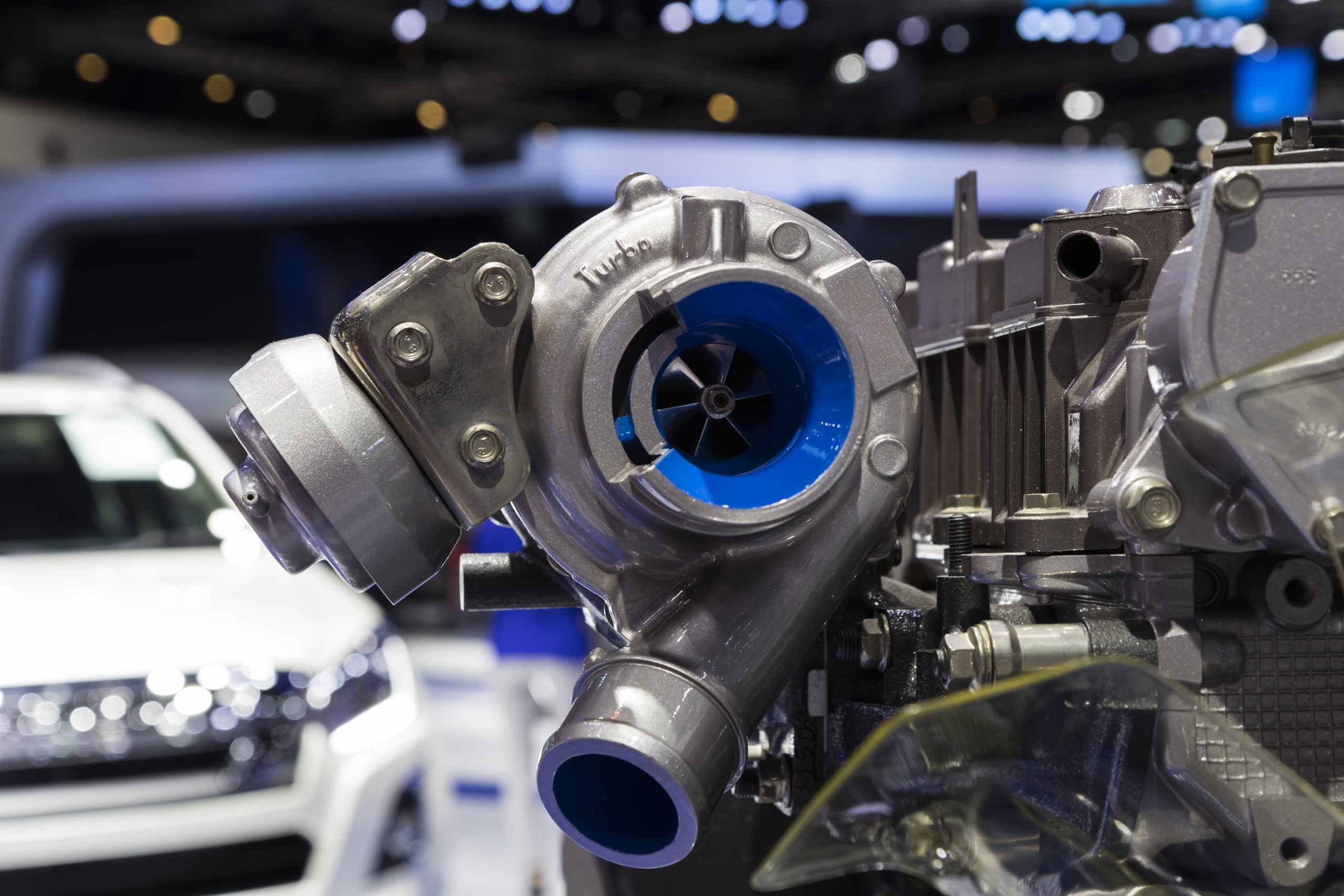
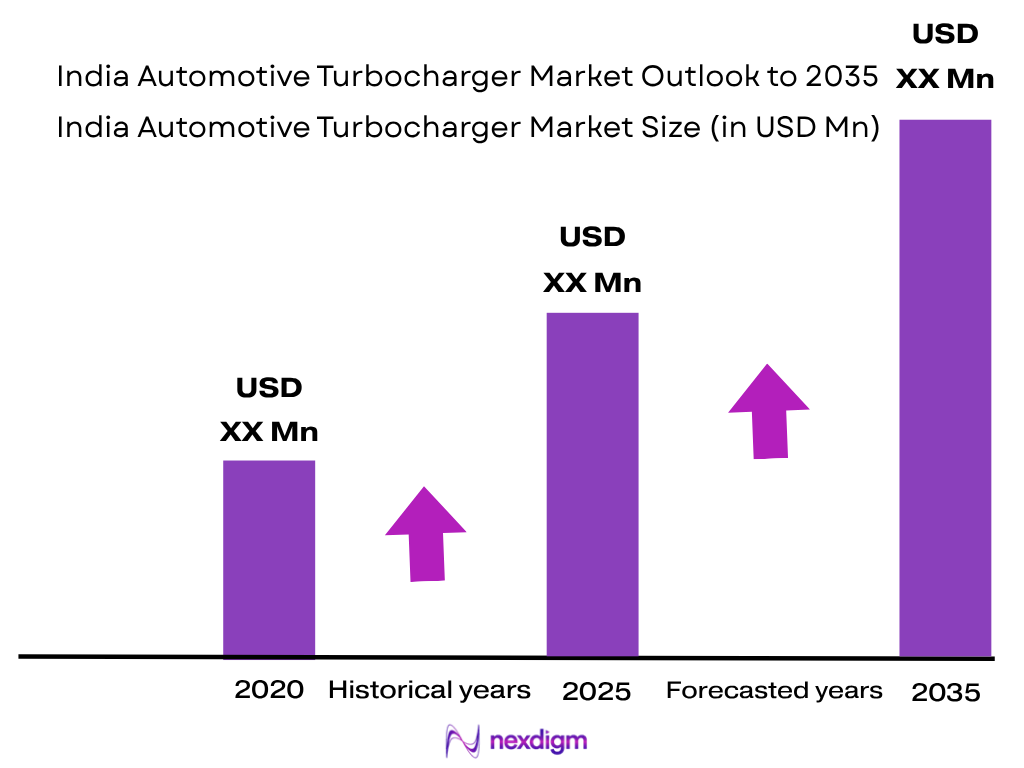
The India Automotive Turbocharger Market is valued at approximately ~USD XX million, supported by passenger-vehicle production, expanding SUV demand, diesel commercial vehicles and increasingly turbocharged small-displacement gasoline engines. India produced 25,931,867 motor vehicles in one operating period and 28,434,742 vehicles in the subsequent period, including passenger vehicles, commercial vehicles, three-wheelers and two-wheelers. Growing vehicle production expands OEM turbocharger fitment while the operating vehicle population generates replacement and remanufacturing demand.
Pune-Chakan, Chennai-Oragadam-Sriperumbudur, Delhi-NCR-Manesar-Bawal and Bengaluru-Hosur dominate India Automotive Turbocharger Market activity because these clusters combine vehicle assembly, engine manufacturing, Tier-1 suppliers, precision machining and automotive engineering capabilities. Passenger-vehicle production increased from 4,579,508 units to 4,901,844 units, while commercial-vehicle production moved from 1,035,626 units to 1,067,504 units across the corresponding periods. These automotive clusters benefit from proximity to OEM engine plants, component suppliers, testing facilities, logistics infrastructure and skilled engineering workforces.
Market Segmentation
By Turbocharger Technology
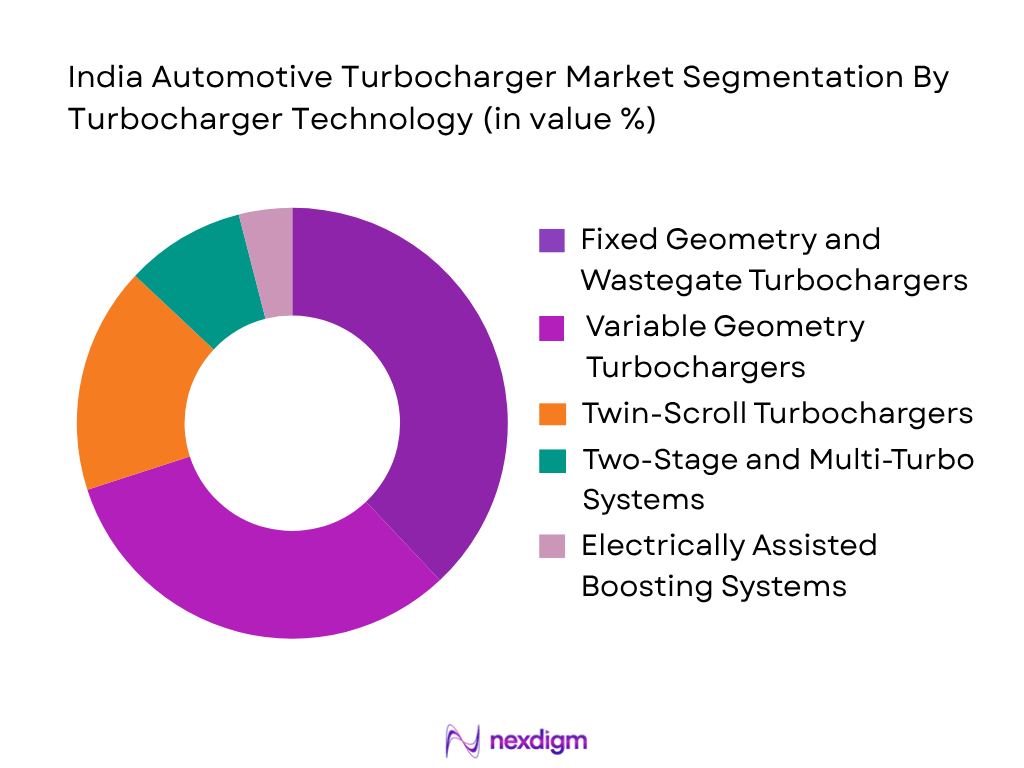
The India Automotive Turbocharger Market is segmented into fixed-geometry and wastegate turbochargers, variable-geometry turbochargers, twin-scroll turbochargers, two-stage and multi-turbo systems, and electrically assisted boosting systems. Fixed-geometry and wastegate turbochargers hold the dominant position because India combines a large commercial-vehicle and utility-vehicle base with growing adoption of small-displacement turbocharged gasoline engines. Their comparatively straightforward architecture, broad engine compatibility, established localization and extensive service familiarity support OEM and replacement demand. Variable-geometry systems have substantial relevance in diesel applications because they provide greater control of turbine flow across different engine speeds and loads, making them particularly applicable to commercial vehicles and higher-torque utility vehicles. Twin-scroll systems are gaining relevance as Indian passenger-vehicle manufacturers increasingly deploy downsized turbo-petrol engines requiring improved low-speed response and exhaust-pulse management. Two-stage systems remain more specialized, primarily serving higher-load diesel applications. Electrically assisted boosting is an emerging category associated with hybridization and advanced 48V powertrain architectures.
By Vehicle Type
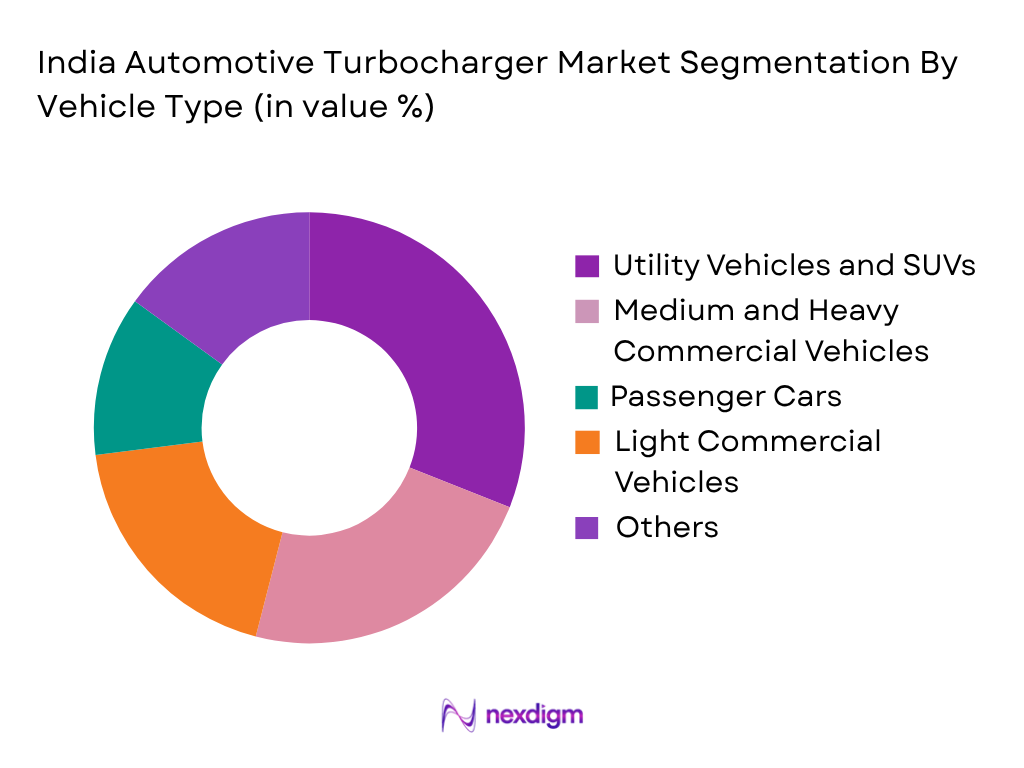
The India Automotive Turbocharger Market is segmented into passenger cars, utility vehicles and SUVs, light commercial vehicles, medium and heavy commercial vehicles, buses and coaches, and agricultural and off-highway vehicles. Utility vehicles and SUVs represent the dominant segment because Indian consumers have increasingly shifted toward compact SUVs, mid-size SUVs and larger utility vehicles, many of which use turbocharged gasoline or diesel engines. Turbocharging enables manufacturers to generate greater torque from smaller engines while meeting vehicle performance and efficiency requirements. Medium and heavy commercial vehicles form another important segment because diesel turbocharging is fundamental to engines used in long-haul trucks, tippers, construction vehicles and buses. Passenger cars increasingly contribute through turbo-petrol engines, particularly in compact and premium models. Light commercial vehicles require durable turbo systems for logistics and distribution applications, while agricultural and off-highway equipment supports demand for high-load diesel turbochargers designed for prolonged operation in demanding environments.
Competitive Landscape
The India Automotive Turbocharger Market includes established global boosting-system manufacturers alongside companies with substantial domestic manufacturing, application engineering and OEM supply capabilities. Competition is concentrated around OEM relationships, localization, gasoline and diesel technology breadth, variable-geometry capability, commercial-vehicle expertise and aftermarket support. Turbo Energy, Garrett, Cummins Turbo Technologies, BorgWarner and Mitsubishi Heavy Industries represent important competitive participants across passenger, utility, commercial and industrial engine applications. Increasing gasoline turbo penetration and evolving BS6 powertrains are encouraging suppliers to strengthen electronic actuation, higher-temperature materials, low-inertia rotating assemblies and application-specific engineering.
| Major Player | Establishment Year | Headquarters | Core Turbo Portfolio | India Manufacturing / Supply Presence | Gasoline Turbo Capability | Diesel / CV Capability | VGT Capability | Aftermarket Capability |
| Turbo Energy Private Limited | 1982 | Chennai, India | ~ | ~ | ~ | ~ | ~ | ~ |
| Garrett Motion Inc. | 1954 | Rolle, Switzerland | ~ | ~ | ~ | ~ | ~ | ~ |
| Cummins Turbo Technologies – Holset | 1952 | Huddersfield, UK | ~ | ~ | ~ | ~ | ~ | ~ |
| BorgWarner Inc. | 1928 | Auburn Hills, USA | ~ | ~ | ~ | ~ | ~ | ~ |
| Mitsubishi Heavy Industries | 1884 | Tokyo, Japan | ~ | ~ | ~ | ~ | ~ | ~ |
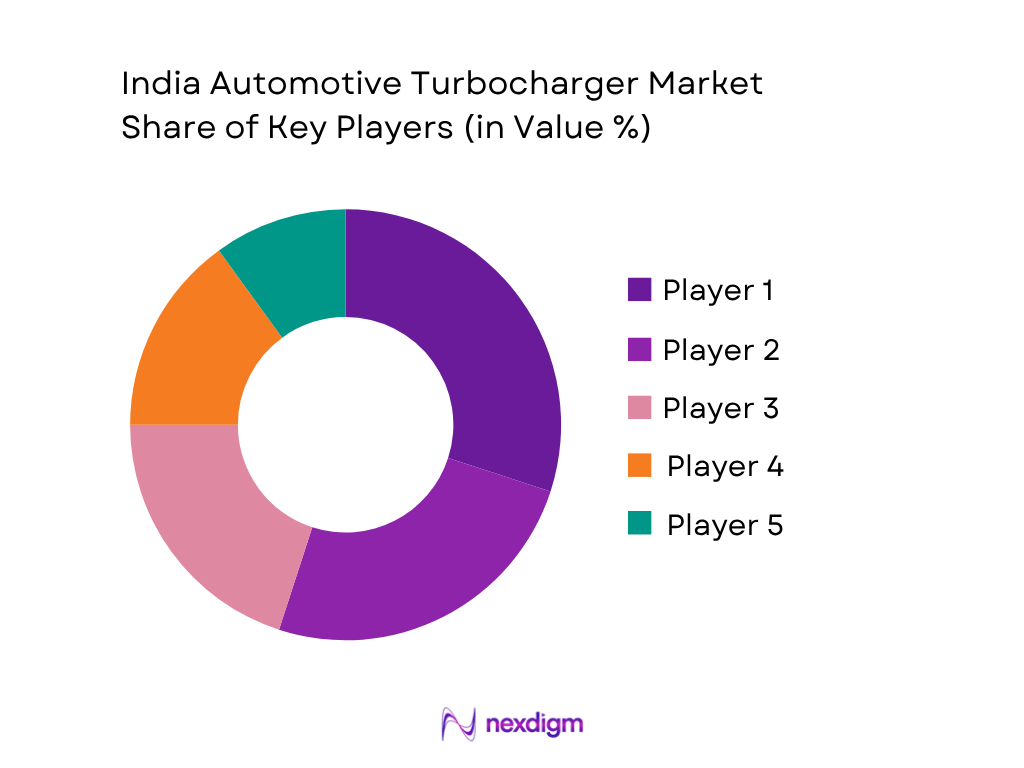
India Automotive Turbocharger Market Analysis
Growth Drivers
Expansion of Passenger Vehicle and Utility Vehicle Production Supporting OEM Turbocharger Demand
India’s expanding passenger-vehicle production base is a direct growth driver for the India Automotive Turbocharger Market because turbocharging is increasingly used across compact gasoline engines, SUVs, utility vehicles and selected diesel platforms. SIAM recorded 4,901,840 passenger vehicles produced in FY2023-24, increasing to 5,061,164 units in FY2024-25 and 5,539,115 units in FY2025-26. Domestic passenger-vehicle sales also increased from 4,218,750 units to 4,301,848 units and then 4,643,439 units across the same three periods. Utility vehicles are especially important for turbocharger demand because heavier body structures require higher low-speed torque, encouraging OEMs to deploy turbocharged gasoline and diesel engines rather than relying exclusively on larger naturally aspirated engines. The wider automotive manufacturing base also expanded, with total vehicle production increasing from 28,439,036 units in FY2023-24 to 31,036,476 units in FY2024-25 and 34,708,984 units in FY2025-26. This enlarges the addressable production ecosystem for wastegate turbochargers, variable-geometry units, twin-scroll systems, actuators and associated air-management components. India’s macroeconomic environment also supports vehicle manufacturing and consumption, with World Bank data showing USD 3,909.89 billion GDP in 2024 and USD 2,694.7 GDP per capita. Together, rising passenger-vehicle output and a large manufacturing economy support deeper OEM turbocharger fitment, domestic application engineering and localized component production.
Commercial Vehicle Production Sustaining Diesel and Variable-Geometry Turbocharger Demand
India’s commercial-vehicle industry provides a durable demand base for automotive turbochargers because modern light, medium and heavy commercial diesel engines depend on forced induction to deliver the torque, combustion efficiency and altitude compensation required for freight, construction, mining and passenger-transport applications. SIAM recorded 1,067,504 commercial vehicles produced in FY2023-24, followed by 1,034,947 units in FY2024-25 and 1,170,150 units in FY2025-26. Domestic commercial-vehicle sales reached 968,770 units in FY2023-24, 958,679 units in FY2024-25 and 1,079,871 units in FY2025-26. The scale of this installed and replenished fleet directly supports demand for fixed-geometry turbochargers, wastegate systems and variable-geometry turbochargers used in commercial diesel engines. Heavy trucks and buses are particularly relevant because turbocharger components must operate under sustained exhaust temperatures and high engine loads, creating recurring requirements for turbine housings, rotating assemblies, bearings, actuators and replacement cores. India’s wider economic base reinforces freight and vehicle utilization: World Bank data places national GDP at USD 3,909.89 billion in 2024, with GDP per capita at USD 2,694.7. The combination of more than 1.17 million commercial vehicles produced in FY2025-26 and a large domestic freight economy supports continued OEM fitment as well as an expanding aftermarket for CHRA replacement, turbocharger overhaul and complete-unit replacement.
Market Challenges
Powertrain Transition Increasing Technology and Product-Portfolio Complexity
The India Automotive Turbocharger Market faces growing portfolio complexity as suppliers must simultaneously support conventional diesel engines, turbocharged gasoline engines, CNG applications, hybridized powertrains and the expanding electric-vehicle ecosystem. SIAM recorded 5,539,115 passenger vehicles and 1,170,150 commercial vehicles produced in FY2025-26, while total vehicle production reached 34,708,984 units, illustrating the breadth of the platform base that component suppliers must address. At the same time, the Ministry of Heavy Industries reported that incentives had been provided for 1,042,172 electric two-wheelers, 238,385 electric three-wheelers, 79,540 electric four-wheelers and 1,391 electric buses under the PLI-Auto framework by the end of 2025. Battery-electric vehicles remove the conventional exhaust turbocharger entirely, while hybrid and combustion platforms continue requiring increasingly sophisticated air-management systems. This forces turbocharger manufacturers to balance current diesel and gasoline demand with investments in electronic wastegates, high-temperature materials, 48V boosting and application engineering for evolving engine architectures. Regulatory complexity adds another layer: Bharat Stage VI OBD Stage II-B requirements applicable from April 2025 specify diagnostic emission thresholds such as 1,900 mg/km CO, 320 mg/km NMHC and 540 mg/km NOx for compression-ignition two-wheelers covered by the notification. India’s USD 3,909.89 billion GDP in 2024 supports a large automotive market, but suppliers must spread engineering resources across a rapidly diversifying propulsion landscape.
Precision Manufacturing and Localization Requirements Raising Supplier Capability Barriers
Turbocharger production in India is technically demanding because compressor wheels, turbine wheels, shafts, bearing systems, electronic actuators and variable-vane assemblies operate at extremely high rotational speeds and temperatures, making machining accuracy, materials control, balancing and validation critical. The broader policy environment is pushing automotive suppliers toward deeper domestic manufacturing while simultaneously raising the capability threshold required to qualify for advanced vehicle programs. The Ministry of Heavy Industries reported 278 PLI-Auto manufacturing units across India in 2025, including 85 units in Maharashtra, 49 in Tamil Nadu, 43 in Haryana, 29 in Karnataka and 14 each in Gujarat and Uttar Pradesh. By March 2026, the PLI-Auto program had generated ₹44,326 crore in cumulative investment, ₹52,414 crore in incremental sales and 67,820 jobs, while 18 applicants had received domestic-value-addition certificates covering 154 products and variants. These figures demonstrate the scale of localization activity but also show the competitive pressure on suppliers to achieve qualified domestic manufacturing rather than rely on imported finished assemblies. Turbocharger suppliers must invest in casting, CNC machining, high-speed rotor balancing, actuator calibration, gas-stand testing and OEM validation to compete for localized engine programs. India’s macroeconomic base, with USD 3,909.89 billion GDP and USD 2,694.7 GDP per capita in 2024, supports manufacturing expansion, but achieving automotive-grade quality across highly stressed rotating components remains a significant technical and capital barrier.
Market Opportunities
Localization of Advanced Turbocharger Components and Application Engineering
The expansion of India’s advanced automotive manufacturing ecosystem creates a strong future opportunity for local production of turbocharger components, electronic actuators, variable-geometry mechanisms and application-specific boosting systems. The Ministry of Heavy Industries reported ₹44,326 crore in cumulative PLI-Auto investment by March 2026, alongside ₹52,414 crore in incremental sales and 67,820 jobs. As of July 2026, 18 applicants had received domestic-value-addition certification for 154 products and variants, demonstrating that OEM and component localization is moving from broad policy intent into certified production activity. India’s vehicle production base provides a substantial customer platform for such localization: SIAM recorded 5,539,115 passenger vehicles, 1,170,150 commercial vehicles and 34,708,984 total vehicles produced in FY2025-26. For turbocharger suppliers, this creates opportunities to localize compressor wheels, turbine housings, CHRA assemblies, wastegate actuators, variable-vane systems and precision bearings while building application-engineering teams close to major OEM clusters in Maharashtra, Tamil Nadu, Haryana and Karnataka. The opportunity is not limited to replacement of imported products; localized engineering allows suppliers to develop turbochargers specifically calibrated for Indian gasoline, diesel and CNG engines and for local operating conditions. World Bank data places India’s 2024 GDP at USD 3,909.89 billion and GDP per capita at USD 2,694.7, supporting continued industrial investment. Current manufacturing scale therefore provides a measurable foundation for deeper domestic turbocharger production and export-oriented engineering capability.
Expansion of Turbocharger Aftermarket, CHRA Replacement and Remanufacturing
India’s growing installed base of turbocharged passenger and commercial vehicles creates a substantial future opportunity for structured aftermarket servicing, CHRA replacement, actuator repair and validated remanufacturing. SIAM recorded domestic passenger-vehicle sales of 4,301,848 units in FY2024-25 and 4,643,439 units in FY2025-26, while commercial-vehicle sales increased from 958,679 units to 1,079,871 units across the same periods. These additions continuously enlarge the active vehicle population that will eventually require turbocharger diagnostics, oil-system inspection, bearing replacement, vane cleaning, electronic actuator calibration or complete turbocharger replacement. Commercial vehicles are especially important because high engine loads and intensive operating cycles make downtime a major fleet concern, increasing demand for rapid parts availability and professional repair capability. India’s wider automotive production base reached 31,036,476 vehicles in FY2024-25 and 34,708,984 vehicles in FY2025-26, providing scale for nationwide distributor and workshop networks. Government-backed manufacturing activity also strengthens parts availability: the PLI-Auto ecosystem included 278 manufacturing units in 2025, with major concentrations in Maharashtra, Tamil Nadu, Haryana and Karnataka. This creates scope for domestic production of CHRA assemblies, actuators, housings and service components rather than depending entirely on imported replacements. With World Bank-reported GDP of USD 3,909.89 billion in 2024, India has the economic and industrial scale to support organized remanufacturing, specialist turbocharger workshops, fleet-service programs and multi-brand aftermarket distribution as the installed turbocharged vehicle base matures.
Future Outlook
The India Automotive Turbocharger Market is expected to expand at approximately ~X.X% CAGR during 2026–2035, supported by rising vehicle production, increasing SUV penetration, gasoline-engine downsizing, commercial-vehicle demand and continued localization of powertrain components. The technology mix is expected to move progressively toward electronically controlled wastegates, advanced variable-geometry systems, twin-scroll turbochargers and more efficient boosting architectures. Gasoline turbocharging will become increasingly important as automakers seek higher torque and performance from smaller-displacement engines. Compact SUVs and mid-size utility vehicles are particularly suitable for turbo-petrol powertrains because these vehicles require sufficient low-speed torque while manufacturers simultaneously seek to control engine displacement. The resulting shift expands the addressable market for wastegate, twin-scroll and electronically actuated turbochargers.
Commercial vehicles will remain fundamental to India’s turbocharger industry. Trucks, buses, tippers and light commercial vehicles require high-torque diesel engines for freight, construction, mining and passenger transportation. Variable-geometry and advanced wastegate turbochargers can improve airflow management across different engine loads, while higher-output heavy-duty applications create opportunities for two-stage boosting architectures.
Major Players
- Turbo Energy Private Limited – TEL Automotive Turbocharger Systems
- Garrett Motion Technologies India Private Limited – Garrett Automotive Turbochargers
- Cummins Technologies India Private Limited – Cummins Turbo Technologies / Holset
- BorgWarner Inc. – Turbo Systems and Advanced Boosting Technologies
- Mitsubishi Heavy Industries Engine & Turbocharger Ltd. – MHI Turbochargers
- IHI Corporation – IHI Turbocharger Systems
- BMTS Technology GmbH & Co. KG – Passenger and Commercial Vehicle Turbochargers
- Melett Limited / BMTS Technology – Turbocharger Aftermarket and CHRA Systems
- Rotomaster International – Replacement and Remanufactured Turbochargers
- Turbo Technics Ltd. – Turbocharger Remanufacturing and Balancing Systems
- Master Power Turbochargers – Automotive and Commercial Vehicle Turbochargers
- Toyota Industries Corporation – Automotive Turbocharger Systems
- Komatsu Ltd. – Heavy-Duty and Off-Highway Turbocharger Systems
- HKS Co., Ltd. – Performance Automotive Turbocharger Systems
- Precision Turbo & Engine – High-Performance and Motorsport Turbocharger Systems
Key Target Audience
- Automotive Turbocharger Manufacturers
- Passenger Vehicle and Utility Vehicle OEMs
- Commercial Vehicle and Engine Manufacturers
- Automotive Tier-1 and Powertrain System Suppliers
- Turbocharger Importers, Distributors and Aftermarket Networks
- Commercial Fleet, Logistics and Vehicle Service Operators
- Investments and Venture Capitalist Firms
- Government and Regulatory Bodies (Ministry of Road Transport and Highways, Ministry of Heavy Industries, Department for Promotion of Industry and Internal Trade, Automotive Research Association of India, International Centre for Automotive Technology)
Research Methodology
Step 1: Identification of Key Variables
The initial phase involves constructing an ecosystem map covering major stakeholders within the India Automotive Turbocharger Market, including turbocharger manufacturers, vehicle OEMs, engine manufacturers, Tier-1 suppliers, distributors, workshops and fleet operators. Desk research is used to identify critical variables including turbocharged vehicle production, engine displacement, fuel type, boosting technology, OEM fitment, replacement cycles, localization and aftermarket structure. These variables establish the boundaries of the market and allow passenger-vehicle, commercial-vehicle and off-highway turbocharger demand to be analyzed separately while maintaining a consolidated industry framework.
Step 2: Market Analysis and Construction
Historical automotive production, engine-platform and powertrain information is compiled to construct the India Automotive Turbocharger Market from both top-down and bottom-up perspectives. Vehicle production is mapped against applicable gasoline and diesel turbocharger penetration, vehicle categories, engine configurations and OEM fitment structures. Bottom-up calculations assess turbocharger units associated with relevant vehicle and engine platforms, while the top-down assessment examines automotive component activity, supplier operations and replacement demand. Results are reconciled to develop a consistent market structure.
Step 3: Hypothesis Validation and Expert Consultation
Market hypotheses are developed and validated through computer-assisted telephone interviews and structured discussions with turbocharger manufacturers, automotive component suppliers, OEM representatives, distributors, fleet operators and workshop specialists. These consultations examine technology adoption, OEM sourcing practices, localization, replacement behaviour and turbocharger servicing requirements. Industry feedback is also used to validate assumptions relating to gasoline versus diesel applications, variable-geometry adoption, CHRA replacement, remanufacturing and electronic actuator servicing. The resulting findings refine market segmentation and competitive assessment.
Step 4: Research Synthesis and Final Output
The final phase integrates automotive production indicators, supplier information, OEM engine-platform analysis, aftermarket activity and primary industry findings. Bottom-up turbocharger demand calculations are triangulated against broader automotive manufacturing and component-market indicators to improve consistency and eliminate material discrepancies. The resulting analysis provides market segmentation, competitive benchmarking, technology assessment, aftermarket evaluation and future opportunity mapping for the India Automotive Turbocharger Market. Particular attention is given to localization, gasoline turbocharging, commercial-vehicle VGT applications and emerging electrified boosting technologies.

- Executive Summary
- Research Methodology (Market Definition and Scope, India Automotive Turbocharger Taxonomy, Gasoline and Diesel Turbocharger Classification, Passenger Vehicle Utility Vehicle and Commercial Vehicle Mapping, Turbocharged Vehicle Production Assessment, OEM Turbocharger Fitment Mapping, Engine Displacement Assessment, Domestic Turbocharger Manufacturing Assessment, Import and Export Mapping, Replacement Cycle Assessment, Turbocharger Aftermarket Analysis, Localization and Supply Chain Assessment, Market Sizing Framework)

- Definition and Scope
- India Automotive Turbocharger Industry Evolution and Technology Development
- Automotive Turbocharger Manufacturing and Assembly Process
- Automotive Turbocharger Value Chain Analysis
- India Automotive Turbocharger Supply Chain Analysis
- Compressor Wheel, Turbine Wheel, CHRA, Bearing Housing, Actuator and Variable Vane Ecosystem Analysis
- India Automotive Turbocharger Manufacturing Footprint and Localization Assessment
- OEM, Tier-1, Aftermarket and Turbocharger Service Framework

- Growth Drivers (Expansion of Passenger and Utility Vehicle Production, Continued Diesel Turbocharger Demand in Commercial Vehicles, Gasoline Engine Downsizing and Turbocharging, Growth of SUV and Utility Vehicle Production, Increasing Commercial Vehicle Output, Bharat Stage VI Engine Efficiency Requirements, Domestic Turbocharger Manufacturing and Localization, Expansion of Automotive Component Exports)
- Market Challenges (Declining Diesel Penetration in Passenger Cars, Battery Electric Vehicle Transition, High-Precision Turbocharger Manufacturing Requirements, Electronic Actuator Calibration Complexity, Turbocharger Heat and Lubrication Management, Specialized Material and Component Supply Exposure, Counterfeit and Non-Genuine Aftermarket Products, Engine Platform and Turbocharger Fitment Complexity)
- Market Opportunities (Small-Displacement Gasoline Turbochargers, Commercial Vehicle Variable Geometry Turbochargers, Two-Stage Heavy-Duty Turbocharging, CNG Turbocharger Applications, Turbocharger Remanufacturing, CHRA and Electronic Actuator Replacement, Export-Oriented Turbocharger Manufacturing, 48V Electrically Assisted Boosting)
- Market Trends (Gasoline Engine Downsizing, SUV Turbocharger Adoption, Variable Geometry Diesel Turbochargers, Electronic Wastegate Systems, Twin-Scroll Gasoline Turbochargers, Higher Exhaust Temperature Capability, Integrated Exhaust Manifold Turbocharging, Electrically Assisted Boosting)
- Regulatory and Standards Landscape (Bharat Stage VI Emission Requirements, OBD Stage II Requirements, Ministry of Road Transport and Highways Vehicle Regulations, Automotive Industry Standards, Automotive Research Association of India Certification Requirements, International Centre for Automotive Technology Testing Requirements, PLI Auto Localization Framework, Vehicle Scrappage and Fitness Requirements)
- SWOT Analysis
- Porter’s Five Forces Analysis
- PESTLE Analysis
- Stakeholder Ecosystem
- Competition Ecosystem

- By Market Value (2020-2025)
- By New Automotive Turbocharger Unit Volume (2020-2025)
- By OEM-Fitted Turbocharger Volume (2020-2025)
- By Replacement Turbocharger Volume (2020-2025)
- By Passenger Vehicle Turbocharger Volume (2020-2025)
- By Commercial Vehicle Turbocharger Volume (2020-2025)

- By Turbocharger Technology (In Value %)
Fixed Geometry Turbochargers
Wastegate Turbochargers
Variable Geometry Turbochargers
Variable Nozzle Turbochargers
Twin-Scroll Turbochargers
Twin-Turbo Systems
Two-Stage Turbocharger Systems
Sequential Turbocharger Systems
Electrically Assisted Turbochargers
Electric Compressors and eBoosters - By Vehicle Type (In Value %)
Hatchbacks and Compact Passenger Cars
Sedans
Utility Vehicles and SUVs
Multi-Purpose Vehicles
Pickup Trucks
Light Commercial Vehicles
Medium Commercial Vehicles
Heavy Commercial Vehicles
Buses and Coaches
Agricultural Tractors
Construction and Off-Highway Vehicles
Specialized Vehicles - By Application Type (In Value %)
Passenger Vehicle Gasoline Engines
Passenger Vehicle Diesel Engines
SUV and Utility Vehicle Engines
Light Commercial Vehicle Engines
Medium and Heavy Commercial Vehicle Engines
Bus and Coach Engines
Agricultural Tractor Engines
Construction Equipment Engines
Mining and Off-Highway Engines
Fleet and Logistics Vehicle Engines
High-Performance Automotive Engines - By Fuel Type (In Value %)
Diesel Turbocharged Vehicles
Gasoline Turbocharged Vehicles
CNG Turbocharged Vehicles
Mild-Hybrid Turbocharged Vehicles
Full-Hybrid Turbocharged Vehicles
Plug-In Hybrid Turbocharged Vehicles
Other Alternative-Fuel Turbocharged Vehicles - By Sales Channel (In Value %)
OEM Direct Supply
Tier-1 Engine and Powertrain Integrators
Authorized Dealership Parts Networks
OEM Replacement Turbocharger Channel
Independent Automotive Parts Distributors
Turbocharger Specialist Distributors
Diesel Fuel Injection and Turbo Specialists
Independent Repair Workshops
Commercial Fleet Service Networks
Turbocharger Remanufacturing Networks
Online Automotive Parts Channels
Export Distribution Channel - By Region (In Value %)
North India
South India
West India
East India
Central India
Pune-Chakan-Talegaon Automotive Cluster
Chennai-Oragadam-Sriperumbudur Automotive Cluster
Delhi-NCR-Manesar-Bawal Automotive Cluster
Pithampur-Dewas Commercial Vehicle Cluster
Sanand-Vadodara Automotive Cluster
Bengaluru-Hosur Automotive Engineering Cluster
Rudrapur-Pantnagar Automotive Cluster
Other India

- Market Share of Major Players (By Revenue, Unit Sales, Passenger Vehicle Turbochargers, Commercial Vehicle Turbochargers, Gasoline Turbochargers, Diesel Turbochargers, OEM Channel, Aftermarket Channel)
- Cross Comparison Parameters (Gasoline Diesel and Commercial Vehicle Turbocharger Portfolio Breadth, Fixed Geometry VGT Twin-Scroll and Two-Stage Technology Capability, India Manufacturing Capacity and Component Localization Footprint, Passenger SUV LCV MCV HCV and Off-Highway Application Coverage, Indian OEM Fitment and Engine Platform Relationship Strength, BS6 OBD Electronic Actuator and Emission-System Integration Capability, Aftermarket CHRA Remanufacturing Service Centre and Parts Network Strength, India R&D Application Engineering and Export Manufacturing Capability)
- SWOT Analysis of Major Players
- Competitive Positioning Matrix
- Product and Technology Portfolio Benchmarking
- Pricing and Distribution Network Benchmarking
- Market Entry Strategy Assessment
- Detailed Profiles of Major Companies
Turbo Energy Private Limited – TEL Automotive Turbocharger Systems
Garrett Motion Technologies India Private Limited – Garrett Automotive Turbochargers
Cummins Technologies India Private Limited – Holset Commercial Vehicle Turbochargers
BorgWarner Inc. – Gasoline Diesel VGT and Advanced Boosting Systems
Mitsubishi Heavy Industries Engine & Turbocharger Ltd. – MHI Automotive Turbochargers
IHI Corporation – IHI Passenger and Commercial Vehicle Turbochargers
BMTS Technology GmbH & Co. KG – Passenger and Commercial Vehicle Turbocharger Systems
Melett Limited / BMTS Technology – CHRA and Turbocharger Aftermarket Components
Rotomaster International – Replacement and Remanufactured Automotive Turbochargers
Turbo Technics Ltd. – Turbocharger Remanufacturing and Balancing Systems
Master Power Turbochargers – Automotive and Commercial Vehicle Turbochargers
Toyota Industries Corporation – Automotive Turbocharger Systems
Komatsu Ltd. – Heavy-Duty and Off-Highway Turbocharger Systems
HKS Co., Ltd. – Performance Automotive Turbocharger Systems
Precision Turbo & Engine – High-Performance and Motorsport Turbocharger Systems

- Turbocharger Buyer Segmentation
- OEM, Fleet and Aftermarket Procurement Behaviour
- Turbocharger Brand and Supplier Selection Criteria
- Turbocharger Buyer Pain Points
- Turbo Technology and Replacement Type Adoption Assessment
- Replacement, Repair and Repurchase Behaviour

- By Market Value (2026-2035)
- By New Automotive Turbocharger Unit Volume (2026-2035)
- By OEM-Fitted Turbocharger Volume (2026-2035)
- By Replacement Turbocharger Volume (2026-2035)
- By Passenger Vehicle Turbocharger Volume (2026-2035)
- By Commercial Vehicle Turbocharger Volume (2026-2035)


 Request a Sample
 Ask for Customization
 Get a Quote
 Enquire Now