
 Download PDF
Market Overview
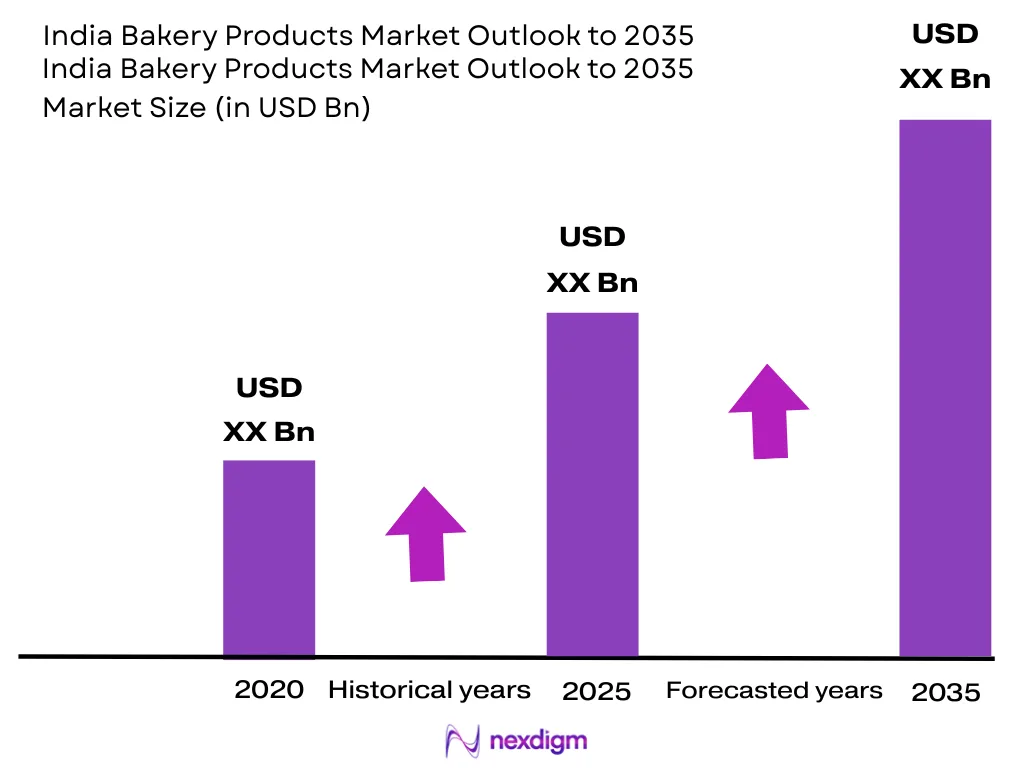
The India Bakery Products Market is valued at approximately USD ~ billion in 2024, supported by rising consumption of packaged foods, rapid urbanization, and increasing demand for convenient ready-to-eat products. According to the Ministry of Food Processing Industries (MoFPI), the Indian food processing sector accounts for over USD 600 billion in market potential, while the packaged foods industry continues to expand through modern retail and e-commerce channels. Bread, biscuits, cakes, rusks, and bakery snacks remain staple products across urban and semi-urban households. The market is further driven by changing lifestyles, increasing disposable incomes, and growing demand for premium, health-focused, and indulgent bakery products.
Market Segmentation
By Product Type
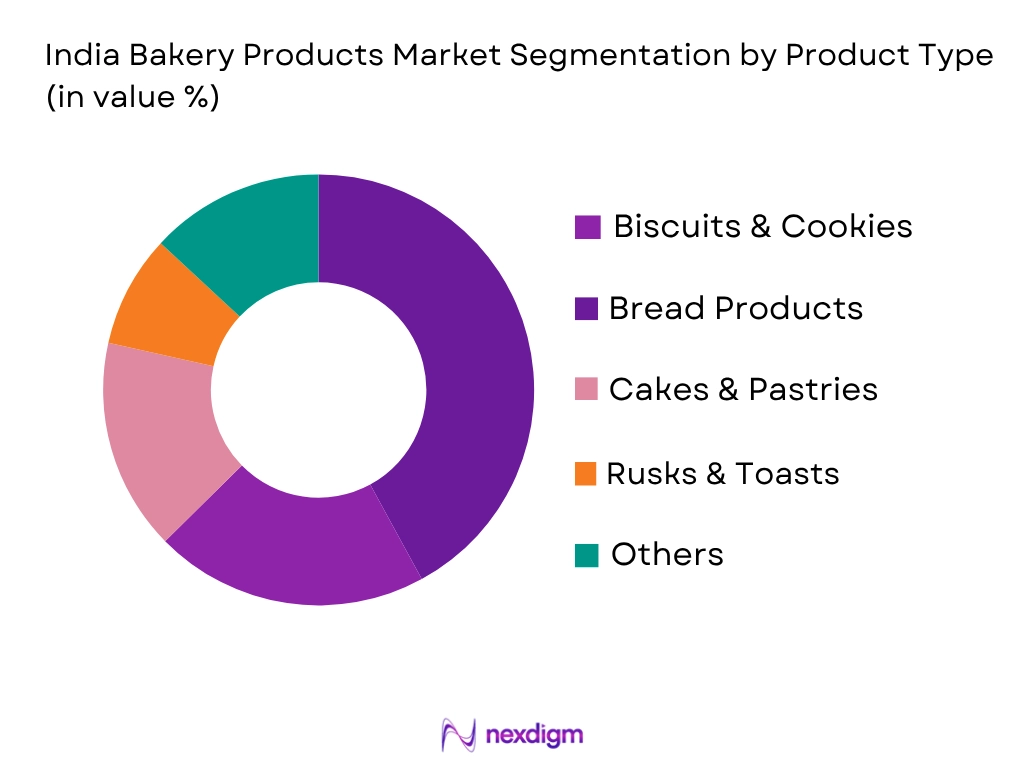
The India Bakery Products Market is segmented into biscuits & cookies, bread products, cakes & pastries, rusks & toasts, bakery snacks, frozen bakery products, artisan bakery products, and pizza bases & flatbreads. Recently, biscuits and cookies have maintained the dominant market share under this segmentation due to their affordability, long shelf life, extensive distribution network, and widespread acceptance across all age groups. Leading brands such as Britannia, Parle, ITC Sunfeast, and Mondelez have established strong consumer loyalty and nationwide reach through both urban and rural markets. The category benefits from frequent consumption as a snack, breakfast accompaniment, and tea-time product. Continuous product innovation in premium cookies, digestive biscuits, healthy variants, and value-added offerings has further expanded consumer demand. Additionally, biscuits enjoy deeper penetration in general trade and kirana stores compared to other bakery categories, reinforcing their leadership position within the Indian bakery products market.
By Distribution Channel
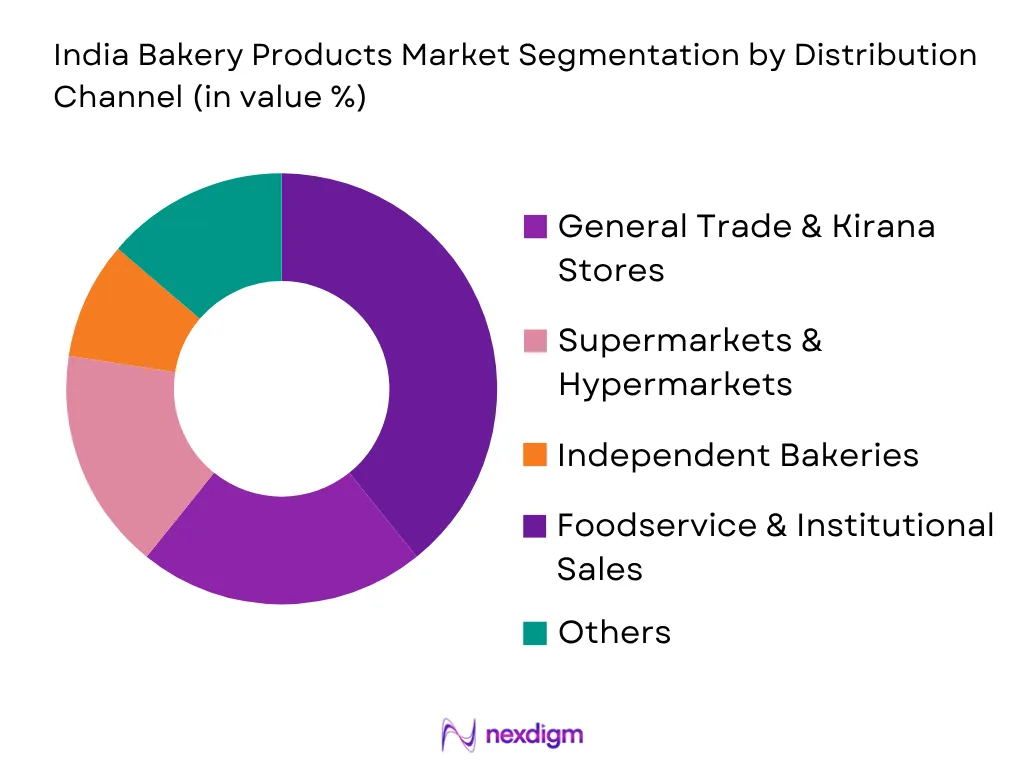
The India Bakery Products Market is segmented into general trade & kirana stores, supermarkets & hypermarkets, bakery chains, foodservice channels, online grocery platforms, quick commerce channels, convenience stores, and direct-to-consumer sales. General trade and kirana stores dominate this segmentation due to their unparalleled reach across urban, semi-urban, and rural markets. These stores represent the primary retail touchpoint for packaged bakery products such as biscuits, bread, cakes, and rusks. Their proximity to residential areas, frequent replenishment cycles, and consumer familiarity contribute significantly to category sales. Bakery manufacturers continue to prioritize general trade distribution because of its extensive market penetration and ability to serve smaller towns and villages. Moreover, impulse purchases and low-ticket bakery products perform particularly well in kirana outlets. While modern trade and online channels continue to expand, general trade remains the most influential distribution channel for bakery products throughout India.
Competitive Landscape
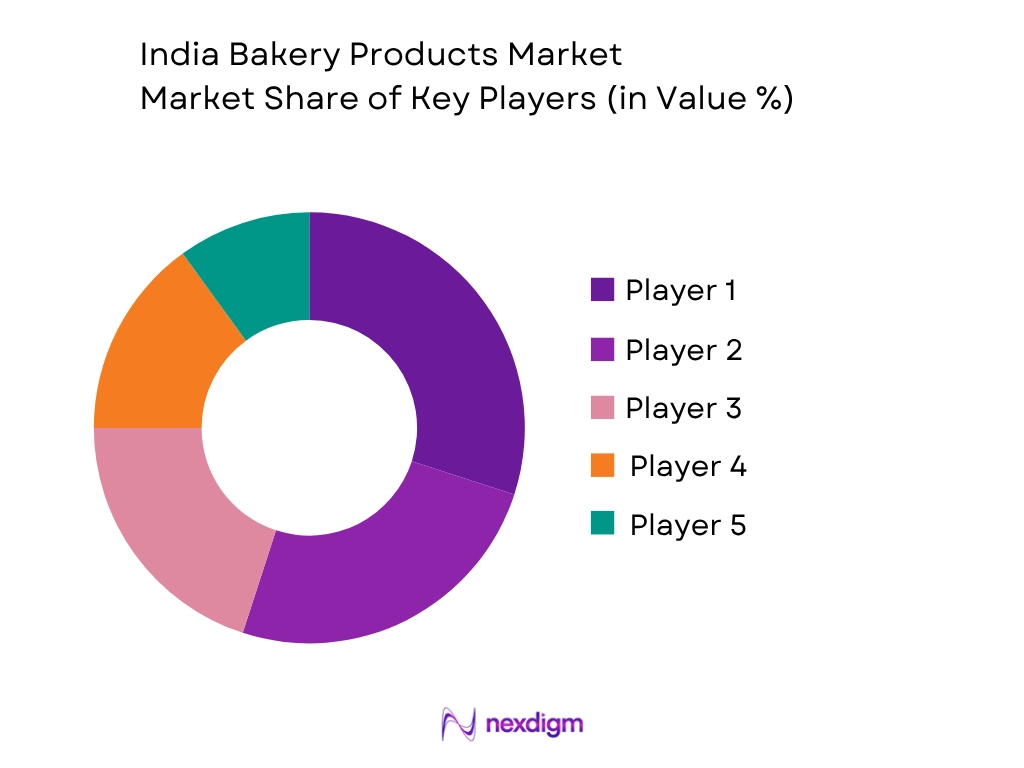
The India Bakery Products Market is highly competitive and comprises a mix of large organized manufacturers, regional bakery brands, and a substantial unorganized sector. Major companies compete through product innovation, extensive distribution networks, strong brand recognition, and value-based pricing strategies. The market is characterized by high penetration of packaged biscuits and growing demand for premium bakery products, resulting in intense competition across multiple product categories.
| Company | Establishment Year | Headquarters | Key Brands | Product Portfolio | Distribution Reach | Manufacturing Presence | Retail Penetration | Innovative Focus |
| Britannia Industries | 1892 | ~ | ~ | ~ | ~ | ~ | ~ | ~ |
| Parle Products | 1929 | ~ | ~ | ~ | ~ | ~ | ~ | ~ |
| ITC Foods (Sunfeast) | 2003 | ~ | ~ | ~ | ~ | ~ | ~ | ~ |
| Mondelez India | 1948 | ~ | ~ | ~ | ~ | ~ | ~ | ~ |
| Bonn Group | 1985 | ~ | ~ | ~ | ~ | ~ | ~ | ~ |
India Bakery Products Market Analysis
Growth Drivers
Rising Urbanization and Expansion of Packaged Food Consumption
India’s rapid urbanization continues to be a major growth driver for the bakery products market, as urban consumers increasingly shift toward convenient and ready-to-eat food options. India’s urban population exceeded 522 million people, while the urbanization rate reached approximately 37% of the total population. Simultaneously, India’s population surpassed 1.43 billion, creating one of the largest consumer bases globally for packaged food products. The growing concentration of consumers in metropolitan regions such as Mumbai, Delhi NCR, Bengaluru, Hyderabad, Chennai, and Pune has significantly increased demand for bread, biscuits, cakes, pastries, and bakery snacks. Furthermore, India’s private final consumption expenditure exceeded USD 2.4 trillion, reflecting rising consumer spending power. Urban households increasingly rely on packaged bakery products because of changing lifestyles, longer working hours, dual-income households, and greater exposure to organized retail formats. The expansion of supermarkets, convenience stores, food delivery platforms, and quick-commerce networks has further improved accessibility to bakery products, strengthening category penetration across urban and semi-urban regions. Rising female workforce participation, increasing disposable income levels, and changing eating habits are further supporting the adoption of packaged bakery products across multiple demographic groups, making urbanization one of the strongest long-term growth drivers for the India bakery products market.
Growth of Food Processing Industry and Organized Retail Infrastructure
The continued expansion of India’s food processing sector and organized retail ecosystem is significantly supporting the bakery products market. The food processing industry contributes approximately 13% of manufacturing Gross Value Added and around 8% of total industrial output, creating a strong foundation for bakery manufacturing. The sector processes substantial quantities of wheat, sugar, dairy products, edible oils, and food ingredients that form the backbone of bakery production. India’s Gross Domestic Product exceeded USD 4 trillion, creating favorable conditions for consumer spending and industrial expansion. Simultaneously, retail infrastructure continues to strengthen through the growth of supermarkets, hypermarkets, convenience chains, and e-commerce platforms. The country hosts over 13 million retail outlets, making it one of the largest retail markets globally. This extensive retail network facilitates widespread distribution of biscuits, breads, rusks, cakes, and bakery snacks across both urban and rural regions. Organized bakery manufacturers are increasingly leveraging automated production facilities, wider distribution systems, and modern packaging technologies to improve product quality and shelf life. As consumer access to branded products improves across Tier-I, Tier-II, and Tier-III cities, organized bakery companies are experiencing greater market penetration, creating sustained demand growth for bakery products across India.
Market Challenges
Volatility in Wheat and Agricultural Commodity Supply
The bakery products industry remains highly dependent on agricultural commodities, particularly wheat, making supply volatility a major challenge for manufacturers. India produced approximately 113 million metric tons of wheat, making it one of the world’s largest wheat-producing nations. However, irregular monsoons, heatwaves, changing weather patterns, and fluctuations in crop yields continue to affect grain availability and procurement conditions. The bakery industry also relies heavily on sugar, edible oils, dairy ingredients, and packaging materials, all of which experience periodic supply-side fluctuations. Agricultural commodity markets continue to face uncertainty due to climate-related disruptions and changing global trade dynamics. Since bread, biscuits, cakes, and rusks are highly price-sensitive categories, manufacturers often face difficulties passing increased raw material costs directly to consumers. This challenge is particularly significant in India’s highly competitive bakery market, where large organized brands compete alongside thousands of regional and unorganized bakery producers operating with thin margins. In addition, bakery companies must maintain consistent product quality and availability despite changing input conditions, requiring sophisticated procurement and inventory management practices. These factors collectively increase operational complexity and can affect production planning and profitability across the bakery value chain.
Fragmented Market Structure and Distribution Complexity
The fragmented nature of India’s bakery industry presents significant operational and distribution challenges. A large portion of bakery production remains concentrated within regional and local manufacturers that operate with varying production standards, technology adoption levels, and distribution capabilities. India’s retail ecosystem includes more than 13 million retail outlets, the majority of which are traditional kirana stores. While this extensive network provides broad consumer access, it also creates logistical complexity for manufacturers attempting to maintain product freshness, inventory efficiency, and consistent distribution coverage. India’s road network exceeds 6.6 million kilometers, making it one of the largest transportation systems globally, yet last-mile delivery challenges persist across remote and rural regions. Bakery products such as bread, cakes, and fresh pastries generally have shorter shelf lives compared to many packaged food categories, increasing inventory management requirements. In addition, India’s population exceeds 1.43 billion, spread across thousands of urban centers, towns, and villages, requiring extensive warehousing and logistics infrastructure. The presence of a large unorganized bakery sector also intensifies competition and creates pricing pressures for organized manufacturers, making market consolidation and efficient distribution increasingly important for long-term growth.
Market Opportunities
Rising Demand for Health-Oriented and Functional Bakery Products
A significant opportunity within the India bakery products market lies in the growing demand for health-focused and functional bakery offerings. Rising health awareness, increasing disposable incomes, and changing dietary preferences are encouraging consumers to seek products containing whole grains, millet ingredients, fiber enrichment, protein fortification, reduced sugar formulations, and clean-label ingredients. India’s per capita income surpassed USD 2,700, reflecting improving purchasing power among consumers. Simultaneously, national initiatives promoting nutritional security have increased awareness regarding healthier grain alternatives. India remains one of the largest producers of millets globally, with annual production exceeding 17 million metric tons, creating substantial opportunities for bakery manufacturers to innovate using locally sourced ingredients. The expansion of organized retail, premium grocery stores, and digital commerce channels further enhances consumer access to specialty bakery products. Growing demand for gluten-free products, high-protein snacks, and fortified bakery items is encouraging manufacturers to diversify product portfolios. As consumers increasingly prioritize nutrition, wellness, and ingredient transparency, bakery companies have opportunities to introduce premium offerings and capture higher-value market segments while differentiating themselves from traditional mass-market products.
Expansion of Quick Commerce, E-Commerce, and Premium Bakery Retail
The rapid development of digital retail channels presents substantial opportunities for the India bakery products market. India’s internet user base exceeded 950 million individuals, making it one of the world’s largest digital consumer markets. In addition, UPI transaction volumes surpassed 18 billion transactions per month, highlighting the growing adoption of digital commerce and online purchasing behavior. The expansion of quick-commerce platforms, food delivery applications, and online grocery services has significantly improved access to bakery products across metropolitan and Tier-I cities. Consumers increasingly purchase bread, cakes, cookies, desserts, and premium baked goods through digital channels because of convenience and faster delivery times. Furthermore, India’s urban population exceeds 522 million people, creating a large addressable market for digitally enabled bakery retail. Premium bakery chains, artisanal bakeries, and specialty dessert brands are leveraging these platforms to expand customer reach beyond physical store locations. The integration of technology, logistics infrastructure, and consumer convenience creates favorable conditions for sustained growth across premium bakery, frozen bakery, and direct-to-consumer bakery segments. As digital adoption continues to deepen, bakery manufacturers can benefit from improved market access, higher product visibility, and stronger consumer engagement across multiple sales channels.
Future Outlook
The India Bakery Products Market is expected to witness robust growth during the forecast period due to rising urbanization, increasing disposable incomes, and changing dietary preferences. Growing demand for packaged convenience foods, premium bakery products, and healthier alternatives will continue to drive market expansion. Manufacturers are expected to focus on innovation in high-protein, millet-based, gluten-free, and low-sugar bakery categories. The market is also likely to benefit from the rapid expansion of quick commerce platforms, online grocery channels, and organized retail. Premium bakery chains, frozen bakery products, and foodservice demand are expected to create new growth avenues. Investments in automation, cold chain infrastructure, and sustainable packaging solutions will further strengthen operational efficiency and product quality across the industry.
Major Players
- Britannia Industries
- Parle Products
- ITC Foods (Sunfeast)
- Mondelez India
- Bonn Group
- Modern Foods
- English Oven
- Harvest Gold
- Monginis
- Theobroma Foods
- Cremica Foods
- Bisk Farm
- Mrs. Bector’s Food Specialities
- Baker’s Circle
- Jubilant FoodWorks (Bakery and Dessert Segment)
Key Target Audience
- Bakery Product Manufacturers
- Biscuit and Cookie Manufacturers
- Bread and Rusk Producers
- Frozen Bakery Product Manufacturers
- Foodservice and Quick Service Restaurant Operators
- Organized Retail and E-Commerce Companies
- Investments and Venture Capitalist Firms
- Government and Regulatory Bodies
Research Methodology
Step 1: Identification of Key Variables
The initial phase involves constructing a comprehensive ecosystem map covering bakery manufacturers, ingredient suppliers, distributors, retailers, foodservice operators, and consumers. Extensive desk research is conducted using government databases, industry reports, company filings, and trade publications to identify the key variables influencing demand, production, pricing, and distribution within the India Bakery Products Market.
Step 2: Market Analysis and Construction
In this phase, historical market data related to bakery product production, retail sales, consumption patterns, organized and unorganized sector participation, and distribution channels are analyzed. Market penetration, category-wise demand, and regional consumption patterns are assessed to estimate revenue generation and market structure accurately.
Step 3: Hypothesis Validation and Expert Consultation
Market hypotheses are developed and validated through structured interviews with bakery manufacturers, distributors, retail procurement managers, foodservice operators, ingredient suppliers, and industry experts. These consultations provide valuable insights regarding category growth, operational challenges, competitive dynamics, and evolving consumer preferences.
Step 4: Research Synthesis and Final Output
The final phase involves integrating findings from both primary and secondary research sources. Data triangulation techniques are applied to verify market estimates, segmentation analysis, and future forecasts. This process ensures the development of a comprehensive, reliable, and validated assessment of the India Bakery Products Market.

- Executive Summary
- Research Methodology (Market Definitions and Assumptions, Abbreviations, Market Sizing Approach, Top-Down Analysis, Bottom-Up Analysis, Demand-Side Assessment, Supply-Side Assessment, Organized vs Unorganized Market Mapping, Retail Audit Analysis, Primary Industry Interviews, Consumer Purchase Behavior Assessment, Data Triangulation, Forecasting Framework, Limitations and Future Conclusions)

- Definition and Scope
- Market Evolution and Industry Genesis
- Timeline of Major Industry Developments
- Bakery Industry Business Cycle Analysis
- Bakery Value Chain Analysis

- Growth Drivers (Expanding Middle-Class Population, Rising Urbanization, Growth in Organized Retail, Increasing Consumption of Convenience Foods, Expansion of Quick Commerce Platforms, Rising Disposable Income, Growing Café Culture, Increasing Demand for Packaged Foods)
- Market Challenges (Volatility in Wheat and Sugar Prices, Fragmented Unorganized Sector, Shelf-Life Management Constraints, Rising Logistics Costs, Food Inflation Pressures, Regulatory Compliance Costs, Supply Chain Inefficiencies, Intense Price Competition)
- Market Opportunities (Millet-Based Bakery Innovation, Premium and Artisan Bakery Expansion, Functional and Health-Oriented Bakery Products, Frozen Bakery Penetration, Rural Market Expansion, Quick Commerce Growth, Clean Label Product Development, Export Opportunities)
- Market Trends (Whole Wheat Product Adoption, Premiumization of Bakery Products, High-Protein Bakery Launches, Millet-Based Product Development, Clean Label Ingredients, Packaged Fresh Bakery Products, Frozen Ready-to-Bake Products, Health and Wellness Positioning)
- Government Regulations (FSSAI Food Safety Standards, Packaging and Labeling Regulations, Nutritional Disclosure Requirements, Fortified Food Standards, Food Additive Regulations, GST Framework, Import Regulations for Ingredients, Sustainable Packaging Guidelines)
- SWOT Analysis
- Porter’s Five Forces Analysis
- PESTLE Analysis
- Stakeholder Ecosystem
- Competition Ecosystem
- ESG and Sustainability Assessment

- By Market Value (2020-2025)
- By Volume Consumption (2020-2025)
- By Average Selling Price (2020-2025)

- By Product Type (In Value %)
Bread Products
Biscuits and Cookies
Cakes and Pastries
Rusks and Toasts
Morning Goods (Muffins, Doughnuts, Croissants, Buns)
Frozen Bakery Products
Artisan and Premium Bakery Products
Traditional Indian Bakery Products
Bakery Snacks and Sweet Baked Goods
Pizza Bases and Flatbreads - By Ingredient Type (In Value %)
Conventional Bakery Products
Whole Wheat Bakery Products
Multigrain Bakery Products
Gluten-Free Bakery Products
Organic Bakery Products
High-Protein Bakery Products
Low Sugar Bakery Products
Millet-Based Bakery Products
Vegan Bakery Products - By Distribution Channel (In Value %)
General Trade and Kirana Stores
Supermarkets and Hypermarkets
Convenience Stores
Bakery Chains and Standalone Bakeries
Online Grocery Platforms
Quick Commerce Platforms
Direct-to-Consumer Channels
Foodservice and Institutional Sales - By Region (In Value %)
North India
South India
West India
East India
Central India
Tier-I Cities
Tier-II Cities
Tier-III Cities and Rural Markets - By Packaging Type (In Value %)
Flexible Plastic Packaging
Paper Packaging
Cartons and Boxes
Single-Serve Packaging
Family Pack Packaging
Sustainable and Recyclable Packaging
Modified Atmosphere Packaging

- Market Share of Major Players (By Value, Volume, Product Category, Distribution Channel, Organized Retail Presence)
- Cross Comparison Parameters (Product Portfolio Breadth, Bakery SKU Count, Production Capacity, Distribution Reach, General Trade Penetration, Modern Retail Presence, Health-Oriented Product Portfolio, New Product Launch Frequency)
- SWOT Analysis of Major Players
- Pricing Analysis by SKU and Product Category
- Detailed Profiles of Major Companies
Britannia Industries
Parle Products
ITC Foods (Sunfeast)
Mondelez India
Bonn Group
Modern Foods
English Oven
Harvest Gold
Monginis
Theobroma Foods
Cremica Foods
Bisk Farm
Mrs. Bector’s Food Specialities
Baker’s Circle
Jubilant FoodWorks (Bakery and Dessert Segment)

- Consumption Behavior Assessment
- Demographic Consumption Trends
- Household Bakery Expenditure Analysis
- Premium vs Mass Market Demand Assessment
- Brand Loyalty Analysis
- Health and Wellness Influence on Purchasing Decisions
- Consumer Pain Point Analysis
- Product Attribute Preference Assessment
- Purchase Decision-Making Process
- Online vs Offline Purchase Behavior
- Quick Commerce Purchase Trends
- Rural vs Urban Consumption Analysis

- By Market Value (2026-2035)
- By Volume Consumption (2026-2035)
- By Average Selling Price (2026-2035)


 Request a Sample
 Ask for Customization
 Get a Quote
 Enquire Now