
 Download PDF
Market Overview
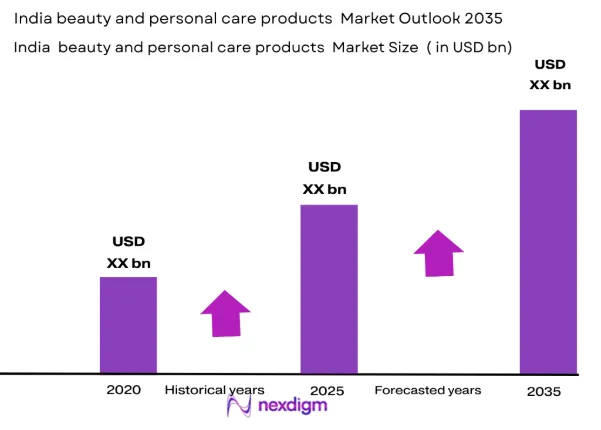
The India Beauty and Personal Care Products Market is valued at USD ~ billion, compared with a preceding published benchmark of USD 17.77 billion, reflecting rapid expansion in grooming, skin care, hygiene, fragrances, and beauty retail. Growth is driven by higher urban consumption, beauty-focused e-commerce, premiumization, influencer-led product discovery, and rising demand for natural and dermatology-backed products. BlueWeave forecasts the market to grow at 8.72% CAGR through 2030.
Mumbai, Delhi-NCR, Bengaluru, Hyderabad, Chennai, and Pune dominate demand because they combine dense affluent consumers, organized retail networks, premium salons, beauty specialty stores, influencer ecosystems, and quick-commerce penetration. Mumbai and Delhi-NCR lead luxury and premium launches, Bengaluru supports digital-first D2C adoption, while tier-2 cities are becoming stronger online growth centers through marketplaces and quick-commerce delivery. Myntra’s rapid delivery rollout in Bengaluru, Delhi-NCR, and Mumbai reflects this metro concentration.
Market Segmentation
By Product Type
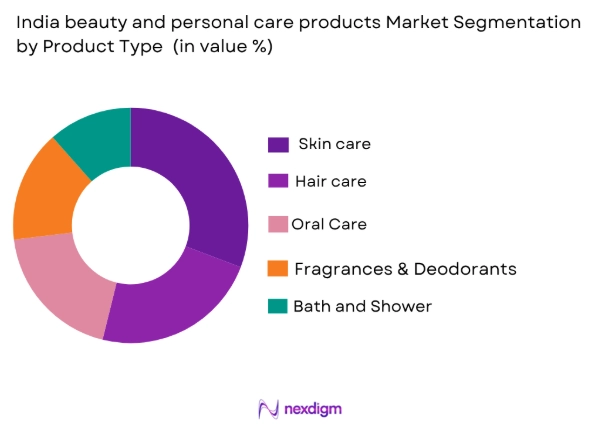
India Beauty and Personal Care Products Market is segmented by product type into skin care, hair care, oral care, bath and shower, fragrances and deodorants, and colour cosmetics. Skin care holds the dominant market share due to rising concern around acne, pigmentation, sun protection, anti-ageing, and barrier repair. Consumers are shifting from basic creams to serums, sunscreens, actives, and dermatology-tested products. The growth of brands such as L’Oréal, Lakmé, Mamaearth, Minimalist, and Nykaa’s private labels has expanded access across price bands. E-commerce has also enabled ingredient-led comparison, reviews, and influencer-led education, strengthening skin care’s leadership over more routine categories.
By Distribution Channel
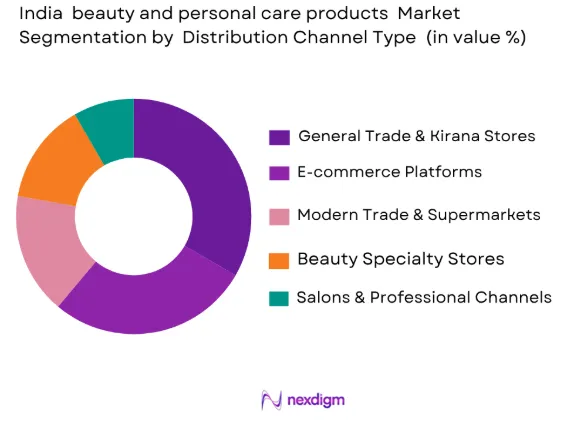
India Beauty and Personal Care Products Market is segmented by distribution channel into general trade, e-commerce platforms, modern trade, beauty specialty stores, salons, and direct selling. General trade continues to dominate because daily-use personal care products such as soap, toothpaste, shampoo, deodorants, and basic creams depend on deep neighborhood retail availability. However, e-commerce is the fastest-expanding channel, led by Nykaa, Amazon, Flipkart, Myntra, Tira, Purplle, Blinkit, Zepto, and brand-owned D2C sites. Beauty specialty stores are also gaining relevance for premium launches, sampling, and assisted selling, but mass-market consumption still depends heavily on physical retail reach.
Competitive Landscape
The India Beauty and Personal Care Products Market is moderately consolidated at the branded end but highly fragmented across regional, ayurvedic, salon-grade, and digital-first D2C brands. Hindustan Unilever, L’Oréal India, Procter & Gamble, Dabur, and Marico retain strong distribution and brand equity, while Nykaa, Mamaearth, Lotus Herbals, Biotique, and premium global labels are reshaping online and specialist beauty retail.
| Company | Establishment Year | Headquarters | Core Categories | India Positioning | Channel Strength | Natural/Ayurvedic Focus | Premium Portfolio | Digital Strategy |
| Hindustan Unilever | 1933 | Mumbai, India | ~ | ~ | ~ | ~ | ~ | ~ |
| L’Oréal India | 1994 | Mumbai, India | ~ | ~ | ~ | ~ | ~ | ~ |
| Procter & Gamble India | 1964 | Mumbai, India | ~ | ~ | ~ | ~ | ~ | ~ |
| Dabur India | 1884 | Ghaziabad, India | ~ | ~ | ~ | ~ | ~ | ~ |
| Marico | 1990 | Mumbai, India | ~ | ~ | ~ | ~ | ~ | ~ |
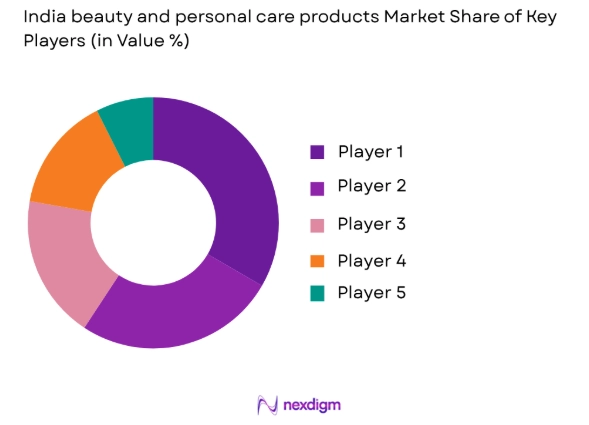
India Beauty and Personal Care Products Market Analysis
Growth Drivers
Rising Consumer Spending on Personal Grooming
India’s rising consumption capacity directly supports higher spending on personal grooming products such as shampoos, skin care, deodorants, and oral care. According to the Household Consumption Expenditure Survey, average monthly per capita expenditure reached ₹6,996 in urban areas and ₹4,122 in rural areas, with non-food categories accounting for ₹4,220 urban and ₹2,183 rural spending. These figures indicate that discretionary categories like personal care are receiving a larger share of household budgets. Additionally, India’s GDP reached USD 3.91 trillion, reflecting overall economic expansion and improved purchasing power for daily-use and premium grooming products.
Growing Demand for Natural and Ayurvedic Beauty Products
The demand for natural and ayurvedic beauty products is supported by India’s strong AYUSH ecosystem and export performance. The Ministry of Ayush reported exports of USD 688.89 million in FY2024-25, rising from USD 649.2 million in FY2023-24, indicating increasing global and domestic demand for herbal and plant-based formulations. Regulatory infrastructure also supports this segment with 34 State Drug Testing Laboratories and 108 private laboratories approved for testing Ayurvedic and herbal products. This institutional backing ensures quality assurance and encourages consumers to adopt herbal skin care, hair care, and wellness-based personal care products.
Challenges
High Competition Among Domestic and Global Brands
India Beauty and Personal Care Products Market faces intense competition due to a large number of domestic, regional, and international players operating across multiple categories. ONDC reported over 6 lakh sellers and service providers offering more than 3 crore products across 1,200 cities, including beauty and personal care categories. This large supply base intensifies competition not only among established FMCG companies but also among D2C and regional brands. The widespread availability of products across channels such as general trade, e-commerce, and specialty retail reduces entry barriers while increasing pricing pressure and brand differentiation challenges.
Regulatory Compliance and Product Safety Standards
Regulatory compliance remains a key challenge as beauty products must adhere to strict safety, labeling, and quality norms. India has 34 State Drug Testing Laboratories and 108 private laboratories approved for testing Ayurvedic and related products, indicating a structured but complex regulatory environment. Additionally, oversight from bodies such as CDSCO and BIS requires manufacturers to comply with ingredient standards, packaging norms, and safety testing. This increases operational costs and time-to-market, especially for smaller players and new entrants in the beauty and personal care sector.
Opportunities
Clean Beauty and Sustainable Packaging
Clean beauty and sustainable packaging present strong opportunities due to increasing environmental awareness and regulatory focus. India’s plastic waste generation reached 3.47 million tonnes annually, creating pressure on industries including beauty and personal care to adopt recyclable and biodegradable packaging solutions. The government’s Plastic Waste Management Rules also mandate Extended Producer Responsibility (EPR), requiring brands to manage post-consumer plastic waste. This regulatory push is encouraging companies to adopt refillable packaging, reduced plastic usage, and eco-friendly materials, creating innovation opportunities in sustainable beauty product development.
Men’s Grooming Segment Expansion
The men’s grooming segment is expanding due to demographic and workforce trends. India’s male workforce population exceeds 400 million individuals, forming a large consumer base for grooming products such as shaving creams, beard oils, deodorants, and skin care products. Urbanization, which has reached 513.3 million people, further supports adoption of grooming routines among men in metropolitan and tier-2 cities. Additionally, increased participation in formal employment sectors and rising disposable incomes are encouraging men to spend more on personal care products, creating sustained demand growth in this segment.
Future Outlook
Over the next five years, the India Beauty and Personal Care Products Market is expected to expand through premiumization, wider online access, ingredient-led skin care, men’s grooming, and faster adoption of natural and functional products. Growth will also be supported by quick-commerce availability, tier-2 and tier-3 city demand, dermatologist-backed formulations, and hybrid products combining beauty, wellness, and personal care benefits.Key future themes include clean beauty, refillable and sustainable packaging, AI-led skin diagnostics, personalized beauty recommendations, scalp care, dermocosmetics, premium fragrances, and salon-grade at-home treatments. Global brands will continue entering India through Nykaa, Sephora, Tira, Myntra, and selective retail partnerships, while domestic D2C brands will expand offline to improve retention and profitability.
Major Players
- Hindustan Unilever
- L’Oréal India
- Procter & Gamble India
- Dabur India
- Marico
- Godrej Consumer Products
- Emami
- Colgate-Palmolive India
- Nivea India
- Johnson & Johnson India
- Nykaa
- Mamaearth
- Lotus Herbals
- Biotique
- Lakmé
Key Target Audience
- Beauty and personal care product manufacturers
- FMCG companies
- D2C beauty brands
- E-commerce and quick-commerce platforms
- Beauty specialty retailers
- Salon chains and professional beauty distributors
- Investments and venture capitalist firms
- Government and regulatory bodies
Research Methodology
Step 1: Identification of Key Variables
The initial phase involves mapping manufacturers, brands, retailers, distributors, e-commerce platforms, salons, and regulatory bodies within the India Beauty and Personal Care Products Market. Variables include category demand, price bands, channel mix, product claims, consumer demographics, and compliance requirements.
Step 2: Market Analysis and Construction
Historical market data is compiled through company filings, industry publications, retail channel indicators, product launches, and category-level performance. Revenue estimates are constructed by analyzing product penetration, average selling prices, distribution reach, and online versus offline sales behavior.
Step 3: Hypothesis Validation and Expert Consultation
Market hypotheses are validated through interviews with brand managers, distributors, retailers, salon operators, e-commerce category managers, and packaging suppliers. These inputs help refine assumptions on category growth, premiumization, channel margins, and consumer preference shifts.
Step 4: Research Synthesis and Final Output
The final phase integrates secondary research, expert inputs, competitive benchmarking, and market modeling. The output includes market size, segmentation, growth drivers, competitive positioning, and forecast assumptions for the India Beauty and Personal Care Products Market.

- Executive Summary
- Research Methodology (Market Definitions and Scope, Primary and Secondary Data Sources, India Regulatory Framework Reference, Product Classification Standards, Market Sizing Approach, Price Benchmarking Method, Forecasting Model Logic, Data Confidence and Margin of Error)

- Definition and Industry Scope
- Consumer Usage and Beauty Value Chain
- Retail and Distribution Structure
- Product Category Overview
- Supply Chain Flow from Manufacturers to End Consumers
- Regulatory and Safety Approval Framework in India

- Growth Drivers
Rising Consumer Spending on Personal Grooming
Growing Demand for Natural and Ayurvedic Beauty Products
Expansion of E-commerce and Digital Beauty Retail
Influence of Social Media and Beauty Trends
Rising Demand for Premium Skin Care and Fragrances - Challenges
High Competition Among Domestic and Global Brands
Regulatory Compliance and Product Safety Standards
Price Sensitivity Among Mass Consumers
Counterfeit and Grey Market Beauty Products
Sustainability and Packaging Compliance Pressure - Opportunities
Clean Beauty and Sustainable Packaging
Men’s Grooming Segment Expansion
Premiumization in Skin Care and Fragrances
Personalized Beauty and AI-Led Product Recommendations
Growth of Dermatology-Backed and Functional Beauty Products - Trends
Ayurvedic and Herbal Beauty Products
Vegan and Cruelty-Free Beauty Products
Hybrid Beauty and Skinification Products
Inclusive Beauty and Diverse Shade Ranges
Subscription-Based Beauty Retail Models - Government and Industry Regulations
- SWOT Analysis of Key Competitors
- Pricing and Procurement Analysis
- Porter’s Five Forces Analysis

- By Market Value, 2020-2025
- By Product Volume, 2020-2025
- By Average Selling Price, 2020-2025
- By Product Category, 2020-2025

- By Product Type (In Value %)
Skin Care
Hair Care
Oral Care
Bath & Shower
Fragrances & Deodorants
- By Distribution Channel (In Value %)
General Trade & Kirana Stores
E-commerce Platforms
Modern Trade & Supermarkets
Beauty Specialty Stores
Salons & Professiona - By Price Segment (In Value %)
Mass Market Products
Premium Products
Luxury Products
Professional and Salon-Grade Products - By Gender (In Value %)
Women
Men
Unisex - By Age Group (In Value %)
Teenagers
Young Adults
Middle-Aged Consumers
Senior Consumers

- Market Structure
- Competitive Intensity and Entry Barriers
- Pricing Matrix by Product Category
- Product Portfolio Comparison
- Cross-Comparison Parameters (Company Overview, Regional Distribution Reach, Product Category Focus, Product Formulation and Technology Specs, Brand Positioning, Regulatory Approvals and Compliance, Average Selling Price Bands, Channel Presence, Annual Revenue from India Operations, After-Sales and Customer Support Network, Marketing and Influencer Strategy, Sustainability Initiatives, Private Label and Retail Partnerships, Customer Satisfaction Scores)
- SWOT Analysis of Key Competitors
- Pricing and Procurement Analysis
- Porter’s Five Forces Analysis
- Key Players
Hindustan Unilever
L’Oréal India
Procter & Gamble India
Dabur India
Marico
Godrej Consumer Products
Emami
Colgate-Palmolive India
Nivea India
Johnson & Johnson India
Nykaa
Mamaearth
Lotus Herbals
Biotique
Lakmé

- Middle to upper-income, beauty-conscious consumers
- Demand for affordable and effective personal care solutions
- Preference for natural, ayurvedic, and dermatologically tested products
- Premium services, discount options, and subscription models
- Seeking advanced, innovative, and personalized beauty products
- Social media-driven beauty trends and influencer recommendations

- By Market Value, 2026-2025
- By Product Volume, 2020-2025
- By Average Selling Price, 2020-2025
- By Product Category, 2020-2025


 Request a Sample
 Ask for Customization
 Get a Quote
 Enquire Now