
 Download PDF
Market Overview
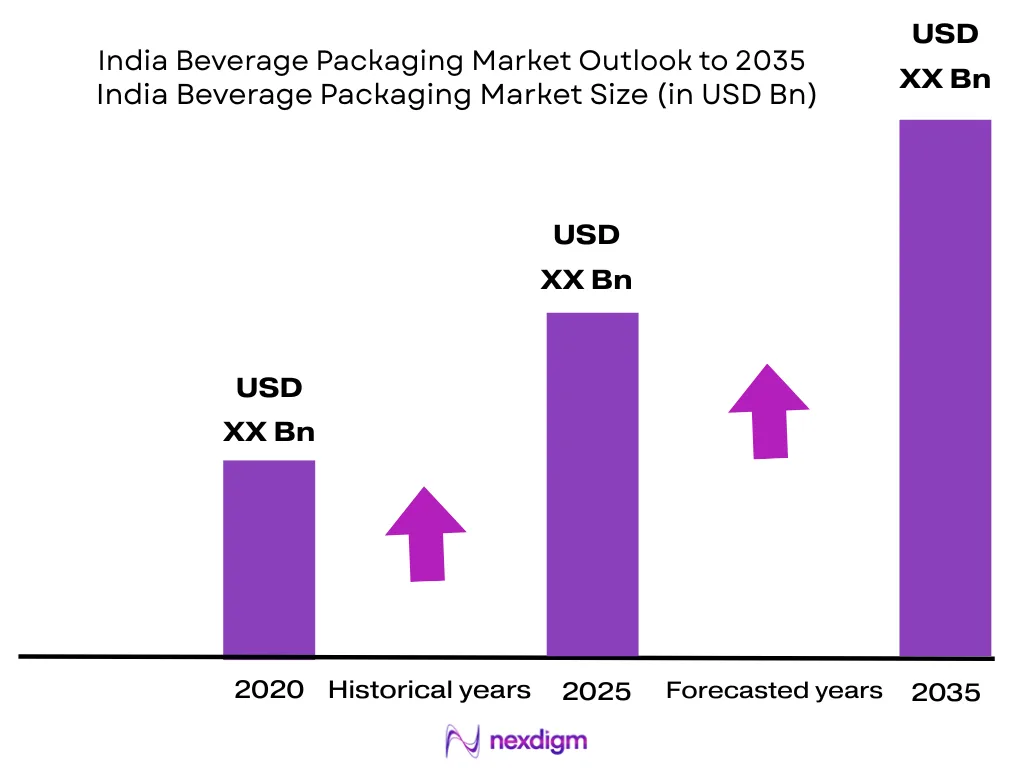
The India Beverage Packaging Market is valued at approximately USD ~ billion and is forecast to expand at a CAGR of % during 2026–2035. The two latest fiscal readings place nominal GDP at approximately ₹295.36 lakh crore and ₹318.07 lakh crore, supporting packaged-water, soft-drink, dairy, juice, beer, spirits and functional-beverage demand. Population scale, urban distribution, travel consumption, quick commerce and expanding filling capacity drive requirements for bottles, cartons, cans, pouches, closures and transport packaging. Delhi NCR, Mumbai–Pune, Ahmedabad–Vadodara, Hyderabad, Bengaluru–Kolar, Chennai–Sriperumbudur, Kolkata–Howrah, Punjab, Uttar Pradesh and Uttarakhand dominate India’s beverage-packaging ecosystem. These clusters combine beverage bottlers, dairy processors, breweries, resin suppliers, preform moulders, glass plants, carton converters, logistics infrastructure and dense consumer markets. Western and southern corridors offer strong port and manufacturing access, while northern clusters serve packaged water, carbonated beverages, dairy drinks and institutional distribution across populous inland markets.
Market Segmentation
By Packaging Material
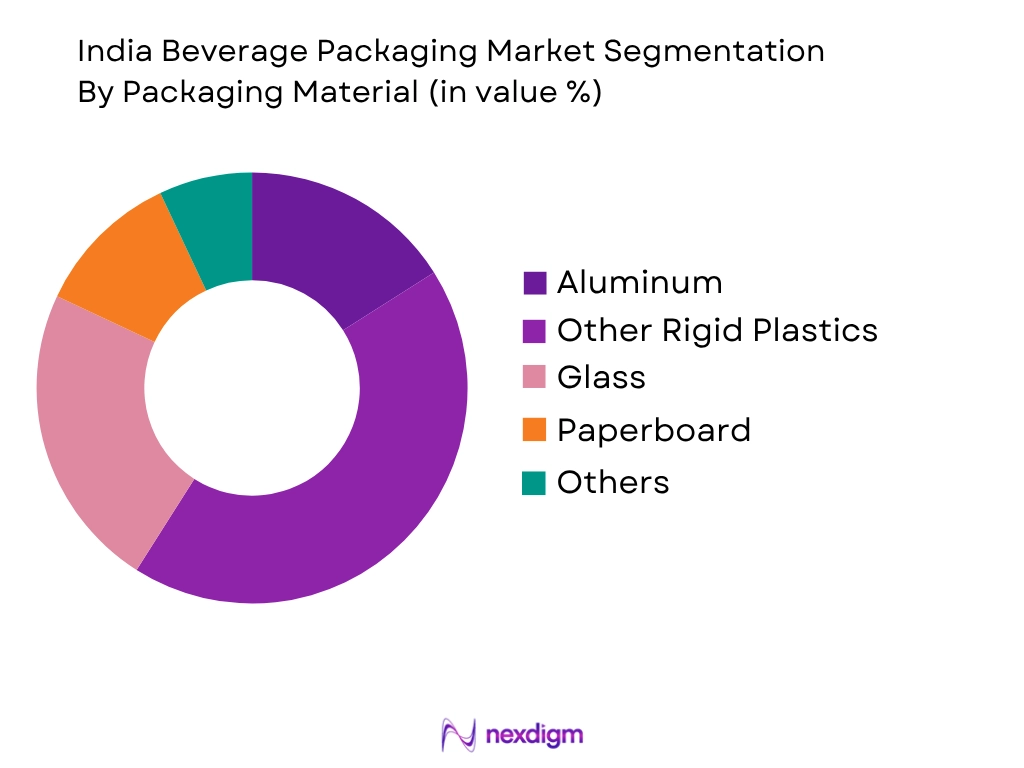
The India Beverage Packaging Market is segmented into PET and other rigid plastics, glass, paperboard and aseptic cartons, aluminium and steel, and flexible or composite packaging. PET and other rigid plastics hold the dominant indicative share because packaged drinking water, carbonated soft drinks, juices, edible beverages, sports drinks, dairy products and family-size formats rely extensively on PET bottles, preforms, caps and labels. PET offers low container weight, transparency, resealability, high-speed filling compatibility and efficient national transportation. Returnable and one-way glass remain important for soft drinks, beer and spirits, while aseptic cartons are deeply established in milk, juice, flavoured dairy drinks and shelf-stable beverages. Aluminium cans are gaining relevance in energy drinks, beer, ready-to-drink alcohol and premium soft drinks, but their manufacturing and filling base remains less extensive than PET. Flexible packaging serves dairy pouches, concentrates, drink powders, bag-in-box systems and selected low-unit formats.
By Beverage Category
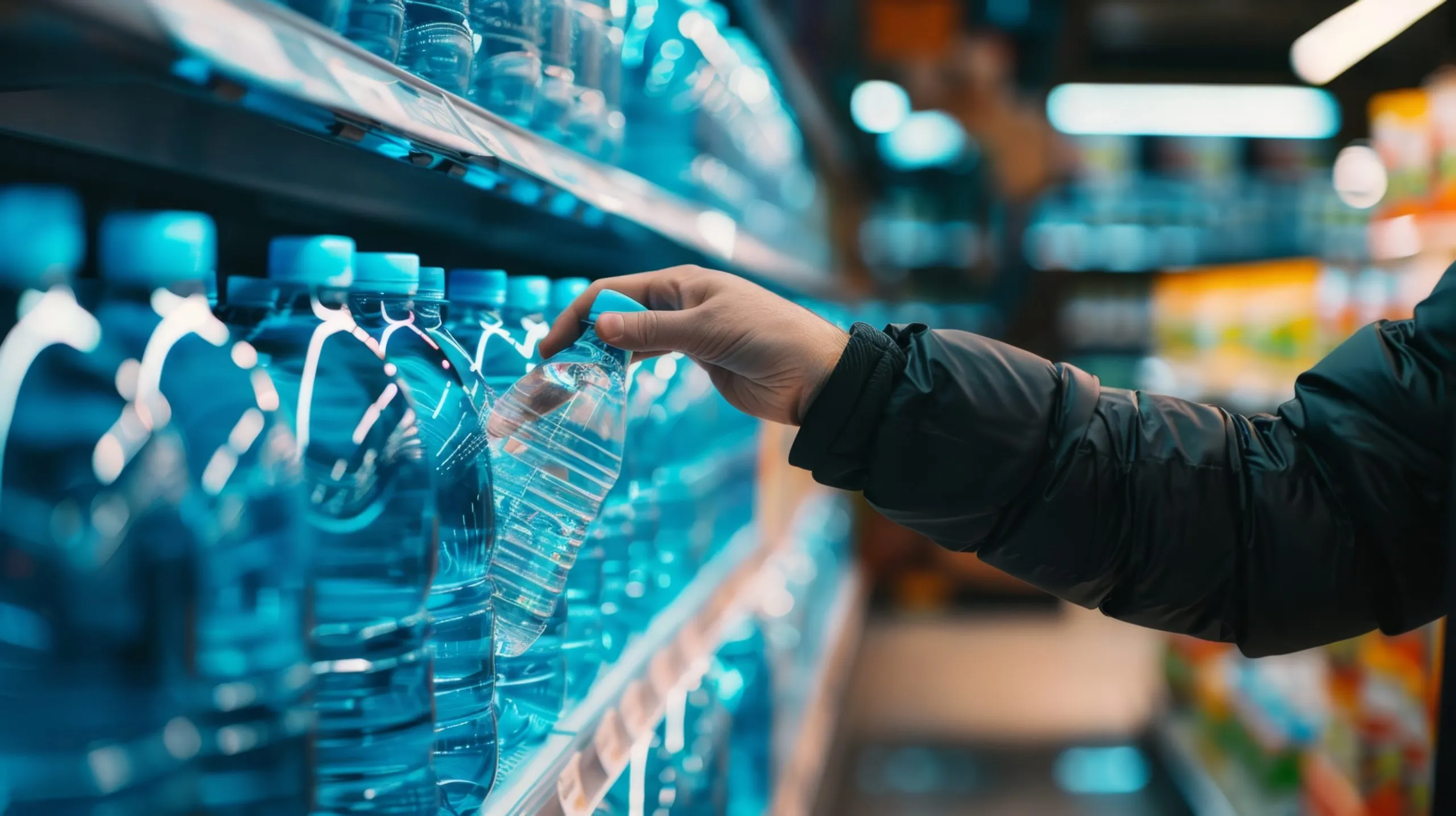
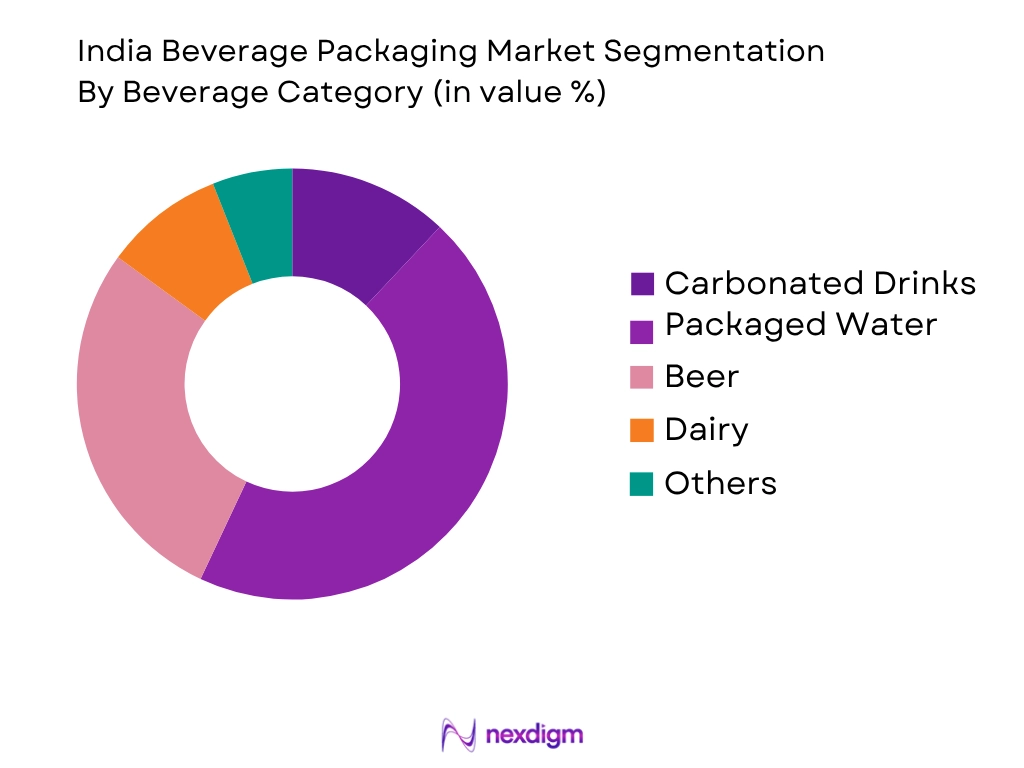
The India Beverage Packaging Market is segmented into packaged drinking water, carbonated soft drinks, dairy and traditional milk beverages, juices and fruit drinks, alcoholic beverages, energy and sports drinks, ready-to-drink tea and coffee, functional beverages and traditional drinks. Packaged drinking water holds the dominant indicative share because bottled water is distributed through supermarkets, kirana stores, hotels, restaurants, railway stations, airports, offices, hospitals, events and roadside retail. The category uses small PET bottles, multi-serve containers, large refillable water jars, caps, labels, shrink films and corrugated cases. Carbonated beverages contribute substantial demand for PET, returnable glass and cans. Dairy packaging is diversified across flexible pouches, HDPE and PET bottles, cups, gable-top cartons and aseptic packs. Juice, mango beverages, coconut water and flavoured milk support hot-fill PET and aseptic-carton consumption. Beer and spirits sustain glass, cans, closures, labels and presentation packaging.
Competitive Landscape
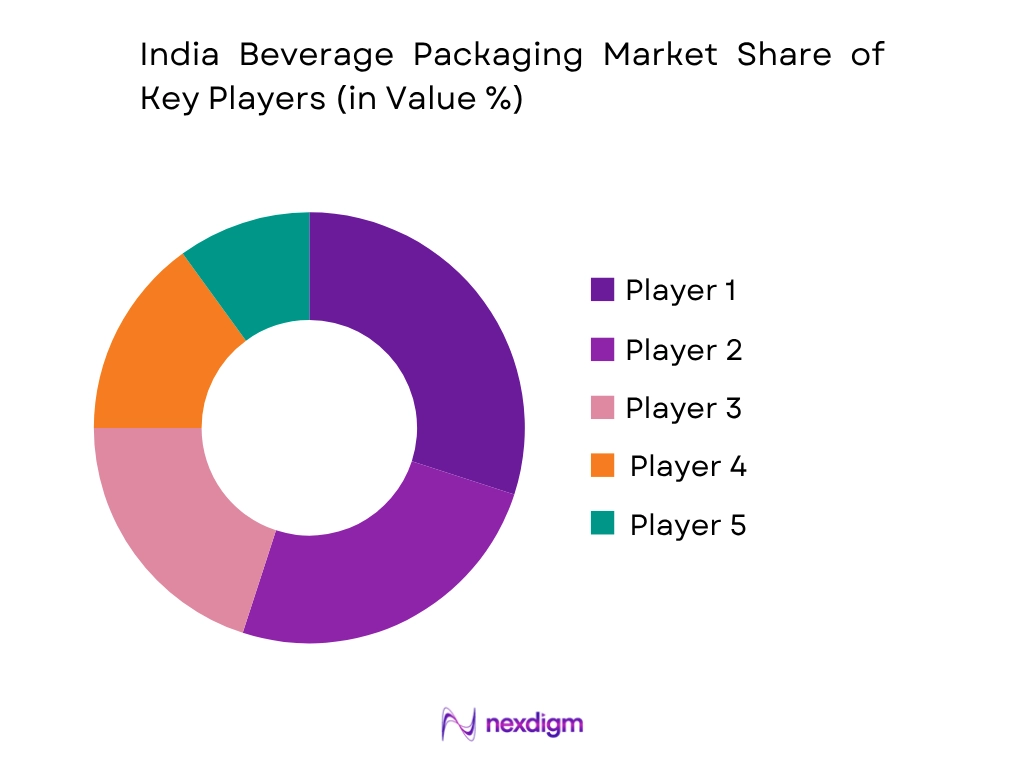
The India Beverage Packaging Market includes large PET bottle and preform manufacturers, glass-container producers, aseptic-carton suppliers, flexible-packaging companies, closure specialists and emerging metal-can participants. Competition depends on plant proximity to bottlers, high-speed filling compatibility, lightweighting, food-contact compliance, food-grade recycled PET availability, EPR documentation and the ability to supply multiple package sizes. Manjushree Technopack, AGI Greenpac, ALPLA India, Tetra Pak India and UFlex represent major positions across rigid plastic, glass, cartons, flexible packaging and recycled-material systems.
| Company | Establishment Year | Headquarters | Core Beverage Portfolio | Material Capability | Principal Applications | India Footprint | Circularity Capability | Strategic Differentiation |
| Manjushree Technopack | 1983 | Bengaluru, India | ~ | ~ | ~ | ~ | ~ | ~ |
| AGI Greenpac | 1981 glass-packaging heritage | Hyderabad, India | ~ | ~ | ~ | ~ | ~ | ~ |
| ALPLA India | 1955 group heritage | Hard, Austria | ~ | ~ | ~ | ~ | ~ | ~ |
| Tetra Pak India | 1951 group heritage | Pully, Switzerland | ~ | ~ | ~ | ~ | ~ | ~ |
| UFlex | 1985 | Noida, India | ~ | ~ | ~ | ~ | ~ | ~ |
India Beverage Packaging System Market Analysis
Growth Drivers
Expansion of Packaged Water, Dairy, and Ready-to-Drink Distribution
India’s expanding beverage production and distribution system is increasing demand for PET bottles, preforms, caps, returnable glass bottles, aluminium cans, aseptic cartons, dairy pouches, labels, corrugated cases, reusable crates, and filling-line equipment. India’s nominal GDP reached ₹295.36 lakh crore in 2023–24 and increased to ₹318.07 lakh crore in 2024–25, while the World Bank recorded current-dollar GDP of approximately USD 3.91 trillion in 2024. This economic scale supports investments in beverage plants, cold-chain networks, warehouses, modern retail, quick-commerce platforms, hotels, restaurants, railways, airports, hospitals, schools, offices, and roadside distribution. Beverage packaging requirements are particularly extensive because India’s market combines packaged drinking water, carbonated soft drinks, flavoured milk, lassi, buttermilk, fruit beverages, mango drinks, energy drinks, juices, plant-based beverages, beer, spirits, ready-to-drink alcohol, functional products, and traditional beverages. Each product requires a different balance of oxygen protection, light resistance, carbonation strength, filling temperature, shelf life, tamper evidence, portability, and affordability. Packaged drinking water relies heavily on lightweight PET bottles, large refillable jars, closures, labels, shrink film, and corrugated transit packaging. Dairy beverages use flexible pouches, PET and HDPE bottles, cups, gable-top cartons, and aseptic packs because distribution conditions vary between refrigerated urban retail and ambient regional routes. Carbonated beverages depend on pressure-resistant PET, returnable glass, aluminium cans, crown closures, and reusable beverage crates. India’s regional manufacturing clusters reinforce packaging demand. Delhi NCR, Haryana, Punjab, Uttar Pradesh, Uttarakhand, Gujarat, Maharashtra, Telangana, Karnataka, Tamil Nadu, Andhra Pradesh, Kerala, West Bengal, Madhya Pradesh, and Assam contain significant beverage filling, dairy processing, packaging conversion, and logistics operations. Locating bottle, preform, closure, and carton production near filling plants reduces the transport of empty packaging and allows converters to provide rapid technical support during line trials. Quick-commerce and travel channels also favour compact single-serve formats that can withstand rapid picking, motorcycle delivery, repeated handling, and limited storage space. These factors make beverage packaging a systems market rather than a simple container market: suppliers must integrate material selection, filling compatibility, closure performance, labelling, secondary packaging, palletisation, and recovery. India’s ₹318.07 lakh crore nominal economy and approximately USD 3.91 trillion current-dollar output therefore provide a measurable macroeconomic foundation for continued beverage packaging system development. Sources: Ministry of Statistics and Programme Implementation and World Bank.
Plastic Packaging EPR and Food-Grade rPET Regulation
India’s plastic packaging EPR and food-contact framework is accelerating investment in bottle redesign, recycled-content sourcing, packaging-data systems, registered recycling capacity, and producer-recycler partnerships. Beverage producers, importers, and brand owners must account for rigid plastic packaging, flexible plastic packaging, multilayer packaging, and other applicable structures placed into the market. This directly affects PET bottles, HDPE containers, polypropylene closures, shrink films, labels, secondary plastic wrapping, beverage pouches, and imported filled packaging. The compliance process requires companies to classify packaging correctly, register through the relevant system, calculate obligations, obtain valid recycling evidence, and maintain records connecting packaging introduced into commerce with material recovered or processed. The regulatory environment became more significant for beverage applications when FSSAI’s packaging framework formally permitted recycled PET to be used for packaging, storing, carrying, or dispensing food products under specified conditions. FSSAI issued detailed food-contact rPET guidance in May 2025, requiring material produced through approved processes to be tested through NABL- or ILAC-accredited laboratories. The approved-manufacturer list published in September 2025 contained 10 approved food-grade rPET manufacturing lines or facilities, including Srichakra Polyplast, Reliance Industries, Ganesha Ecopet, UFlex, Ester Industries, JB Ecotex, Dodhia Synthetic, and Safar Ecopet-related operations. This represents a significant development for packaged water, soft drinks, juice, dairy drinks, edible liquids, and functional beverages because domestic beverage-grade resin availability is necessary for higher recycled-content adoption. Approval does not remove the need for technical qualification. Beverage companies must verify resin source, contamination control, intrinsic viscosity, colour, odour, acetaldehyde performance, migration safety, preform heating, bottle-blowing consistency, and compatibility with the intended product and storage condition. Packaging design also affects recycling performance. Clear PET containers, reduced pigmentation, smaller labels, wash-off adhesives, compatible caps, and limited use of full-body shrink sleeves improve sorting and reduce contamination. The beverage packaging system must therefore connect brand owners, bottle manufacturers, preform suppliers, waste collectors, kabadiwalas, aggregators, material recovery facilities, registered recyclers, laboratories, and filling plants. India’s nominal GDP is estimated at ₹346.36 lakh crore in 2025–26, compared with ₹318.07 lakh crore in the preceding fiscal period, providing a growing industrial base for recycling equipment, testing laboratories, collection infrastructure, and packaging conversion. The combination of EPR obligations, FSSAI approval requirements, 10 approved rPET lines or facilities, and rising domestic output is shifting beverage packaging procurement toward suppliers capable of delivering verified recycled content, food-contact conformity, material traceability, and operational recovery partnerships. Sources: FSSAI and Ministry of Statistics and Programme Implementation.
Market Challenges
Fragmented Collection and Inconsistent Recycled Feedstock
India’s beverage packaging recovery system remains fragmented across municipal collection, informal waste picking, kabadiwala networks, scrap dealers, aggregators, brand-sponsored programs, material recovery facilities, and registered recyclers. PET bottles, aluminium cans, glass bottles, beverage cartons, flexible pouches, closures, labels, shrink films, and corrugated cases have different commercial values and require separate processing routes. High-value transparent PET bottles and aluminium cans are more likely to be recovered because collectors can identify established buyers. Low-weight labels, caps, multilayer pouches, sachets, contaminated cups, and small flexible packs are harder to aggregate in commercially meaningful quantities. India’s large geographic scale amplifies this problem. Beverage packaging generated in Delhi, Mumbai, Bengaluru, Chennai, Hyderabad, Ahmedabad, Kolkata, Pune, or other major cities may be located close to aggregators and recyclers, while packaging generated in smaller towns and rural districts can be hundreds of kilometres from appropriate processing facilities. Transporting uncompressed PET bottles or mixed low-density plastics is inefficient because vehicles carry large volumes of air relative to material weight. Feedstock quality also varies. PET bottle bales may contain coloured bottles, PVC, food residue, oils, sand, moisture, labels, adhesives, closures, and non-bottle plastics. These contaminants affect recycled resin colour, odour, intrinsic viscosity, processing stability, and suitability for food-contact use. Glass must be separated from ceramics, stones, metals, laboratory glass, and heat-resistant products before returning to container furnaces. Beverage cartons require hydrapulping technology capable of recovering paper fibre while managing polymer and aluminium fractions. Flexible beverage packaging may combine PET, polyethylene, aluminium foil, inks, and adhesives, making conventional mechanical recycling difficult. FSSAI’s food-grade rPET requirements increase the importance of controlled input streams because approved recycling technology alone cannot compensate for poorly sorted or contaminated feedstock. India had 10 approved food-grade rPET manufacturing lines or facilities by September 2025, but the effectiveness of these assets depends on consistent access to suitable post-consumer bottles. The macroeconomic scale of ₹318.07 lakh crore in 2024–25 creates substantial beverage throughput, yet discarded volume does not automatically become specification-grade secondary material. Recovery requires covered storage, balers, sorting tables, digital scales, collection vehicles, washing systems, occupational-safety equipment, working capital, and direct purchase agreements. Informal collectors also need transparent payment systems and predictable offtake so that material is not diverted to lower-value applications. Beverage brands can improve performance through distributor backhaul, retail take-back, collection at railway stations and events, school programs, and long-term contracts with registered recyclers. Until these systems become more geographically consistent, packaging manufacturers may face shortages of food-grade rPET, clean cullet, recycled HDPE, and high-quality recovered fibre even when substantial packaging waste exists. Sources: FSSAI, Ministry of Statistics and Programme Implementation, and India’s plastic EPR framework.
Food-Contact Compliance and Filling-System Conversion Complexity
India’s beverage packaging system must satisfy food safety, product protection, machinery compatibility, shelf-life performance, climate exposure, transport durability, recyclability, and affordability at the same time. This creates substantial technical barriers when beverage companies switch materials or increase recycled content. FSSAI’s Packaging Regulations require food-contact materials to be suitable for their intended use, and food businesses must obtain applicable conformity documentation from NABL-accredited laboratories. A revised inspection order issued in April 2025 classified food-grade packaging material as critical to food safety, increasing the operational importance of supplier records, certificates, migration testing, and traceability. Food-grade rPET adds further requirements. The May 2025 guidance requires approved processes, accredited testing, source control, and compliance with intended food-contact conditions. A recycled PET resin that performs adequately in a non-food tray cannot automatically be used for packaged water, carbonated beverages, juice, or dairy. Beverage bottles require stable intrinsic viscosity, colour, acetaldehyde performance, contaminant removal, and blow-moulding consistency. Increasing rPET content can affect preform heating, wall distribution, top-load strength, bottle clarity, and line speed. Excessive lightweighting may cause panel deformation, cap leakage, poor grip strength, or pallet instability during long road journeys and high-temperature storage. Switching from PET to aluminium cans requires different depalletising, rinsing, filling, seaming, coding, inspection, and secondary-packaging systems. Returnable glass requires washing, caustic control, bottle inspection, crack detection, crate handling, and distributor backhaul. Aseptic cartons require sterile processing, controlled barrier structures, filling-machine compatibility, and reliable seals. Dairy pouches need consistent film thickness and sealing under high-speed form-fill-seal conditions. Beverage pouches and bag-in-box systems must maintain spout, tap, and seal performance while protecting the product from oxygen, light, and puncture. India’s beverage distribution environment introduces additional stresses, including high ambient temperatures, monsoon humidity, uneven roads, prolonged storage, manual handling, and variable cold-chain availability. These conditions can expose weaknesses that may not appear during laboratory testing. The economic scale is also significant: nominal GDP reached ₹318.07 lakh crore in 2024–25, while provisional estimates place it at ₹346.36 lakh crore in 2025–26. High-volume beverage plants operating within this economy can process tens of thousands of containers per hour, meaning a minor defect in a preform neck, cap liner, can end, carton blank, or label adhesive can stop production and generate substantial packaging and product waste. Packaging suppliers therefore require polymer scientists, food-contact specialists, filling-line engineers, closure technicians, glass technologists, migration laboratories, and regulatory teams. Smaller regional beverage companies frequently depend on packaging suppliers and co-packers for this expertise. Sources: FSSAI and Ministry of Statistics and Programme Implementation.
Market Opportunities
Food-Grade rPET, Automated Sorting, and Bottle-to-Bottle Systems
India has a significant opportunity to establish regional bottle-to-bottle ecosystems connecting beverage brands, collectors, aggregators, recyclers, preform manufacturers, bottle blowers, and filling plants. The commercial foundation already exists. India recorded current-dollar GDP of approximately USD 3.91 trillion in 2024, while nominal domestic output increased from ₹295.36 lakh crore in 2023–24 to ₹318.07 lakh crore in 2024–25. This scale supports large recurring consumption of packaged water, carbonated soft drinks, sports beverages, juice, flavoured milk, edible liquids, and functional drinks, producing substantial post-consumer PET availability. FSSAI’s updated regulatory pathway makes food-grade rPET commercially more relevant. Its approved-manufacturer list contained 10 approved lines or facilities as of September 2025, while the May 2025 guidelines established requirements for recycling technology, input control, accredited laboratory testing, traceability, and intended use. The current opportunity is not merely to produce recycled flakes or general-purpose pellets; it is to create resin that beverage companies can qualify for new food-contact bottles. A closed-loop system begins with package design. Clear PET, compatible polyethylene or polypropylene closures, reduced sleeve coverage, washable inks, wash-off adhesives, and avoidance of PVC improve sorting and recycling yield. Collection can be developed through supermarkets, quick-commerce dark stores, beverage depots, offices, schools, railway stations, airports, hotels, hospitals, stadiums, and distributor backhaul. Digital collection platforms can record the weight, location, collector, aggregator, and recycler associated with each batch. Automated near-infrared sorting, artificial-intelligence inspection, label removal, hot washing, melt filtration, decontamination, crystallisation, and solid-state processing can raise output consistency. Laboratories can verify intrinsic viscosity, colour, acetaldehyde, contaminant reduction, migration, and bottle performance. Beverage companies can strengthen the economics by signing long-term offtake agreements rather than purchasing recycled resin through irregular spot markets. Regional integration is important because transporting empty bottles and low-density bales across long distances reduces efficiency. Recycling and preform capacity located near Delhi NCR, western India, Hyderabad, Bengaluru, Chennai, Kolkata, and other filling clusters can shorten supply chains and allow direct technical collaboration. The opportunity also extends to recycling software, bale-quality certification, reverse-logistics management, collector financing, and bottle-design services. India’s economy is estimated to reach ₹346.36 lakh crore in 2025–26, providing a current industrial basis for investment in these systems. The combination of expanding domestic output, regulated food-grade use, and 10 approved rPET lines or facilities creates a credible path for future beverage packaging growth based on current rather than forecasted statistics. Sources: FSSAI, Ministry of Statistics and Programme Implementation, and World Bank.
Regional Aseptic Packaging, Aluminium Cans, and Smart Filling Systems
India’s expanding beverage diversity creates an opportunity for regional aseptic-filling capacity, specialty aluminium cans, digital printing, smart inspection, and flexible co-packing systems. Dairy drinks, flavoured milk, lassi, plant-based beverages, mango drinks, juices, coconut water, protein beverages, ready-to-drink coffee, energy drinks, beer, and cocktails have different package and filling requirements. Aseptic cartons are particularly relevant because they enable selected dairy, juice, and nutritional products to move through extended ambient distribution without continuous refrigeration before opening. This is commercially important in a country where beverage products must travel between large manufacturing clusters, tier-two cities, small towns, and rural retail points. Investments can include aseptic processing, sterilisation, filling machines, barrier-laminate conversion, closure application, quality inspection, and recovery partnerships for used cartons. Aluminium cans provide a parallel opportunity in energy drinks, beer, carbonated water, ready-to-drink alcohol, premium soft drinks, and functional beverages. Sleek and slim formats offer strong shelf differentiation, while full-body printing, digital decoration, and sleeving support regional launches and smaller brands. The opportunity is not limited to container manufacturing. India needs co-packers that can handle lower production runs, multiple can sizes, PET bottles, glass, pouches, and cartons without requiring emerging beverage companies to build their own filling plants. Smart filling systems can use machine vision, automated seam inspection, cap-torque measurement, fill-level detection, leak testing, coding verification, and real-time production data. These technologies reduce rejected packs and help beverage companies meet food-safety and traceability requirements. India’s nominal GDP increased to ₹318.07 lakh crore in 2024–25, while the World Bank recorded GDP of approximately USD 3.91 trillion in 2024 and the Ministry of Statistics and Programme Implementation estimated ₹346.36 lakh crore for 2025–26. These indicators support continued investment in advanced manufacturing, warehousing, retail, and beverage distribution. FSSAI’s current packaging regime also strengthens demand for technical systems because food-contact packaging requires conformity documentation, and the April 2025 inspection framework identifies food-grade packaging as critical to food safety. Regional co-packing can be positioned near Delhi NCR, Mumbai–Pune, Gujarat, Hyderabad, Bengaluru, Chennai, Andhra Pradesh, Kolkata, Uttar Pradesh, Uttarakhand, and Assam to reduce container transport and support local brands. The future growth opportunity lies in integrating packaging design, filling machinery, digital inspection, regulatory documentation, short-run decoration, and regional distribution rather than supplying isolated containers. Current GDP, FSSAI compliance requirements, and the expanding approved rPET ecosystem provide measurable support for these investments without relying on future market-size estimates. Sources: Ministry of Statistics and Programme Implementation, World Bank, and FSSAI.
Future Outlook
The India Beverage Packaging Market is expected to expand through 2035 as packaged-water access, dairy processing, soft-drink penetration, quick commerce, institutional consumption and premium beverage launches increase container demand. PET bottles, aseptic cartons, returnable glass, aluminium cans and food-grade recycled PET will remain central to market development. India’s nominal GDP is estimated at ₹346.36 lakh crore for 2025–26, compared with ₹318.07 lakh crore in the preceding fiscal period. This broader economic expansion supports organised retail, foodservice, travel, cold-chain distribution and beverage-manufacturing investment. Food-grade rPET represents one of the market’s most significant development areas. FSSAI’s Packaging First Amendment Regulations notified in March 2025 formalised the use of recycled plastics in food packaging under specified conditions. The accompanying guidelines require approved recycling technology, controlled input materials, traceability, quality testing and assessment through accredited laboratories.
Major Players
- Manjushree Technopack
- Pearl Polymers
- ALPLA India
- PGP Glass
- Hindusthan National Glass and Industries
- AGI Greenpac
- UFlex
- Ester Industries
- Tetra Pak India
- SIG India
- Huhtamaki India
- Hitech Corporation
- Chemco Group
- Bericap India
- Manaksia Aluminium Company
Key Target Audience
- Beverage-container and packaging-material manufacturers
- Packaged-water, soft-drink, dairy, juice, beer and spirits producers
- Contract beverage fillers and co-packaging companies
- Modern retailers, quick-commerce platforms and beverage distributors
- Waste collectors, aggregators, recyclers and plastic waste processors
- Investments and venture capitalist firms
- Private-equity and strategic packaging investors
- Government and regulatory bodies
Research Methodology
Step 1: Identification of Key Variables
The first phase maps resin producers, bottle and preform manufacturers, glass companies, carton suppliers, closure producers, beverage brands, franchise bottlers, co-packers, retailers, waste collectors and recyclers. Key variables include container units, package weight, beverage volume, recycled content, returnability, filling technology, EPR category and food-contact status.
Step 2: Market Analysis and Construction
Historical information is compiled by material, container format, beverage category, pack size, region, filling process and distribution channel. Bottom-up analysis evaluates plant capacity, container shipments, filling volumes, material tonnage and company revenue. Top-down analysis reviews GDP, beverage production, retail activity, imports, exports and recycling flows.
Step 3: Hypothesis Validation and Expert Consultation
Market hypotheses are validated through computer-assisted telephone interviews with converters, beverage manufacturers, dairy processors, fillers, resin companies, recyclers, retailers and regulatory professionals. Consultations assess capacity utilisation, package qualification, rPET availability, EPR compliance, returnable-container systems, regional logistics and customer switching behaviour.
Step 4: Research Synthesis and Final Output
Supply-side and demand-side findings are triangulated to reconcile packaging production, beverage filling, imports, recycled-feedstock availability and customer procurement. Segment shares and forecasts are tested against package weights, plant footprints, filling capacity, regulatory requirements, company disclosures and primary-industry feedback.

- Executive Summary
- Research Methodology (Market Definitions and Assumptions, Beverage Packaging Inclusion and Exclusion Criteria, Abbreviations, Market Sizing Approach, Top-Down Analysis, Bottom-Up Analysis, Beverage Filling Volume Model, Container Unit Conversion Model, Packaging Material Tonnage Assessment, Domestic Production Analysis, Import and Export Assessment, Demand-Side Interviews, Supply-Side Interviews, Data Triangulation, State-Level Scenario Modelling, Forecasting Framework, Limitations and Future Conclusions)

- Definition and Scope
- Market Evolution and Industry Genesis
- Evolution of Beverage Container Materials
- Development of PET Beverage Packaging
- Expansion of Returnable Glass Bottle Systems
- Development of Aluminium Beverage Cans

- Growth Drivers (Large Consumer Base, Packaged-Water Demand, Dairy Beverage Expansion, Carbonated Soft Drink Consumption, Aseptic Beverage Adoption, Quick Commerce, Travel Consumption and Organised Retail)
- Market Challenges (Food-Grade rPET Availability, Fragmented Collection, Glass Freight Intensity, Informal-Sector Dependence, State Regulatory Variation, Low-Unit Pack Economics and Multilayer Recycling)
- Market Opportunities (Food-Grade rPET, Aluminium Can Expansion, Aseptic Dairy Packaging, Returnable Glass Optimisation, Digital Can Printing, Fibre-Based Multipacks, Smart Closures and Regional Co-Packing)
- Market Trends (PET Lightweighting, Can Premiumisation, Recycled Content, Aseptic Cartons, Returnable Bottles, Low-Unit Packs, Digital Printing, Anti-Counterfeit Labels and Packaging Carbon Disclosure)
- SWOT Analysis
- Porter’s Five Forces Analysis
- PESTLE Analysis

- By Market Value (2020-2025)
- By Beverage Container Units (2020-2025)
- By Packaged Beverage Volume (2020-2025)

- By Packaging Material (In Value %)
PET
HDPE
Polypropylene
Polyethylene Films
Aluminium
Steel and Tinplate
Glass - By Beverage Category (In Value %)
Carbonated Soft Drinks
Packaged Drinking Water
Natural Mineral Water
Flavoured and Enhanced Water
Energy Drinks
Sports and Isotonic Drinks
Fruit Juices - By Distribution Channel (In Value %)
Supermarkets and Hypermarkets
Modern Grocery Stores
Traditional Kirana Stores
Convenience Stores
Cash-and-Carry Wholesalers
Chemists and Pharmacies - By Region (In Value %)
North India
West India
South India
East India
Central India
North East India

- Market Share of Major Players
- Cross Comparison Parameters (Beverage Container Material and Format Breadth, Annual Beverage Container and Closure Manufacturing Capacity, India Plant Footprint and Proximity to Filling Clusters, Food-Grade rPET and Closed-Loop Material Capability, Filling-Line Compatibility and High-Speed Technical Support, Beverage Category and Pack-Size Coverage, FSSAI EPR and Recycled-Content Compliance Support, Lightweighting and New-Format Commercialisation Capability)
- SWOT Analysis of Major Players
- Detailed Profiles of Major Companies
Manjushree Technopack
Pearl Polymers
ALPLA India
PGP Glass
Hindusthan National Glass and Industries
AGI Greenpac
UFlex
Ester Industries
Tetra Pak India
SIG India
Huhtamaki India
Hitech Corporation
Chemco Group
Bericap India
Manaksia Aluminium Company

- Carbonated Soft Drink Producer Analysis
- Packaged-Water Producer Analysis
- Energy and Sports Drink Producer Analysis
- Juice and Fruit-Beverage Producer Analysis
- Dairy Cooperative and Processor Analysis
- Plant-Based Beverage Producer Analysis

- By Market Value (2026-2035)
- By Beverage Container Units (2026-2035)
- By Packaged Beverage Volume (2026-2035)


 Request a Sample
 Ask for Customization
 Get a Quote
 Enquire Now