
 Download PDF
Market Overview
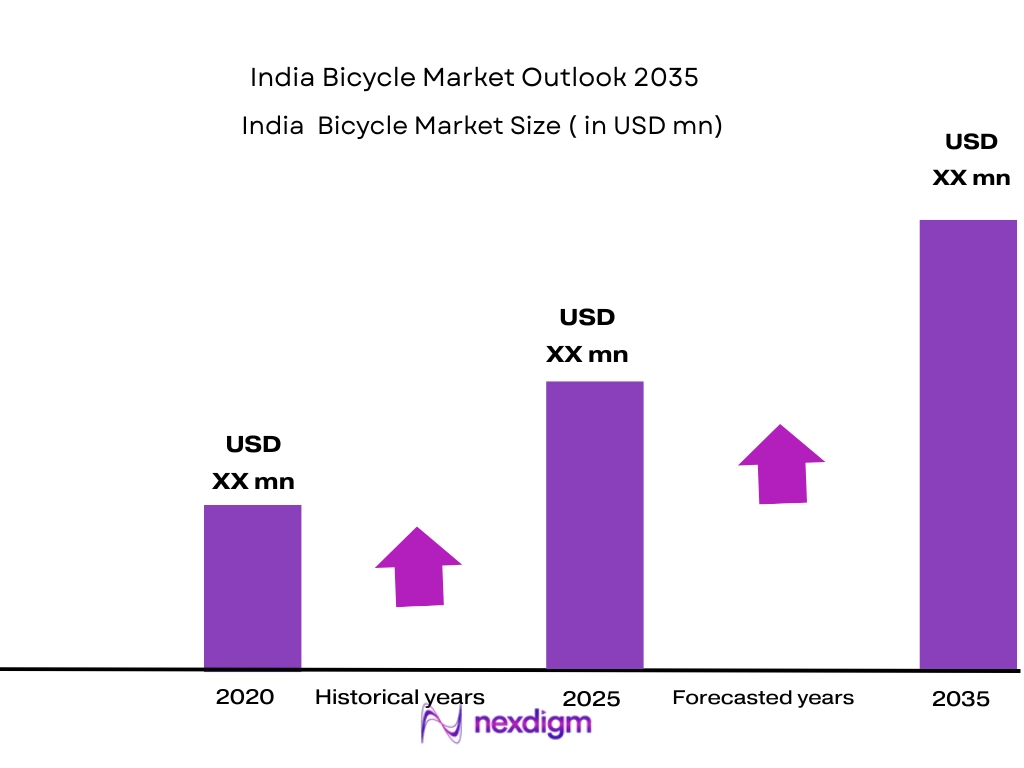
The India bicycle market demonstrates significant scale, with an estimated valuation of approximately USD ~ million, driven by rising demand for affordable mobility, increasing health awareness, and growing interest in fitness activities. The market is supported by India’s large population base, particularly in rural and semi-urban areas where bicycles remain a primary mode of transportation. Additionally, urban consumers are increasingly adopting bicycles for fitness, recreation, and short-distance commuting. The expansion of e-commerce platforms and organized retail channels has further improved accessibility, while technological advancements such as electric bicycles are transforming the market landscape.
Dominance within the India bicycle market is concentrated in states such as Uttar Pradesh, Tamil Nadu, Punjab, and Maharashtra, where strong manufacturing bases and high demand drive growth. Urban centers like Delhi NCR, Mumbai, and Bangalore contribute significantly due to increasing disposable income and fitness trends. Rural areas continue to account for a large share due to daily commuting needs, while government initiatives promoting eco-friendly transportation and cycling infrastructure further support market expansion.
Market Segmentation
By Product Type
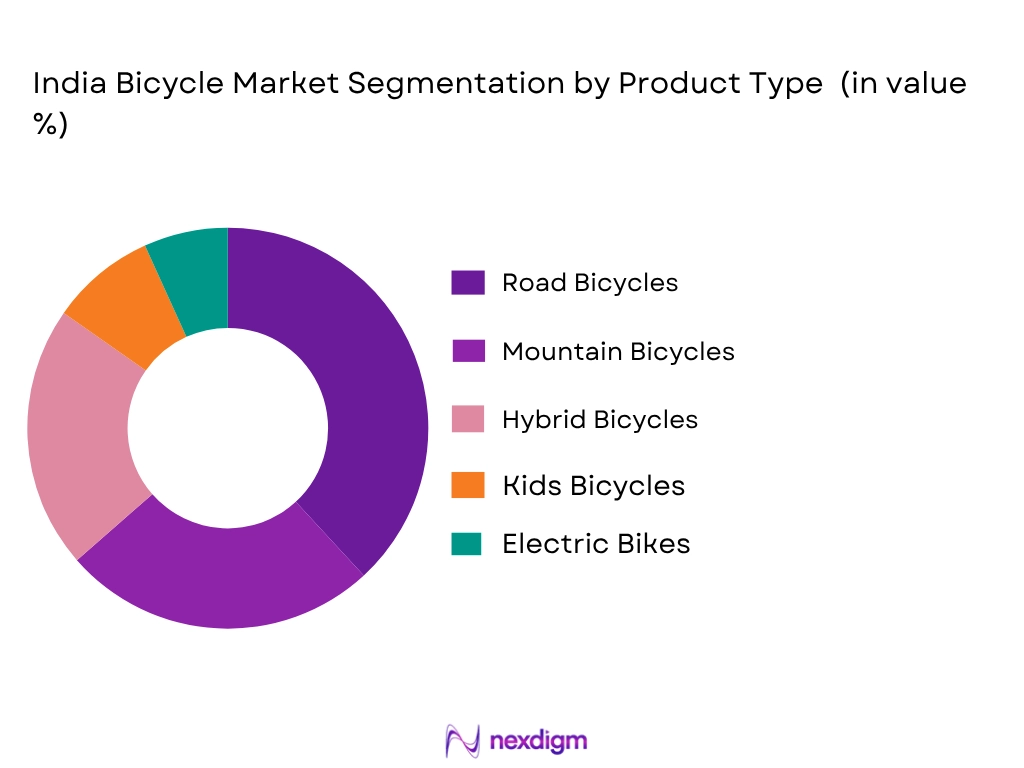
India bicycle market is segmented by product type into road bicycles, mountain bicycles, hybrid bicycles, kids bicycles, and electric bicycles. Recently, road and commuter bicycles dominate the market due to their affordability and widespread use for daily transportation, especially in rural and semi-urban regions. However, electric bicycles are gaining traction due to increasing urban adoption, convenience, and government support for green mobility solutions.
By End User
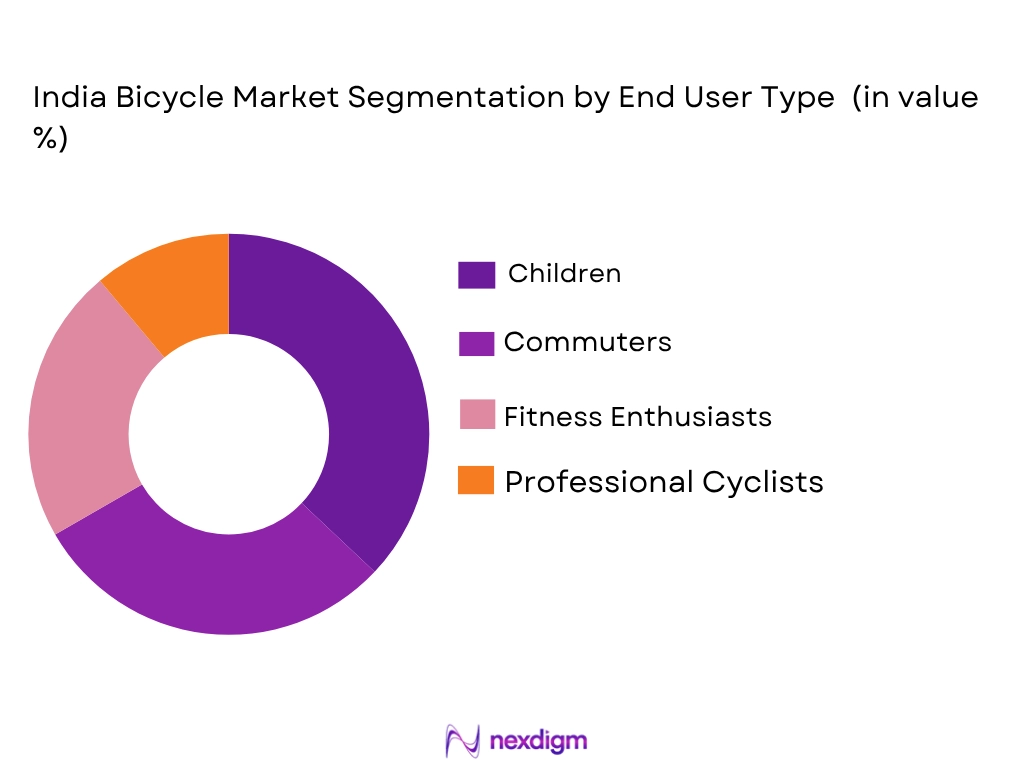
India bicycle market is segmented by end user into children, commuters, fitness enthusiasts, and professional cyclists. Recently, commuters dominate the market due to high demand for cost-effective transportation in both rural and urban areas. Additionally, fitness enthusiasts are emerging as a fast-growing segment, driven by rising health consciousness and lifestyle changes among urban populations.
Competitive Landscape
The India bicycle market is highly fragmented, with a mix of large domestic manufacturers and numerous regional players. Leading companies dominate through strong distribution networks, brand recognition, and large-scale manufacturing capabilities. Competitive dynamics are influenced by pricing, product variety, and distribution reach, while smaller players compete through localized offerings and cost advantages. Increasing focus on innovation and premium product segments is reshaping competition in the market.
| Company Name | Establishment Year | Headquarters | Technology Focus | Market Reach | Key Products | Revenue | Service Coverage Model |
| Hero Cycles | 1956 | India | ~ | ~ | ~ | ~ | ~ |
| Atlas Cycles | 1951 | India | ~ | ~ | ~ | ~ | ~ |
| TI Cycles | 1949 | India | ~ | ~ | ~ | ~ | ~ |
| Firefox Bikes | 2005 | India | ~ | ~ | ~ | ~ | ~ |
| Avon Cycles | 1948 | India | ~ | ~ | ~ | ~ | ~ |
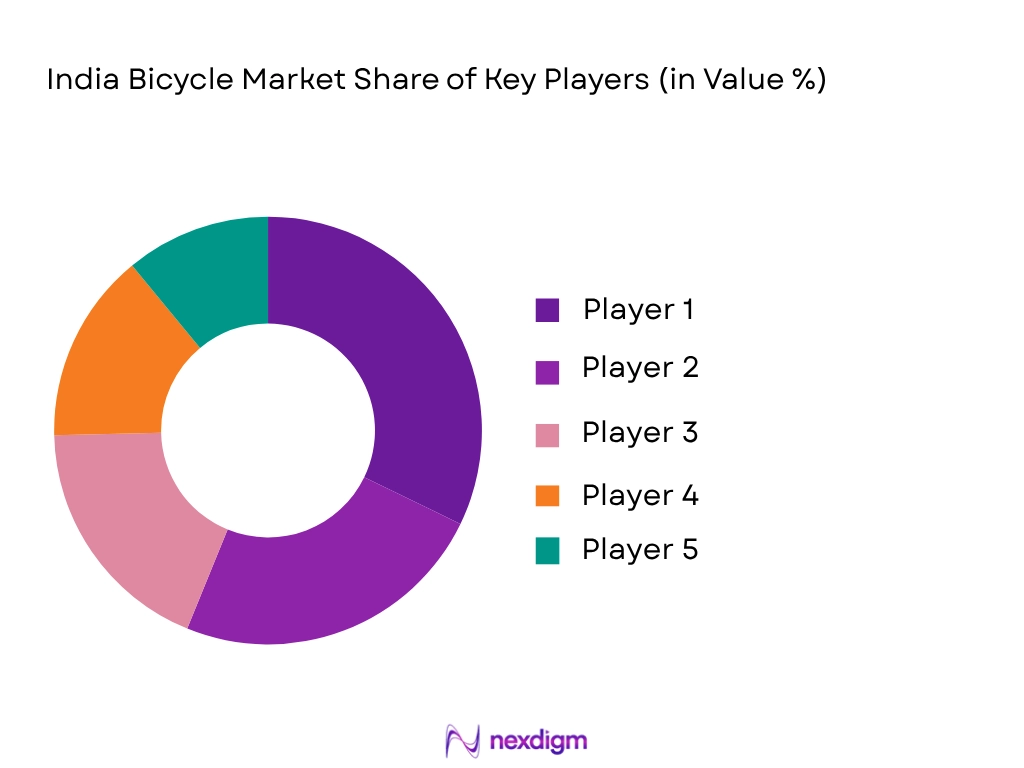
India Bicycle Market Analysis
Growth Drivers
Rising Health and Fitness Awareness
The India bicycle market is witnessing strong growth due to increasing awareness around health and fitness, especially among urban consumers. Cycling is being widely adopted as a convenient, low-cost, and effective form of exercise. Rising cases of lifestyle diseases such as obesity, diabetes, and cardiovascular issues are encouraging individuals to shift toward active routines. Additionally, social media trends, fitness influencers, and cycling communities are promoting cycling as a lifestyle choice. Corporate wellness initiatives and recreational cycling events are further boosting participation. This growing inclination toward healthier living is expected to sustain long-term demand for bicycles across urban and semi-urban regions.
Growing Urban Traffic Congestion
Rapid urbanization and increasing vehicle ownership have led to severe traffic congestion in major Indian cities, significantly impacting daily commuting. Bicycles are emerging as a practical and economical solution for short-distance travel, helping reduce travel time and dependency on fuel. With rising fuel prices and environmental concerns, consumers are increasingly considering bicycles as an alternative mode of transport. Many urban professionals and students are adopting cycling for last-mile connectivity. Government initiatives promoting non-motorized transport and development of cycling tracks in select cities further support this shift. This trend is expected to drive steady demand for bicycles in urban areas.
Market Challenges
Low Profit Margins in Mass Segment
The mass segment of the India bicycle market operates on very thin profit margins due to intense price competition and high cost sensitivity among consumers. Manufacturers are often forced to keep prices low to remain competitive, which limits their ability to invest in innovation and quality improvements. Rising raw material costs, especially steel and components, further put pressure on margins. Additionally, distributors and retailers also operate on limited margins, impacting overall profitability across the value chain. This creates sustainability challenges for organized players and restricts their ability to expand aggressively in the low-cost segment.
Unorganized Market Competition
The presence of a large unorganized sector poses a significant challenge to established bicycle manufacturers in India. Local players often offer cheaper alternatives with minimal branding and lower quality standards, attracting price-sensitive consumers. This leads to intense competition and price undercutting in the market. Organized players find it difficult to maintain consistent pricing and brand value in such an environment. Moreover, unorganized manufacturers often operate with lower compliance and operational costs, giving them a pricing advantage. This imbalance affects market structure and profitability, making it challenging for branded companies to dominate fully.
Opportunities
Growth in Premium and Performance Bicycles
The India bicycle market is witnessing increasing demand for premium and performance bicycles, particularly among urban consumers and fitness enthusiasts. With rising disposable incomes and lifestyle upgrades, consumers are willing to invest in high-quality bicycles that offer better performance, durability, and design. Segments such as mountain bikes, road bikes, and hybrid cycles are gaining popularity. Additionally, cycling as a recreational and sports activity is expanding, supported by cycling clubs and events. Manufacturers are focusing on innovation, lightweight materials, and advanced features to cater to this segment. This shift toward premiumization presents strong growth opportunities and higher profit margins.
E-Bicycle Adoption in Urban Areas
Electric bicycles are emerging as a key growth opportunity in the India bicycle market, especially in urban regions. E-bikes provide convenience, ease of use, and require less physical effort, making them suitable for a wider consumer base. Increasing fuel costs and environmental concerns are encouraging consumers to adopt eco-friendly transportation options. Government initiatives supporting electric mobility and sustainability further boost demand. Additionally, technological advancements in battery efficiency and design are improving product appeal. Urban commuters are increasingly using e-bikes for daily travel and last-mile connectivity. This segment is expected to grow rapidly in the coming years.
Future Outlook
The India bicycle market is expected to witness steady growth over the next decade, driven by increasing urbanization, rising health awareness, and government initiatives promoting sustainable mobility. The adoption of electric bicycles and technological advancements will play a key role in shaping the market. Expansion of cycling infrastructure and digital sales channels will further enhance accessibility and demand across regions.
Major Players
- Hero Cycles
- Atlas Cycles
- Avon Cycles
- TI Cycles
- Firefox Bikes
- Stryder Cycles
- Montra Cycles
- Ninety One Cycles
- EMotorad
- Hercules Cycles
- BSA Cycles
- Mach City
- La Sovereign
- Gang Cycles
- Road Master India
Key Target Audience
- Bicycle manufacturers
- Component suppliers
- Retailers and distributors
- E-commerce platforms
- Government and urban planning authorities
- Fitness and sports organizations
- Investment firms
Research Methodology
Step 1: Identification of Key Variables
- Key demand and supply variables influencing the India bicycle market are identified, including consumer preferences, pricing, and income levels.
- Regulatory policies, urban mobility trends, and sustainability initiatives are also considered.
- Technological factors such as e-bicycle adoption and product innovation are analyzed.
- These variables are mapped based on their impact on market growth and industry dynamics.
Step 2: Market Analysis and Construction
- Data is collected from secondary sources such as industry reports, company filings, and government publications.
- Market size is estimated using both top-down and bottom-up approaches for accuracy.
- Segmentation is developed based on product type, end user, and region.
- Analytical models are applied to ensure consistency and validate market estimates.
Step 3: Hypothesis Validation and Expert Consultation
- Initial findings and assumptions are tested through primary research and expert interviews.
- Inputs are gathered from manufacturers, distributors, retailers, and industry professionals.
- Market trends and growth projections are validated against real-world insights.
- Any discrepancies are refined to improve the reliability of the analysis.
Step 4: Research Synthesis and Final Output
- All research insights are compiled into a structured and comprehensive report format.
- Data is cross-verified using triangulation techniques to ensure accuracy.
- Key findings, trends, and strategic recommendations are clearly presented.
- The final output is designed to provide actionable insights for stakeholders and decision-makers.

- Executive Summary
- Research Methodology (Market Definitions and Scope of Bicycle Industry, Product Classification Framework, OEM vs Aftermarket Analysis, Pricing and Demand Assessment, Primary Interviews with Manufacturers, Distributors, Retailers, and Industry Experts, Bottom-Up Volume Modelling, Top-Down Revenue Validation, Assumptions on Pricing, Demand Cycles, and Supply Chain, Limitations and Data Triangulation Techniques, TAM/SAM/SOM Modelling Framework Based on Usage and Penetration)

- Definition and Scope
- Evolution of the Bicycle Ecosystem in India
- Timeline of Industry and Policy Developments
- Supply Chain and Distribution Lifecycle Integration
- Value Chain Analysis
- Stakeholder Ecosystem

- Growth Drivers
Rising Health and Fitness Awareness
Growing Urban Traffic Congestion
Government Promotion of Cycling and Sustainability
Increasing Demand for E-Bicycles
Expansion of Organized Retail and E-commerce - Market Challenges
Low Profit Margins in Mass Segment
Unorganized Market Competition
Supply Chain Disruptions
Price Sensitivity of Consumers
Limited Cycling Infrastructure - Opportunities
Growth in Premium and Performance Bicycles
E-Bicycle Adoption in Urban Areas
Expansion in Tier 2 and Tier 3 Cities
Export Opportunities for Indian Manufacturers
Government Smart City Initiatives - Market Trends
Shift Toward Fitness and Recreational Cycling
Rising Popularity of E-Bicycles
Growth of Cycling Communities and Events
Digital Sales and Direct-to-Consumer Models
Innovation in Lightweight and Smart Bicycles - Government Regulations
- SWOT Analysis
- Porter’s Five Forces
- Impact of Urban Mobility Policies
- Sustainability and Green Mobility Initiatives

- By Value, 2020-2025
- By Volume (Units Sold), 2020-2025
- By Average Selling Price, 2020-2025
- By Urban vs Rural Demand, 2020-2025

- By Product Type (In Value %)
Road Bicycles
Mountain Bicycles
Hybrid Bicycles
Kids Bicycles
Electric Bicycles - By End User (In Value %)
Children
Commuters
Fitness Enthusiasts
Professional Cyclists - By Price Segment (In Value %)
Low Range
Mid Range
Premium Range - By Distribution Channel (In Value %)
Offline Retail Stores
Online/E-commerce Platforms
Specialty Bicycle Stores - By Region (In Value %)
North India
South India
East India
West India

- Market Share of Major Players
- By Revenue
- By Volume Sold
- By Product Portfolio
- By Geographic Presence
- TAM Coverage Ratio
- Cross Comparison Parameters (Product Range, Pricing Strategy, Distribution Network, Manufacturing Capacity, Export Presence, Brand Positioning, Innovation Capability, Customer Loyalty)
- SWOT Analysis of Major Players
- Pricing Benchmarking
- Detailed Profiles of Major Companies
Hero Cycles
Atlas Cycles
Avon Cycles
TI Cycles (Murugappa Group)
Firefox Bikes
Montra Cycles
Stryder Cycles
Ninety One Cycles
EMotorad
Hercules Cycles
BSA Cycles
Mach City
La Sovereign
Gang Cycles
Road Master India

- Consumer Demographics and Demand Patterns
- Usage Frequency Analysis
- Price Sensitivity and Buying Behavior
- Brand Preference Analysis
- Pain Point Analysis
- Decision-Making Criteria
- End User TAM Analysis

- By Value, 2026-2035
- By Volume (Units Sold), 2026-2035
- By Average Selling Price, 2026-2035
- By Urban vs Rural Demand, 2026-2035


 Request a Sample
 Ask for Customization
 Get a Quote
 Enquire Now