
 Download PDF
Market Overview
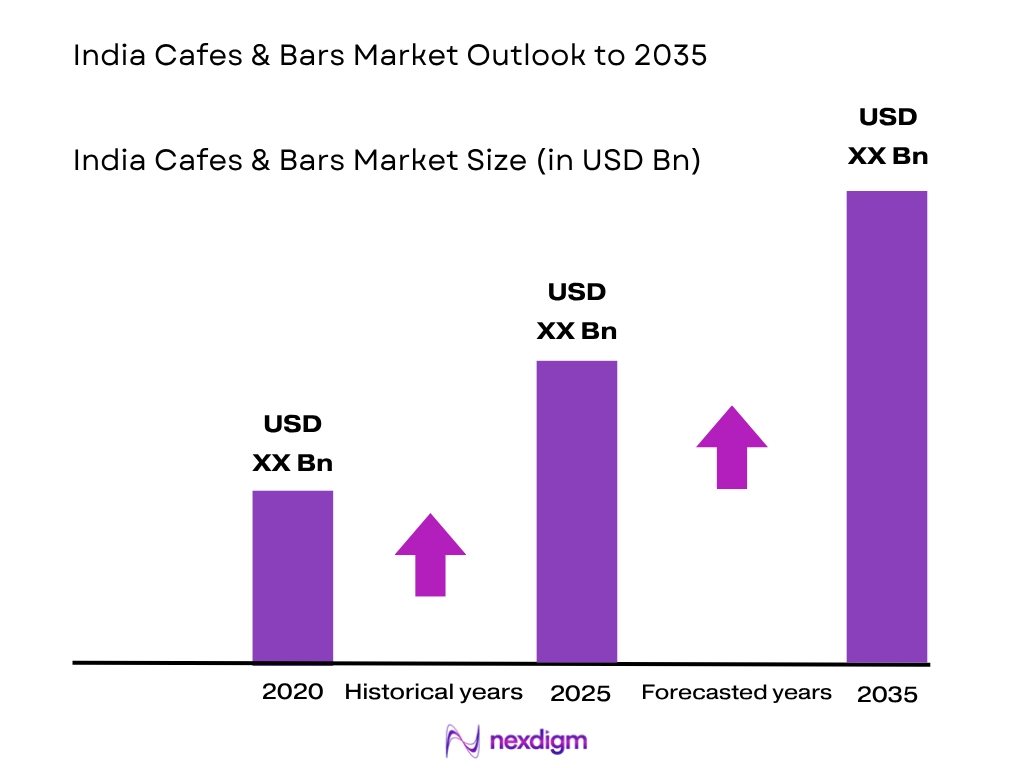
The India Cafes & Bars Market is valued at an implied USD ~ billion, derived from Nexdigm’s published USD ~ billion base and 9.84% growth benchmark; the previous comparable base is approximately USD ~ billion. Growth is driven by specialist tea and coffee outlets, premium beverage adoption, work-from-café behavior, social dining, and rising branded foodservice penetration. Nexdigm reports the market at USD ~ billion and forecast to reach USD ~ billion at 8.92% CAGR.
The India Cafes & Bars Market is concentrated in Mumbai, Delhi NCR, Bengaluru, Hyderabad, Chennai and Pune because these cities combine high office density, mall/high-street real estate, nightlife clusters, young working populations, airport traffic and higher acceptance of premium beverages. The broader Indian foodservice market stood at USD ~ billion, with organized foodservice at USD ~ billion, while branded coffee shops reached 5,339 outlets, adding 600 stores over the prior twelve-month period.
Market Segmentation
By Format Type
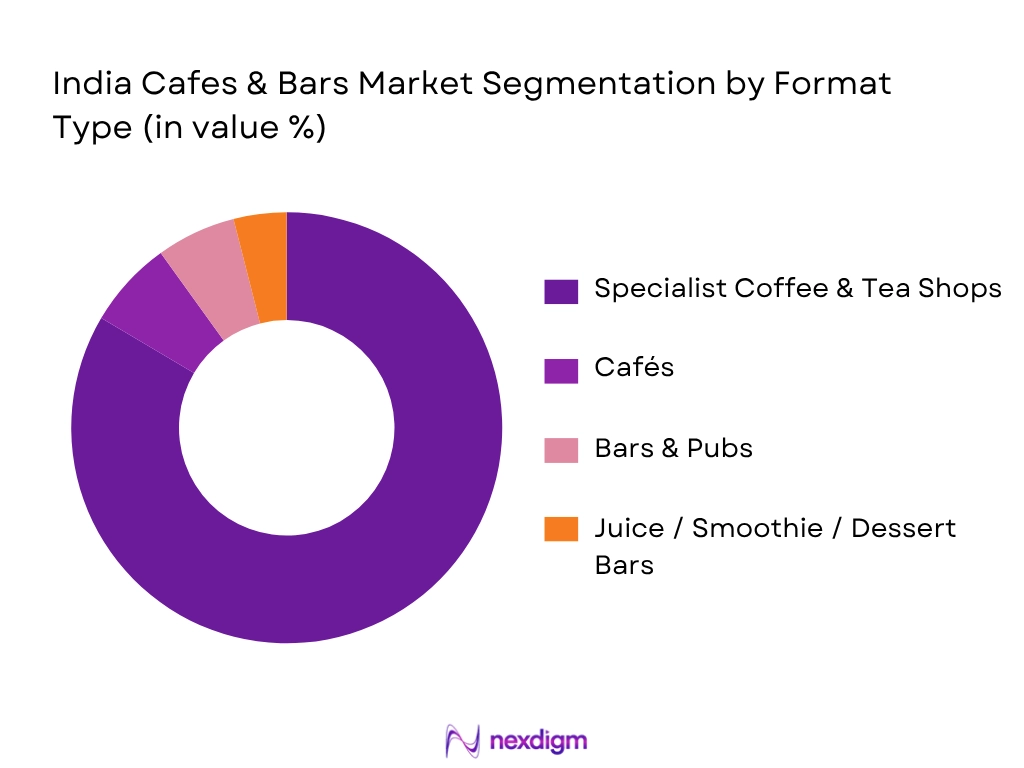
India Cafes & Bars Market is segmented by cuisine / format type into specialist coffee and tea shops, cafés, bars and pubs, and juice/smoothie/dessert bars. Specialist coffee and tea shops dominate the market because India’s tea-drinking base is large, while younger urban consumers are shifting toward premium coffee, cold brews, artisanal chai, café meals and social consumption occasions. Branded tea and coffee chains also operate at lower average ticket sizes than premium cocktail-led venues, enabling higher repeat frequency. Chains such as Chaayos, Chai Point, Starbucks, Barista, Third Wave Coffee and Blue Tokai have scaled through mall, high-street, office district and delivery-led models. This sub-segment benefits from all-day consumption, lower regulatory complexity than alcohol-led bars, and stronger compatibility with students, office workers and women consumers seeking safe, accessible social spaces. Nexdigm also identifies specialist coffee and tea shops as the dominant cuisine segment in the market.
By Outlet Type
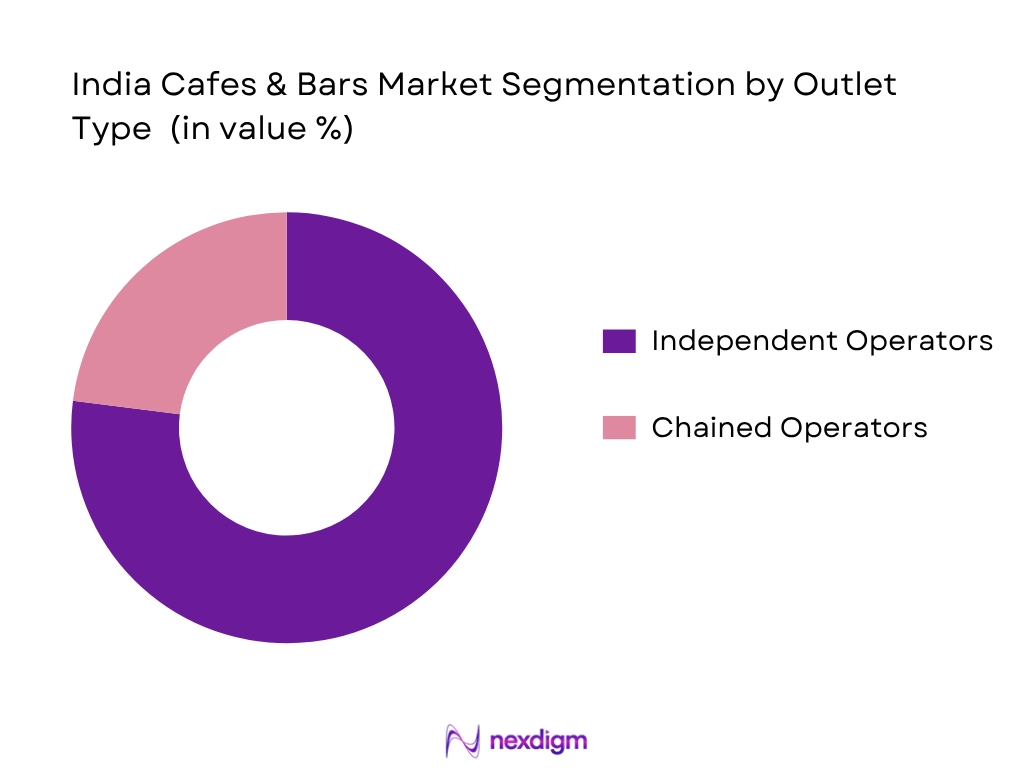
India Cafes & Bars Market is segmented by outlet type into independent outlets and chained outlets. Independent outlets dominate because the market remains highly fragmented, with neighborhood cafés, local chai cafés, stand-alone bars, restobars, pubs and specialty outlets adapting menus to local catchments faster than national chains. These outlets benefit from lower brand-standardization costs, flexible real estate choices, owner-led customer relationships and regional food-beverage customization. In cities such as Bengaluru, Mumbai, Pune, Delhi NCR and Goa, independent cafés and bars often compete through ambience, music, local communities, craft beverages, microbrewery culture and Instagram-led discovery. However, chained outlets are gaining faster traction because of brand trust, loyalty apps, operational consistency, franchising, airport/mall expansion and stronger procurement systems. Nexdigm reports independent outlets as the largest outlet category, while chained outlets show faster growth momentum.
Competitive Landscape
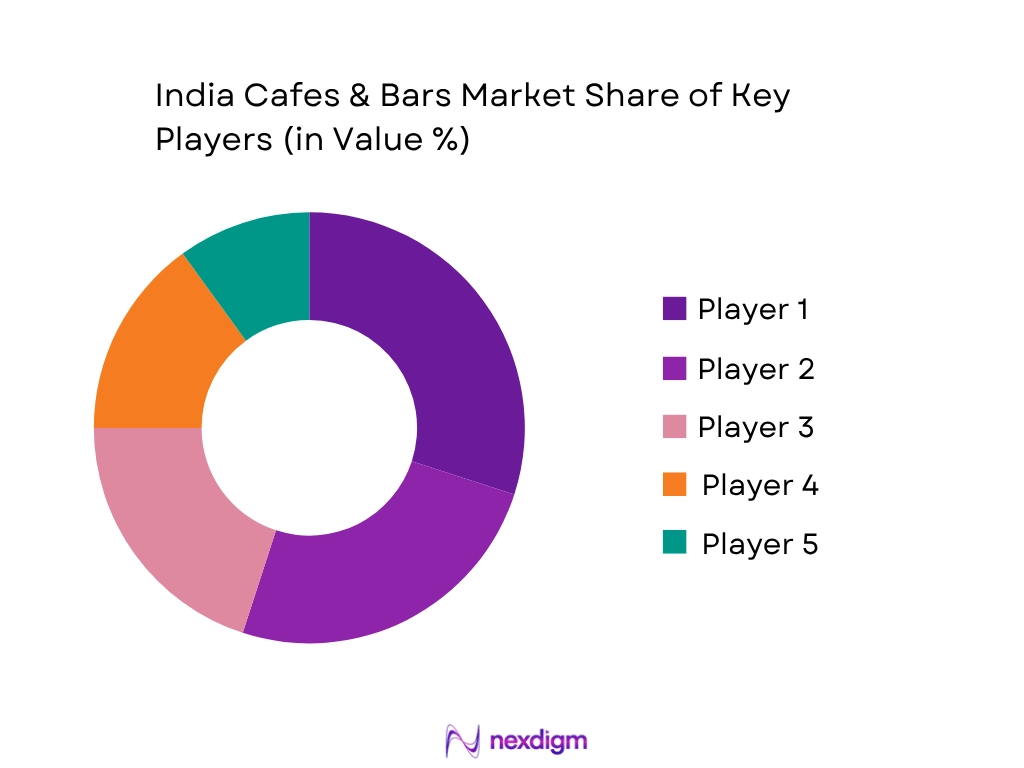
The India Cafes & Bars Market is fragmented, with the top five companies accounting for a small combined share according to Nexdigm. Competition is split between national café chains, specialty coffee brands, tea-led QSR cafés, experiential restobar operators and regional brewpubs. Tata Starbucks, Café Coffee Day, Barista, Blue Tokai and Third Wave Coffee are prominent café-side competitors, while SOCIAL, The Beer Café, Toit and Doolally represent organized bar/restobar and brewpub formats.
| Player | Establishment Year | Headquarters | Core Format | Outlet / Market Footprint | Beverage Positioning | Expansion Model | Digital / Delivery Maturity | Key Differentiator |
| Tata Starbucks | 2012 in India | Mumbai | ~ | ~ | ~ | ~ | ~ | ~ |
| Café Coffee Day | 1996 | Bengaluru | ~ | ~ | ~ | ~ | ~ | ~ |
| Barista | 2000 | Gurugram | ~ | ~ | ~ | ~ | ~ | ~ |
| Blue Tokai Coffee Roasters | 2013 | Gurugram / Delhi NCR | ~ | ~ | ~ | ~ | ~ | ~ |
| Third Wave Coffee | 2016 | Bengaluru | ~ | ~ | ~ | ~ | ~ | ~ |
India Cafes & Bars Market Analysis
Growth Drivers
Urbanization
Urbanization directly supports the India cafés and bars market because cafés, pubs, restobars, brewpubs and premium coffee chains need dense catchments, high evening footfall, office clusters, transit hubs and mall/high-street real estate. India’s urban population reached 534,916,498 people in 2024, compared with 522,939,628 people in 2023, expanding the addressable base for dine-in coffee, after-office drinking, work-from-café occasions and organized foodservice formats. India’s national accounts also show a services-heavy consumption environment: MoSPI estimated real GDP at INR 184.88 lakh crore and nominal GDP at INR 324.11 lakh crore for FY2024-25, while the trade, hotels, transport and communication services grouping recorded stronger activity in official quarterly releases. For cafés and bars, this means demand is not only population-led but location-led: high-density urban districts create repeated weekday consumption, while malls, airports and nightlife streets create occasion-based weekend demand. Urban expansion also improves supply-side feasibility because operators can cluster stores, central kitchens, roasted-coffee distribution, alcohol procurement, staffing and POS-led inventory systems within the same city network. This makes metro and Tier-I city expansion structurally more attractive than dispersed standalone growth.
Gen-Z Consumption
Gen-Z consumption is a core demand driver for India’s cafés and bars because younger consumers use cafés and bars as social, digital, study, work, dating and leisure spaces rather than only as foodservice outlets. The macro base is large: World Bank-linked data reports India’s 15–64 population at 989,967,399 people in 2024, while UNFPA lists India’s total population at 1,463,900,000 people in 2025. This working-age and youth-heavy base supports high-frequency, low-to-mid ticket beverage occasions such as iced coffee, chai, frappes, mocktails, craft beer, cocktails, bar snacks and café meals. Digital infrastructure also strengthens Gen-Z-led consumption: the Ministry of Finance reported over 18,000 crore digital payment transactions in FY2024-25, and UPI accounted for the majority of retail digital payment transactions in the same period, improving ease of QR ordering, split bills, app loyalty and aggregator-led discovery. For cafés and bars, this matters operationally because Gen-Z consumers are strongly format-sensitive: ambience, Wi-Fi, plug points, Instagrammable interiors, music, safety, cashless payment and brand community increasingly influence visit frequency. The segment therefore pushes operators toward experiential store design, cold beverage innovation, event programming, creator-led discovery and loyalty-led repeat transactions.
Market Challenges
Excise Fragmentation
Excise fragmentation is a major challenge for the India cafés and bars market because the bar side of the business operates under state-specific liquor controls instead of one uniform national operating framework. India has 28 states and 8 union territories, and the Constitution places intoxicating liquors under the State List, covering production, manufacture, possession, transport, purchase and sale of intoxicating liquors. This creates different licensing procedures, permitted trading hours, annual renewals, brand registration norms, dry-day rules, age restrictions, procurement channels and enforcement practices across markets. A café chain can roll out coffee, tea, bakery and QSR-style menus with more standardized compliance, but a restobar, pub, lounge or brewpub must adapt separately to each state excise environment. This affects menu architecture, alcohol availability, event planning, live-music programming and city expansion sequencing. The compliance burden is particularly relevant for operators expanding across Bengaluru, Mumbai, Delhi NCR, Pune, Hyderabad, Goa and tourist-heavy districts because each state-level regime affects bar feasibility differently. For investors and multi-city operators, excise fragmentation reduces replicability: the same outlet design, staffing model and beverage menu cannot be copied across states without local legal, procurement and licensing modifications.
Rental Burden
Rental burden remains a structural challenge because cafés and bars depend on visible, high-footfall real estate: high streets, premium residential catchments, office districts, malls, airport terminals, nightlife corridors and university clusters. Real-estate pressure is visible in official housing and property indicators that shape commercial catchment economics. National Housing Bank’s RESIDEX city index shows movement from 151.64 in September 2024 to 156.05 in December 2024 and 161.84 in March 2025, indicating rising property-value pressure in tracked urban markets. NHB-linked reporting also noted that property prices increased in 48 out of 50 cities during Q4 FY2024-25. For cafés and bars, this matters because high rentals compress store-level payback, especially where average daily sales depend on limited seating hours, weather sensitivity, weekend skew and weekday lunch/evening peaks. Bars face an added constraint because not every commercial property is eligible for liquor licensing, smoking-zone permissions, music permissions, late-night operations or adequate parking. Cafés also face pressure because work-from-café customers may occupy tables for long periods, lowering seat productivity unless the outlet can monetize beverages, food attach, memberships or repeat orders. Rising real-estate intensity therefore pushes operators toward smaller formats, kiosk cafés, delivery-linked cafés, franchise models and carefully selected micro-markets.
Opportunities
White Spaces
White spaces in the India cafés and bars market are emerging in transit hubs, tourist circuits, Tier-I/Tier-II city clusters, university zones, business districts and premium residential catchments where organized café and bar penetration remains uneven despite strong macro demand enablers. India recorded 20.57 million international tourist arrivals in 2024, according to PIB, while the Ministry of Tourism’s compendium highlights 2,509.63 million domestic tourist visits in 2023 and continued tourism normalization through 2024 releases. These flows create location-specific opportunities for airport cafés, highway cafés, heritage-district cafés, hotel bars, rooftop lounges, experiential brewpubs and regional-food-led restobars. White spaces are especially relevant because cafés and bars are not only urban consumption outlets; they also serve travel breaks, business meetings, post-sightseeing evenings, pilgrimage-town refreshment, nightlife and destination dining. Operators can use tourism corridors and commercial mobility data to identify micro-markets where branded coffee, safe women-friendly bars, low/no-alcohol menus, premium chai cafés and craft-beverage formats remain underbuilt. The opportunity is future-facing, but it is backed by current travel and urban mobility numbers: high domestic movement and inbound travel create repeatable demand pockets beyond core metros.
Consumption Gaps
Consumption gaps create future growth headroom because India’s cafés and bars market still has a wide difference between formal urban consumption potential and the availability of professionally operated outlets with consistent service, safety, digital ordering and premium beverage menus. MoSPI’s official GDP release places real GDP at INR 184.88 lakh crore and nominal GDP at INR 324.11 lakh crore for FY2024-25, showing a large domestic economic base for discretionary services, while digital adoption reduces friction for beverage-led foodservice. The Ministry of Finance reported over 18,000 crore digital payment transactions in FY2024-25, supporting QR menus, UPI billing, prepaid wallets, online reservations, loyalty points and delivery/takeaway orders. This is highly market-specific because cafés and bars monetize frequent micro-occasions: morning coffee, study sessions, office meetings, birthday gatherings, after-office drinks, sports screenings and weekend socializing. Consumption gaps are visible where consumer behavior has shifted faster than outlet supply—such as premium cold coffee in smaller cities, craft beer outside established brewpub hubs, women-friendly nightlife, low/no-alcohol cocktails, work-friendly cafés and regional Indian bar-snack menus. Current macro and payment infrastructure supports these gaps without needing future estimates: the consumer base, digital transaction rails and services-oriented economy already exist, while outlet formats remain uneven across city tiers and catchments.
Future Outlook
The India Cafes & Bars Market is expected to expand steadily, supported by urban lifestyle shifts, premium coffee adoption, higher social dining frequency and chain expansion into Tier-I and Tier-II cities. Growth will be strongest where café formats combine beverages, food, workspace utility and community engagement. Bar-side growth will depend on state excise regimes, permissible trading hours, safety norms and craft beverage acceptance. Chained cafés, travel-location outlets and delivery-enabled beverage formats are expected to outperform traditional stand-alone outlets. Over the longer forecast period, the market will move from outlet-led expansion to productivity-led growth. Operators will focus on average daily sales, food attach rate, beverage gross margin, rent-to-revenue ratio, table turns, loyalty-led repeat orders and better menu engineering. Premiumization will remain visible in specialty coffee, Indian-origin estate coffee, craft beer, cocktails, low/no-alcohol beverages and experience-led venues. Consolidation is likely as better-funded operators acquire regional café, bar and restobar assets to improve city density and procurement scale.
Major Players
- Tata Starbucks
- Café Coffee Day
- Barista
- Costa Coffee India
- Blue Tokai Coffee Roasters
- Third Wave Coffee
- Tim Hortons India
- McCafé India
- Chaayos
- Chai Point
- SOCIAL
- The Beer Café
- BrewDog India
- Toit
- Doolally Taproom
Key Target Audience
- Café chain operators
- Bar, pub, lounge and restobar operators
- Specialty coffee roasters and beverage manufacturers
- Alcoholic beverage companies and beer manufacturers
- Real estate developers, mall operators and airport retail concessionaires
- Investments and venture capitalist firms
- Food delivery, POS, loyalty and restaurant technology platforms
- Government and regulatory bodies , Food Safety and Standards Authority of India, state excise departments, municipal corporations, GST Council, Ministry of Food Processing Industries
Research Methodology
Step 1: Identification of Key Variables
The initial phase involves constructing an ecosystem map covering café chains, independent cafés, bars, pubs, restobars, brewpubs, beverage suppliers, foodservice distributors, landlords, delivery aggregators and regulators. Key variables include outlet count, average ticket size, beverage mix, food attach rate, dine-in contribution, delivery contribution, license cost, rent burden and city-level density.
Step 2: Market Analysis and Construction
Historical market values are compiled through published foodservice, café, coffee shop and cafés-and-bars market sources, followed by reconciliation with outlet-level benchmarks. The top-down approach uses foodservice and beverage consumption pools, while the bottom-up approach estimates revenue using outlet count, daily bills, average order value and format-wise productivity.
Step 3: Hypothesis Validation and Expert Consultation
Market hypotheses are validated through interviews with café founders, bar operators, F&B directors, coffee roasters, mall leasing teams, alcohol distributors, POS providers and delivery-platform managers. These discussions test assumptions on menu pricing, operating margins, delivery dependence, consumer frequency, city expansion priorities and regulatory constraints.
Step 4: Research Synthesis and Final Output
The final stage triangulates secondary research, primary interviews and operating metrics to create a validated market model. Outputs include market size, segmentation, competitive landscape, growth outlook, opportunity mapping and recommendations for operators, investors, landlords, beverage companies and technology providers targeting the India Cafes & Bars Market.

- Executive Summary
- Research Methodology (Market Definitions and Assumptions, Café-Bar Classification Framework, Top-Down Foodservice Revenue Pooling, Bottom-Up Outlet Census, Menu Price Benchmarking, Beverage Volume Estimation, Alcohol Licensing Adjustment, GST and Excise Normalization, Primary Interviews with Café Operators, Bar Owners, Distributors, Roasters, Brewers and Mall Leasing Teams, Mystery Menu Checks, Delivery Aggregator Menu Scraping, Limitations and Forecasting Assumptions)

- Definition and Scope
- Overview Genesis
- Evolution of Café, Coffeehouse, Pub, Lounge, Restobar and Microbrewery Formats
- Timeline of Major Branded Café and Bar Operators
- Business Cycle
- Supply Chain and Value Chain Analysis
- Organized, Standalone, Hotel-Affiliated and Aggregator-Enabled Outlet Ecosystem
- Café-Bar Operating Model Economics
- India Urban Consumption Hotspots
- Regulatory Landscape for Cafés, Bars, Pubs, Lounges and Brewpubs

- Growth Drivers (Urbanization, Gen-Z Consumption, Specialty Coffee Adoption, Social Drinking, Mall-Led Expansion, Digital Payments)
- Market Challenges (Excise Fragmentation, Rental Burden, Staff Attrition, Menu Inflation, Regulatory Risk)
- Opportunities (White Spaces, Consumption Gaps, Premium Formats, Digital Loyalty, Micro-Market Expansion)
- Trends (Menu Innovation, Premium Beverage Mix, Local Sourcing, Social Media-Led Discovery)
- Government Regulations (FSSAI, GST, State Excise, Music Licensing, Fire NOC, Trade License, Smoking-Zone Norms)
- Supply Chain Analysis (Roasted Coffee, Tea, Dairy, Bakery Inputs, Fresh Produce, Alcohol Procurement, POS and Equipment Vendors)
- Value Chain Analysis (Raw Material Sourcing, Roasting/Brewing, Menu Engineering, Store Operations, Aggregator Listing, Customer Retention)
- Unit Economics Analysis (Average Daily Sales, Revenue per Seat, Staff Cost, Rental Ratio, Beverage Margin, Food Cost, Payback Period)
- Pricing Analysis (Average Ticket Size, Menu Price Ladder, Beverage Add-On Pricing, Happy-Hour Pricing, Premium Pour Pricing)
- Consumer Behavior Analysis (Frequency, Occasion, Spend Band, Daypart, Group Size, Brand Loyalty, Review Sensitivity)
- SWOT Analysis (Brand Density, Premiumization, Regulatory Dependence, Operational Scalability)
- Porter’s Five Forces (Supplier Power, Buyer Power, New Entrants, Substitutes, Rivalry Intensity)
- Stakeholder Ecosystem (Operators, Roasters, Breweries, Distributors, Aggregators, Landlords, Regulators, Investors)
- Competition Ecosystem (National Chains, Regional Chains, Independent Cafés, Hotel Bars, Brewpubs, Nightlife Groups)

- By Revenue (2020-2025)
- By Number of Outlets (2020-2025)
- By Average Ticket Size (2020-2025)
- By Transactions / Bills Generated (2020-2025)
- By Beverage Volume Served (2020-2025)
- By Food-to-Beverage Revenue Mix (2020-2025)
- By Organized and Unorganized Revenue Contribution (2020-2025)

- By Outlet Format (In Value%)
Branded Coffee Chains
Independent Specialty Cafés
Tea Cafés and Chai-Led QSR Cafés
Bakery Cafés and Dessert Cafés
Co-Working Cafés and Community Cafés
Restobars
Pubs and Sports Bars
Cocktail Bars and Lounges
Microbreweries and Brewpubs
Hotel Bars and Premium F&B Lounges - By Beverage Category (In Value%)
Hot Coffee
Cold Coffee and Frappes
Tea and Chai-Based Beverages
Fresh Juices, Coolers and Mocktails
Beer
Craft Beer
IMFL and Imported Spirits
Cocktails
Wine and Sangria
Low / No-Alcohol Beverages - By Food Category (In Value%)
Bakery and Confectionery
Sandwiches, Wraps and Light Bites
All-Day Breakfast
Continental and Global Casual Dining
Indian Small Plates and Chakna
Bar Snacks and Finger Food
Desserts and Ice Cream-Based Add-Ons
Health-Focused and Vegan Menu Items - By Revenue Stream (In Value%)
Dine-In Sales
Takeaway Sales
Online Food Delivery Sales
Corporate Catering and Bulk Orders
Private Events and Table Reservations
Live Gigs, Cover Charges and Experience-Led Revenue
Merchandise, Packaged Coffee and Retail Beans
Alcohol Bottle Service and Premium Pour Revenue - By Price Positioning (In Value%)
Mass-Market Cafés
Mid-Market Cafés
Premium Specialty Cafés
Luxury and Hotel Cafés
Affordable Bars
Mid-Market Restobars
Premium Cocktail Bars
High-Energy Nightlife Venues - By City Tier (In Value%)
Metro Cities
Tier-I Cities
Tier-II Cities
Tier-III and Emerging Urban Clusters
Tourist and Leisure Destinations
University and Young Workforce Clusters - By Region (In Value%)
North India
South India
West India
East India
Central India
North-East India - By Location Cluster (In Value%)
High-Street Markets
Shopping Malls
Office Districts and Tech Parks
Airports and Transit Hubs
Premium Residential Catchments
University Catchments
Tourist / Hospitality Districts
Nightlife Streets and Food Hubs - By Ownership Model (In Value%)
Company-Owned Company-Operated
Franchise-Owned Franchise-Operated
Franchise-Owned Company-Operated
Master Franchise
Hotel / Mall Concession Model
Independent Owner-Operated Outlets
Cloud-Kitchen Assisted Café Formats - By Consumer Occasion (In Value%)
Morning Coffee and Breakfast
Work-from-Café and Solo Consumption
Student Hangouts
Business Meetings
Casual Socializing
Dates and Premium Evenings
After-Office Drinking
Weekend Nightlife
Live Sports Screening
Celebrations and Private Events

- Market Share of Major Players (Revenue Share, Outlet Share, Brand Recall, City Penetration)
- Market Share by Format (Coffee Chains, Specialty Cafés, Tea Cafés, Restobars, Brewpubs, Cocktail Bars)
- Cross Comparison Parameters (Outlet Count, City Footprint, Average Ticket Size, Beverage Mix, Food Attach Rate, Alcohol License Coverage, Daypart Utilization, Delivery / Takeaway Mix)
- Additional Comparison Parameters (Company Overview, Business Strategies, Recent Developments, Strengths, Weaknesses, Ownership Model, Franchise Structure, Revenue Streams, Menu Architecture, Store Format, Seating Capacity, Loyalty Program, Digital Presence, Expansion Pipeline, Rental Strategy, Vendor Network, Unique Value Proposition)
- SWOT Analysis of Major Players (Brand Strength, Format Scalability, Menu Differentiation, Compliance Exposure)
- Pricing Analysis of Major Players (Coffee SKUs, Tea SKUs, Mocktail SKUs, Beer Pints, Craft Beer, Cocktails, Bar Snacks, Combo Meals)
- Outlet Expansion Benchmarking (Metro Saturation, Tier-I Penetration, Tier-II Rollout, Mall vs High-Street Mix)
- Detailed Profiles of Major Companies
Tata Starbucks
Café Coffee Day
Barista
Costa Coffee India
Blue Tokai Coffee Roasters
Third Wave Coffee
Tim Hortons India
McCafé India
Chaayos
Chai Point
SOCIAL
The Beer Café
BrewDog India
Toit
Doolally Taproom

- Urban Gen-Z Consumers (Affordability, Social Media Discovery, Cold Beverages, Group Hangouts)
- Young Working Professionals (After-Office Consumption, Premium Coffee, Cocktails, Convenience, Loyalty)
- Students (Price Sensitivity, Hangout Duration, Wi-Fi Access, Combo Meals)
- Corporate Consumers (Meetings, Bulk Orders, Catering, Business District Footfall)
Women Consumer Cohorts (Safety, Ambience, Location Accessibility, Mocktails, Premium Cafés) - Tourists and Expat Consumers (Hotel Bars, Premium Cafés, Craft Beer, High-Street Locations)
- Purchasing Power and Budget Allocation (Average Bill, Frequency, Premium Upgrade, Occasion-Based Spend)
- Needs, Desires and Pain Points (Menu Variety, Seat Availability, Noise, Service Speed, Hygiene, Safety, Parking)
- Decision-Making Process (Discovery, Review Check, Menu Scan, Reservation, Visit, Repeat, Loyalty)

- By Revenue (2026-2035)
- By Number of Outlets (2026-2035)
- By Average Ticket Size (2026-2035)
- By Transactions / Bills Generated (2026-2035)
- By Beverage Volume Served (2026-2035)
- By Food-to-Beverage Revenue Mix (2026-2035)
- By Organized and Unorganized Revenue Contribution (2026-2035)


 Request a Sample
 Ask for Customization
 Get a Quote
 Enquire Now