
 Download PDF
 Download PDF
Market Overview
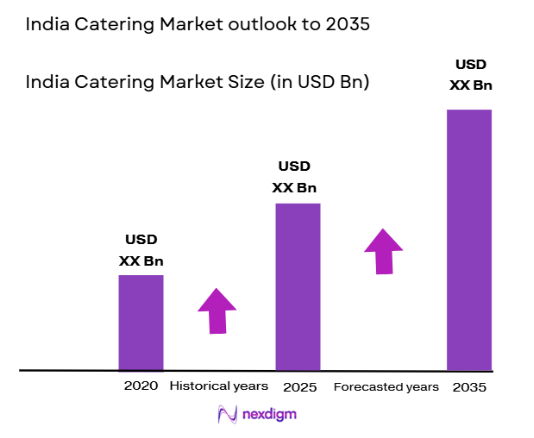
The India Catering Market is valued at approximately USD ~ billion in 2024, driven by increasing demand for corporate, event, and institutional catering services. Key factors such as growing disposable incomes, a robust hospitality sector, and the expansion of corporate offices have fueled this growth. The catering sector is also seeing an increased reliance on technology, including mobile apps and online platforms, to cater to a wider audience. Consumer preferences have shifted towards ready-to-eat and health-conscious meal options, further enhancing market dynamics.
India’s major cities like Mumbai, Delhi, Bengaluru, and Hyderabad dominate the catering market due to their large corporate presence, thriving event industry, and substantial consumer demand. These cities are hubs for food service providers, thanks to their strong infrastructure, large populations, and growing tourism sectors. Furthermore, the government’s initiatives to boost the hospitality and foodservice industries have contributed significantly to regional dominance, ensuring that these cities remain key drivers of the market.
Market Segmentation
By Product Type:
India Catering Market is segmented by product type into full-service catering, corporate catering, event catering, meal delivery services, and institutional catering. Recently, corporate catering has gained a dominant market share due to factors such as an increasing number of office spaces, demand for cost-effective meal solutions, and flexibility in catering options offered to corporate employees. The shift towards healthier eating habits and the rise of remote work and hybrid models have also driven demand for corporate catering services.

By Platform Type:
India Catering Market is segmented by platform type into online ordering platforms, traditional catering services, mobile catering units, catering apps, and restaurant catering. Recently, online ordering platforms have seen a surge in market share due to increasing consumer reliance on mobile technology for food ordering, convenience, and ease of delivery. The rise of apps like Zomato, Swiggy, and other online meal delivery services has transformed how catering services are accessed.

Competitive Landscape
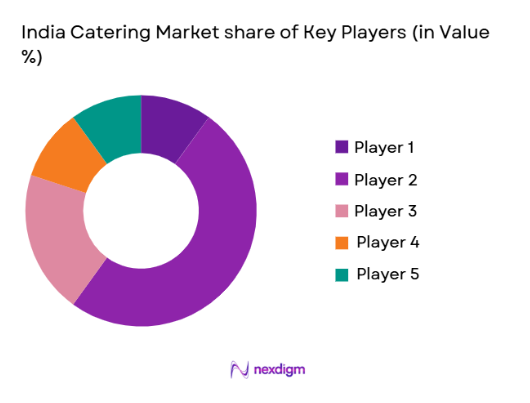
The competitive landscape of the India Catering Market is highly fragmented, with a mix of local and national players competing for market share. Major players are focusing on technological advancements, expanding service portfolios, and increasing reach through online platforms to cater to a larger consumer base. The market is also witnessing consolidation as smaller firms are merging with larger service providers to enhance capabilities and broaden their offerings.
| Company Name | Establishment Year | Headquarters | Technology Focus | Market Reach | Key Products | Revenue (USD Billion) | Market-Specific Parameter |
| Leela Group | 1986 | Mumbai, India | ~ | ~ | ~ | ~ | ~ |
| Sodexo | 1966 | Paris, France | ~ | ~ | ~ | ~ | ~ |
| ITC Hotels | 1975 | Kolkata, India | ~ | ~ | ~ | ~ | ~ |
| Zomato | 2008 | Gurgaon, India | ~ | ~ | ~ | ~ | ~ |
| Foodlink | 2003 | Mumbai, India | ~ | ~ | ~ | ~ | ~ |
India Catering Market Analysis
Growth Drivers
Increasing Demand for Corporate Catering:
The India Catering Market is significantly driven by the increasing demand for corporate catering services. With the rise of the corporate sector, particularly in metropolitan cities, companies are looking for catering solutions that are efficient, cost-effective, and flexible. Catering services tailored to office spaces, such as breakfast, lunch, and snack options, are becoming an integral part of employee wellness programs. Additionally, the growing trend of hybrid and remote work is boosting demand for meal delivery and pre-packaged office catering services. Companies are also turning to corporate catering to improve employee satisfaction, making it an essential growth driver.
Expansion of Event and Wedding Catering:
Another key growth driver for the India Catering Market is the growing demand for catering services in the event and wedding sectors. As disposable incomes rise, more families are investing in large-scale events, such as weddings, corporate events, and parties. The increasing preference for high-quality catering services at these events is driving the demand for specialized catering. Catering service providers are also capitalizing on the trend of customized menus and luxury food services, offering personalized solutions for upscale events. The hospitality industry’s expansion has bolstered the demand for top-tier catering providers, further propelling market growth.
Market Challenges
High Operational Costs:
The India Catering Market faces significant challenges related to operational costs, particularly in the sourcing of quality ingredients, food packaging, and logistics. Catering companies must maintain high standards of food safety and hygiene, which comes with increased operational overheads. Additionally, fluctuations in commodity prices, such as those of vegetables, dairy products, and meat, affect the pricing structure. These factors can lead to profit margin pressures for catering service providers, particularly those offering low-cost solutions. The high cost of sourcing raw materials and maintaining quality standards in a competitive market environment poses a challenge for catering businesses.
Intense Competition:
Intense competition from both established and emerging players in the catering market has created a challenging environment for growth. With the increasing popularity of online platforms, numerous small and medium-sized catering providers have entered the market, offering affordable and specialized services. This results in a highly fragmented market where distinguishing a brand from others is a challenge. Established catering companies must invest heavily in marketing, technology, and service diversification to maintain their market share. Moreover, companies also face competition from cloud kitchens and meal delivery services, which further complicate the market dynamics.
Opportunities
Demand for Health-Conscious Meal Options:
One of the significant opportunities in the India Catering Market is the rising demand for health-conscious meal options. With consumers becoming more aware of their health and fitness, there is a growing trend towards healthier food options, such as organic, vegan, gluten-free, and low-calorie meals. Catering providers that offer these kinds of meal options stand to gain a competitive edge in the market. Additionally, the increasing awareness of lifestyle-related diseases and the push for healthier diets in corporate and institutional settings are also fueling the demand for nutritious meals. This offers a great opportunity for catering service providers to innovate and create new offerings focused on health and wellness.
Technological Advancements in Catering:
The India Catering Market also presents opportunities for growth through technological innovations. The adoption of mobile apps, artificial intelligence (AI), and cloud-based solutions to streamline operations, manage orders, and improve customer service is becoming increasingly important. Catering providers that can integrate smart technologies, such as online ordering platforms and predictive analytics, will be able to optimize their operations, reduce food wastage, and improve customer experiences. Additionally, automation in food preparation, packaging, and delivery processes can help reduce costs and increase efficiency, further expanding the market’s growth potential.
Future Outlook
The India Catering Market is expected to witness steady growth in the next five years, driven by an increasing shift toward health-conscious eating, technological innovations, and the expansion of corporate and event catering services. The rising demand for online food services, coupled with a growing focus on sustainability in catering operations, will likely shape the market’s future trends. Technological advancements in catering management systems and mobile ordering platforms will also contribute to the market’s growth trajectory, offering businesses opportunities to enhance customer engagement and operational efficiency.
Major Players
- Leela Group
- Sodexo
- ITC Hotels
- Zomato
- Foodlink
- Barbecue Nation
- Compass Group
- Aramark
- Elior Group
- Dineout
- Royal Catering Services
- Sodexo India
- Radisson Blu
- The Oberoi Group
- Oberoi Hotels & Resorts
Key Target Audience
- Investments and venture capitalist firms
- Government and regulatory bodies
- Food and beverage manufacturers
- Event management companies
- Corporates and office spaces
- Large institutions and schools
- Healthcare and hospital organizations
- Restaurants and food chains
Research Methodology
Step 1: Identification of Key Variables
The first step in the research process involves identifying key variables influencing the market, such as trends, growth drivers, and challenges specific to the catering industry.
Step 2: Market Analysis and Construction
The next step involves analyzing the catering market’s current landscape by reviewing relevant data, including market size, segmentation, and regional trends.
Step 3: Hypothesis Validation and Expert Consultation
After constructing the market framework, we validate hypotheses with insights from industry experts, including business executives and market analysts, to ensure the data’s accuracy.
Step 4: Research Synthesis and Final Output
Finally, the gathered data is synthesized into a comprehensive market report, which includes in-depth analysis, charts, and forecasts for future market growth.

- Executive Summary
- Research Methodology(Definitions, Scope, Industry Assumptions, Market Sizing Approach, Primary & Secondary Research Framework, Data Collection & Verification Protocol, Analytic Models & Forecast Methodology, Limitations & Research Validity Checks)

- Market Definition and Scope
- Value Chain & Stakeholder Ecosystem
- Regulatory / Certification Landscape
- Sector Dynamics Affecting Demand
- Strategic Initiatives & Infrastructure Growth

- Growth Drivers
Increasing Demand for Ready-to-eat Meals
Expanding Corporate Catering Sector
Technological Advancements in Catering Services
Rising Disposable Income and Spending on Dining
Growth of the Hospitality and Event Industry - Market Challenges
Rising Costs of Raw Materials and Ingredients
Logistical Challenges in Delivery
Regulatory Compliance and Hygiene Standards
Intense Competition in the Market
Dependency on External Vendors - Market Opportunities
Increased Focus on Healthy and Sustainable Eating
Emerging Demand for Catering Solutions in Tier 2 and 3 Cities
Adoption of Digital Platforms and Automation in Catering - Trends
Growth of Meal Kit Delivery Services
Shift towards Healthier Menu Options
Increasing Popularity of Cloud Kitchens
Adoption of Sustainability Practices
Growing Demand for Customizable Catering Solutions - Government Regulations & Defense Policy
Food Safety and Quality Regulations
Sustainability and Environmental Regulations
Policy Support for Food Industry Innovations - SWOT Analysis
- Stakeholder and Ecosystem Analysis
- Porter’s Five Forces Analysis
- Competition Intensity and Ecosystem Mapping

- By Market Value, 2020-2025
- By Installed Units, 2020-2025
- By Average System Price, 2020-2025
- By System Complexity Tier, 2020-2025

- By System Type (In Value%)
Full-service Catering
Corporate Catering
Event Catering
Meal Delivery Services
Institutional Catering - By Platform Type (In Value%)
Online Ordering Platforms
Traditional Catering Services
Mobile Catering Units
Catering Apps
Restaurant Catering - By Fitment Type (In Value%)
On-premise Catering
Off-premise Catering
Hybrid Catering Solutions
Cloud Kitchens
Meal Kit Services - By EndUser Segment (In Value%)
Residential
Corporate Offices
Events and Conferences
Schools and Universities
Healthcare Facilities - By Procurement Channel (In Value%)
Direct Procurement
Online Platforms
Corporate Partnerships
Third-party Distributors
Event Organizers - By Material / Technology (In Value%)
Food Production Technology
Meal Packaging Solutions
Catering Management Software
Sustainability Solutions
Delivery Infrastructure

- Market structure and competitive positioning
- Market share snapshot of major players
- CrossComparison Parameters (System Type, Platform Type, Procurement Channel, EndUser Segment, Fitment Type, Material/Technology, Competitive Intensity, Customer Satisfaction, Pricing Strategy, Delivery Network)
- SWOT Analysis of Key Players
- Pricing & Procurement Analysis
- Key Players
Leela Group
Taj Hotels
Sodexo
ITC Hotels
Eurest
Compass Group
Eden Catering
Barbecue Nation
Foodlink
Royal Catering Services
Oven Story
Catering Circle
Zomato
Swiggy
Dineout

- Rising Demand from Corporate Offices
- Event Organizers’ Growing Need for Catering
- Increasing Popularity of Institutional Catering
- Changing Consumer Preferences for Meal Customization

- Forecast Market Value, 2026-2035
- Forecast Installed Units, 2026-2035
- Price Forecast by System Tier, 2026-2035
- Future Demand by Platform, 2026-2035


 Request a Sample
 Ask for Customization
 Get a Quote
 Enquire Now