
 Download PDF
Market Overview
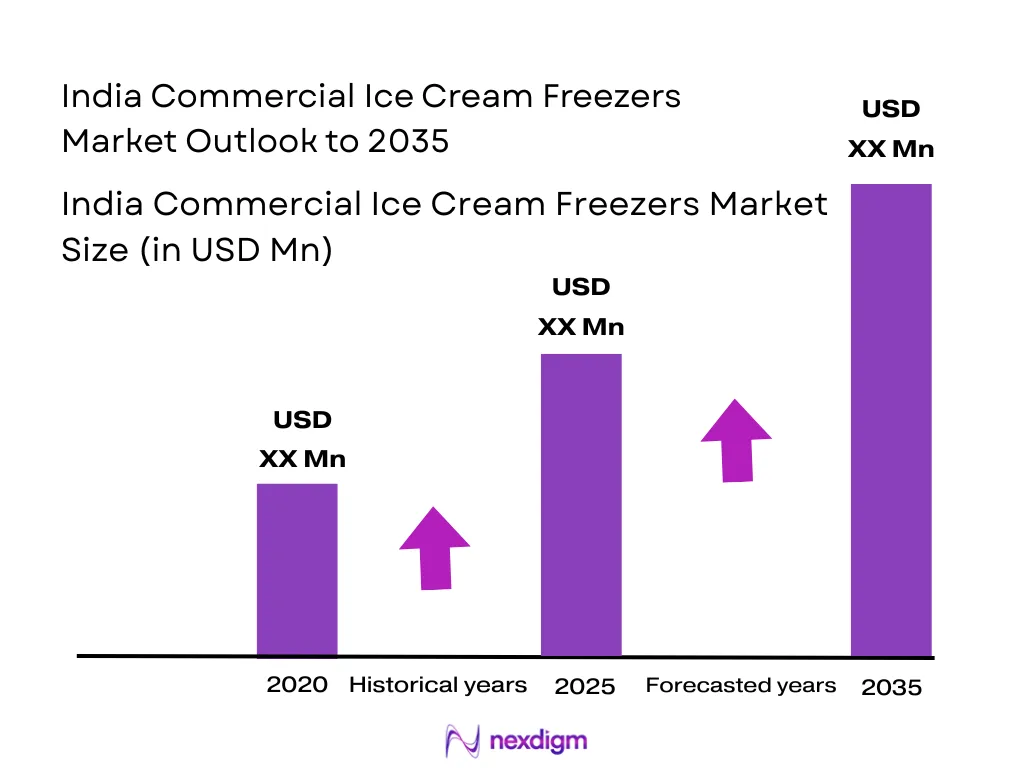
The Commercial Ice Cream Freezers Market was valued at approximately USD ~ million in 2024, based on industry benchmarking and proprietary business intelligence aggregators that track appliance and cold‑chain equipment sales in foodservice and retail segments globally. This market is driven by rising demand for frozen desserts and premium ice cream offerings in supermarkets, convenience formats, cafes, and quick‑service restaurants, along with growth of premium and craft ice cream brands across developed and emerging markets. The penetration of energy‑efficient and IoT‑enabled freezer technologies has further stimulated replacement cycles and unit upgrades. Major urban consumption centers such as Mumbai, Delhi NCR, Bengaluru, and Hyderabad dominate market activity in India due to dense population clusters, higher disposable incomes, strong organized retail ecosystems, and vibrant foodservice sectors in these metros. Likewise, on a global scale, countries such as the United States, China, and Germany exert significant influence because of established retail chains, extensive hospitality infrastructure, and higher per‑capita consumption of frozen desserts. These regions benefit from developed cold‑chain logistics and structured equipment financing ecosystems that support commercial freezer deployments.
Market Segmentation
By Product Type
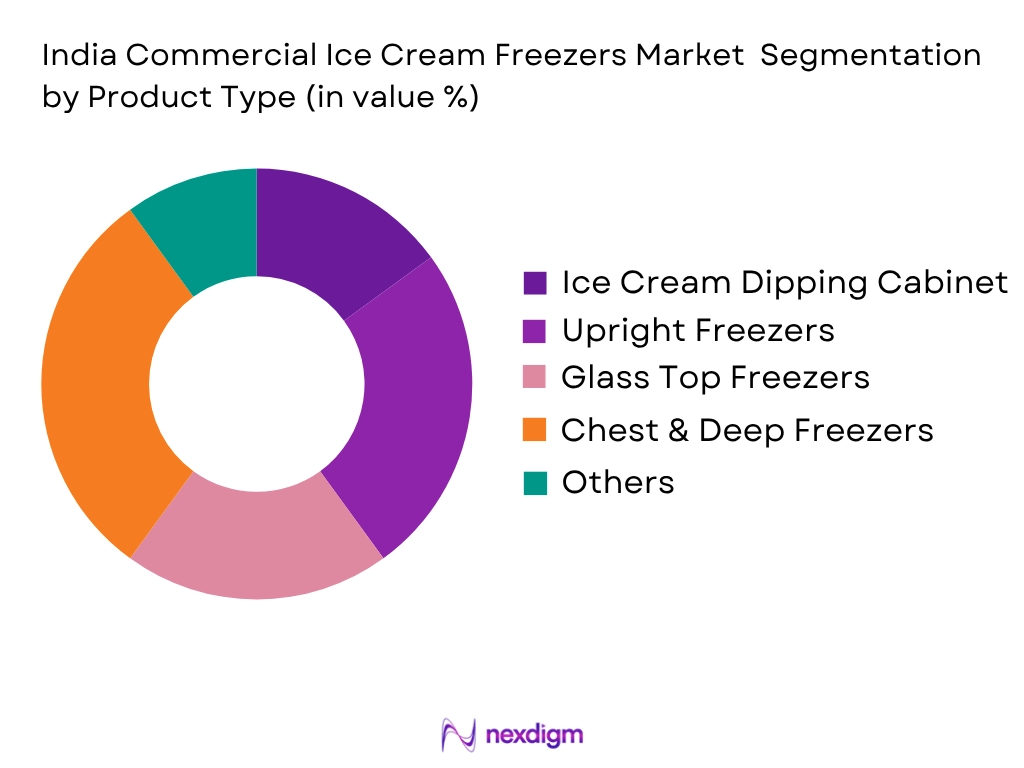
The Commercial Ice Cream Freezers Market is segmented into chest & deep freezers, upright freezers, glass‑top display freezers, ice‑cream dipping cabinets, and gelato & soft‑serve batch freezers. Chest & deep freezers hold the largest market share because they are versatile, cost‑effective solutions for bulk storage and impulse retail locations such as supermarkets, convenience stores, and petrol forecourts. These units require lower upfront investment compared to specialized display cabinets and provide flexible storage and display capacity for packaged ice cream. Their design simplicity and energy‑efficient operation make them a preferred choice for small and mid‑sized retailers seeking to balance capital expenditures and operational costs. Additionally, the prevalence of value‑oriented retail formats in emerging economies supports continued penetration of chest formats. In contrast, gelato & soft‑serve batch freezers capture interest in niche artisanal segments and upscale foodservice, though their share remains smaller due to higher unit costs and specialized operation requirements.
By End User
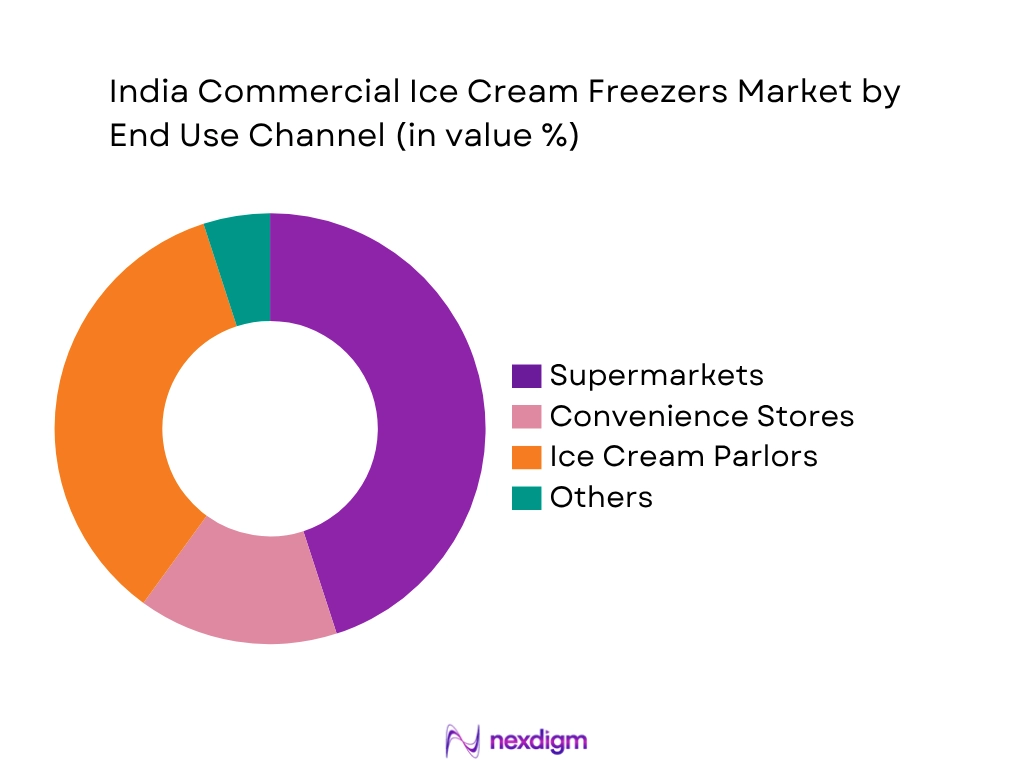
The Commercial Ice Cream Freezers Market is segmented by end user into supermarkets & hypermarkets, ice cream parlors & gelaterias, quick‑service restaurants (QSRs), convenience stores & fuel stations, and catering & institutional foodservice. Supermarkets & hypermarkets dominate because these channels maintain extensive freezer cabinets for a broad SKU range, high‑footfall retail spaces, and multiple checkout zones where impulse purchases of packaged ice-cream are significant revenue drivers. Retailers prioritize large‑footprint and energy‑efficient freezers to maximize display capacity and minimize operating expenses, especially during peak summer seasons. Ice cream parlors and gelaterias also contribute significantly, leveraging specialized batch and soft‑serve freezers to support premium, artisanal product offerings and experiential retail experiences. QSRs are increasingly adopting dedicated ice cream freezer units to diversify menus with desserts and value‑added offerings, while convenience stores and fuel stations prefer compact, attractive display freezers to drive high‑margin impulse purchasing.
Competitive Landscape
The global Commercial Ice Cream Freezers Market is characterized by medium concentration with both established international manufacturers and regional equipment suppliers. The competitive landscape reflects technological differentiation (energy efficiency, refrigerant type, IoT features), geographic sales network strength, and service/support capabilities.
| Company | Establishment | HQ | Product Portfolio | Cooling Technology | Energy Efficiency | Distribution Reach | Installation & Service |
| Hussmann (Ingersoll Rand) | 1907 | USA | ~ | ~ | ~ | ~ | ~ |
| Electrolux Professional | 1919 | Sweden | ~ | ~ | ~ | ~ | |
| True Manufacturing | 1945 | USA | ~ | ~ | ~ | ~ | ~ |
| Haier | 1984 | China | ~ | ~ | ~ | ~ | ~ |
| AHT Cooling Systems | 1945 | Austria | ~ | ~ | ~ | ~ | ~ |
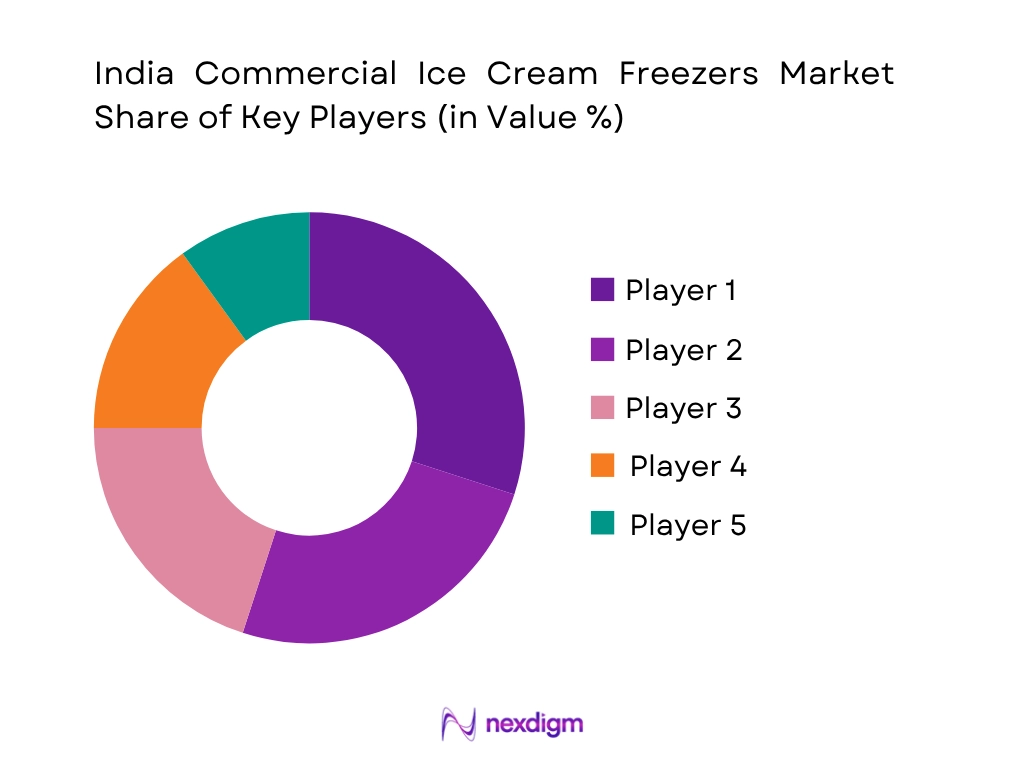
India Commercial Ice Cream Freezers Market
Growth Drivers
Rising Consumer Demand Backed by Expanding Retail Infrastructure
A key growth driver for the India Commercial Ice Cream Freezers Market is the rapid expansion of the retail landscape, which directly influences freezer deployments in food and grocery channels. India’s retail market size reached ₹82,00,000 crore (US$ 939.8 billion) in 2024, up from ₹35,00,000 crore (US$ 400.9 billion) in 2014, reflecting stronger consumer purchasing power and broader retail penetration across urban and semi‑urban areas. This expansion is supported by increased household consumption expenditure reported by the World Bank, where India’s private consumption contributed over 57% of GDP, with inflation averaging 4.6% in 2024 opening space for rising real incomes and discretionary spend. Organized retail formats, including supermarkets and convenience store chains, are increasing freezer footprint requirements to display and preserve frozen desserts year‑round. Additionally, India’s e‑commerce retail sector reached US$ 53.08 billion in 2024, enabling quick commerce platforms to demand more commercial freezer units for storage and last‑mile delivery readiness, enhancing product availability and impulse sales. These structural retail developments directly boost the need for commercial ice cream freezers in both traditional and modern channels.
Strong Raw Material Base and Cold‑Chain Improvements
Another growth driver is the robustness of India’s dairy sector, which underpins ice cream production and consequently freezer demand across retail and foodservice outlets. According to the Agricultural and Processed Food Products Export Development Authority (APEDA), India produced 239.30 million tonnes of milk during 2023‑24, making it the world’s largest milk producer. This abundant raw material supply supports year‑round ice cream manufacturing, increasing the frequency and volume of freezer usage in retail outlets and parlors. The expansion of integrated cold chain projects under government schemes such as the Pradhan Mantri Kisan Sampada Yojana has facilitated 291 cold chain initiatives, improving refrigerated storage and distribution infrastructure essential for frozen dessert quality preservation. In addition to dairy productivity, the World Bank notes that India’s economy grew around 6.5% in FY24‑25, reinforcing macroeconomic stability that enhances investments in cold‑chain logistics. These improvements reduce spoilage risk and improve geographic reach, encouraging retailers and standalone outlets to increase freezer installations. The combined effect of strong dairy production and strengthening cold‑chain infrastructure enhances market penetration for commercial ice cream freezers.
Market Challenges
High Operational and Infrastructure Costs in Non‑Metro Regions
A significant challenge facing the India Commercial Ice Cream Freezers Market is the high cost of maintaining cold‑chain infrastructure outside metropolitan centers. While urban retail zones benefit from established power supplies and logistics, many non‑metro and rural areas struggle with inconsistent electricity availability and higher per‑unit refrigeration costs. According to the World Bank, India’s infrastructure investment lag remains a structural constraint, even as GDP growth steadied around 6.5% in FY24‑25; this affects reliable power and transport linkages critical for freezer efficiency. Furthermore, despite modern retail growth, traditional kirana stores—numbering around 13–15 million and still handling over 80% of retail grocery sales—often lack adequate freezer capacity due to cost barriers and space constraints. The expansion of cold storage is uneven, with most facilities concentrated near urban production hubs rather than consumption centers, leading to higher transportation and energy costs for freezer operators in secondary cities. These elevated operational challenges constrain the ability of smaller retailers and ice cream parlors to adopt advanced commercial freezers, limiting overall market uptake and ROI for equipment investment.
Seasonal Demand Fluctuations and Inventory Management Risks
Seasonality in India’s ice cream consumption presents another market challenge, impacting freezer utilization and inventory planning. Retail sales volumes for ice cream and frozen desserts historically peak during warmer months and decline in cooler seasons, requiring operators to balance freezer utilization to avoid under‑used capacity for large parts of the year. According to Statista, ice cream and frozen dessert sales volume in India reached approximately 3,298 thousand metric tons in 2021, with consumption patterns still influenced by seasonal weather variations. Although consumption is expanding year‑round due to changing preferences, managing inventory and energy costs during off‑peak periods remains a challenge. Inconsistent demand complicates forecasting for freezer requirements and can lead to inefficient capital deployment, especially for smaller independent outlets without sophisticated demand planning systems. Retailers and foodservice operators must contend with inventory spoilage risks when demand dips unexpectedly, exacerbated by temperature control costs. This cyclical demand pattern places pressure on pricing strategies and profitability for both freezer vendors and users, constraining steady revenue flow across calendar quarters.
Market Opportunities
Tier‑II and Tier‑III City Penetration Supported by Consumption Trends
A significant opportunity for the commercial ice cream freezer market lies in deeper penetration into Tier‑II and Tier‑III Indian cities where per‑capita consumption remains relatively low but is increasing. According to industry analysis, India’s per capita ice cream consumption grew from 400 millilitres in 2011 to around 1.6 litres in 2023, reflecting a rising consumer base with greater appetite for frozen desserts beyond metropolitan areas. Organized retail expansion into these secondary cities is being underpinned by the broader Indian retail market, which reached ₹82 lakh crore (US$ 939.8 billion) in 2024, with considerable growth in newer retail outlets and convenience formats. These regions present less saturated markets for commercial freezer manufacturers to expand distribution networks and service infrastructure. Furthermore, government efforts to enhance cold‑chain storage and logistics under national schemes support last‑mile refrigeration reach, enabling freezer adoption in smaller towns. As disposable incomes rise outside metro clusters and more consumers adopt modern retail shopping habits, the demand for year‑round availability of ice cream and frozen desserts will necessitate increased freezer installations in supermarkets, grocery outlets, and local parlors.
Cold‑Chain Technology Adoption and Sustainability‑Driven Retrofit Demand
Another key opportunity is the growing adoption of advanced cold‑chain technologies and energy‑efficient refrigeration solutions that align with sustainability goals. India’s commitment to energy performance and environmental standards creates demand for freezers with superior energy efficiency and low‑impact refrigerants, triggering retrofit cycles across retail and foodservice channels. As retailers modernize formats and expand product assortments, there is an opening for commercial freezer suppliers to offer next‑generation units with smart monitoring, predictive maintenance capabilities, and compliance with energy norms. The expansion of integrated cold‑chain projects—291 under national schemes—indicates broader acceptance of refrigerated logistics infrastructure that can support high‑quality frozen goods. Additionally, macroeconomic stability with moderate inflation (~4.6%) supports investments in long‑term asset upgrades. As sustainability becomes a procurement criterion for major retail chains and franchise operators, freezer manufacturers that can demonstrate lower lifecycle energy costs, reliable performance, and compliance with evolving standards will benefit from accelerated demand. This shift toward technology‑enabled and eco‑compliant freezers opens avenues for differentiation and premium product placements.
Future Outlook
The Commercial Ice Cream Freezers Market is expected to exhibit steady growth during 2026–2035, underpinned by expanding foodservice footprints, growth of organized retail, consumer preference shifts toward premium frozen desserts, and ongoing equipment replacements driven by energy and refrigerant standards. Advances in smart monitoring, predictive maintenance, and energy‑efficient compressor technologies will enable operators to reduce operational costs and improve uptime, further stimulating adoption across chains and independent stores. Sustainability considerations, especially the phase‑down of high‑GWP refrigerants and regulatory star‑rating enforcement in emerging markets, will influence purchase decisions and accelerate migrations to next‑generation freezers. IoT‑enabled solutions offering real‑time diagnostics and remote control will also support scalability in retail and quick commerce logistics. Across global markets, increasing of delivery‑oriented micro‑fulfillment centers and cloud kitchens requiring reliable freezer capacity for frozen goods will support demand well into the next decade. Industry consensus forecasts a CAGR of approximately 6.1% for the global Commercial Ice Cream Freezers Market during 2026–2035.
Major Players
- Hussmann (Ingersoll Rand)
- Electrolux Professional
- True Manufacturing
- Haier
- AHT Cooling Systems
- Illinois Tool Works (ITW)
- Qingdao Haier Co. Ltd.
- Rockwell Industries Ltd.
- Standex International
- TurboAir
- Summit Commercial
- Metalfrio Solutions
- Beverage Air
- Gram Commercial
- Tecfrigo
Key Target Audience
- Retail Chain Strategic Procurement Heads
- Foodservice Operations Leaders
- Cold‑Chain and Logistics Infrastructure Investors
- Appliance OEM Product Strategy & R&D Departments
- Equipment Leasing & Financing Firms
- Energy & Sustainability Compliance Officers
- Investments and Venture Capitalist Firms
- Government and Regulatory Bodies
Research Methodology
Step 1: Identification of Key Variables
Initial research involved mapping the ecosystem of commercial refrigeration and ice cream freezer stakeholders, including OEMs, distributors, end users, and regulatory bodies. Data sources included proprietary market databases, company financials, industry publications, and government policy documents.
Step 2: Market Analysis and Construction
A structured bottom‑up approach was used to compile historical sales, product shipments, and revenue data across regions and segments. Cross‑verification was performed using publicly disclosed company reports and industry intelligence platforms.
Step 3: Hypothesis Validation and Expert Consultation
Market assumptions were validated through structured interviews with industry experts, equipment specialists, and large account buyers to refine usage patterns, pricing dynamics, and adoption drivers.
Step 4: Research Synthesis and Final Output
The final stage integrated quantitative forecasts with qualitative insights on technology, compliance, and competitive positioning, ensuring a validated and comprehensive analysis of growth prospects and market nuances.

- Executive Summary
- Research Methodology (Market Definitions & Assumptions, Abbreviations, Market Sizing Framework, India Primary & Secondary Data Sources, Forecasting Model Logic, Competitive Benchmarking Approach, Limitations)

- Market Definition and Scope
- Market Genesis and Adoption Cycle
- Value Chain and Ecosystem
- India Refrigeration Regulatory Landscape

- Growth Drivers (Ice Cream Consumption Growth (Urban & Tier‑2/3, Expansion of Organised Retail & QSR Chains, Energy‑efficiency adoption & replacement cycles)
- Market Restraints (High upfront CapEx and Cost of Ownership, Volatile raw material & component costs, Skills gap in installation & servicing)
- Opportunities (loT ‑ enabled predictive maintenance, Leasing & subscription models lowering financing hurdles, Natural refrigerant adoption for compliance)
- Innovation & Trends (Smart Controls & Digital Monitoring, LED & High Visibility Merchandising, Modular & Scalable Systems)
- Porter’s Five Forces
- Competitive Landscape & Market Share Analysis

- By Total Market (2020-2025)
- By Power Consumption Tier (2020-2025)
- By Business Channel (2020-2025)

- By Product Type (In Value %)
Chest Freezers (Storage / Impulse)
Upright Freezers (Glass Door)
Glass‑Top Display Freezers
Gelato & Soft‑Serve Batch Freezers
Walk‑in Freezers - By End User (In Value %)
Ice Cream Parlours & Gelaterias
Supermarkets / Hypermarkets
Convenience / Fuel Stations
Catering & Events / Institutional Foodservice
- By Sales Channel (In Value %)
Distributors & Dealers
OEM Direct Sales
Online E‑commerce Platforms
Leasing / Rental Models (Freezer‑as‑a‑Service) - By Region (In Value %)
North India
West India
South India
East & Northeast India

- Cross‑Comparison Parameters (Company Overview, Product Portfolio Breadth, Cooling Technology Leadership, Energy Efficiency Ratings, Sales & Distribution Footprint, After‑Sales Service Network, Warranty & Support Policies, Price per Capacity Tier)
- Industry Competitive Parameters (Cooling Efficiency (kWh/24h per litre, Refrigerant Type & Compliance, Merchandising Visibility Score, Smart/IoT Feature Index)
- Pricing Benchmarking (Key SKUs)
- SWOT Analysis
- Key Company Profiles
Blue Star Limited
Voltas Limited
Godrej & Boyce Mfg. Co. Ltd.
Ice Make Refrigeration Limited
True Manufacturing Co. (India operations)
Hoshizaki Corporation (Japan)
Gram Commercial (Denmark)
Italforni / Carpigiani (Italy)
Fukushima Industries (Japan)
Electrolux Professional (Sweden)
Upright Freezer OEMs – Tecfrigo / IARP (Italy)
Carrier / Refrigeration Solutions Div.
Samsung Commercial Freezer Business
LG Commercial Appliances
Local OEMs & Private Label Suppliers (Gujarat/NCR clusters)

- Purchasing Drivers & Investment Considerations in Retail & F&B
- Retailer & Foodservice Decision Pathways
- Lease vs Purchase Decision Influencers
- End‑User Maintenance & Lifecycle Expectation
- End‑User Technology & Feature Demand

- By Product Type (2026-2035)
- By Cooling Technology (2026-2035)
- By End‑User Adoption (2026-2035)


 Request a Sample
 Ask for Customization
 Get a Quote
 Enquire Now