
 Download PDF
 Download PDF
Market Overview
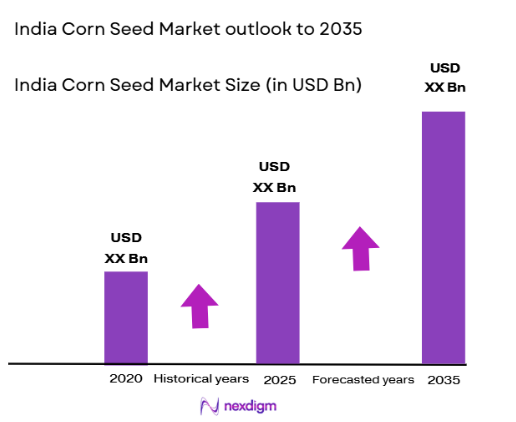
The India Corn Seed Market is estimated to reach a value of approximately USD ~ billion based on a recent historical assessment. This growth is primarily driven by the increasing demand for high-yield and genetically modified corn seeds to meet the food production needs of the growing population. Additionally, government initiatives promoting agricultural modernization and technological advancements in seed development contribute significantly to the market expansion.
India, with its vast agricultural landscape, is home to key corn-producing states such as Maharashtra, Karnataka, and Uttar Pradesh. These regions dominate the market due to favorable climatic conditions and the strong presence of both large-scale and smallholder farmers. The government’s focus on enhancing seed production infrastructure also supports the dominance of these areas in the overall market landscape.
Market Segmentation
By Product Type:
The India Corn Seed Market is segmented by product type into hybrid seeds, open-pollinated varieties, genetically modified seeds, non-GMO seeds, and high-yield seeds. Recently, hybrid seeds have a dominant market share due to their enhanced characteristics such as increased yield and resistance to pests and diseases. Hybrid seeds offer better performance and stability, which makes them highly preferred among both large-scale commercial farmers and smallholder farmers looking to improve crop productivity.

By Platform Type:
The India Corn Seed Market is also segmented by platform type into traditional farming, modern farming, contract farming, organic farming, and greenhouse farming. The dominant sub-segment is modern farming, which is experiencing rapid adoption due to its focus on advanced agricultural practices, such as mechanized planting and high-efficiency irrigation systems. These modern methods increase the precision of seed application and improve overall crop yields, contributing to the dominance of this segment in the market.

Competitive Landscape
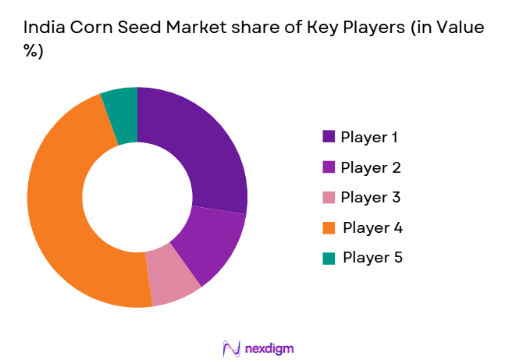
The competitive landscape of the India Corn Seed Market is marked by the presence of both large multinational corporations and regional players. Major players are focusing on product innovation, seed quality, and research and development to secure a significant share of the market. The consolidation in the industry has been driven by strategic acquisitions and partnerships, as companies seek to expand their portfolios and capabilities in seed technology.
| Company Name | Establishment Year | Headquarters | Technology Focus | Market Reach | Key Products | Revenue |
| Bayer CropScience | 1863 | Leverkusen, Germany | ~ | ~ | ~ | ~ |
| Syngenta | 2000 | Basel, Switzerland | ~ | ~ | ~ | ~ |
| Monsanto | 1901 | St. Louis, USA | ~ | ~ | ~ | ~ |
| DowDuPont | 2017 | Wilmington, USA | ~ | ~ | ~ | ~ |
| Nuziveedu Seeds | 2001 | Hyderabad, India | ~ | ~ | ~ | ~ |
India Corn Seed Market Analysis
Growth Drivers
Government Support for Agricultural Modernization:
Government initiatives such as subsidies for high-yield seeds, financial support for farmers, and infrastructure development have created an environment conducive to the growth of the corn seed market. These efforts have incentivized farmers to adopt modern farming techniques, improving productivity and ensuring a steady supply of corn seeds to meet increasing demand. Programs promoting the adoption of genetically modified and hybrid corn seeds have contributed significantly to market expansion, providing farmers with access to advanced seed varieties that offer higher yields and better disease resistance.
Technological Advancements in Seed Production:
Advancements in seed technology, including genetic modifications and hybridization techniques, have revolutionized the corn seed industry. The development of genetically modified seeds with improved traits such as drought tolerance, pest resistance, and higher yield potential has significantly impacted the market. As farmers continue to seek better-performing varieties, the adoption of these advanced seeds has spurred market growth. Moreover, innovations in seed coating technologies and precision farming tools that improve seed planting and crop monitoring have further contributed to increased demand for high-quality corn seeds.
Market Challenges
High Seed Prices:
One of the key challenges hindering the growth of the India Corn Seed Market is the high cost of high-quality seeds, especially genetically modified varieties. The price of hybrid and genetically modified corn seeds is considerably higher compared to open-pollinated varieties, making it less affordable for smallholder farmers. While these advanced seeds offer higher yields and better resistance to pests and diseases, the cost factor poses a significant barrier, especially for farmers in rural areas with limited access to financial resources. High seed prices, coupled with the rising cost of fertilizers and pesticides, make it challenging for farmers to adopt modern seed technologies on a large scale.
Soil Degradation and Water Scarcity:
Soil degradation and water scarcity are two critical challenges faced by the agricultural sector in India, and they directly affect the corn seed market. The increasing dependence on monoculture farming, which involves planting the same crop year after year, has led to a decline in soil fertility. Additionally, water scarcity in key agricultural regions makes it difficult to sustain high-yield crops, including corn. The lack of proper irrigation infrastructure exacerbates this issue, limiting the effectiveness of modern farming techniques that rely on consistent water availability. These environmental challenges threaten to hinder the growth of the corn seed market, as they impact crop yields and the long-term sustainability of agricultural practices.
Opportunities
Increasing Demand for Sustainable and Organic Corn Seeds:
The demand for organic and sustainably produced corn seeds is rising as consumers and farmers alike become more aware of the benefits of organic farming. With a growing preference for pesticide-free and genetically unmodified products, there is significant potential for the expansion of the organic corn seed market. Government incentives and certification programs for organic farming are expected to support the growth of this segment. The shift towards sustainability in agriculture presents a lucrative opportunity for seed companies to diversify their offerings and cater to the increasing demand for organic corn varieties.
Expansion of Corn Seed Exports:
India has the potential to become a major exporter of corn seeds due to its strong agricultural base and favorable climatic conditions for seed production. As global demand for corn continues to rise, particularly in emerging markets, there is an opportunity for Indian companies to expand their presence in international markets. By improving seed quality, adopting advanced technologies, and enhancing distribution networks, Indian corn seed producers can tap into lucrative export markets. Expanding export opportunities will not only help companies increase their revenue but also position India as a key player in the global corn seed market.
Future Outlook
The India Corn Seed Market is expected to experience steady growth over the next five years. Key factors driving this growth include technological advancements in seed production, government support for agricultural modernization, and increasing demand for high-yield corn varieties. Innovations such as genetically modified seeds with improved drought resistance and pest tolerance will continue to shape the market. Additionally, the shift towards sustainable farming practices and organic corn cultivation presents opportunities for market diversification. With a growing emphasis on precision agriculture, the market will likely see further improvements in productivity and cost-efficiency, supported by advancements in seed technology and infrastructure development.
Major Players
- Bayer CropScience
- Syngenta
- Monsanto
- DowDuPont
- Nuziveedu Seeds
- Rallis India
- Kaveri Seed Company
- Pro Agro Seeds
- SeedWorks International
- Advanta Seeds
- Mahyco
- UPL Limited
- VNR Seeds
- JK Seeds
- DuPont Pioneer
Key Target Audience
- Farmers and agricultural producers
- Seed companies and distributors
- Government bodies and policymakers
- Agricultural research institutions
- Agrochemical companies
- Investment firms
- Agricultural equipment manufacturers
- Exporters and importers of agricultural products
Research Methodology
Step 1: Identification of Key Variables
The research begins with identifying the critical factors that influence the India Corn Seed Market, such as market trends, key drivers, challenges, and growth opportunities.
Step 2: Market Analysis and Construction
Comprehensive market data is collected through primary and secondary research to understand the current market structure, key players, and emerging trends.
Step 3: Hypothesis Validation and Expert Consultation
Expert consultations are conducted to validate the market assumptions, ensuring the accuracy and reliability of the findings.
Step 4: Research Synthesis and Final Output
The final report is compiled, synthesizing all gathered data, expert insights, and market forecasts to provide a comprehensive overview of the India Corn Seed Market.

- Executive Summary
- Research Methodology(Definitions, Scope, Industry Assumptions, Market Sizing Approach, Primary & Secondary Research Framework, Data Collection & Verification Protocol, Analytic Models & Forecast Methodology, Limitations & Research Validity Checks)

- Market Definition and Scope
- Value Chain & Stakeholder Ecosystem
- Regulatory / Certification Landscape
- Sector Dynamics Affecting Demand
- Strategic Initiatives & Infrastructure Growth

- Growth Drivers
Increase in Corn Consumption
Rising Demand for High-Yield Seeds
Government Support for Agriculture
Technological Advancements in Seed Production
Climate Change Adaptation Strategies - Market Challenges
High Seed Prices
Soil Health Degradation
Water Scarcity Issues
Regulatory Compliance Challenges
Market Access in Remote Areas - Market Opportunities
Growing Demand for Bio-Based Fertilizers
Expansion of Genetically Modified Seeds
Increasing Adoption of Sustainable Farming Practices - Trends
Focus on Drought-Resistant Seeds
Increase in Seed Innovation and Research
Digitalization of Farming Techniques
Consumer Preference for Organic Corn Products
Rise in Precision Agriculture Technologies - Government Regulations & Defense Policy
Sustainable Agricultural Practices
Regulations on Genetically Modified Seeds
Subsidies for Corn Seed Production - SWOT Analysis
- Stakeholder and Ecosystem Analysis
- Porter’s Five Forces Analysis
- Competition Intensity and Ecosystem Mapping

- By Market Value, 2020-2025
- By Installed Units, 2020-2025
- By Average System Price, 2020-2025
- By System Complexity Tier, 2020-2025

- By System Type (In Value%)
Hybrid Seeds
Open-Pollinated Varieties
Genetically Modified Seeds
Non-GMO Seeds
High Yield Seeds - By Platform Type (In Value%)
Traditional Farming
Modern Farming
Contract Farming
Organic Farming
Greenhouse Farming - By Fitment Type (In Value%)
Field Application
Protected Environment
Commercial Scale Farming
Smallholder Farming
Research & Development - By EndUser Segment (In Value%)
Farmers
Agricultural Enterprises
Seed Companies
Government Agricultural Programs
Agricultural Research Institutions - By Procurement Channel (In Value%)
Direct Procurement
Retail Distribution
Online Platforms
Agricultural Cooperatives
Seed Dealers - By Material / Technology (in Value%)
Biotechnology
Seed Coating Technology
Hybridization Techniques
Genetic Engineering
Conventional Breeding

- Market structure and competitive positioning
- Market share snapshot of major players
- CrossComparison Parameters (Seed Type, Procurement Channel, Technology Used, Market Access, Government Support, Cost of Seeds, Brand Loyalty, Distribution Channels, Research Investment, Seed Quality)
- SWOT Analysis of Key Players
- Pricing & Procurement Analysis
- Key Players
BASF
Bayer CropScience
DowDuPont
Monsanto
Syngenta
Mahyco
Nuziveedu Seeds
Pioneer Hi-Bred
Krishidhan Seeds
Rallis India
Kaveri Seed Company
Pro Agro Seeds
BioSeed
SeedWorks International
Advanta Seeds

- Farmers’ Increasing Adoption of Hybrid Seeds
- Seed Companies Focused on Innovation
- Government Support Programs for Smallholder Farmers
- Agricultural Research Institutions Collaborating with Seed Companies

- Forecast Market Value, 2026-2035
- Forecast Installed Units, 2026-2035
- Price Forecast by System Tier, 2026-2035
- Future Demand by Platform, 2026-2035


 Request a Sample
 Ask for Customization
 Get a Quote
 Enquire Now