

 Download PDF
Market Overview
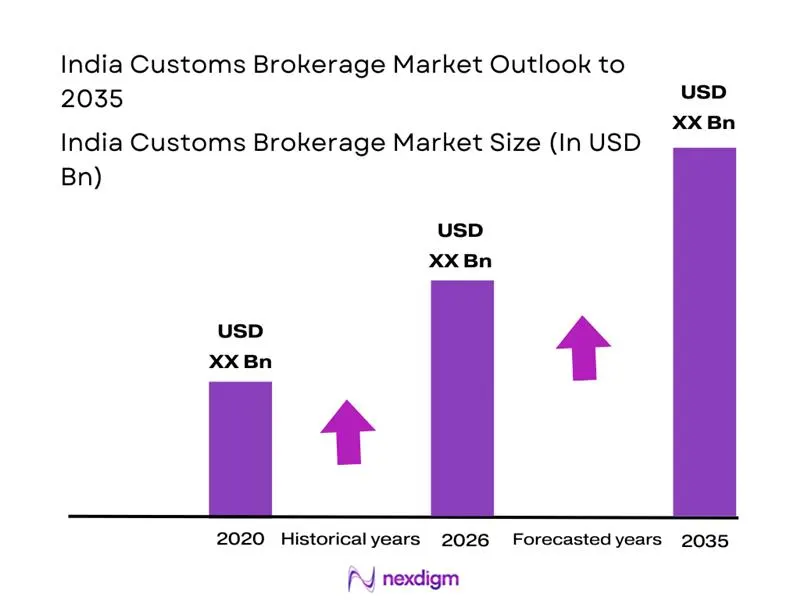
The India customs brokerage market is valued at approximately ~, derived from service revenues linked to over USD 1.6 trillion in merchandise trade handled through India’s customs ecosystem and more than 40 million Bills of Entry processed via Central Board of Indirect Taxes and Customs digital systems. Growth is driven by rising import complexity in sectors such as electronics and crude oil, along with increasing reliance on licensed customs brokers for compliance, classification, and duty optimization across diverse shipment categories.
Major logistics hubs such as Mumbai, Chennai, Delhi NCR, and Ahmedabad dominate the market due to their proximity to high-volume ports, industrial clusters, and inland container depots. These regions benefit from advanced customs digital infrastructure, higher container throughput, and strong CHA networks, enabling faster clearance and handling of complex cargo, making them central to India’s customs brokerage demand ecosystem.
Market Segmentation
By Service Type
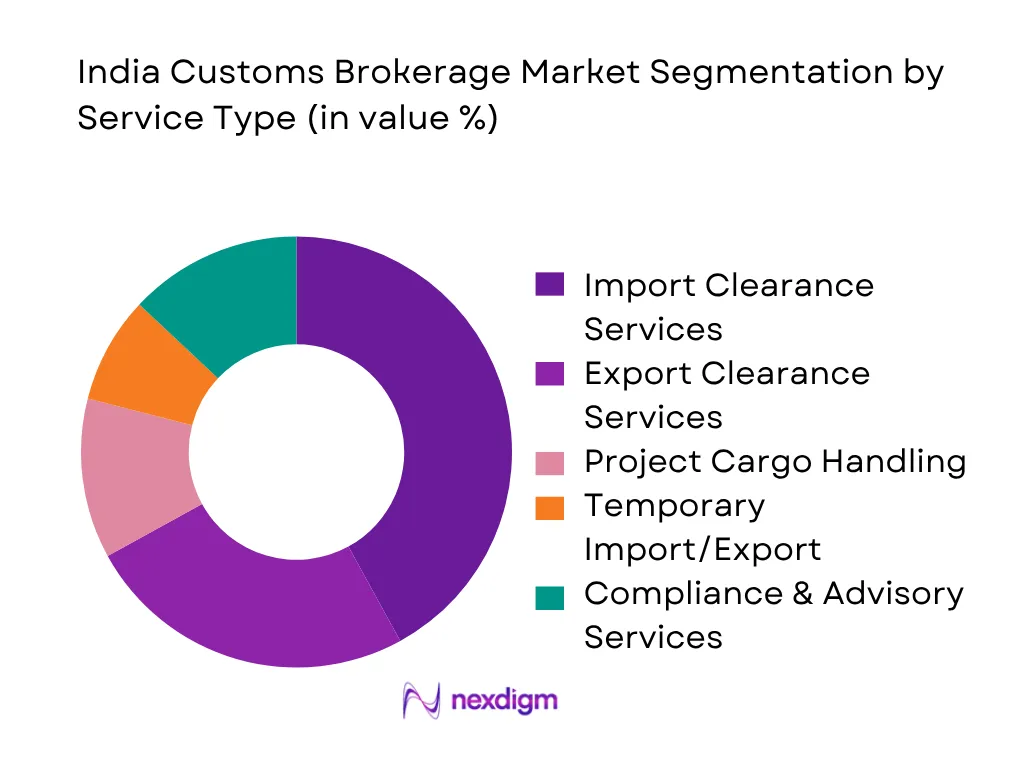
India customs brokerage market is segmented into import clearance services, export clearance services, project cargo handling, temporary import/export, and compliance & advisory services. Import clearance services dominate the market, accounting for the highest share due to India’s heavy reliance on imports such as crude oil, machinery, and electronics. These shipments require extensive documentation, duty calculations, and regulatory approvals, increasing dependency on customs brokers. Import processes involve more inspections, valuation checks, and classification complexities compared to exports, leading to higher service fees and longer engagement cycles. Additionally, the growth of cross-border e-commerce imports and SME participation in global sourcing has further increased demand for professional import clearance services, reinforcing its dominant position in the market.
By Mode of Transport
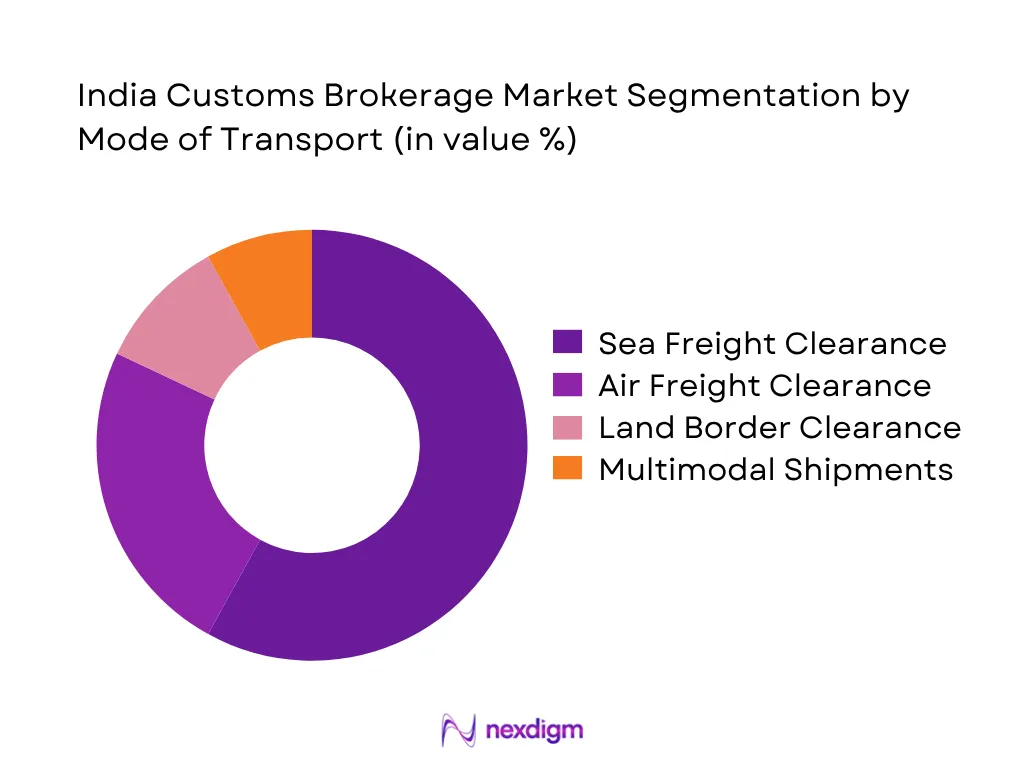
India customs brokerage market is segmented into sea freight clearance, air freight clearance, land border clearance, and multimodal shipments. Sea freight clearance dominates the market due to India’s heavy dependence on maritime trade, which handles the majority of cargo volume including bulk commodities like crude oil, coal, and industrial goods. Major ports process millions of TEUs annually, creating high demand for customs brokerage services. Sea shipments involve complex documentation, container tracking, and port handling procedures, requiring extensive broker involvement. Compared to air freight, which is faster but lower in volume, sea freight generates higher transaction volumes and longer processing cycles, making it the primary contributor to brokerage revenues.
Competitive Landscape
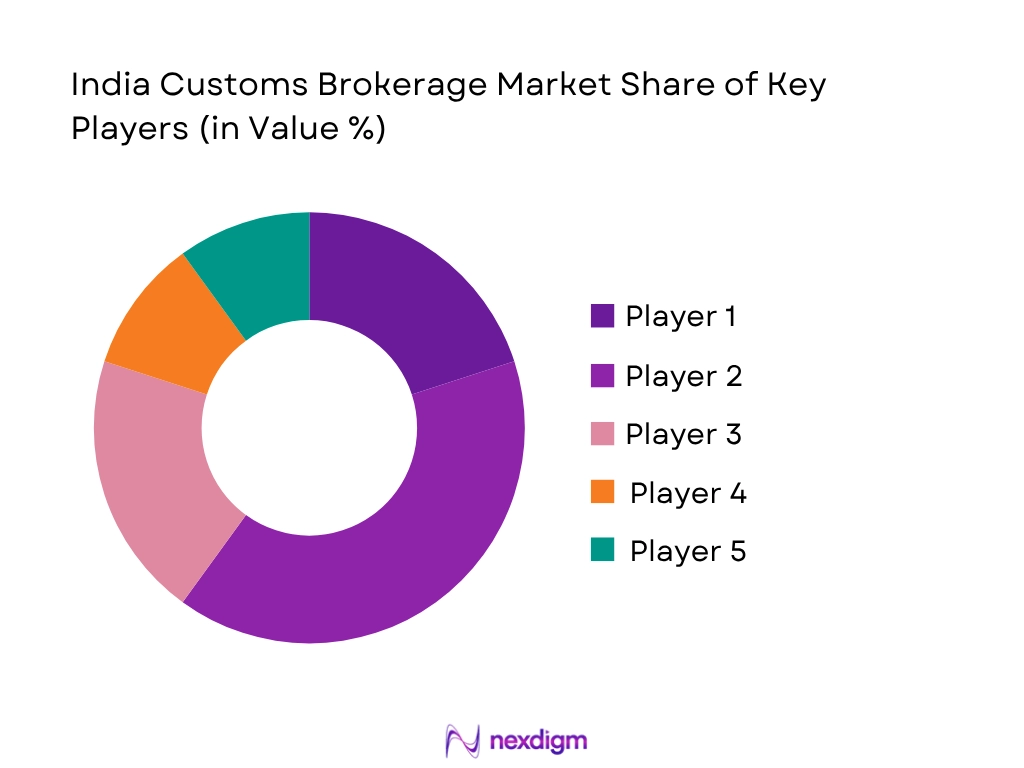
The India customs brokerage market is characterized by a mix of global logistics giants and domestic CHA firms, creating a moderately consolidated competitive environment. Companies such as DHL Global Forwarding, Kuehne + Nagel, and Allcargo Logistics Ltd dominate due to their integrated service offerings, digital capabilities, and extensive port coverage. Domestic players leverage strong regulatory expertise and local relationships, while global firms benefit from advanced technology platforms and international networks, intensifying competition across service quality and pricing.
| Company | Establishment Year | Headquarters | Licensed CHAs | Port Coverage | Avg Clearance Time | Digital Integration | AEO Status | Service Portfolio |
| Allcargo Logistics Ltd | 1993 | Mumbai | ~ | ~ | ~ | ~ | ~ | ~ |
| DHL Global Forwarding | 1815 | Germany | ~ | ~ | ~ | ~ | ~ | ~ |
| Kuehne + Nagel | 1890 | Switzerland | ~ | ~ | ~ | ~ | ~ | ~ |
| DB Schenker India | 1872 | Germany | ~ | ~ | ~ | ~ | ~ | ~ |
| Jeena & Company | 1900 | Mumbai | ~ | ~ | ~ | ~ | ~ | ~ |
India Customs Brokerage Market Analysis
Growth Drivers
Trade Volume Growth Rate
India’s customs brokerage demand is directly linked to expanding trade volumes, with merchandise exports recorded at USD 437 billion and imports at USD 678 billion as per Ministry of Commerce and Industry. Container traffic across major ports exceeded 17 million TEUs, while total cargo handled crossed 795 million tonnes, according to Ministry of Ports, Shipping and Waterways. The World Bank reports India’s trade-to-GDP ratio exceeding 40, indicating strong integration with global markets. Rising shipment volumes increase the number of Bills of Entry and shipping bills processed, directly driving demand for customs brokers managing classification, valuation, and compliance for high-frequency import-export transactions.
EXIM Policy Support Index
Government policy reforms continue to strengthen customs brokerage demand through simplified trade processes and export promotion schemes. Under the Foreign Trade Policy, India processed over 1.5 million export authorizations and licenses through Directorate General of Foreign Trade digital systems. The Reserve Bank of India reported export credit outstanding above INR 3 trillion, reflecting institutional support for exporters. Additionally, India’s logistics performance improvements, highlighted by a ranking of 38 in the World Bank Logistics Performance Index, indicate policy-driven efficiency gains. These reforms increase trade participation, creating higher compliance requirements and boosting reliance on licensed customs brokers for documentation and regulatory adherence.
Market Challenges
Regulatory Complexity Score
India’s customs environment remains complex due to multi-layered compliance requirements across agencies. Over 500 tariff lines and multiple duty structures under GST, basic customs duty, and cess categories are administered by Central Board of Indirect Taxes and Customs. The World Trade Organization notes India maintains over 10,000 tariff lines, requiring precise HS classification. Additionally, India processes more than 40 million customs declarations annually, increasing the likelihood of procedural delays. Multiple regulatory touchpoints, including DGFT and FSSAI approvals, add complexity. This fragmented compliance structure increases dependency on customs brokers but also raises operational challenges in ensuring accuracy and timely clearance.
Documentation Error Rate
High documentation requirements contribute to frequent errors in customs filings, impacting clearance timelines. India processes over 40 million Bills of Entry annually through ICEGATE systems, as reported by Central Board of Indirect Taxes and Customs. Even minor discrepancies in HS codes, valuation, or invoices can lead to reassessment or cargo hold-ups. The World Bank highlights that documentary compliance time for imports in India exceeds 70 hours, reflecting procedural intensity. Additionally, port dwell time for containers remains above 2.5 days at major ports, according to Ministry of Ports, Shipping and Waterways. These factors highlight the operational burden on brokers and the critical need for accuracy in documentation processes.
Opportunities
FTAs Utilization Rate
India’s expanding network of free trade agreements is creating opportunities for customs brokers to support compliance and tariff optimization. India has operational FTAs with over 15 countries and regions, including ASEAN, Japan, and Australia, as per Ministry of Commerce and Industry. Preferential trade under these agreements requires accurate rules-of-origin certification and documentation. Trade with FTA partner countries exceeds USD 400 billion, increasing the volume of preferential shipments. The World Bank notes that trade facilitation measures significantly reduce clearance time when properly utilized. This creates demand for specialized brokerage services focused on FTA compliance, duty savings, and documentation accuracy for exporters and importers.
E-commerce Cross-Border Growth
Rapid growth in cross-border e-commerce is significantly increasing customs brokerage demand for low-value, high-frequency shipments. India handled over 300 million cross-border e-commerce parcels annually, supported by digital trade platforms and logistics networks, as reported by Ministry of Electronics and Information Technology. The World Bank highlights that digital trade expansion is accelerating parcel-based imports and exports. Additionally, India’s internet user base exceeded 850 million, driving online retail penetration and international purchases. These shipments require simplified but high-volume customs processing, increasing reliance on automated brokerage solutions and specialized clearance services tailored to e-commerce logistics.
Future Outlook
The India customs brokerage market is expected to witness steady expansion driven by increasing trade volumes, regulatory digitization, and growing complexity in global supply chains. Government initiatives such as faceless assessment, paperless documentation, and single-window clearance systems are significantly improving operational efficiency and reducing turnaround times. The rise of cross-border e-commerce and SME participation in international trade is creating new demand segments for customs brokers. Additionally, advancements in automation technologies such as AI-based document processing and blockchain-enabled trade platforms are transforming traditional brokerage operations. As infrastructure investments in ports, logistics corridors, and multimodal transport systems continue, the market is projected to grow at a CAGR of approximately 6.5% during the forecast period, supported by increasing demand for compliance expertise and integrated logistics solutions.
Major Players
- Allcargo Logistics Ltd
- Aegis Logistics Ltd
- DHL Global Forwarding India
- Kuehne + Nagel India
- DB Schenker India
- Expeditors International India
- Jeena & Company
- TVS Supply Chain Solutions
- Blue Dart Express Ltd
- Gati Ltd
- TCI
- Mahindra Logistics Ltd
- Safexpress Pvt Ltd
- CJ Darcl Logistics Ltd
- DSV Air & Sea India
Key Target Audience
- Importers and Exporters
- Freight Forwarding Companies
- Third-Party Logistics Providers
- E-commerce Cross-Border Platforms
- Port Authorities and Terminal Operators
- Government and Regulatory Bodies
- Investments and Venture Capitalist Firms
- Customs Brokerage Firms and Licensed CHAs
Research Methodology
Step 1: Identification of Key Variables
The process begins with mapping the customs brokerage ecosystem, identifying stakeholders such as CHAs, freight forwarders, port authorities, and import-export businesses. Secondary research from trade databases, government portals, and industry publications is used to identify key variables influencing market performance.
Step 2: Market Analysis and Construction
Historical data on trade volumes, shipment counts, and customs filings is analyzed to estimate market size. Revenue modeling is conducted based on average brokerage fees per shipment and service distribution across industries and transport modes.
Step 3: Hypothesis Validation and Expert Consultation
Primary interviews with customs brokers, logistics providers, and regulatory experts are conducted to validate assumptions related to pricing, operational challenges, and demand trends. These insights refine the market segmentation and forecasts.
Step 4: Research Synthesis and Final Output
Data from primary and secondary sources is triangulated to ensure accuracy. Final insights are compiled into a comprehensive report covering market dynamics, competitive landscape, and future growth opportunities.

- Executive Summary
- Research Methodology (Market Definitions and Scope of Customs Brokerage Services, HS Code Classification Framework, ICEGATE Data Utilization Approach, Primary Interviews with Licensed Customs Brokers, Bottom-Up Shipment Volume Modelling, Top-Down Trade Flow Validation, Assumptions on Duty Structures and Clearance Timelines, Limitations and Data Triangulation Techniques, TAM/SAM/SOM Modelling Framework Based on Trade Value and Shipment Penetration)

- Definition and Scope
- Evolution of Customs Brokerage Ecosystem in India
- Timeline of Regulatory Reforms
- Trade Logistics Lifecycle Integration
- Value Chain Analysis
- Stakeholder Ecosystem

- Growth Drivers
Trade Volume Growth Rate
EXIM Policy Support Index
Digital Customs Adoption Rate
Addressable Market Expansion - Market Challenges
Regulatory Complexity Score
Documentation Error Rate
Port Congestion Index
Unorganized Broker Share - Opportunities
FTAs Utilization Rate
E-commerce Cross-Border Growth
AEO Certification Penetration
Untapped SME Segment TAM - Market Trends
Faceless Assessment Adoption
AI-based Documentation Automation
Single Window Interface Adoption Rate
Digital Broker Platforms Penetration - Government Regulations
- SWOT Analysis
- Porter’s Five Forces
- Supply Chain Digitization Impact
- Logistics Integration Analysis

- By Value, 2020-2025
- By Shipment Volume, 2020-2025
- By Average Brokerage Fee per Shipment, 2020-2025

- By Service Type (in Value %)
Import Clearance Services
Export Clearance Services
Project Cargo Handling
Temporary Import/Export
Compliance & Advisory Services - By Mode of Transport (in Value %)
Sea Freight Clearance
Air Freight Clearance
Land Border Clearance
Multimodal Shipments - By End User Industry (in Value %)
Automotive & Engineering Goods
Pharmaceuticals & Chemicals
Electronics & Electricals
Textiles & Apparel
FMCG & Retail Goods
Agriculture & Perishables - By Port Type (in Value %))
Major Ports
Minor/Private Ports
Inland Container Depots (ICDs)
Air Cargo Complexes - By Client Type (in Value %)
Large Enterprises
SMEs
E-commerce Cross-Border Sellers
Government & Defense Shipments

- Market Share of Major Players
- By Value
- Shipment Volume
- Bill of Entry Processing Volume
- TAM Coverage Ratio
- Cross Comparison Parameters (Service Portfolio Breadth, Average Clearance Time (Hours), ICEGATE Integration Level, Number of Licensed CHAs, Port Coverage Network, AEO Certification Status, Digital Platform Capability, Client Retention Rate)
- SWOT Analysis of Major Players
- Pricing Benchmarking
- Detailed Profiles of Major Companies
Allcargo Logistics Ltd
Aegis Logistics Ltd
DHL Global Forwarding India
Kuehne + Nagel India
DB Schenker India
Expeditors International India
Jeena & Company
TVS Supply Chain Solutions
Blue Dart Express Ltd
Gati Ltd
TCI
Mahindra Logistics Ltd
Safexpress Pvt Ltd
CJ Darcl Logistics Ltd
DSV Air & Sea India

- Shipment Volume Patterns & Seasonality
- Cost Sensitivity & Brokerage Fee Elasticity
- Compliance Burden Analysis
- Pain Point Analysis
- Decision-Making Criteria
- End User TAM Analysis

- By Value, 2026-2035
- By Shipment Volume, 2026-2035
- By Average Brokerage Fee per Shipment, 2026-2035


 Request a Sample
 Ask for Customization
 Get a Quote
 Enquire Now