
 Download PDF
Market Overview
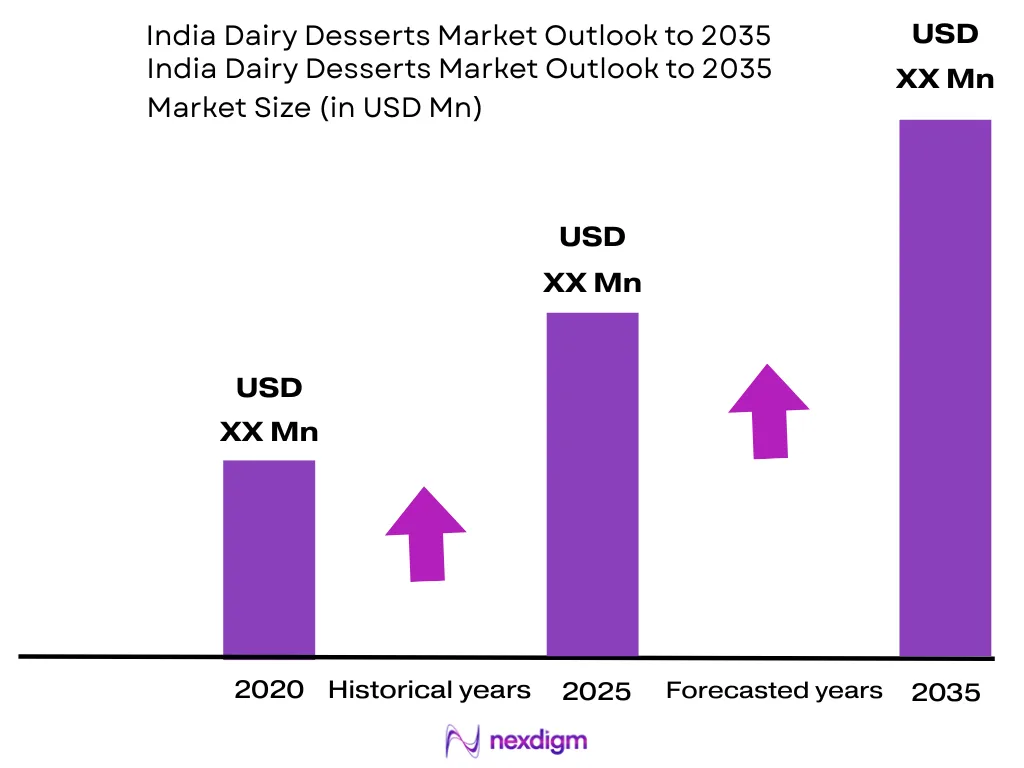
The India Dairy Desserts Market reached an estimated value of USD ~ million, supported by India’s position as the world’s largest milk producer. According to government dairy statistics, India’s milk production exceeded 239 million tonnes, compared to over 230 million tonnes in the previous year, creating a strong raw material base for dairy dessert manufacturing. Rising urbanization, increasing disposable incomes, expansion of refrigerated retail infrastructure, and growing demand for convenient dessert products continue to drive consumption. The increasing popularity of premium dairy snacks, flavored puddings, custards, mousses, and yogurt-based desserts has further strengthened category growth across metropolitan and tier-1 cities.
Market Segmentation
By Product Type
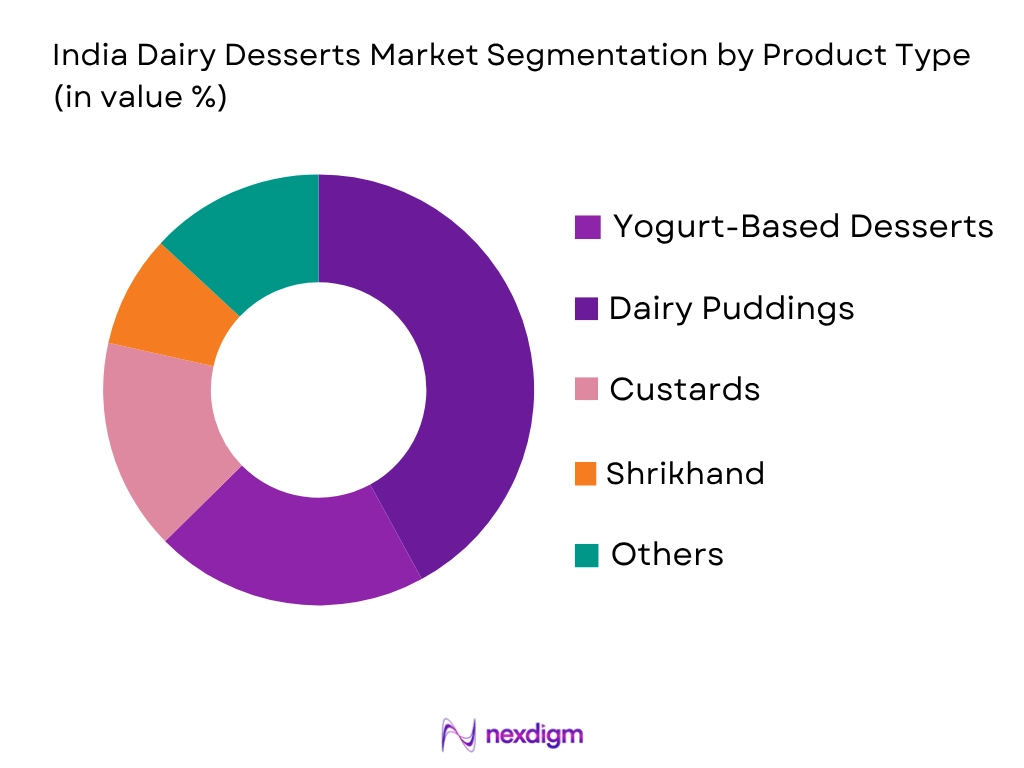
India Dairy Desserts Market is segmented by product type into yogurt-based desserts, puddings, custards, mousses, shrikhand, mishti doi, rabri-based products, and specialty desserts. Recently, yogurt-based desserts have accounted for the dominant share of the market due to their strong positioning as both indulgent and health-oriented products. Consumers increasingly prefer products containing probiotics, lower fat content, and convenient single-serve packaging. Brands such as Epigamia, Nestlé, Britannia, and Amul have significantly expanded flavored yogurt and Greek yogurt portfolios. The category benefits from growing awareness of digestive health, rising demand for protein-rich snacks, and wider availability through supermarkets, convenience stores, and quick-commerce channels. Continuous innovation in flavors, textures, and premium offerings further reinforces the leadership of yogurt-based desserts within the Indian dairy dessert landscape.
By Distribution Channel
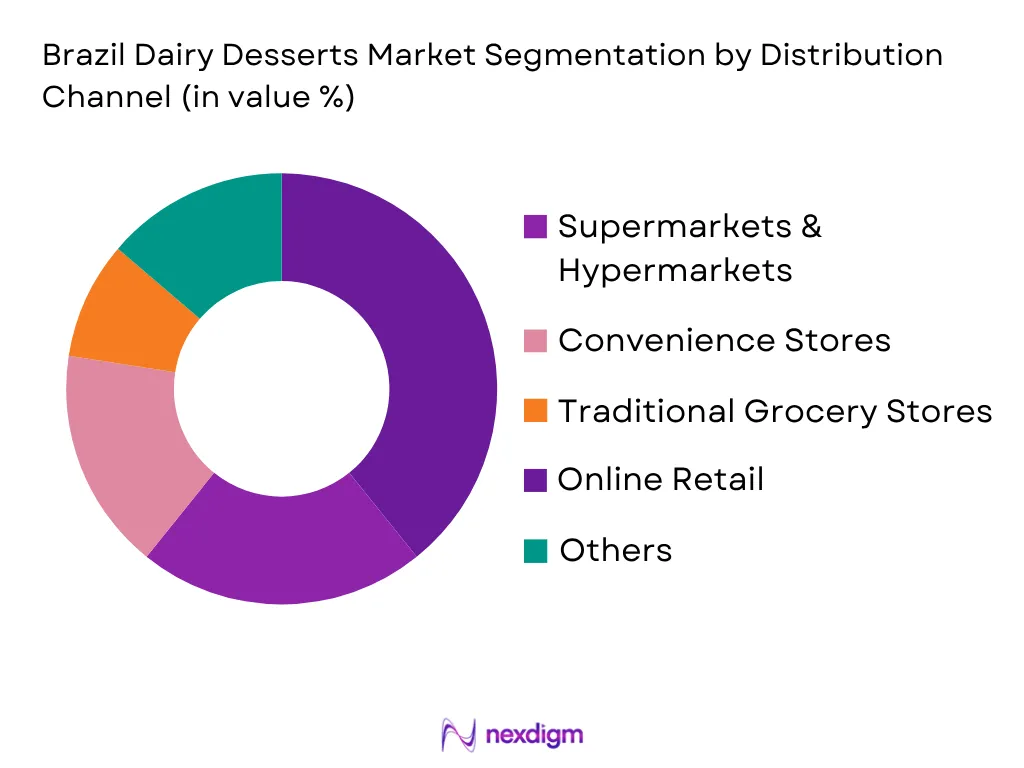
India Dairy Desserts Market is segmented by distribution channel into supermarkets & hypermarkets, traditional grocery stores, convenience stores, online grocery platforms, quick-commerce channels, specialty stores, and foodservice sales. Recently, supermarkets and hypermarkets have maintained the dominant market share owing to their ability to provide refrigerated display infrastructure, extensive product assortments, and superior product visibility. Organized retail chains such as Reliance Fresh, D-Mart, Spencer’s, and Star Bazaar offer consumers access to premium and imported dairy dessert products alongside domestic brands. These outlets facilitate impulse purchases through dedicated chilled dessert sections and promotional activities. The availability of multiple SKUs, family packs, premium offerings, and new product launches has further strengthened the segment. As modern retail penetration continues to expand across urban India, supermarkets and hypermarkets remain the preferred channel for dairy dessert manufacturers seeking higher consumer engagement and category expansion.
Competitive Landscape
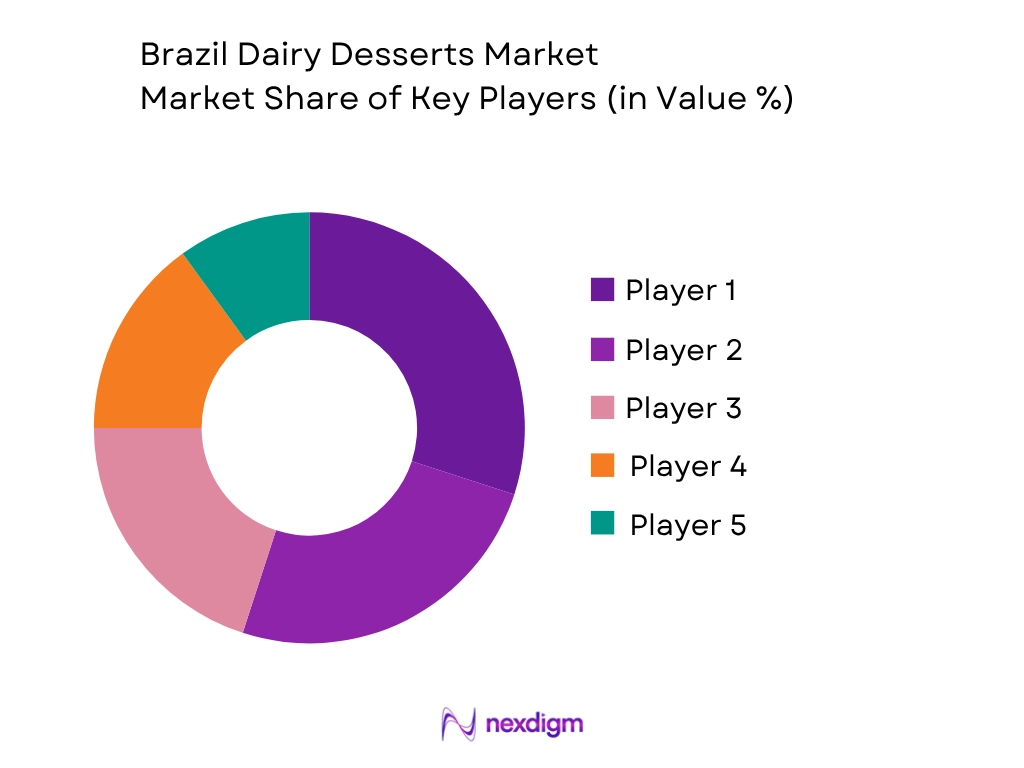
The India Dairy Desserts Market is moderately consolidated and dominated by a mix of dairy cooperatives, multinational food manufacturers, and specialized dairy companies. Major players compete through product innovation, premiumization strategies, distribution expansion, cold-chain investments, and regional flavor customization. Companies continue to introduce high-protein, probiotic, reduced-sugar, and premium dessert offerings to attract evolving consumer preferences.
| Company | Establishment Year | Headquarters | Dairy Dessert Focus | Product Portfolio | Distribution Reach | Premium Product Presence | Cold Chain Strength | Innovative Focus |
| Amul | 1946 | ~ | ~ | ~ | ~ | ~ | ~ | ~ |
| Mother Dairy | 1974 | ~ | ~ | ~ | ~ | ~ | ~ | ~ |
| Nestlé India | 1961 | ~ | ~ | ~ | ~ | ~ | ~ | ~ |
| Britannia Industries | 1892 | ~ | ~ | ~ | ~ | ~ | ~ | ~ |
| Epigamia | 2013 | ~ | ~ | ~ | ~ | ~ | ~ | ~ |
India Dairy Desserts Market Analysis
Growth Drivers
Rising Dairy Consumption and Expanding Milk Production
India’s position as the world’s largest milk producer continues to support the dairy desserts market through abundant raw material availability and a well-established dairy processing ecosystem. According to the Department of Animal Husbandry and Dairying, India’s milk production reached approximately 239 million tonnes, compared to around 231 million tonnes in the previous period. The country possesses more than 307 million bovine animals, creating a strong foundation for dairy-based product manufacturing. The World Bank reports India’s population exceeding 1.43 billion, while IMF estimates place India’s nominal GDP above USD 4 trillion, reflecting rising consumer purchasing power and food expenditure. Growing urban populations, expanding middle-income households, and increasing preference for packaged dairy snacks are encouraging manufacturers to launch value-added dairy desserts such as puddings, custards, mousses, shrikhand, and yogurt-based desserts. The presence of large dairy cooperatives and organized dairy processors further strengthens product availability across retail channels. Increasing penetration of refrigerated retail infrastructure and quick-commerce platforms supports greater accessibility of chilled dairy desserts across metropolitan and tier-1 cities, contributing significantly to category expansion.
Growth of Organized Retail and Food Processing Infrastructure
The expansion of organized retail and food processing infrastructure is significantly supporting dairy dessert consumption across India. Government data indicates that the food processing sector contributes substantially to manufacturing output and employment generation, while the country has over 900 approved dairy processing plants under various regulatory frameworks. India possesses more than 12 million retail outlets, with modern retail chains continuing to expand refrigerated shelf space for value-added dairy products. The Ministry of Food Processing Industries has approved numerous cold-chain projects aimed at strengthening refrigerated logistics and reducing food wastage. India’s urban population exceeds 520 million according to World Bank estimates, creating a large consumer base for convenient ready-to-eat dairy desserts. Increasing internet penetration and the rapid growth of online grocery platforms have further improved access to premium dairy products. Major cities such as Mumbai, Delhi, Bengaluru, Hyderabad, and Chennai are witnessing higher consumption of packaged dairy desserts due to changing lifestyles and rising demand for convenience foods. These developments create favorable conditions for manufacturers to expand product portfolios and strengthen nationwide distribution networks.
Market Challenges
Cold Chain and Refrigerated Logistics Constraints
Dairy desserts require uninterrupted refrigerated storage throughout production, transportation, and retail distribution, making cold-chain infrastructure a critical challenge. Despite substantial investments, India continues to experience logistical gaps in temperature-controlled transportation and storage facilities. Government data shows that food wastage remains significant due to inadequate cold storage capacity across several regions. India has more than 8,000 cold storage facilities; however, a large portion is concentrated in specific states and primarily used for agricultural commodities. The country’s geographical size and diverse climatic conditions increase transportation complexity for chilled dairy products. According to World Bank logistics indicators, supply-chain efficiency varies significantly across regions, affecting timely product movement. Dairy desserts such as puddings, custards, mousses, and yogurt-based products possess limited shelf lives and require strict temperature maintenance. Retailers operating in smaller cities and rural markets often face infrastructure limitations that restrict product availability. These challenges increase operational complexity for manufacturers and limit penetration into underserved regions despite growing consumer demand.
Competition from Traditional Sweets and Emerging Alternatives
India’s dairy dessert market faces strong competition from traditional sweet categories that remain deeply embedded in consumer culture. Products such as rasgulla, gulab jamun, kheer, rabri, peda, and various regional sweets continue to dominate dessert consumption occasions across households and celebrations. According to government agricultural and food consumption statistics, dairy-based traditional sweets account for substantial utilization of processed milk across the country. Simultaneously, the emergence of plant-based desserts and lactose-free alternatives has increased competitive pressure within premium urban markets. India’s expanding health-conscious consumer segment is increasingly evaluating sugar intake, ingredient transparency, and nutritional profiles before making purchasing decisions. The country has more than 800 million internet users, contributing to greater awareness regarding wellness-focused dietary choices and alternative food products. Manufacturers of dairy desserts therefore face the dual challenge of competing against established traditional products while also responding to changing consumer preferences. Continuous innovation, flavor differentiation, and product premiumization are required to maintain category relevance and consumer engagement.
Market Opportunities
Increasing Demand for Protein-Enriched and Functional Dairy Desserts
The growing focus on nutrition and wellness presents a significant opportunity for protein-enriched and functional dairy desserts in India. According to government health and nutrition data, rising awareness regarding balanced diets and protein consumption has encouraged consumers to seek products offering additional nutritional benefits. India’s population exceeds 1.43 billion, including a large working-age demographic increasingly interested in convenient yet nutritious food options. The country also has one of the world’s largest fitness and wellness consumer bases, supporting demand for value-added dairy products containing probiotics, added protein, vitamins, and functional ingredients. Organized retail chains and online grocery platforms are allocating additional shelf space to premium health-oriented dairy categories. Urban centers such as Bengaluru, Mumbai, Hyderabad, Pune, and Delhi have emerged as important markets for protein-focused food products. Dairy dessert manufacturers can capitalize on this trend through innovations in Greek yogurt desserts, high-protein puddings, probiotic custards, and low-sugar indulgent offerings. The strong domestic milk supply further supports large-scale development of functional dairy dessert categories.
Expansion Through Quick Commerce and Digital Retail Channels
The rapid expansion of digital commerce platforms is creating substantial growth opportunities for dairy dessert manufacturers. India possesses more than 950 million internet subscribers and one of the world’s largest digital consumer ecosystems. The growth of quick-commerce platforms offering delivery within minutes has transformed the availability of chilled and perishable food products. Metropolitan regions such as Mumbai, Bengaluru, Delhi NCR, Hyderabad, Chennai, and Pune are experiencing strong adoption of app-based grocery purchasing behavior. Government digital economy initiatives and increasing smartphone penetration continue to support online retail expansion. Dairy desserts are particularly well positioned within quick-commerce ecosystems due to their impulse purchase nature, premium positioning, and suitability for immediate consumption occasions. Enhanced last-mile logistics capabilities and refrigerated delivery solutions have improved product accessibility while maintaining quality standards. Manufacturers can leverage these channels to introduce premium dessert cups, specialty flavors, seasonal products, and limited-edition launches directly to consumers. The continued evolution of India’s digital retail infrastructure provides a strong platform for expanding dairy dessert consumption beyond traditional retail formats.
Future Outlook
The India Dairy Desserts Market is expected to witness robust growth over the forecast period supported by increasing urbanization, rising disposable incomes, and growing preference for convenient dairy-based snacks. Expansion of organized retail, quick-commerce platforms, and refrigerated logistics infrastructure is expected to improve product accessibility. Premiumization trends, health-focused formulations, and regional flavor innovations are likely to create new growth avenues. Manufacturers are expected to focus on protein-enriched, probiotic, reduced-sugar, and functional dairy desserts to address evolving consumer preferences. The market will continue benefiting from India’s strong dairy production ecosystem and expanding packaged food consumption.
Major Players
- Amul
- Mother Dairy
- Nestlé India
- Britannia Industries
- Hatsun Agro Product
- Dodla Dairy
- Heritage Foods
- Parag Milk Foods
- Milky Mist Dairy
- Epigamia
- Danone India
- Schreiber Dynamix Dairies
- Kwality Dairy
- Creambell
- Gujarat Cooperative Milk Marketing Federation (GCMMF)
Key Target Audience
- Dairy Dessert Manufacturers
- Dairy Processing Companies
- Food & Beverage Manufacturers
- Organized Retail Chains
- Quick Commerce and E-Commerce Platforms
- Foodservice and Hospitality Operators
- Investment and Venture Capitalist Firms
- Government and Regulatory Bodies (FSSAI, Ministry of Food Processing Industries, National Dairy Development Board)
Research Methodology
Step 1: Identification of Key Variables
The initial phase involves constructing an ecosystem map covering dairy farmers, milk cooperatives, dairy processors, retail chains, foodservice operators, logistics providers, and consumers. Extensive secondary research is conducted using industry publications, government databases, company reports, and trade statistics to identify variables influencing demand and supply dynamics.
Step 2: Market Analysis and Construction
Historical market information is compiled and analyzed to evaluate consumption trends, production volumes, distribution channel performance, and category penetration. Market sizing is developed using both demand-side consumption analysis and supply-side revenue assessments across product categories.
Step 3: Hypothesis Validation and Expert Consultation
Market assumptions are validated through structured discussions with dairy processors, category managers, distributors, retailers, and industry experts. These consultations provide insights into pricing structures, product innovations, consumer preferences, and competitive positioning.
Step 4: Research Synthesis and Final Output
Data collected through primary and secondary sources is triangulated using bottom-up and top-down approaches. Final outputs are validated against industry benchmarks to ensure consistency, reliability, and accuracy across all market estimates and forecasts.

- Executive Summary
- Research Methodology (Market Definitions and Assumptions, Abbreviations, Market Sizing Approach, Bottom-Up Analysis, Top-Down Validation, Primary Research Framework, Expert Interviews, Demand-Supply Assessment, Data Triangulation Model, Forecasting Methodology, Limitations and Future Conclusions)

- Definition and Scope
- Market Genesis and Evolution
- Timeline of Key Industry Developments
- India Dairy Industry Overview
- Dairy Desserts Consumption Lifecycle

- Growth Drivers (Rising Demand for Ready-to-Eat Dairy Snacks, Expansion of Organized Retail and Cold Chain Infrastructure, Increasing Premiumization of Dairy Consumption, Growing Urban Population and Disposable Income, Rising Demand for Convenient Indulgent Food Products)
- Market Challenges (Raw Milk Supply Volatility, Cold Chain Logistics Constraints, Competition from Traditional Indian Sweets, Shelf-Life Management Challenges, Rising Input and Packaging Costs)
- Market Opportunities (Protein-Enriched Dairy Desserts, Functional and Probiotic Dessert Categories, Premium Gourmet Dessert Innovations, Expansion Through Quick Commerce Channels, Regional Flavor-Based Product Development)
- Market Trends (Premium Chilled Dessert Cups, High-Protein Dairy Dessert Launches, Clean Label Product Development, Fusion of Traditional and Western Dessert Formats, Lactose-Free and Reduced Sugar Innovations)
- Government Regulations (FSSAI Dairy Product Standards, Food Safety and Packaging Regulations, Nutritional Labeling Requirements, Cold Chain Compliance Standards, Milk Procurement and Quality Control Regulations)
- SWOT Analysis
- Porter’s Five Forces Analysis
- PESTLE Analysis
- Stakeholder Ecosystem
- Competition Ecosystem

- By Market Value (2020-2025)
- By Volume Consumption (2020-2025)
- By Average Selling Price (2020-2025)

- By Product Type (In Value %)
Yogurt-Based Desserts
Dairy Puddings
Custards
Mousses
Shrikhand
Mishti Doi
Rabri and Kheer-Based Desserts
Cheesecake and Specialty Dairy Desserts - By Flavor Type (In Value %)
Chocolate
Vanilla
Mango
Strawberry
Mixed Fruit
Caramel
Coffee
Traditional Indian Flavors (Kesar, Elaichi, Paan, Kulfi) - By Distribution Channel (In Value %)
Supermarkets and Hypermarkets
Convenience Stores
Traditional Kirana Stores
Online Grocery Platforms
Quick Commerce Platforms
Specialty Dairy Stores
Foodservice and Institutional Sales - By Region (In Value %)
North India
South India
West India
East India
Central India - By Packaging Type (In Value %)
Single-Serve Cups
Family Packs
Multi-Pack Formats
Pouches
Glass Containers
Premium Dessert Jars

- Market Share of Major Players (By Value, Volume, Product Category, Distribution Channel )
- Cross Comparison Parameters (Product Portfolio Breadth, Dairy Dessert SKU Count, Production Capacity, Distribution Reach, Cold Chain Strength, Innovation Pipeline, Premium Product Presence, Sustainability Initiatives)
- SWOT Analysis of Major Players
- Pricing Analysis by SKU and Product Category
- Detailed Profiles of Major Companies
Amul
Mother Dairy
Nestlé India
Britannia Industries
Hatsun Agro Product
Dodla Dairy
Heritage Foods
Parag Milk Foods
Milky Mist Dairy
Epigamia (Drums Food International)
Danone India
Schreiber Dynamix Dairies
Kwality Dairy
Creambell
Gujarat Cooperative Milk Marketing Federation (GCMMF)

- Consumption Behavior Assessment
- Demographic Consumption Trends
- Purchasing Power Analysis
- Household Spending on Dairy Products
- Consumer Preferences by Product Category
- Premium vs Mass Market Demand
- Brand Loyalty Assessment
- Health and Wellness Influence on Purchase Decisions
- Consumer Pain Point Analysis
- Decision-Making Process Analysis

- By Market Value (2026-2035)
- By Volume Consumption (2026-2035)
- By Average Selling Price (2026-2035)


 Request a Sample
 Ask for Customization
 Get a Quote
 Enquire Now