

 Download PDF
 Download PDF
Market Overview
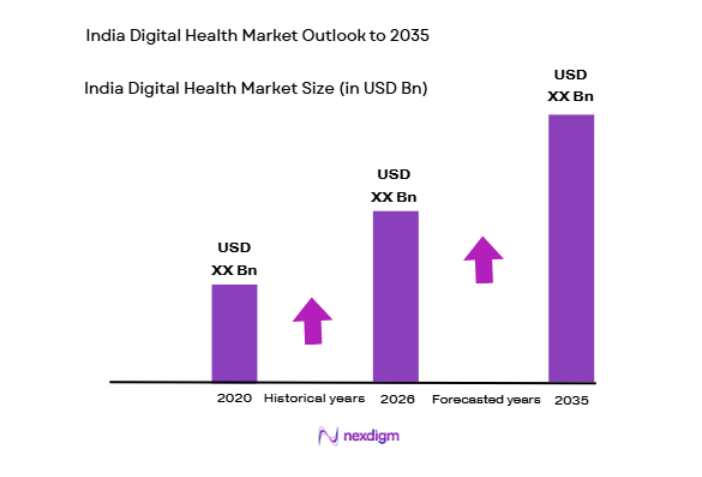
Based on a recent historical assessment, the India digital health market generated approximately USD ~ billion according to government-supported digital health ecosystem assessments and industry reports from the National Health Authority and NITI Aayog. The market is driven by rapid digitalization of healthcare delivery, rising smartphone penetration exceeding ~ million devices according to the Telecom Regulatory Authority of India, expanding telemedicine adoption, electronic health record platforms, and large-scale public health technology programs such as the Ayushman Bharat Digital Mission enabling nationwide digital health infrastructure.
Major metropolitan regions including Bengaluru, Hyderabad, Delhi NCR, Mumbai, and Chennai dominate the India digital health market because these cities host large technology ecosystems, digital health startups, and advanced healthcare infrastructure supported by venture capital funding and hospital network integration. These locations benefit from strong IT service capabilities, extensive digital innovation clusters, and large tertiary hospital networks that adopt telehealth platforms, electronic medical records, remote patient monitoring systems, and AI-driven diagnostic technologies integrated within urban healthcare delivery systems.
Market Segmentation
By Product Type
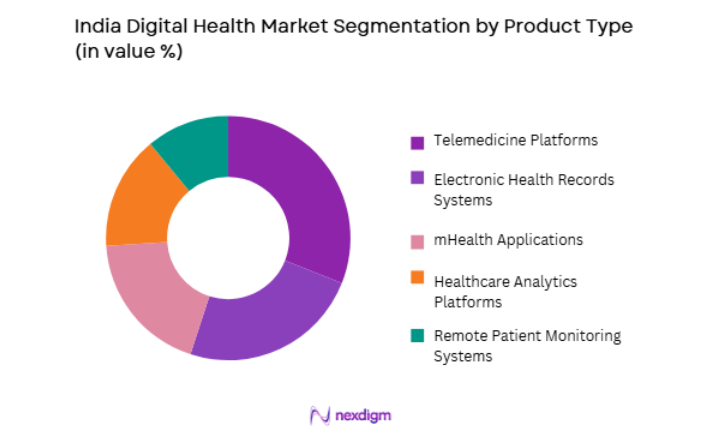
India Digital Health market is segmented by product type into telemedicine platforms, electronic health records systems, mHealth applications, healthcare analytics platforms, and remote patient monitoring systems. Recently, telemedicine platforms have a dominant market share due to factors such as strong demand patterns driven by accessibility gaps in rural healthcare, widespread smartphone adoption, improved internet connectivity, and growing consumer acceptance of virtual consultations. Telemedicine enables patients to access qualified physicians without geographical constraints while healthcare providers expand digital services through hospital networks and integrated health platforms. Government initiatives supporting digital consultations through the eSanjeevani telemedicine service under the National Health Authority have significantly expanded patient adoption. Telemedicine platforms also integrate e-pharmacy, diagnostics booking, and digital prescription systems, creating comprehensive digital healthcare ecosystems. Technology companies and healthcare startups continue expanding teleconsultation capabilities through AI-supported triage systems and multilingual patient interfaces designed for diverse regional populations.
 By End User
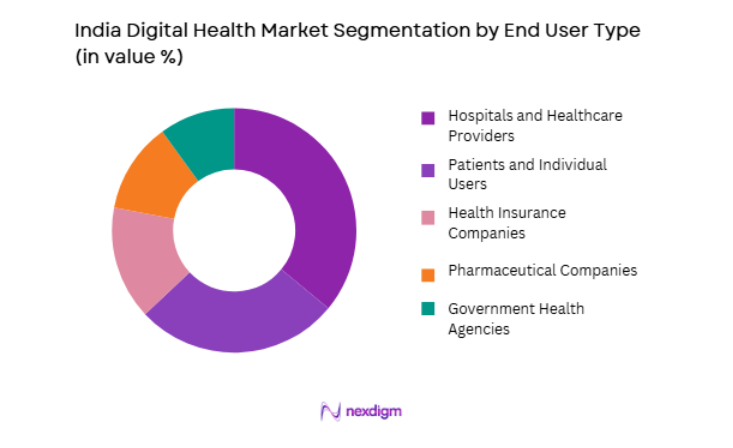
India Digital Health market is segmented by end user into hospitals and healthcare providers, patients and individual users, health insurance companies, pharmaceutical companies, and government health agencies. Recently, hospitals and healthcare providers have a dominant market share due to factors such as rapid digitization of hospital infrastructure, integration of electronic health records systems, deployment of telemedicine services, and implementation of hospital management information systems across both public and private healthcare institutions. Large hospital chains increasingly invest in digital patient engagement platforms, AI-assisted diagnostics, and remote monitoring technologies to enhance operational efficiency and clinical outcomes. Private hospital networks including multi specialty hospitals deploy centralized health information systems that connect patient data, laboratory services, radiology imaging platforms, and billing systems within integrated digital ecosystems. Government health programs also support digital hospital adoption through national digital health registries and interoperable health information platforms developed under the Ayushman Bharat Digital Mission. Hospitals benefit from digital health technologies by reducing administrative inefficiencies, improving patient record accessibility, and enabling data-driven clinical decision support systems.
Competitive Landscape
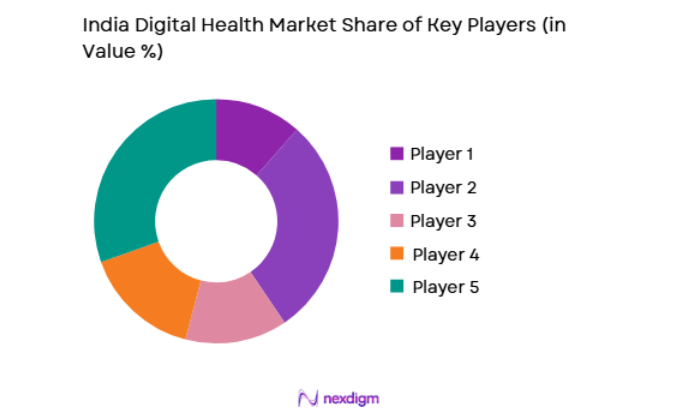
The India digital health market demonstrates moderate consolidation with several technology companies, healthcare startups, and hospital network platforms competing through telemedicine services, electronic health record platforms, digital diagnostics solutions, and AI-driven healthcare analytics. Large technology firms and established healthtech startups maintain strong market influence through platform ecosystems connecting teleconsultation, pharmacy services, diagnostic testing, and digital medical records. Venture capital investment and government digital health initiatives continue to accelerate innovation while hospital chains increasingly collaborate with technology companies to deploy scalable digital healthcare infrastructure.
| Company Name | Establishment Year | Headquarters | Technology Focus | Market Reach | Key Products | Revenue | Digital Health Platform Type |
| Practo Technologies | 2008 | Bengaluru, India | ~ | ~ | ~ | ~ | ~ |
| Tata 1mg | 2015 | Gurugram, India | ~ | ~ | ~ | ~ | ~ |
| Apollo TeleHealth | 1999 | Hyderabad, India | ~ | ~ | ~ | ~ | ~ |
| PharmEasy | 2015 | Mumbai, India | ~ | ~ | ~ | ~ | ~ |
| mfine | 2017 | Bengaluru, India | ~ | ~ | ~ | ~ | ~ |
India Digital Health Market Analysis
Growth Drivers
Expansion of National Digital Health Infrastructure and Government Digital Health Programs
India’s digital health market is experiencing rapid expansion due to large scale government initiatives designed to digitize healthcare services and create an integrated national health data infrastructure across hospitals, clinics, laboratories, and pharmacies. The Ayushman Bharat Digital Mission developed by the National Health Authority is building a nationwide digital health ecosystem that connects patients, healthcare providers, and insurers through interoperable digital health records and identity systems. Under this framework every citizen can receive a unique health ID that links medical records across healthcare providers, enabling seamless data exchange and improving continuity of care. The government has established digital registries for hospitals, doctors, and healthcare facilities that strengthen verification and transparency across healthcare service providers. Telemedicine services delivered through government supported platforms such as eSanjeevani have expanded virtual consultations across rural regions where physical healthcare access remains limited. Public digital health infrastructure encourages private sector innovation by creating interoperable platforms that allow startups and technology companies to build healthcare applications integrated with national digital health architecture. State governments are also investing in digital hospital infrastructure and electronic medical records systems across public hospitals to improve healthcare administration and patient record management. These initiatives reduce operational inefficiencies while enabling faster diagnosis and treatment through digitally connected healthcare networks. Government support also increases investor confidence and accelerates venture capital funding into digital health startups developing telehealth platforms, diagnostic technologies, and healthcare analytics systems.
Rapid Growth of Smartphone Connectivity and Consumer Adoption of Mobile Healthcare Services
The rapid expansion of mobile internet connectivity across India has fundamentally transformed healthcare accessibility by enabling digital healthcare services delivered through smartphones and mobile health applications. India has more than 750 million smartphone users according to the Telecom Regulatory Authority of India, creating a massive digital consumer base capable of accessing telemedicine consultations, health monitoring applications, and online pharmacy platforms. Mobile healthcare applications allow patients to schedule virtual consultations, access laboratory test bookings, receive digital prescriptions, and manage chronic disease monitoring from remote locations without visiting physical healthcare facilities. Rural populations particularly benefit from mobile healthcare services because digital platforms connect them with urban medical specialists who may otherwise be geographically inaccessible. The affordability of smartphones and low cost mobile data plans has accelerated adoption of healthcare apps across both urban and semi urban populations. Digital health platforms also integrate wearable devices and remote patient monitoring systems that track vital health indicators such as heart rate, blood glucose levels, and physical activity patterns. Healthcare providers use mobile applications to maintain patient communication, send medication reminders, and monitor treatment adherence for chronic conditions including diabetes and cardiovascular diseases. Pharmaceutical companies and diagnostic laboratories increasingly integrate digital ordering platforms that allow patients to purchase medicines and book laboratory tests through mobile applications. Venture capital investment into digital health startups continues expanding mobile healthcare ecosystems designed specifically for India’s diverse linguistic and regional healthcare needs.
Market Challenges
Fragmented Healthcare Infrastructure and Uneven Digital Adoption Across Rural Regions
One of the most significant challenges affecting the India digital health market is the fragmented structure of the healthcare system combined with uneven digital adoption across rural and semi urban regions where healthcare infrastructure remains limited. India’s healthcare delivery system consists of a vast network of public hospitals, private clinics, diagnostic centers, and independent practitioners that often operate without standardized digital health systems or interoperable electronic health record platforms. Many small healthcare facilities continue relying on paper based medical records which limits the integration of digital health technologies within patient management systems. Rural healthcare centers frequently face limited internet connectivity and inadequate digital infrastructure which restricts the deployment of telemedicine services and digital health platforms. Healthcare professionals in smaller clinics may lack training in digital healthcare technologies which slows adoption of electronic medical records and digital patient management systems. Interoperability challenges also arise when different digital health platforms cannot easily exchange patient data across hospitals, laboratories, pharmacies, and insurance providers. These technical barriers prevent seamless patient information sharing that is essential for effective digital healthcare ecosystems. Smaller healthcare providers may also face financial constraints that limit investment in digital infrastructure upgrades including cloud based health information systems and telehealth technologies. The lack of standardized data governance frameworks across healthcare providers further complicates integration of digital health platforms within national health registries. Patients in rural communities may also demonstrate lower awareness of digital health services due to limited digital literacy or cultural preferences for traditional healthcare consultations.
Data Privacy Concerns and Regulatory Complexity in Healthcare Information Management
Another major challenge affecting the India digital health market involves data privacy concerns and regulatory complexity surrounding the management of sensitive healthcare information within digital health platforms. Digital health systems store extensive personal medical records including diagnostic reports, treatment histories, laboratory results, and prescription information which require strong data protection frameworks to safeguard patient privacy. India’s evolving data protection legislation and healthcare data governance policies create regulatory uncertainty for digital health companies developing large scale patient information platforms. Healthcare providers must comply with multiple regulatory frameworks including information technology laws, health data protection policies, and medical device regulations when deploying digital health solutions. Concerns regarding unauthorized data access or cybersecurity vulnerabilities can reduce patient trust in digital healthcare services if platforms do not demonstrate robust security protections. Digital health companies must invest heavily in encryption technologies, secure cloud infrastructure, and identity verification systems to protect sensitive patient data stored within digital health platforms. Hospitals and healthcare providers must also implement strict data management protocols to ensure compliance with regulatory standards governing patient confidentiality and electronic medical records management. Cross border data flows become complex when international cloud service providers host healthcare information infrastructure that may be subject to multiple regulatory jurisdictions. Healthcare startups entering the digital health market often face high compliance costs associated with developing secure technology systems that meet regulatory requirements for patient data protection.
Opportunities
Expansion of Artificial Intelligence and Advanced Healthcare Analytics Platforms
Artificial intelligence technologies present a major opportunity for the India digital health market by enabling advanced diagnostic tools, predictive healthcare analytics, and automated clinical decision support systems that enhance healthcare efficiency and patient outcomes. AI powered healthcare platforms analyze large volumes of medical data including diagnostic images, electronic health records, genomic data, and wearable device information to assist doctors in identifying disease patterns and recommending personalized treatment plans. Hospitals increasingly deploy AI based radiology imaging systems capable of detecting early stage abnormalities in medical scans such as X rays, CT scans, and MRI imaging with high precision. These technologies improve diagnostic accuracy while reducing the workload burden on healthcare professionals facing high patient volumes across urban hospitals. AI powered predictive analytics platforms can also analyze population health data to identify emerging disease trends and improve public health planning across large patient populations. Pharmaceutical companies utilize AI technologies for drug discovery and clinical trial analytics that accelerate the development of new medical treatments. Digital health startups are developing AI enabled symptom assessment tools integrated within telemedicine applications that guide patients toward appropriate medical consultations. Remote patient monitoring systems powered by AI algorithms can analyze continuous streams of biometric data from wearable devices and alert physicians when abnormal health patterns appear. Healthcare insurers are also exploring AI driven risk assessment models that improve health insurance underwriting and disease prevention strategies.
Integration of Digital Health Platforms with Insurance and Preventive Healthcare Ecosystems
The integration of digital health platforms with health insurance services and preventive healthcare programs presents another major opportunity for the India digital health market as insurers increasingly adopt digital technologies to improve healthcare accessibility and disease management. Health insurance providers are developing digital ecosystems that connect telemedicine consultations, pharmacy services, diagnostics platforms, and wellness programs within integrated healthcare applications available to policyholders. These platforms enable patients to access medical consultations, prescription services, and preventive healthcare programs through a single digital interface linked to insurance coverage benefits. Preventive healthcare services including remote monitoring for chronic diseases, digital wellness coaching, and lifestyle health tracking applications help insurers reduce long term healthcare costs by encouraging early disease detection and improved health management. Insurance companies benefit from digital health platforms by gaining access to real time patient health data that supports better risk assessment and personalized insurance product design. Employers offering corporate health insurance programs increasingly adopt digital healthcare services that allow employees to access telemedicine consultations and preventive health screening programs through workplace benefits platforms. Pharmaceutical companies and diagnostic laboratories also integrate with digital insurance platforms to streamline prescription fulfillment and diagnostic testing services for insured patients. Government healthcare programs can utilize digital health platforms to deliver preventive healthcare services and population health monitoring initiatives across rural and underserved communities.
Future Outlook
The India digital health market is expected to experience substantial expansion over the next five years as healthcare providers accelerate digital transformation across hospitals, clinics, and diagnostic networks. Artificial intelligence diagnostics, remote monitoring technologies, and integrated telemedicine platforms will significantly improve healthcare accessibility. Government programs such as Ayushman Bharat Digital Mission will continue strengthening nationwide digital health infrastructure. Increasing venture capital investment and rising smartphone healthcare adoption will further accelerate innovation and demand across India’s digital healthcare ecosystem.
Major Players
- PractoTechnologies
- Tata 1mg
- PharmEasy
- Apollo TeleHealth
- mfine
- Netmeds
- Medlife
- HealthifyMe
- Portea Medical
- Qure.ai
- Innovaccer
- MedGenome
- DocsApp
- Lybrate
- Remedico
Key Target Audience
- Healthcare providers and hospital networks
- Pharmaceutical companies
- Digital health technology developers
- Health insurance companies
- Medical device manufacturers
- Investments and venture capitalist firms
- Government and regulatory bodies
Research Methodology
Step 1: Identification of Key Variables
Key market variables including digital healthcare adoption rates, telemedicine utilization, healthcare IT investments, smartphone connectivity, and government digital health initiatives were identified through extensive review of national health policy documents and healthcare technology adoption trends across India.
Step 2: Market Analysis and Construction
Market structure was constructed through analysis of digital health service categories including telemedicine platforms, electronic health records, mobile health applications, and healthcare analytics systems operating across hospital networks, healthcare startups, and public digital health infrastructure programs.
Step 3: Hypothesis Validation and Expert Consultation
Industry hypotheses were validated through consultations with healthcare technology professionals, hospital administrators, digital health entrepreneurs, and healthcare policy experts to ensure accuracy regarding adoption patterns, regulatory frameworks, and emerging healthcare technology innovations.
Step 4: Research Synthesis and Final Output
All validated research findings were synthesized through comparative market analysis, triangulation of multiple data sources, and structured evaluation of technology adoption patterns to produce a comprehensive and evidence based assessment of the India digital health market.

- Executive Summary
- Research Methodology (Definitions, Scope, Industry Assumptions, Market Sizing Approach, Primary & Secondary Research Framework, Data Collection & Verification Protocol, Analytic Models & Forecast Methodology, Limitations & Research Validity Checks)

- Market Definition and Scope
- Value Chain & Stakeholder Ecosystem
- Regulatory / Certification Landscape
- Sector Dynamics Affecting Demand

- Growth Drivers
Increasing smartphone penetration and internet connectivity enabling digital healthcare services
Government initiatives promoting digital health infrastructure and telemedicine adoption
Growing demand for remote healthcare access in rural and underserved regions - Market Challenges
Data privacy concerns and cybersecurity risks in digital health platforms
Limited digital literacy among sections of the population
Integration challenges between legacy hospital systems and new digital platforms - Market Opportunities
Expansion of AI driven diagnostics and predictive healthcare analytics
Growth of telemedicine services for remote patient consultations
Development of integrated national digital health data ecosystems - Trends
Rapid adoption of teleconsultation platforms and virtual healthcare services
Integration of wearable health devices with digital health monitoring platforms - Government Regulations
National Digital Health Mission promoting digital healthcare infrastructure
Data protection regulations governing health information management
Telemedicine practice guidelines supporting virtual healthcare consultations - SWOT Analysis
- Porter’s Five Forces

- By Market Value, 2020-2025
- By Installed Units, 2020-2025
- By Average System Price, 2020-2025
- By System Complexity Tier, 2020-2025

- By System Type (In Value%)
Telemedicine Platforms
Electronic Health Record Systems
Remote Patient Monitoring Solutions
Mobile Health Applications
Digital Diagnostics and AI Health Platforms - By Platform Type (In Value%)
Hospital Based Digital Health Platforms
Cloud Based Health Management Platforms
Mobile Health Platforms
Integrated Healthcare Data Platforms
Wearable Device Integrated Health Platforms - By Fitment Type (In Value%)
Standalone Digital Health Applications
Integrated Hospital Information Systems
Cloud Hosted Healthcare Platforms
AI Enabled Clinical Decision Support Systems - By End User Segment (In Value%)
Hospitals and Healthcare Providers
Diagnostic Laboratories
Patients and Individual Healthcare Consumers

- Market Share Analysis
- Cross Comparison Parameters (Platform Functionality, Data Security Compliance, Integration with Hospital Systems, User Interface Accessibility, AI and Analytics Capability, Teleconsultation Support, Interoperability with Health Data Standards)
- SWOT Analysis of Key Competitors
- Pricing & Procurement Analysis
- Key Players
Practo
Tata 1mg
PharmEasy
Apollo 24 7
Netmeds
Mfine
DocsApp
HealthPlix
CureFit Healthcare
MedGenome
Tricog Health
Qure.ai
Niramai Health Analytics
HealthifyMe
Dozee

- Hospitals adopting digital platforms for patient management and clinical data integration
- Diagnostic laboratories using digital systems for test reporting and patient connectivity
- Patients increasingly relying on telemedicine and mobile health applications
- Insurance providers integrating digital health platforms for claims and health monitoring

- Forecast Market Value, 2026-2035
- Forecast Installed Units, 2026-2035
- Price Forecast by System Tier, 2026-2035
- Future Demand by Platform, 2026-2035


 Request a Sample
 Ask for Customization
 Get a Quote
 Enquire Now