
 Download PDF
Market Overview
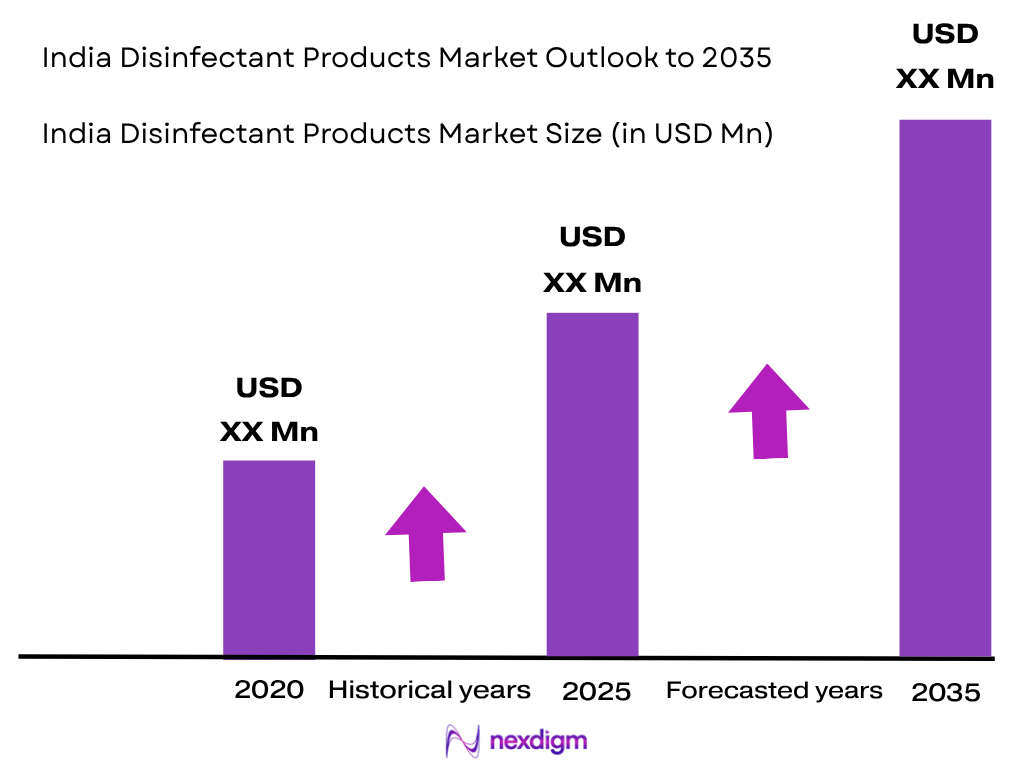
The India Disinfectant Products Market is valued at USD ~ million in 2024, supported by increasing demand from healthcare facilities, households, commercial establishments, food processing units, and industrial users. The market expansion is driven by rising awareness regarding hygiene practices, increased healthcare infrastructure development, and growing institutional cleaning requirements. According to the Ministry of Health and Family Welfare, India’s public health infrastructure includes more than 200,000 healthcare facilities, creating continuous demand for infection prevention and sanitation products. The market is further supported by India’s expanding consumer goods sector, with the World Bank reporting India’s GDP reached approximately USD 3.9 trillion in 2024, supporting household consumption and commercial activity.
The India Disinfectant Products Market is concentrated across metropolitan and industrial regions including Delhi NCR, Mumbai, Bengaluru, Chennai, Hyderabad, Pune, and Ahmedabad due to higher healthcare infrastructure density, commercial activity, industrial presence, and organized retail penetration. Delhi NCR and Mumbai represent major demand centers because of their concentration of hospitals, corporate offices, hospitality facilities, and institutional users. Southern cities such as Bengaluru, Chennai, and Hyderabad contribute significantly due to pharmaceutical manufacturing, healthcare services, and technology-driven commercial infrastructure. According to the Ministry of Commerce and Industry, India’s services sector and industrial ecosystem continue expanding, supporting demand for professional cleaning and hygiene solutions. Urbanization and rising sanitation awareness further strengthen adoption of disinfectant products across residential and commercial applications.
Market Segmentation
By Product Type
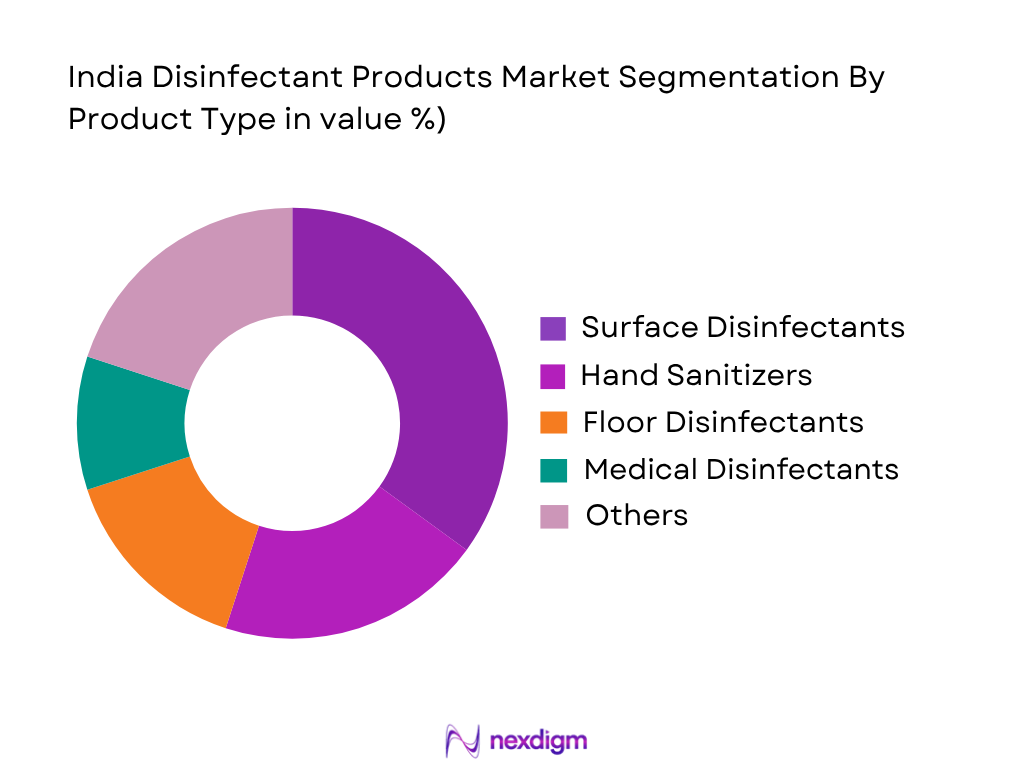
The India Disinfectant Products Market is segmented by product type into surface disinfectants, hand sanitizers, floor disinfectants, toilet and bathroom disinfectants, kitchen disinfectants, air disinfectants, medical disinfectants, and industrial disinfectants. Surface disinfectants represent the dominant segment due to widespread usage across hospitals, households, offices, educational institutions, and commercial establishments. Surface disinfectants are preferred because they provide broad application coverage for frequently touched areas such as floors, furniture, equipment, and public spaces. Healthcare facilities represent a major demand contributor due to infection control requirements and regular sanitization protocols. The expansion of organized retail and e-commerce platforms has also improved consumer access to surface disinfectant products. Manufacturers continue introducing multi-surface formulations, ready-to-use sprays, wipes, and specialized antimicrobial solutions, supporting sustained demand across residential and institutional applications.
By Application
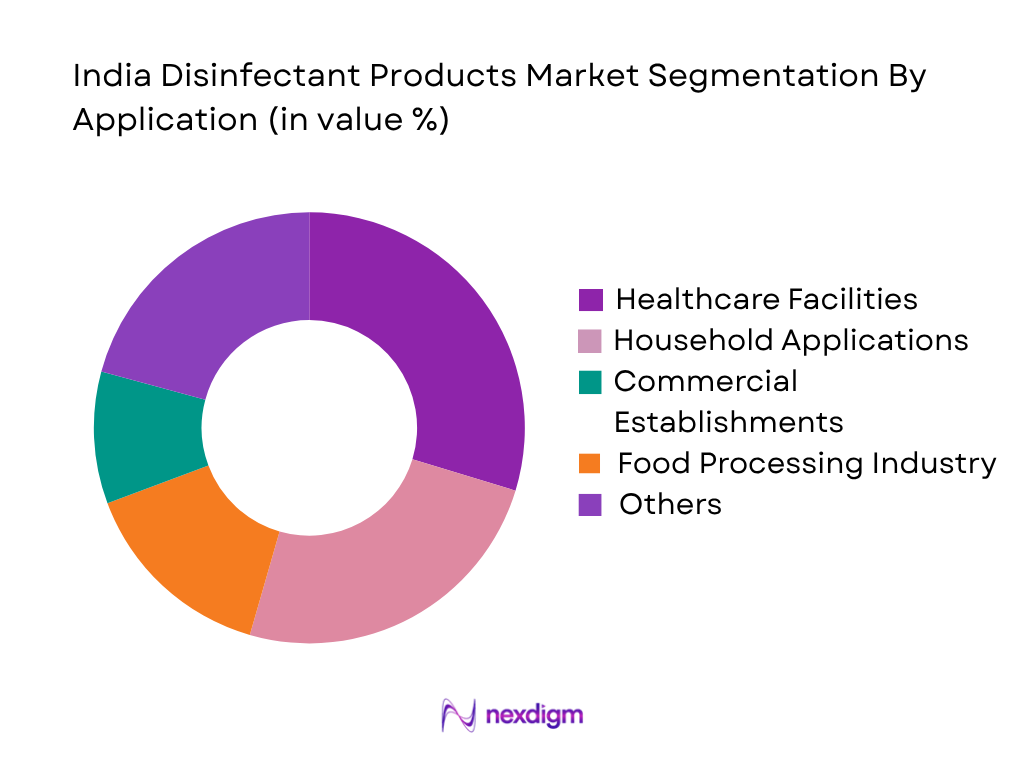
The India Disinfectant Products Market is segmented by application into healthcare facilities, household applications, commercial establishments, hospitality, food processing, pharmaceutical manufacturing, educational institutions, industrial facilities, government facilities, and transportation infrastructure. Healthcare facilities represent the leading application segment due to continuous requirements for infection prevention, sterilization, and hygiene management. Hospitals and clinics require specialized disinfectants for operating rooms, patient areas, medical equipment, and high-contact surfaces. India’s healthcare infrastructure expansion supports long-term demand for professional-grade disinfectant solutions. The Food Safety and Standards Authority of India has also increased focus on hygiene practices within food processing and handling environments, supporting adoption in food manufacturing facilities. Commercial offices, hotels, schools, and public infrastructure are increasingly implementing structured cleaning protocols, further increasing demand for disinfectant products.
Competitive Landscape
The India Disinfectant Products Market is characterized by competition among multinational consumer goods companies, healthcare hygiene providers, chemical manufacturers, and domestic FMCG companies. The competitive environment is influenced by product portfolio diversity, brand recognition, distribution reach, institutional supply capabilities, and innovation in disinfectant formulations. Companies compete across household hygiene, healthcare-grade solutions, institutional cleaning products, and industrial sanitation applications.
| Company | Establishment Year | Headquarters | Product Portfolio | Major Applications | Distribution Network | Healthcare Presence | Household Brand Presence | Innovation Capability |
| Reckitt Benckiser | 1823 | United Kingdom | ~ | ~ | ~ | ~ | ~ | ~ |
| Hindustan Unilever Limited | 1933 | India | ~ | ~ | ~ | ~ | ~ | ~ |
| Procter & Gamble | 1837 | USA | ~ | ~ | ~ | ~ | ~ | ~ |
| Ecolab Inc. | 1923 | USA | ~ | ~ | ~ | ~ | ~ | ~ |
| Diversey Holdings | 1923 | USA | ~ | ~ | ~ | ~ | ~ | ~ |
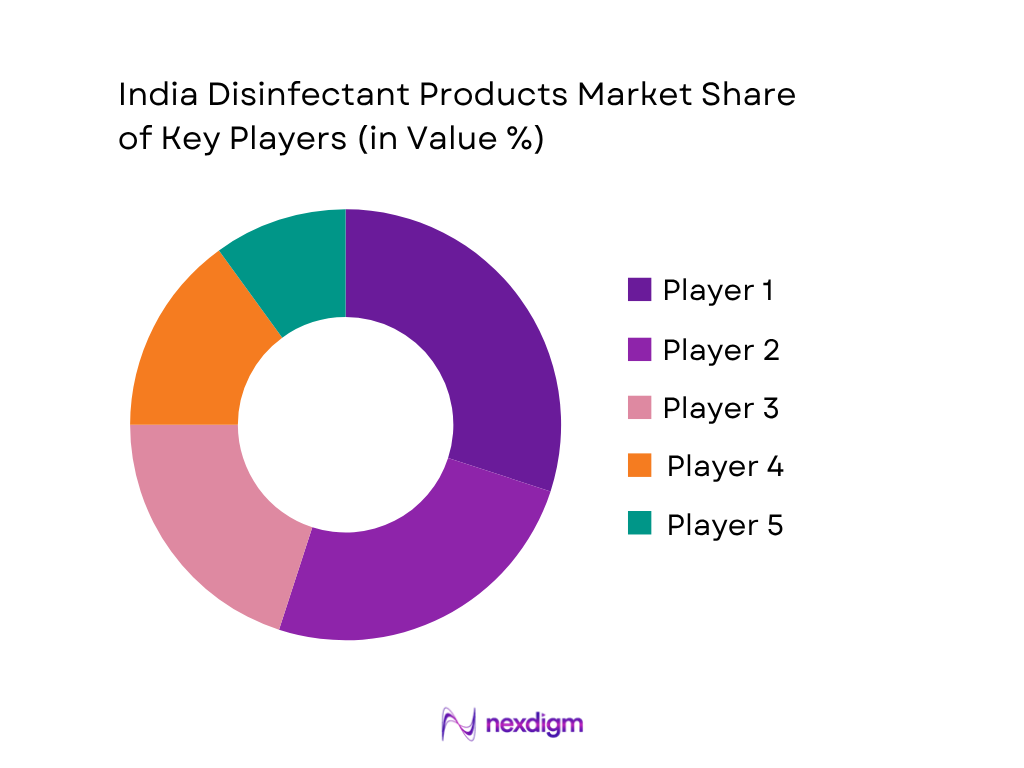
India Disinfectant Products Market Analysis
Growth Drivers
Rising Healthcare Infrastructure and Infection Prevention Requirements
The India Disinfectant Products Market is significantly supported by expansion in healthcare infrastructure, increasing infection prevention requirements, and adoption of structured sanitation practices across hospitals and medical facilities. Healthcare institutions represent a major consumer base for surface disinfectants, instrument disinfectants, floor disinfectants, and specialized antimicrobial solutions due to continuous requirements for maintaining hygiene standards. According to the Ministry of Health and Family Welfare, India has more than 200,000 public healthcare facilities, including sub-centres, primary health centres, community health centres, and hospitals, creating a broad demand base for infection control products. The Government of India allocated approximately INR 90,659 crore for healthcare expenditure in the Union Budget framework, supporting healthcare system strengthening and infrastructure development. The World Bank reported India’s population exceeded 1.4 billion people, creating significant healthcare service requirements and increasing the need for sanitation solutions. Additionally, the expansion of private hospitals, diagnostic centers, and medical facilities across urban and semi-urban regions is increasing procurement of professional-grade disinfectants. Growing focus on healthcare-associated infection prevention, sterilization protocols, and compliance with hygiene standards is encouraging hospitals to adopt advanced disinfectant formulations, supporting long-term demand across healthcare applications.
Increasing Household Hygiene Awareness and Expansion of Consumer Cleaning Products
The India Disinfectant Products Market is benefiting from increased household hygiene awareness, rising urbanization, and wider availability of cleaning products through organized retail and digital commerce channels. Disinfectants are increasingly used in residential applications including floor cleaning, kitchen sanitation, bathroom hygiene, and surface protection. According to the World Bank, India’s urban population exceeded 510 million people, supporting higher demand for packaged household cleaning products due to changing lifestyles, smaller living spaces, and increasing emphasis on hygiene. The Ministry of Statistics and Programme Implementation reported continued growth in household consumption expenditure, supporting spending on consumer goods categories including cleaning and hygiene products. India’s internet user base crossed 800 million users according to government digital economy assessments, enabling wider access to online hygiene product purchases through e-commerce platforms. FMCG companies are expanding disinfectant product availability across supermarkets, general trade outlets, and online marketplaces, improving consumer accessibility. The increasing adoption of ready-to-use disinfectant sprays, wipes, multipurpose cleaners, and premium hygiene products is strengthening household demand. Rising awareness regarding cleanliness, sanitation, and personal health protection continues to encourage consumers to integrate disinfectant products into regular household cleaning routines.
Market Challenges
Raw Material Price Volatility and Dependence on Chemical Supply Chains
The India Disinfectant Products Market faces challenges due to fluctuations in chemical raw material availability, dependency on imported specialty chemicals, and changing costs of active ingredients used in disinfectant formulations. Key inputs such as alcohol compounds, quaternary ammonium compounds, hydrogen peroxide, chlorine derivatives, and specialty biocides require stable chemical supply chains for consistent production. According to the Department for Promotion of Industry and Internal Trade, India’s chemical industry remains a significant manufacturing sector, with domestic chemical production requiring integration with global raw material supply networks. India imported chemicals and related products valued at more than USD 80 billion during recent trade periods, highlighting the importance of international supply chains for chemical availability. The Ministry of Chemicals and Fertilizers has emphasized strengthening domestic chemical manufacturing capabilities to reduce dependency on external sources. Fluctuations in crude oil prices, transportation costs, and global chemical production conditions can influence availability of disinfectant ingredients. Manufacturers producing specialized healthcare-grade disinfectants face additional challenges due to strict quality requirements and formulation stability needs. These supply-side constraints can affect production planning, inventory management, and the ability of smaller manufacturers to maintain consistent product availability across different regions.
Regulatory Compliance Requirements and Competition from Unorganized Manufacturers
The India Disinfectant Products Market experiences challenges related to regulatory compliance, quality standard requirements, and competition from smaller unorganized manufacturers. Disinfectant products require compliance with safety, labeling, chemical composition, and performance requirements depending on their intended applications. Regulatory oversight from agencies such as the Central Drugs Standard Control Organisation, Food Safety and Standards Authority of India, and Bureau of Indian Standards influences product approval and quality management practices. India has more than 6.3 million registered micro, small, and medium enterprises according to the Ministry of Micro, Small and Medium Enterprises, creating a highly fragmented manufacturing environment across multiple industries, including cleaning and hygiene products. Smaller manufacturers may face difficulties investing in advanced testing facilities, quality certification, and formulation development. The presence of low-cost products from unorganized suppliers can create pricing pressure for established brands that maintain higher compliance standards. Additionally, consumers may find it difficult to differentiate between professional-grade disinfectants and basic cleaning products due to limited product awareness. Increasing regulatory focus on chemical safety, environmental impact, and product effectiveness is encouraging manufacturers to improve quality systems while increasing operational complexity.
Market Opportunities
Development of Eco-Friendly and Bio-Based Disinfectant Solutions
The India Disinfectant Products Market has significant opportunities through development of environmentally friendly, biodegradable, and plant-based disinfectant formulations as consumers and institutions increasingly focus on sustainable cleaning solutions. Demand is emerging for disinfectants that provide effective microbial protection while reducing environmental impact associated with conventional chemical formulations. India’s sustainability focus is supported by government initiatives promoting cleaner production practices and environmental management across industries. The Ministry of Environment, Forest and Climate Change continues to implement programs focused on pollution reduction and sustainable resource management, encouraging industries to adopt safer chemical practices. India’s renewable energy capacity exceeded 200 GW according to government energy sector updates, reflecting broader movement toward sustainable technologies across industries. Disinfectant manufacturers are increasingly exploring formulations based on plant-derived active ingredients, essential oils, hydrogen peroxide systems, and biodegradable compounds for household and institutional applications. Food processing companies, hospitality businesses, and healthcare organizations are showing increasing interest in safer hygiene solutions that align with sustainability objectives. Development of eco-friendly disinfectants provides manufacturers opportunities to target premium consumers, institutional buyers, and export markets seeking environmentally responsible hygiene products.
Expansion of Institutional Cleaning and Food Processing Sanitation Applications
The India Disinfectant Products Market has growth opportunities through increasing demand from institutional cleaning services, food processing facilities, pharmaceutical manufacturing units, and commercial establishments requiring specialized sanitation solutions. Food processing represents a significant opportunity area as manufacturers require disinfectants for maintaining hygiene throughout production environments, equipment cleaning, and facility sanitation. According to the Ministry of Food Processing Industries, India’s food processing sector continues expanding with thousands of registered processing units operating across dairy, beverages, packaged foods, and agricultural processing segments. The Food Safety and Standards Authority of India has strengthened focus on food safety compliance, increasing the importance of sanitation practices within food production facilities. India’s manufacturing sector contributed approximately 17% to GDP according to World Bank economic assessments, supporting demand for industrial hygiene solutions across factories and production facilities. Pharmaceutical manufacturing also creates opportunities due to strict cleanliness requirements in production environments. Institutional buyers such as hotels, offices, schools, airports, and commercial buildings are increasingly adopting professional cleaning systems. These applications create opportunities for disinfectant manufacturers to develop specialized products with improved efficacy, application-specific formulations, and bulk supply solutions for large-scale users.
Future Outlook
Over the next decade, the India Disinfectant Products Market is expected to experience continued development driven by increasing hygiene awareness, healthcare infrastructure expansion, institutional cleaning requirements, and demand for advanced antimicrobial solutions. Growth will be supported by adoption of eco-friendly disinfectants, professional cleaning systems, and technology-enabled hygiene solutions.
Manufacturers are expected to focus on sustainable formulations, improved safety profiles, and specialized disinfectants for healthcare, food processing, and industrial applications. Expansion of online retail and organized distribution networks will further improve product accessibility across urban and semi-urban markets.
Major Players
- Reckitt Benckiser India Limited
- Hindustan Unilever Limited
- Procter & Gamble India
- Dabur India Limited
- Godrej Consumer Products Limited
- Jyothy Labs Limited
- ITC Limited
- Ecolab India Private Limited
- 3M India Limited
- Diversey India Private Limited
- SC Johnson Products Private Limited
- Henkel India Private Limited
- Zep Inc.
- Nirma Limited
- Himalaya Wellness Company
Key Target Audience
- Household hygiene product manufacturers
- Healthcare hygiene solution providers
- Hospital and healthcare facility management companies
- Food processing and pharmaceutical manufacturers
- Institutional cleaning service providers
- Investments and venture capitalist firms (Private equity firms, consumer goods investors, healthcare investment funds)
- Government and regulatory bodies (Ministry of Health and Family Welfare, Central Drugs Standard Control Organisation, Food Safety and Standards Authority of India, Bureau of Indian Standards)
- Chemical manufacturers and biocide suppliers
Research Methodology
Step 1: Identification of Key Variables
The initial phase involves developing an ecosystem map covering major stakeholders within the India Disinfectant Products Market. This includes disinfectant manufacturers, chemical suppliers, healthcare institutions, institutional users, distributors, and regulatory authorities. Extensive secondary research is conducted to identify important variables including product categories, application demand, supply dynamics, regulatory requirements, and competitive factors influencing market development.
Step 2: Market Analysis and Construction
This phase involves analyzing historical information related to disinfectant consumption patterns, product adoption, manufacturing activities, distribution channels, and end-user requirements. Market evaluation includes assessment of household, healthcare, commercial, and industrial applications. Supply-side and demand-side analysis is performed to validate market structure and identify key growth factors.
Step 3: Hypothesis Validation and Expert Consultation
Market assumptions are validated through discussions with industry participants including disinfectant manufacturers, healthcare procurement professionals, distributors, and institutional users. Expert consultations provide insights into product demand, formulation preferences, competitive positioning, regulatory challenges, and future adoption trends.
Step 4: Research Synthesis and Final Output
The final phase integrates primary and secondary research findings to create a comprehensive assessment of the India Disinfectant Products Market. Data collected from manufacturers, distributors, healthcare organizations, and end users is analyzed to validate segmentation, competitive analysis, market dynamics, and future opportunities.

- Executive Summary
- Research Methodology (Market Definitions and Assumptions, Abbreviations, Market Sizing Approach, Disinfectant Product Classification, Active Ingredient Mapping, Alcohol-Based Disinfectant Assessment, Quaternary Ammonium Compound Analysis, Chlorine-Based Disinfectant Evaluation, Hydrogen Peroxide-Based Disinfectant Assessment, Phenolic Disinfectant Analysis, Biocide Technology Assessment, Product Formulation Mapping, Application-Level Demand Analysis, Healthcare Infection Control Assessment, Household Hygiene Assessment, Institutional Cleaning Assessment, Industrial Sanitation Assessment, Primary Industry Interviews, Demand-Side Assessment, Supply-Side Assessment, Top-Down Analysis, Bottom-Up Analysis, Data Triangulation, Forecasting Framework, Market Share Validation, Limitations and Future Conclusions)

- Definition and Scope
- India Disinfectant Products Industry Evolution and Development of Hygiene and Sanitation Practices, Healthcare Infection Prevention Systems, Household Cleaning Product Adoption, Institutional Hygiene Standards, Food Processing Sanitation Requirements, Industrial Disinfection Applications and Advanced Antimicrobial Formulation Technologies
- Disinfectant Products Value Chain Analysis
- Disinfectant Products Supply Chain Analysis
- Active Chemical Ingredient Suppliers, Biocide Raw Material Manufacturers, Chemical Producers, Disinfectant Formulators, Pharmaceutical and FMCG Manufacturers, Healthcare Hygiene Solution Providers, Institutional Cleaning Companies, Food Processing Sanitization Suppliers, Distributors, Retail Channels, Hospitals, Government Institutions and End-Use Industries
- Disinfectant Products Integration Across Surface Disinfectants, Hand Sanitizers, Floor Cleaners, Toilet Disinfectants, Kitchen Hygiene Products, Hospital-Grade Disinfectants, Food Processing Sanitizers, Industrial Cleaning Solutions, Water Treatment Disinfectants and Institutional Hygiene Products

- Growth Drivers (Increasing Healthcare Infection Control Requirements, Expansion of Hospital Infrastructure, Rising Household Hygiene Awareness, Government Sanitation Programs, Growth of Food Processing Industry, Increasing Institutional Cleaning Demand, Urban Population Expansion, Rising Demand for Premium Hygiene Products, Expansion of E-Commerce Distribution Channels)
- Market Challenges (Raw Material Price Volatility, Presence of Unorganized Manufacturers, Chemical Safety Concerns, Regulatory Compliance Requirements, Counterfeit Product Availability, Environmental Concerns Related to Chemical Disposal, Limited Rural Awareness, Product Differentiation Challenges)
- Market Opportunities (Eco-Friendly Disinfectant Formulations, Bio-Based Disinfectant Development, Healthcare Facility Expansion, Food Safety Applications, Water Treatment Disinfection Demand, Institutional Hygiene Solutions, Premium Household Hygiene Products, Export-Oriented Disinfectant Manufacturing, Sustainable Packaging Development)
- Market Trends (Multi-Surface Disinfectant Adoption, Natural and Plant-Based Disinfectants, Antimicrobial Technology Development, Ready-to-Use Disinfectant Formats, Premium Hygiene Product Demand, Sustainable Cleaning Solutions, Smart Dispensing Systems, Hospital Infection Prevention Advancement, Online Hygiene Product Purchasing)
- Government Regulations (Central Drugs Standard Control Organisation Requirements, Food Safety and Standards Authority of India Regulations, Bureau of Indian Standards Guidelines, Ministry of Health and Family Welfare Infection Control Guidelines, Drugs and Cosmetics Act Requirements, Environmental Protection Regulations, Chemical Safety Standards, Hospital Hygiene Protocols)
- SWOT Analysis
- Porter’s Five Forces Analysis
- PESTLE Analysis
- Stakeholder Ecosystem
- Competition Ecosystem

- By Market Value (2020-2025)
- By Volume Consumption (2020-2025)
- By Average Selling Price (2020-2025)
- By Surface Disinfectant Consumption Volume (2020-2025)
- By Hand Sanitizer Consumption Volume (2020-2025)
- By Healthcare Disinfectant Consumption Volume (2020-2025)
- By Institutional Disinfectant Consumption Volume (2020-2025)

- By Product Type (In Value %)
Surface Disinfectants
Hand Sanitizers
Floor Disinfectants
Toilet and Bathroom Disinfectants
Kitchen Disinfectants
Air and Room Disinfectants
Medical and Healthcare Disinfectants
Industrial Disinfectants
Water Treatment Disinfectants - By Active Ingredient Type (In Value %)
Alcohol-Based Disinfectants
Quaternary Ammonium Compound (QAC) Disinfectants
Chlorine-Based Disinfectants
Hydrogen Peroxide-Based Disinfectants
Phenolic Disinfectants
Iodophor-Based Disinfectants
Peracetic Acid-Based Disinfectants
Other Specialty Biocide Formulations - By Application (In Value %)
Healthcare Facilities
Household Cleaning Applications
Commercial Establishments
Hospitality and Food Service Applications
Food and Beverage Processing
Pharmaceutical Manufacturing
Educational Institutions
Industrial Manufacturing Facilities
Government and Public Infrastructure
Transportation and Public Spaces - By Distribution Channel (In Value %)
Supermarkets and Hypermarkets
Pharmacies and Medical Stores
General Trade Retailers
Modern Retail Chains
Online E-Commerce Platforms
Institutional Supply Channels
Direct B2B Distribution
Specialty Hygiene Product Distributors - By Region (In Value %)
North India
South India
West India
East India
Central India
Northeast India

- Market Share of Major Players (By Value, Volume, Product Category, Active Ingredient Category, Application Segment, Distribution Channel, Healthcare Coverage, Household Product Presence)
- Cross Comparison Parameters (Disinfectant Product Portfolio Breadth, Active Ingredient Technology Coverage, Healthcare Disinfection Capability, Household Hygiene Product Presence, Institutional Distribution Network Reach, Manufacturing Capacity, Sustainable Disinfectant Development Capability, Innovation and New Product Launch Frequency)
- SWOT Analysis of Major Players
- Product Portfolio Benchmarking by Disinfectant Category and Application
- Detailed Profiles of Major Companies
Reckitt Benckiser India Limited
Hindustan Unilever Limited
Procter & Gamble India
Dabur India Limited
Godrej Consumer Products Limited
Jyothy Labs Limited
ITC Limited
Ecolab India Private Limited
3M India Limited
Diversey India Private Limited
SC Johnson Products Private Limited
Henkel Adhesives Technologies India Private Limited
Zep Inc.
Nirma Limited
Himalaya Wellness Company

- Household Hygiene Consumption Assessment
- Demographic Consumption Trends
- Purchasing Power Analysis
- Household Spending on Hygiene Products
- Premium vs Mass Market Disinfectant Demand Analysis
- Brand Loyalty Assessment
- Health and Safety Awareness Influence on Purchase Decisions
- Consumer Pain Point Analysis
- Product Attribute Preference Analysis
- Purchase Decision-Making Process
- Online vs Offline Purchase Behaviour

- By Market Value (2026-2035)
- By Volume Consumption (2026-2035)
- By Average Selling Price (2026-2035)
- By Surface Disinfectant Consumption Volume (2026-2035)
- By Hand Sanitizer Consumption Volume (2026-2035)
- By Healthcare Disinfectant Consumption Volume (2026-2035)
- By Institutional Disinfectant Consumption Volume (2026-2035)


 Request a Sample
 Ask for Customization
 Get a Quote
 Enquire Now