
 Download PDF
Market Overview
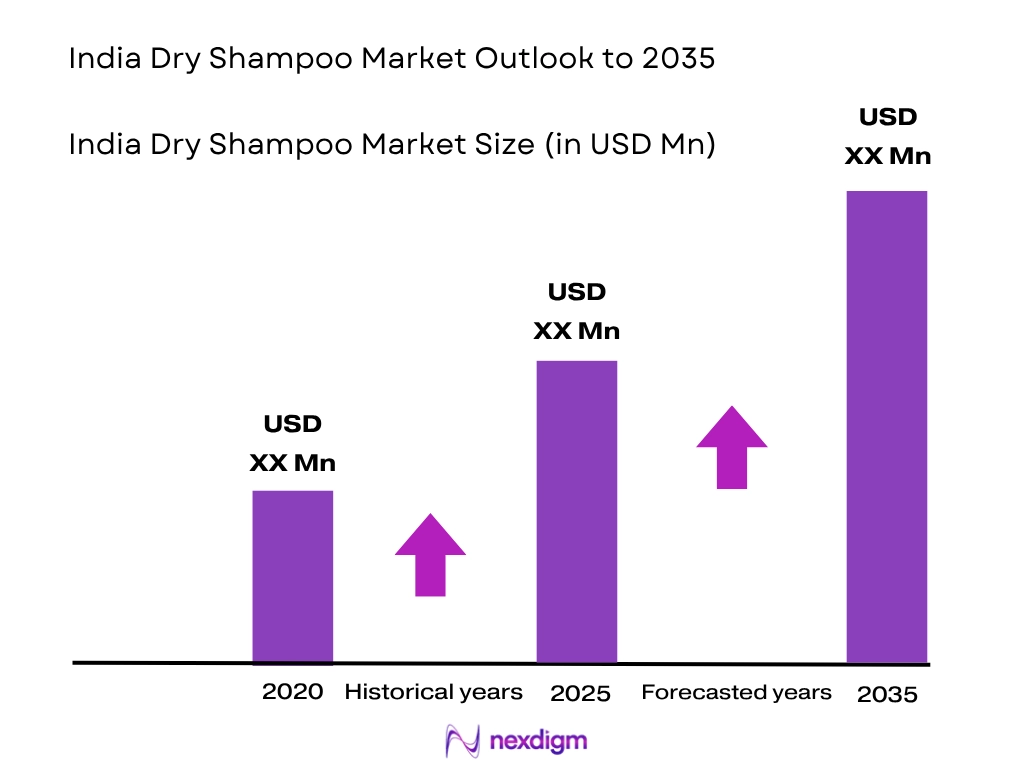
The India Dry Shampoo market is valued at USD ~ million based on published data for 2025 revenue, reflecting steady adoption of dry haircare solutions as an alternative to traditional shampooing. Growth in 2023 and 2024 was driven by increasing urban lifestyle shifts, greater disposable income, and rising preference for quick grooming routines among working professionals and younger consumers. The convenience factor associated with waterless hair refresh, along with greater retail and online distribution penetration, has buoyed demand across metropolitan centers.
Major Indian cities such as Mumbai, Delhi NCR, Bengaluru, and Hyderabad dominate the dry shampoo market due to high consumer awareness, robust retail networks, and elevated spending power. These urban hubs also host beauty and personal care boutiques, salons, and lifestyle stores that actively promote hair care innovations, enabling market penetration of both global and domestic brands. Furthermore, proximity to key distribution logistics hubs enhances product availability and promotional activities across these major consumption clusters.
Market Segmentation
By Product Format
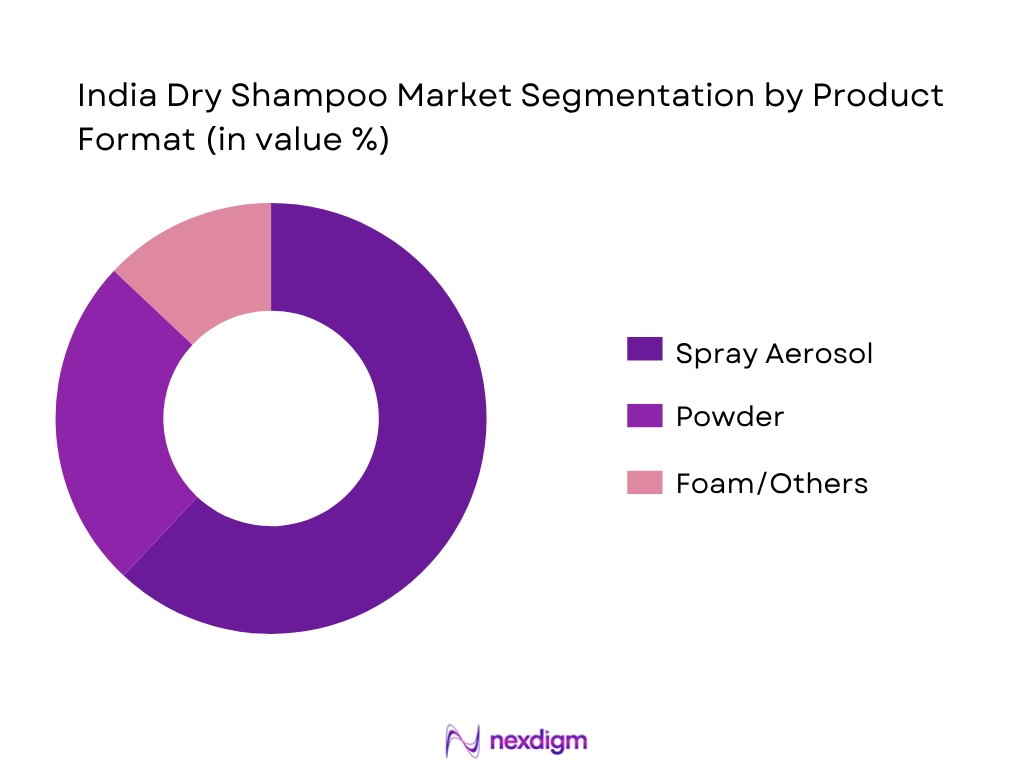
The India dry shampoo market is segmented by product form into spray, powder, and other formats such as foam and non‑aerosol variants. Among these, spray dry shampoos hold the largest share, as consumers prefer mist or aerosol delivery for fast and even application, especially among urban working populations who value convenience and instant refresh without water. Spray formats benefit from established distribution in both modern retail and pharmacy channels, as well as aggressive sampling and promotional strategies by major brands. Powder variants are emerging as a preferred choice among conscious consumers seeking chemical‑free or talc‑free options, especially within youth and eco‑aware segments. Other forms like foam or pump sprays are niche but gaining attention for specialized benefits such as volumizing and scalp care. The dominance of spray form reflects broader consumer expectations for ease of use, portability, and immediate aesthetic results, while niche sub‑segments grow with product innovation and ingredient diversification.
By Distribution Channel
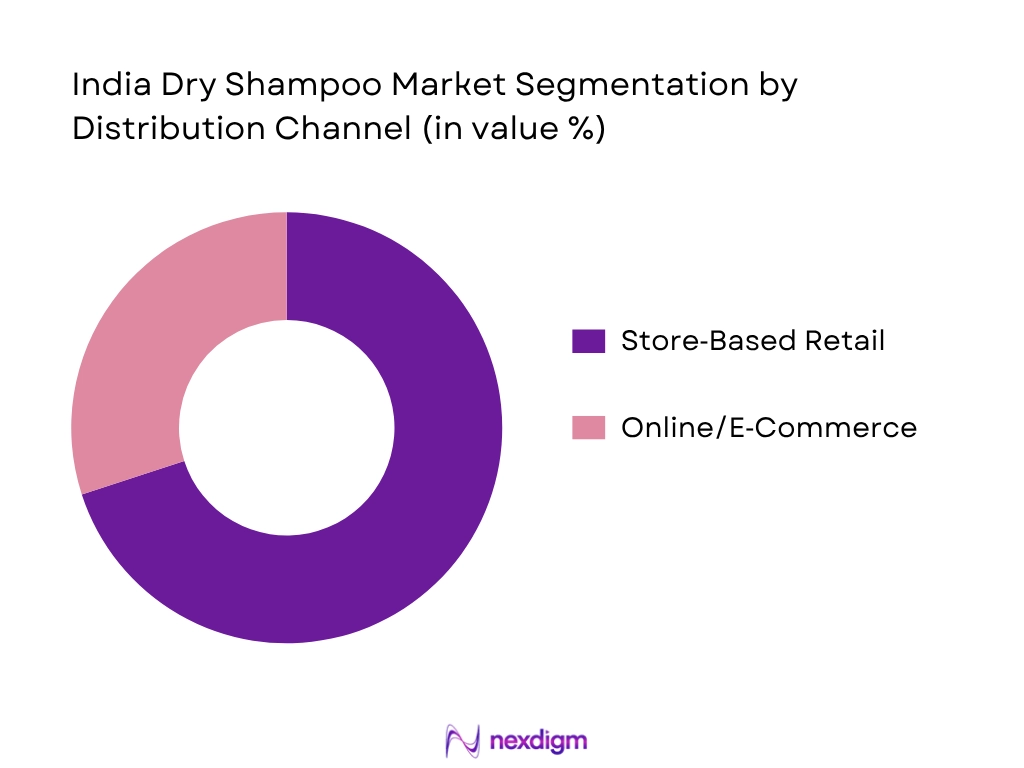
Under distribution channel segmentation, the India dry shampoo market is divided into store‑based retail (such as supermarkets, pharmacies, specialty beauty stores) and online/e‑commerce platforms. Store‑based retail holds the largest share, driven by established consumer trust in brick‑and‑mortar purchase for beauty products, immediate product access, and the ability to physically evaluate variants before buying. Pharmacies and beauty boutiques also contribute significantly through personalized recommendations and sampling. Meanwhile, online/e‑commerce channels are rapidly expanding, supported by rising internet penetration, mobile commerce growth, and digital marketing strategies. Online platforms offer broader SKU availability, user reviews, and convenience—particularly appealing to younger consumers and those seeking niche or imported brands. As digital retail infrastructure strengthens, the online segment is expected to gradually close the gap with store‑based channels over the next decade.
Competitive Landscape
The India Dry Shampoo market features a mix of large multinationals and regional/local brands competing on formulation, distribution reach, pricing, and digital presence. The competitive landscape in India’s dry shampoo sector is characterized by both established global players and emerging domestic brands, reflecting evolving consumer preferences for convenience haircare. Multinationals leverage broad distribution networks and heavy marketing, whereas local entrants focus on specialized formulations, natural ingredients, and targeted lifestyle positioning. Market consolidation around a few high‑visibility brands underscores competitive investments in product innovation and retail presence.
| Company | Establishment Year | Headquarters | Distribution Reach | Product Portfolio Breadth | Ingredient Focus | Pricing Tier | Digital Presence |
| Procter & Gamble | 1837 | USA | ~ | ~ | ~ | ~ | ~ |
| Unilever | 1929 | UK/Netherlands | ~ | ~ | ~ | ~ | ~ |
| L’Oréal | 1909 | France | ~ | ~ | ~ | ~ | ~ |
| Henkel | 1876 | Germany | ~ | ~ | ~ | ~ | ~ |
| BBLUNT | 2004 | India | ~ | ~ | ~ | ~ | ~ |
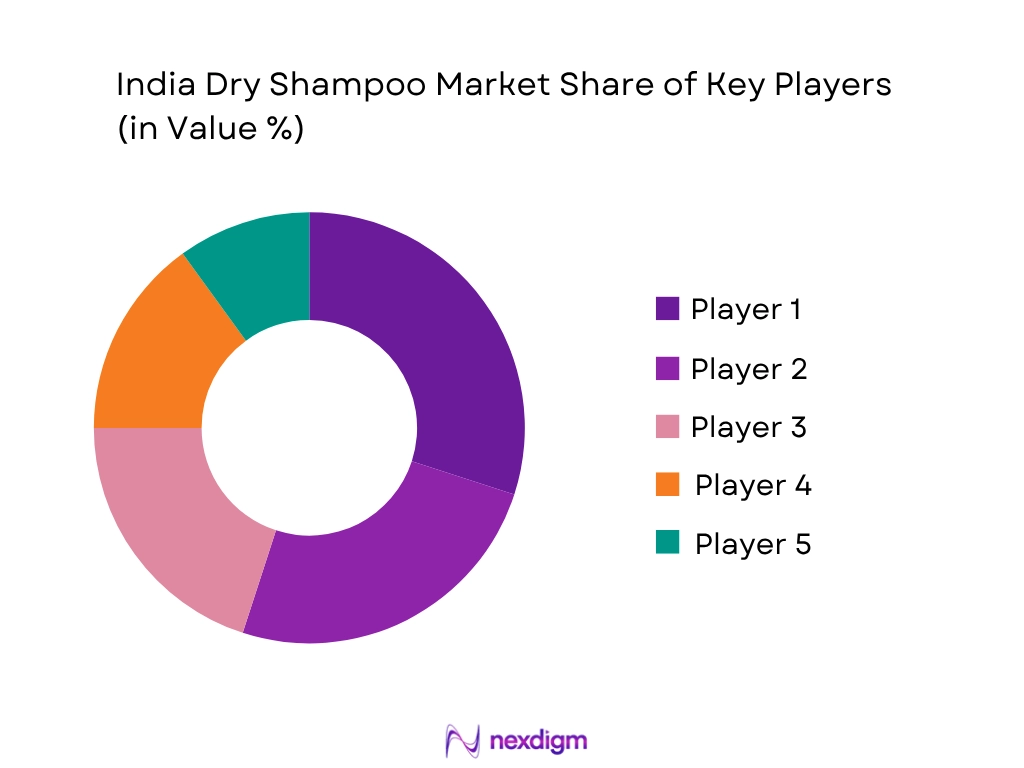
India Dry Shampoo Market Analysis
Growth Drivers
Increasing Urban Lifestyles
India’s demographic trajectory shows a continued shift toward urban living, which directly correlates with exposure to modern grooming habits and discretionary spending on personal care. In 2024, 513.3 million people in India were residing in urban areas, an increase from 504.3 million in 2023, making India the second‑highest urban population in the world behind China according to World Bank data. This urbanization trend supports higher adoption of convenience‑oriented products such as dry shampoo, as urban consumers often face time‑constrained routines and seek products that reduce dependency on water and extensive grooming time. Urban households also have greater access to salons, modern retail formats, and omni‑channel beauty offerings, which promote experimentation with newer formats in haircare. Furthermore, urban non‑food household consumption such as spending on beauty and grooming is substantial: urban monthly per capita consumer expenditure was about INR 6,996, compared with INR 4,122 in rural areas, based on the Government of India’s Household Consumption Expenditure Survey (2023–24), indicating greater disposable income available for personal care products in cities. These demographic and expenditure patterns underpin growing demand for innovative grooming products like dry shampoo among time‑pressed urban consumers.
Hair Grooming Awareness
Heightened consumer awareness about hair grooming and scalp health is reshaping haircare routines across India, especially among younger cohorts who engage actively with beauty content online. While specific head‑to‑head dry shampoo adoption data is limited, broader haircare trends indicate a rising focus on personalized and ingredient‑driven haircare solutions, as highlighted by consumer behaviour studies showing increased interest in treatments addressing individual hair concerns. Recent consumer behaviour insights identify over 850 million internet users and 700 million smartphone users in India by 2026, enabling extensive online discovery, education, and purchase of grooming products, including dry shampoo. Brands and consumers are increasingly focused on product transparency, ingredient benefits, and tailored solutions for scalp and hair concerns such as oiliness, dandruff, and styling needs, reflecting a more informed grooming mindset. While hard numeric data on dry shampoo penetration is not available from government sources, the underlying macro trend of sophisticated consumer behaviour supported by digital access and shifting beauty priorities suggests that awareness of hair grooming routines, including waterless alternatives, is increasing across both urban and semi‑urban demographics.
Market Restraints
Regulatory Compliance
Strict regulatory frameworks around cosmetic products in India can constrain product innovation, reformulation timelines, and market entry for dry shampoo brands. India’s cosmetics industry is governed by regulations under the Drugs and Cosmetics Act and Rules, and adherence to safety standards is required for any new formulation. In the current environment, manufacturers must ensure compliance with ingredient safety norms and aerosol regulations, which vary significantly from one jurisdiction to another and can delay product launches or limit certain formulations. Although no centralized Indian government dataset reports dry shampoo‑specific regulatory compliance numbers, broader cosmetics regulatory oversight and periodic audits by authorities such as the Central Drugs Standard Control Organization (CDSCO) and Bureau of Indian Standards (BIS) influence what chemical agents and propellants can be used in aerosol formats. Additionally, quality‑related inspections can lead to recalls or production halts if standards are not met, adding a compliance cost burden. This regulatory complexity can act as a deterrent for smaller players and slow the pace of new product introductions, limiting rapid expansion in the category relative to simpler personal care formats. No specific numeric industry penetration data for dry shampoo in regulatory contexts is published by government agencies, but the broader cosmetics regulatory environment shapes product portfolios and corporate compliance strategy.
Residue & Hair Health Concerns
Consumer concerns over residue, buildup, and potential hair or scalp irritation represent a restraint for dry shampoo adoption in India. Although direct large‑scale survey figures from government bodies are unavailable, haircare industry research reveals that Indian consumers increasingly demand products that support not just basic grooming but also scalp health and long‑term hair integrity. Global and local trends show consumers gravitating toward formulations that avoid harsh chemicals and promise gentler care, reflecting skepticism about products perceived to leave visible residue or harm hair quality. In the broader cultural context, haircare routines in India have traditionally emphasized cleansing with water and natural oils, and sprays or powder products can be perceived as less effective or potentially damaging without professional endorsement. As a result, some consumers remain hesitant to shift to dry shampoo formats without clear evidence of dermatological safety or scalp‑friendly benefits. This concern is reinforced by detailed haircare trend analyses, which note a rising desire for scientifically validated and scalp‑beneficial products in the overall haircare category suggesting that any residues or perceived hair quality issues can undermine rapid dry shampoo uptake.
Opportunities
Premium & Natural Products
There is a tangible opportunity for product differentiation in the India dry shampoo market through premium and natural ingredient offerings that align with evolving consumer preferences. Consumer trends across the broader haircare sector indicate a significant shift toward ingredient‑conscious and holistic hair solutions, as seen in various macro trend trackers highlighting consumer demand for plant‑based, gentle, and scalp‑health‑oriented products. For example, consumers are increasingly seeking out formulations with botanical extracts and sulfates‑free compositions in haircare, reflecting a strong interest in safer and more natural products. This trend provides a productive backdrop for dry shampoo innovations that emphasize natural botanicals, alcohol‑free bases, and clean formulations, catering to informed consumers who prioritize hair health alongside convenience. As digital and physical retail channels expand, premium niche products are becoming more discoverable among middle‑ and high‑income consumers, particularly in urban and peri‑urban regions. Although exact government‑reported usage figures for such products are not published, broader consumer behaviour metrics for India such as internet users exceeding 850 million, facilitating online discovery of niche personal care categories underscore the growing reach of premium and innovative personal care formats. Capitalizing on the intersection of natural ingredient trends and digital accessibility positions dry shampoo brands to elevate their value propositions beyond mere convenience, appealing to a segment that values efficacy, safety, and sensory experience without compromising on hair health.
D2C & Subscription Models
The rapid expansion of direct‑to‑consumer (D2C) business models and subscription commerce in India presents a strong opportunity for scaling dry shampoo adoption. Macro consumer behaviour trends for 2026 reveal that the Indian digital landscape characterized by approximately 850 million internet users and substantial smartphone penetration, has created fertile ground for online‑first beauty brands to reach consumers efficiently and repeatedly. Subscription models that deliver haircare products like dry shampoo directly to consumers’ homes can help brands build recurring revenue streams and maintain customer engagement. These models also create platforms for personalized product recommendations, sample kits, and curated grooming solutions that increase trial rates and loyalty. In India’s fast‑moving consumer goods ecosystem, D2C channels have already shown promise across skincare and haircare categories, offering convenience and often better unit economics compared with traditional distribution. As consumers increasingly adopt beauty and grooming solutions through mobile platforms and digital wallets, reliance on D2C and subscription frameworks becomes a strategic lever for market penetration—particularly among urban, digitally savvy segments that seek ease of purchase and discovery of new products outside conventional retail. This approach helps brands educate consumers on usage benefits and hair health narratives, reinforcing long‑term engagement with dry shampoo formats.
Future Outlook
Over the long term, the India Dry Shampoo market is expected to demonstrate continued growth driven by expanding urban consumer bases, increased grooming awareness, and product innovation supporting convenience and sustainability. Rising digital engagement, social media influence, and diversified product formulations (including natural and eco‑friendly variants) are anticipated to further penetrate Tier‑2 and Tier‑3 cities. As distribution networks strengthen and consumer preferences evolve, the market is positioned for consistent expansion.
Major Players
- Procter & Gamble
- Unilever
- L’Oréal
- Henkel
- BBLUNT
- Church & Dwight (e.g., Batiste)
- Estée Lauder Companies
- Coty Inc.
- Kao Corporation
- Revlon
- Anomaly Beauty
- Wish Care
- Urban Yoga
- Moxie Beauty
- Local/Niche Regional Brands
Key Target Audience
- Cosmetic & Personal Care Product Manufacturers
- Retail Chains & E‑Commerce Platforms
- Investments and Venture Capitalist Firms
- Supply Chain & Distribution Companies
- Raw Material Suppliers (Chemical/Ingredient Providers)
- Brand & Product Innovation Teams
- Government and Regulatory Bodies (e.g., FSSAI – Food Safety and Standards Authority of India)
- Marketing & Consumer Behavior Analysts
Research Methodology
Step 1: Market Definition and Scoping
This phase defines dry shampoo product categories, form factors, and market boundaries specific to India’s personal care sector. It incorporates secondary research from industry reports and public data sources to set an accurate market scope.
Step 2: Historical Data Compilation and Analysis
Historical revenue and volume data for the India market are collated from reports and validated against multiple sources. Trends in retail and digital channels, consumer preferences, and segment growth are analyzed.
Step 3: Expert Validation and Stakeholder Interviews
Hypotheses on growth drivers and market dynamics are validated through structured interviews with industry participants, including brand managers, distributors, and retail leaders. Insights refine segmentation assumptions and competitive benchmarks.
Step 4: Forecasting and Synthesis
Using bottom‑up statistical models, forecast projections (including revenue and CAGR) are generated. Market sizes are triangulated across segments ensuring alignment with credible published secondary data.

- Executive Summary
- Research Methodology (Market Definitions & Scope Clarification, Assumptions & Standardization Criteria (Form Type, Ingredient Base), Primary & Secondary Research Framework, Data Modeling & Forecasting Techniques (Bottom‑Up & Top‑Down Triangulation), Limitations & Sensitivity Analysis, Data Quality Assurance & Validation Protocols)

- Definition and Market Scope
- Historical Evolution & Market Genesis
- Lifecycle Analysis
- Value Chain & Supply Network
- Regulatory Landscape
- Import/Export Flows & Tariff Impacts
- Consumer Adoption Dynamics & Hair Care Behaviour Trends

- Growth Drivers (Increasing Urban Lifestyles, Hair Grooming Awareness, E‑Commerce Access, Natural/Botanical Shift, Rising Disposable Income, Social Media Influence)
- Market Restraints (Regulatory Compliance, Residue & Hair Health Concerns, Price Sensitivity, Limited Tier‑2/3 Awareness, Raw Material Volatility)
- Opportunities (Premium & Natural Products, D2C & Subscription Models, Salon Partnerships, Retail Private Labels)
- Emerging Trends (Personalized Formulations, Sustainable Packaging, Powder & Non‑Aerosol Innovation, Digital/Influencer Marketing, Multi‑Functional Claims)
- Regulatory Environment (Cosmetic Safety – Aerosols & Talc, Import/Compliance Norms, Labeling & Claims, Packaging Regulations)
- Porter’s Five Forces Analysis (Threat of Entrants, Supplier Power, Buyer Power, Substitutes, Competitive Rivalry)
- SWOT Analysis (Market Strengths, Weaknesses, Opportunities, Threats)
- Value Chain and Supply Chain Analysis (Raw Materials – Talc/Starch/Botanicals, Domestic vs Imported, Manufacturing Hubs, Logistics, Wholesale & Retail Distribution, QA & Testing)
- Pricing Dynamics and Margin Stack (ASP by Segment, Channel Pricing, Promotions, Gross & Contribution Margins, Online vs Offline Economics, Cost Pass-Through)
- Consumer Purchase Behavior & Retail Analytics (Purchase Frequency, Basket Affinity, Cross-Selling, Brand Loyalty, Influencer Impact, Regional Penetration)

- By Market Revenue (2020-2025)
- By Volume (2020-2025)
- By Market Price Matrix (2020-2025)
- By Growth Pattern & Historical CAGR Analysis (2020-2025)

- By Form (In Value%)
Spray
Powder
Aerosol
Compact/Non‑Aerosol - By Primary Function/Benefit (In Value%)
Oil Control
Anti‑Dandruff
Volumizing
Color‑Protect
Scalp Health
Multifunction - By Ingredient Type(In Value%)
Conventional
Natural/Botanical
Organic
Talc‑Free
Alcohol‑Free - By Consumer Demographic (In Value%)
Women
Men
Teens
Kids
Urban Premium Consumers - By Distribution Channel (In Value%)
Modern Trade
Traditional Retail
Pharmacy/Drugstore
Online Pure‑Play
Salons/Professional - By Price Tier (In Value%)
Mass
Mid‑Tier
Premium
Luxury - By Region (In Value%)
North
South
East
West India

- Market Share & Positioning (Market Share by Value & Volume, Form & Ingredient Tier Positioning, Premium vs Mass Tier, Regional Penetration)
- Cross-Comparison Parameters (Company Overview, Distribution Reach, Digital & Social Media Presence, Product Portfolio Breadth, SKU Pricing Architecture, Ingredient & Certification Claims, R&D & Innovation Focus, Regional Availability)
- SWOT Analysis of Major Players (Strengths – Brand Equity, Innovation, Distribution; Weaknesses – Limited Portfolio, Regional Gaps; Opportunities – Premiumization, Natural Products; Threats – New Entrants, Substitutes)
- Pricing & Promotion Benchmarking (ASP by Form & Tier, Channel Price Differentiation, Promotional Campaigns, Gross & Contribution Margins, Online vs Offline Economics)
- Product Portfolio & Innovation Analysis (Formulation Types – Spray, Powder, Non-Aerosol; Functional Benefits – Oil Control, Volumizing, Anti-Dandruff; Ingredient Trends – Botanical, Organic, Talc-Free)
- Distribution & Channel Strategy (Modern Trade, Traditional Retail, Pharmacy/Drugstore, Online Marketplaces, Salon/Professional Partnerships, Omni-Channel Strategy)
- Brand & Company Profiles
Procter & Gamble
Unileve
L’Oréal Group
Henkel
Church & Dwight
Kao Corporation
Estée Lauder Companies
Coty Inc.
Revlon
BBLUNT
Anomaly
Wish Care
Urban Yoga/Local Niche Labels
Moxie Beauty (Direct‑to‑Consumer Focus)
Other Relevant Regional/Niche Competitor

- Usage Patterns & Frequency (Daily vs Occasional Use, Hair Type & Texture Influence, Seasonal Usage Trends, Urban vs Semi‑Urban Behavior)
- Purchase Drivers (Oil Control, Convenience, Scent & Fragrance, Hair Volume/Styling Benefits, Brand Reputation)
- Price Sensitivity & Value Perception (Mass vs Premium Tier Affordability, Promotions & Discounts, Perceived Quality vs Price, Online vs Offline Price Awareness)
- Brand Loyalty & Switching Behavior (Repeat Purchase Rates, Multi-Brand Usage, Influence of Product Reviews, Trial vs Established Preference)
- Product Preferences & Expectations (Form – Spray, Powder, Non‑Aerosol; Ingredients – Natural/Botanical, Talc-Free, Alcohol-Free; Performance – Residue, Longevity, Scent)
- Channel Behavior & Purchase Path (Modern Trade, Pharmacy/Drugstore, Online Marketplaces, Salon/Professional Channels, Omni‑Channel Interaction)
- Influencer & Digital Impact (Social Media Recommendations, Beauty Blogger/Influencer Effect, Online Reviews & Ratings, Video Tutorials Influence)
- Regional & Demographic Insights (Youth vs Adult Consumers, Male vs Female Adoption, Tier‑1 vs Tier‑2/3 Penetration, Metro vs Non-Metro Preferences)
- Pain Points & Unmet Needs (Scalp Sensitivity, Residue Concerns, Limited Form/Variant Availability, Packaging & Dispensing Convenience)
- Cross-Sell & Bundle Opportunities (Correlation with Shampoos, Conditioners, Styling Products, Hair Oils, Hair Treatment Kits)

- By Market Revenue (2020-2025)
- By Volume (2020-2025)
- By Market Price Matrix (2020-2025)
- By Growth Pattern & Historical CAGR Analysis (2020-2025)


 Request a Sample
 Ask for Customization
 Get a Quote
 Enquire Now