
 Download PDF
Market Overview
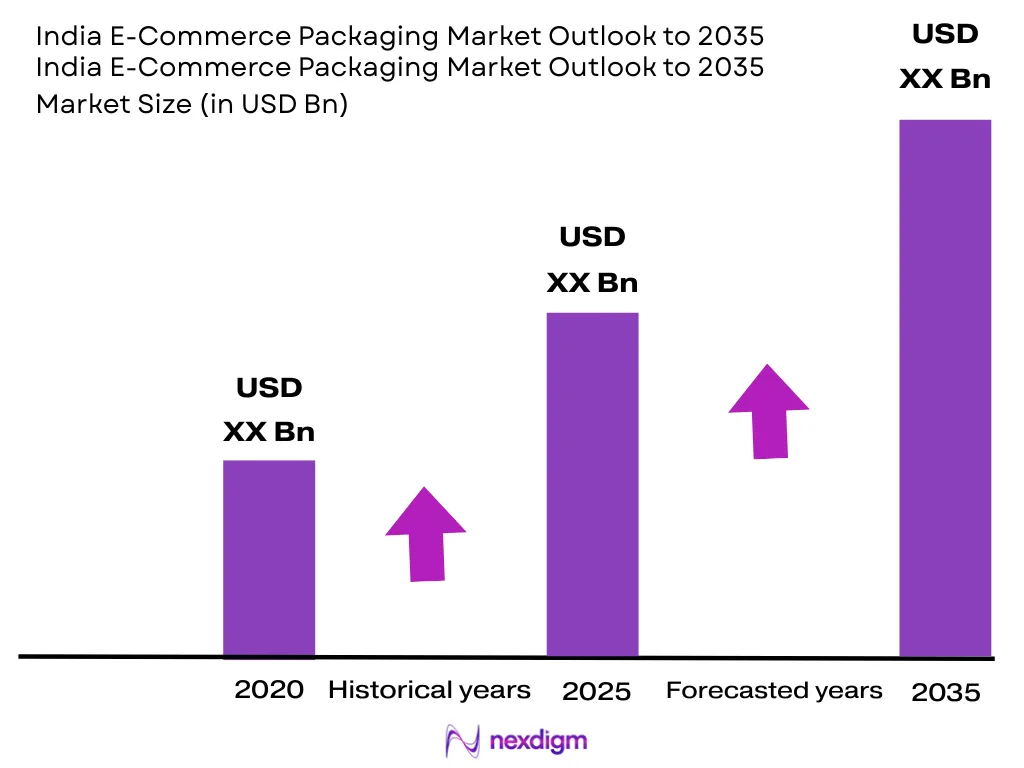
The India E-Commerce Packaging Market generated revenue of USD ~ Million in 2025 and is anticipated to reach USD ~ Million by 2033, expanding at a CAGR of 26.9% during 2026-2033, according to Grand View Research’s Horizon Databook. The market is primarily driven by the explosive growth of quick-commerce and micro-fulfillment models, rapid expansion of third-party logistics networks into Tier-2 cities, and rising e-commerce penetration supported by favorable government policy reforms and enhanced digital payments adoption. India accounted for approximately 4.6% of the global e-commerce packaging market in 2025, with the global market itself valued at USD ~ billion in 2024 and projected to grow at a CAGR of 13.2% through 2034, according to Global Market Insights. Corrugated Boxes represented the largest product segment, holding a 46.89% revenue share in 2025, while more than 250 fulfillment centers opened across India in 2024-2025, mainly across Tier-2 cities, according to Mordor Intelligence, enabling distributed, just-in-time box delivery models that reduce inventory-carrying costs for online sellers across fashion, electronics, grocery, and beauty product categories.
Market Segmentation
By Material
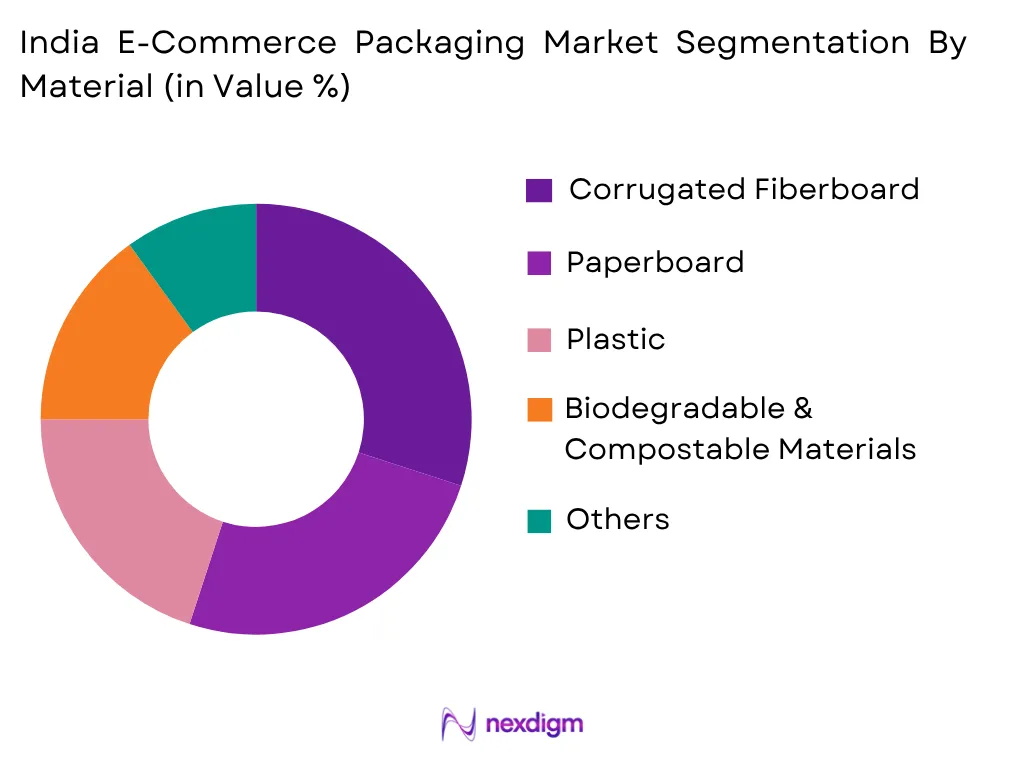
Paperboard & Corrugated Fiberboard represents the fastest-growing material segment within the India E-Commerce Packaging Market, driven by government regulations banning single-use plastics and growing consumer preference for recyclable and biodegradable packaging alternatives. Amazon India and other major e-commerce platforms have replaced single-use plastics with paper-based alternatives such as packing paper and cushioning materials, reflecting the broader industry shift documented by IMARC Group. In July 2024, the Council of Scientific and Industrial Research (CSIR) launched the National Mission on Sustainable Packaging Solutions, driving research investment in sustainable materials and recycling technologies to address the environmental challenges associated with rapid e-commerce packaging volume growth. Plastic materials, including PE films and bubble wrap, retain relevance in categories where barrier performance and cushioning override disposal considerations, particularly for electronics and fragile goods, though the market size for green materials is expected to double by 2031 as enforcement of plastic bans tightens across metropolitan jurisdictions.
By Product Type
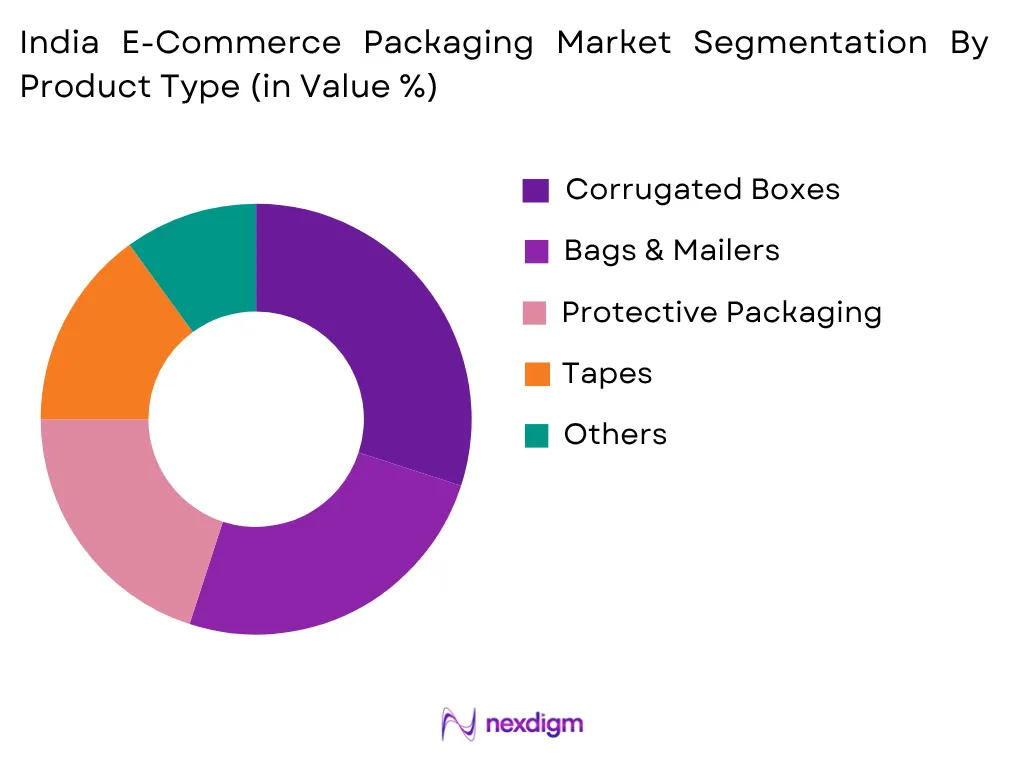
Among these, Corrugated Boxes dominate the India E-Commerce Packaging Market, holding a 46.89% revenue share in 2025, owing to their durability, cost-effectiveness, and suitability for protecting goods across India’s complex and often multi-handoff logistics network. ITC Limited has earmarked 30-35% of its INR 20,000 crore capital expenditure program toward paperboards and packaging, reinforcing the broader industry trajectory toward fiber-based alternatives for e-commerce fulfillment. Corrugated mini-shippers are increasingly replacing conventional mailers to reduce scuffing across multiple hand-offs, while the national logistics network, leveraging over 160,000 post offices, enables broader market access and reinforces the need for cost-effective, durable packaging formats. Bags & Mailers and Protective Packaging represent significant secondary categories, with quick-commerce platforms promising delivery in 10 to 30 minutes increasingly demanding hybrid materials that cushion, insulate, and demonstrate tamper evidence within densely packed rider delivery bags.
Competitive Landscape
The India E-Commerce Packaging Market is highly fragmented, with large integrated paperboard and packaging conglomerates competing alongside regional converters and multinational packaging manufacturers serving India’s rapidly expanding e-commerce and quick-commerce fulfillment networks. Competition is primarily based on manufacturing capacity, fulfillment network integration, regulatory compliance with EPR and plastic waste management rules, and the ability to embed packaging supply directly within 3PL warehouse management systems. ITC Limited, one of India’s largest diversified conglomerates founded in 1910, has committed substantial capital expenditure toward its Paperboards, Specialty Papers, and Packaging Division to capture growing fiber-based e-commerce packaging demand. UFlex Limited continues to recycle post-consumer PET as part of its backward integration strategy, recycling 6,600 tonnes of post-consumer PET in FY 2024, while Manjushree Technopack, a leading rigid plastic packaging manufacturer, was acquired by PAG for approximately USD 1 billion in November 2024, underscoring strong private equity interest in India’s packaging sector. Warehouse management systems increasingly embed packaging SKUs directly with converters, prompting suppliers to preload stock at 3PL nodes, tempering the bullwhip effect during India’s festive season demand peaks.
| Company | Established | Headquarters | Primary Product Portfolio | Natural Color Portfolio | Manufacturing Presence | Major End-Use Industries | Key Strategic Focus | Certifications & Compliance |
| ITC Limited (PSPD) | 1910 | ~ | ~ | ~ | ~ | ~ | ~ | ~ |
| UFlex Limited | 1985 | ~ | ~ | ~ | ~ | ~ | ~ | ~ |
| Manjushree Technopack | 1987 | ~ | ~ | ~ | ~ | ~ | ~ | ~ |
| TCPL Packaging Limited | 1982 | ~ | ~ | ~ | ~ | ~ | ~ | ~ |
| Amcor plc | 1860 | ~ | ~ | ~ | ~ | ~ | ~ | ~ |
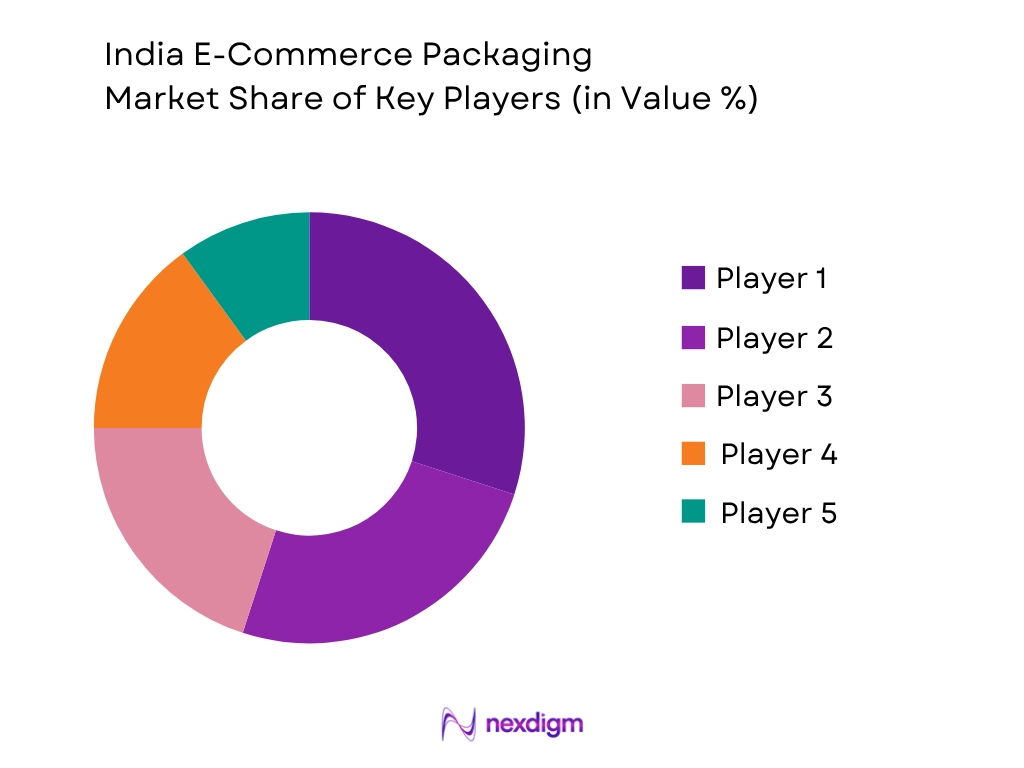
India E-Commerce Packaging Market Analysis
Growth Drivers
Explosive Growth of Quick-Commerce and Micro-Fulfillment
The India E-Commerce Packaging Market is experiencing sustained growth due to the rapid expansion of quick-commerce models promising delivery within 10 to 30 minutes, which demand compact SKUs and easy-open seals to speed pick rates across densely packed rider delivery bags. This ultra-fast grocery and retail delivery model is pushing the broader India packaging market toward hybrid materials that simultaneously cushion, insulate, and demonstrate tamper evidence within tightly constrained delivery formats. Corrugated mini-shippers are increasingly replacing conventional mailers to reduce scuffing across multiple hand-offs, while micro-perforated polymer windows are being adopted to regulate moisture for fresh produce delivered through quick-commerce channels, reflecting the specialized packaging innovation required to serve India’s rapidly scaling ultra-fast delivery ecosystem.
Expansion of 3PL and Last-Mile Fulfillment Networks
The rapid expansion of third-party logistics and last-mile fulfillment networks continues to drive substantial growth in the India E-Commerce Packaging Market. More than 250 fulfillment centers opened across India in 2024-2025, mainly across Tier-2 cities, according to Mordor Intelligence, with this distributed footprint enabling just-in-time box deliveries that reduce inventory-carrying costs for online sellers. Warehouse management systems increasingly embed packaging SKUs directly within their operations, prompting converters to preload stock at 3PL nodes, an embedded supplier model that tempers the bullwhip effect during India’s festive season demand peaks and allows smaller regional packaging plants to secure anchor volumes without competing directly against national conglomerates. India’s national logistics network, leveraging over 160,000 post offices, further enables broader market access across the country’s vast and geographically diverse consumer base.
Market Challenges
Plastic Waste Management Compliance Complexity
The India E-Commerce Packaging Market faces increasing regulatory complexity following the implementation of Extended Producer Responsibility guidelines in 2022 and the Plastic Waste Management Amendment Rules of 2023, which mandate the use of compostable and biodegradable materials and place the onus of post-consumer waste management on e-commerce brand owners and packaging manufacturers. Stringent government regulations banning single-use plastics are catalyzing a strategic shift toward sustainable substrates and adherence to EPR frameworks, requiring e-commerce platforms and packaging converters to reformulate product lines and documentation continuously. This regulatory transition creates compliance costs and operational complexity, particularly for smaller regional packaging manufacturers competing to serve India’s rapidly scaling e-commerce fulfillment networks.
High Cost of Sustainable Packaging Alternatives
The India E-Commerce Packaging Market faces ongoing challenges related to the higher cost of sustainable and biodegradable packaging alternatives relative to conventional plastic formats. As e-commerce platforms including Amazon India replace single-use plastics with paper-based alternatives such as packing paper and cushioning materials, the transition often carries higher per-unit costs that packaging manufacturers and e-commerce companies must absorb or pass through to consumers. This cost pressure is compounded by complex logistics requirements for reusable packaging formats, creating a persistent tension between sustainability goals and cost efficiency that continues to shape purchasing decisions across India’s price-sensitive e-commerce packaging value chain.
Market Opportunities
Green and Biodegradable Packaging Adoption
Growing regulatory and consumer demand for sustainable packaging presents substantial opportunities for manufacturers operating in the India E-Commerce Packaging Market. The Council of Scientific and Industrial Research’s July 2024 launch of the National Mission on Sustainable Packaging Solutions is driving research investment in sustainable materials and recycling technologies, while the market size for green materials is expected to double by 2031 as enforcement of plastic bans tightens across metropolitan jurisdictions. Companies capable of developing cost-competitive biodegradable and recyclable packaging formats that meet the durability requirements of India’s complex logistics network are well positioned to capture this accelerating demand shift, particularly as major e-commerce platforms continue transitioning away from single-use plastics toward paper-based alternatives.
Tier-2 City Fulfillment Center Expansion
The continued expansion of fulfillment centers into India’s Tier-2 cities presents significant opportunities for regional packaging converters and manufacturers. More than 250 fulfillment centers opened across India in 2024-2025, mainly across Tier-2 cities, creating a distributed footprint that enables just-in-time box deliveries and reduces inventory-carrying costs for online sellers. This embedded supplier model, in which warehouse management systems increasingly incorporate packaging SKUs directly, allows smaller regional packaging plants to secure anchor volumes without competing head-on with national conglomerates, creating meaningful opportunities for regional and mid-sized packaging manufacturers to establish dedicated supply relationships with 3PL providers expanding into previously underserved geographic markets.
Future Outlook
The India E-Commerce Packaging Market is expected to witness sustained expansion over the forecast period, supported by continued growth in quick-commerce and micro-fulfillment models, ongoing expansion of 3PL and last-mile fulfillment networks into Tier-2 and Tier-3 cities, and rising e-commerce penetration across India’s growing consumer base. Continued investment in sustainable, biodegradable packaging formats, driven by the National Mission on Sustainable Packaging Solutions and tightening EPR enforcement, is expected to reshape material selection across the industry. The market is also likely to benefit from continued fulfillment center expansion and embedded supplier models at 3PL nodes, supporting long-term growth across fashion, electronics, grocery, and beauty product packaging applications.
Major Players
- ITC Limited (Paperboards, Specialty Papers & Packaging Division)
- UFlex Limited
- Manjushree Technopack
- TCPL Packaging Limited
- Amcor plc
- Emami Paper Mills
- JK Paper Limited
- Achal Packaging
- Mondi Group
- Smurfit WestRock
- Berry Global Inc.
- Sonoco Products Company
- DS Smith
- Cosmo First Limited
- Huhtamaki PPL
Key Target Audience
- E-Commerce Packaging Manufacturers and Converters
- E-Commerce Marketplaces and D2C Brands
- Quick-Commerce Platforms
- Third-Party Logistics (3PL) Providers
- Fashion, Electronics, and Beauty Product Companies
- Recycling and Waste Management Companies
- Investment and Venture Capitalist Firms
- Government and Regulatory Bodies (Ministry of Environment, Forest and Climate Change, Central Pollution Control Board (CPCB), Council of Scientific and Industrial Research (CSIR))
- Raw Material Suppliers and Paperboard Manufacturers
Research Methodology
Step 1: Identification of Key Variables
The research process begins with identifying the complete ecosystem of the India E-Commerce Packaging Market, including raw material suppliers, packaging manufacturers, converters, e-commerce marketplaces, logistics providers, and regulatory authorities. Extensive secondary research is conducted using company annual reports, government publications, trade associations, customs statistics, industry journals, and proprietary databases to determine the variables influencing market demand, pricing, production, consumption, and technological developments.
Step 2: Market Analysis and Construction
Historical market information is collected and analyzed to estimate market size, production volumes, import-export activity, application-wise demand, and pricing trends. A combination of top-down and bottom-up approaches is used to estimate market revenues and validate segment-level performance. Consumption patterns across fashion, electronics, grocery, and beauty product categories are evaluated to establish an accurate representation of the industry.
Step 3: Hypothesis Validation and Expert Consultation
The preliminary findings are validated through Computer-Assisted Telephone Interviews (CATIs) and structured discussions with packaging manufacturers, procurement managers, converters, e-commerce logistics executives, regulatory experts, and senior executives operating within the Indian e-commerce industry. These interviews help verify market assumptions, competitive developments, technology adoption trends, pricing dynamics, and future investment opportunities while refining the overall market estimates.
Step 4: Research Synthesis and Final Output
The final stage integrates insights obtained from primary interviews with quantitative information collected through secondary sources. Data triangulation techniques are applied to reconcile differences between supply-side and demand-side estimates, ensuring robust market forecasting. The report is then reviewed through multiple quality assurance checkpoints to deliver a comprehensive analysis covering market size, segmentation, competitive landscape, future outlook, and strategic recommendations for industry stakeholders.

- Executive Summary
- Research Methodology (Market Definitions and Assumptions, Abbreviations, Market Sizing Approach, Top-Down Analysis, Bottom-Up Analysis, Demand-Side Assessment, Supply-Side Assessment, Primary Industry Interviews, Secondary Research Validation, Data Triangulation, Forecasting Framework, Limitations and Future Conclusions)

- Definition and Scope
- Market Evolution and Industry Genesis
- Timeline of Major Industry Developments
- E-Commerce Packaging Industry Value Chain Analysis
- Supply Chain Analysis

- Growth Drivers (Explosive Growth of Quick-Commerce and Micro-Fulfillment, Expansion of 3PL and Last-Mile Fulfillment Networks, Rising E-Commerce Penetration in Tier-2 and Tier-3 Cities, Growth in D2C Brand Adoption, Festive Season Transaction Surges, Government Digital Payment Adoption)
- Market Challenges (Plastic Waste Management Compliance Complexity, High Cost of Sustainable Packaging Alternatives, Reverse Logistics and Returns Packaging Complexity, Raw Material Price Volatility, Regulatory Compliance Complexity)
- Market Opportunities (Green and Biodegradable Packaging Adoption, Smart and Traceable Packaging Technologies, Mono-Material Recyclable Packaging Development, Export-Oriented Manufacturing, Tier-2 City Fulfillment Center Expansion)
- Market Trends (Growth of Micro-Fulfillment Packaging for Quick-Commerce, Shift Toward Paper-Based Alternatives, Embedded Supplier Models at 3PL Nodes, Right-Sized Packaging Adoption, Consolidation Through Mergers and Acquisitions)
- Government Regulations (Extended Producer Responsibility Guidelines 2022, Plastic Waste Management Amendment Rules 2023, National Mission on Sustainable Packaging Solutions, Food Safety and Standards (Packaging and Labelling) Regulations, Bureau of Indian Standards (BIS) Norms)
- Import and Export Analysis (Trade Volume, Major Import Sources, Export Destinations, HS Code Analysis, Trade Balance)
- Raw Material Availability Analysis (Kraft Paper, Corrugated Fiberboard, Polyethylene, BOPP Resin, Recycled Paperboard)
- Technology Landscape (Automated Box-Sizing Technology, Digital Printing, Tamper-Evident Sealing Systems, Smart Labeling and QR Tracking, Cold Chain Packaging for Grocery Delivery)
- Sustainability Assessment (Recycled Content Adoption, Right-Sized Packaging Design, Carbon Footprint Reduction, Biodegradable Material Development, Circular Economy Initiatives)
- PESTLE Analysis
- SWOT Analysis
- Porter’s Five Forces Analysis
- Stakeholder Ecosystem
- Competition Ecosystem

- By Market Value (2020-2025)
- By Volume Consumption (2020-2025)
- By Average Selling Price (2020-2025)

- By Product Type (In Value %)
Corrugated Boxes
Bags & Mailers
Tapes
Protective Packaging - By Material (In Value %)
Paperboard & Corrugated Fiberboard
Plastic (PE, BOPP & Bubble Wrap)
Biodegradable & Compostable Materials - By Application (In Value %)
Fashion & Apparel
Electronics & Appliances
Grocery & Quick-Commerce
Beauty & Personal Care
Home & Furniture - By End User (In Value %)
E-Commerce Marketplaces
Direct-to-Consumer (D2C) Brands
Quick-Commerce Platforms
Third-Party Logistics (3PL) Providers - By Region (In Value %)
Northern India
Western India
Southern India
Eastern India

- Market Share of Major Players (By Value, Volume, Material, Application Industry, Product Category)
- Cross Comparison Parameters (Product Portfolio Breadth, Fulfillment Network Integration, Application Technical Support Capability, Manufacturing Capacity, Regulatory Compliance & Certifications, E-Commerce Customer Base, Innovation & New Product Launch Frequency)
- SWOT Analysis of Major Players
- Pricing Analysis by Product Category and SKU
- Production Capacity Analysis
- Manufacturing Footprint Analysis
- Distribution Network Analysis
- Innovation Benchmarking
- Detailed Profiles of Major Companies
ITC Limited (Paperboards, Specialty Papers & Packaging Division)
UFlex Limited
Manjushree Technopack
TCPL Packaging Limited
Amcor plc
Emami Paper Mills
JK Paper Limited
Achal Packaging
Mondi Group
Smurfit WestRock
Berry Global Inc.
Sonoco Products Company
DS Smith
Cosmo First Limited
Huhtamaki PPL

- Consumption Pattern Analysis (Industrial Usage, Order Size, Product Category Penetration, Seasonal Demand, Reformulation Activity)
- Purchasing Criteria (Durability, Regulatory Compliance, Cost Efficiency, Recyclability, Tamper Evidence, Supply Reliability)
- Procurement and Supplier Selection Analysis
- Sustainable Packaging Adoption Assessment
- Premium vs Conventional Packaging Demand
- Product Attribute Preference Analysis (Cushioning Performance, Print Quality, Seal Integrity, Recyclability, Right-Sizing, Tamper Evidence)
- Consumer Sustainability Preference Influence on Product Development
- Pain Point Analysis
- Decision-Making Process

- By Market Value (2026-2035)
- By Volume Consumption (2026-2035)
- By Average Selling Price (2026-2035)


 Request a Sample
 Ask for Customization
 Get a Quote
 Enquire Now