
 Download PDF
Market Overview
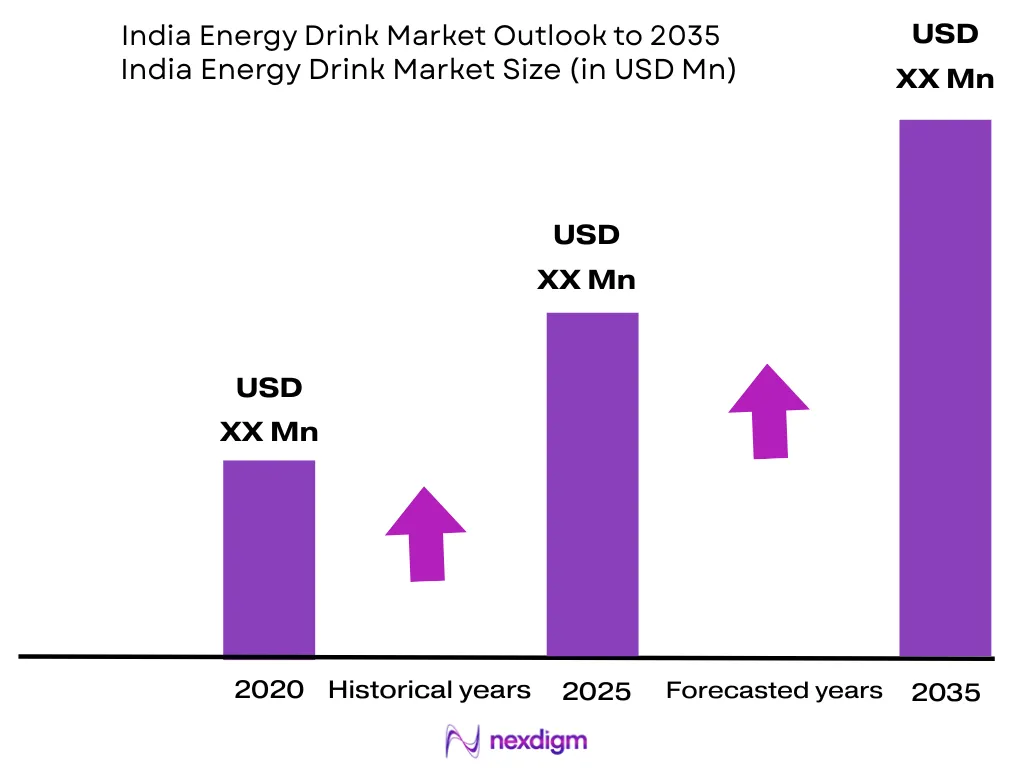
The India Energy Drink Market is valued at USD ~ million, with a forecasted CAGR of 6.2% for the long-term outlook period toward 2035. The market is driven by fast urban lifestyles, rising packaged beverage adoption, student consumption, work-related fatigue, gym usage, gaming and quick-commerce visibility. India’s GDP reached USD 3.91 trillion, compared with USD 3.57 trillion in the preceding base, strengthening packaged beverage consumption capacity. The India Energy Drink Market is concentrated in Delhi NCR, Mumbai, Bengaluru, Hyderabad, Chennai, Pune, Kolkata and Ahmedabad because these cities combine students, IT workers, gyms, nightlife, delivery networks, modern retail and quick-commerce penetration. Delhi metro area recorded 33,807,000 people, Mumbai 21,673,000, while India’s urban population reached 513,325,082, compared with 504,297,814 in the prior base, supporting higher chilled RTD beverage demand.
Market Segmentation
By Product Type
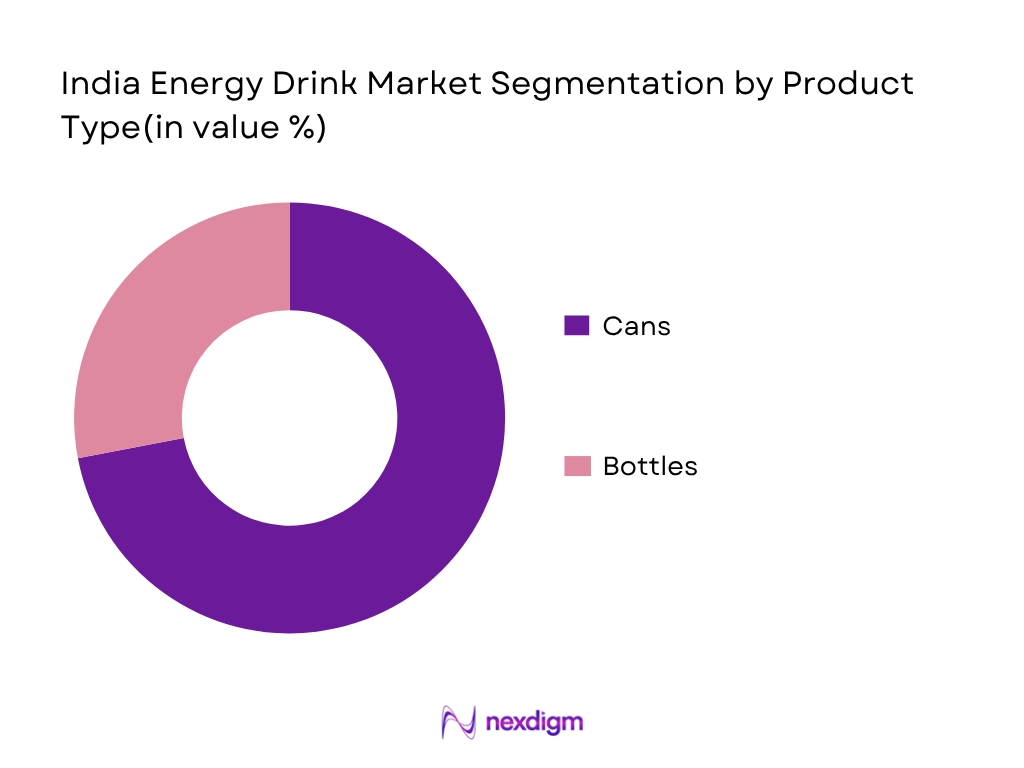
India Energy Drink Market is segmented by product type into traditional energy drinks, functional energy drinks, sugar-free energy drinks, glucose-based energy drinks and organic or natural energy drinks. Recently, traditional energy drinks have a dominant market share in India under product type segmentation because they have the widest consumer familiarity, strongest mass retail presence and deepest route-to-market coverage across kirana stores, supermarkets, petrol pumps, convenience outlets and online platforms. Brands such as Sting, Red Bull, Monster, Hell, Predator and Cloud 9 have built category recall around instant energy, alertness, taste and youth-oriented positioning. Traditional products also benefit from carbonated formats, PET affordability, high chilled visibility and impulse purchase behaviour. Functional and sugar-free products are gaining traction in metro cities, gyms and quick-commerce platforms, but traditional energy drinks remain dominant because they cover the broadest price points and consumption occasions.
By Packaging Type
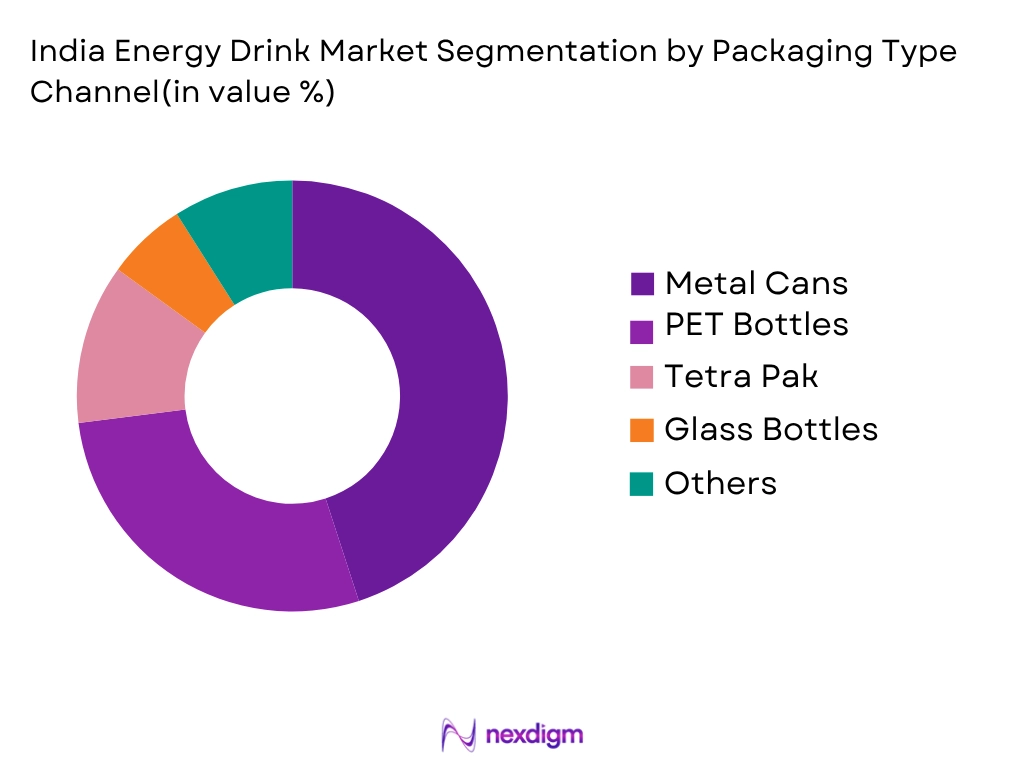
India Energy Drink Market is segmented by packaging type into PET bottles, metal cans, Tetra Pak or cartons, glass bottles, and pouches, sachets or other formats. Recently, PET bottles have a dominant market share in India under packaging type segmentation because they make energy drinks more accessible in a price-sensitive market. PET formats support low-ticket packs, mass distribution, portability and kirana-led impulse consumption. Euromonitor notes that affordable PET bottles are turbocharging India’s energy drinks category, while Mordor Intelligence reports PET bottles as the leading packaging format in India’s energy drink market. Metal cans remain important for premium brands such as Red Bull, Monster and Hell, but PET bottles dominate because they allow wider reach across general trade, semi-urban markets, convenience outlets and youth-led mass consumption.
Competitive Landscape
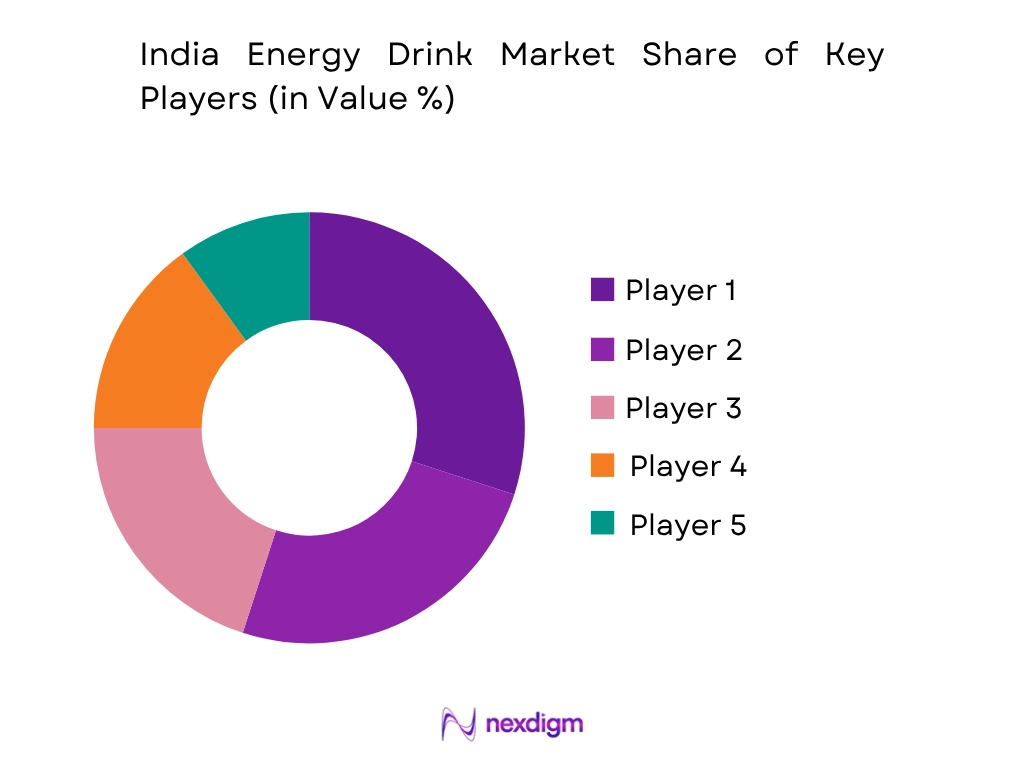
The India Energy Drink Market is led by a mix of global premium brands, multinational mass-market beverage companies and Indian domestic challengers. PepsiCo’s Sting has expanded the mass segment through affordability and PET packaging, while Red Bull retains premium brand equity across urban consumers, HoReCa and modern trade. Monster, Hell and Predator compete in aspirational urban energy formats, while Cloud 9, Urzza, Fast&Up and sports nutrition-linked players address domestic, functional and fitness-led demand. Competition is intensifying as companies compete across price points, pack formats, kirana reach, quick-commerce listings and youth marketing.
| Company | Establishment Year | Headquarters | Core Energy Drink Portfolio | India Positioning | Packaging Focus | Channel Strength | Product Innovation Focus | Market-Specific Edge |
| PepsiCo India | 1989 | Gurugram, India | ~ | ~ | ~ | ~ | ~ | ~ |
| Red Bull India | 1987 | Mumbai, India | ~ | ~ | ~ | ~ | ~ | ~ |
| Monster Energy India | 1935 | Corona, USA | ~ | ~ | ~ | ~ | ~ | ~ |
| Coca-Cola India | 1993 | Gurugram, India | ~ | ~ | ~ | ~ | ~ | ~ |
| Hell Energy India | 2006 | Szikszó, Hungary | ~ | ~ | ~ | ~ | ~ | ~ |
India Energy Drink Market Analysis
Growth Drivers
Urban Youth, Workforce Mobility and Daily Energy Occasions
India Energy Drink Market is supported by a large urban and working consumer base that creates repeat demand for RTD energy drinks across study, office work, commuting, gym, delivery work and late-hour productivity occasions. The World Bank reports India’s GDP at USD 3.91 trillion and GDP per capita at USD 2,694.7, supporting packaged beverage consumption capacity in urban retail corridors. India’s urban population indicator covers the period through 2024, reflecting the continued expansion of dense city markets where quick-commerce, modern trade, petrol pumps and campus retail are concentrated. PLFS reported worker population ratio at 58.2 for persons aged 15 years and above during July 2023–June 2024, supporting demand from working consumers.
Digital Commerce and Instant Beverage Availability
India Energy Drink Market benefits from digital commerce and UPI-enabled small-ticket retail because energy drinks are frequently bought as impulse beverages through quick-commerce, e-commerce, convenience outlets and neighbourhood stores. TRAI reported 970.16 million total internet subscribers for the quarter ending December 2024, expanding digital access for online beverage discovery and quick-commerce ordering. UPI processed 172 billion transactions in 2024, supporting low-friction small-value purchases across retail stores, delivery platforms and grocery apps. World Bank reported India’s GDP at USD 3.91 trillion, strengthening the macroeconomic base for organised packaged beverage distribution, digital payments, and branded FMCG consumption.
Market Challenges
Caffeinated Beverage Regulation and Labelling Compliance
India Energy Drink Market faces compliance pressure because caffeinated products must operate within FSSAI’s food safety, licensing and product-labelling framework. FoSCoS functions as the national portal for food business licensing, registration, renewal, modification and annual returns, making compliance relevant for manufacturers, importers, distributors and retailers. India’s total economic scale, with GDP at USD 3.91 trillion and GDP per capita at USD 2,694.7, makes national rollout attractive, but it also increases exposure to inspections, label checks and consumer complaints. For energy drink brands, caffeine warnings, ingredient declarations, claim substantiation and imported SKU clearance remain execution-heavy requirements across a large, multi-channel retail system.
Health Scrutiny Around Sugar, Stimulants and Youth Consumption
India Energy Drink Market faces health-positioning challenges because many energy drinks are associated with high sugar, caffeine, taurine and aggressive youth branding. The World Bank reports India’s population at country scale and GDP at USD 3.91 trillion, meaning beverage manufacturers operate in a very large consumer market where health-policy attention can affect mass-market product claims. AISHE reported higher education enrolment at 4.33 crore students, creating a major student and young-adult audience but also raising scrutiny around campus marketing and high-caffeine consumption occasions. Brands must balance flavour, stimulant efficacy, lower-sugar reformulation, FSSAI-compliant labelling and responsible communication for study, gaming and exam-period use.
Market Opportunities
Campus, Coaching and Student Productivity Channel
India Energy Drink Market has a strong opportunity in campus, coaching-centre, hostel and student productivity channels because the student base creates repeat occasions around studying, examinations, gaming, commuting and late-night routines. AISHE reported 4.33 crore higher education enrolments and 98.5 lakh STEM enrolments, indicating dense youth clusters with high relevance for functional beverages positioned around alertness and focus. World Bank reported India’s GDP per capita at USD 2,694.7, supporting gradual expansion of branded beverage consumption in metro and Tier-2 education hubs. Brands can build future growth through college canteens, vending, quick-commerce bundles, exam-season campaigns and FSSAI-compliant productivity positioning.
Quick-Commerce, Mobile Payments and Urban Chilled Delivery
India Energy Drink Market has future growth opportunity through quick-commerce and chilled last-mile delivery because urban consumers increasingly purchase packaged beverages through app-led grocery baskets. TRAI reported 1,092.79 million total internet subscribers for March 2026, expanding the digital consumer base for instant beverage ordering and discovery. UPI processed about 22,000 crore transactions during calendar 2025, with a daily average of about 60 crore transactions, supporting low-ticket, high-frequency purchases on delivery platforms and retail counters. With India’s GDP at USD 3.91 trillion, energy drink brands can use quick-commerce listings, chilled availability, variety packs and urban sampling to build repeat consumption.
Future Outlook
The India Energy Drink Market is expected to grow steadily as energy drinks move from a niche urban stimulant beverage into a broader functional refreshment category. Growth will be driven by youth consumption, student use, work fatigue, gaming, fitness culture, nightlife, quick-commerce delivery and the shift toward ready-to-drink packaged beverages.
Over the next phase, mass-market PET bottle formats will continue expanding access in kirana and semi-urban retail, while premium cans will remain relevant in metros, gyms, HoReCa and modern trade. Sugar-free, low-calorie and functional variants will gain momentum among urban professionals and fitness consumers. India-specific flavours such as mango, lemon, tropical fruit and masala-inspired profiles can help brands localise taste and increase trial.
Quick-commerce will play a larger role in chilled beverage discovery, especially in Delhi NCR, Mumbai, Bengaluru, Hyderabad, Chennai and Pune. Energy drink brands are also expected to deepen campus, coaching-centre, petrol-pump, gym and delivery-worker targeting. Regulatory compliance will remain important because FSSAI requirements around caffeinated beverages, ingredient labelling, claims and product safety directly affect product formulation and marketing.
Major Players
- PepsiCo India
- Red Bull India
- Monster Energy India
- Coca-Cola India
- Hell Energy India
- Hector Beverages
- Goldwin Healthcare
- Bisleri International
- Varun Beverages
- Patanjali Ayurved
- Fast&Up
- Myprotein India
- GNC India
- Ocean Beverages
- Cloud 9 Energy Drink
Key Target Audience
- Energy drink manufacturers and brand owners
- Functional beverage companies
- Carbonated soft drink and packaged beverage companies
- Kirana, supermarket and modern trade retail chains
- Quick-commerce and e-commerce grocery platforms
- Packaging manufacturers and PET bottle suppliers
- Investments and venture capitalist firms
- Government and regulatory bodies (Food Safety and Standards Authority of India, Ministry of Health and Family Welfare, Department of Consumer Affairs, Bureau of Indian Standards, Central Board of Indirect Taxes and Customs)
Research Methodology
Step 1: Identification of Key Variables
The initial phase involves constructing an ecosystem map for the India Energy Drink Market, covering brand owners, bottlers, co-packers, ingredient suppliers, packaging companies, distributors, kirana stores, modern trade chains, HoReCa, gyms, e-commerce and quick-commerce platforms. The objective is to identify variables such as pack type, product formulation, caffeine positioning, sugar profile, channel reach and regional demand.
Step 2: Market Analysis and Construction
In this phase, historical data for the India Energy Drink Market is compiled through company portfolios, public market sources, SKU-level benchmarking, retailer listings, quick-commerce availability and packaging format analysis. The assessment reviews PET bottles, cans, sugar-free variants, general trade reach, modern trade visibility, online sales and regional consumption clusters.
Step 3: Hypothesis Validation and Expert Consultation
Market hypotheses are validated through computer-assisted telephone interviews with beverage distributors, kirana retailers, modern trade buyers, quick-commerce category managers, gym retailers, HoReCa suppliers and co-packers. These consultations provide practical insights into SKU movement, chilled visibility, retailer margins, consumer preferences, pack-size performance and channel-specific product acceptance.
Step 4: Research Synthesis and Final Output
The final phase involves triangulating top-down market benchmarks with bottom-up brand, pack and channel evidence. Direct engagement with beverage manufacturers, distributors and retail stakeholders helps verify product segmentation, competitive positioning, regional demand, price-pack strategy, regulatory compliance and future opportunity areas in the India Energy Drink Market.

- Executive Summary
- Research Methodology (market definitions and assumptions, caffeinated beverage classification, RTD energy drink inclusion, stimulant beverage scope, FSSAI compliance mapping, top-down and bottom-up market sizing, retail audit checks, distributor interviews, SKU-level benchmarking, limitations and future conclusions)

- Definition and Scope
- Overview Genesis
- Timeline of Major Players
- Business Cycle
- Supply Chain and Value Chain Analysis

- Growth Drivers (youth population, urban retail, general trade reach, quick commerce, fitness culture, gaming, nightlife, affordability)
- Market Challenges (FSSAI compliance, caffeine limits, sugar concerns, affordability pressure, cold-chain gaps, distribution fragmentation)
- Market Opportunities (zero sugar, mass-priced PET, India-specific flavours, Ayurveda-inspired energy, quick commerce, campus retail, gym retail, rural expansion)
- Market Trends (low-ticket packs, quick commerce, sugar-free, functional stacking, local flavours, influencer marketing, energy-plus-hydration)
- SWOT Analysis
- Porter’s Five Forces

- By Value (2020-2025)
- By Volume (2020-2025)
- By Unit Sales (2020-2025)

- By Product Type (In Value %)
Carbonated RTD Energy Drinks
Non-Carbonated Energy Drinks
Glucose-Based Energy Beverages
Energy Shots - By Packaging Type (In Value %)
Aluminum Cans
PET Bottles
Glass Bottles
Tetra Pak Cartons
Sachets and Powder Packs - By Distribution Channel (In Value %)
Kirana and General Trade
Modern Trade and Supermarkets
Convenience Stores and Petrol Pumps
Chemists and Pharmacy Retail
HoReCa, Clubs and Nightlife - By Region (In Value %)
North India
West India
South India
East India
Tier-1 Cities

- Market Share of Major Players on the Basis of Value and Volume
- Cross Comparison Parameters (caffeine mg per litre, price-point pack availability, PET versus can portfolio, general trade distribution reach, quick-commerce listing depth, sugar-free SKU mix, India-specific flavour portfolio, FSSAI labelling and claims compliance)
- SWOT Analysis of Major Players
- Detailed Profiles of Major Companies
PepsiCo India
Red Bull India
Monster Energy India
Hell Energy India
Coca-Cola India
Hector Beverages
Goldwin Healthcare
Bisleri International
Varun Beverages
Patanjali Ayurved
Hector Beverages Paper Boat
Fast&Up
Myprotein India
GNC India
Ocean Beverages

- Market Demand and Utilization
- Purchasing Power and Budget Allocation
- Regulatory and Compliance Requirements
- Needs, Desires and Pain Point Analysis
- Decision-Making Process

- By Value (2026-2035)
- By Volume (2026-2035)
- By Unit Sales (2026-2035)


 Request a Sample
 Ask for Customization
 Get a Quote
 Enquire Now