
 Download PDF
 Download PDF
Market Overview
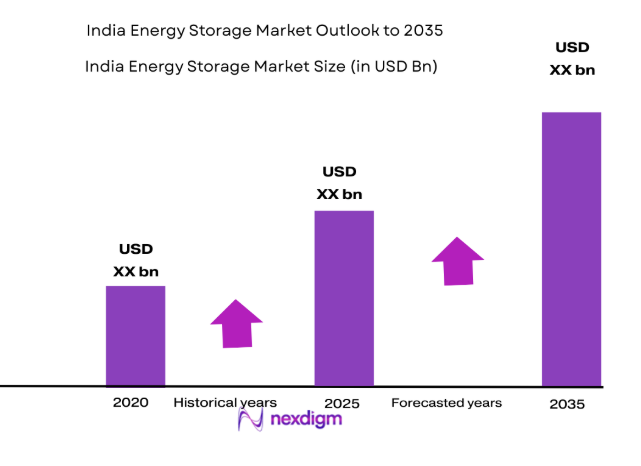
The India Energy Storage market is valued at approximately USD ~ billion, driven by the rapid growth in renewable energy adoption and the increasing demand for reliable energy storage solutions. Government incentives and advancements in battery technology have played a key role in accelerating market development. This market is expected to continue growing as India seeks to reduce its reliance on fossil fuels, with storage solutions becoming increasingly vital for grid stability and integrating intermittent renewable energy sources.
India is emerging as a leader in energy storage due to its ambitious renewable energy targets and significant investments in energy infrastructure. States like Rajasthan, Gujarat, and Tamil Nadu are leading the adoption of energy storage systems due to their high renewable energy output. Urban centers such as Delhi and Mumbai also play a key role in driving demand, influenced by growing urbanization, industrialization, and government-backed energy transition initiatives.
Market Segmentation
By Product Type
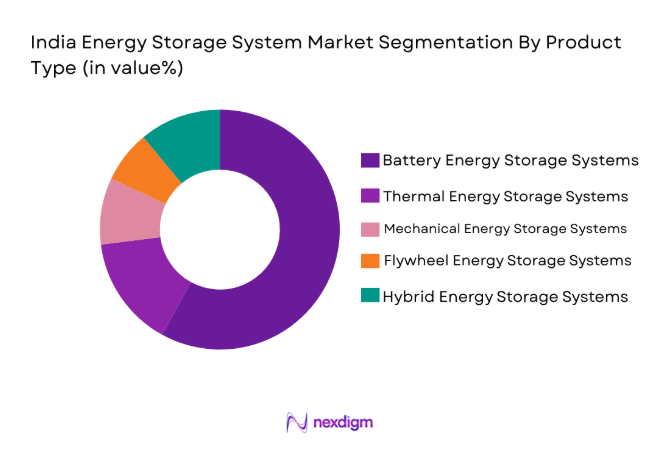
India Energy Storage market is segmented by product type into Battery Energy Storage Systems, Thermal Energy Storage Systems, Mechanical Energy Storage Systems, Flywheel Energy Storage Systems, and Hybrid Energy Storage Systems. Recently, Battery Energy Storage Systems have gained a dominant market share due to the continued advancements in lithium-ion technology and falling battery costs. The increase in demand for efficient, scalable storage solutions for both residential and commercial purposes has fueled the rapid adoption of these systems across the country.
By Platform Type
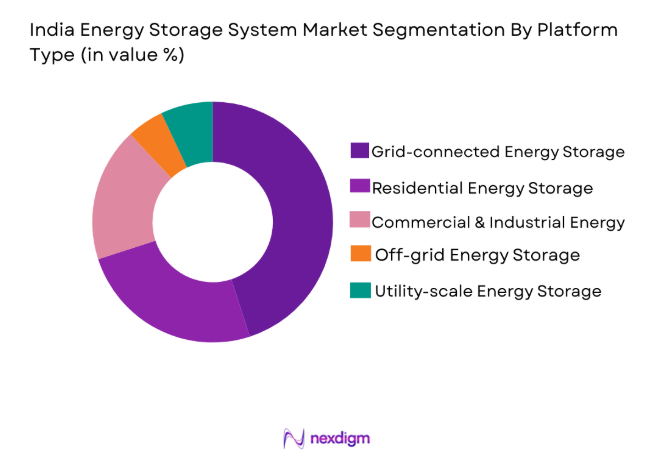
India Energy Storage market is segmented by platform type into Grid-scale Energy Storage, Residential Energy Storage, Commercial & Industrial Energy Storage, Off-grid Energy Storage, and Utility-scale Energy Storage. Grid-scale Energy Storage currently dominates the market due to large investments in utility-scale projects and the growing need for grid stabilization as renewable energy sources become more prevalent. This sub-segment benefits from supportive government policies and favorable financial incentives.
Competitive Landscape
The India Energy Storage market is characterized by consolidation, with both international and domestic players competing for market share. Major players are leveraging technological advancements, strategic partnerships, and government collaborations to enhance their market position. These companies are focusing on increasing production capacity and improving storage solutions to cater to the growing energy demands in India.
| Company Name | Establishment Year | Headquarters | Technology Focus | Market Reach | Key Products | Revenue (USD Billion) | Additional Parameter |
| Tata Power | 1919 | Mumbai, India | ~ | ~ | ~ | ~ | ~ |
| Exide Industries | 1947 | Kolkata, India | ~ | ~ | ~ | ~ | ~ |
| Luminous Power Technologies | 1988 | New Delhi, India | ~ | ~ | ~ | ~ | ~ |
| Adani Green Energy | 2015 | Ahmedabad, India | ~ | ~ | ~ | ~ | ~ |
| Fluence Energy | 2018 | Washington, USA | ~ | ~ | ~ | ~ | ~ |
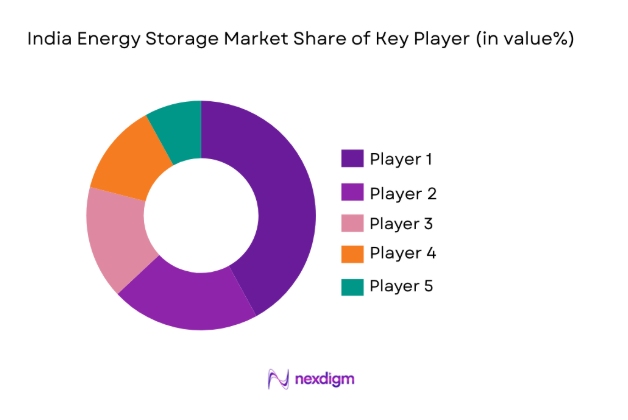
India Energy Storage Market Analysis
Growth Drivers
Technological Advancements
Continuous innovations in battery technology, particularly lithium-ion batteries, are driving the growth of the India Energy Storage market. As costs for lithium-ion batteries decrease and their efficiency increases, energy storage systems have become more accessible, especially for residential and commercial applications. These advancements are enabling the storage of larger amounts of energy for longer periods, making energy storage systems more viable for grid integration. The development of alternative chemistries and hybrid solutions is also contributing to cost reduction and system optimization, further driving adoption in a market focused on sustainability. Technological advancements in battery storage technology ensure that energy storage becomes more cost-effective, scalable, and long-lasting, providing a significant boost to the overall market.
Government Support
The Indian government has been a major driving force in the growth of the energy storage market, with various initiatives, subsidies, and favorable policies aimed at reducing carbon emissions and supporting renewable energy projects. The government’s push for a clean energy transition is leading to the adoption of energy storage systems as part of India’s national energy strategy. Policies such as the National Solar Mission, National Electric Mobility Mission, and other green energy incentives directly support energy storage system deployment, particularly in regions with high renewable energy potential. These supportive regulations and financial incentives make energy storage systems more accessible to both public and private sector players, significantly expanding market opportunities.
Market Challenges
High Capital Investment Requirements
One of the main challenges faced by the India Energy Storage market is the high initial capital required for deploying energy storage systems, especially for large-scale projects. While prices of batteries have come down in recent years, the initial investment for advanced energy storage solutions still remains a significant barrier for many utilities and businesses. This challenge is especially acute in emerging markets like India, where access to capital is limited, and energy storage systems are often seen as a high-risk investment. Government subsidies and financing models like public-private partnerships may mitigate this challenge to some extent, but upfront costs continue to hinder broader adoption, particularly in rural or less economically developed regions.
Regulatory and Policy Barriers
Although the Indian government has introduced several policies to support the energy transition, there are still regulatory challenges that hinder the growth of the energy storage market. Policy uncertainty, lack of standardized regulations for energy storage systems, and complex approval processes create barriers for market players. Without a clear and consistent regulatory framework, it becomes difficult for companies to plan long-term investments in energy storage. In some cases, these barriers may also result in delays in project timelines and additional costs for businesses. Ensuring clear policies and incentives for energy storage technologies is crucial to unlocking the market’s potential.
Opportunities
Expansion of Electric Vehicle (EV) Charging Infrastructure
The rapid growth of the electric vehicle (EV) market in India presents a significant opportunity for the energy storage market. EVs require substantial charging infrastructure, which often needs to be supported by energy storage solutions to ensure consistent and reliable power supply. By integrating energy storage systems with EV charging stations, energy can be stored during off-peak hours and used during high-demand periods, reducing the strain on the grid and making EV charging more efficient. As the government pushes for greater adoption of electric vehicles, the demand for energy storage systems at EV charging stations will rise, providing a substantial market opportunity.
Partnerships with International Energy Firms
Collaborating with global energy firms presents an opportunity for Indian companies to access advanced technologies and expertise in energy storage. International firms have extensive experience in large-scale energy storage systems and can help enhance the quality and scalability of storage solutions in India. These partnerships could lead to the introduction of new, more efficient energy storage technologies tailored to India’s specific energy needs. By leveraging international knowledge and technologies, India can accelerate its energy transition and achieve its renewable energy targets more efficiently, creating significant business opportunities for energy storage companies.
Future Outlook
The India Energy Storage market is poised for substantial growth in the coming years, driven by increasing demand for renewable energy, technological advancements, and government-backed incentives. As the country pushes toward its renewable energy goals, the need for efficient and reliable storage solutions will only intensify. Continued investments in research and development will lead to innovations in storage technology, improving performance and cost-effectiveness. The growing integration of energy storage in urban and rural areas alike, coupled with supportive regulatory frameworks, will further propel market expansion, offering significant opportunities for both domestic and international players.
Major Players
- Tata Power
- Exide Industries
- Luminous Power Technologies
- Adani Green Energy
- Fluence Energy
- NTPC Limited
- Mahindra Electric
- Blue Star Ltd.
- Schneider Electric
- BHEL
- ABB
- Hyundai Energy Solutions
- Panasonic Energy India
- AES Corporation
- Sumitomo Electric Industries
Key Target Audience
- Investments and venture capitalist firms
- Government and regulatory bodies
- Utilities and energy companies
- Renewable energy developers
- Large industrial end-users
- Commercial sector energy managers
- Real estate developers
Research Methodology
Step 1: Identification of Key Variables
The key variables impacting the India Energy Storage market are identified through market analysis, expert consultations, and secondary research.
Step 2: Market Analysis and Construction
Market analysis is conducted to determine the scope, size, and segmentation of the energy storage market based on different technologies, end-users, and applications.
Step 3: Hypothesis Validation and Expert Consultation
Hypotheses on growth drivers, challenges, and opportunities are validated by consulting industry experts, stakeholders, and key market participants.
Step 4: Research Synthesis and Final Output
Data is synthesized into comprehensive market insights and forecasts, which are presented in the final report to provide actionable recommendations for stakeholders.

- Executive Summary
- Research Methodology (Definitions, Scope, Industry Assumptions, Market Sizing Approach, Primary & Secondary Research Framework, Data Collection & Verification Protocol, Analytic Models & Forecast Methodology, Limitations & Research Validity Checks)

- Market Definition and Scope
- Value Chain & Stakeholder Ecosystem
- Regulatory / Certification Landscape
- Sector Dynamics Affecting Demand
- Strategic Initiatives & Infrastructure Growth

- Growth Drivers
Government Policies & Incentives for Clean Energy
Technological Advancements in Battery Storage
Increasing Demand for Renewable Energy Integration - Market Challenges
High Initial Capital Investment
Regulatory Barriers and Compliance Issues
Energy Storage Efficiency and Duration - Market Opportunities
Rise in Electric Vehicle Adoption
Expansion in Renewable Energy Projects
Development of Advanced Energy Storage Technologies - Trends
Growing Focus on Battery Recycling
Integration of AI and IoT in Energy Storage Systems - Government Regulations
- SWOT Analysis
Porter’s Five Forces

- By Market Value, 2020-2025
- By Installed Units, 2020-2025
- By Average System Price, 2020-2025
- By System Complexity Tier, 2020-2025

- By System Type (In Value%)
Battery Energy Storage Systems
Thermal Energy Storage Systems
Mechanical Energy Storage Systems
Flywheel Energy Storage Systems
Hybrid Energy Storage Systems - By Platform Type (In Value%)
Grid-scale Energy Storage
Residential Energy Storage
Commercial & Industrial Energy Storage
Off-grid Energy Storage
Utility-scale Energy Storage - By Fitment Type (In Value%)
On-premise Solutions
Cloud-based Solutions
Modular Solutions
Integrated Solutions - By End User Segment (In Value%)
Utility Providers
Commercial Enterprises
Residential Sector

- Market Share Analysis
- Cross Comparison Parameters (System Type, Platform Type, End User Segment, Procurement Channel, Price, Installed Units, System Complexity Tier)
- SWOT Analysis of Key Competitors
- Pricing & Procurement Analysis
- Key Players
Tata Power
NTPC Limited
Adani Green Energy
Indian Energy Exchange
Luminous Power Technologies
Suzlon Energy
SMA Solar Technology
Exide Industries
Mahindra Electric
Blue Star Ltd.
RuggedCom
Ametek Power
Fluence Energy
Sungrow Power
LG Chem

- Utility Sector Adoption of Energy Storage Solutions
- Commercial Sector’s Role in Energy Efficiency
- Residential Sector’s Increasing Interest in Energy Independence
- Government Incentives Driving End User Growth

- Forecast Market Value, 2026-2035
- Forecast Installed Units, 2026-2035
- Price Forecast by System Tier, 2026-2035
- Future Demand by Platform, 2026-2035


 Request a Sample
 Ask for Customization
 Get a Quote
 Enquire Now