
 Download PDF
 Download PDF
Market Overview
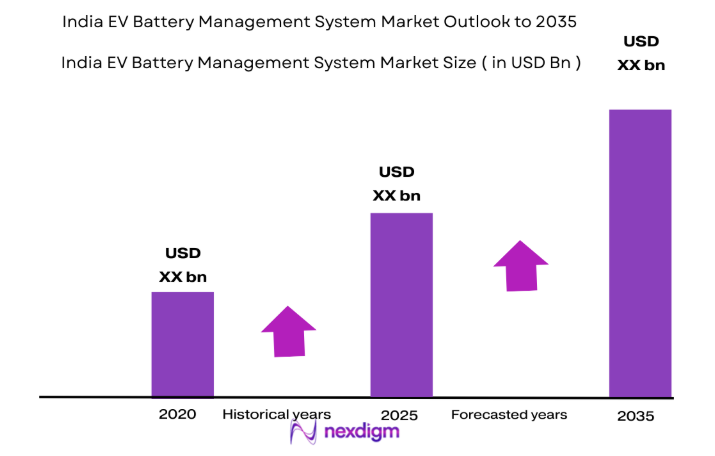
India EV Battery Management System Market is experiencing strong growth, supported by the rapid expansion of electric mobility and battery manufacturing ecosystems across the country. Based on a recent historical assessment, the market size for EV battery management systems in India reached approximately USD ~ million, supported by increasing electric vehicle production and battery pack integration. Data published by the International Energy Agency and India’s Ministry of Heavy Industries highlights the strong expansion of electric mobility programs and large-scale EV manufacturing investments driving demand for battery monitoring and control technologies.
Major urban and industrial regions including Bengaluru, Pune, Chennai, and the National Capital Region dominate the EV battery management system ecosystem due to their concentration of electric vehicle manufacturing plants, battery assembly facilities, and electronics engineering companies. These cities host leading automotive manufacturers, semiconductor design centers, and EV startups working on battery monitoring technologies. Strong supply chain infrastructure, advanced R&D capabilities, and proximity to automotive production clusters further reinforce these cities as major hubs for EV battery management system development and deployment.
Market Segmentation
By Product Type
India EV Battery Management System Market is segmented by product type into Centralized Battery Management Systems, Distributed Battery Management Systems, Modular Battery Management Systems, Wireless Battery Management Systems, and Smart Battery Monitoring Units. Recently, Modular Battery Management Systems have a dominant market share due to their scalability, ease of integration across multiple battery pack configurations, and growing adoption in electric passenger vehicles and commercial fleets. Modular systems enable manufacturers to optimize battery pack safety and thermal control while simplifying maintenance and replacement. Automotive manufacturers increasingly prefer modular systems because they allow flexible battery pack design, which is essential for electric two-wheelers, passenger vehicles, buses, and commercial EV platforms deployed across India’s rapidly expanding electric mobility ecosystem.

By Platform Type
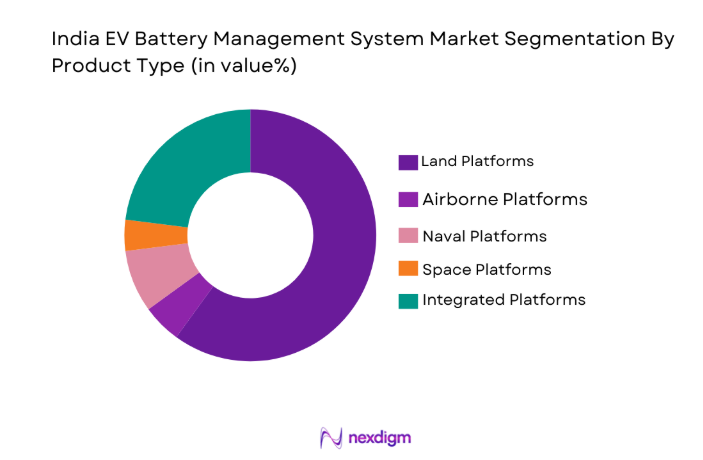
India EV Battery Management System Market is segmented by platform type into Land Platforms, Airborne Platforms, Naval Platforms, Space Platforms, and Integrated Platforms. Recently, Land Platforms have a dominant market share due to their wide-scale use in electric passenger vehicles, electric two-wheelers, and electric buses, all of which require reliable battery monitoring systems to ensure safety, efficiency, and optimal performance. The rapid growth of electric mobility across urban and rural areas has driven significant adoption of EVs across land-based platforms. The expansion of infrastructure, including charging stations and battery swapping solutions, supports the growth of EVs in both private and commercial sectors. This trend is further bolstered by government incentives for electric vehicle adoption, making land platforms the most significant and fast-growing segment in the market.
Competitive Landscape
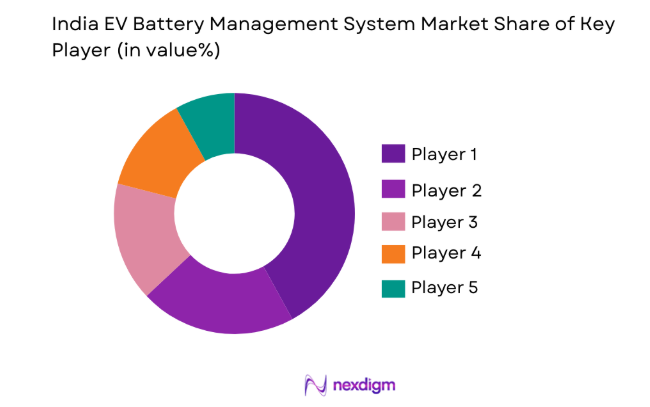
The India EV Battery Management System Market remains moderately consolidated, with several global semiconductor manufacturers, automotive electronics suppliers, and domestic EV technology firms competing across battery monitoring hardware and battery analytics software. International technology companies supply integrated battery management chips and electronic control units, while Indian startups focus on modular systems and AI-enabled battery diagnostics. Partnerships between automotive manufacturers, battery cell producers, and electronics firms further strengthen competition and innovation across the market.
| Company Name | Establishment Year | Headquarters | Technology Focus | Market Reach | Key Products | Revenue | Battery Monitoring Architecture |
| Texas Instruments | 1930 | United States | ~ | ~ | ~ | ~ | ~ |
| Analog Devices | 1965 | United States | ~ | ~ | ~ | ~ | ~ |
| NXP Semiconductors | 2006 | Netherlands | ~ | ~ | ~ | ~ | ~ |
| Renesas Electronics | 2010 | Japan | ~ | ~ | ~ | ~ | ~ |
| Eberspaecher Vecture | 2013 | Germany | ~ | ~ | ~ | ~ | ~ |
India EV Battery Management System Market Analysis
Growth Drivers
Rapid Expansion of Electric Vehicle Manufacturing Ecosystem in India
Rapid Expansion of Electric Vehicle Manufacturing Ecosystem in India drives strong demand for advanced battery management systems because electric vehicles depend on reliable battery monitoring technologies to maintain performance and safety across high-capacity lithium-ion battery packs. Automotive manufacturers across India are rapidly scaling electric vehicle production lines to meet rising domestic demand and national electrification targets supported by government mobility initiatives. Electric vehicle batteries require sophisticated electronic systems capable of monitoring voltage, temperature, and current across hundreds of battery cells simultaneously. Battery management systems therefore act as a central intelligence unit that ensures safe operation and optimal battery performance across vehicles. Automotive manufacturers integrate increasingly complex battery packs with higher energy density to extend vehicle driving range. As battery packs grow larger and more powerful, the need for advanced battery monitoring electronics becomes essential for maintaining safety and reliability. Semiconductor companies and automotive electronics suppliers therefore invest heavily in developing high precision battery monitoring chips and system architectures tailored for electric vehicles. Continuous growth of EV manufacturing clusters across India further accelerates deployment of battery management technologies integrated into modern electric mobility platforms.
Government Incentives and Policy Support for Electric Mobility Adoption
Government Incentives and Policy Support for Electric Mobility Adoption strongly accelerate the growth of EV battery management systems because public policies encourage large-scale adoption of electric vehicles and local battery manufacturing infrastructure. National electric mobility programs and financial incentives encourage consumers and businesses to shift from internal combustion vehicles toward electric alternatives. Government procurement of electric buses and fleet vehicles further increases electric vehicle production volumes across the country. As vehicle manufacturers expand production capacity, demand for battery pack integration technologies grows proportionally across the automotive ecosystem. Battery management systems play a critical role in ensuring that electric vehicles operate safely under diverse environmental and charging conditions. Government policies supporting domestic battery manufacturing also encourage investments in battery pack assembly facilities where battery management electronics are integrated into battery modules. Increasing collaboration between public institutions and automotive manufacturers strengthens innovation in battery safety technologies and energy management systems. These regulatory frameworks collectively create a supportive ecosystem that encourages continuous investment in EV battery management technologies across India’s rapidly evolving electric mobility landscape.
Market Challenges
High Cost and Technical Complexity of Advanced Battery Management Systems
High Cost and Technical Complexity of Advanced Battery Management Systems remains a major challenge because modern electric vehicle batteries require sophisticated electronics capable of monitoring hundreds of lithium-ion cells with high accuracy and reliability. Designing such systems requires advanced semiconductor components, specialized sensors, and complex software algorithms that increase development and production costs. Automotive manufacturers must integrate battery management electronics within compact battery packs while maintaining high safety standards. The complexity of integrating these systems into electric vehicles increases engineering requirements and testing procedures across the production lifecycle. Battery management systems must continuously monitor battery temperature, voltage balance, and current flow while preventing conditions that may lead to overheating or battery degradation. Manufacturers must therefore invest heavily in research and development to ensure reliable system performance across diverse operating environments. Limited domestic semiconductor manufacturing capacity further increases dependency on imported electronic components required for battery management architectures. These technical and supply chain challenges collectively increase system costs and may slow adoption among smaller electric vehicle manufacturers operating with constrained production budgets.
Limited Domestic Semiconductor Manufacturing and Supply Chain Dependencies
Limited Domestic Semiconductor Manufacturing and Supply Chain Dependencies represent a structural challenge for the India EV Battery Management System Market because battery monitoring systems rely heavily on advanced semiconductor components produced by global electronics manufacturers. Battery management systems integrate microcontrollers, voltage sensing chips, temperature sensors, and communication interfaces that require highly specialized semiconductor fabrication technologies. India’s current semiconductor manufacturing capacity remains limited compared with global electronics production hubs. As a result, domestic EV manufacturers often depend on imported semiconductor components to build battery management electronics integrated within EV battery packs. Global semiconductor shortages or geopolitical trade disruptions can therefore affect the availability and pricing of critical components required for battery management systems. Delays in component procurement may slow electric vehicle production schedules and disrupt supply chains supporting EV battery pack assembly. Automotive manufacturers must maintain strategic supplier relationships and diversified procurement networks to mitigate such risks. Government initiatives promoting semiconductor manufacturing in India aim to address this challenge but domestic capacity expansion will require sustained investment and technological collaboration across the electronics ecosystem.
Opportunities
Integration of Artificial Intelligence Based Battery Health Analytics Platforms
Integration of Artificial Intelligence Based Battery Health Analytics Platforms creates a major opportunity for EV battery management systems because advanced analytics technologies enable real-time monitoring and predictive maintenance of electric vehicle battery packs. Modern electric vehicles generate large volumes of battery performance data including cell temperature, charge cycles, voltage fluctuations, and energy usage patterns. Artificial intelligence platforms can analyze this data to identify early signs of battery degradation and potential safety risks. Automotive manufacturers increasingly integrate cloud connectivity and digital monitoring systems into battery management architectures to improve battery reliability and lifecycle management. Predictive analytics technologies allow vehicle operators and fleet managers to monitor battery health remotely and schedule maintenance before performance issues occur. This capability is particularly valuable for commercial electric vehicle fleets operating in logistics and public transportation sectors where vehicle uptime is critical. AI driven battery diagnostics can also optimize charging patterns and energy consumption across electric vehicles. Technology companies developing software based battery analytics platforms therefore gain opportunities to collaborate with automotive manufacturers and battery pack producers within the rapidly evolving EV ecosystem.
Expansion of Domestic Lithium Ion Battery Manufacturing and Gigafactory Infrastructure
Expansion of Domestic Lithium Ion Battery Manufacturing and Gigafactory Infrastructure presents significant opportunities for battery management system suppliers because every battery pack requires sophisticated electronic monitoring systems for safe and efficient operation. India is witnessing increasing investments in large-scale battery manufacturing facilities aimed at supporting domestic electric vehicle production and reducing reliance on imported battery cells. These gigafactory projects involve large battery pack assembly lines that integrate battery management electronics into each module and pack configuration. As domestic battery production expands, demand for battery monitoring electronics grows proportionally across manufacturing facilities. Battery management systems ensure optimal cell balancing, thermal protection, and safety monitoring throughout the battery lifecycle. Manufacturers also develop customized battery management architectures optimized for different electric vehicle platforms including two wheelers, passenger vehicles, buses, and commercial transport systems. Collaboration between battery manufacturers, automotive companies, and electronics firms further accelerates innovation in battery safety and energy optimization technologies. These developments create a strong long term opportunity for battery management system suppliers operating across India’s expanding electric mobility ecosystem.
Future Outlook
The India EV Battery Management System Market is expected to experience sustained expansion driven by rapid electrification of transportation and increasing investments in domestic battery manufacturing infrastructure. Advancements in battery monitoring technologies, wireless battery management architectures, and artificial intelligence based battery diagnostics are expected to enhance system efficiency and safety. Government policies supporting electric mobility, battery manufacturing, and semiconductor production will strengthen the ecosystem. Growing electric vehicle production across two wheelers, passenger vehicles, and electric buses will further accelerate demand for advanced battery management systems across India.
Major Players
- Texas Instruments
- Analog Devices
- NXP Semiconductors
- Renesas Electronics
- Infineon Technologies
- Eberspaecher Vecture
- Continental AG
- Bosch Mobility Solutions
- LG Energy Solution
- Panasonic Energy
- BYD Electronics
- Tata Elxsi
- Vector Informatik
- AVL List GmbH
- Eaton Corporation
Key Target Audience
- Electric vehicle manufacturers
- Battery pack manufacturers
- Automotive electronics suppliers
- Semiconductor companies
- Investments and venture capitalist firms
- Government and regulatory bodies
- Electric mobility infrastructure developers
Research Methodology
Step 1: Identification of Key Variables
Key market variables including electric vehicle production volumes, battery pack configurations, semiconductor supply chains, and battery management technology adoption were identified. These parameters form the core analytical foundation used to evaluate market structure and technology deployment trends.
Step 2: Market Analysis and Construction
Comprehensive data analysis was conducted by examining electric vehicle manufacturing data, battery manufacturing investments, and semiconductor component supply chains. The market structure was constructed by mapping technology adoption across vehicle platforms and battery pack architectures.
Step 3: Hypothesis Validation and Expert Consultation
Industry hypotheses were validated through consultation with automotive engineers, battery technology specialists, and semiconductor experts. Expert feedback ensured the reliability of technological assumptions and validated the accuracy of market interpretation.
Step 4: Research Synthesis and Final Output
All validated data and expert insights were synthesized to develop a structured market analysis. The final output integrates technology trends, supply chain dynamics, competitive positioning, and demand drivers shaping the India EV Battery Management System Market.

- Executive Summary
- Research Methodology (Definitions, Scope, Industry Assumptions, Market Sizing Approach, Primary & Secondary Research Framework, Data Collection & Verification Protocol, Analytic Models & Forecast Methodology, Limitations & Research Validity Checks)

- Market Definition and Scope
- Value Chain & Stakeholder Ecosystem
- Regulatory / Certification Landscape
- Sector Dynamics Affecting Demand

- Growth Drivers
Rapid Expansion of Electric Vehicle Manufacturing in India
Government Incentives and EV Adoption Policies
Advancement in Lithium Ion Battery Technologies - Market Challenges
High Cost of Advanced Battery Monitoring Electronics
Thermal Management and Battery Safety Concerns
Supply Chain Dependence for Semiconductor Components - Market Opportunities
Development of Indigenous EV Battery Electronics Ecosystems
Integration of AI Enabled Battery Health Monitoring Systems
Expansion of Electric Commercial Vehicle Fleets - Trends
Adoption of Wireless Battery Management Systems
Integration of Cloud Based Battery Analytics Platforms - Government Regulations
National Electric Mobility Mission Plan Compliance
Advanced Automotive Battery Safety Standards Implementation
Production Linked Incentive Scheme for EV Components - SWOT Analysis
- Porter’s Five Forces

- By Market Value, 2020-2025
- By Installed Units, 2020-2025
- By Average System Price, 2020-2025
- By System Complexity Tier, 2020-2025

- By System Type (In Value%)
Centralized Battery Management Systems
Distributed Battery Management Systems
Modular Battery Management Systems
Wireless Battery Management Systems
Integrated Smart Battery Management Systems - By Platform Type (In Value%)
Electric Two Wheelers
Electric Three Wheelers
Electric Passenger Vehicles
Electric Commercial Vehicles
Electric Buses - By Fitment Type (In Value%)
Original Equipment Manufacturer Fitment
Aftermarket Replacement Systems
Fleet Integrated Battery Monitoring Systems
Retrofit Battery Management Systems - By End User Segment (In Value%)
Automotive Manufacturers
Electric Mobility Fleet Operators
Battery Pack Manufacturers

- Market Share Analysis
- Cross Comparison Parameters (Battery Monitoring Accuracy, System Architecture Type, Thermal Management Capability, Communication Protocol Integration, Scalability for Large Battery Packs, AI Enabled Battery Diagnostics, Cost Efficiency)
- SWOT Analysis of Key Competitors
- Pricing & Procurement Analysis
- Key Players
Tata AutoComp Systems
Exicom Tele-Systems
Delta Electronics India
Bosch Limited
Continental Automotive India
LG Energy Solution
BYD Electronics
Eberspaecher Vecture
NXP Semiconductors
Texas Instruments
Renesas Electronics
Analog Devices
Panasonic Energy
Mahindra Electric Mobility
Ather Energy

- Automotive OEMs Increasing Integration of Smart Battery Electronics
- Fleet Operators Prioritizing Battery Health Monitoring Systems
- Battery Pack Manufacturers Expanding Localized Electronics Integration
- Electric Mobility Startups Driving Innovation in Battery Monitoring

- Forecast Market Value, 2026-2035
- Forecast Installed Units, 2026-2035
- Price Forecast by System Tier, 2026-2035
- Future Demand by Platform, 2026-2035


 Request a Sample
 Ask for Customization
 Get a Quote
 Enquire Now