
 Download PDF
 Download PDF
Market Overview
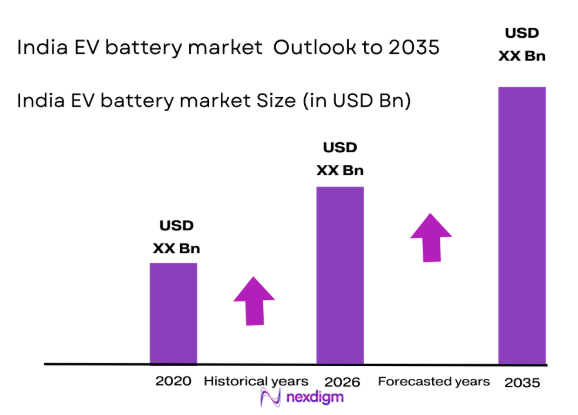
India EV battery market reached approximately USD ~ billion based on a recent historical assessment, driven by rapid electric two- and three-wheeler adoption and large-scale public transport electrification. National incentives for advanced chemistry cell manufacturing and localization of battery packs have expanded domestic supply chains. Strong demand from mobility fleets and urban logistics has accelerated high-volume lithium iron phosphate deployment, while passenger vehicle electrification and energy storage integration continue to expand battery value creation across the automotive ecosystem.
Within India EV battery market, manufacturing and deployment are concentrated in industrialized western and southern states where automotive clusters, electronics supply chains, and port logistics enable efficient production and distribution. Tamil Nadu, Karnataka, and Maharashtra host major gigafactory investments and vehicle assembly ecosystems, while Delhi NCR and Uttar Pradesh drive deployment through dense urban mobility demand. These regions combine policy incentives, skilled labor, and supplier networks that collectively sustain large-scale battery manufacturing and consumption capacity.
Market Segmentation
By Product Type
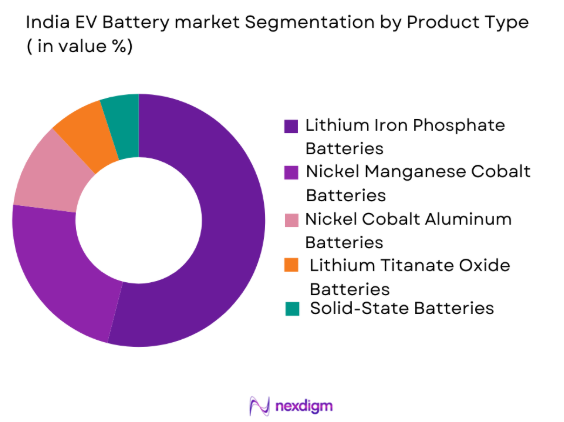
India EV Battery market is segmented by product type into lithium iron phosphate batteries, nickel manganese cobalt batteries, nickel cobalt aluminum batteries, lithium titanate oxide batteries, and solid-state batteries. Recently, lithium iron phosphate batteries has a dominant market share due to factors such as strong demand from electric two-wheelers, buses, and fleet vehicles requiring long cycle life and thermal stability. Domestic manufacturers have prioritized lithium iron phosphate chemistries for cost-sensitive mobility segments supported by localization incentives and standardized pack architectures. Public transport electrification programs prefer lithium iron phosphate for safety and durability, while battery swapping ecosystems widely deploy this chemistry for commercial vehicles. Availability of supply chains and compatibility with Indian operating conditions have reinforced sustained adoption across mobility categories.
By Vehicle Segment
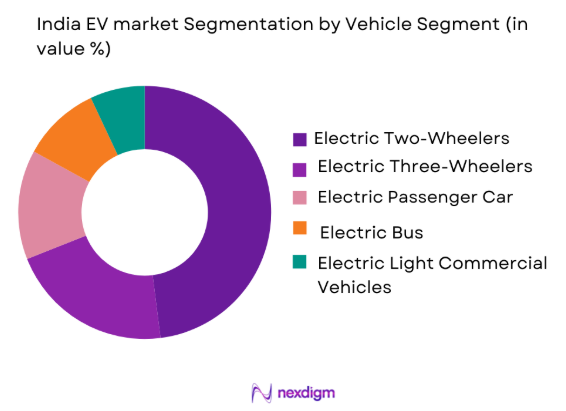
India EV Battery market is segmented by vehicle segment into electric two-wheelers, electric three-wheelers, electric passenger cars, electric buses, and electric light commercial vehicles. Recently, electric two-wheelers has a dominant market share due to factors such as large-scale urban adoption, affordability, and high daily utilization in personal and delivery mobility. Government incentives and state policies have accelerated two-wheeler electrification supported by dense charging and swapping infrastructure. Domestic OEM production scale and standardized battery formats enable cost optimization and high-volume procurement. Fleet electrification in delivery and shared mobility further expands battery consumption intensity, while passenger vehicles and buses, though higher capacity, remain lower in unit volumes relative to two-wheelers.
Competitive Landscape
India EV battery market shows moderate consolidation with domestic battery manufacturers, automotive component firms, and emerging cell technology companies competing across pack assembly, chemistry development, and recycling integration. Large industrial groups leverage automotive supply chains and government incentive programs to scale manufacturing, while specialized startups focus on advanced chemistries and fast-charging technologies. Strategic partnerships with vehicle OEMs and fleet operators shape procurement volumes, and vertical integration across cell, pack, and recycling capabilities increasingly differentiates leading players.
| Company Name | Establishment Year | Headquarters | Technology Focus | Market Reach | Key Products | Revenue | Cell Chemistry Focus |
| Exide Industries | 1947 | India | ~ | ~ | ~ | ~ | ~ |
| Amara Raja Energy & Mobility | 1985 | India | ~ | ~ | ~ | ~ | ~ |
| Tata AutoComp Systems | 1995 | India | ~ | ~ | ~ | ~ | ~ |
| Reliance New Energy | 2021 | India | ~ | ~ | ~ | ~ | ~ |
| Ola Electric Mobility | 2017 | India | ~ | ~ | ~ | ~ | ~ |
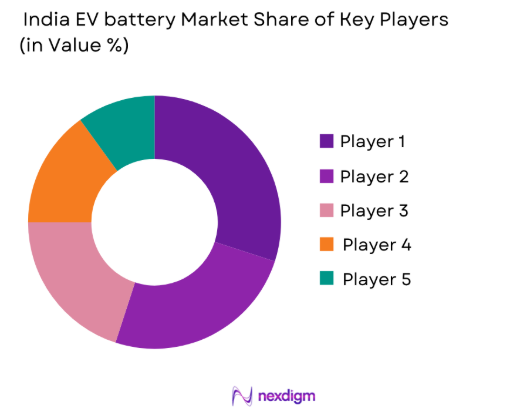
India EV battery Market Analysis
Growth Drivers
National Electric Mobility Expansion and Incentive-Driven Localization
India EV battery market growth is strongly supported by nationwide electric mobility expansion reinforced by fiscal incentives and localization mandates across the battery value chain. Government programs promoting domestic advanced chemistry cell production and EV adoption have stimulated large-scale investments in gigafactories, pack assembly facilities, and supply chain integration across minerals, components, and recycling. Public transport electrification initiatives in metropolitan regions have generated sustained demand for high-capacity battery systems, while electrification of two- and three-wheelers has created high-volume battery consumption across urban and semi-urban mobility segments. Fleet operators and logistics providers are transitioning to electric vehicles to reduce operating costs and comply with emission mandates, increasing replacement and lifecycle battery demand. Domestic OEM manufacturing scale combined with standardized battery architectures has reduced costs and enabled widespread deployment across vehicle categories. Energy storage integration and vehicle-to-grid applications further expand battery utilization beyond mobility, increasing market value. Localization policies encouraging domestic sourcing and manufacturing have strengthened supply resilience and reduced import dependency. Collectively, these structural factors continue to expand battery production, deployment, and technological capability across India mobility ecosystems.
Urban Mobility Electrification and High-Utilization Fleet Demand
India EV battery market expansion is significantly driven by electrification of urban mobility systems and high-utilization commercial fleets that require frequent battery deployment and replacement. Rapid growth in e-commerce and last-mile delivery services has accelerated adoption of electric two- and three-wheelers operating in dense urban corridors, increasing battery consumption intensity due to daily charging cycles and high mileage usage. Ride-hailing, shared mobility, and logistics operators prioritize electric fleets to reduce fuel costs and comply with urban emission restrictions, sustaining large-scale battery procurement. Battery swapping infrastructure expansion enables continuous vehicle operation without long charging downtime, increasing battery inventory per vehicle in fleet operations. Municipal transport electrification programs deploying electric buses further add large-capacity battery demand across cities. Urban air quality regulations and low-emission zone policies encourage fleet electrification, reinforcing sustained battery deployment. Standardization of fleet battery packs enables rapid scaling and maintenance efficiency. High utilization rates shorten battery replacement cycles, expanding aftermarket demand. These mobility patterns collectively create recurring battery consumption and stable long-term market growth.
Market Challenges
Dependence on Imported Critical Minerals and Supply Volatility
India EV battery market faces structural challenges due to dependence on imported lithium, cobalt, nickel, and other critical minerals required for advanced battery chemistries. Limited domestic mineral reserves and refining capacity expose manufacturers to global commodity price volatility and geopolitical supply disruptions. Fluctuations in international lithium and cobalt prices directly influence battery production costs and pricing stability, affecting OEM procurement planning and profitability. Import reliance increases currency exposure and logistics risks across the battery value chain. Domestic cell manufacturing initiatives still depend on imported precursor materials and cathode components, constraining full localization. Competition for minerals from global EV markets intensifies procurement risks for Indian producers. Supply chain concentration in limited geographies heightens vulnerability to trade restrictions or policy changes. Recycling infrastructure capable of recovering critical minerals remains in early stages, limiting secondary material availability. These factors collectively challenge cost competitiveness and supply security in India battery manufacturing ecosystem.
Battery Cost Pressures and Lifecycle Performance Constraints
India EV battery market development is constrained by high battery costs relative to vehicle affordability requirements and demanding operating conditions that affect lifecycle performance. Cost sensitivity in two- and three-wheeler segments requires low-cost chemistries and pack architectures while maintaining safety and durability, limiting adoption of higher-energy materials. Thermal stress from high ambient temperatures and variable charging infrastructure can degrade battery performance and shorten lifespan in Indian environments. Frequent deep-cycle usage in commercial fleets accelerates degradation, increasing replacement frequency and total cost of ownership concerns. Limited charging standardization and infrastructure variability complicate battery management optimization. Safety concerns and quality variation across suppliers can affect market confidence. Financing barriers for battery leasing or ownership further influence adoption economics. Recycling and second-life value realization remain underdeveloped, affecting lifecycle economics. Balancing cost, durability, and performance across diverse mobility segments remains a persistent industry challenge.
Opportunities
Domestic Gigafactory Expansion and Advanced Chemistry Localization
India EV battery market presents significant opportunity through expansion of domestic gigafactory capacity and localization of advanced chemistry technologies across the battery value chain. National incentive programs for advanced chemistry cell manufacturing encourage investment in large-scale cell production facilities capable of meeting growing EV and energy storage demand. Localization of cathode, anode, and electrolyte production can reduce import dependence and improve cost competitiveness. Technology transfer partnerships with global battery innovators accelerate development of high-energy and fast-charging chemistries suited to Indian mobility needs. Integrated manufacturing ecosystems combining cell production, pack assembly, and recycling create circular supply chains and resource efficiency. Domestic manufacturing scale can support exports to emerging EV markets. Regional industrial clusters provide infrastructure and logistics advantages for gigafactory deployment. Skilled workforce development programs support advanced manufacturing capability. These factors collectively position India as a future hub for battery manufacturing and innovation.
Battery Swapping Ecosystems and Mobility-as-a-Service Integration
India EV battery market opportunity is expanding through battery swapping infrastructure and mobility-as-a-service models that decouple battery ownership from vehicle purchase. Swapping networks enable rapid energy replenishment for commercial fleets, reducing downtime and increasing vehicle utilization in logistics and passenger mobility operations. Standardized swappable battery formats across vehicle platforms enable interoperability and high asset utilization. Subscription-based battery services reduce upfront vehicle costs and improve affordability for operators and consumers. Fleet operators can optimize battery utilization and lifecycle management through centralized monitoring and maintenance. Swapping stations integrated with renewable energy and energy storage can provide grid services and peak-load balancing. Urban mobility platforms integrating battery services with vehicle leasing and fleet management create new revenue streams. Data analytics on battery usage enables predictive maintenance and asset optimization. Expansion of swapping ecosystems across cities can significantly increase battery deployment scale and recurring demand.
Future Outlook
India EV battery market is expected to expand strongly as electric mobility penetration deepens across two-wheelers, passenger vehicles, and commercial fleets. Gigafactory investments and localization policies will strengthen domestic cell manufacturing and reduce import dependence. Advancements in lithium iron phosphate and emerging chemistries will improve safety and lifecycle performance. Battery swapping and energy storage integration will create new demand channels. Regulatory incentives and urban electrification mandates will sustain long-term battery deployment growth across mobility ecosystems.
Major Players
- Exide Industries
- Amara Raja Energy & Mobility
- Tata AutoComp Systems
- Reliance New Energy
- Ola Electric Mobility
- Mahindra Electric Automobile
- Sun Mobility
- Okaya Power
- Lohum Cleantech
- Log9 Materials
- HBL Power Systems
- Ather Energy
- Hero Electric
- Panasonic Energy India
- BYD India
Key Target Audience
- Automotive OEMs
- EV Fleet Operators
- Battery Manufacturers
- Energy Storage Developers
- Logistics and Mobility Platforms
- Investments and venture capitalist firms
- Government and regulatory bodies
- Charging and Swapping Infrastructure Providers
Research Methodology
Step 1: Identification of Key Variables
Market variables including battery chemistry adoption, vehicle electrification rates, manufacturing capacity, and policy incentives were identified. Supply chain components across minerals, cell production, pack assembly, and recycling were mapped to define market boundaries and analytical parameters.
Step 2: Market Analysis and Construction
Demand across vehicle segments and applications was analyzed alongside manufacturing investments and deployment patterns. Value chain mapping and regional production clusters were assessed to construct market structure and segmentation.
Step 3: Hypothesis Validation and Expert Consultation
Industry experts across battery manufacturing, automotive OEMs, and mobility platforms validated demand drivers, technology trends, and cost dynamics. Policy frameworks and incentive programs were cross-checked against deployment evidence.
Step 4: Research Synthesis and Final Output
Validated insights were synthesized into market sizing, segmentation, and competitive analysis. Growth drivers, challenges, and opportunities were structured to reflect technology, policy, and demand interactions across the India EV battery ecosystem.

- Executive Summary
- Research Methodology (Definitions, Scope, Industry Assumptions, Market Sizing Approach, Primary & Secondary Research Framework, Data Collection & Verification Protocol, Analytic Models & Forecast Methodology, Limitations & Research Validity Checks)

- Market Definition and Scope
- Value Chain & Stakeholder Ecosystem
- Regulatory / Certification Landscape
- Sector Dynamics Affecting Demand
- Strategic Initiatives & Infrastructure Growth

- Growth Drivers
Expansion of Domestic Cell Manufacturing Capacity
Rising Electrification of Public and Commercial Transport
Government Incentives for Localized Battery Value Chain - Market Challenges
Dependence on Imported Critical Minerals
Battery Cost Pressures and Price Volatility
Recycling and End of Life Infrastructure Gaps - Market Opportunities
Scaling Battery Swapping Infrastructure Ecosystems
Localization of Advanced Chemistry Technologies
Integration of Energy Storage and Vehicle Batteries - Trends
Shift Toward Lithium Iron Phosphate Chemistries
Emergence of Battery as a Service Models
Investment in Gigafactory and Recycling Facilities
Government Regulations
SWOT Analysis of Key Competitors
Porter’s Five Forces

- By Market Value, 2020-2025
- By Installed Units, 2020-2025
- By Average System Price, 2020-2025
- By System Complexity Tier, 2020-2025

- By System Type (In Value%)
Lithium Iron Phosphate Battery Systems
Nickel Manganese Cobalt Battery Systems
Nickel Cobalt Aluminium Battery Systems
Solid State Battery Systems
Lithium Titanate Oxide Battery Systems - By Platform Type (In Value%)
Electric Two Wheelers
Electric Passenger Cars
Electric Buses
Electric Three Wheelers
Electric Light Commercial Vehicles - By Fitment Type (In Value%)
OEM Integrated Battery Packs
Swappable Battery Modules
Aftermarket Replacement Packs
Leased Battery Packs
Second Life Repurposed Packs - By End User Segment (In Value%)
Electric Vehicle OEMs
Fleet Operators and Mobility Providers
Public Transport Authorities
Logistics and Delivery Companies
Private EV Owners - By Procurement Channel (In Value%)
Direct OEM Procurement
Government Tenders and Subsidy Programs
Battery Leasing Service Providers
Authorized Component Distributors
Strategic Technology Partnerships

- Market Share Analysis
- Cross Comparison Parameters (Battery Chemistry, Energy Density, Cycle Life, Thermal Management, Cost per kWh, Charging Time, Safety Performance, Operating Temperature Range, Pack Integration Architecture, Recycling Efficiency)
- SWOT Analysis of Key Competitors
- Pricing & Procurement Analysis
- Key Players
Exide Industries
Amara Raja Energy & Mobility
Tata AutoComp Systems
Reliance New Energy
Ola Electric Mobility
Mahindra Electric Automobile
Sun Mobility
Okaya Power
Lohum Cleantech
Log9 Materials
HBL Power Systems
Ather Energy
Hero Electric
Panasonic Energy India
BYD India

- Fleet electrification accelerating high capacity battery demand
- Public transport electrification prioritizing durable chemistries
- Logistics sector adopting swappable battery architectures
- Private ownership expanding small format battery volumes

- Forecast Market Value, 2026-2035
- Forecast Installed Units, 2026-2035
- Price Forecast by System Tier, 2026-2035
- Future Demand by Platform, 2026-2035


 Request a Sample
 Ask for Customization
 Get a Quote
 Enquire Now