
 Download PDF
Market Overview
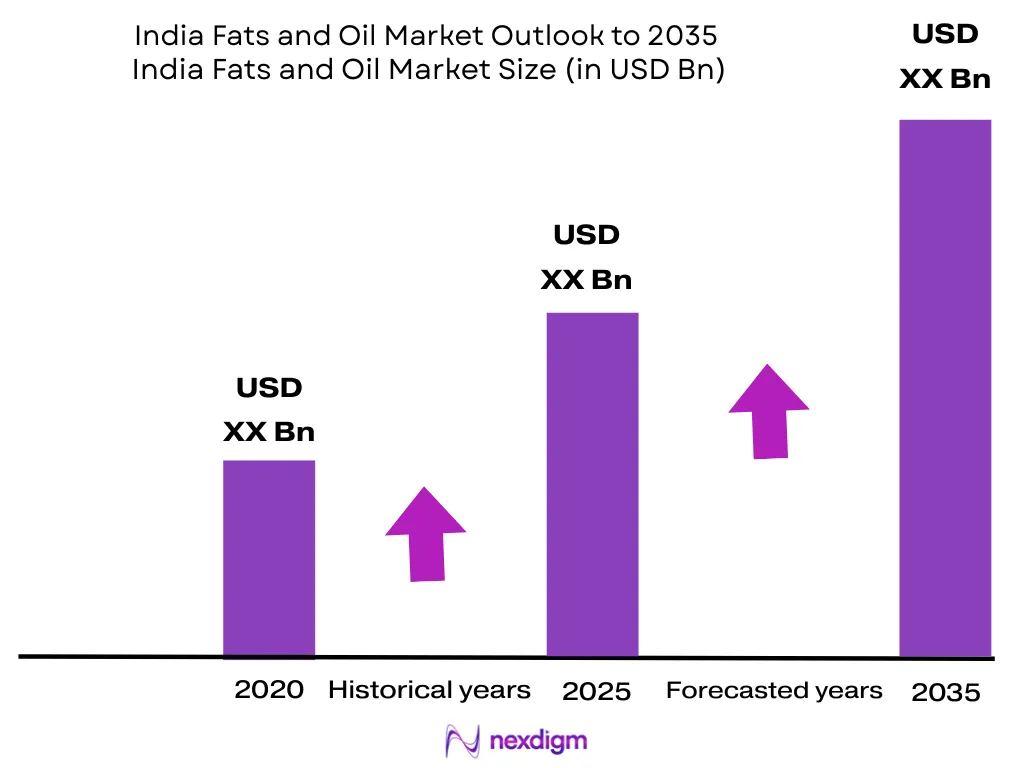
India Fats and Oil Market is valued at USD ~ billion, based on a five-year historical analysis, and is forecasted to grow at a CAGR of ~% during the forecast period. Demand is driven by palm oil, soybean oil, mustard oil, sunflower oil, ghee, vanaspati, bakery fats, foodservice frying oils, and packaged branded oils. India’s edible oil import bill reached USD 15 billion, while World Bank recorded GDP at USD 3.91 trillion and GDP per capita at USD 2,694.7. Gujarat, Maharashtra, Madhya Pradesh, Rajasthan, Uttar Pradesh, Punjab, Haryana, Tamil Nadu, Andhra Pradesh, Telangana, and Kerala dominate India Fats and Oil Market due to port-based refining, soybean and mustardseed crushing, groundnut processing, coconut oil consumption, foodservice density, and regional cooking habits. Oilseed output was estimated at 426.09 LMT after 396.69 LMT, while soybean output reached 151.80 LMT and groundnut output reached 118.96 LMT, supporting domestic crushing clusters.
Market Segmentation
By Product Type
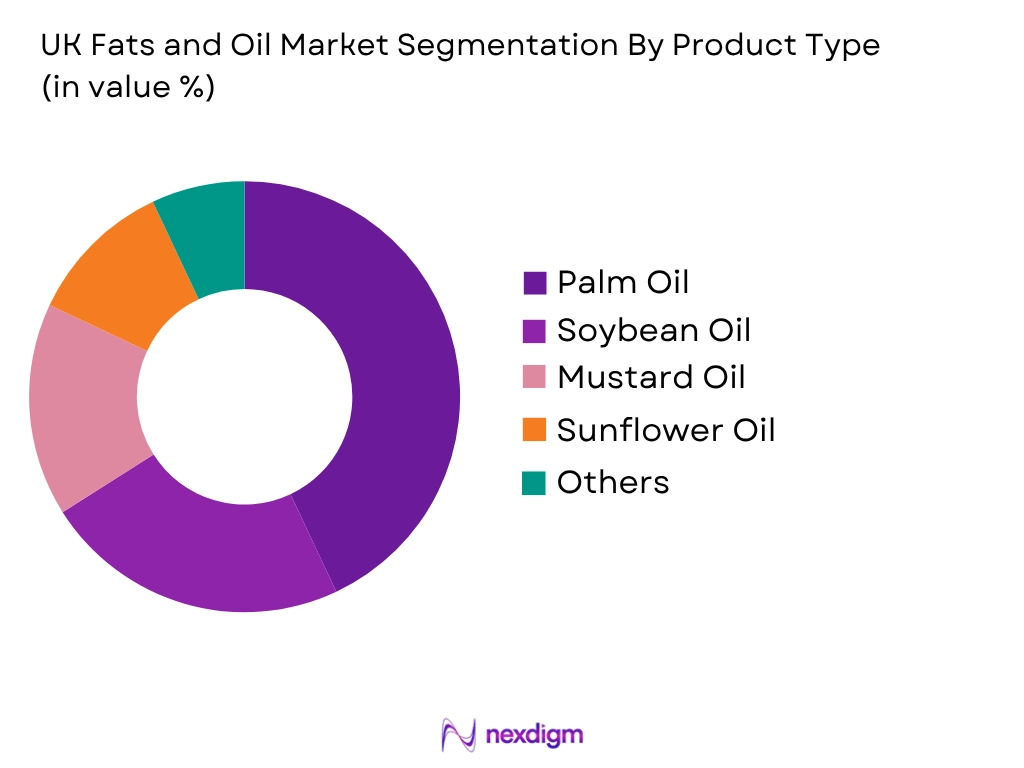
India Fats and Oil Market is segmented by product type into palm oil, soybean oil, mustard oil, sunflower oil, groundnut oil, rice bran oil, cottonseed oil, coconut oil, sesame oil, safflower oil, corn oil, olive oil, ghee, butter, vanaspati, bakery shortening, margarine, and specialty fats. Recently, palm oil has had the dominant market share under the product type segmentation due to its high use in foodservice frying, packaged snacks, bakery fats, vanaspati, institutional cooking, and price-sensitive household consumption. Palm oil also benefits from large import availability through Indonesia and Malaysia, established port-based refineries, and strong use in bulk channels. Mustard oil remains regionally dominant in North and East India, while soybean oil and sunflower oil are widely used in refined packaged oil categories. However, palm oil remains the broadest industrial and foodservice oil because it serves multiple high-volume applications.
By Distribution Channel
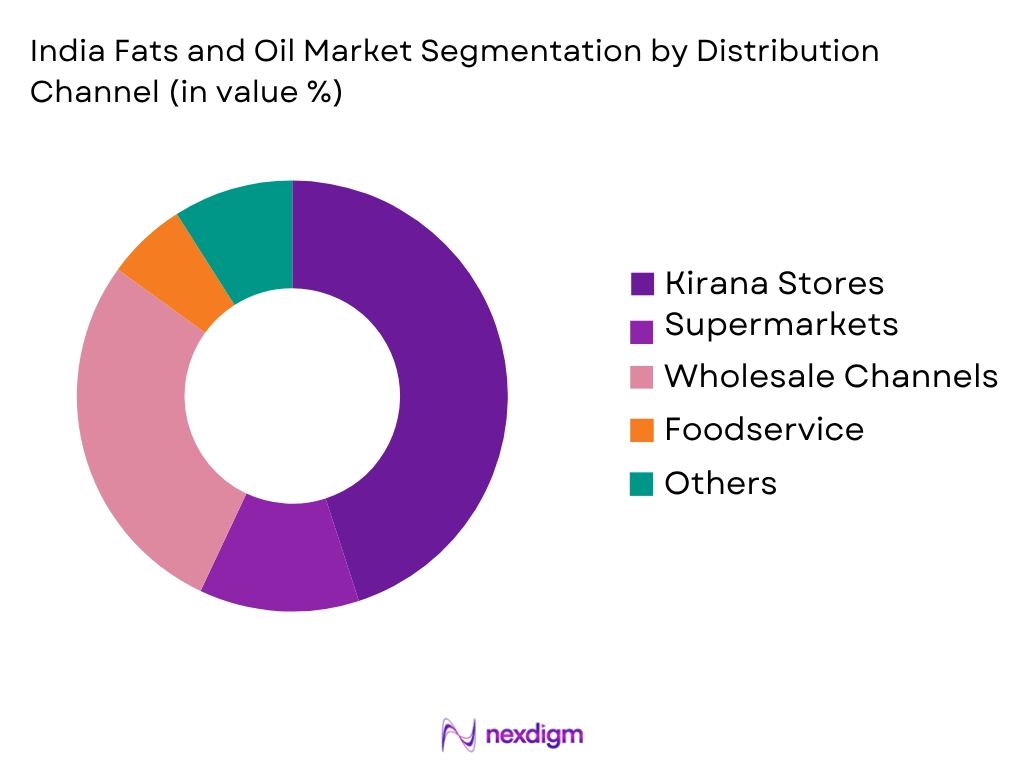
India Fats and Oil Market is segmented by distribution channel into kirana stores, modern trade supermarkets and hypermarkets, cash-and-carry wholesalers, e-commerce and quick commerce, direct-to-consumer platforms, foodservice distributors, HoReCa suppliers, industrial ingredient suppliers, commodity traders, and cooperative distribution channels. Recently, kirana stores have had the dominant market share under the distribution channel segmentation because edible oil remains a high-frequency pantry staple bought through neighborhood retail. Kirana stores support branded pouches, small packs, regional oil preferences, and retailer-led brand recommendation. They also remain important for semi-urban and rural penetration, where loose oil, pouch oil, mustard oil, soybean oil, and palmolein move through wholesale and distributor networks. Modern trade supports large packs and private labels, while quick commerce is gaining relevance in urban top-up purchases. However, kirana stores remain structurally dominant because of reach, credit familiarity, proximity, and regional assortment control.
Competitive Landscape
India Fats and Oil Market is led by integrated refiners, FMCG-backed edible oil brands, port-based importers, regional oil specialists, and food ingredient suppliers. AWL Agri Business, Patanjali Foods, Emami Agrotech, Cargill India, and Gemini Edibles and Fats India are major players due to refining scale, branded packaged oil portfolios, palm-soy-sunflower sourcing, kirana reach, modern trade presence, and institutional bulk supply. Competition is shaped by import sourcing, refinery utilization, regional oil strength, price pass-through ability, brand trust, and health-positioned portfolio expansion.
| Company | Establishment Year | Headquarters | Core Portfolio | Processing Strength | Key End Users | Channel Strength | Health / Fortification Focus | Market-Specific Advantage |
| AWL Agri Business | 1999 | Ahmedabad, India | ~ | ~ | ~ | ~ | ~ | ~ |
| Patanjali Foods | 1986 original Ruchi Soya roots | Indore / Haridwar, India | ~ | ~ | ~ | ~ | ~ | ~ |
| Emami Agrotech | 2002 | Kolkata, India | ~ | ~ | ~ | ~ | ~ | ~ |
| Cargill India | 1987 in India | Gurugram, India | ~ | ~ | ~ | ~ | ~ | ~ |
| Gemini Edibles and Fats India | 2008 | Hyderabad, India | ~ | ~ | ~ | ~ | ~ | ~ |
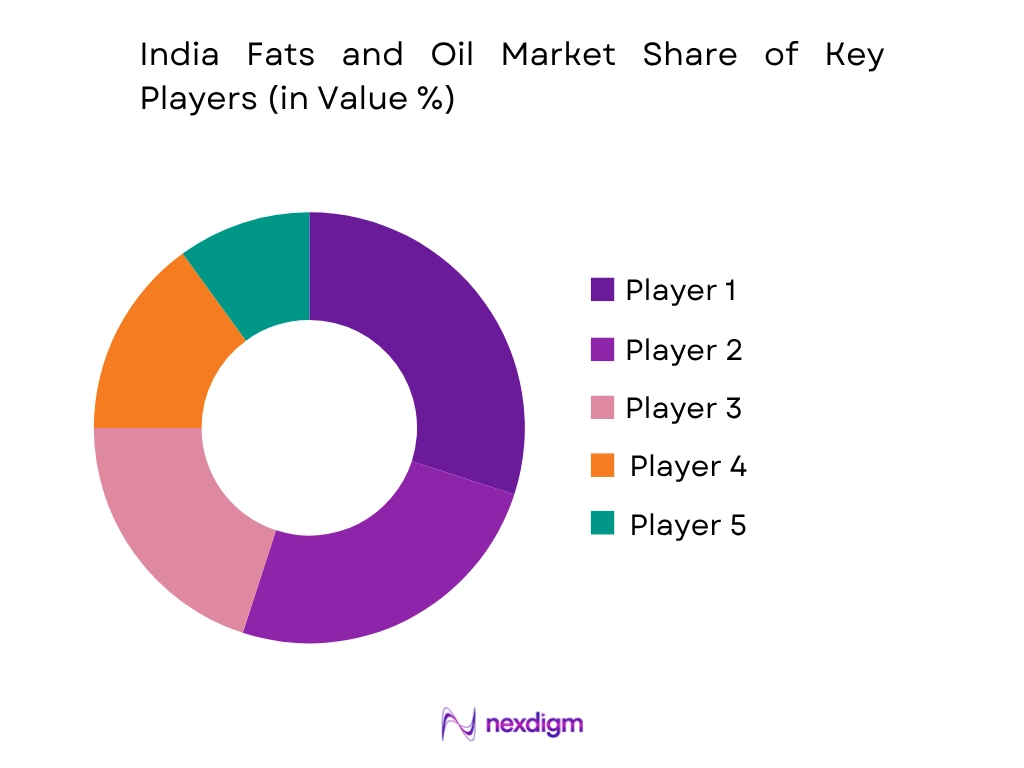
India Fats and Oil Market Analysis
Growth Drivers
Large Household Consumption Base and Urban Food Demand
India’s large population and expanding urban consumption base are core growth drivers for the India Fats and Oil Market because edible oils, ghee, vanaspati, bakery fats, frying oils, and specialty fats are used daily across households, restaurants, packaged foods, snacks, sweets, and institutional kitchens. World Bank records India’s population at 1,450,935,791 people, GDP at USD 3.91 trillion, GDP per capita at USD 2,694.7, and annual GDP growth at 6.5, creating a large consumer base for packaged and loose edible oil demand. Urbanization strengthens branded oil consumption because urban households buy refined sunflower oil, soybean oil, mustard oil, rice bran oil, groundnut oil, olive oil, and cold-pressed oils through supermarkets, kirana stores, quick commerce, and modern trade. World Bank records India’s urban population share at 36.87, translating into more than 500 million urban consumers. This is market specific because fats and oils are not discretionary products; they are recurring cooking inputs used in frying, tempering, baking, confectionery, mithai, ready meals, namkeen, and HoReCa food preparation.
Domestic Oilseed Production and Government Oilseed Push
Domestic oilseed production is a major growth driver for the India Fats and Oil Market because the country is attempting to strengthen local supply of mustard, soybean, groundnut, sesame, safflower, sunflower, niger, and rice bran oil while reducing dependence on imported palm, soybean, and sunflower oils. Government-linked oilseed data shows total oilseed output at 426.09 LMT after 396.69 LMT, with soybean output at 151.80 LMT and groundnut output at 118.96 LMT, supporting crushing, solvent extraction, de-oiled cake production, refining, and packaged oil manufacturing. The Government of India’s National Mission on Edible Oils–Oilseeds has an outlay of ₹10,103.38 crore and aims to raise oilseed production from 39 million tonnes to 69.7 million tonnes. India’s macroeconomic base reinforces this push: IMF lists India’s 2026 projected real GDP change at 6.5 and country population at 1,476.626 million. The market impact is direct because higher domestic oilseed availability improves refinery feedstock security, regional oil brands, farmer-linked procurement, and edible oil supply resilience.
Market Challenges
High Import Dependence and Global Supply Exposure
High import dependence is a major challenge for the India Fats and Oil Market because domestic oilseed output does not fully cover edible oil demand, leaving refiners and consumers exposed to palm oil, soybean oil, and sunflower oil supply from overseas markets. India’s edible oil import bill reached USD 15 billion, while edible oil imports rose to 15.5 million metric tons from 4.37 million metric tons over the long-term reference period cited in government-linked reporting. India sources palm oil mainly from Indonesia and Malaysia, soybean oil from Argentina and Brazil, and sunflower oil from Russia and Ukraine, making domestic availability sensitive to global crop cycles, freight, currency movement, export policies, and geopolitical disruption. World Bank data shows India’s GDP at USD 3.91 trillion and population at 1,450,935,791, indicating a very large demand base that must be supplied consistently. This challenge is market specific because palm oil supports foodservice frying, namkeen, bakery fats, vanaspati, institutional cooking, and low-ticket packaged oils, while soft oils support household refined oil categories.
Duty Volatility, Loose Oil Quality Risk and Refining Complexity
Policy volatility, quality control, and refining complexity restrain the India Fats and Oil Market because edible oil players must manage import duties, port operations, commodity price swings, blending decisions, packaging, fortified oil norms, and food safety compliance. The Department of Food and Public Distribution notes that import of edible oil is under Open General License and that refined soybean, refined palm, and refined sunflower oils carry a basic customs duty of 32.5, with an effective duty of 35.75, showing how duty structures directly affect landed cost and procurement planning. India’s market is also exposed to loose oil quality risk, adulteration concerns, and consumer trust issues, making packaged branded oil conversion important but operationally difficult in price-sensitive areas. World Bank records household and national demand scale through GDP of USD 3.91 trillion and GDP per capita of USD 2,694.7, while India’s population is 1,450,935,791. These numbers indicate why even small disruptions in import policy, refining throughput, port storage, or retail supply can affect millions of household and foodservice buyers.
Market Opportunities
Packaged, Fortified and Health-Positioned Edible Oils
Packaged, fortified, and health-positioned edible oils create a significant opportunity for the India Fats and Oil Market because consumers are shifting from loose oil toward branded oils that communicate purity, fortification, regional taste, and functional health positioning. India’s large consumption base supports this transition, with World Bank recording 1,450,935,791 people, GDP of USD 3.91 trillion, and GDP per capita of USD 2,694.7. The opportunity is also supported by government focus on edible oil self-reliance: the National Mission on Edible Oils–Oilseeds has an outlay of ₹10,103.38 crore and aims to increase edible oil production from 12.7 million metric tons to 25.45 million metric tons. This provides a supply-side base for branded mustard oil, soybean oil, groundnut oil, rice bran oil, sunflower oil, and blended oils. The market opportunity is specific because products can be positioned around kachi ghani processing, cold-pressed extraction, rice bran heart-health claims, fortified oil, low-absorption frying, regional cooking suitability, and trans-fat-free industrial fat use for bakeries, snacks, mithai, and packaged foods.
Domestic Oilseed Expansion and Import Substitution
Domestic oilseed expansion creates a long-term opportunity for the India Fats and Oil Market because local soybean, mustard, groundnut, sesame, safflower, sunflower, niger, rice bran, and oil palm supply can reduce vulnerability to imported edible oils. The National Mission on Edible Oils–Oilseeds aims to raise oilseed production from 39 million tonnes to 69.7 million tonnes, while the National Mission on Edible Oils–Oil Palm aims to bring 6.5 lakh hectares under oil palm cultivation and increase crude palm oil production to 28 lakh tonnes. Government-linked reporting also states that current edible oil production is 12.7 million metric tons and the mission aims to raise it to 25.45 million metric tons. India’s macroeconomic scale strengthens this opportunity, with IMF listing 2026 projected real GDP change at 6.5 and population at 1,476.626 million. This opportunity is market specific because better domestic oilseed availability can support crushers, solvent extractors, refiners, regional edible oil brands, farmer producer organizations, de-oiled cake exporters, and packaged oil players while improving supply security for households, foodservice, snacks, bakery, and industrial fat users.
Future Outlook
India Fats and Oil Market is expected to expand steadily during the forecast period, supported by household cooking demand, packaged oil penetration, foodservice recovery, snack manufacturing, quick commerce grocery growth, and government efforts to improve domestic oilseed output. Palm oil will remain essential to foodservice and industrial demand, while mustard, soybean, sunflower, groundnut, coconut, and rice bran oils will remain tied to regional cooking patterns. Domestic oilseed policy will become more important for long-term supply security. The National Mission on Edible Oils–Oilseeds aims to raise oilseed production from 39 million tonnes to 69.7 million tonnes, creating opportunities for crushers, seed companies, farmer producer organizations, refiners, and branded edible oil players.
Packaged branded oils will continue gaining ground over loose oil because consumers increasingly value quality assurance, purity, fortification, health claims, and brand trust. Kirana stores will remain important for reach, but modern trade and quick commerce will support premiumization in rice bran oil, cold-pressed oils, olive oil, filtered groundnut oil, and kachi ghani mustard oil. Import exposure will remain a structural market challenge. India imports a large share of its edible oil needs, mainly palm oil from Indonesia and Malaysia, soybean oil from Argentina and Brazil, and sunflower oil from Russia and Ukraine. Government duty changes, global crop conditions, currency movement, freight, and international prices will continue shaping domestic procurement and retail pricing.
Major Players
- AWL Agri Business
- Patanjali Foods
- Emami Agrotech
- Cargill India
- Bunge India
- Marico
- Gemini Edibles and Fats India
- Gokul Refoils and Solvent
- Adani Wilmar Fortune
- Mother Dairy Dhara
- Kaleesuwari Refinery
- Ruchi Soya
- COFCO International India
- Agro Tech Foods
- Liberty Oil Mills
Key Target Audience
- Edible Oil Manufacturers
- Oilseed Crushers and Solvent Extractors
- Port-Based Refiners and Importers
- Food Processing Companies
- HoReCa and QSR Operators
- Modern Trade, Kirana and Quick Commerce Buyers
- Investments and Venture Capitalist Firms
- Government and Regulatory Bodies (Food Safety and Standards Authority of India, Ministry of Consumer Affairs Food and Public Distribution, Ministry of Agriculture and Farmers Welfare, Directorate General of Foreign Trade, Bureau of Indian Standards)
Research Methodology
Step 1: Identification of Key Variables
The initial phase involves constructing an ecosystem map encompassing all major stakeholders within the India Fats and Oil Market. This includes oilseed farmers, mandis, crushers, solvent extractors, importers, port-based refiners, packaged oil brands, foodservice distributors, kirana wholesalers, modern retailers, industrial buyers, and regulators. The primary objective is to define critical variables such as product type, source, application, channel, import dependency, regional oil preference, and packaged versus loose oil mix.
Step 2: Market Analysis and Construction
In this phase, historical data is compiled and analyzed for the India Fats and Oil Market. The assessment covers domestic oilseed output, edible oil imports, palm-soy-sunflower trade flows, refining infrastructure, retail packaged oil movement, foodservice bulk demand, industrial fat usage, and regional cooking oil demand. Top-down analysis uses government and trade datasets, while bottom-up validation uses SKU mapping, distributor checks, and channel-level assessment.
Step 3: Hypothesis Validation and Expert Consultation
Market hypotheses are developed and validated through computer-assisted interviews with edible oil refiners, oilseed crushers, importers, packaged oil companies, kirana distributors, modern trade buyers, HoReCa suppliers, and food ingredient users. These consultations provide operational and commercial insights into supply availability, regional substitution, consumer preferences, duty impact, channel margins, and product positioning. The process helps refine market segmentation and competitive benchmarking.
Step 4: Research Synthesis and Final Output
The final phase integrates desk research, trade data, retail checks, distributor interviews, industrial buyer inputs, and regulatory assessment into a consolidated market model. Manufacturer inputs are compared with observed shelf presence, import flows, domestic oilseed output, and regional consumption patterns. The final output provides a validated view of market size, segmentation, competitive landscape, growth outlook, and strategic implications for the India Fats and Oil Market.

- Executive Summary
- Research Methodology (Market Definitions and Assumptions, Abbreviations, Edible Oils and Fats Classification, Packaged vs Loose Oil Inclusion Criteria, Vegetable Oil and Animal Fat Inclusion Criteria, Palm Oil and Soft Oil Import Mapping, Domestic Oilseed Crushing Assessment, Retail vs Foodservice vs Industrial Demand Mapping, Market Sizing Approach, Top-Down Analysis, Bottom-Up Analysis, Demand-Side Assessment, Supply-Side Assessment, Ministry of Food and Public Distribution Edible Oil Scenario Validation, SEA Import Flow Assessment, Agmarknet and Retail Price Checks, Port-Based Refinery Mapping, Primary Industry Interviews, Data Triangulation, Forecasting Framework, Limitations and Future Conclusions)

- Definition and Scope
- Market Evolution and Industry Genesis
- Timeline of Major Industry Developments
- Business Cycle and Seasonal Demand Pattern
- Oilseed Crushing and Solvent Extraction Value Chain Analysis

- Growth Drivers (Large Household Cooking Oil Consumption Base, Rising Packaged Edible Oil Penetration, Palm Oil Import Availability, Domestic Oilseed Mission Support, Foodservice and QSR Expansion, Snack and Namkeen Manufacturing Demand, Health-Oriented Rice Bran and Mustard Oil Adoption, Quick Commerce Grocery Growth, Fortified Oil Awareness)
- Market Challenges (High Import Dependence, Palm Oil Price Volatility, Soft Oil Supply Exposure, Domestic Oilseed Yield Constraints, Loose Oil Adulteration Risk, Edible Oil Duty Fluctuations, Port and Refinery Logistics Bottlenecks, Trans Fat Compliance Pressure, Farmer-Consumer Price Balancing)
- Market Opportunities (National Mission on Edible Oils, Domestic Oilseed Productivity Improvement, Packaged Branded Oil Conversion, Cold-Pressed and Premium Oil Growth, Rice Bran Oil Expansion, Fortified Edible Oil Adoption, Traceable and Sustainable Palm Oil Sourcing, HoReCa Frying Oil Solutions, Small Pack and Sachet Penetration, Quick Commerce Edible Oil Bundles)
- Market Trends (Shift from Loose to Packaged Oils, Mustard Oil Premiumization, Kachi Ghani Branding, Palm-Soy-Sunflower Price Switching, Rise of Blended Oils, Growth of Rice Bran Oil, Premium Cold-Pressed Oils, Fortified Oil Labeling, Private Label Expansion, Health Claims and Low-Absorption Positioning)
- SWOT Analysis
- Porter’s Five Forces Analysis
- PESTLE Analysis

- By Market Value (2020-2025)
- By Volume Consumption (2020-2025)
- By Average Selling Price (2020-2025)

- By Product Type (In Value %)
Palm Oil
Soybean Oil
Mustard Oil
Sunflower Oil
Groundnut Oil - By Source Type (In Value %)
Vegetable Oils
Dairy-Based Fats
Animal-Based Fats
Blended Oils and Fats
Imported Soft Oils
Domestic Oilseed-Based Oils - By Distribution Channel (In Value %)
Kirana Stores
Modern Trade Supermarkets and Hypermarkets
Cash-and-Carry and Wholesale Channels
E-Commerce and Quick Commerce
Direct-to-Consumer Brand Platforms
Foodservice Distributors - By Region (In Value %)
North India
West India
South India
East India
Central India
Northeast India

- Market Share of Major Players (By Value, Volume, Product Type, Application, Channel, Source Type)
- Competitive Positioning Matrix (Port-Based Refining Capacity, Domestic Oilseed Sourcing, Branded Retail Strength, Kirana Distribution Reach, Modern Trade Presence, Industrial Ingredient Capability, Premium Oil Portfolio, Health and Fortification Positioning)
- Cross Comparison Parameters (Port-Based Refining Capacity, Domestic Oilseed Crushing Network, Palm-Soy-Sunflower Portfolio Breadth, Mustard and Regional Oil Strength, Packaged Edible Oil Distribution Reach, Kirana and Rural Penetration, Fortified and Health Oil Portfolio, HoReCa and Industrial Bulk Oil Capability)
- SWOT Analysis of Major Players
- Detailed Profiles of Major Companies
AWL Agri Business
Patanjali Foods
Emami Agrotech
Cargill India
Bunge India
Marico
Gemini Edibles and Fats India
Gokul Refoils and Solvent
Adani Wilmar Fortune
Mother Dairy Dhara
Kaleesuwari Refinery
Ruchi Soya
COFCO International India
Agro Tech Foods
Liberty Oil Mills

- Household Consumption Behavior Assessment
- Regional Taste and Oil Preference Assessment
- Foodservice Demand Assessment
- Industrial Food Manufacturer Demand Assessment
- Health and Wellness Influence on Purchase Decisions
- Purchasing Power and Trade-Down Analysis

- By Market Value (2026-2035)
- By Volume Consumption (2026-2035)
- By Average Selling Price (2026-2035)


 Request a Sample
 Ask for Customization
 Get a Quote
 Enquire Now