
 Download PDF
Market Overview
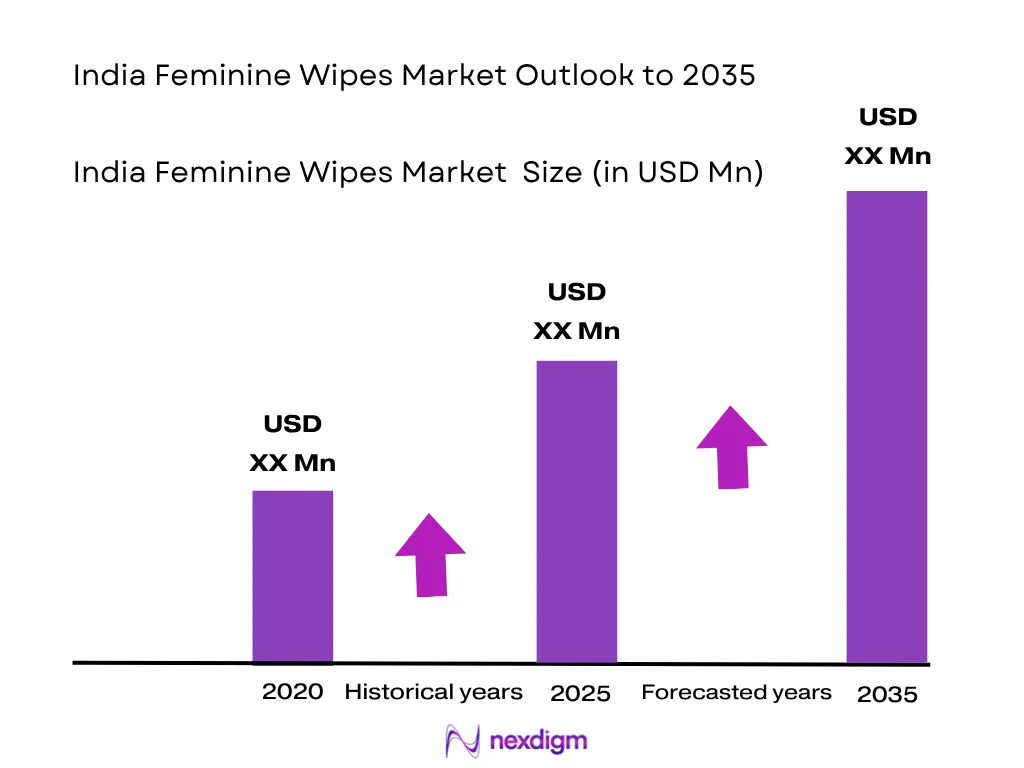
The India feminine wipes market is valued at USD ~ million in 2025, based on revenue analysis from Nexdigm, representing the country’s consumption of intimate care wipes designed for daily hygiene and convenience. This market has been driven by rising female awareness about personal hygiene, increased disposable income, urbanization, and greater acceptance of intimate hygiene products beyond traditional menstrual items. Expanding modern retail and online channels have also facilitated higher availability and adoption among urban and semi‑urban consumers.
Major urban centers such as Mumbai, Delhi NCR, Bengaluru, and Hyderabad lead demand for feminine wipes due to higher income levels, improved retail infrastructure, greater health awareness, and stronger e‑commerce penetration. These cities host concentrated consumer bases with exposure to personal care innovations and international brands. On the global map, Asia‑Pacific countries such as China and Japan have been strong markets due to broad demographic segments, rising hygiene consciousness, and institutional retail networks that systematically distribute intimate care categories.
Market Segmentation
By Product Type
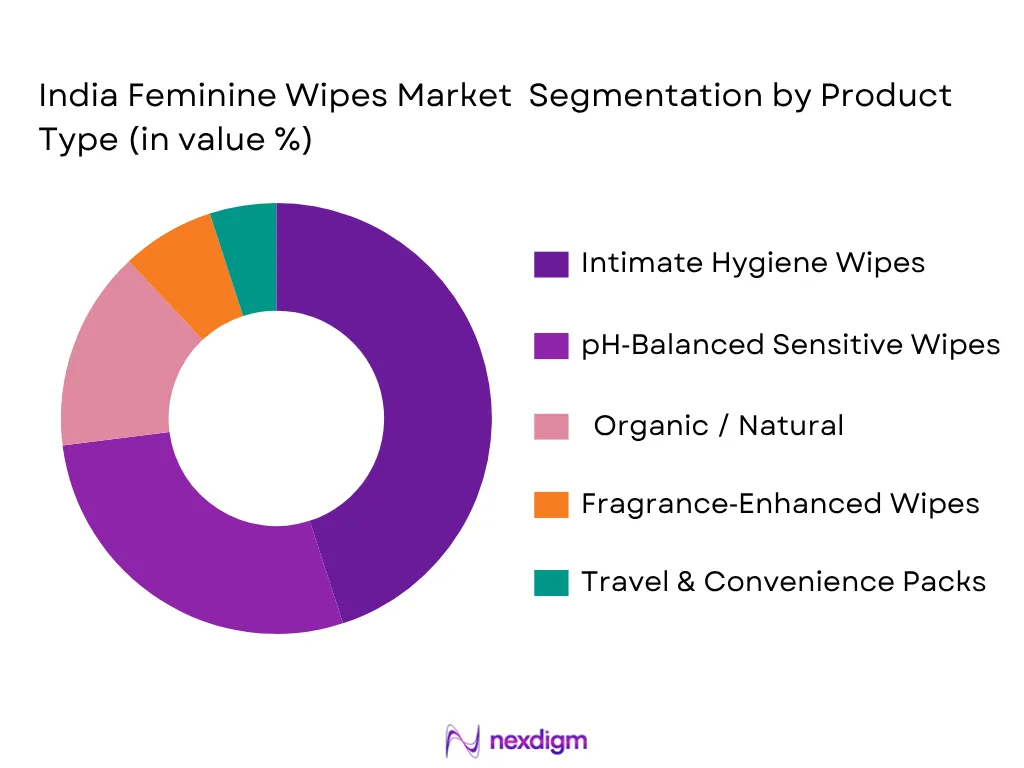
Intimate Hygiene Wipes dominate product type share in India because they address daily cleanliness needs, offering ease of use and convenience for on‑the‑go consumers. Their formulation often includes mild cleansers designed to maintain comfort in intimate areas, resonating with women seeking practical personal hygiene solutions. Brands emphasize pH‑balanced and dermatologically tested formulas to build trust, while widespread online promotions and retail availability further support adoption. Consumer preference for convenience plus frequent use occasions contributes to this segment’s leadership over more niche variants like organic or fragrance wipes.
By Distribution Channel
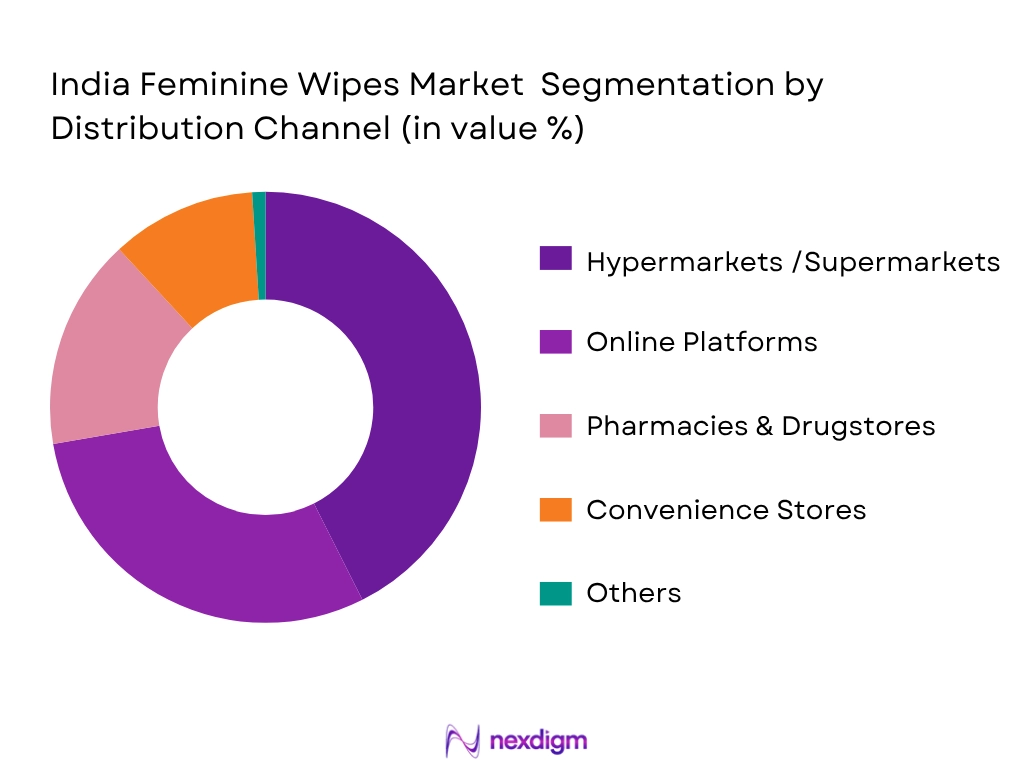
Supermarkets & Hypermarkets hold the largest channel share because they combine wide geographic coverage with high visibility and multi‑brand offerings that allow consumers to compare products easily. These large format stores also conduct promotions and discounting that enhance trial among personal care shoppers. Additionally, online channels are rapidly growing due to mobile penetration, digital marketing, and doorstep delivery convenience, making intimate care wipes readily available across urban and peri‑urban regions. Pharmacies remain relevant given their health‑oriented environment, but their share is comparatively lower due to competitive pricing and space limitations for FMCG categories.
Competitive Landscape
The India feminine wipes market is moderately consolidated with domestic and multinational personal care companies offering a range of intimate hygiene products. Leading players focus on product innovation, distribution expansion, and marketing to address hygiene awareness and consumer preferences.
| Company | Est. Year | Headquarters | Product Portfolio Breadth | Distribution Reach | Ingredient Innovation | Brand Equity | Packaging Variants | Retail Penetration |
| Procter & Gamble | 1837 | Cincinnati, USA | ~ | ~ | ~ | ~ | ~ | ~ |
| Unicharm Corp | 1961 | Tokyo, Japan | ~ | ~ | ~ | ~ | ~ | ~ |
| Johnson & Johnson | 1886 | New Brunswick, USA | ~ | ~ | ~ | ~ | ~ | ~ |
| Edgewell Personal Care | 1992 | Shelton, USA | ~ | ~ | ~ | ~ | ~ | ~ |
| Albaad | 1960 | Beerot Yitzhak, ISR | ~ | ~ | ~ | ~ | ~ | ~ |
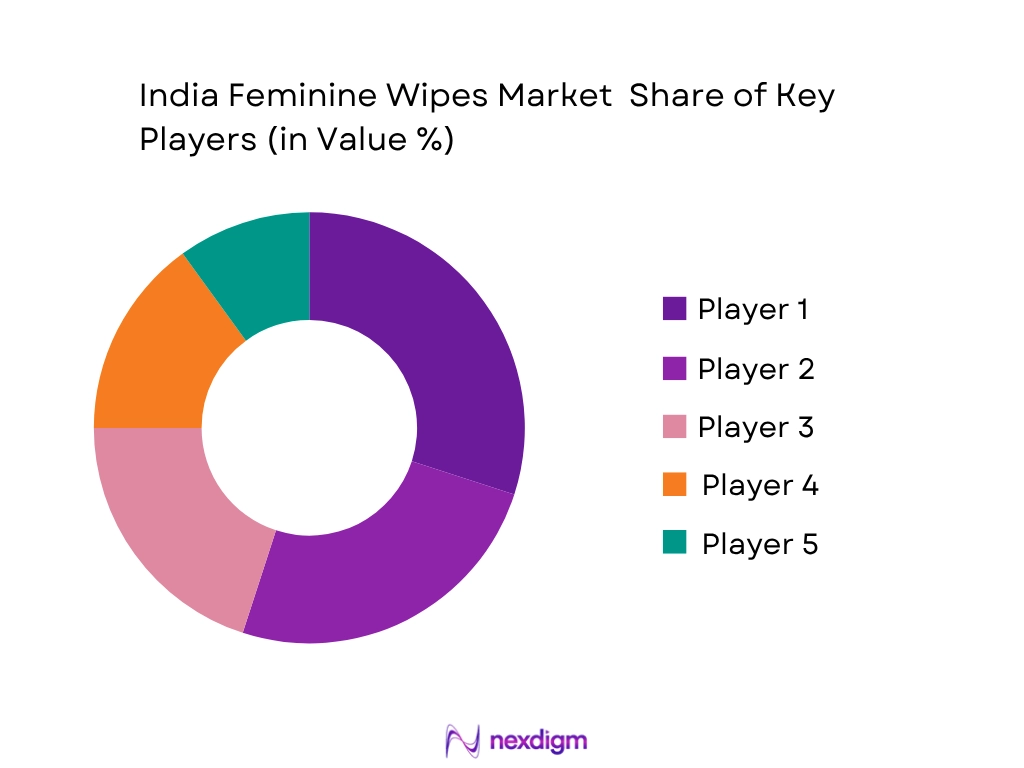
India Feminine Wipes Market Analysis
Growth Drivers
Hygiene Awareness & Lifestyle Changes
Increasing personal hygiene awareness among women in India is aligned with broader improvements in health infrastructure and sanitation access. According to SDG monitoring data, 86 percent of India’s population has access to a hand‑washing facility with soap and water at home (2024), indicating a foundational improvement in hygiene practices at the household level, which supports adoption of specialized hygiene products like feminine wipes. Additionally, official government statistics show female economic participation and visibility are rising; women now hold 39.2 percent of all bank accounts and contribute to 39.7 percent of total deposits, reflecting greater financial inclusion and empowerment that drives discretionary spend on personal care items. Urban and semi‑urban women increasingly participate in education and employment. Labour force data shows overall female Worker Population Ratios trending upward, enabling greater awareness of intimate hygiene needs. These macro factors underpin market demand as women integrate convenient hygienic products into their routines beyond basic soap and water use.
Rising Disposable Income
Household consumption data from the Household Consumption Expenditure Survey 2023‑24 indicates that rural Monthly Per Capita Consumption Expenditure (MPCE) reached INR 4,122, while urban MPCE was INR 6,996 before imputations, reflecting rising disposable capacity for non‑food items such as personal care products. Consumption of non‑food categories increased as a share of overall spending, with non‑food items constituting 53 percent of rural MPCE and 60 percent of urban MPCE, illustrating broader shifts toward discretionary spending in both segments. Such shifts in expenditure patterns signal that consumers are allocating more of their monthly budgets to products beyond essentials, including personal hygiene categories. Concurrently, poverty rates in India declined significantly — national poverty fell below 5 percent in 2024, indicating widespread improvements in living standards which support rising demand for convenience and hygiene‑oriented goods. This enhanced purchasing power across consumer groups, particularly in urban and rising semi‑urban segments, is a fundamental driver for feminine wipes, which are considered a discretionary hygiene item.
Market Challenges
Cultural Sensitivities & Social Taboos
Deep‑rooted social norms and cultural sensitivities around intimate hygiene continue to present a barrier to adoption of feminine wipes in India. Official gender‑disaggregated data reveals that while formal empowerment metrics, such as economic participation, are improving, a significant proportion of women still engage in traditional sanitation practices that avoid discussion of intimate care. Despite major improvements in sanitation infrastructure and hygiene access, products perceived as related to intimate areas can be stigmatized or misunderstood. Additionally, many women outside major metropolitan areas continue to rely on traditional methods (soap and water) due to longstanding beliefs about natural cleaning processes. Limited open dialogue around intimate hygiene persists, especially in rural and semi‑urban communities where conservative norms remain strong. This socio‑cultural environment dampens marketplace receptivity for newer hygiene product categories, even as awareness campaigns intensify. Without broader societal adaptation and health education that normalizes women’s intimate care needs, these cultural barriers restrain market penetration in large segments of the population.
Price Sensitivity Among Tier‑2/3 Cities
While urban and high‑income consumers are increasingly able to spend on personal care products, affordability remains a key constraint in India’s vast Tier‑2 and Tier‑3 cities, where household consumption capacity is markedly lower. Data from the Household Consumption Expenditure Survey shows that although spending on non‑food items is rising, rural MPCE at INR 4,122 and urban MPCE at INR 6,996 highlight a considerable gap in household capacity to purchase discretionary products. In smaller towns, average incomes are closer to rural levels, leading to heightened price sensitivity, especially for non‑essentials such as feminine wipes, which often carry higher per‑unit prices than basic hygiene alternatives. The narrowing urban‑rural consumption gap from 84 percent to 70 percent in 2023‑24 suggests some convergence but also underscores persistent economic limitations in lower‑tier markets. Consequently, price sensitivity in these regions limits demand for modern intimate hygiene products relative to urban metro clusters, challenging market expansion without targeted pricing strategies or affordable product tiers.
Opportunities
Product Innovation with Biodegradable Materials
India’s shift toward environmentally sustainable consumption offers a significant opportunity for feminine hygiene products engineered with biodegradable, eco‑friendly materials. Current household consumption patterns show an increasing share of non‑food expenditure, with rural areas spending 53 percent of MPCE on non‑food items and urban areas allocating 60 percent, indicating broader openness to premium and differentiated personal care goods. Biodegradable materials such as plant‑based nonwoven fabrics could appeal to environmentally conscious consumers and align with broader public health goals, particularly given the nation’s emphasis on sanitation and sustainable development goals. Moreover, India’s population of 1.45 billion people represents a massive potential market for sustainable goods, and rising environmental consciousness among younger women, often influenced by global sustainability trends, can catalyze demand for greener feminine wipes alternatives to conventional single‑use products. These innovations not only address ecological concerns but also provide differentiated value propositions that can justify price premiums and drive category growth beyond traditional hygiene use cases.
Untapped Rural & Semi‑Urban Markets
Despite lower adoption rates relative to urban centers, rural and semi‑urban India represents a vast and largely untapped opportunity for feminine hygiene products. Approximately 65 percent of India’s population lives in rural areas, where increased access to sanitation and hygiene infrastructure for example, 86 percent hand‑washing facility access, is laying foundational conditions for willingness to adopt advanced personal care products. Household per capita spending data shows rural MPCE at INR 4,122, with a narrowing gap to urban MPCE, indicating rising rural consumption capacity. As digital commerce continues to penetrate Tier‑2 and Tier‑3 cities, even remote consumers gain access to categories previously limited to metros. Moreover, government initiatives aimed at enhancing women’s welfare, sanitation education, and financial inclusion contribute to incremental demand growth. By developing tailored distribution strategies, affordable product lines, and awareness campaigns contextualized for local consumer sensibilities, manufacturers can unlock sizable demand in these regions, driving next‑phase expansion of feminine wipes beyond metro adoption pockets.
Future Outlook
Over the next decade, the India feminine wipes market is expected to expand steadily driven by ongoing urbanization, rising disposable incomes, increased awareness of feminine hygiene, and enhanced retail and e‑commerce infrastructure. Continued emphasis on health education, digital marketing influences, and growth of premium product categories (natural/organic, skin‑friendly, dermatologically tested) will attract a broader consumer base. Manufacturers are likely to innovate formulation and sustainable packaging to address environmental concerns, while partnerships with pharmacies and online subscription models will further expand reach and consumption frequency.
Major Players
- Procter & Gamble
- Unicharm Corporation
- Johnson & Johnson
- Edgewell Personal Care
- Albaad
- BodyWise
- Corman SpA
- KCWW
- Guy & O’Neill, Inc.
- Drylock Technologies
- First Quality Enterprises
- The Honey Pot Company
- Marico (KeepSafe range)
- Local domestic brands (India)
- Private label retail brands
Key Target Audience
- FMCG & Personal Care Product Manufacturers
- Retail Chain & Modern Trade Buyers
- Investments and Venture Capitalist Firms
- Importers & Exporters in Hygiene Products
- Private Equity Firms in Consumer Goods
- Government and Regulatory Bodies (FSSAI, Ministry of Health & Family Welfare)
- E‑Commerce Retail Platforms
- Distributors & Wholesalers of Hygiene Products
Research Methodology
Step 1: Identification of Key Variables
The phase begins with constructing the market ecosystem for India feminine wipes, involving a review of hygiene trends, product categories, distribution channels, and key demand drivers using secondary databases and industry sources. The objective is to establish relevant variables that influence market behaviour in terms of consumption and revenue generation.
Step 2: Market Analysis and Construction
Historical data on India market revenue, channel mix, and segment performance was compiled to analyse penetration levels and generate baseline sizing. This phase includes converting shipment data into consumption estimates and reconciling multiple sources for a consistent market size view.
Step 3: Hypothesis Validation and Expert Consultation
Hypotheses on market growth and segment dominance are validated through discussions with industry practitioners, retailers, and brand managers. These insights provide ground‑level context to supplement quantitative data, particularly for India‑specific consumer preferences and distribution efficacy.
Step 4: Research Synthesis and Final Output
The final phase integrates primary insights with secondary data to validate trends and refine forecasts. Engagement with brands and channel partners informs competitive benchmarking and enriches revenue estimates for product types and distribution channels.

- Executive Summary
- Research Methodology (Market Definitions & Product Scope (Feminine Wipes, Intimate Cleansing Wipes, pH‑balanced Wipes), Geographic Coverage & Urban/Rural Stratification, Primary Research Framework & Sampling Protocols, Secondary Data Sourcing and Validation, Revenue vs. Volume Data Reconciliation, Limitations & Reliability Indices)

- Market Definition and Scope
- Market Genesis & Historical Development
- Feminine Wipes Lifecycle & Usage Evolution
- End‑to‑End Value Chain Mapping
- Industry Structure & Supply Chain
- Regulatory Framework
- Hygiene & Consumer Health Considerations

- Growth Drivers (Hygiene Awareness & Lifestyle Changes, Rising Disposable Income & Urbanization, E-Commerce Penetration & Mobile Shopping, Brand Marketing & Digital Influencer Promotions)
- Market Challenges (Cultural Sensitivities & Social Taboos, Price Sensitivity Among Tier-2/3 Cities, Environmental Concerns & Disposal Issues, Competition from Traditional Cleansing Methods)
- Opportunities (Product Innovation with Organic & Biodegradable Materials, Untapped Rural & Semi-Urban Markets, Digital Subscription & DTC Models, Health & Gynecological Partnerships)
- Trends (Premiumization & Functional Wipes, Eco-Friendly Packaging & Sustainability Focus, Travel-Sized & Convenience Packs, Increasing Online Purchases)
- Regulatory Environment (FSSAI Guidelines, INCI Ingredient Compliance, Labeling Standards, Import Regulations for Raw Materials)
- Value Chain and Supply Chain Analysis (Raw Material Sourcing – Nonwoven Fabrics & Cleansing Agents, Domestic vs Imported Ingredients, Manufacturing Nodes, Logistics Hubs, Wholesale & Retail Distribution, Quality Assurance & Testing)
- Pricing Dynamics and Margin Stack (ASP by Segment – Value, Mid, Premium; Channel Price Differentiation; Promotional Discounts; Gross & Contribution Margins; Online vs Offline Economics; Cost Pass-Through Mechanisms)
- Private Label vs Branded Landscape (Price Positioning, Brand Loyalty & Trust, Innovation Frequency, Product Differentiation, Shelf Productivity, Online Visibility)

- By Market Revenue (2020-2025)
- By Market Volume (2020-2025)
- By Average Selling Price Trends (2020-2025)
- By Market Penetration Metrics (2020-2025)
- By Unit Economics and Consumption Frequency (2020-2025)

- By Product Type (In Value%)
Alcohol‑Free Wipes
pH‑Balanced Sensitive/Women‑Specific Wipes
Natural/Organic Wipes
Fragrance/Perfumed Wipes
Travel/Convenience Packs - By Consumer Application (In Value%)
Daily Personal Hygiene
Menstrual Care Adjunct
Post‑Workout/On‑the‑Go
Medical & Gynecological Use
Travel & Outdoor Usage - By Distribution Channel (In Value%)
Supermarkets & Hypermarkets
Pharmacies & Drugstores
E‑Commerce / Digital Retail Platforms
Modern Trade Retail Chains
Direct‑to‑Consumer (Brand Websites + Subscriptions) - By Pricing Tier (In Value%)
Value/Low‑Price Tier
Mid‑Tier Domestic Brands
Premium/Imported Brands
Private Label Retail Brands - By Region (In Value%)
North India South India
West & Central India
East & Northeast India

- Market Share of Major Players (Value share, volume share, pack share, retail shelf share, pharmacy channel share, grocery channel share, online marketplace share)
- Cross‑Comparison of Key Competitors (Brand Portfolio Depth, Product SKUs & Price Bands, Channel Strength (Distribution Reach Quality Score), Retail Shelf Penetration (Brick‑and‑Mortar vs Online), Ingredient Differentiation (Formulation/Claims), Marketing Spend/Brand Equity Score, Manufacturing Capacity & Scalability, Consumer Sentiment & Reviews)
- SWOT Analysis of Major Players (Brand equity, retailer coverage, formulation credibility, price competitiveness, sustainability risk, digital visibility, portfolio depth, private-label exposure)
- SKU Benchmarking of Major Players (Pack size, ingredient architecture, substrate claim, fragrance profile, product format, claims hierarchy, disposal instruction, unit economics)
- Pricing Analysis Basis SKUs for Major Players (Entry price, average selling price, price per wipe, promotional depth, multipack price, online marketplace variance, retailer loyalty price, premium uplift)
- Retail Shelf and Digital Shelf Analysis (Search rank, product title optimisation, claim visibility, review count, rating quality, image pack hierarchy, subscription availability, out-of-stock frequency)
- Detailed Profiles of Major Companies
Procter & Gamble
Unicharm Corporation
Johnson & Johnson
Kimberly‑Clark
Essity Aktiebolag
Edgewell Personal Care Co
Ontex
Hembad International
VWash
Himalaya Drug Co
Saathi Pads
Natracare LLC
Drylock Technologies
First Quality Enterprises
Daio Paper Corporation

- Buyer Cohort Profiling (age, gender, income level, lifestyle orientation, hygiene-consciousness, urban vs semi-urban residence)
- Purchase Drivers and Barriers (brand reputation, price sensitivity, product efficacy, skin-friendly formulation, availability, cultural perception)
- Shopper Journey and Decision Funnel (awareness channels, social media & influencer impact, trial triggers, reviews, purchase friction points, repurchase motivators)
- Channel Behavior Analysis (discovery channels, purchase channels, replenishment frequency, basket mission, cross-category bundling)
- E-Commerce, DTC, and Social Commerce Analysis (traffic source, customer acquisition cost, conversion rate, subscription mix, repeat purchase rate, AR/VR engagement)
- Basket Composition and Repurchase Economics (cross-sell & upsell rates, attach rate per category, replenishment cycles, bundle adoption, seasonal SKU preference)
- Retailer and Influencer/Stylist Influence (shelf curation, influencer endorsements, personal shopper input, product sampling, event-driven triggers)

- By Market Revenue (2026-2035)
- By Market Volume (2026-2035)
- By Average Selling Price Trends (2026-2035)
- By Market Penetration (2026-2035)
- By Unit Economics and Consumption Frequency (2026-2035)


 Request a Sample
 Ask for Customization
 Get a Quote
 Enquire Now