
 Download PDF
Market Overview
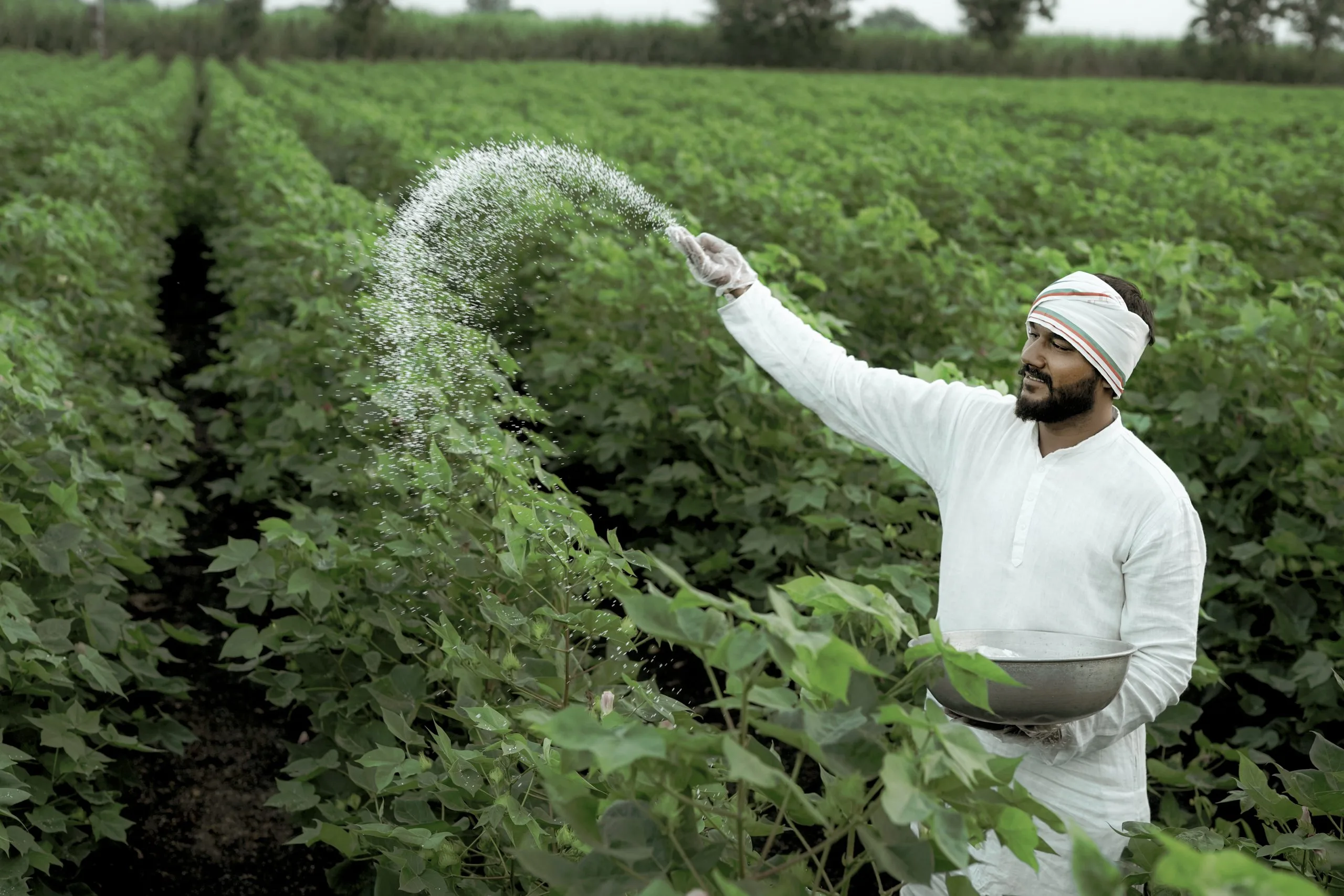
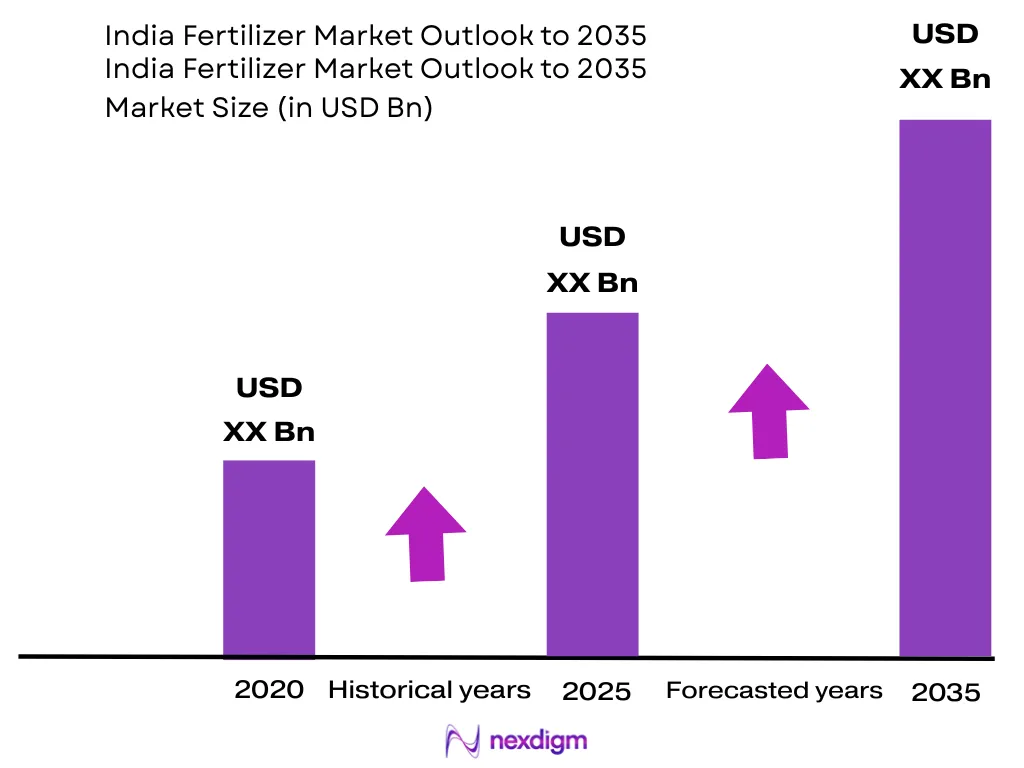
The India fertilizer market is one of the largest agricultural input markets globally, supported by the country’s position as a leading producer of rice, wheat, sugarcane, cotton, and pulses. India cultivated more than 140 million hectares of net sown area and produced over 330 million metric tons of food grains and horticultural produce, creating substantial demand for nutrient replenishment and soil fertility management. Fertilizer consumption exceeded 68 million metric tons, driven by expanding agricultural acreage, rising crop productivity requirements, government subsidy programmes that ensure fertilizer affordability for smallholder farmers, and initiatives aimed at strengthening domestic fertilizer production and reducing import dependency. India’s agricultural sector supports the livelihoods of more than 600 million people, making fertilizer availability and affordability a matter of national food security policy.
Market Segmentation
By Nutrient Type
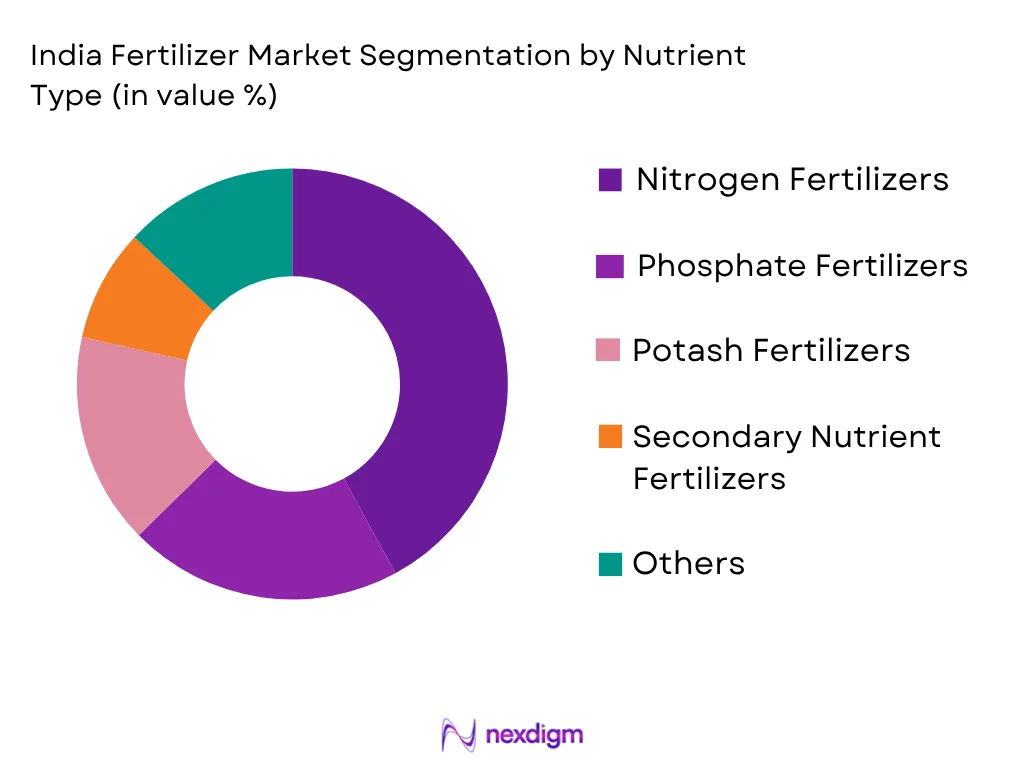
Nitrogen fertilizers dominate the India fertilizer market due to the country’s extensive cultivation of nitrogen-intensive crops such as rice, wheat, sugarcane, and maize. Urea is the single most consumed fertilizer in India, accounting for the largest share of total nutrient consumption, driven by its highly subsidized price under the government’s fertilizer subsidy programme and its effectiveness across a wide range of crop applications. Indian agricultural soils across the Indo-Gangetic Plain and other major cropping zones require consistent nitrogen replenishment to achieve target yields across multiple growing seasons. The widespread adoption of high-yielding variety seeds and intensive cropping systems further amplifies nitrogen demand. Government policies capping urea retail prices have reinforced farmer preference for nitrogen-based products, contributing to an imbalanced NPK consumption ratio that the Nutrient Based Subsidy (NBS) scheme seeks to gradually address.
By Crop Type
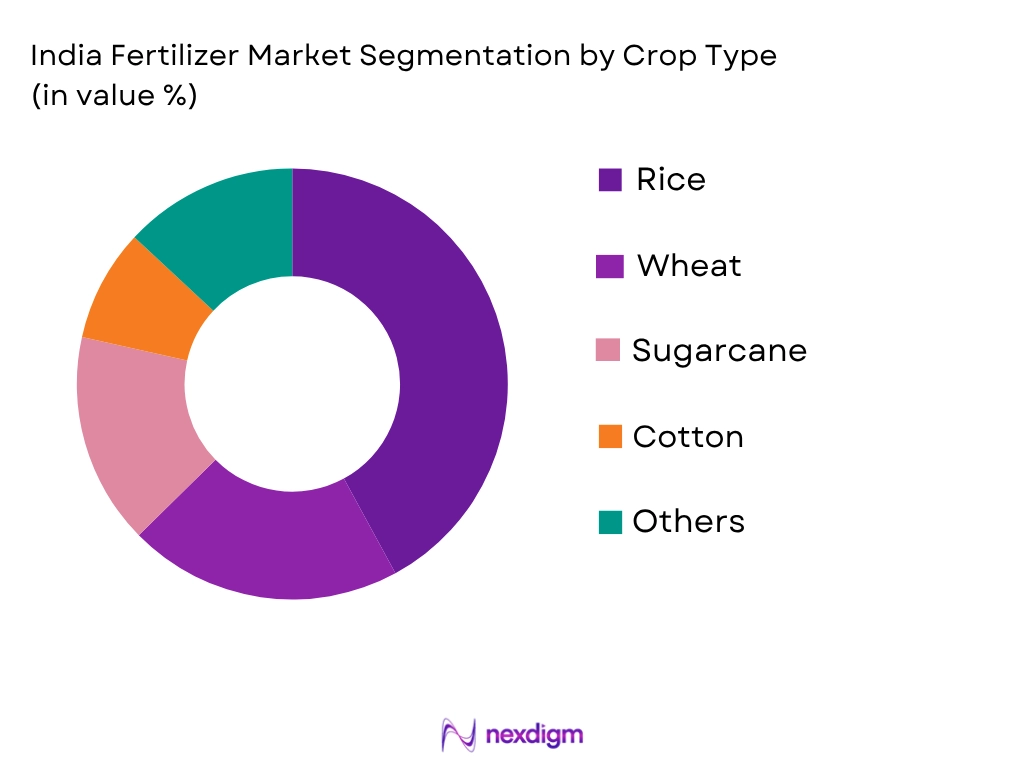
Rice represents the dominant crop segment within the India fertilizer market because it is the most widely cultivated food grain crop in the country, occupying the largest share of irrigated agricultural land during the Kharif season. The crop requires significant and consistent applications of nitrogen, phosphate, and potash fertilizers to sustain productivity across multiple growing seasons and meet the food security demands of a population exceeding 1.4 billion people. Large-scale paddy cultivation in West Bengal, Punjab, Andhra Pradesh, Telangana, Odisha, and Uttar Pradesh heavily depends on nutrient management programmes involving urea, DAP, and complex fertilizers. Rising domestic demand for rice alongside export commitments has encouraged producers to maintain intensive cultivation practices and fertilizer application rates. Consequently, rice farming remains the single largest contributor to fertilizer consumption throughout the country.
Competitive Landscape
The India fertilizer market is characterized by the coexistence of large public sector undertakings, farmer-owned cooperatives, and private sector manufacturers, with government policy and subsidy frameworks playing a central role in shaping competitive dynamics. Companies compete through extensive distribution networks, point-of-sale licensing systems, agronomic extension services, blending capabilities, import infrastructure, and crop-specific nutrient solutions. Strategic investments in domestic production expansion, specialty fertilizers, nano fertilizer technology, and digital agricultural platforms continue to reshape the competitive landscape across the market.
| Company | Establishment Year | Headquarters | Product Portfolio | Production & Blending Facilities
|
Import Infrastructure | Distribution Reach | Specialty Fertilizer Portfolio | Agronomic Support Network |
| IFFCO | 1967 | ~ | ~ | ~ | ~ | ~ | ~ | ~ |
| Coromandel International | 1961 | ~ | ~ | ~ | ~ | ~ | ~ | ~ |
| Chambal Fertilisers | 1985 | ~ | ~ | ~ | ~ | ~ | ~ | ~ |
| GSFC | 1962 | ~ | ~ | ~ | ~ | ~ | ~ | ~ |
| Paradeep Phosphates | 1981 | ~ | ~ | ~ | ~ | ~ | ~ | ~ |
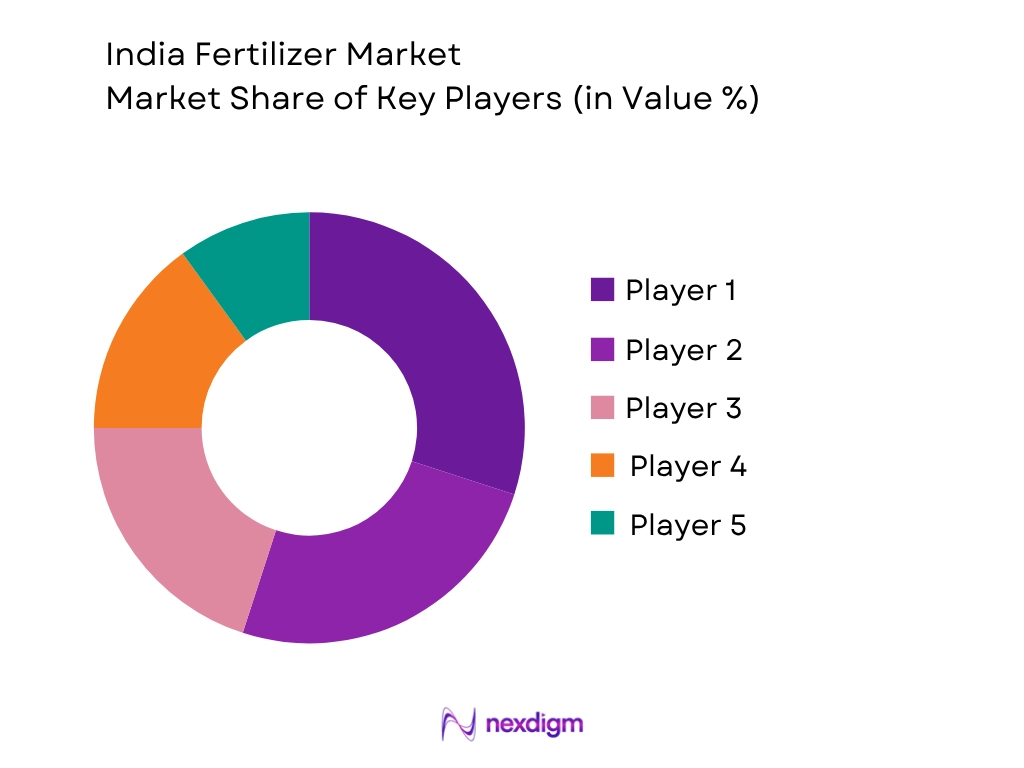
India Fertilizer Market Analysis
Growth Drivers
Expansion of Rice and Wheat Cultivation and Food Grain Production
The India fertilizer market continues to be driven by the sustained expansion of rice and wheat cultivation across the country’s major agricultural regions. According to the Ministry of Agriculture and Farmers Welfare, India’s total food grain production reached a record 329 million metric tons in the 2023-24 crop year, reflecting the sustained intensification of crop production across the Kharif and Rabi seasons. Rice production exceeded 137 million metric tons and wheat production surpassed 113 million metric tons, underpinning massive fertilizer consumption in states including Uttar Pradesh, Punjab, Haryana, West Bengal, Andhra Pradesh, and Telangana. The Department of Fertilizers reported total fertilizer consumption of approximately 68.5 million metric tons in 2023-24, with urea accounting for more than 35 million metric tons of total usage. India’s net sown area of approximately 140 million hectares, combined with the government’s commitment to sustaining food grain self-sufficiency and building buffer stocks, continues to generate strong structural demand for nitrogen, phosphate, and potash fertilizers. Additionally, the Government of India’s GDP exceeded USD 3.7 trillion in 2024 according to World Bank estimates, with the agricultural sector contributing approximately 17% of national output. The combination of food security imperatives, expanding irrigation coverage under the Pradhan Mantri Krishi Sinchai Yojana, and rising farmer aspirations for improved crop yields creates enduring demand for fertilizer products across the country.
Government Subsidy Support and Policy-Driven Fertilizer Accessibility
India’s government subsidy framework is a fundamental structural driver of fertilizer market demand, ensuring price accessibility for the country’s predominantly smallholder farming population. According to the Union Budget 2024-25, the Government of India allocated approximately INR 1.64 lakh crore (approximately USD 19.7 billion) toward fertilizer subsidies, one of the largest such allocations globally. The urea subsidy maintains retail prices significantly below market levels, while the Nutrient Based Subsidy (NBS) scheme provides fixed per-kilogram subsidies for phosphatic and potassic fertilizers to encourage balanced nutrient use. The Direct Benefit Transfer for Fertilizers (DBT) programme, implemented through point-of-sale devices at retail outlets, has improved subsidy delivery efficiency and reduced leakages. The PM PRANAM (Pradhan Mantri Programme for Restoration, Awareness, Nourishment, and Amelioration of Mother Earth) scheme aims to incentivize states to reduce chemical fertilizer usage and promote alternative nutrients. The Soil Health Card programme, which has issued over 220 million cards to farmers, is encouraging more targeted and scientifically guided fertilizer application. Additionally, the government’s push for nano urea and nano DAP through IFFCO and other manufacturers is seeking to enhance nutrient use efficiency and reduce subsidy expenditure over the long term. These combined policy interventions shape fertilizer consumption patterns, product preferences, and market volumes throughout India’s agricultural sector.
Market Challenges
High Dependence on Imported Potash and Phosphate
A major structural challenge facing the India fertilizer market is the country’s near-total dependence on imported potash and significant reliance on imported phosphate raw materials. According to the Department of Fertilizers, India imports virtually 100% of its muriate of potash (MOP) requirements, with major suppliers including Canada, Russia, Belarus, and Jordan. Phosphoric acid and rock phosphate imports for DAP and NPK fertilizer manufacturing are sourced from Morocco, Jordan, Saudi Arabia, and other countries. In 2023-24, India imported approximately 4.5 million metric tons of MOP and significant volumes of DAP and phosphoric acid, creating substantial exposure to international commodity price volatility and geopolitical supply disruptions. The Russia-Ukraine conflict and associated sanctions significantly disrupted potash and nitrogen supply chains in 2022, highlighting the vulnerability of India’s fertilizer import dependency. Additionally, currency fluctuations between the Indian Rupee and the US Dollar influence the landed cost of imported fertilizers and the magnitude of government subsidy payouts. The absence of commercially viable domestic potash reserves means that India’s potash supply security remains permanently dependent on international markets, making import diversification and strategic stockpiling critical policy priorities for the Government of India.
Imbalanced NPK Consumption and Soil Degradation
A significant agronomic and structural challenge in the India fertilizer market is the persistent imbalance in NPK (nitrogen, phosphorus, potassium) nutrient consumption ratios. According to the Indian Council of Agricultural Research (ICAR) and the Fertiliser Association of India (FAI), the recommended NPK consumption ratio is 4:2:1, but actual consumption patterns are heavily skewed toward nitrogen due to the disproportionate subsidy on urea relative to phosphatic and potassic fertilizers. Excess nitrogen application and insufficient potash and phosphate use have contributed to declining soil organic matter, soil acidification, and micronutrient deficiencies across major agricultural regions. The ICAR has reported widespread zinc, boron, and sulphur deficiencies across large areas of Indian farmland, reducing the effectiveness of fertilizer investments and suppressing yield potential. While the Nutrient Based Subsidy scheme and the Soil Health Card programme are designed to promote balanced fertilization, farmer behavior continues to reflect price signals more than agronomic recommendations. Correcting the NPK imbalance requires sustained policy intervention, farmer education, and price rationalization, all of which present significant governance and implementation challenges within the context of India’s complex fertilizer subsidy architecture.
Market Opportunities
Expansion of Nano Fertilizer and Domestic Production Capacity
The development and large-scale commercialization of nano fertilizers represents one of the most significant growth opportunities in the India fertilizer market. IFFCO’s launch of Nano Urea Liquid in 2021 and Nano DAP in 2023 marked a transformative development in Indian fertilizer technology, with the potential to significantly reduce the volume of conventional fertilizers required per hectare while maintaining or improving crop yields. The government’s support for nano fertilizer production, combined with mandatory blending guidelines and promotional campaigns targeting millions of farmers, is creating a new product category with substantial long-term demand potential. Beyond nano fertilizers, the Government of India’s goal of achieving fertilizer self-sufficiency through domestic capacity expansion is driving investment in new urea manufacturing plants fuelled by natural gas and coal gasification. Investments in phosphate beneficiation from domestic rock phosphate deposits in Rajasthan and the development of new ammonia and urea production facilities under the Revamped Urea policy are further expanding domestic supply. The large and growing agricultural base, combined with rising farmer incomes under various government support schemes, provides a highly receptive market for innovative and cost-effective nutrient solutions.
Growth of Specialty, Biological, and Sustainable Fertilizers
The transition toward sustainable agriculture, improved nutrient use efficiency, and soil health restoration is creating strong opportunities for specialty fertilizer and biological nutrient products in India. The country’s vast horticultural sector, covering more than 27 million hectares of fruits and vegetables, creates substantial demand for water-soluble fertilizers, micronutrient blends, controlled-release products, and fertigation solutions tailored to high-value crops. Biological fertilizers including rhizobium, phosphate-solubilizing bacteria, and mycorrhizal inoculants are gaining traction under government promotion programmes and growing farmer interest in input cost reduction. The PM PRANAM scheme’s financial incentives for reducing chemical fertilizer consumption are expected to accelerate adoption of biofertilizers, organic manures, and city compost across multiple states. Additionally, India’s large livestock population generates approximately 700 million metric tons of animal waste annually, presenting a significant untapped resource for organic and organomineral fertilizer production under the Gobardhan scheme. Rising awareness of soil health, increasing availability of soil testing infrastructure under the Soil Health Card programme, and expanding e-commerce channels for agricultural inputs are further supporting growth in specialty and sustainable fertilizer categories across India’s diverse agricultural landscape.
Future Outlook
The India fertilizer market is expected to witness sustained growth over the forecast period due to expanding agricultural production, increasing food security requirements, rising adoption of precision farming technologies, and government initiatives promoting balanced nutrient management and domestic fertilizer self-sufficiency. Policy frameworks including the PM PRANAM scheme, the Nutrient Based Subsidy programme, and the Soil Health Card initiative are expected to gradually shift consumption patterns toward more balanced and efficient nutrient use. Rising demand for nano fertilizers, specialty nutrients, biological solutions, and water-soluble products will further diversify and expand the market. Additionally, investments in domestic urea and phosphate production capacity, digital agriculture platforms, and sustainable farming programmes are likely to strengthen long-term market prospects as India’s agricultural sector continues to evolve.
Major Players
- Indian Farmers Fertiliser Cooperative (IFFCO)
- Krishak Bharati Cooperative (KRIBHCO)
- National Fertilizers Limited (NFL)
- Rashtriya Chemicals and Fertilizers (RCF)
- Coromandel International
- Chambal Fertilisers and Chemicals
- Gujarat State Fertilizers and Chemicals (GSFC)
- Deepak Fertilisers and Petrochemicals
- Tata Chemicals (Rallis India)
- Nagarjuna Fertilizers and Chemicals
- Zuari Agro Chemicals
- Paradeep Phosphates
- Yara India
- Mosaic India
- EuroChem India
Key Target Audience
- Fertilizer Manufacturers
- Agricultural Input Distributors and Retailers
- Commercial Farming Enterprises and Farmer Producer Organizations (FPOs)
- Agribusiness Cooperatives
- Investments and Venture Capitalist Firms
- Government and Regulatory Bodies (Ministry of Agriculture and Farmers Welfare, Department of Fertilizers, Ministry of Chemicals and Fertilizers, ICAR, FAI)
- Fertilizer Importers and Exporters
- Precision Agriculture Technology Providers
Research Methodology
Step 1: Identification of Key Variables
The initial phase involves constructing an ecosystem map encompassing all major stakeholders within the India Fertilizer Market. Extensive secondary research is conducted through industry publications, government databases, company annual reports, trade associations, and agricultural statistics. The objective is to identify critical variables influencing fertilizer demand, supply, pricing, imports, and crop production.
Step 2: Market Analysis and Construction
This phase focuses on gathering and analyzing historical information regarding fertilizer production, imports, nutrient consumption, crop acreage, and agricultural output. Market revenues are estimated through analysis of fertilizer volumes, average selling prices, and nutrient demand trends. Both supply-side and demand-side assessments are incorporated to develop comprehensive market estimates.
Step 3: Hypothesis Validation and Expert Consultation
Preliminary findings and market assumptions are validated through structured interviews with fertilizer manufacturers, distributors, agricultural cooperatives, agronomists, and industry specialists. These consultations provide valuable insights into purchasing patterns, nutrient application trends, production economics, and future market developments.
Step 4: Research Synthesis and Final Output
The final stage integrates findings obtained from primary and secondary research. Data triangulation techniques are applied to ensure consistency and reliability across all market estimates. The resulting report provides a comprehensive assessment of market structure, competitive dynamics, growth opportunities, and long-term industry outlook for the India Fertilizer Market.

- Executive Summary
- Research Methodology (Market Definitions and Assumptions, Abbreviations, Market Sizing Approach, Top-Down Analysis, Bottom-Up Analysis, Fertilizer Demand Assessment by Crop Area, Nutrient Consumption Analysis, Import-Export Assessment, Primary Industry Interviews, Data Triangulation, Forecasting Framework, Limitations and Future Conclusions)

- Definition and Scope
- Market Evolution and Industry Genesis
- Timeline of Major Industry Developments
- India Agricultural Production Ecosystem
- Fertilizer Industry Value Chain Analysis

- Growth Drivers (Expansion of Rice and Wheat Cultivation Area, Rising Yield Optimization Requirements, Increasing Adoption of Precision Agriculture, Government Subsidy Support for Fertilizer Affordability, Growth in Horticultural and Cash Crop Production, Rising Rural Income and Agricultural Investment)
- Market Challenges (High Dependence on Imported Potash and Phosphate, Subsidy Burden on Government Finances, Imbalanced NPK Nutrient Usage, Volatility in Global Fertilizer Prices, Logistics and Last-Mile Distribution Constraints)
- Market Opportunities (Expansion of Nano Fertilizer Adoption, Specialty Fertilizer Growth, Biofertilizer and Organic Fertilizer Development, City Compost and Waste-to-Nutrient Initiatives, Precision Nutrient Management Solutions)
- Market Trends (Increased Use of Nano Urea and Nano DAP, Digital Agriculture Integration, Soil Health Card Programme Expansion, Carbon-Efficient Crop Nutrition, Expansion of Biological Inputs and Biostimulants)
- Government Regulations (New Fertiliser Policy, Nutrient Based Subsidy Scheme, Soil Health Card Programme, PM PRANAM Scheme, Direct Benefit Transfer for Fertilizers, Import and Trade Policies)
- Import Dependency Assessment (Potash Import Ratio, Phosphate Import Ratio, Nitrogen Import Ratio, Supplier Country Concentration)
- Raw Material Analysis (Natural Gas Availability, Phosphate Rock Supply, Potash Reserves, Sulfur Availability)
- Fertilizer Consumption Intensity Analysis (Kg per Hectare, Nutrient Use Efficiency, Crop-Wise Consumption, Regional Application Rates)
- Price Trend Analysis (Urea Prices, DAP Prices, MOP Prices, NPK Prices, SSP Prices)
- Supply-Demand Gap Analysis (Domestic Production Capacity, Installed Capacity Utilization, Import Requirements, Inventory Levels)
- SWOT Analysis
- Porter’s Five Forces Analysis
- PESTLE Analysis
- Stakeholder Ecosystem
- Competition Ecosystem

- By Market Value (2020-2025)
- By Production Volume (2020-2025)
- By Average Selling Price (2020-2025)

- By Nutrient Type (In Value %)
Nitrogen Fertilizers
Phosphate Fertilizers
Potash Fertilizers
Secondary Nutrient Fertilizers
Micronutrient Fertilizers
Specialty and Customized Fertilizers - By Application Method (In Value %)
Soil Application
Fertigation
Foliar Application
Seed Treatment
Precision Agriculture Application - By Crop Type (In Value %)
Rice
Wheat
Sugarcane
Cotton
Maize
Pulses
Fruits and Vegetables
Oilseeds
Others - By Region (In Value %)
North India
South India
West India
East India
Central India - By Distribution Channel (In Value %)
Government Distribution Network (PACS / Cooperatives)
Agricultural Retailers and Dealers
Direct Sales by Manufacturers
Distributors and Wholesalers
Digital Agricultural Platforms

- Market Share Analysis of Major Players (By Value, By Volume, Nutrient Segment, Crop Segment, By Region)
- Market Concentration Analysis
- Cross Comparison Parameters (Product Portfolio Diversity, Annual Fertilizer Production Capacity, Blending Capacity, Import Terminal Infrastructure, Distribution Network Reach, Agronomic Technical Service Coverage, Specialty Fertilizer Portfolio Strength, Crop-Specific Nutrient Solution Capability)
- SWOT Analysis of Major Players
- Pricing Analysis by Product Type and Nutrient Grade
- Detailed Profiles of Major Companies
Indian Farmers Fertiliser Cooperative (IFFCO)
Krishak Bharati Cooperative (KRIBHCO)
National Fertilizers Limited (NFL)
Rashtriya Chemicals and Fertilizers (RCF)
Coromandel International
Chambal Fertilisers and Chemicals
Gujarat State Fertilizers and Chemicals (GSFC)
Deepak Fertilisers and Petrochemicals
Tata Chemicals (Rallis India)
Nagarjuna Fertilizers and Chemicals
Zuari Agro Chemicals
Paradeep Phosphates
Yara India
Mosaic India
EuroChem India

- Crop Nutrient Consumption Assessment (Crop Area, Yield Targets, Nutrient Removal Rates, Fertilizer Intensity)
- Farm Size Analysis (Smallholder Farms, Medium Farms, Large Commercial Farms)
- Purchasing Power Analysis (Farm Income Levels, Credit Availability, Fertilizer Budget Allocation)
- Seasonal Demand Assessment (Kharif Season, Rabi Season, Zaid Season, Procurement Patterns)
- Farmer Purchasing Behavior (Brand Preference, Nutrient Preference, Price Sensitivity)
- Precision Agriculture Adoption Analysis (GPS-Based Application, Variable Rate Technology, Digital Farm Management)
- Sustainability Adoption Analysis (Carbon Reduction Practices, Soil Health Management, Regenerative Agriculture)
- Pain Point Analysis (Input Costs, Nutrient Availability, Logistics Challenges, Agronomic Support)
- Purchase Decision-Making Process

- By Market Value (2026-2035)
- By Production Volume (2026-2035)
- By Average Selling Price (2026-2035)


 Request a Sample
 Ask for Customization
 Get a Quote
 Enquire Now