
 Download PDF
Market Overview
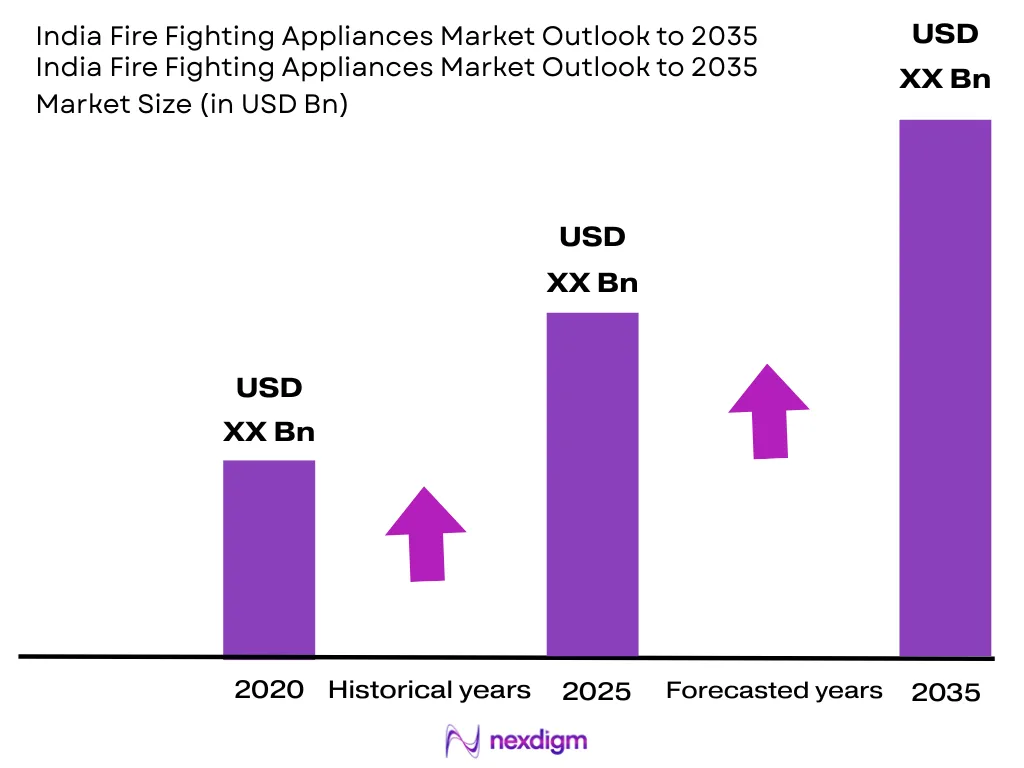
The India Fire Fighting Appliances Market was valued at USD ~ billion in 2024 and is projected to expand at a CAGR of ~% during the 2026–2035 forecast period. According to data published by the Ministry of Home Affairs (MHA), the Bureau of Indian Standards (BIS), and industry associations including the Fire and Security Association of India (FSAI), India continues to witness rising demand for fire safety and firefighting equipment driven by rapid urbanisation, expanding industrial infrastructure, increasing regulatory enforcement of the National Building Code (NBC) 2016, and a growing awareness of fire safety norms across commercial, industrial, and residential segments. The National Crime Records Bureau (NCRB) has consistently reported thousands of fire-related incidents annually across India, reinforcing the critical need for comprehensive fire prevention and suppression infrastructure. Growth is supported by India’s position as one of Asia’s fastest-expanding economies, with GDP exceeding USD 3.7 trillion according to the World Bank in 2024, and sustained government investment in infrastructure, smart cities, industrial corridors, and defence modernisation programmes creating large-scale demand for fire safety systems and appliances across the country.
Market Segmentation
By Product Type
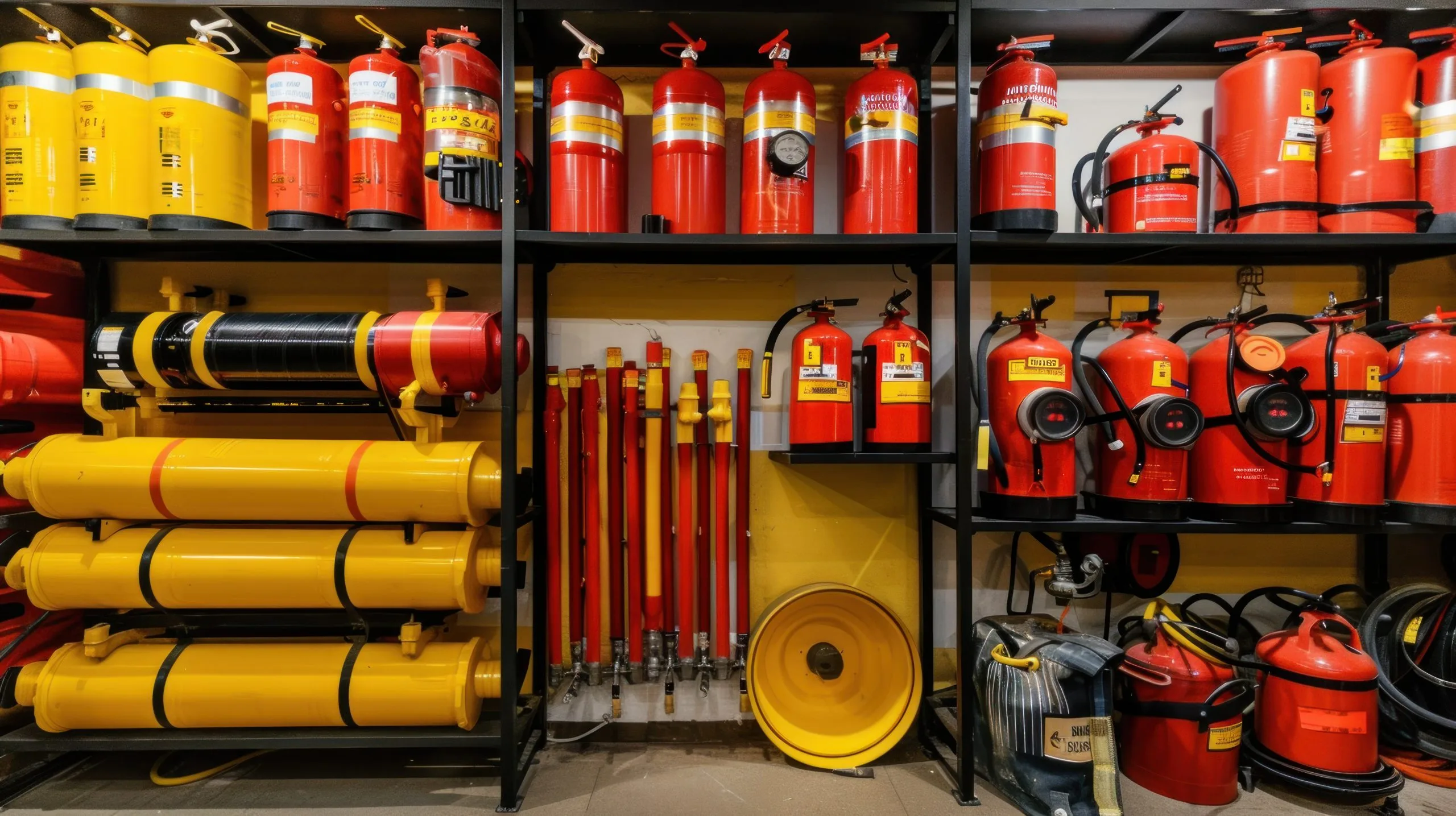
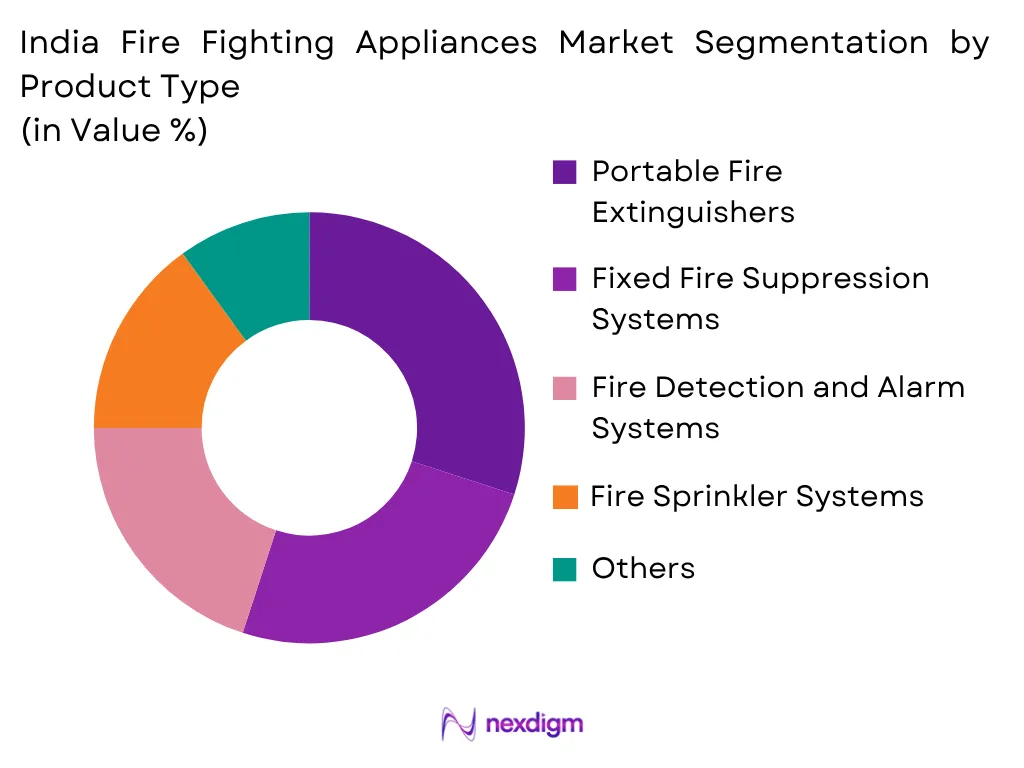
Portable fire extinguishers continue to dominate the India Fire Fighting Appliances Market owing to their widespread mandatory requirement across all building types under the National Building Code of India 2016, low unit cost, ease of installation, high replacement frequency, and applicability across residential, commercial, and industrial premises. According to the Bureau of Indian Standards (BIS), portable fire extinguishers are subject to mandatory IS certification requirements, and the large volume of construction activity across India’s urban and semi-urban regions continuously generates demand for new installations. Fixed fire suppression systems represent the fastest-growing product segment, driven by increasing mandates for sprinkler systems, hydrant networks, and gaseous suppression installations in commercial complexes, IT parks, data centres, warehouses, hotels, and hospitals under Fire NOC compliance requirements enforced by state fire departments. Fire detection and alarm systems are also witnessing strong growth as commercial and institutional buyers increasingly invest in addressable fire alarm control panels, smoke detectors, heat detectors, and integrated building safety management systems. Continuous investments in smart detection technologies, IoT-enabled monitoring platforms, and integration with building management systems have further strengthened India’s transition toward comprehensive and networked fire safety infrastructure across major urban commercial and industrial centres.
By Distribution Channel
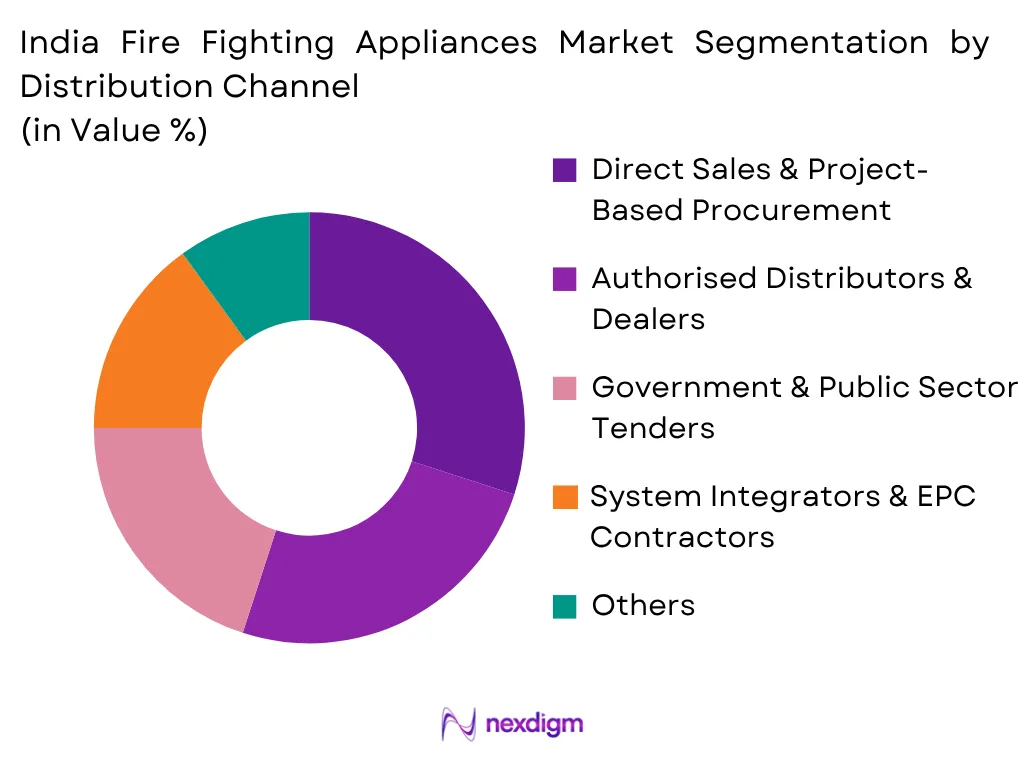
Direct sales and project-based procurement represent the dominant distribution channel in the India Fire Fighting Appliances Market, as large commercial construction projects, industrial facilities, government infrastructure programmes, and institutional buyers typically procure fire safety systems through structured tendering processes, EPC contractors, and direct manufacturer engagement. Leading fire safety companies maintain dedicated project sales teams, technical consultants, and relationship-driven procurement processes targeting builders, developers, facility managers, and government departments. Authorised distributors and dealers serve as a critical second channel, particularly for portable fire extinguishers and retail fire safety products supplying smaller commercial establishments, residential buildings, and retail buyers across Tier 1, Tier 2, and Tier 3 cities. Government and public sector tendering through platforms such as GeM (Government e-Marketplace) is increasingly important as central and state governments, defence establishments, railways, and public sector undertakings procure firefighting vehicles, suppression systems, and detection equipment through transparent tender processes. The Annual Maintenance Contract (AMC) channel represents a growing and highly recurring revenue stream, as all installed fire safety systems require periodic inspection, refilling, testing, and certification, creating a stable and expanding service revenue base for manufacturers and service providers with established installation footprints across India.
Competitive Landscape
The India Fire Fighting Appliances Market is moderately fragmented, with multinational fire safety companies competing alongside a large number of established domestic manufacturers and regional players. Global companies such as Honeywell, Johnson Controls (Tyco), Hochiki, and Kidde leverage advanced product portfolios, international certifications, and strong presence in large commercial and industrial projects, while domestic companies including Minimax India, Ceasefire Industries, Safex Fire Services, and Firepro Systems maintain competitive advantages through BIS-certified product ranges, price-competitive offerings, extensive distribution networks, and deep understanding of India-specific compliance requirements. Competition is intense across price-sensitive segments such as portable extinguishers, while premium and technology-driven segments including addressable detection systems, clean agent suppression, and smart IoT-enabled safety platforms offer higher margin opportunities for technically differentiated players. Government tender participation, BIS and international certification credentials, after-sales service capacity, and geographic distribution reach across India’s diverse regional markets remain critical competitive parameters.
| Company | Establishment Year | Headquarters | Primary Product Focus | Manufacturing Facilities
|
Export Presence | Product Integration | Certifications & Standards | Value-Added Product Portfolio |
| Minimax India | 1981 | ~ | ~ | ~ | ~ | ~ | ~ | ~ |
| Ceasefire Industries | 1998 | ~ | ~ | ~ | ~ | ~ | ~ | ~ |
| Safex Fire Services | 1978 | ~ | ~ | ~ | ~ | ~ | ~ | ~ |
| Morita Holdings India (Agni) | 2003 | ~ | ~ | ~ | ~ | ~ | ~ | ~ |
| Firepro Systems | 1996 | ~ | ~ | ~ | ~ | ~ | ~ | ~ |
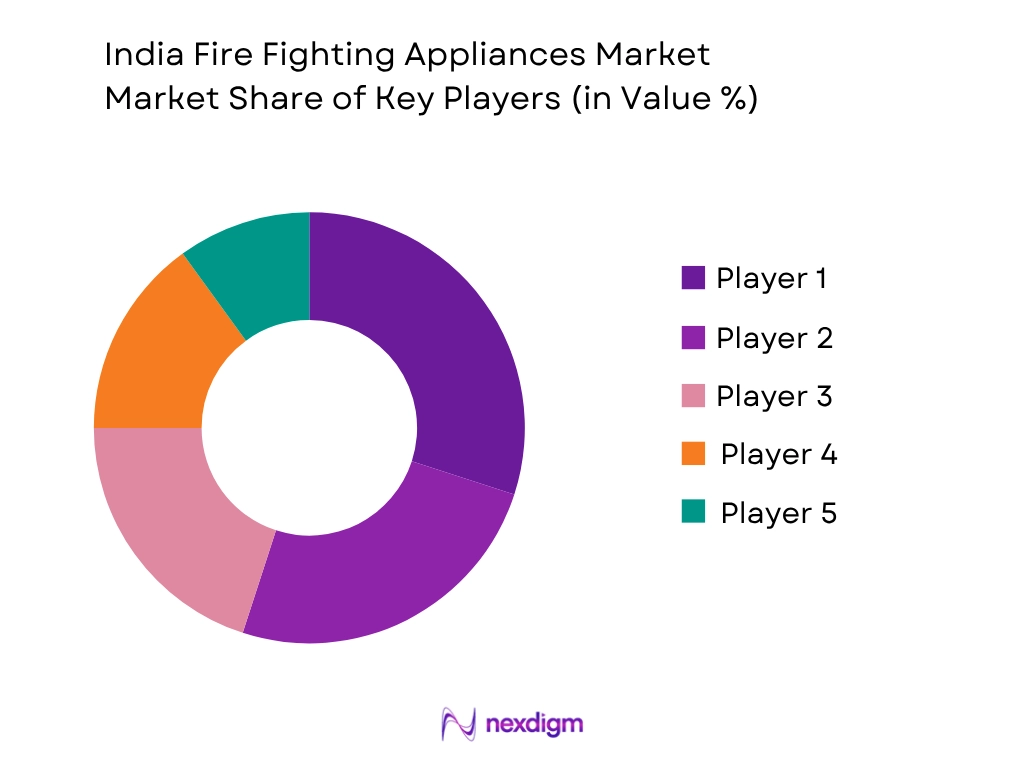
India Fire Fighting Appliances Market Analysis
Growth Drivers
Mandatory Regulatory Compliance and National Building Code Enforcement
Strengthening regulatory enforcement of fire safety norms under the National Building Code of India (NBC) 2016 and associated state-level fire service acts continues to be the most fundamental growth driver for the India Fire Fighting Appliances Market. According to the Ministry of Home Affairs (MHA), India has progressively tightened fire safety compliance requirements for residential, commercial, industrial, and public infrastructure projects, making fire NOC (No Objection Certificate) issuance by state fire departments mandatory for building occupancy across a growing range of property categories. The Bureau of Indian Standards (BIS) enforces IS certification requirements for portable fire extinguishers, detection systems, and suppression equipment, ensuring minimum product quality standards across the market. According to the World Bank, India’s GDP exceeded USD 3.7 trillion in 2024, reflecting sustained economic expansion and continuous growth in construction and industrial activity, both of which directly drive demand for compliant fire safety installations. The National Crime Records Bureau (NCRB) has reported tens of thousands of fire incidents annually in recent years, contributing to increased government focus on fire prevention infrastructure and stricter enforcement of installation mandates. The Smart Cities Mission, AMRUT programme, and the Government of India’s Pradhan Mantri Awas Yojana (PMAY) housing schemes have further expanded the addressable market for fire safety products by creating large volumes of new construction requiring NBC-compliant fire safety systems. Additionally, high-profile fire tragedies in commercial establishments, hospitals, and industrial sites in recent years have prompted state governments to intensify inspections and enforcement actions, accelerating retrofit installations across existing building stock.
Rapid Urbanisation, Real Estate Expansion and Industrial Infrastructure Growth
India’s accelerating urbanisation and large-scale infrastructure development programmes are generating sustained long-term demand for fire fighting appliances across residential, commercial, and industrial segments. According to the Census of India and the Ministry of Housing and Urban Affairs (MoHUA), India’s urban population is expected to exceed 600 million by 2030, driving unprecedented construction activity across major metropolitan areas, Tier 2 cities, and newly developing industrial corridors. The Real Estate (Regulation and Development) Act (RERA) has strengthened accountability among builders and developers, further encouraging compliance with fire safety norms as part of project completion and occupancy certification requirements. India’s National Industrial Corridor Development Programme, encompassing projects such as the Delhi-Mumbai Industrial Corridor (DMIC) and Chennai-Bengaluru Industrial Corridor (CBIC), is creating large-scale demand for comprehensive fire safety systems across new manufacturing facilities, warehouses, and logistics parks. The International Monetary Fund (IMF) projected India to remain the world’s fastest-growing major economy, with GDP growth forecast at approximately 6.5 percent in 2024-25, supporting sustained investment in commercial real estate, hospitality, healthcare, data centres, and manufacturing infrastructure. The Petroleum and Explosives Safety Organisation (PESO) enforces strict fire safety requirements across oil storage, petrochemical, and gas distribution facilities, creating consistent demand for specialised suppression and detection systems in the energy sector. These structural growth drivers collectively position fire fighting appliances as a critical and rapidly expanding segment within India’s broader safety and security industry.
Market Challenges
Prevalence of Substandard Products and Low Compliance in the Informal Sector
The India Fire Fighting Appliances Market continues to face significant quality and compliance challenges arising from the widespread prevalence of uncertified, counterfeit, and substandard fire safety products, particularly in price-sensitive segments and informal market channels. According to the Bureau of Indian Standards (BIS), a substantial portion of portable fire extinguishers and basic fire safety equipment sold in India, particularly through unorganised distributors and informal trade channels, does not carry valid IS certification or meets only the minimum regulatory threshold, compromising actual firefighting effectiveness. The Fire and Security Association of India (FSAI) has consistently highlighted the prevalence of grey market fire safety products as a threat to public safety, brand integrity, and fair competition within the organised segment. Low awareness of fire safety norms among small and medium enterprises (SMEs), residential housing societies, and informal commercial establishments, combined with inconsistent enforcement by state fire departments, enables the continued circulation of substandard products. Price sensitivity remains a dominant purchase criterion among a large segment of buyers, incentivising procurement of the cheapest available option rather than technically superior and fully compliant products. The Ministry of Consumer Affairs, Food and Public Distribution has included fire extinguishers under the BIS Quality Control Order, strengthening enforcement against non-compliant products, but effective implementation across India’s large and geographically diverse market remains an ongoing challenge. Sustained investment in market surveillance, consumer awareness campaigns, and strengthened BIS certification enforcement across distribution channels is essential to improving product quality standards and ensuring effective fire safety outcomes across the country.
Fragmented Distribution and Limited Fire Safety Infrastructure in Tier 2 and Tier 3 Cities
Despite strong demand growth in major metropolitan areas, the India Fire Fighting Appliances Market continues to face distribution and awareness challenges in smaller cities, semi-urban areas, and rural regions, where fire safety infrastructure remains significantly underdeveloped. According to the Ministry of Home Affairs (MHA), fire service coverage across India’s smaller cities and towns remains inadequate, with a large proportion of Tier 2 and Tier 3 urban local bodies lacking sufficient firefighting vehicles, trained personnel, and fire station infrastructure relative to their growing building stock and industrial activity. The uneven geographic distribution of authorised distributors, fire safety consultants, and certified installation agencies means that buyers in non-metropolitan markets frequently rely on unorganised local traders with limited product knowledge and after-sales service capabilities. Long payment cycles associated with government and public sector procurement, combined with delayed project completion timelines in construction, create working capital pressures for distributors and regional dealers. The Annual Maintenance Contract (AMC) ecosystem, which is critical for ensuring that installed fire safety systems remain functional and compliant, is significantly less developed outside major urban centres, resulting in a large volume of installed equipment that is poorly maintained and potentially non-functional during fire emergencies. Strengthening distribution networks, expanding dealer training programmes, and improving fire department capacity across smaller Indian cities remain essential steps toward ensuring consistent fire safety standards and deepening market penetration beyond India’s top metropolitan markets.
Market Opportunities
Smart Fire Safety Systems, IoT Integration and Data Centre Demand
The rapid adoption of smart building technologies, IoT-enabled safety infrastructure, and the explosive growth of India’s data centre industry are creating substantial high-value growth opportunities for advanced fire fighting appliances and detection systems. According to the Ministry of Electronics and Information Technology (MeitY), India’s data centre capacity is expanding rapidly driven by digital transformation initiatives, cloud computing adoption, government data localisation requirements, and increasing enterprise IT investment, creating strong demand for precision fire suppression systems, including clean agent FM-200 and Novec 1230 gaseous suppression installations, inert gas systems, and advanced aspirating smoke detection technologies. India’s Smart Cities Mission, overseen by the Ministry of Housing and Urban Affairs, encompasses 100 selected cities investing in intelligent infrastructure, including integrated fire safety monitoring, emergency response systems, and smart building management platforms that require sophisticated detection and suppression technologies. The World Bank estimated India’s GDP at USD 3.7 trillion in 2024 and projected continued strong growth through 2035, reinforcing sustained investment capacity for premium fire safety technology adoption among institutional and corporate buyers. Global technology companies including Honeywell, Johnson Controls, and Hochiki are actively expanding their addressable market in India by offering IoT-connected fire alarm systems, cloud-monitored suppression solutions, and AI-driven predictive fire risk analytics that provide real-time safety intelligence to facility managers. The growing adoption of Building Information Modelling (BIM) in large commercial construction projects is also creating opportunities for integrated fire safety system design and digital-twin based compliance verification. Companies investing in addressable detection systems, wireless fire alarm networks, smart suppression panels, and integrated building safety platforms are well positioned to capture premium revenue growth as India’s commercial and industrial real estate sector rapidly modernises its safety infrastructure.
Electric Vehicle Battery Fire Suppression and Defence Sector Modernisation
Two emerging high-growth demand segments, electric vehicle battery fire suppression and defence and railway sector modernisation, are expected to generate significant new market opportunities for specialised fire fighting appliances in India through 2035. According to the Ministry of Heavy Industries and the Society of Indian Automobile Manufacturers (SIAM), India’s electric vehicle market has been growing rapidly under the FAME II and PM e-Drive schemes, creating a new and technically complex category of fire risk associated with lithium-ion battery thermal runaway events in electric two-wheelers, electric buses, and electric commercial vehicles. Specialised lithium-ion battery fire suppression systems, aerosol-based suppression solutions, and thermal management products specifically designed for EV battery pack fires represent an emerging and underserved market segment where domestic product innovation and regulatory frameworks are still developing. The Ministry of Defence’s capital procurement programmes, including the Agnipath scheme-related infrastructure expansion, new military base construction, and defence modernisation under the Aatmanirbhar Bharat initiative, continue to create large-scale demand for specialised firefighting vehicles, aircraft rescue and firefighting (ARFF) equipment, and high-performance suppression systems. Indian Railways, one of the world’s largest railway networks managed by the Ministry of Railways, is investing in modernisation of fire safety equipment across stations, workshops, and rolling stock under various safety and maintenance upgrade programmes. These new demand verticals offer Indian and multinational fire safety companies opportunities to develop differentiated products, establish technology partnerships, and capture higher-margin specialised contracts beyond the competitive mainstream market for standard fire extinguishers and conventional suppression systems.
Future Outlook
The India Fire Fighting Appliances Market is expected to witness strong and sustained growth throughout the forecast period, supported by tightening regulatory enforcement of fire safety norms, rapid urbanisation, expanding industrial and commercial infrastructure, increasing awareness of fire safety, and growing adoption of smart and IoT-enabled fire detection and suppression systems. Manufacturers are increasingly investing in BIS-certified product innovation, addressable detection technologies, clean agent suppression systems, and value-added AMC service offerings. Growing penetration of fire safety infrastructure in Tier 2 and Tier 3 cities, expanding government tender activity, data centre fire safety investment, electric vehicle suppression systems, and defence sector modernisation are expected to create additional high-value growth opportunities. Continued investments in manufacturing capability, export market development, and digital product innovation will further strengthen long-term competitiveness for India-based fire safety manufacturers.
Major Players
- Minimax India
- Ceasefire Industries
- Safex Fire Services
- Morita Holdings India (Agni)
- Firepro Systems
- Hochiki India
- Johnson Controls (Tyco Fire & Security India)
- Honeywell Fire Safety India
- Supremex Fire Fighting Equipment
- Amerex India
- Kidde India (Carrier Global)
- Naffco India
- Alert Fire Control
- Kanex Fire
- Grap Fire Industries
Key Target Audience
- Fire Fighting Appliance Manufacturers and System Integrators
- Fire Detection and Alarm System Manufacturers
- EPC Contractors and Project Developers
- Real Estate Developers and Building Management Companies
- Industrial and Manufacturing Facility Operators
- Investments and Venture Capitalist Firms
- Government and Regulatory Bodies (Bureau of Indian Standards (BIS), Ministry of Home Affairs (MHA), Petroleum and Explosives Safety Organisation (PESO), National Disaster Management Authority (NDMA), Fire and Security Association of India (FSAI), State Fire Departments)
- Annual Maintenance Contract (AMC) and Fire Safety Service Providers
Research Methodology
Step 1: Identification of Key Variables
The research begins by identifying the major stakeholders across the India Fire Fighting Appliances value chain, including raw material suppliers, equipment manufacturers, importers, system integrators, distributors, EPC contractors, government agencies, end-user segments, and after-sales service providers. Extensive secondary research is conducted using government publications, industry associations, trade databases, company reports, and proprietary databases to establish the key variables influencing market performance.
Step 2: Market Analysis and Construction
Historical market information is compiled and evaluated to estimate the overall market size, product category penetration, installation volumes, pricing dynamics, tender activity, and revenue generation across major fire fighting appliance segments. Both demand-side and supply-side indicators are analyzed using bottom-up and top-down market sizing approaches to ensure comprehensive market coverage, accounting for the diverse end-user base spanning residential, commercial, industrial, government, and infrastructure segments across India.
Step 3: Hypothesis Validation and Expert Consultation
Preliminary market estimates and analytical assumptions are validated through Computer Assisted Telephone Interviews (CATIs) and structured discussions with fire safety equipment manufacturers, EPC contractors, distributors, facility managers, fire department officials, compliance consultants, and industry experts. These interviews provide valuable commercial insights into procurement patterns, compliance behaviour, product preferences, and emerging technology adoption that strengthen the reliability of market estimates.
Step 4: Research Synthesis and Final Output
The final stage integrates primary research findings with secondary information to develop a comprehensive assessment of market size, segmentation, competitive landscape, buyer behaviour, and future opportunities. Multiple validation techniques, including data triangulation and cross-verification with BIS certification data, import-export statistics, and project tender databases, are employed to ensure the consistency, accuracy, and credibility of the final market report.

- Executive Summary
- Research Methodology (Market Definitions and Assumptions, Abbreviations, Market Taxonomy, Market Sizing Approach, Top-Down Analysis, Bottom-Up Analysis, Demand-Side Assessment, Supply-Side Assessment, Primary Industry Interviews, Secondary Research Validation, Data Triangulation, Forecasting Framework, Limitations and Future Conclusions)

- Definition and Scope
- Market Evolution and Industry Genesis
- Timeline of Major Industry Developments
- Industry Value Chain Analysis
- Supply Chain Analysis

- Growth Drivers (Mandatory BIS Certification and NBC Compliance, Rapid Urbanisation and Real Estate Development, Expanding Industrial and Manufacturing Sector, Government Smart Cities Mission, Rising Awareness of Fire Safety, Oil & Gas Sector Investments, Growth in Hospitality and Healthcare Infrastructure, Increasing Foreign Direct Investment in Manufacturing)
- Market Challenges (Low Fire Safety Compliance in Informal Sector, Price Sensitivity and Prevalence of Substandard Products, Fragmented Distribution Network in Tier 2 and Tier 3 Cities, Limited Enforcement of Fire Safety Norms, Raw Material Cost Volatility, Shortage of Skilled Fire Safety Professionals, Delayed Government Procurement Cycles)
- Market Opportunities (Smart Fire Detection and IoT-Enabled Systems, Green Building and LEED Certification Requirements, Data Centre Fire Safety, EV Battery Fire Suppression, Defence and Railway Modernisation Programmes, Export Potential to Middle East and South Asia, Retrofitting of Existing Buildings)
- Market Trends (Adoption of Addressable Fire Alarm Systems, Shift Towards Eco-Friendly Clean Agents, IoT and AI Integration in Fire Detection, Wireless Fire Detection Systems, Building Information Modelling (BIM) Integration, Prefabricated Modular Suppression Systems, Growth of AMC and Service Revenue)
- Government Regulations (National Building Code of India (NBC) 2016, BIS Certification (IS Standards), Petroleum and Explosives Safety Organisation (PESO) Regulations, National Fire Protection Association (NFPA) Standards Adoption, State Fire Service Acts, Factory Act Compliance, Environment Protection Act Guidelines, MoEFCC Guidelines on Clean Agents)
- Standards and Certification Analysis (BIS IS 2171 Portable Extinguishers, IS 15683 Fire Suppression, IS 2189 Fire Detection Systems, TAC India Standards, CEA Regulations for Power Sector, OISD Standards for Oil & Gas)
- Raw Material Supply Analysis (Steel and Aluminium Availability, Dry Chemical Powder Supply, CO2 Gas Supply Chains, Electronic Components for Detection Systems, Cost Structure)
- Regulatory Enforcement Analysis (Fire NOC Framework, State Fire Department Capacity, Inspection and Audit Frameworks, Penalty Structures)
- Innovation Landscape (Smart Systems, IoT Integration, Eco-Friendly Agents, Modular Suppression, EV Fire Suppression Technology)
- SWOT Analysis
- Porter’s Five Forces Analysis
- PESTLE Analysis
- Stakeholder Ecosystem
- Competition Ecosystem

- By Market Value (2020-2025)
- By Volume (2020-2025)
- By Average Selling Price (2020-2025)

- By Product Type (In Value %)
Portable Fire Extinguishers
Fixed Fire Suppression Systems
Fire Detection and Alarm Systems
Fire Sprinkler Systems
Fire Hydrant Systems
Fire Trucks & Firefighting Vehicles
Personal Protective Equipment (PPE) for Firefighting
Rescue and Emergency Equipment - By Extinguishing Agent / Technology Type (In Value %)
Dry Chemical Powder (DCP)
Carbon Dioxide (CO2)
Foam-Based Systems
Water Mist & Sprinkler Systems
Clean Agent (FM-200, Novec 1230)
Wet Chemical Systems - By End User / Application (In Value %)
Residential Buildings
Commercial Buildings & Offices
Industrial & Manufacturing Facilities
Oil, Gas & Petrochemical
Government, Defence & Public Infrastructure
Hospitality & Healthcare
Transportation & Logistics
Power Generation & Utilities - By Distribution Channel (In Value %)
Direct Sales & Project-Based Procurement
Authorised Distributors & Dealers
Government & Public Sector Tenders
System Integrators & EPC Contractors
Online Sales Platforms
Annual Maintenance Contract (AMC) Channel - By Region (In Value %)
North India (Delhi NCR, Uttar Pradesh, Rajasthan, Haryana, Punjab)
West India (Maharashtra, Gujarat)
South India (Karnataka, Tamil Nadu, Telangana, Kerala)
East India (West Bengal, Odisha, Bihar, Jharkhand)
Central India (Madhya Pradesh, Chhattisgarh)
North-East India

- Market Share Analysis (By Value, Volume, Product Category, End-User Segment, Region)
- Cross Comparison Parameters (Product Portfolio Breadth, Manufacturing Capacity, BIS and International Certifications, Distribution Network Depth, Export Presence, Government Tender Track Record, AMC and Service Revenue Share, R&D and Innovation Investment)
- SWOT Analysis of Major Players
- Pricing Analysis (By Product Type, Technology Grade, End-User Segment, Project Size)
- Detailed Profiles of Major Companies
Minimax India
Ceasefire Industries
Safex Fire Services
Morita Holdings India (Agni)
Firepro Systems
Hochiki India
Johnson Controls (Tyco Fire & Security India)
Honeywell Fire Safety India
Supremex Fire Fighting Equipment
Amerex India
Kidde India (Carrier Global)
Naffco India
Alert Fire Control
Kanex Fire
Grap Fire Industries

- Procurement Pattern Analysis (Tendering Frequency, Project-Based vs AMC Procurement, Institutional vs Retail Purchase Behaviour, Compliance-Driven vs Proactive Procurement)
- End-User Segment Demand Analysis (Industrial, Commercial, Residential, Government)
- Budget and Expenditure Analysis by Sector
- Premium vs Economy Product Preference Analysis
- Brand and Certification Preference Analysis
- After-Sales Service and AMC Preference
- Product Attribute Preference Analysis (Brand Reputation, BIS Certification, Price, After-Sales Support, Compliance Track Record, Product Range)
- Awareness and Compliance Behaviour
- Online vs Offline Procurement Behaviour
- Buyer Pain Point Analysis
- Procurement Decision-Making Process

- By Market Value (2026-2035)
- By Volume (2026-2035)
- By Average Selling Price (2026-2035)


 Request a Sample
 Ask for Customization
 Get a Quote
 Enquire Now