
 Download PDF
Market Overview
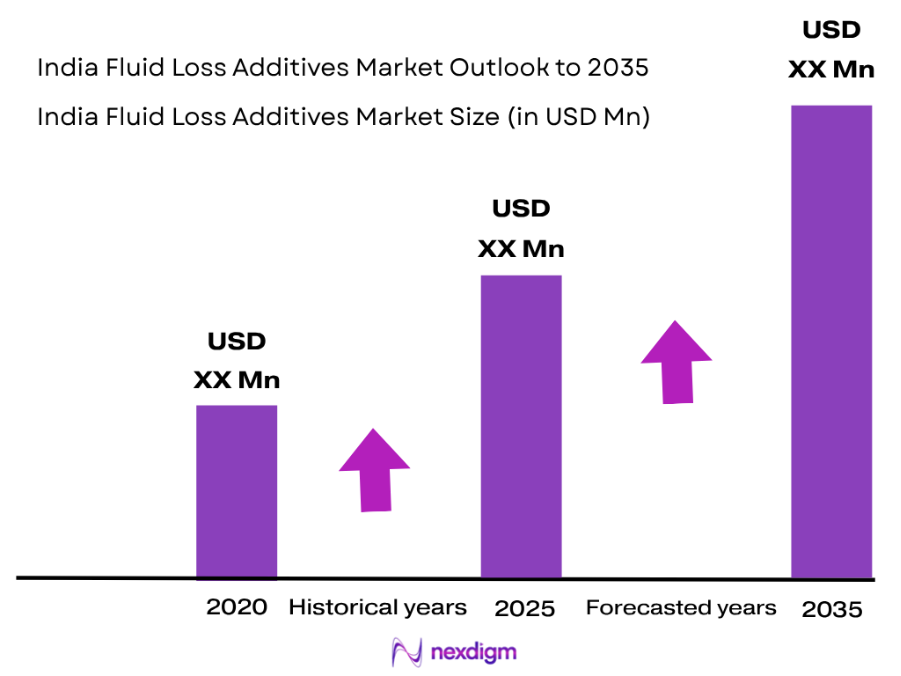
The India Fluid Loss Additives Market is valued at approximately USD ~ billion, based on the latest market assessment, and is supported by the expansion of oil and gas exploration, drilling-fluid consumption, wellbore-stability requirements, and increasing technical complexity of drilling operations. India’s upstream sector continues to require filtration-control additives for water-based, polymer-based and high-performance drilling-fluid systems. Demand is particularly linked to exploratory and development drilling, where PAC, CMC, modified starches and synthetic polymers help control filtrate invasion, maintain filter-cake quality and reduce formation damage.
The India Fluid Loss Additives Market is concentrated around major oil and gas producing and drilling regions, particularly Gujarat, Rajasthan, Assam, offshore Mumbai and the Krishna-Godavari Basin. These regions dominate because they combine hydrocarbon exploration, established drilling infrastructure, oilfield-service ecosystems and proximity to major operators and contractors. Gujarat and Rajasthan are particularly important for onshore activity, while Mumbai Offshore and the eastern offshore region support offshore drilling requirements. Industrial chemical clusters around Gujarat and Maharashtra also strengthen additive manufacturing, blending and distribution capabilities.
Market Segmentation
By Product Type
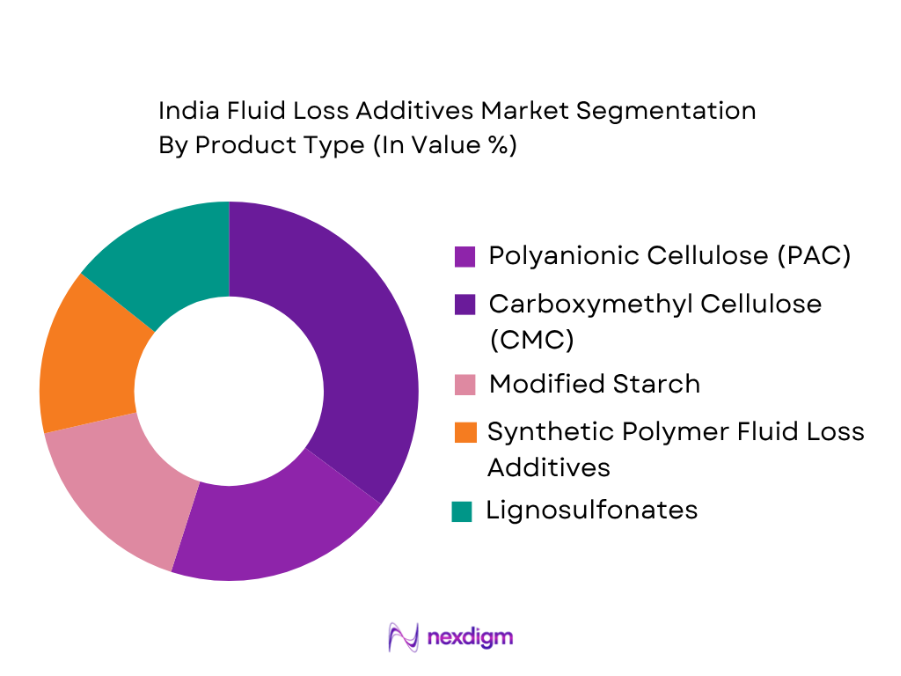
The India Fluid Loss Additives Market is segmented by product type into polyanionic cellulose, carboxymethyl cellulose, modified starch, resinated lignite, lignosulfonates, synthetic polymers and specialty high-performance fluid-loss polymers. Polyanionic cellulose is expected to hold the dominant share at approximately ~% in 2024, supported by its established application in water-based drilling fluids and its ability to provide filtration control while maintaining desirable rheological characteristics. PAC is widely applicable across conventional drilling environments and can be formulated for different salinity, temperature and density conditions. Its compatibility with commonly used drilling-fluid components makes it suitable for exploratory and development wells. Modified PAC grades can also provide improved filtration performance under challenging conditions, creating opportunities for application-specific formulations. CMC and modified starch remain important alternatives where formulation economics, temperature requirements and fluid characteristics favor their use. Synthetic polymers are gaining technical relevance in higher-performance applications requiring improved thermal and salt tolerance. However, PAC’s established field acceptance, broad applicability and availability across drilling-fluid formulations support its leading position within India’s fluid-loss-additive product landscape.
By Application
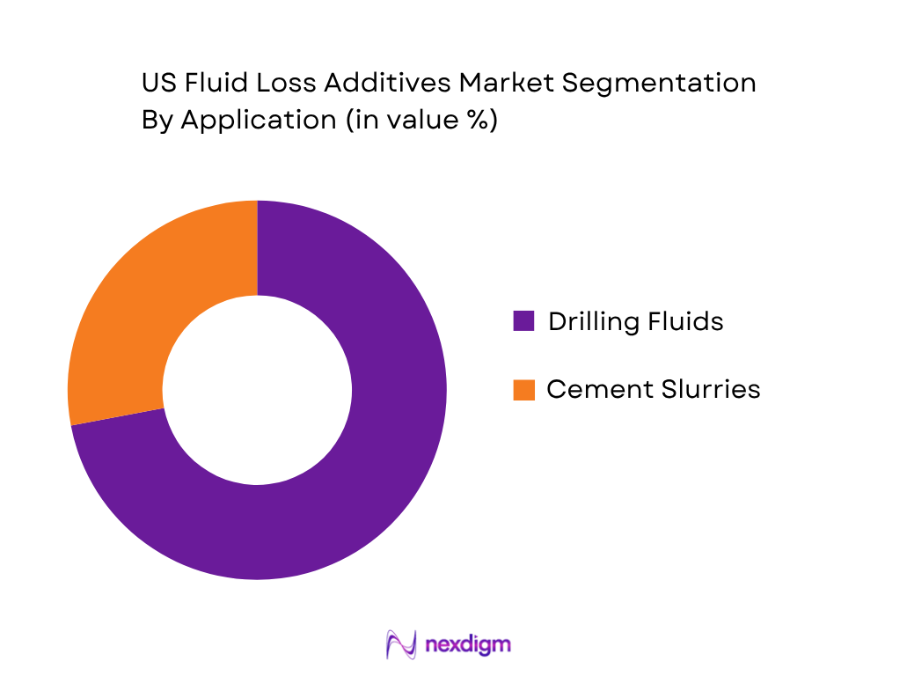
The India Fluid Loss Additives Market is segmented by application into exploratory drilling, development drilling, workover operations, completion fluids, wellbore stabilization, unconventional drilling, reservoir drill-in fluids and formation-damage-control applications. Development drilling is expected to represent the leading application with approximately ~% share in 2024, reflecting the recurring requirement for drilling-fluid systems during field development and production-well construction. Development wells require reliable filtration control to maintain wellbore stability, manage filtrate invasion and protect productive formations. Fluid-loss additives are particularly important where operators encounter permeable formations, differential-pressure conditions and extended drilling intervals. Exploratory drilling also represents a significant application because uncertainty in formation characteristics increases the importance of adaptable drilling-fluid formulations. Offshore and complex wells can require specialized fluid-loss packages capable of maintaining performance under elevated temperature, salinity and pressure. Workover and completion operations provide additional demand where fluid-loss control helps prevent excessive fluid invasion and protect reservoir productivity. Increasing attention to formation-damage prevention and reservoir drill-in technologies is also encouraging suppliers to develop application-specific additive packages rather than relying solely on standardized products.
Competitive Landscape
The India Fluid Loss Additives Market includes global oilfield-service companies, specialty chemical manufacturers, drilling-fluid specialists and regional formulation suppliers. Competition is influenced by product-performance consistency, PAC and CMC portfolio depth, HPHT filtration capability, technical support, manufacturing presence and relationships with oil and gas operators and drilling contractors. Global companies generally compete through advanced formulations and application engineering, while domestic suppliers can differentiate through localized production, shorter supply chains and customized drilling-fluid solutions.
| Company | Established | Headquarters | PAC/CMC Portfolio | HPHT Capability | Drilling-Fluid Support | India Presence | Key Differentiator | Primary Customer Base |
| SLB | ~ | Houston, USA | ~ | ~ | ~ | ~ | ~ | ~ |
| Halliburton | ~ | Houston, USA | ~ | ~ | ~ | ~ | ~ | ~ |
| Baker Hughes | ~ | Houston, USA | ~ | ~ | ~ | ~ | ~ | ~ |
| Newpark Resources | ~ | The Woodlands, USA | ~ | ~ | ~ | ~ | ~ | ~ |
| CES Energy Solutions | 2006 IPO | Calgary, Alberta | ~ | ~ | ~ | ~ | ~ | ~ |
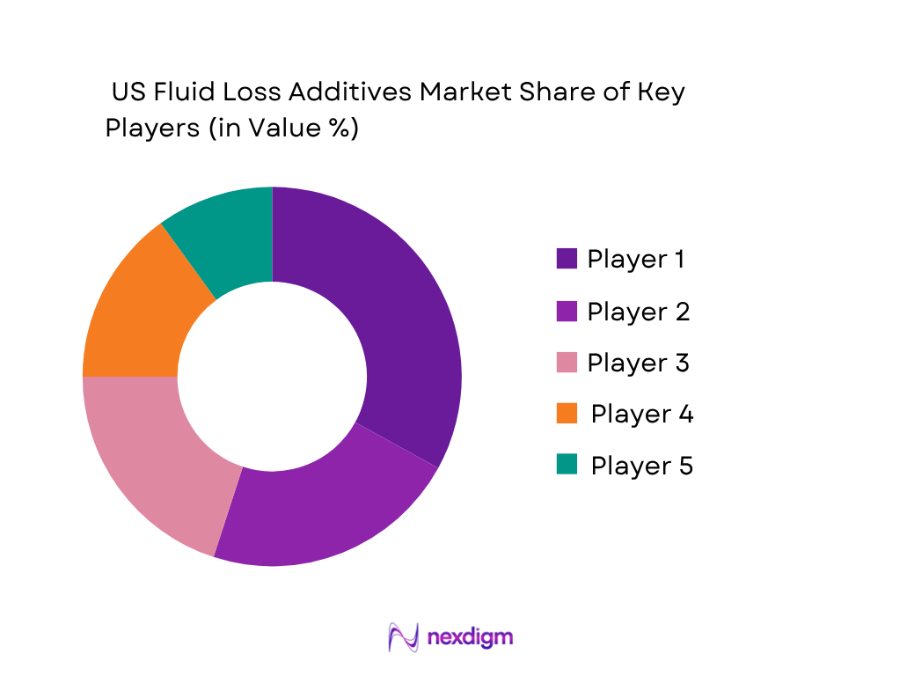
India Fluid Loss Additives Market Analysis
Growth Drivers
Expansion of Exploration and Development Drilling
The India Fluid Loss Additives Market is being supported by the continued expansion of exploration and development drilling, which directly increases the requirement for drilling-fluid systems capable of controlling filtrate invasion, maintaining filter-cake integrity and protecting productive formations. The Directorate General of Hydrocarbons reported 741 wells drilled during 2023-24, comprising 132 exploratory/appraisal wells and 609 development wells, demonstrating a substantial operating base for drilling-fluid consumption (DGH, India’s Hydrocarbon Outlook 2023-24). The subsequent DGH outlook reported 132 exploratory wells and 612 development wells during 2024-25, taking the total to 744 wells, indicating that drilling activity remained at a high level (DGH, India’s Hydrocarbon Outlook 2024-25). ONGC alone drilled 578 wells in FY2024-25, including 109 exploratory wells and 469 development wells, compared with 544 wells in FY2023-24 (ONGC, Annual Report 2024-25). This sustained drilling activity creates recurring requirements for PAC, CMC, modified starch and synthetic-polymer fluid-loss additives. The broader macroeconomic environment also supports industrial investment: the IMF estimated India’s real GDP growth at 6.5% in 2024, while its 2025 assessment projected 6.5% growth for 2025-26, reflecting continued domestic economic activity (IMF, 2025). DGH further reported that India’s 26 sedimentary basins contain 12.0 billion tonnes of oil equivalent of discovered petroleum and 12.9 billion tonnes of undiscovered potential, providing a substantial exploration resource base (DGH, 2024). The country’s sedimentary basins occupy approximately 50% of India’s onland area and 73% of its offshore area within the EEZ, creating a geographically broad requirement for drilling fluids and associated filtration-control technologies (DGH, 2024). Development drilling is particularly important because each production well requires carefully controlled fluid-loss performance to minimize formation damage while maintaining wellbore stability. The increase from 514 development wells in 2023-24 to 612 in 2024-25 also demonstrates the importance of development programs alongside exploration activity (DGH, 2024-25). As drilling contractors and operators move toward deeper targets and more technically demanding wells, fluid-loss additives must deliver consistent performance across changing temperature, pressure, salinity and formation conditions. Oil India reported drilling wells targeting depths exceeding 5,700 metres in Assam during FY2024-25, demonstrating the increasingly demanding nature of some Indian drilling operations (Oil India, Annual Report 2024-25). Consequently, the combination of active exploration, recurring development drilling, deep drilling requirements and India’s large sedimentary resource base provides a strong operational foundation for demand for fluid-loss-control chemicals.
Increasing Onshore and Offshore Drilling Activity
The India Fluid Loss Additives Market is also driven by the breadth of India’s onshore and offshore drilling environment, where drilling-fluid formulations must address different geological, temperature, pressure, salinity and wellbore conditions. DGH identified 26 sedimentary basins across India and reported that sedimentary basin coverage extends across approximately 50% of the country’s onland area and 73% of its offshore EEZ area (DGH, 2024). This geographic footprint creates demand for different fluid-loss-control formulations rather than a single standardized additive. During 2023-24, India recorded 741 wells drilled, consisting of 132 exploratory/appraisal wells and 609 development wells, while 2024-25 activity reached 744 wells, including 132 exploratory wells and 612 development wells (DGH, 2024; DGH, 2025). ONGC’s own drilling program increased from 544 wells in FY2023-24 to 578 wells in FY2024-25, with development wells increasing from 441 to 469 (ONGC, 2025). These figures demonstrate that fluid-loss-control requirements are generated across both exploratory and development programs. Offshore operations add another layer of technical complexity because drilling fluids may encounter higher pressures, temperature variations and challenging formation characteristics. DGH reported that India commenced first oil production from the challenging deepwater KG-DWN-98/2 Cluster-II during the 2023-24 reporting period, demonstrating the country’s movement into technically demanding offshore resources (DGH, 2024). Oil India also reported drilling two Assam wells beyond 5,700 metres during FY2024-25, illustrating the need for formulations capable of maintaining filtration performance at considerable depth (Oil India, 2025). India’s macroeconomic environment provides an additional foundation for upstream activity: IMF reported 6.5% real GDP growth for India in 2024 and projected 6.5% growth for 2025 and 2026, reflecting continued economic activity and energy demand (IMF, 2025). The World Bank has likewise maintained India as one of the world’s fastest-growing major economies in its recent economic assessments. For fluid-loss-additive suppliers, this combination of onshore resource development, offshore exploration and increasingly deep wells creates demand for differentiated PAC, CMC, starch and synthetic-polymer formulations. Onshore wells require cost-effective and reliable filtration control across large drilling programs, while offshore and deepwater wells create requirements for enhanced thermal stability, salt tolerance and formation protection. The diversity of India’s drilling environments also increases demand for application-specific formulation support from drilling-fluid engineers. Consequently, growth in both the number of wells and the technical complexity of drilling provides a broad demand base for fluid-loss additives across India’s upstream oil and gas industry.
Market Challenges
Raw Material Dependence and Polymer Performance Variability
The India Fluid Loss Additives Market faces a significant challenge from raw-material availability, quality consistency and variation in polymer performance. Fluid-loss-control products rely on materials such as polyanionic cellulose, carboxymethyl cellulose, modified starches and synthetic polymers whose hydration characteristics, molecular structure, purity and substitution levels can materially affect filtration performance. This becomes increasingly important as Indian operators undertake deeper and more technically complex drilling programs. DGH recorded 741 wells drilled in 2023-24 and 744 wells in 2024-25, creating a large recurring requirement for consistent drilling-fluid chemicals (DGH, 2024; DGH, 2025). ONGC alone increased drilling from 544 wells in FY2023-24 to 578 wells in FY2024-25, meaning that even relatively small variations in additive quality can affect fluid treatment requirements across a substantial number of wells (ONGC, 2025). The technical challenge is particularly relevant for PAC and CMC because changes in polymer characteristics can influence API filtration, HTHP filtration, viscosity contribution and filter-cake properties. High-temperature environments can accelerate polymer degradation, while high salinity and divalent ions can interfere with hydration and adsorption. Oil India’s FY2024-25 report provides an example of increasingly demanding drilling conditions, with two Assam wells targeting formations at depths exceeding 5,700 metres (Oil India, 2025). Such wells can require more rigorous qualification of filtration-control additives. India’s macroeconomic environment also means that industrial supply chains remain important to operating continuity: IMF estimated real GDP growth at 6.5% in 2024 and projected 6.5% for 2025 and 2026, supporting continued industrial and energy activity (IMF, 2025). However, stronger economic activity does not eliminate supply-chain exposure for specialty chemicals. Manufacturers need reliable sources of cellulose derivatives, specialty polymers and chemical intermediates while maintaining batch-to-batch consistency. The challenge becomes more complex when additives are required to perform across multiple drilling-fluid systems, including freshwater, saltwater, polymer and high-density formulations. Operators may require different additive grades depending on formation permeability, temperature, salinity and drilling-fluid composition. Consequently, suppliers must maintain rigorous quality control, laboratory testing and field-validation capabilities. The increasing diversity of Indian drilling conditions also makes it difficult for a single formulation to provide optimum performance across all wells. Companies with localized manufacturing, strong raw-material qualification systems and technical application laboratories can therefore reduce operational risk. For the wider India Fluid Loss Additives Market, raw-material security and consistent polymer performance remain important competitive factors because drilling-fluid failures can increase filtration, compromise wellbore stability and create formation-damage risks.
High-Temperature, High-Salinity and Formation-Damage Constraints
The India Fluid Loss Additives Market faces another major challenge from the need to maintain filtration control under high-temperature, high-pressure and high-salinity conditions without increasing formation-damage risk. India’s upstream industry increasingly includes deep and technically complex wells, creating greater performance requirements for drilling-fluid additives. DGH reported 132 exploratory/appraisal wells and 609 development wells during 2023-24, while 2024-25 recorded 132 exploratory wells and 612 development wells (DGH, 2024; DGH, 2025). ONGC reported 109 exploratory wells and 469 development wells in FY2024-25, with total drilling reaching 578 wells, its highest level in the previous 35 years (ONGC, 2025). The depth of certain operations adds further formulation pressure. Oil India reported two wells drilled in Assam during FY2024-25 that targeted Paleocene-Lower Eocene plays at depths exceeding 5,700 metres (Oil India, 2025). At increasing depths, elevated temperature and pressure can affect polymer hydration, degradation and filtration behavior. High-salinity environments introduce additional complications because sodium chloride and divalent ions can alter polymer interactions and reduce filtration-control effectiveness for certain additive chemistries. Calcium contamination is particularly important because it can interfere with polymer performance and create undesirable changes in drilling-fluid rheology. Formation damage is another concern: an additive that creates excessive or difficult-to-remove filter cakes can restrict fluid movement through productive formations, while inadequate filtration control can allow excessive filtrate invasion. These competing requirements make additive selection highly application-specific. India’s macroeconomic expansion reinforces the importance of reliable upstream operations. IMF reported 6.5% real GDP growth in 2024 and projected 6.5% growth for 2025 and 2026, supporting continued energy consumption and industrial activity (IMF, 2025). DGH’s assessment of 12.0 billion tonnes of oil equivalent of discovered petroleum and 12.9 billion tonnes of undiscovered potential across India’s sedimentary basins further demonstrates the long-term technical scope of exploration and development (DGH, 2024). However, resource availability does not automatically translate into straightforward drilling conditions. Operators must manage formation characteristics, drilling-fluid density, temperature, pressure and chemical compatibility simultaneously. Fluid-loss additives therefore need to provide low filtration without adversely affecting viscosity, solids tolerance or reservoir productivity. Suppliers also need application-engineering teams capable of adjusting formulations according to real-time drilling conditions. The challenge creates higher qualification requirements because operators may demand API filtration testing, HTHP testing, salinity compatibility evaluation and formation-damage assessment before approving products. As Indian drilling expands into more technically challenging environments, suppliers that cannot demonstrate stable performance across these conditions may face limitations in higher-value applications.
Market Opportunities
High-Performance PAC and CMC Formulations and Indigenous Manufacturing
The India Fluid Loss Additives Market presents an opportunity for suppliers to develop higher-performance PAC and CMC formulations while expanding domestic production of advanced drilling-fluid chemicals. The opportunity is supported by the scale of drilling activity and India’s substantial upstream resource base. DGH reported 741 wells drilled during 2023-24, including 132 exploratory/appraisal wells and 609 development wells, followed by 744 wells during 2024-25, including 132 exploratory wells and 612 development wells (DGH, 2024; DGH, 2025). ONGC accounted for 578 wells in FY2024-25, consisting of 109 exploratory and 469 development wells, providing a significant recurring application base for drilling-fluid additives (ONGC, 2025). High-performance PAC and CMC products can be engineered to provide improved filtration control, lower dosage requirements, enhanced salt tolerance and better thermal stability compared with standard grades. Such products are particularly relevant where operators encounter deeper wells, higher temperatures or formations with elevated permeability. India’s upstream resource base also supports the longer-term application opportunity: DGH identified 12.0 billion tonnes of oil equivalent of discovered petroleum and 12.9 billion tonnes of undiscovered potential across 26 sedimentary basins (DGH, 2024). Domestic manufacturing can address the need for reliable supply while enabling suppliers to customize additive grades for Indian drilling conditions. The opportunity is reinforced by the country’s strong macroeconomic environment. IMF reported 6.5% real GDP growth in 2024 and projected 6.5% growth in 2025 and 2026, indicating sustained economic activity that supports energy and industrial demand (IMF, 2025). Indigenous manufacturing can also shorten supply chains for operators and drilling-fluid companies, improve technical responsiveness and facilitate smaller customized batches. Suppliers can develop PAC grades for freshwater, seawater and salt-contaminated systems, alongside CMC products designed for specific filtration and rheology requirements. Modified starch and synthetic-polymer technologies can complement these products in more demanding applications. Local formulation laboratories can further improve performance through testing against Indian formation characteristics and drilling-fluid systems. The opportunity therefore extends beyond manufacturing volume: it involves creating application-specific products with consistent molecular characteristics, validated filtration performance and strong field support. Companies capable of combining domestic production with advanced formulation expertise can strengthen their position in exploratory, development, offshore and deep-drilling applications. The combination of recurring drilling activity, large prospective sedimentary resources and increasing technical requirements makes advanced PAC and CMC development one of the most relevant opportunities in the India Fluid Loss Additives Market.
HPHT, Offshore and Customized Drilling-Fluid Solutions
The India Fluid Loss Additives Market has a significant opportunity to develop specialized products for HPHT wells, offshore drilling, reservoir drill-in fluids, completion systems and other technically demanding applications. India’s upstream industry is increasingly extending into deeper and more complex geological targets, creating requirements that standard filtration-control products may not always satisfy. DGH recorded 132 exploratory/appraisal wells and 609 development wells in 2023-24, followed by 132 exploratory wells and 612 development wells in 2024-25 (DGH, 2024; DGH, 2025). ONGC’s drilling program reached 578 wells in FY2024-25, including 109 exploratory wells and 469 development wells (ONGC, 2025). Oil India reported that two wells drilled in Assam during FY2024-25 targeted Paleocene-Lower Eocene plays at depths exceeding 5,700 metres, demonstrating the need for formulations capable of maintaining performance at significant depth (Oil India, 2025). Offshore opportunities are also important because DGH reported first oil production from the challenging deepwater KG-DWN-98/2 Cluster-II during its 2023-24 reporting period (DGH, 2024). These operating conditions create demand for additives with improved thermal stability, pressure tolerance, high-salinity compatibility and resistance to calcium contamination. Customized drilling-fluid packages can combine fluid-loss control with rheology management, shale inhibition and formation protection rather than treating filtration control as an isolated function. Reservoir drill-in fluids represent another opportunity because operators need to balance low filtration with minimal invasion of productive formations. Digital mud monitoring can strengthen this opportunity by allowing drilling-fluid engineers to track filtration, density, rheology and solids characteristics and adjust additive concentrations during operations. India’s macroeconomic conditions provide a supportive backdrop: IMF reported 6.5% real GDP growth for 2024 and projected 6.5% for 2025 and 2026 (IMF, 2025). DGH’s assessment of 26 sedimentary basins, covering approximately 50% of India’s onland area and 73% of offshore EEZ area, demonstrates the geographic breadth of potential drilling applications (DGH, 2024). Suppliers can therefore target differentiated segments rather than competing solely on standard additive volumes. HPHT polymers, salt-tolerant PAC, advanced CMC, low-dosage synthetic polymers and environmentally preferred cellulose derivatives can address distinct technical requirements. Local application-engineering teams can further customize formulations according to basin geology, drilling-fluid composition and operator specifications. The opportunity is consequently strongest for suppliers that combine chemical formulation capabilities, field testing, mud-engineering expertise and domestic technical support. As drilling moves toward deeper, offshore and technically complex environments, customized filtration-control solutions can become a stronger competitive differentiator within India’s fluid-loss-additive industry.
Future Outlook
The India Fluid Loss Additives Market is expected to record continued development through increasing exploration activity, development drilling and demand for technically advanced drilling-fluid formulations. Growth will increasingly depend on high-performance filtration-control products capable of operating under higher temperature, pressure and salinity conditions. The market is also expected to benefit from greater localization of oilfield chemicals and increasing demand for customized formulations. PAC, CMC, modified starch and synthetic-polymer technologies are likely to remain important, while advanced low-dosage and environmentally preferred additives can gain relevance. Digital drilling-fluid monitoring and application-specific fluid packages are expected to create additional opportunities for suppliers with strong technical-service capabilities. Offshore drilling, complex well construction and reservoir-protection requirements should further support demand for specialized fluid-loss-control solutions.
Major Players
- SLB
- Halliburton
- Baker Hughes
- Newpark Resources
- Nouryon
- Clariant
- BASF
- Ashland
- Elementis
- Chevron Phillips Chemical
- Filtron Envirotech
- Indus Fluid Systems
- SDF Chemicals
- Navin Drilling Fluids & Minerals
- Aryan Speciality Chemicals
Key Target Audience
- Oil and Gas Exploration and Production Companies
- Drilling Contractors and Well Construction Companies
- Oilfield Service and Drilling Fluid Companies
- Specialty Chemical and Oilfield Chemical Manufacturers
- Investments and Venture Capitalist Firms
- Government and Regulatory Bodies (Directorate General of Hydrocarbons, Ministry of Petroleum and Natural Gas, Oil Industry Safety Directorate)
- Oilfield Equipment and Chemical Distributors
- Industrial Chemical and Polymer Manufacturers
Research Methodology
Step 1: Identification of Key Variables
The initial phase involves mapping the India Fluid Loss Additives Market ecosystem, including oil and gas operators, drilling contractors, drilling-fluid service providers, specialty chemical manufacturers and raw-material suppliers. Key variables include additive consumption, product formulation, filtration performance, drilling activity, application requirements, well type and regional demand.
Step 2: Market Analysis and Construction
Historical and current market information is compiled across product types, drilling-fluid systems, applications, well types and end users. The analysis evaluates additive utilization, drilling-fluid consumption, operator requirements and supplier capabilities to construct a bottom-up assessment of market demand and competitive positioning.
Step 3: Hypothesis Validation and Expert Consultation
Market hypotheses are validated through discussions with oilfield-service professionals, drilling-fluid engineers, chemical suppliers, drilling contractors and upstream industry participants. Technical consultations focus on filtration-control requirements, product selection, dosage, compatibility, HPHT performance, salinity tolerance and operator purchasing criteria.
Step 4: Research Synthesis and Final Output
The final analysis integrates supplier information, drilling activity assessment, product benchmarking and demand-side insights. Data is triangulated across multiple sources to establish a consistent market framework covering product segmentation, application demand, regional activity, competitive positioning and future development opportunities.

- Executive Summary
- Research Methodology (Market Definition and Scope, Fluid Loss Additive Classification, Market Sizing Framework, Top-Down Analysis, Bottom-Up Analysis, Demand-Side Assessment, Supply-Side Assessment, Drilling Activity Mapping, Additive Consumption Assessment, Primary Industry Interviews, Supplier Validation, Data Triangulation, Forecasting Framework, Assumptions and Limitations)

- Definition and Scope
- India Oil and Gas Drilling Industry Evolution
- Fluid Loss Additives Industry Development and Technology Evolution
- India Drilling Fluids Value Chain Analysis
- Fluid Loss Additives Supply Chain Analysis (Cellulose Derivatives, Synthetic Polymers, Modified Starch, Lignosulfonates, Specialty Polymers, Chemical Blending, Drilling Fluid Service Providers, Oilfield Contractors, Exploration and Production Companies)
India Drilling Activity Landscape (Onshore Wells, Offshore Wells, Exploratory Wells, Development Wells, Conventional Wells, Unconventional Wells) - Fluid Loss Control Technology Mapping (API Filtration Control, HTHP Filtration Control, Thin Filter Cake Formation, Wellbore Stability, Formation-Damage Prevention)

- Growth Drivers (Expansion of Exploration and Development Drilling, Increasing Onshore and Offshore Drilling Activity, Growing Demand for Wellbore Stability, Increasing Use of Water-Based Drilling Fluids, Complex Well Trajectories, Development of Domestic Hydrocarbon Resources, Expansion of Unconventional Resource Evaluation, Increasing Drilling Fluid Performance Requirements)
- Market Challenges (Raw Material Supply Dependence, Polymer Performance Variability, High-Temperature Stability Requirements, High-Salinity Compatibility, Calcium Contamination, Formation-Damage Risk, Additive Compatibility Requirements, Skilled Mud Engineering Requirements, Quality Consistency, Environmental Compliance, Complex Formulation Requirements, Supply Chain Volatility)
- Market Opportunities (High-Performance PAC and CMC Formulations, Indigenous Fluid Loss Additive Manufacturing, HPHT Drilling Solutions, Offshore Fluid Loss Control, Unconventional Reservoir Development, Advanced Synthetic Polymers, Environmentally Preferred Cellulose Derivatives, Low-Dosage Additive Systems, Customized Drilling Fluid Packages, Digital Mud Monitoring, Reservoir Drill-In Fluid Solutions, Advanced Completion Fluid Systems)
- Market Trends (Higher-Performance Water-Based Mud Systems, Advanced PAC Grades, High-Temperature Polymers, Low-Dosage Formulations, Environmentally Preferred Additives, Customized Fluid-Loss Packages, Automated Mud Monitoring, Formation-Damage Reduction, High-Salinity Fluid Systems, Indigenous Drilling Chemical Development)
- Government Regulations and Standards (Directorate General of Hydrocarbons Requirements, Petroleum and Natural Gas Regulatory Framework, Hydrocarbon Exploration and Licensing Policy, Environmental Clearance Requirements, Offshore Drilling Requirements, Hazardous Chemical Handling Requirements, Drilling Waste Management Requirements, API Drilling Fluid Standards, Occupational Safety Requirements)
- SWOT Analysis
- Porter’s Five Forces Analysis
- PESTLE Analysis
- Stakeholder Ecosystem
- Competition Ecosystem

- By Market Value (2020-2025)
- By Additive Consumption Volume (2020-2025)
- By Fluid Loss Additive Consumption per Well (2020-2025)
- By Drilling Fluid Consumption Volume (2020-2025)
- By Onshore Drilling Consumption (2020-2025)
- By Offshore Drilling Consumption (2020-2025)
- By Exploratory Drilling Consumption (2020-2025)

- By Product Type (In Value %)
Polyanionic Cellulose (PAC)
Carboxymethyl Cellulose (CMC)
Modified Starch
Pre-Gelatinized Starch
High-Temperature Starch
Resinated Lignite
Lignosulfonates
Synthetic Polymer Fluid Loss Additives
Polyacrylamide-Based Additives
Specialty High-Performance Fluid Loss Polymers - By Drilling Fluid System (In Value %)
Water-Based Mud
Oil-Based Mud
Synthetic-Based Mud
Polymer Mud
High-Performance Water-Based Mud
Low-Solids Mud
Saltwater Mud Systems
High-Density Drilling Fluid Systems - By Application (In Value %)
Exploratory Drilling
Development Drilling
Workover Operations
Completion Fluids
Wellbore Stabilization
Shale and Unconventional Drilling
Reservoir Drill-In Fluids
Lost-Circulation and Filtration-Control Applications - By Well Type (In Value %)
Onshore Wells
Offshore Wells
Deepwater and Complex Offshore Wells
Horizontal Wells
Directional Wells
Vertical Wells
High-Temperature Wells
High-Pressure Wells - By End User (In Value %)
ONGC
Oil India Limited
Private Exploration and Production Companies
Joint Venture Operators
International Oil and Gas Operators
Drilling Contractors
Oilfield Service Companies
Well Construction and Completion Service Providers - By Region (In Value %)
Western India
Gujarat
Rajasthan
Maharashtra
Eastern India
Assam
West Bengal
Northeastern India
Southern India
Andhra Pradesh
Tamil Nadu
Krishna-Godavari Basin
Offshore India
Mumbai Offshore
Eastern Offshore

- Market Share of Major Players (By Revenue, Product Type, Fluid System, Application, End User, Region)
- Cross Comparison Parameters (PAC and CMC Product Portfolio, HTHP Fluid Loss Performance, API Filtration Performance, High-Salinity Compatibility, Calcium Tolerance, Thermal Stability, Additive Dosage Efficiency, India Manufacturing and Technical Support Capability)
- SWOT Analysis of Major Players
- Detailed Profiles of Major Companies
SLB
Halliburton
Baker Hughes
Newpark Resources
Nouryon
Clariant
Chevron Phillips Chemical
BASF
Ashland
Elementis
Filtron Envirotech India
Indus Fluid Systems
SDF Chemicals India
Navin Drilling Fluids & Minerals
Aryan Speciality Chemicals

- Oil and Gas Operator Requirement Assessment
- Drilling Contractor Requirement Assessment
- Mud Engineering Requirement Analysis
- Exploration Well Application Assessment
- Development Well Application Assessment
- Offshore Drilling Requirement Assessment
- Unconventional Reservoir Requirement Assessment

- By Market Value (2026-2035)
- By Additive Consumption Volume (2026-2035)
- By Fluid Loss Additive Consumption per Well (2026-2035)
- By Drilling Fluid Consumption Volume (2026-2035)
- By Onshore Drilling Consumption (2026-2035)
- By Offshore Drilling Consumption (2026-2035)
- By Exploratory Drilling Consumption (2026-2035)


 Request a Sample
 Ask for Customization
 Get a Quote
 Enquire Now
