
 Download PDF
 Download PDF
Market Overview
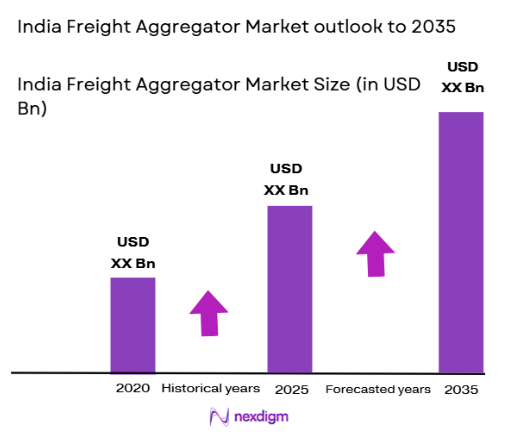
The India Freight Aggregator Market, valued at USD ~ billion, has witnessed significant growth driven by the increasing demand for efficient logistics solutions across industries like e-commerce, manufacturing, and retail. The demand for faster, reliable, and cost-effective freight transportation is boosting the adoption of digital platforms that streamline operations and enhance supply chain visibility. These platforms are also driven by advancements in artificial intelligence, machine learning, and big data analytics, enabling real-time tracking, route optimization, and predictive maintenance. The market is expected to continue expanding as businesses seek innovative solutions to manage logistics and freight services more effectively.
The market is primarily driven by large urban centers such as Mumbai, Delhi, and Bengaluru, where infrastructure, digitalization, and industrial activities converge. These cities, along with key regions like Pune and Chennai, dominate the market due to their strategic locations, robust infrastructure, and well-established transportation networks. The growth of e-commerce platforms, manufacturing hubs, and the push for efficient freight management are key factors driving demand in these areas. These regions are also benefiting from government initiatives to modernize logistics infrastructure and promote digital platforms in freight aggregation.
Market Segmentation
By Product Type:
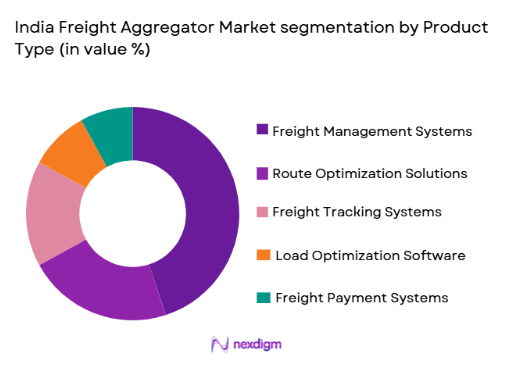
The India Freight Aggregator Market is segmented by product type into several sub-segments. Recently, freight management systems have dominated the market share, driven by the growing demand for end-to-end solutions that offer real-time tracking, route optimization, and seamless communication between carriers and customers. The increasing reliance on integrated systems that connect various elements of the supply chain has significantly boosted the demand for these solutions. Freight management systems are widely adopted by logistics service providers and large enterprises that require a robust system to manage multiple shipments efficiently across different regions.
By Platform Type:
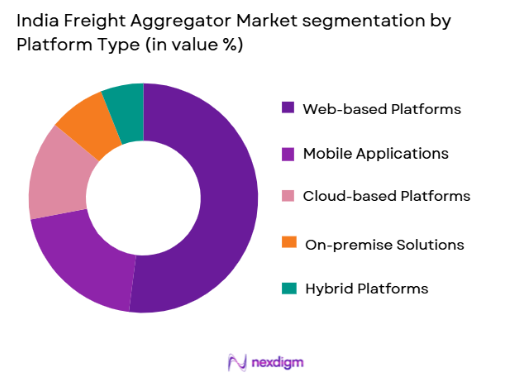
The India Freight Aggregator Market is also segmented by platform type into several sub-segments. Web-based platforms have taken the lead in market share, driven by their flexibility and the growing trend of businesses moving towards cloud solutions for managing freight operations. Web-based platforms provide accessibility across devices and allow for easier integration with other supply chain management tools. Their widespread adoption is fueled by the increasing preference for scalable, cloud-based services that reduce operational costs and improve data accessibility for users across multiple locations.
Competitive Landscape
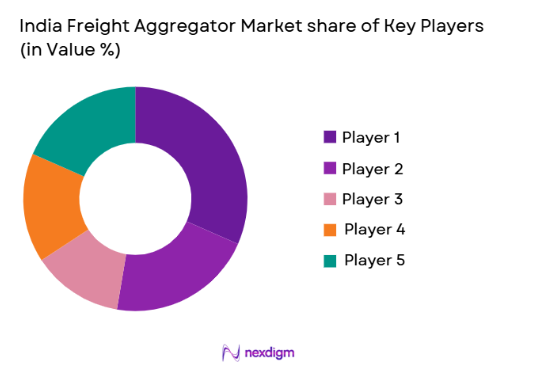
The competitive landscape of the India Freight Aggregator Market is characterized by consolidation, with both established logistics companies and technology startups aggressively expanding their digital footprints. The market is increasingly influenced by major players who are investing heavily in technological advancements and expanding their service offerings to capture a larger share of the growing demand for digital freight solutions. The rise of key regional players along with global logistics giants who are focusing on digital transformation is further intensifying competition.
| Company Name | Establishment Year | Headquarters | Technology Focus | Market Reach | Key Products | Revenue (USD) | Additional Parameter |
| Delhivery | 2011 | Gurugram, India | ~ | ~ | ~ | ~ | ~ |
| Gati | 1989 | Hyderabad, India | ~ | ~ | ~ | ~ | ~ |
| Rivigo | 2014 | Gurugram, India | ~ | ~ | ~ | ~ | ~ |
| Xpressbees | 2015 | Pune, India | ~ | ~ | ~ | ~ | ~ |
| Ecom Express | 2012 | Gurugram, India | ~ | ~ | ~ | ~ | ~ |
India Freight Aggregator Market Analysis
Growth Drivers
Government Initiatives:
The government’s push to improve logistics infrastructure through initiatives such as the National Logistics Policy (NLP) is accelerating the growth of the freight aggregation market. This policy aims to streamline logistics processes, enhance connectivity, and reduce costs for freight operators. The policy encourages investment in technology, which is crucial for optimizing freight operations. Through initiatives like the Bharatmala Project, the government is improving road infrastructure and making it easier for logistics companies to deliver goods efficiently. Furthermore, the introduction of digital platforms to ease freight booking, tracking, and management has led to an increased uptake of digital freight services by logistics providers and customers alike. This progress is instrumental in the market’s growth, as digital transformation boosts operational efficiency, enabling logistics companies to meet the increasing demand for fast and reliable freight services.
Technological Advancements:
The rapid advancement in technology is playing a pivotal role in driving the freight aggregation market in India. Technologies such as artificial intelligence (AI), machine learning (ML), and the Internet of Things (IoT) have enabled freight aggregators to offer more efficient, data-driven solutions. These technologies allow for route optimization, real-time tracking, and predictive analytics, which helps logistics companies minimize costs, improve delivery times, and increase customer satisfaction. Additionally, the integration of blockchain technology in logistics ensures greater transparency and security, which is vital for maintaining trust in the supply chain. These technological advancements are transforming traditional logistics operations and are expected to continue driving growth in the freight aggregator market in the coming years.
Market Challenges
Infrastructure Limitations:
One of the primary challenges faced by the India Freight Aggregator Market is the inadequate infrastructure in certain regions, which hampers the efficient movement of goods. Although major cities like Mumbai, Delhi, and Bengaluru have well-established logistics infrastructure, rural and semi-urban areas still face issues such as poor road connectivity, outdated transport systems, and lack of warehousing facilities. These limitations affect the ability of freight aggregators to deliver goods in a timely manner and significantly impact their operational costs. Additionally, regulatory complexities and delays in the clearance of goods at border points further contribute to inefficiencies. Addressing these infrastructure limitations will be critical for sustaining long-term growth in the sector.
Cybersecurity Risks:
As the India Freight Aggregator Market increasingly adopts digital platforms, cybersecurity risks have become a major concern. Digital freight solutions depend heavily on cloud-based systems and real-time data sharing, which makes them vulnerable to cyber-attacks, data breaches, and other security threats. The lack of a robust cybersecurity framework in many logistics firms exacerbates this risk, leading to potential losses and damage to customer trust. With the rise of e-commerce and greater dependence on digital platforms for freight services, it is vital for companies to invest in advanced cybersecurity measures to safeguard customer data and maintain a secure supply chain.
Opportunities
Expansion of Digital Freight Platforms:
The growing demand for faster and more efficient delivery services has created a significant opportunity for digital freight platforms. These platforms allow businesses to manage shipments, track deliveries, and optimize routes in real time, all through a user-friendly interface. The integration of advanced technologies like AI, ML, and IoT into digital platforms is expected to offer even greater benefits, such as predictive analytics and automated decision-making. The shift towards digital solutions is particularly beneficial for e-commerce companies and manufacturers, who require reliable, cost-effective, and scalable logistics solutions. With the increasing focus on improving logistics infrastructure and digital services, the expansion of digital freight platforms presents a promising opportunity for market players.
Rise in E-commerce and Retail Demand:
The rise in e-commerce and the growing demand for retail goods is fueling the need for efficient freight services in India. As online shopping becomes more prevalent, there is an increasing demand for logistics solutions that can ensure timely delivery and product tracking. This shift presents a significant opportunity for freight aggregators to cater to the growing logistics needs of e-commerce platforms. Freight aggregators can provide efficient last-mile delivery solutions, help retailers scale their operations, and ensure a smooth supply chain experience. With more consumers shopping online, the demand for freight aggregation services is expected to continue growing in the coming years, making it an important opportunity for market players.
Future Outlook
The future outlook for the India Freight Aggregator Market looks promising, with substantial growth expected in the next five years. Increased government support, advancements in digital technologies, and the expansion of e-commerce are likely to drive the market forward. The shift towards automation and AI in logistics will further optimize the sector, enhancing operational efficiency and reducing costs. Regulatory support, such as the implementation of logistics policies and infrastructure development, will play a significant role in shaping the market’s future. Furthermore, as demand for faster, more reliable delivery solutions rises, freight aggregators will increasingly rely on innovative digital platforms to meet these expectations.
Major Players
- Delhivery
- Gati
- Rivigo
- Xpressbees
- Ecom Express
- Blue Dart Express
- DTDC
- India Post
- TCI Express
- Mahindra Logistics
- Transport Corporation of India
- Lalit Shipping Services
- Allcargo Logistics
- Freight Tiger
- Flyt
Key Target Audience
- Investments and venture capitalist firms
- Government and regulatory bodies
- Freight service providers
- Large e-commerce platforms
- Manufacturers requiring logistics solutions
- Logistics service providers
- Retailers in need of freight aggregation
- Automotive companies
Research Methodology
Step 1: Identification of Key Variables
Identifying key factors affecting market growth such as infrastructure, technological advancements, and regulatory policies.
Step 2: Market Analysis and Construction
Analyzing market trends, historical data, and consumer behavior to build a comprehensive market model.
Step 3: Hypothesis Validation and Expert Consultation
Validating assumptions and hypotheses through interviews with industry experts and market stakeholders.
Step 4: Research Synthesis and Final Output
Synthesizing all collected data and expert insights to produce a detailed, actionable market report.

- Executive Summary
- Research Methodology (Definitions, Scope, Industry Assumptions, Market Sizing Approach, Primary & Secondary Research Framework, Data Collection & Verification Protocol, Analytic Models & Forecast Methodology, Limitations & Research Validity Checks)

- Market Definition and Scope
- Value Chain & Stakeholder Ecosystem
- Regulatory / Certification Landscape
- Sector Dynamics Affecting Demand
- Strategic Initiatives & Infrastructure Growth

- Growth Drivers
Growth in E-commerce Demand
Increase in Urbanization and Freight Movement
Technological Advancements in Logistics
Government Initiatives for Infrastructure Development
Demand for Real-time Tracking and Monitoring - Market Challenges
Regulatory Compliance Issues
Technological Integration Challenges
Infrastructure Constraints
Operational Costs and Efficiency Issues
Cybersecurity Risks - Market Opportunities
Expansion of Digital Freight Platforms
Growth in Cross-border Freight Aggregation
Adoption of Automation and AI in Freight Management - Trends
Rise of Multimodal Freight Solutions
Increasing Adoption of AI and Automation in Logistics
Focus on Sustainability in Freight Transportation
Integration of Blockchain for Transparency and Security
Growth of Smart Logistics and IoT-based Solutions - Government Regulations & Defense Policy
Government Push for Infrastructure Development
Regulatory Compliance for Cross-border Freight
Implementation of Digital Freight Solutions - SWOT Analysis
- Stakeholder and Ecosystem Analysis
- Porter’s Five Forces Analysis
- Competition Intensity and Ecosystem Mapping

- By Market Value, 2020-2025
- By Installed Units, 2020-2025
- By Average System Price, 2020-2025
- By System Complexity Tier, 2020-2025

- By System Type (In Value%)
Freight Management Systems
Route Optimization Solutions
Freight Tracking Systems
Load Optimization Software
Freight Payment Systems - By Platform Type (In Value%)
Web-based Platforms
Mobile Applications
Cloud-based Platforms
On-premise Solutions
Hybrid Platforms - By Fitment Type (In Value%)
On-demand Solutions
Integrated Solutions
Customized Solutions
End-to-End Freight Solutions
SaaS-based Solutions - By EndUser Segment (In Value%)
Logistics Service Providers
E-commerce Platforms
Freight Transporters
Third-Party Logistics Providers
Retailers - By Procurement Channel (In Value%)
Direct Procurement
Online Platforms
Third-party Distributors
Bidding & Tendering Systems
Channel Partners - By Material / Technology (In Value%)
Artificial Intelligence
Machine Learning
Big Data Analytics
Cloud Computing
IoT Integration

- Market structure and competitive positioning
- Market share snapshot of major players
- CrossComparison Parameters (System Type, Platform Type, Procurement Channel, EndUser Segment, Fitment Type, Material / Technology, Region, Service Offering, Operational Efficiency, Pricing Strategy)
- SWOT Analysis of Key Players
- Pricing & Procurement Analysis
- Key Players
Delhivery
Blue Dart Express
Gati
Lalamove
Rivigo
Ecom Express
Xpressbees
Tata Motors
DHL Express
Flipkart
Uber Freight
Ryder Logistics
GoJek
LogiNext
Shiprocket

- Demand from E-commerce for Freight Aggregation
- Role of Third-Party Logistics Providers in Freight Management
- Focus on Automation for Large-scale Retailers
- Growth in Freight Demand from the Automotive Industry

- Forecast Market Value, 2026-2035
- Forecast Installed Units, 2026-2035
- Price Forecast by System Tier, 2026-2035
- Future Demand by Platform, 2026-2035


 Request a Sample
 Ask for Customization
 Get a Quote
 Enquire Now