
 Download PDF
Market Overview
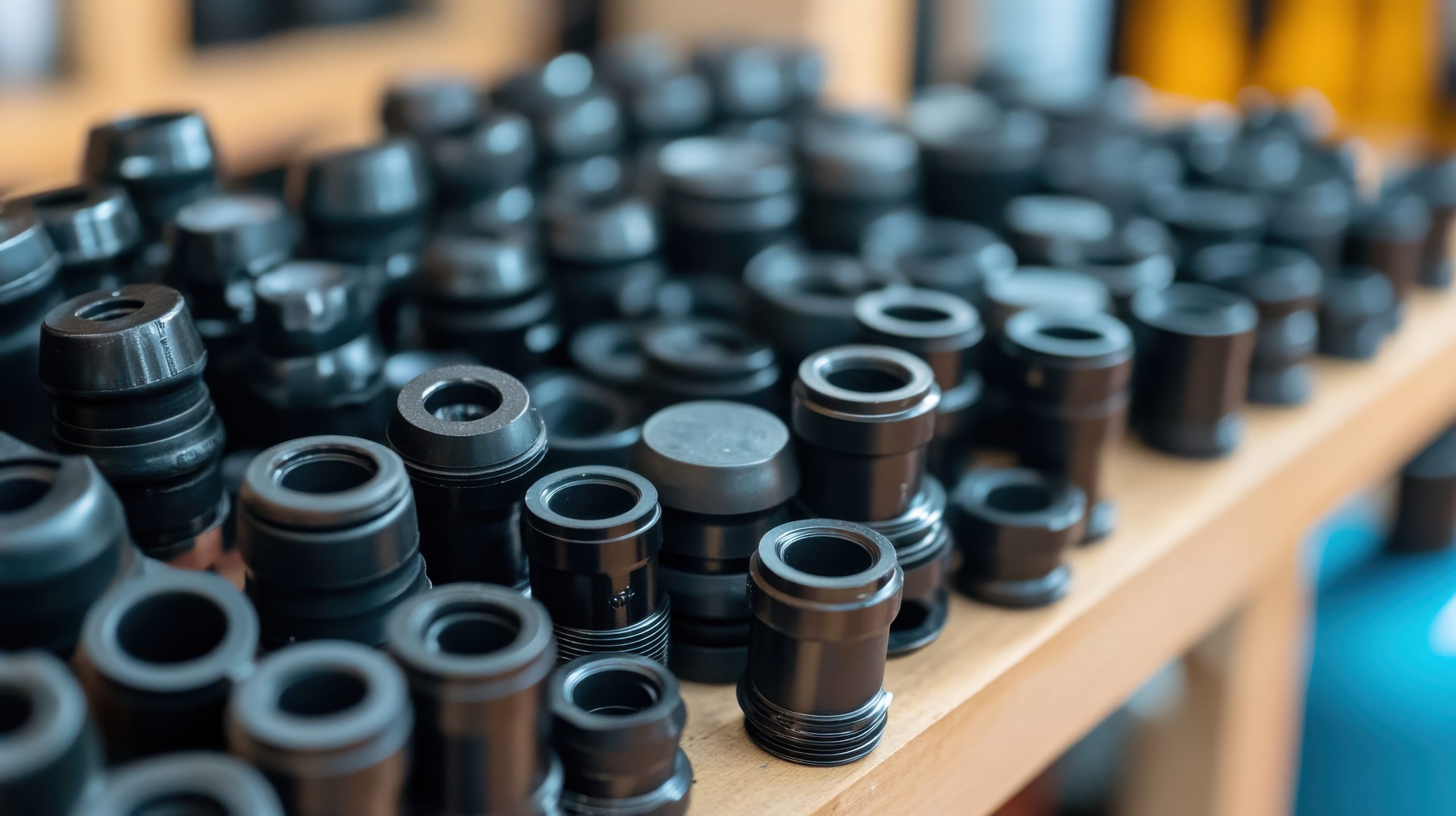
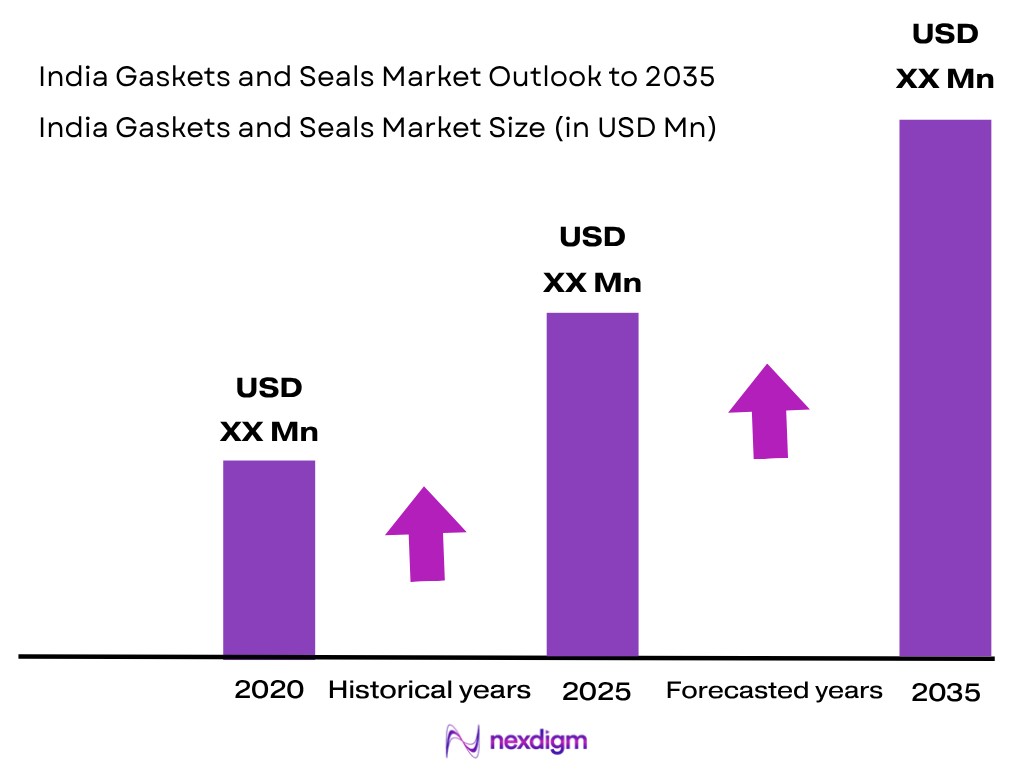
The India Gaskets and Seals Market is valued at approximately USD ~XX billion, supported by refinery operations, automotive manufacturing, chemicals, power generation, water infrastructure and industrial machinery. India’s refining capacity increased from 253.9 MMTPA to 256.8 MMTPA, while total automobile production increased from approximately 25.94 million units to 28.44 million units. This industrial expansion sustains demand for mechanical seals, industrial gaskets, O-rings, rotary seals, packing and precision elastomers.
Gujarat, Maharashtra, Tamil Nadu, Karnataka and Delhi NCR dominate India’s gasket and seal demand because they concentrate refineries, petrochemicals, automotive plants, engineering industries and advanced manufacturing. Jamnagar and Vadinar anchor Gujarat’s refining ecosystem, while Pune, Chennai, Bengaluru and Gurugram-Manesar support automotive and machinery demand. Refining capacity rose from 253.9 MMTPA to 256.8 MMTPA, while vehicle production expanded from 25.94 million to 28.44 million units, strengthening sealing consumption across these industrial corridors.
Market Segmentation
By Product Type
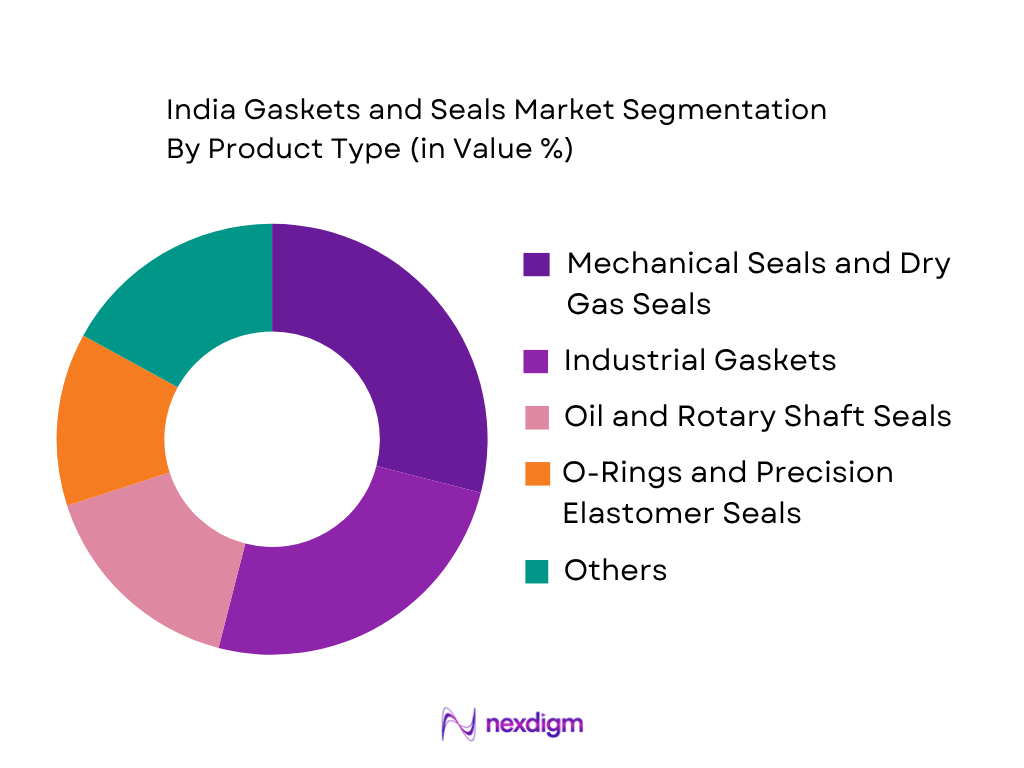
By Product Type: The India Gaskets and Seals Market is segmented into mechanical seals, industrial gaskets, oil and rotary shaft seals, O-rings and precision elastomer seals, hydraulic and pneumatic seals, and compression packing and specialty sealing products. Mechanical seals hold the dominant modeled share because India operates a large installed base of centrifugal pumps, compressors, mixers, reactors and other rotating equipment across refineries, petrochemical complexes, fertilizer plants, thermal power facilities and water-treatment infrastructure. Refining capacity of 256.8 MMTPA demonstrates the scale of process equipment requiring cartridge seals, dry gas seals and seal-support systems. Mechanical seals also generate recurring aftermarket demand through seal-face replacement, cartridge rebuilding, failure analysis and refurbishment. Their comparatively high value per application and critical role in reducing leakage and maintaining rotating-equipment reliability make them the leading product category in value terms.
By End-Use Industry
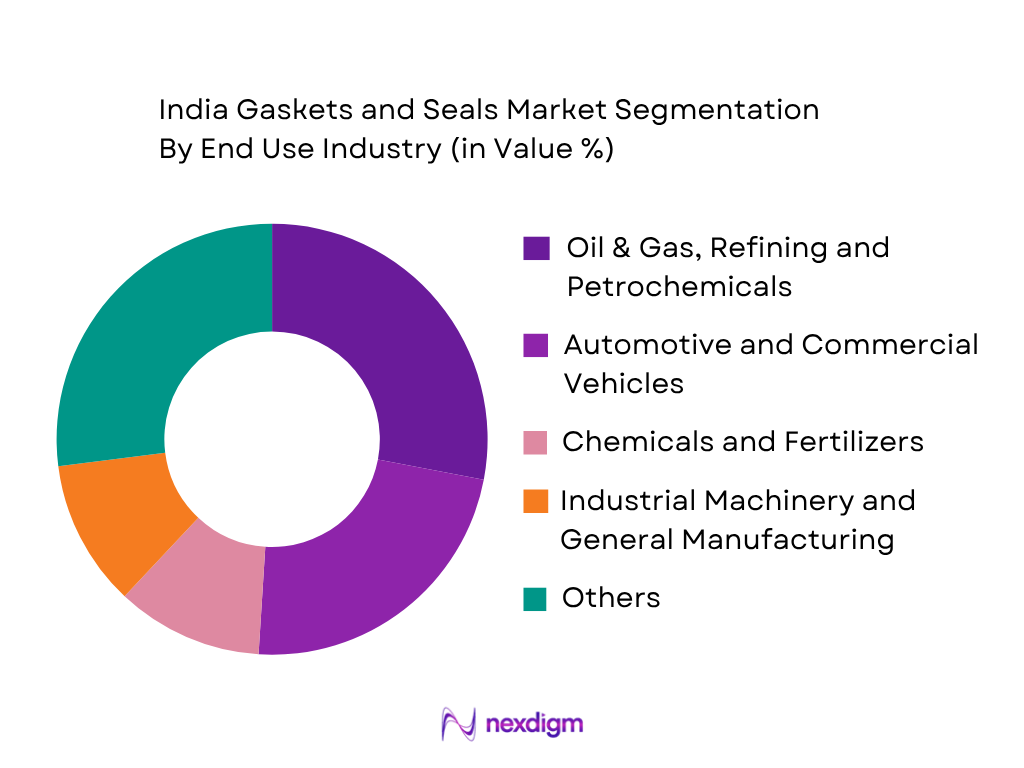
The India Gaskets and Seals Market is segmented into oil and gas, refining and petrochemicals, automotive and transportation, chemicals and fertilizer, industrial machinery, power generation, water and wastewater, semiconductor and electronics, aerospace and other manufacturing industries. Oil and gas, refining and petrochemicals represent the dominant modeled demand segment because India has one of the world’s largest refining systems, with 256.8 MMTPA of installed refining capacity and domestic petroleum-product consumption of 233.3 million tonnes. Refineries and petrochemical plants require mechanical seals, RTJ gaskets, spiral-wound gaskets, graphite products, packing and chemically resistant elastomers across pumps, compressors, valves and pressure vessels. Automotive follows closely because India produced approximately 28.44 million vehicles, creating extensive requirements for engine, transmission, axle, hydraulic, thermal-management and EV sealing systems.
Competitive Landscape
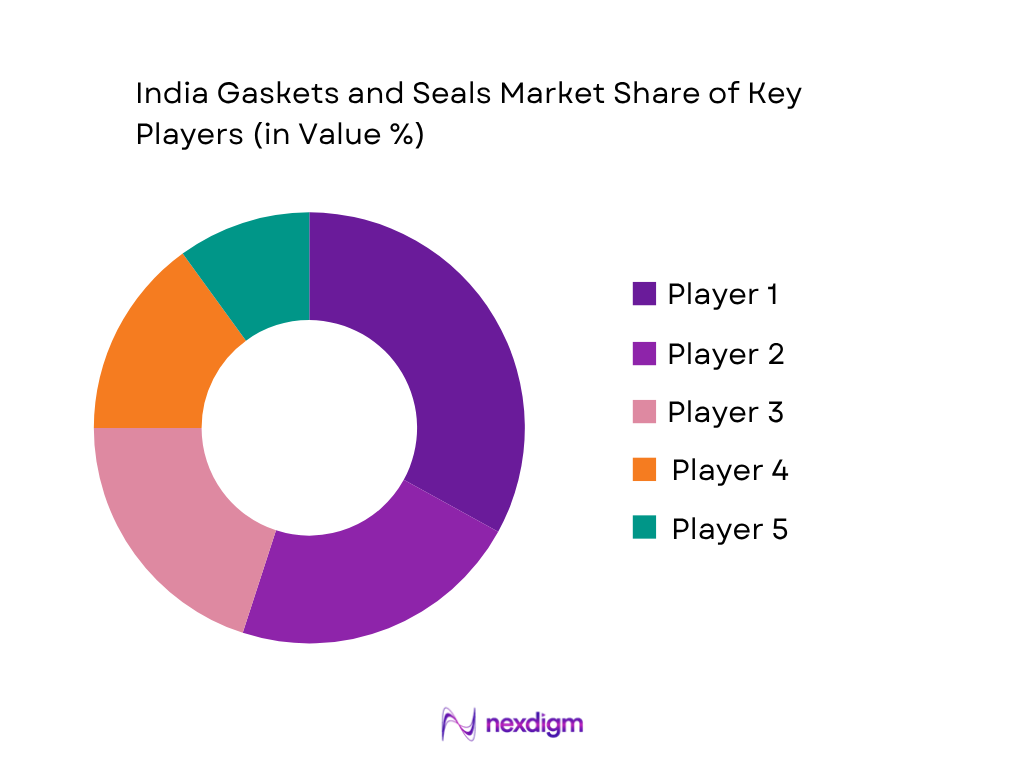
The India Gaskets and Seals Market combines global sealing-technology companies with established domestic automotive and industrial component manufacturers. John Crane and EagleBurgmann are strongly positioned in refinery, petrochemical and rotating-equipment applications; Trelleborg Sealing Solutions has substantial precision-polymer and engineered-seal capabilities; SKF combines rotary sealing with bearing and condition-monitoring expertise; and Talbros Automotive Components maintains a significant domestic automotive gasket and sealing manufacturing footprint. Competition is shaped by localization, OEM approvals, material engineering, service capability and emergency availability.
| Major Player | Establishment Year | Headquarters | Core Sealing Portfolio | Key Material Capability | Major India End-Use Exposure | India Manufacturing / Service Capability | Mechanical Seal / MRO Capability | OEM & Engineering Strength |
| John Crane | 1917 | Slough, UK | ~ | ~ | ~ | ~ | ~ | ~ |
| EagleBurgmann | 2004 | Wolfratshausen, Germany | ~ | ~ | ~ | ~ | ~ | ~ |
| Trelleborg Sealing Solutions | 1952 | Stuttgart, Germany | ~ | ~ | ~ | ~ | ~ | ~ |
| SKF | 1907 | Gothenburg, Sweden | ~ | ~ | ~ | ~ | ~ | ~ |
| Talbros Automotive Components | 1956 | Faridabad, India | ~ | ~ | ~ | ~ | ~ | ~ |
India Gaskets and Seals Market Analysis
Growth Drivers
Large Refinery, Petrochemical and Oil & Gas Infrastructure Base
India’s expanding hydrocarbon-processing infrastructure is a major demand driver for mechanical seals, dry gas seals, spiral-wound gaskets, RTJ gaskets, graphite sealing products and compression packing. Petroleum Planning & Analysis Cell data show India’s refining system currently provides 267.116 million tonnes per annum of installed capacity, including 68.2 million tonnes across Reliance’s two Jamnagar refineries and 20 million tonnes at Vadinar. PPAC also recorded 29,193 km of operational natural-gas pipelines in its 2024 oil and gas snapshot, while total operational and under-construction pipeline length reached 35,217 km. These assets contain thousands of pumps, compressors, valves, flanged joints, heat exchangers and pressure systems where leakage prevention and rotating-equipment reliability require recurring seal replacement and refurbishment. Refinery shutdowns additionally generate concentrated requirements for custom gaskets, cartridge seals, packing and emergency MRO support. India’s broader economic base reinforces this industrial demand: World Bank data put nominal GDP at USD 3,909.89 billion in 2024 and GDP per capita at USD 2,694.7. The combination of large refining capacity, pipeline infrastructure and process-equipment intensity therefore supports persistent OEM and aftermarket consumption of industrial sealing products.
Automotive, Power and Advanced Manufacturing Scale
India’s large automotive and industrial manufacturing base creates high-volume demand for rotary shaft seals, O-rings, engine gaskets, hydraulic seals, transmission seals, bearing seals and increasingly EV thermal-management components. Government data show vehicle production increased from 28.4 million units in FY2023-24 to 31 million units in FY2024-25, while vehicle exports increased from 4.5 million units to 5.36 million units, expanding requirements across passenger vehicles, commercial vehicles, two-wheelers and component supply chains. Power infrastructure creates another substantial equipment base: Central Electricity Authority data recorded 242,996.91 MW of thermal capacity, 8,180 MW of nuclear capacity, 46,928.17 MW of large hydro capacity and total installed electricity capacity of 448,381.45 MW in July 2024. Pumps, turbines, hydraulic equipment and auxiliary systems throughout this base require dynamic seals and gasket replacements. Semiconductor investment adds higher-value demand: three projects launched in 2024 involved more than INR 1.25 lakh crore, including a 50,000-wafer-starts-per-month fabrication facility. World Bank data place India’s 2024 GDP at USD 3,909.89 billion, supporting continued industrial capital formation and engineered sealing demand.
Market Challenges
Specialty-Material and High-Purity Qualification Complexity
The India Gaskets and Seals Market faces a growing technical challenge as semiconductor, refinery, hydrogen and other critical applications require sealing products substantially more specialized than conventional industrial elastomers. Semiconductor manufacturing environments require high-purity FFKM, PTFE and engineered polymer components capable of controlling contamination, outgassing and chemical degradation under vacuum and plasma conditions. In 2024, the government approved three semiconductor units comprising a 50,000 wafer-starts-per-month fab, an Assam packaging facility designed for 48 million units per day, and a Sanand unit designed for 15 million units per day. A further semiconductor facility approved in September 2024 carries planned capacity of 6 million chips per day. These production environments raise qualification requirements for elastomer formulation, cleanliness, dimensional control and traceability. Refining simultaneously requires API-oriented mechanical-seal engineering across a national capacity base now totaling 267.116 million tonnes per annum, increasing the need for silicon-carbide faces, specialty fluoropolymers and chemically resistant materials. Suppliers unable to maintain consistent specialty compounds or qualification documentation face long approval cycles. World Bank data record India’s nominal GDP at USD 3,909.89 billion in 2024, indicating a large industrial economy where technical qualification rather than underlying demand increasingly determines supplier access to premium sealing applications.
Legacy Equipment Diversity and Skilled Mechanical-Seal Service Requirements
India’s broad industrial installed base creates a servicing challenge because seal specifications differ substantially across older refineries, power stations, chemical plants, fertilizer facilities, pipelines, water systems and newer automated manufacturing assets. PPAC currently lists 267.116 million tonnes per annum of refining capacity distributed across numerous refineries with different commissioning periods, equipment vendors and maintenance standards. Its 2024 oil-and-gas infrastructure snapshot recorded 29,193 km of operational natural-gas pipelines, creating another extensive collection of compressor, valve and flange systems requiring compatible replacement seals. Central Electricity Authority data recorded 242,996.91 MW of thermal capacity and 8,180 MW of nuclear capacity in July 2024, adding thousands of pumps, turbines and auxiliary rotating systems requiring planned maintenance. This installed-base diversity increases demand for reverse engineering, seal-face lapping, cartridge rebuilding, dimensional measurement and emergency gasket fabrication rather than standardized catalogue replacement alone. Mechanical-seal failure analysis also requires personnel familiar with alignment, vibration, process conditions and support systems, creating dependence on experienced technicians and regional service infrastructure. World Bank data record India’s 2024 GDP at USD 3,909.89 billion and GDP per capita at USD 2,694.7, reflecting an economy large enough to sustain diverse industrial assets but also a highly heterogeneous MRO requirement.
Market Opportunities
Semiconductor-Grade Seals, Green Hydrogen and Domestic Specialty-Elastomer Localization
India’s emerging semiconductor and green-hydrogen ecosystems create a future growth opportunity for locally manufactured FFKM O-rings, PTFE components, vacuum seals, hydrogen-compatible elastomers and precision-engineered sealing assemblies. In 2024, three semiconductor projects carrying more than INR 1.25 lakh crore of investment were launched, including the Dholera fab at INR 91,000 crore, the Assam assembly and test unit at INR 27,000 crore, and the Sanand unit at INR 7,600 crore. Another Sanand project approved in September 2024 involves INR 3,300 crore and capacity of 6 million chips per day, taking four approved projects to almost INR 1.5 lakh crore of investment and approximately 70 million chips per day of combined capacity. Green hydrogen provides a parallel sealing opportunity: under the National Green Hydrogen Mission, tenders were awarded in 2024 for 1,500 MW per annum of electrolyser
Hydrogen-Compatible Seals and Green-Hydrogen Electrolyser Sealing
India’s developing green-hydrogen ecosystem presents a forward growth opportunity for gasket and seal manufacturers capable of supplying hydrogen-compatible elastomers, PTFE-based seals, compressor seals, valve packing, electrolyser gaskets and sealing systems designed to manage permeation, pressure cycling and chemical exposure. The opportunity is supported by manufacturing and production capacities already awarded under the National Green Hydrogen Mission rather than by distant demand forecasts. In January 2024, contracts were awarded to 8 companies for 1,500 MW per year of electrolyser manufacturing capacity, while green-hydrogen production contracts were awarded to 10 companies for 412,000 tonnes per year of production capacity. By 2025–2026, the awarded electrolyser-manufacturing base had expanded to 3,000 MW per year across 15 companies, and awarded green-hydrogen production capacity reached 862,000 tonnes per year across 18 companies. These are significant numbers for sealing suppliers because electrolyser stacks rely on repeated sealing interfaces across cells, manifolds and balance-of-plant equipment, while hydrogen production sites also require compressors, valves, storage connections, pipelines, pumps for associated process fluids and gas-handling systems. Additional demand pathways are being established in existing heavy industries. Government data reported 20,000 tonnes per year of green-hydrogen production and supply capacity awarded specifically for supply to Indian Oil, Bharat Petroleum and Hindustan Petroleum facilities, directly linking hydrogen deployment with India’s large refinery equipment base. The green-ammonia ecosystem broadens the addressable sealing requirement: production and supply arrangements covering 724,000 tonnes per year of green ammonia had been established for 13 fertilizer units by 2025–2026.
Future Outlook
The India Gaskets and Seals Market is expected to expand at approximately ~XX% CAGR during 2026-2035, driven by refinery capacity additions, automotive localization, semiconductor manufacturing, water infrastructure, power-system modernization and industrial equipment replacement. Growth will increasingly shift from commodity sealing products toward application-engineered mechanical seals, FFKM components, high-purity products and condition-monitoring-enabled solutions.
Major Players
- EagleBurgmann India
- John Crane India
- AESSEAL India
- Trelleborg Sealing Solutions India
- SKF India
- Freudenberg Sealing Technologies India
- Parker Hannifin India
- Flowserve India
- Garlock India
- KLINGER India
- A.W. Chesterton India
- Talbros Automotive Components
- Banco Products India
- Dana India
- Seal Maker / Precision Seal Manufacturing Ecosystem India
Key Target Audience
- Gasket, Mechanical Seal and Precision Elastomer Manufacturers
- Refinery, Petrochemical, Chemical and Fertilizer Operators
- Automotive, Commercial Vehicle and EV Manufacturers
- Industrial Machinery, Pump and Compressor Manufacturers
- Semiconductor, Electronics and Advanced Manufacturing Companies
- Investments and Venture Capitalist Firms
- Government and Regulatory Bodies (Ministry of Petroleum and Natural Gas, Ministry of Heavy Industries, Ministry of Electronics and Information Technology, Bureau of Indian Standards, Petroleum and Explosives Safety Organisation, Central Pollution Control Board)
- Private Equity Firms, Industrial Distributors, EPC Contractors and Strategic Investors
Research Methodology
Step 1: Identification of Key Variables
The initial phase develops an India-specific ecosystem map covering gasket manufacturers, mechanical-seal OEMs, elastomer compounders, automotive sealing suppliers, industrial distributors, equipment manufacturers and end users. Critical variables include refining capacity, automotive production, process-industry equipment, power generation, semiconductor investment, water infrastructure, OEM fitment and replacement cycles.
Step 2: Market Analysis and Construction
Historical market construction combines top-down and bottom-up approaches. Top-down analysis assesses refinery capacity, automotive production, industrial manufacturing and infrastructure, while the bottom-up model evaluates company revenues, gasket volumes, mechanical-seal installations, replacement demand, elastomer consumption, imports, domestic production and repair activity by end-use sector.
Step 3: Hypothesis Validation and Expert Consultation
Market hypotheses are validated through computer-assisted telephone interviews with mechanical-seal manufacturers, gasket suppliers, automotive component producers, refinery maintenance teams, industrial distributors, pump manufacturers and process-industry procurement specialists. These discussions validate replacement cycles, qualification requirements, material selection, local sourcing, refurbishment intensity and regional demand patterns.
Step 4: Research Synthesis and Final Output
Primary information is triangulated with PPAC refinery statistics, SIAM vehicle-production data, government semiconductor announcements, company disclosures and manufacturing indicators. Product-level and company-level estimates are reconciled against equipment populations and end-user demand to avoid double counting between OEM fitment, distributor sales, aftermarket replacements and mechanical-seal refurbishment.

- Executive Summary
- Research Methodology (Market Definition and Product Classification, Static Versus Dynamic Seal Mapping, Mechanical Seal Installed-Base Assessment, Industrial Gasket Consumption Mapping, Automotive Seal Demand Assessment, Refinery and Petrochemical Equipment Mapping, Power Plant Rotating Equipment Assessment, Semiconductor High-Purity Seal Mapping, Water and Wastewater Pump Assessment, Domestic Manufacturing Analysis, Import-Export Assessment, OEM Versus Aftermarket Demand, Top-Down Market Sizing, Bottom-Up Revenue Reconstruction, Primary Industry Interviews, Distributor Checks, Mechanical Seal Replacement-Cycle Analysis, Data Triangulation, Forecasting Framework, Research Limitations)

- Definition and Scope
- India Gaskets and Seals Industry Evolution
- India Gaskets and Seals Value Chain Analysis
- India Gaskets and Seals Supply Chain Analysis
- Domestic Manufacturing Versus Imported Specialty Sealing Products

- Growth Drivers (Large Refinery and Petrochemical Rotating Equipment Base, Automotive and Commercial Vehicle Production, Two-Wheeler Manufacturing Scale, Oil and Gas Pipeline Infrastructure, Thermal and Nuclear Power Equipment Demand, Fertilizer and Chemical Processing Capacity, Water Infrastructure Expansion, Semiconductor Manufacturing Investment, Industrial Machinery Production, Mechanical Seal Replacement Cycles)
- Market Challenges (Specialty FFKM and Fluoropolymer Import Dependence, Fragmented Unorganized Gasket Fabrication, Low-Cost Commodity Seal Competition, OEM Qualification Requirements, API 682 Compliance Complexity, Semiconductor Purity Qualification, Skilled Mechanical Seal Technician Availability, Raw Material Supply Volatility, Legacy Equipment Diversity, Long Automotive and Industrial Approval Cycles)
- Market Opportunities (Refinery and Petrochemical Turnaround Services, Dry Gas Seal Retrofits, Low-Emission Mechanical Seals, Semiconductor-Grade FFKM Seals, EV Battery and Thermal Management Seals, Hydrogen-Compatible Seals, Green Hydrogen Electrolyser Sealing, Carbon Capture Equipment Sealing, Nuclear-Grade Seals, Water and Wastewater Pump Seals, Railway and Metro Sealing, Aerospace High-Temperature Seals, Domestic Specialty Elastomer Localization, CNC-Machined Emergency Seals, Predictive Seal Condition Monitoring)
- Market Trends (Cartridge Mechanical Seal Adoption, Dry Gas Seal Penetration, Expanded PTFE Gaskets, Low-Emission Graphite Packing, FFKM High-Purity Seals, Localization of Precision Elastomer Components, Sensor-Enabled Mechanical Seal Monitoring, Split Mechanical Seals, Bearing Isolators, EV-Specific Rotary Seals, Hydrogen-Compatible Elastomers, High-Purity Semiconductor Sealing)
- Government Regulations and Technical Standards (Bureau of Indian Standards Requirements, Petroleum and Explosives Safety Organisation Requirements, Oil Industry Safety Directorate Standards, Central Pollution Control Board Emission Requirements, Automotive Industry Standards, API 682 Mechanical Seal Requirements, ASME Gasket Standards, IATF Automotive Quality Requirements, Aerospace Quality Certification, Semiconductor Cleanliness and Material Qualification)
- SWOT Analysis
- Porter’s Five Forces Analysis
- PESTLE Analysis

- By Market Value (2020-2025)
- By Industrial Gasket Consumption Volume (2020-2025)
- By Mechanical Seal Consumption Volume (2020-2025)
- By O-Ring and Precision Elastomer Consumption Volume (2020-2025)
- By Oil and Rotary Shaft Seal Consumption Volume (2020-2025)
- By Hydraulic and Pneumatic Seal Consumption Volume (2020-2025)

- By Product Type (in value %)
Spiral Wound Gaskets
Ring Type Joint Gaskets
Kammprofile Gaskets
Metal Jacketed Gaskets
Compressed Non-Asbestos Fibre Gaskets
Flexible Graphite Gaskets
PTFE and Expanded PTFE Gaskets
Rubber and Elastomeric Gaskets
Mechanical Seals
Cartridge Mechanical Seals
Dry Gas Seals
Metal Bellows Seals
Agitator and Reactor Seals
Oil and Rotary Shaft Seals - By Material Type (in value %)
NBR
HNBR
EPDM
FKM Fluoroelastomer
FFKM Perfluoroelastomer
Silicone
Fluorosilicone
Polyurethane
PTFE
Expanded PTFE - By Equipment Application (in value %)
Centrifugal Pumps
Positive Displacement Pumps
Compressors
Turbines
Valves and Actuators
Pipeline Flanges
Heat Exchangers
Pressure Vessels
Reactors
Mixers and Agitators
Industrial Gearboxes - By End-Use Industry (in value %)
Upstream Oil and Gas
Midstream Pipelines and Gas Processing
Petrochemicals and Chemicals
Commercial Vehicles
Two-Wheelers and Three-Wheelers
Electric Vehicles and Battery Manufacturing
Railways and Metro Systems
Aerospace and Defence
Semiconductor and Electronics Manufacturing
Thermal Power Generation
Hydropower - By Demand Type (in value %)
OEM Equipment Fitment
Automotive OEM Sealing Demand
Industrial Original Equipment Demand
Routine MRO Replacement
Refinery and Petrochemical Turnarounds
Fertilizer Plant Shutdown Maintenance
Power Plant Maintenance
Mechanical Seal Replacement
Mechanical Seal Repair and Refurbishment
Emergency Gasket Fabrication
Automotive Aftermarket Replacement - By Sales Channel (in value %)
Direct Manufacturer-to-OEM Sales
Direct Manufacturer-to-Industrial End User Sales
Authorized Industrial Distributors
Gasket Fabricators and Converters
Mechanical Seal Service Centres
Pump and Compressor Service Providers
Automotive Tier Suppliers
Automotive Aftermarket Distributors
EPC Procurement

- Market Share of Major Players (India Revenue, Product Category, End-Use Industry, OEM Exposure, MRO Exposure, Domestic Manufacturing, Distribution Footprint)
- Cross Comparison Parameters (India Gaskets and Seals Revenue, Static-Dynamic-High-Purity Sealing Portfolio Breadth, Refining-Automotive-Power-Semiconductor Application Coverage, India Manufacturing-Gasket Fabrication-Elastomer Moulding Capability, FFKM-PTFE-Graphite-Metallic Material Portfolio, Mechanical Seal Repair and Refurbishment Footprint, India Inventory-Distribution and Field-Service Network Coverage, API-OEM-IATF-Semiconductor Qualification and Application Engineering Capability)
- SWOT Analysis of Major Players (Product Technology, India Manufacturing, Local Material Capability, End-Use Exposure, OEM Relationships, MRO Infrastructure, Distribution Reach, Localization Strength)
- Detailed Profiles of Major Companies
EagleBurgmann India
John Crane India
AESSEAL India
Trelleborg Sealing Solutions India
SKF India
Freudenberg Sealing Technologies India
Parker Hannifin India
Flowserve India
Garlock India
KLINGER India
A.W. Chesterton India
Talbros Automotive Components
Banco Products India
Dana India
Seal Maker / Precision Seal Manufacturing Ecosystem India

- Refinery Procurement Assessment
- Automotive OEM Procurement Assessment
- Process Industry Requirement Assessment
- Semiconductor Customer Requirement Assessment
- Power Plant Customer Requirement Assessment
- Water Utility Procurement Assessment

- By Market Value (2026-2035)
- By Industrial Gasket Consumption Volume (2026-2035)
- By Mechanical Seal Consumption Volume (2026-2035)
- By O-Ring and Precision Elastomer Consumption Volume (2026-2035)
- By Oil and Rotary Shaft Seal Consumption Volume (2026-2035)
- By Hydraulic and Pneumatic Seal Consumption Volume (2026-2035)


 Request a Sample
 Ask for Customization
 Get a Quote
 Enquire Now