
 Download PDF
 Download PDF
Market Overview
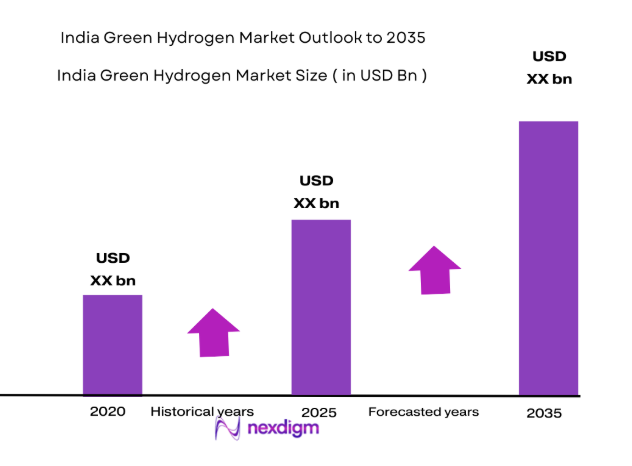
The India Green Hydrogen market has witnessed significant growth, driven by governmental initiatives supporting clean energy adoption and advancements in hydrogen production technologies. With a market size reaching USD ~ billion, the sector is propelled by increasing investments in renewable energy sources and a nationwide push toward reducing carbon emissions. This expansion is further fueled by the growing demand for hydrogen-powered solutions in various sectors, including transportation, energy, and industry. The government’s policy incentives have been crucial in stimulating this sector’s growth, alongside improvements in green hydrogen production methods.
India is at the forefront of green hydrogen production in the Asia-Pacific region, with dominant activity in cities like New Delhi, Mumbai, and Bangalore. These cities benefit from robust industrial infrastructure, strong governmental support, and proximity to renewable energy sources like solar and wind power. The country’s commitment to meeting sustainability targets, particularly the 2030 decarbonization goals, strengthens India’s position as a global leader in green hydrogen production. Major industrial hubs are fostering innovation and collaboration, accelerating the deployment of green hydrogen technologies.
Market Segmentation
By Product Type
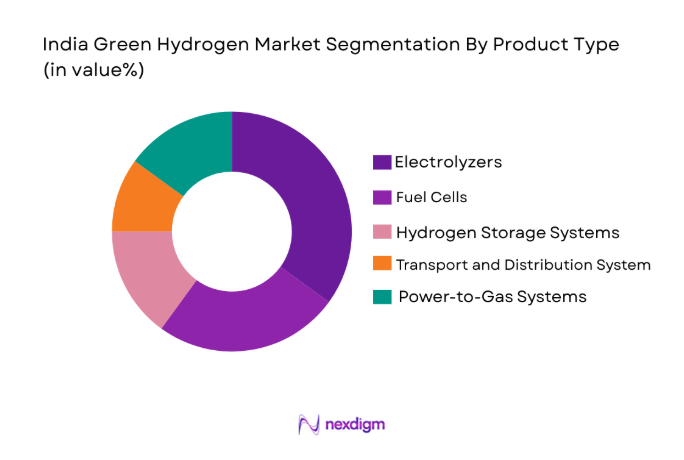
The India Green Hydrogen market is segmented by product type into electrolyzers, fuel cells, hydrogen storage systems, transport and distribution systems, and power-to-gas systems. Recently, electrolyzers have dominated the market share due to increasing demand for efficient and scalable hydrogen production technologies. Factors such as technological advancements, government incentives, and the growing adoption of hydrogen in various industrial applications have driven this sub-segment’s growth, making it the preferred choice for clean energy initiatives.
By Platform Type
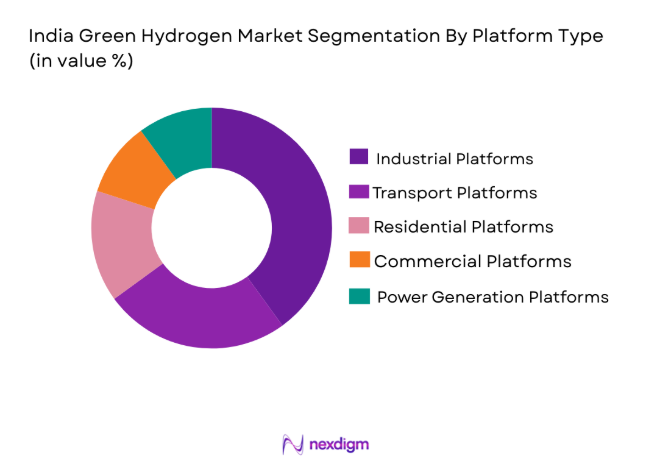
The India Green Hydrogen market is segmented by platform type into industrial platforms, transport platforms, residential platforms, commercial platforms, and power generation platforms. Recently, industrial platforms have secured a dominant market share due to the increasing demand for clean energy solutions in industrial applications. These platforms benefit from large-scale adoption, government-driven projects, and the need to reduce emissions in the industrial sector, making them a key focus for hydrogen integration and sustainable energy solution.
Competitive Landscape
The competitive landscape of the India Green Hydrogen market is marked by a mix of established companies and new entrants aiming to capitalize on the growing demand for clean energy solutions. Major players in the market are consolidating their positions through strategic partnerships, collaborations, and technological advancements to offer cutting-edge green hydrogen solutions. Companies with strong R&D capabilities and government support are at the forefront of this transformation.
| Company Name | Establishment Year | Headquarters | Technology Focus | Market Reach | Key Products | Revenue (USD) | Additional Market-Specific Parameter |
| Indian Oil Corporation Limited | 1959 | New Delhi, India | ~ | ~ | ~ | ~ | ~ |
| Reliance Industries Limited | 1966 | Mumbai, India | ~ | ~ | ~ | ~ | ~ |
| NTPC Limited | 1975 | New Delhi, India | ~ | ~ | ~ | ~ | ~ |
| Adani Group | 1988 | Ahmedabad, India | ~ | ~ | ~ | ~ | ~ |
| Tata Power | 1919 | Mumbai, India | ~ | ~ | ~ | ~ | ~ |
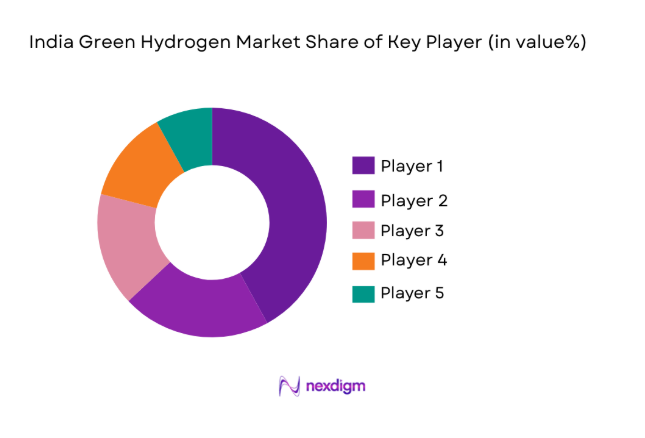
India Green Hydrogen Market Analysis
Growth Drivers
Government Policies and Incentives
The Indian government’s robust support for green hydrogen continues to be a major driver of market growth. By offering various subsidies, tax incentives, and funding for green hydrogen projects, the government has incentivized investments in the necessary infrastructure. This policy support is crucial as India strives to meet its decarbonization goals and targets for 2030, with green hydrogen playing a significant role in the nation’s transition to clean energy. Furthermore, the Indian government’s focus on decreasing reliance on fossil fuels and its broader commitment to sustainable energy systems have made green hydrogen an essential pillar of its energy strategy. Government initiatives aimed at facilitating renewable energy production, such as the National Hydrogen Mission, have spurred companies to explore hydrogen as a viable energy source for industries ranging from transportation to manufacturing. As these incentives align with the global shift toward low-carbon solutions, they ensure green hydrogen’s growing presence in India’s energy mix, offering long-term market opportunities.
Technological Advancements in Electrolyzers and Fuel Cells
Rapid technological progress in electrolyzers and fuel cells has dramatically boosted the efficiency and scalability of green hydrogen production, marking a key growth driver. Advances in electrolyzer design, particularly in alkaline and proton-exchange membrane (PEM) technologies, have significantly reduced the cost of producing hydrogen. Coupled with developments in fuel cell efficiency, this has enhanced the viability of green hydrogen as a clean energy solution. These innovations have made it possible to generate hydrogen more affordably, which is essential for widespread adoption across various sectors. The integration of hydrogen production technologies into key applications such as transportation, industrial power generation, and energy storage is driving the demand for green hydrogen. As the cost of production continues to fall due to technological improvements, green hydrogen will increasingly compete with fossil fuels in industries such as transportation, power, and heavy industry. Furthermore, the rise of hydrogen fuel cell electric vehicles (FCEVs) is expected to further accelerate the demand for green hydrogen in the automotive sector, particularly as governments implement stricter emissions regulations and push for decarbonization in the transportation industry.
Market Challenges
High Capital Cost of Green Hydrogen Production Systems
A significant hurdle facing the India Green Hydrogen market is the high capital cost of hydrogen production systems. Despite reductions in the cost of electrolyzers and other production technologies, the initial investment required for infrastructure, such as hydrogen production facilities and distribution networks, remains prohibitively expensive for many players. The steep capital expenditures required to scale up production systems often create a barrier to entry for smaller, local players who struggle to compete with well-capitalized, multinational corporations that can bear the high upfront costs. As a result, the lack of funding options for small and medium enterprises (SMEs) can slow the pace of market development. This challenge is compounded by the need for significant investment in hydrogen storage and transportation infrastructure. Without a favorable cost structure, it is difficult for the green hydrogen market to scale efficiently. The government’s role in addressing this barrier through funding support and long-term policy frameworks will be key to accelerating market growth and adoption.
Limited Hydrogen Distribution Infrastructure
Another significant challenge to the growth of the India Green Hydrogen market is the limited infrastructure for hydrogen distribution and storage. While the demand for hydrogen is increasing, the absence of a well-established, national distribution network presents a bottleneck in delivering hydrogen to end users. Without a robust and cost-effective distribution infrastructure, the scalability of green hydrogen production is constrained, limiting its market penetration. The lack of hydrogen storage solutions further exacerbates the problem, as hydrogen must be stored under high pressure or in liquid form, both of which require specialized infrastructure. In addition, the development of pipelines, storage facilities, and distribution networks requires substantial investments from both the private and public sectors. The relatively nascent state of hydrogen infrastructure poses challenges in scaling green hydrogen solutions across the country, particularly for applications in industrial use and transportation. However, as demand grows, investment in infrastructure will become critical for facilitating wider adoption and ensuring a sustainable green hydrogen ecosystem in India.
Opportunities
Growth of Green Hydrogen in Transportation
One of the most promising opportunities for the India Green Hydrogen market lies in its potential for revolutionizing the transportation sector. With increasing concerns about carbon emissions from fossil fuels, India is focused on transitioning toward sustainable mobility solutions. Green hydrogen, used in fuel cell electric vehicles (FCEVs), presents a compelling alternative to traditional battery electric vehicles (BEVs), especially for heavy-duty applications like trucks, buses, and long-range vehicles. Unlike BEVs, which are constrained by the limitations of battery capacity and charging infrastructure, hydrogen fuel cells provide faster refueling times and longer ranges, making them ideal for commercial transportation. Additionally, with the government’s focus on decarbonization and promoting clean energy solutions, there is a growing push to introduce green hydrogen in urban and rural transportation fleets. Hydrogen-powered buses and trucks are already being tested in various regions, with plans for widespread adoption. As the automotive industry shifts toward decarbonization, the integration of hydrogen-powered vehicles into public transport systems and freight networks offers a substantial opportunity for market growth.
International Collaborations and Export Potential
India has significant potential to become a global leader in green hydrogen production, thanks to its abundant renewable energy resources and ongoing technological advancements. As demand for clean hydrogen grows internationally, especially in regions like Europe and Japan, India is well-positioned to capitalize on this opportunity through international collaborations. These collaborations could focus on joint research and development, technology exchange, and the export of green hydrogen to meet the global demand. India’s geographic location, access to vast solar and wind resources, and government policies supporting clean energy make it an attractive partner for global players seeking to establish hydrogen supply chains. Furthermore, India’s growing green hydrogen production capacity could be exported to international markets to support global energy transition efforts. Such collaborations can foster innovation, reduce production costs, and improve hydrogen technology infrastructure, enhancing India’s role in the international green hydrogen supply chain. The development of export-oriented hydrogen projects will open new revenue streams and strengthen India’s position in the global hydrogen economy.
Future Outlook
The future of the India Green Hydrogen market is promising, with expected growth driven by advancements in production technology, increased government support, and the expanding demand for clean energy solutions. Over the next five years, the market is set to witness technological developments in hydrogen production and storage, making it a more cost-effective and scalable energy source. Regulatory frameworks are likely to evolve, offering further incentives for both producers and consumers of green hydrogen. The growing demand for hydrogen-powered solutions across sectors such as transportation, energy, and industry will play a crucial role in shaping the market’s trajectory.
Major Players
- Indian Oil Corporation Limited
- Reliance Industries Limited
- NTPC Limited
- Adani Group
- Tata Power
- Greenko Group
- JSW Energy
- Power Grid Corporation of India
- Air Products and Chemicals, Inc.
- Siemens Energy
- Plug Power Inc.
- Nel ASA
- Thyssenkrupp
- Linde Group
- Bloom Energy
Key Target Audience
- Investments and venture capitalist firms
- Government and regulatory bodies
- Energy companies and utilities
- Renewable energy developers
- Hydrogen technology providers
- Industrial players in heavy industries
- Automotive manufacturers
Research Methodology
Step 1: Identification of Key Variables
The key variables affecting the India Green Hydrogen market are identified based on industry trends, technological advancements, and regulatory frameworks. A thorough review of relevant variables is conducted to ensure a comprehensive understanding of the market.
Step 2: Market Analysis and Construction
Market analysis is carried out by studying current data on market trends, growth drivers, and challenges. Analytical tools and models are used to construct a reliable market framework based on available data and industry reports.
Step 3: Hypothesis Validation and Expert Consultation
Experts and stakeholders are consulted to validate hypotheses. This step ensures that the data and findings align with real-world conditions and the industry’s evolving dynamics.
Step 4: Research Synthesis and Final Output
The final research output is synthesized from all the collected data, analyzed findings, and expert consultations. This comprehensive report provides an accurate, up-to-date overview of the India Green Hydrogen market.

- Executive Summary
- Research Methodology (Definitions, Scope, Industry Assumptions, Market Sizing Approach, Primary & Secondary Research Framework, Data Collection & Verification Protocol, Analytic Models & Forecast Methodology, Limitations & Research Validity Checks)

- Market Definition and Scope
- Value Chain & Stakeholder Ecosystem
- Regulatory / Certification Landscape
- Sector Dynamics Affecting Demand
- Strategic Initiatives & Infrastructure Growth

- Growth Drivers
Government Policies and Incentives for Green Hydrogen
Technological Advancements in Electrolyzer and Fuel Cell Technologies
Increasing Demand for Clean Energy Solutions
Decarbonization Targets and Sustainability Initiatives
Availability of Renewable Energy Resources - Market Challenges
High Capital Cost of Green Hydrogen Production Systems
Limited Infrastructure for Hydrogen Distribution
Technological Barriers in Large-Scale Implementation
Regulatory and Compliance Issues
Market Acceptance and Awareness Challenges - Market Opportunities
Growth of Green Hydrogen in Transportation Sector
International Collaborations and Export Potential
Technological Innovations in Hydrogen Production and Storage - Trends
Integration of Green Hydrogen in Industry 4.0
Rise of Hybrid Renewable Energy Solutions - Government Regulations
Data Protection and Privacy Regulations
Export Control and Compliance Policies
Government Funding and Grants for Green Hydrogen Technologies - SWOT Analysis
- Porter’s Five Forces

- By Market Value, 2020-2025
- By Installed Units, 2020-2025
- By Average System Price, 2020-2025
- By System Complexity Tier, 2020-2025

- By System Type (In Value%)
Electrolyzers
Fuel Cells
Hydrogen Storage Systems
Transport and Distribution Systems
Power-to-Gas Systems - By Platform Type (In Value%)
Industrial Platforms
Transport Platforms
Residential Platforms
Commercial Platforms
Power Generation Platforms - By Fitment Type (In Value%)
On-premise Solutions
Cloud-based Solutions
Modular Solutions
Integrated Solutions - By End User Segment (In Value%)
Government and Public Sector
Private Sector / Industrial Applications
Energy & Utilities
Transportation Sector

- Market Share Analysis
- Cross Comparison Parameters (System Type, Platform Type, Procurement Channel, End User Segment, Fitment Type, Technological Innovation, Pricing Strategy)
- SWOT Analysis of Key Competitors
- Pricing & Procurement Analysis
- Key Players
Indian Oil Corporation Limited
Reliance Industries Limited
NTPC Limited
Larsen & Toubro Limited
Adani Group
BHEL
Tata Power
Greenko Group
JSW Energy
Power Grid Corporation of India
Air Products and Chemicals, Inc.
Siemens Energy
Plug Power Inc.
Nel ASA
Thyssenkrupp

- Government’s Increasing Investment in Renewable Energy
- Private Sector’s Adoption of Clean Energy Solutions
- Sector-Specific Demand for Green Hydrogen Solutions
- Integration of Green Hydrogen in Public Transport

- Forecast Market Value, 2026-2035
- Forecast Installed Units, 2026-2035
- Price Forecast by System Tier, 2026-2035
- Future Demand by Platform, 2026-2035


 Request a Sample
 Ask for Customization
 Get a Quote
 Enquire Now