
 Download PDF
Market Overview
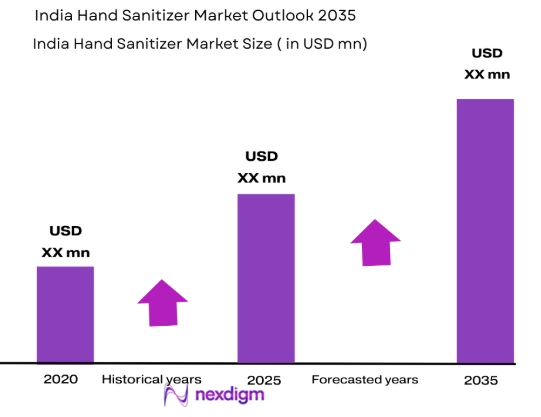
The India hand sanitizer market is valued at approximately USD ~ million, driven by an increasing focus on hygiene and health awareness, especially following the COVID-19 pandemic. In 2025, this market witnessed robust growth due to ongoing hygiene consciousness and increased retail availability, contributing to the higher demand for sanitizers. The market is supported by government initiatives and the rising penetration of hygiene products in both urban and rural areas. Furthermore, growing demand from corporate and healthcare sectors further amplifies its expansion.
In India, cities such as Delhi, Mumbai, and Bengaluru dominate the hand sanitizer market. These metropolitan cities are characterized by a high concentration of healthcare facilities, a growing awareness of hygiene, and a large retail infrastructure. The corporate sector in these cities contributes significantly to the demand for hand sanitizers due to employee hygiene and workplace safety measures. The prevalence of large retail chains, e-commerce platforms, and an expanding middle-class population further bolsters market growth in these urban areas.
Market Segmentation
By Product Type
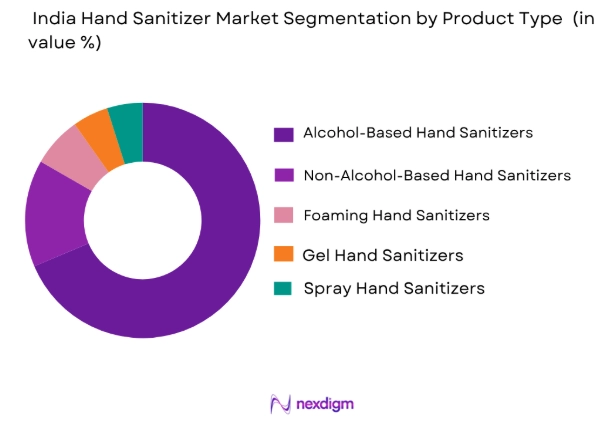
The India hand sanitizer market is segmented into alcohol-based hand sanitizers, non-alcohol-based hand sanitizers, foaming hand sanitizers, gel hand sanitizers, and spray hand sanitizers. Among these, alcohol-based hand sanitizers dominate the market due to their proven effectiveness in killing germs and viruses. The high demand for alcohol-based sanitizers surged during the COVID-19 pandemic and continues to remain strong due to their widespread use in both healthcare and commercial settings. Consumers’ preference for alcohol-based sanitizers remains high, driven by their easy availability and the trust in their efficacy in sanitizing hands.
By End-Use Application
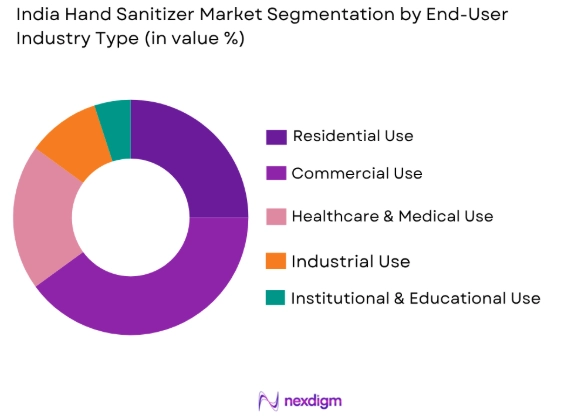
The market is segmented based on end-use applications into residential, commercial, healthcare, industrial, and institutional & educational use. The commercial segment holds the dominant market share, driven by an increasing emphasis on hygiene practices in workplaces, especially post-pandemic. Companies across various sectors, including IT, finance, and hospitality, invest heavily in hand sanitizing products to ensure employee and customer safety. Additionally, the healthcare sector remains a key contributor, with hospitals, clinics, and healthcare professionals requiring sanitizers as an essential tool in infection prevention.
Competitive Landscape
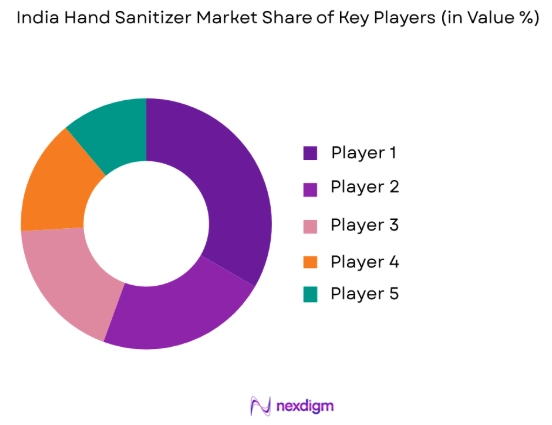
The India hand sanitizer market is dominated by several key players, including global giants like Reckitt Benckiser (Dettol), ITC (Savlon), and Procter & Gamble (Safeguard), alongside local companies such as Vi-John and Zoono. These companies lead the market with extensive distribution networks, well-established brand loyalty, and innovative product offerings. The market is highly competitive, with these companies leveraging strong brand recall and continuous product innovation, especially in response to the increasing demand for alcohol-free and eco-friendly sanitizers.
| Company Name | Establishment Year | Headquarters | Product Portfolio | Distribution Channels | Brand Recognition | R&D Investments | Price Range (INR) | Compliance & Certifications |
| Reckitt Benckiser (Dettol) | 1823 | United Kingdom | Hand Sanitizers, Disinfectants | Retail, E-commerce | High | High | 100-500 | ISO 9001, GMP |
| ITC (Savlon) | 1910 | India | Hand Sanitizers, Soaps | Retail, Online | High | Medium | 150-450 | ISO 9001, CE |
| Procter & Gamble (Safeguard) | 1837 | United States | Hand Sanitizers, Antiseptic | E-commerce, Retail | High | High | 120-450 | FDA, ISO 9001 |
| Vi-John Group | 1992 | India | Hand Sanitizers, Personal Care | Retail, E-commerce | Medium | Low | 50-250 | ISO 9001, GMP |
| Zoono India | 2009 | India | Hand Sanitizers, Disinfectants | Online, Retail | Medium | Medium | 100-700 | ISO 9001, GMP |
India Hand Sanitizer Market Analysis
Growth Drivers
Increased Health and Hygiene Awareness
India has witnessed a substantial shift in health and hygiene consciousness in recent years, particularly due to the global pandemic. The Indian government, through initiatives like the Swachh Bharat Mission (Clean India Campaign), has focused on improving hygiene practices across urban and rural areas. According to the World Health Organization, over 70% of Indian households are now using sanitation products, a significant increase from previous years. This increased focus on hygiene translates directly into heightened demand for hand sanitizers. In 2023, Indian households’ expenditure on hygiene products grew significantly, contributing to the demand for hand sanitizers in both urban and rural sectors.
Post-Pandemic Hygiene Trends
The COVID-19 pandemic drastically changed consumer behavior towards hygiene, leading to a sustained increase in the demand for hand sanitizers. According to the Indian Ministry of Health and Family Welfare, there was a notable increase in the distribution of hygiene products, including sanitizers, within the healthcare, retail, and corporate sectors. Furthermore, health guidelines such as the mandatory use of hand sanitizers in public places, along with the continuous focus on sanitizing hands to prevent infections, have reinforced hygiene practices. This trend has persisted post-pandemic, contributing significantly to the market’s growth.
Market Challenges
Price Sensitivity
India’s price-sensitive consumer base presents a significant challenge to the hand sanitizer market. Despite the increased awareness around hygiene, a large portion of the population in lower-income brackets is highly sensitive to price increases. The National Sample Survey Office (NSSO) data shows that about 25% of Indian households fall under low-income categories, where affordability is a major concern when purchasing non-essential goods. This sensitivity makes it difficult for certain brands, especially premium-priced sanitizers, to capture a larger market share. Cost-effective alternatives thus dominate this price-sensitive segment, which influences overall market dynamics.
Availability of Counterfeit Products
The proliferation of counterfeit hand sanitizers is a growing concern in India. The Ministry of Consumer Affairs reported that between 2022 and 2023, there was a sharp rise in the sale of counterfeit sanitizers, many of which were found to be ineffective or harmful due to non-compliance with safety standards. The lack of stringent enforcement of quality controls and the high demand for sanitizers during the pandemic led to the flooding of the market with such products. These counterfeit products not only pose health risks but also impact the market’s growth by creating consumer distrust.
Opportunities
Expansion of Online Retail Platforms
India’s e-commerce sector is experiencing rapid growth, with a 30% increase in online retail sales in 2023, as reported by the Ministry of Commerce and Industry. This shift is being mirrored in the hand sanitizer market, where more consumers are turning to online platforms for their hygiene product purchases. The increasing penetration of smartphones and internet access in rural areas has opened up new opportunities for the sale of sanitizers via e-commerce platforms. Major online retail giants like Amazon, Flipkart, and BigBasket have seen a significant uptick in sanitizer sales, allowing brands to reach a wider and more diverse customer base.
Growth in Healthcare and Corporate Hygiene Sectors
The healthcare sector’s demand for hand sanitizers continues to be a significant driver for market growth in India. According to the Indian Healthcare Industry Report, the healthcare sector’s hygiene products market saw a 22% increase in usage over the past year, especially in hospitals, clinics, and nursing homes. Additionally, corporate hygiene initiatives are expanding as more companies, including those in IT and manufacturing, adopt hygiene protocols that require hand sanitizers for employees and visitors. This growing demand from both sectors presents ample opportunities for brands to increase their market presence in India.
Future Outlook
Over the next five years, the India hand sanitizer market is expected to experience steady growth, driven by ongoing health awareness, corporate hygiene initiatives, and increasing demand for hygiene products in public spaces. The rise in consumer preference for eco-friendly and alcohol-free sanitizers will likely lead to innovations in product formulations. Additionally, government regulations and institutional guidelines on hygiene standards will continue to support the expansion of the market. As the market matures, the role of e-commerce platforms will grow, further enhancing product accessibility across urban and rural areas.
Major Players
- Reckitt Benckiser (Dettol)
- ITC (Savlon)
- Procter & Gamble (Safeguard)
- Vi-John Group
- Zoono India
- Himalaya Drug Company
- Dabur India Limited
- Unilever India (Lifebuoy)
- Amway India Enterprises
- Pigeon India Pvt. Ltd.
- Godrej Consumer Products Ltd.
- Mortein (Reckitt Benckiser)
- Sterillium India Pvt. Ltd.
- SaniCare
- The Himalaya Drug Company
Key Target Audience
- Healthcare Institutions (Hospitals, Clinics, Laboratories)
- Corporate Offices and Workplaces
- Government and Regulatory Bodies (Ministry of Health and Family Welfare, Food Safety and Standards Authority of India)
- Retail Chains and E-commerce Platforms
- Manufacturers of Hygiene Products
- Investors and Venture Capitalist Firms
- Educational Institutions (Schools, Colleges, Universities)
- Institutional Buyers (Hotels, Restaurants, Transport Services)
Research Methodology
Step 1: Identification of Key Variables
In this phase, an ecosystem map is constructed to identify all major stakeholders within the India hand sanitizer market. This includes manufacturers, distributors, retailers, and consumers. Data is gathered through secondary research, including industry reports, company filings, and market surveys.
Step 2: Market Analysis and Construction
Historical data regarding hand sanitizer usage, product penetration, and revenue generation is compiled. This step involves analyzing factors like end-user segments, distribution channels, and the economic impact of hygiene standards across various sectors to estimate the overall market size.
Step 3: Hypothesis Validation and Expert Consultation
Industry experts are consulted to validate market assumptions and hypotheses. This step includes interviews with manufacturers, retailers, and healthcare professionals to understand consumer behavior and market trends.
Step 4: Research Synthesis and Final Output
In the final phase, insights from expert consultations and secondary data are synthesized. A detailed report is produced, incorporating data triangulation techniques to ensure the accuracy and reliability of the market analysis.

- Executive Summary
- Research Methodology (Market Definitions and Assumptions, Regulatory Framework Consideration, Market Sizing via Revenue, Market Segmentation Approach, Primary Expert Interviews with Manufacturers and Distributors, Data Triangulation Using Industry Reports and Market Surveys, Limitations and Forecasting Assumptions)

- Definition and Scope
- Evolution of Hand Sanitizer Usage in India
- Regulatory Landscape and Licensing Framework
- Market Ecosystem
- Value Chain Analysis
- Role of Hand Sanitizers in Public Health
- Adoption and Usage Patterns

- Growth Drivers
Increased Health and Hygiene Awareness
Post-Pandemic Hygiene Trends
Government Regulations on Hygiene Standards
Corporate Hygiene Initiatives
Rising Disposable Income and Health Concerns - Market Challenges
Price Sensitivity
Availability of Counterfeit Products
Regulatory Compliance Costs
Raw Material Price Volatility - Opportunities
Expansion of Online Retail Platforms
Growth in Healthcare and Corporate Hygiene Sectors
Eco-Friendly Packaging and Sustainable Products
Rising Demand for Natural and Organic Sanitizers - Market Trends
Shift to Alcohol-Free Sanitizer Alternatives
Introduction of Smart Sanitizers
Use of Sanitizers in Personal Care Products
Customization and Fragrance Innovations
Eco-Conscious and Sustainable Manufacturing - Regulatory Framework
Regulations by Drugs Controller General of India (DCGI)
Packaging and Labeling Standards
Advertising and Marketing Regulations
Import and Export Policies
- SWOT Analysis of Key Competitors
- Pricing & Procurement Analysis
- Porter’s Five Forces

- By Revenue, 2020–2025
- By Volume Sold, 2020–2025
- By Product Type, 2020–2025
- By Distribution Channel, 2020–2025

- By Product Type (In Value %)
Alcohol-Based Hand Sanitizers
Non-Alcohol-Based Hand Sanitizers
Foaming Hand Sanitizers
Gel Hand Sanitizers
Spray Hand Sanitizers - By End-Use Application (In value %)
Residential Use
Commercial Use
Healthcare & Medical Use
Industrial Use
Institutional & Educational Use - By Distribution Channel (In value %)
Offline (Retail Stores, Pharmacies)
Online Platforms
B2B Distribution (Corporate & Institutional Sales) - By Packaging Type (In Value %)
Individual Bottles
Bulk Packaging
Refill Packs
Travel-Sized Containers - By Region (In Value %)
North India
South India
West India
East India
Tier-2 & Tier-3 Cities Penetration

- Market Share Analysis (By Revenue and Volume)
- Cross Comparison Parameters (Company Overview, Sales Volume, Revenue, Brand Portfolio, Geographic Presence, Distribution Network, Product Innovation, Marketing Strategy, Online Presence, Compliance Track Record)
- Competitive Strategies
- Pricing & Product Range Analysis
- Detailed Profiles of Major Companies
Reckitt Benckiser India Pvt. Ltd.
ITC Limited
HUL (Hindustan Unilever Limited)
Godrej Consumer Products Ltd.
Procter & Gamble India Pvt. Ltd.
Zoono India
Sterillium India Pvt. Ltd.
Metsä Tissue India Pvt. Ltd.
SAB Miller India Ltd.
Vi-John Group
Nivea India Pvt. Ltd.
Debonair India Pvt. Ltd.

- Consumer Behavior Analysis
- Corporate and Institutional Buying Patterns
- Healthcare Sector Demand Trends
- Pain Points in Hand Sanitizer Use
- Key Buying Factors for Consumers

- By Revenue, 2026–2035
- By Volume Sold, 2026–2035
- By Product Type, 2026–2035
- By Distribution Channel, 2026–2035


 Request a Sample
 Ask for Customization
 Get a Quote
 Enquire Now