
 Download PDF
Market Overview
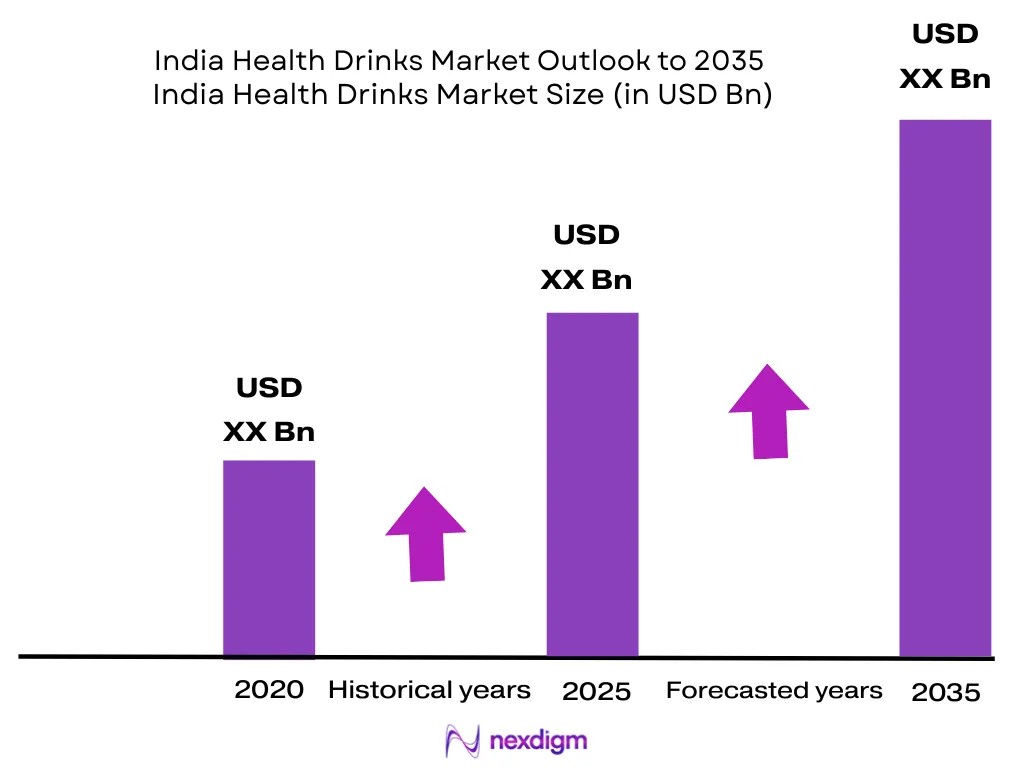
India Health Drinks Market is valued at USD ~ billion, rising from the previous historical base and supported by functional beverages, fortified juices, sports drinks, energy drinks, kombucha, dairy alternatives, and RTD tea/coffee. The wider health drinks market reached USD ~ billion in the next base year, with a forecast CAGR of 11.34% during the long-range outlook period. Growth is driven by wellness consumption, fitness awareness, urban convenience, and functional beverage adoption. Delhi NCR, Mumbai, Bengaluru, Hyderabad, Chennai, Kolkata, Pune, Ahmedabad, Surat, and Jaipur dominate India Health Drinks Market due to dense urban consumption, modern trade penetration, gyms, pharmacies, offices, quick commerce, and premium retail. India’s population rose from 1,438,069,596 to 1,450,935,791, while urban population rose from 518,239,122 to 530,387,142, supporting strong demand for energy drinks, ORS, protein RTDs, fortified beverages, and nutrition drinks.
Market Segmentation
By Product Type
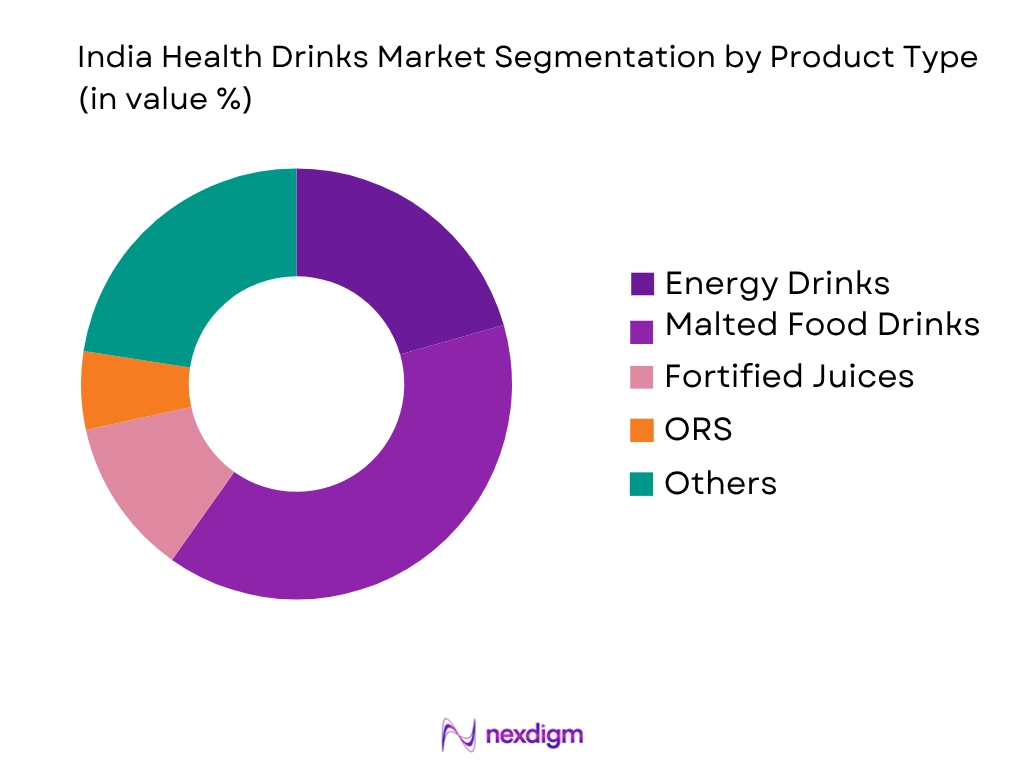
India Health Drinks Market is segmented by product type into malted food drinks, fortified juices, energy drinks, ORS and electrolyte drinks, sports drinks, probiotic dairy drinks, protein RTDs, plant-based wellness drinks, Ayurveda/herbal beverages, kombucha, and functional water. Malted food drinks and nutrition powders dominate this segmentation due to their deep household penetration, child nutrition positioning, milk-mixing habit, general trade availability, refill pouch formats, and strong mother-led purchase decisions. Brands such as Horlicks, Bournvita, Boost, Complan, Pediasure, Ensure, and Protinex have built trust across family nutrition, child growth, adult nutrition, and protein supplementation. This segment also benefits from India’s large child and family consumer base, kirana distribution, and regional affordability through jars, refill packs, and sachets.
By Distribution Channel
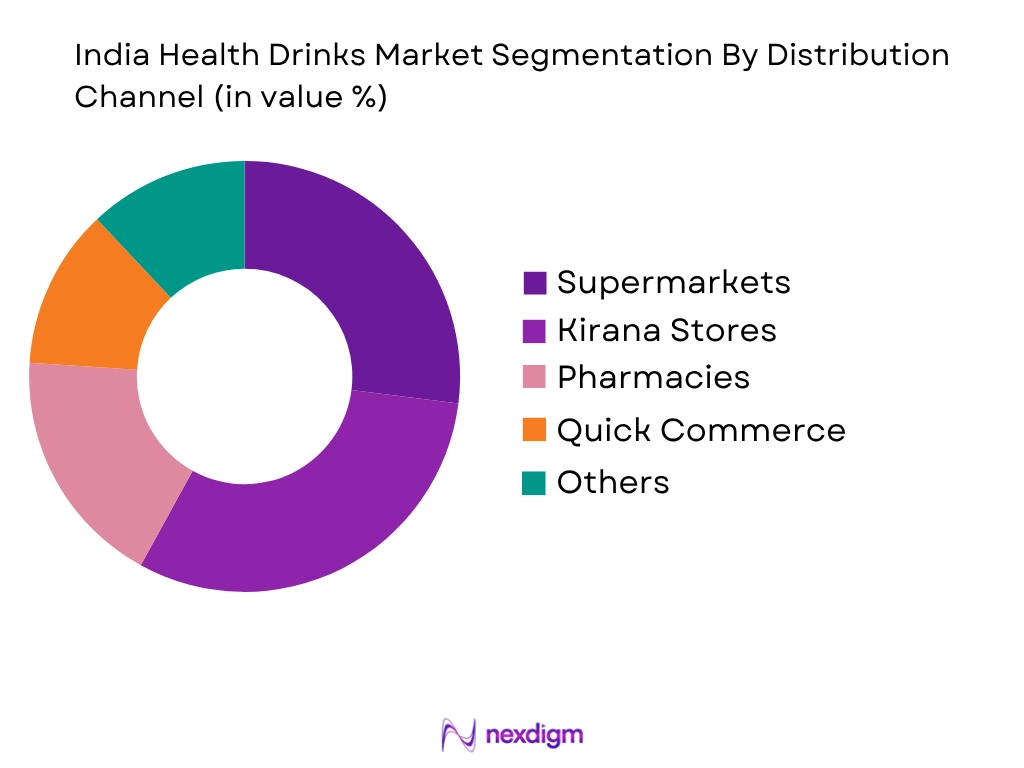
India Health Drinks Market is segmented by distribution channel into general trade, modern trade, chemists and pharmacies, e-commerce marketplaces, quick commerce, D2C websites, gyms, sports retail, health stores, HoReCa, institutions, and juice bars. General trade and kirana stores dominate the distribution channel segmentation because India’s health drink consumption is still strongly linked to household grocery replenishment, child nutrition, refill packs, sachets, and mass-market brand availability. Malted drinks, glucose powders, ORS, herbal juices, dairy drinks, and fortified beverages rely heavily on neighbourhood retail and distributor-led stocking. Modern trade is stronger for premium protein RTDs, plant-based drinks, and imported energy drinks, while pharmacies are critical for ORS, adult nutrition, diabetic nutrition, and probiotic positioning. Quick commerce is expanding urban discovery, but general trade remains the backbone of national penetration.
Competitive Landscape
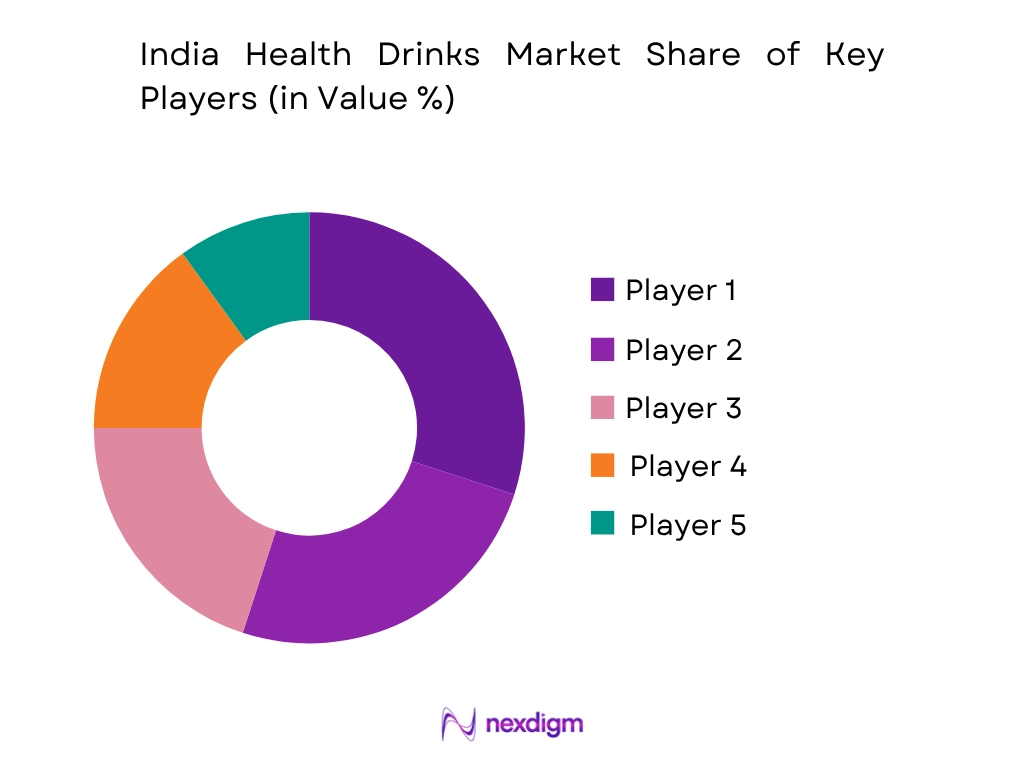
India Health Drinks Market is dominated by multinational FMCG companies, domestic wellness players, dairy companies, nutrition specialists, and emerging D2C fitness brands. Hindustan Unilever, Mondelez, Zydus Wellness, Nestlé, Abbott, Danone, PepsiCo, Red Bull, Coca-Cola, Dabur, Patanjali, Parle Agro, Yakult Danone, Hector Beverages, and HealthKart compete across malted nutrition, energy drinks, ORS, fortified juices, sports hydration, probiotic dairy, Ayurveda drinks, and protein nutrition. Competition is shaped by general trade reach, FSSAI compliance, mother-child trust, pharmacy credibility, quick-commerce visibility, and pack-size architecture.
| Company | Establishment Year | Headquarters | Key Health Drink Brands | Dominant Category | Core Channel Strength | Functional Positioning | Packaging Strength | Market-Specific Advantage |
| Hindustan Unilever Limited | 1933 | Mumbai | ~ | ~ | ~ | ~ | ~ | ~ |
| Mondelez India Foods | 1948 | Mumbai | ~ | ~ | ~ | ~ | ~ | ~ |
| Zydus Wellness | 1994 | Ahmedabad | ~ | ~ | ~ | ~ | ~ | ~ |
| PepsiCo India | 1989 | Gurugram | ~ | ~ | ~ | ~ | ~ | ~ |
| Dabur India | 1884 | Ghaziabad | ~ | ~ | ~ | ~ | ~ | ~ |
India Health Drinks Market Analysis
Growth Drivers
Large Urban Consumer Base Supporting Nutrition and Functional Drink Penetration
India Health Drinks Market is supported by a large urban and semi-urban consumer base where malted drinks, ORS, protein RTDs, fortified juices, energy drinks, and probiotic dairy beverages can scale through kirana stores, pharmacies, modern trade, gyms, and quick commerce. World Bank records India’s GDP at USD 3.91 trillion and GDP per capita at USD 2,694.7 in 2024, indicating a large consumption economy with rising formal retail depth. India’s population is also tracked at 1,450,935,791 people in 2024, while urban population reached 530,387,142 people, creating dense demand clusters for single-serve hydration, milk-based nutrition, and functional beverages. These indicators justify strong urban launch potential for health drinks across Delhi NCR, Mumbai, Bengaluru, Hyderabad, Chennai, Pune, Ahmedabad, and Kolkata.
Digital Payments and Quick Commerce Supporting Health Drink Discovery
India Health Drinks Market is increasingly supported by digital-led discovery and rapid fulfilment for energy drinks, ORS, protein RTDs, functional water, low-sugar beverages, herbal juices, and premium nutrition products. PIB reports total digital payment transactions of 16,443.02 crore in 2023-24 and 18,120.82 crore in 2024-25 till January 2025, demonstrating the transaction infrastructure supporting online beverage purchases. PIB also reports that UPI processed about 22,000 crore transactions in calendar year 2025, with an average of 60 crore transactions per day. This supports quick-commerce ordering, subscription packs, marketplace bundles, and D2C nutrition brands. World Bank records India’s GDP at USD 3.91 trillion in 2024, giving the digital health drink market a large macroeconomic base.
Market Challenges
Regulatory Scrutiny on “Health Drink” Classification and E-Commerce Categorisation
India Health Drinks Market faces a direct regulatory challenge because the “health drink” label itself is not defined under India’s food law framework. FSSAI clarified in April 2024 that the term “Health Drink” is not defined or standardised under the FSS Act 2006 or related rules, and advised e-commerce food business operators to remove or de-link such drinks from “Health Drinks / Energy Drinks” categories where inappropriate. This affects malt-based beverages, dairy-based beverage mixes, cereal-based beverage mixes, proprietary drinks, and children’s nutrition products sold online. The challenge is significant because India’s consumer base includes 1,450,935,791 people and World Bank records GDP of USD 3.91 trillion in 2024, making compliance failures scalable across large digital and offline channels.
E-Commerce Food Safety, Shelf-Life, and Misleading Claim Compliance
India Health Drinks Market faces rising compliance pressure across e-commerce, quick commerce, and D2C channels because many products are sold as nutrition, energy, hydration, immunity, protein, or wellness drinks. FSSAI’s 2024 e-commerce direction requires pre-packed foods sold online to show clear principal-display-panel images, provide mandatory food information before purchase, ensure last-mile delivery by trained personnel, and immediately delist non-compliant products. It also requires food delivered to consumers to have either 30 percent shelf life or 45 days remaining before expiry, depending on the applicable condition. This is highly relevant for protein RTDs, probiotic dairy drinks, ORS-type beverages, fortified juices, and chilled nutrition formats. World Bank’s USD 2,694.7 GDP per capita figure in 2024 shows a mass-market affordability context where label trust and product safety remain critical.
Market Opportunities
Heat-Linked ORS, Electrolyte, and Functional Hydration Expansion
India Health Drinks Market has a strong opportunity in ORS-compliant drinks, electrolyte beverages, coconut water, sports hydration, and functional water because heat exposure is becoming a recurrent consumption trigger. IMD-linked government communication states that above-normal maximum temperatures and heat-wave conditions were expected across southern peninsular India, parts of the northeast and northwest, Himalayan foothills, Odisha, Coastal Andhra Pradesh, Tamil Nadu, Gujarat, and Maharashtra, with an increase of 2–4 heatwave days above normal in some regions. This supports current demand for pharmacy-led rehydration, summer hydration, and outdoor-workforce beverage formats. The macro base is large: World Bank records India’s 2024 population at 1,450,935,791 people and GDP at USD 3.91 trillion, allowing hydration brands to scale across urban, semi-urban, and rural retail.
Protein, Adult Nutrition, and Preventive Wellness Beverages
India Health Drinks Market has an opportunity to expand protein RTDs, adult nutrition drinks, diabetic-friendly beverages, fortified dairy, probiotic drinks, and Ayurveda-based wellness drinks as consumption shifts from basic refreshment to nutrition-led use cases. World Bank records India’s GDP per capita at USD 2,694.7 in 2024 and GDP at USD 3.91 trillion, indicating a large but value-sensitive market where sachets, refill packs, pharmacy packs, and single-serve RTDs can coexist. IMF’s India profile shows GDP at USD 4.15 trillion and GDP per capita at USD 2.81 thousand for 2026, supporting continued macro scale for health-oriented packaged beverages. India’s urban population of 530,387,142 people in 2024 gives brands a concentrated base for gym, office, pharmacy, quick-commerce, and modern-trade nutrition formats.
Future Outlook
India Health Drinks Market is expected to expand strongly over the coming decade, driven by child nutrition, adult nutrition, energy beverages, sports hydration, ORS, protein RTDs, probiotic dairy, Ayurveda/herbal beverages, fortified juices, and quick-commerce-led discovery. The market’s long-range forecast indicates 11.34% CAGR for India health drinks, while the India functional drinks category is expected to grow at 10.8% CAGR across its forecast period. Future growth will be shaped by three structural forces. First, India’s household nutrition base will continue to support malted drinks, fortified powders, adult nutrition drinks, and refill-pack formats. Second, urban consumers will drive premiumisation in protein RTDs, energy drinks, functional water, plant-based drinks, kombucha, and low-sugar beverages. Third, pharmacy, quick commerce, and D2C will become more important for ORS, diabetic nutrition, protein supplements, and science-backed functional beverages. Regulation will increasingly influence claims, labelling, and product positioning. FSSAI oversight has already become more relevant for health drink terminology, ORS labelling, nutraceuticals, fortified foods, proprietary foods, and misleading nutrition claims. This will push companies to improve claim substantiation, sugar disclosure, functional ingredient transparency, and product classification.
Major Players
- Hindustan Unilever Limited
- Mondelez India Foods
- Zydus Wellness
- Nestlé India
- Abbott India
- Danone India
- PepsiCo India
- Red Bull India
- Coca-Cola India
- Hector Beverages
- Dabur India
- Patanjali Foods and Patanjali Ayurved
- Parle Agro
- Yakult Danone India
- HealthKart
Key Target Audience
- Malted food drink manufacturers
- Functional beverage and fortified juice companies
- Energy drink and sports hydration companies
- Protein RTD, adult nutrition and clinical nutrition brands
- Dairy, probiotic and plant-based beverage manufacturers
- General trade, modern trade, pharmacy, e-commerce and quick-commerce retail chains
- Investments and venture capitalist firms
- Government and regulatory bodies (FSSAI, Ministry of Health and Family Welfare, Ministry of Food Processing Industries, Ministry of AYUSH, Department of Consumer Affairs, Advertising Standards Council of India)
Research Methodology
Step 1: Identification of Key Variables
The initial phase involves constructing an ecosystem map for India Health Drinks Market across FMCG manufacturers, nutrition brands, beverage companies, dairy players, pharmacies, distributors, kirana stores, modern trade chains, e-commerce platforms, quick-commerce operators, and regulators. Key variables include product category, functional claim, sugar profile, pack size, region, channel, and consumer cohort.
Step 2: Market Analysis and Construction
This phase compiles historical and current data for malted drinks, fortified juices, energy drinks, ORS, sports drinks, protein RTDs, probiotic dairy, plant-based drinks, herbal beverages, and functional water. The market is constructed using top-down sizing, bottom-up SKU mapping, distributor checks, retail audits, and channel-wise validation.
Step 3: Hypothesis Validation and Expert Consultation
Market hypotheses are validated through structured interviews with manufacturers, distributors, category managers, pharmacy buyers, ingredient suppliers, co-packers, and quick-commerce operators. These consultations validate shelf velocity, general trade dependence, claim sensitivity, pack architecture, rural affordability, urban premiumisation, and category substitution.
Step 4: Research Synthesis and Final Output
The final phase integrates secondary research, expert validation, competitive benchmarking, and segment-level triangulation. The output reconciles market size, segmentation, competitive landscape, distribution structure, future outlook, and strategic recommendations using both top-down and bottom-up approaches for India Health Drinks Market.

- Executive Summary
- Research Methodology (Market Definitions and Assumptions, Functional Drink Taxonomy, FSSAI Classification Mapping, Abbreviations, Market Sizing Approach, Top-Down Assessment, Bottom-Up SKU Mapping, General Trade Checks, Modern Trade Audits, E-Commerce SKU Mapping, Distributor Interviews, Primary Research Approach, Limitations and Future Conclusions)

- Definition and Scope
- Overview Genesis
- Evolution of Health Drink Consumption
- Timeline of Major Players
- Business Cycle

- Growth Drivers (Child Nutrition, Urbanisation, Fitness Culture, Heat Stress, E-Commerce, Quick Commerce, Health Awareness, Protein Deficiency, Preventive Wellness)
- Market Challenges (FSSAI Compliance, Misleading Health Claims, Sugar Content, Label Accuracy, Rural Affordability, Cold Chain, Category Trust, Distribution Complexity)
- Opportunities (Protein Nutrition, Electrolyte Hydration, Ayurveda Drinks, Functional Dairy, Plant-Based Beverages, Diabetic Nutrition, Rural Sachets, Quick Commerce)
- Trends (Low Sugar, Ayurveda, Proteinisation, Electrolytes, Quick Commerce, Millet Drinks, Plant-Based, Fortification, Functional Shots)
- SWOT Analysis (Strengths, Weaknesses, Opportunities, Threats, Functional Beverage Ecosystem)
- Porter’s Five Forces (Supplier Power, Buyer Power, Competitive Rivalry, Substitutes, New Entrants)

- By Value (2020-2025)
- By Volume (2020-2025)
- By Average Retail Price (2020-2025)

- By Product Category (In Value %)
Malted Food Drinks
Energy Drinks
Sports and Isotonic Drinks
ORS and Electrolyte Rehydration Drinks
Fortified Juices and Nectar-Based Health Drinks - By Ingredient Platform (In Value %)
Malt and Milk-Based Formulations
Caffeine and Taurine Formulations
Electrolyte and Glucose Formulations
Probiotic and Fermented Culture Formulations - By Distribution Channel (In Value %)
General Trade
Modern Trade
Chemists and Pharmacies
E-Commerce Marketplaces
Quick Commerce - By Region (In Value %)
North India
South India
West India
East India
Central India

- Market Share of Major Players on the Basis of Value and Volume (Malted Drinks, Energy Drinks, Sports Drinks, ORS and Electrolytes, Fortified Dairy, Protein RTD)
- Cross Comparison Parameters (Functional Claim Portfolio, India General Trade Reach, Quick Commerce Availability, FSSAI and Claim Compliance, Sugar and Nutrition Profile, Pack-Size Architecture, Regional Manufacturing Footprint, Ingredient Differentiation)
- SWOT Analysis of Major Players
- Pricing Analysis Basis SKUs for Major Players
- Detailed Profiles of Major Companies
Hindustan Unilever Limited
Mondelez India Foods
Zydus Wellness
Nestlé India
Abbott India
Danone India
PepsiCo India
Red Bull India
Coca-Cola India
Hector Beverages
Dabur India
Patanjali Foods and Patanjali Ayurved
Parle Agro
Yakult Danone India
HealthKart

- Market Demand and Utilisation
- Purchasing Power and Budget Allocation
- Needs, Desires, and Pain Point Analysis
- Decision-Making Process
- Consumption Occasion Analysis

- By Value (2026-2035)
- By Volume (2026-2035)
- By Average Retail Price (2026-2035)


 Request a Sample
 Ask for Customization
 Get a Quote
 Enquire Now