

 Download PDF
Market Overview
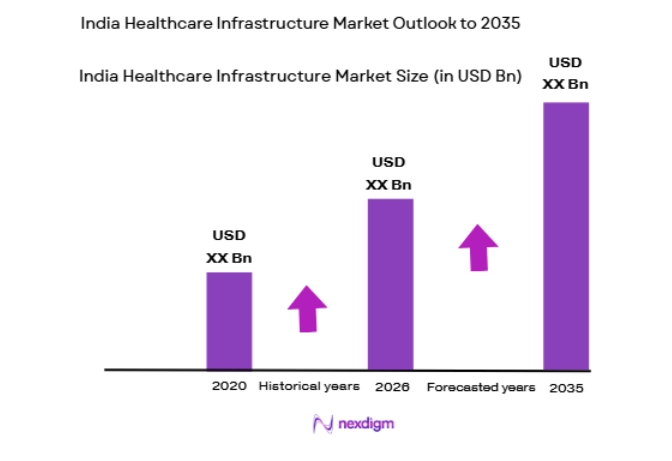
India’s healthcare infrastructure market represents a rapidly expanding sector driven by growing healthcare demand, rising investments in hospital capacity, and large-scale public health programs. A recent historical assessment indicates that the India healthcare infrastructure market is valued at approximately USD ~ billion based on data from the Ministry of Health and Family Welfare and the National Health Accounts. Market expansion is driven by increasing population health needs, expansion of private hospital networks, and government initiatives aimed at strengthening healthcare delivery systems.
Delhi, Mumbai, Bengaluru, Chennai, and Hyderabad dominate the India healthcare infrastructure market due to strong concentration of tertiary hospitals, medical education institutions, and specialized healthcare facilities. Delhi leads due to the presence of national medical institutes and large hospital networks, while Mumbai benefits from private healthcare investments and medical tourism services. Bengaluru and Hyderabad are driven by expanding private hospital groups and healthcare technology integration, while Chennai remains a major hub for advanced specialty care.
Market Segmentation
By Facility Type
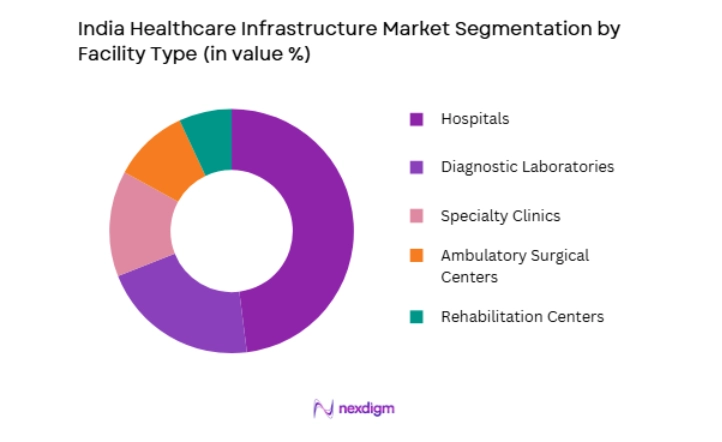
India Healthcare Infrastructure market is segmented by Facility type into hospitals, diagnostic laboratories, specialty clinics, ambulatory surgical centers, and rehabilitation centers. Recently, hospitals have a dominant market share due to factors such as comprehensive healthcare service delivery, higher patient intake capacity, and large investments in multi-specialty healthcare infrastructure. Hospitals remain the primary point of care for complex medical treatments, surgeries, and long-term hospitalization services across India’s healthcare ecosystem. Both public and private sector investments focus heavily on expanding hospital bed capacity and establishing tertiary care centers capable of addressing increasing healthcare demand. Additionally, government healthcare schemes supporting affordable treatment services further strengthen hospital utilization. Private hospital chains also continue expanding across urban and semi-urban regions, reinforcing hospitals as the dominant infrastructure component within India’s healthcare sector.
By Ownership Model
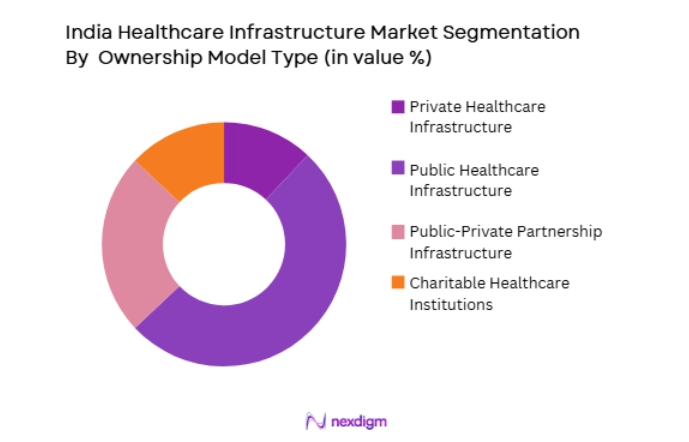
India Healthcare Infrastructure market is segmented by Ownership Model into public healthcare infrastructure, private healthcare infrastructure, public-private partnership healthcare infrastructure, and charitable healthcare institutions. Recently, private healthcare infrastructure has a dominant market share due to factors such as higher investment capacity, advanced medical technology adoption, and expansion of multi-specialty hospital networks across major cities. Private hospital operators continue to invest in advanced medical equipment, specialized treatment centers, and integrated healthcare campuses designed to attract both domestic patients and international medical tourists. Corporate hospital groups also focus on expanding their presence into Tier II and Tier III cities where healthcare demand is rapidly increasing. Additionally, private healthcare facilities often provide shorter treatment waiting times and specialized care services, which attract a significant patient population seeking high-quality healthcare delivery.
Competitive Landscape
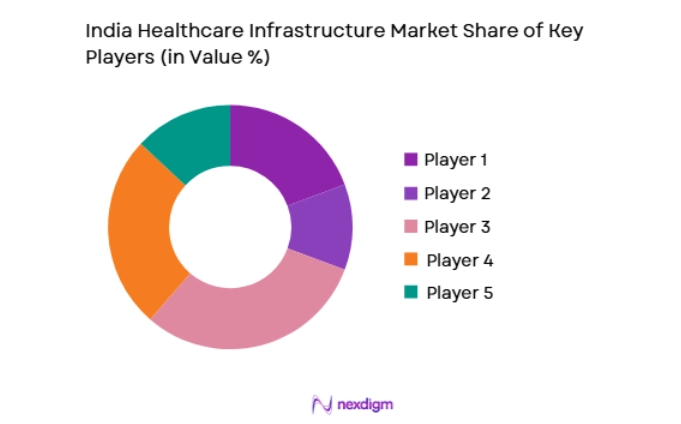
The India healthcare infrastructure market is highly competitive and characterized by the presence of large hospital chains, specialized healthcare providers, and diagnostic service networks. Major private healthcare groups dominate urban healthcare infrastructure development while government institutions focus on expanding primary and secondary healthcare services across rural regions. Competition is shaped by hospital capacity expansion, medical technology adoption, and the development of integrated healthcare ecosystems combining hospitals, diagnostic facilities, and telemedicine platforms.
| Company Name | Establishment Year | Headquarters | Technology Focus | Market Reach | Key Products | Revenue | Hospital Beds |
| Apollo Hospitals | 1983 | India | ~ | ~ | ~ | ~ | ~ |
| Fortis Healthcare | 1996 | India | ~ | ~ | ~ | ~ | ~ |
| Max Healthcare | 2000 | India | ~ | ~ | ~ | ~ | ~ |
| Narayana Health | 2000 | India | ~ | ~ | ~ | ~ | ~ |
| Manipal Hospitals | 1953 | India | ~ | ~ | ~ | ~ | ~ |
India Healthcare Infrastructure Market Analysis
Growth Drivers
Expansion of Government Healthcare Programs and Public Health Infrastructure Investments
India’s healthcare infrastructure expansion is strongly supported by large-scale government initiatives designed to improve healthcare accessibility, strengthen hospital capacity, and enhance medical service delivery across both urban and rural regions. National healthcare programs focusing on universal health coverage have encouraged significant public investment in hospitals, primary health centers, and diagnostic facilities aimed at improving healthcare outcomes for a rapidly growing population. Infrastructure development initiatives include construction of new medical colleges, expansion of district hospitals, and modernization of public healthcare facilities across multiple states. Government policies supporting affordable healthcare insurance schemes have also increased patient access to hospital services, thereby encouraging further infrastructure investment. Public health authorities are prioritizing improvements in emergency medical services, telemedicine networks, and disease surveillance systems in order to strengthen healthcare system resilience. In addition, government programs promoting healthcare digitalization and health information technology integration are improving operational efficiency across medical institutions. Investments in rural healthcare infrastructure remain particularly important because a significant portion of India’s population resides outside major metropolitan areas where access to advanced medical services remains limited. As these public healthcare initiatives continue expanding, they create sustained demand for new healthcare infrastructure facilities including hospitals, diagnostic laboratories, and community health centers.
Rapid Growth of Private Hospital Chains and Medical Tourism Infrastructure
The rapid expansion of private healthcare providers across India is another major factor driving growth within the healthcare infrastructure market as corporate hospital chains invest heavily in building advanced medical facilities capable of delivering high-quality specialized healthcare services. Private healthcare operators continue to expand multi-specialty hospital networks across metropolitan areas and emerging Tier II cities in response to increasing demand for advanced treatment options and improved patient care experiences. Investments in cutting-edge medical equipment, robotic surgery technologies, and advanced diagnostic platforms are enabling private hospitals to offer specialized medical services across fields such as cardiology, oncology, orthopedics, and neurology. India has also emerged as a major destination for international medical tourism due to its combination of highly skilled medical professionals and relatively affordable treatment costs compared with developed countries. Medical tourism demand has encouraged the development of internationally accredited hospitals equipped with modern infrastructure capable of serving international patients. Private hospital groups also focus on developing integrated healthcare ecosystems that combine hospitals, outpatient clinics, diagnostic laboratories, and rehabilitation centers within a single network. As private sector participation continues increasing within India’s healthcare system, infrastructure investments from corporate hospital chains will remain a key driver of market expansion.
Market Challenges
Shortage of Healthcare Professionals and Skilled Medical Workforce
One of the major structural challenges facing India’s healthcare infrastructure market is the shortage of trained healthcare professionals required to operate expanding medical facilities effectively. Although new hospitals and healthcare institutions are being developed rapidly across the country, the availability of skilled doctors, nurses, and medical technicians has not always kept pace with infrastructure growth. This imbalance creates operational pressures for hospitals that must recruit and retain qualified healthcare professionals in order to maintain high standards of patient care. Rural regions face particularly severe workforce shortages as many medical professionals prefer employment opportunities within major metropolitan cities offering higher salaries and better working conditions. The shortage of specialized medical professionals also affects the ability of healthcare institutions to provide advanced treatment services such as complex surgeries and specialized diagnostic procedures. Expanding medical education infrastructure and training programs will therefore be essential to address workforce gaps and ensure sustainable development of healthcare infrastructure across India.
High Capital Investment Requirements for Healthcare Infrastructure Development
Developing modern healthcare infrastructure requires substantial capital investment due to the high cost of constructing hospital buildings, installing advanced medical equipment, and maintaining regulatory compliance with healthcare standards. Healthcare infrastructure projects often involve long development timelines and significant financial commitments before operational revenues begin to materialize. Private investors must carefully evaluate project feasibility and long-term demand conditions before committing capital to new healthcare facilities. Additionally, advanced medical equipment such as imaging systems, surgical robots, and intensive care units requires continuous upgrades and maintenance, further increasing operational costs. Smaller healthcare providers may struggle to secure financing for infrastructure expansion, limiting their ability to compete with larger hospital chains. Managing these financial challenges requires innovative financing models, public-private partnerships, and supportive government policies aimed at facilitating infrastructure investment.
Opportunities
Expansion of Healthcare Infrastructure in Tier II and Tier III Cities
The growing healthcare demand in smaller cities across India presents significant opportunities for infrastructure development as healthcare providers seek to expand services beyond major metropolitan areas. Rapid urbanization and rising income levels in Tier II and Tier III cities are increasing demand for advanced healthcare services previously available only in large cities. Private hospital groups are increasingly investing in regional healthcare centers designed to provide specialized treatment services closer to local populations. Expanding healthcare infrastructure in these regions also reduces patient travel requirements and improves access to timely medical care. Government initiatives encouraging healthcare investment in underserved regions further support infrastructure development opportunities across emerging urban centers.
Integration of Digital Health Technologies and Smart Hospital Infrastructure
Technological innovation is creating new opportunities for modernizing healthcare infrastructure through the integration of digital health platforms, artificial intelligence diagnostic tools, and smart hospital management systems. Hospitals are increasingly adopting electronic medical record systems, telemedicine platforms, and data-driven healthcare analytics to improve operational efficiency and patient care outcomes. Smart hospital infrastructure solutions incorporating automation, digital monitoring systems, and connected medical devices enable healthcare providers to deliver more efficient services while optimizing resource utilization. As digital health technologies continue advancing, integration of these systems within healthcare infrastructure will become an increasingly important component of hospital development strategies across India.
Future Outlook
India’s healthcare infrastructure market is expected to expand significantly over the next five years as both public and private sector investments accelerate hospital construction, diagnostic capacity expansion, and healthcare technology adoption. Rising healthcare demand driven by population growth and increasing chronic disease prevalence will continue to stimulate infrastructure development. Government healthcare programs and private hospital expansion will further strengthen service accessibility. Integration of digital health technologies and telemedicine platforms will also reshape the structure of healthcare infrastructure delivery across the country.
Major Players
- Apollo Hospitals
- Fortis Healthcare
- Max Healthcare
- Narayana Health
- Manipal Hospitals
- Aster DM Healthcare
- Medanta Hospitals
- Care Hospitals
- Global Hospitals
- Columbia Asia Hospitals
- KIMS Hospitals
- SRL Diagnostics
- Dr Lal PathLabs
- Metropolis Healthcare
- HCG Oncology Centers
Key Target Audience
- Hospital Infrastructure Developers
- Medical Equipment Manufacturers
- Private Hospital Chains
- Healthcare Facility Management Companies
- Healthcare Technology Providers
- Investments and venture capitalist firms
- Government and regulatory bodies
- Health Insurance Providers
Research Methodology
Step 1: Identification of Key Variables
Key variables including hospital capacity expansion, healthcare investment flows, patient demand trends, and medical technology adoption are identified to evaluate infrastructure development patterns.
Step 2: Market Analysis and Construction
Healthcare infrastructure data from national health accounts, hospital networks, and government healthcare development programs is analyzed to construct segmentation and market structure insights.
Step 3: Hypothesis Validation and Expert Consultation
Healthcare administrators, hospital infrastructure specialists, and medical technology experts are consulted to validate market assumptions and identify infrastructure expansion trends.
Step 4: Research Synthesis and Final Output
Collected insights are synthesized into structured market intelligence covering competitive landscape, infrastructure investments, demand drivers, and long-term opportunities.

- Executive Summary
- Research Methodology (Definitions, Scope, Industry Assumptions, Market Sizing Approach, Primary & Secondary Research Framework, Data Collection & Verification Protocol, Analytic Models & Forecast Methodology, Limitations & Research Validity Checks)

- Market Definition and Scope
- Value Chain & Stakeholder Ecosystem
- Regulatory / Certification Landscape
- Sector Dynamics Affecting Demand

- Growth Drivers
Increasing government expenditure on public healthcare infrastructure development
Rising demand for advanced hospital facilities driven by population growth and urbanization
Expansion of private hospital networks and specialty care centers across metropolitan cities - Market Challenges
High capital investment required for hospital construction and medical infrastructure deployment
Shortage of skilled healthcare professionals in rural and semi urban regions
Regulatory approval delays for healthcare facility development projects - Market Opportunities
Expansion of healthcare infrastructure in tier two and tier three cities
Growth of public private partnership projects in hospital infrastructure development
Increasing investment in smart hospitals and digital healthcare infrastructure - Trends
Adoption of smart hospital infrastructure integrated with digital health technologies
Growth of multi specialty healthcare facilities and medical cities - Government Regulations
National Health Mission initiatives supporting healthcare facility expansion
Ayushman Bharat program strengthening primary healthcare infrastructure
Regulatory frameworks governing hospital accreditation and healthcare standards - SWOT Analysis
- Porter’s Five Forces

- By Market Value, 2020-2025
- By Installed Units, 2020-2025
- By Average System Price, 2020-2025
- By System Complexity Tier, 2020-2025

- By System Type (In Value%)
Hospital Infrastructure Development
Diagnostic Center Infrastructure
Primary Healthcare Center Infrastructure
Specialty Care Facility Infrastructure
Ambulatory Surgical Center Infrastructure - By Platform Type (In Value%)
Public Healthcare Infrastructure
Private Healthcare Infrastructure
Public Private Partnership Healthcare Infrastructure
Corporate Hospital Networks
Rural Healthcare Infrastructure - By Fitment Type (In Value%)
New Hospital Construction Projects
Hospital Expansion and Modernization Projects
Medical Equipment Infrastructure Integration
Smart Hospital Digital Infrastructure - By End User Segment (In Value%)
Government Healthcare Authorities
Private Hospital Chains
Diagnostic Laboratory Networks

- Market Share Analysis
- Cross Comparison Parameters (Infrastructure Investment Size, Bed Capacity Expansion, Technology Integration Level, Project Development Model, Healthcare Service Specialization)
- SWOT Analysis of Key Competitors
- Pricing & Procurement Analysis
- Key Players
Apollo Hospitals Enterprise
Fortis Healthcare
Max Healthcare Institute
Narayana Health
Manipal Hospitals
Aster DM Healthcare
Medanta The Medicity
KIMS Healthcare
Yashoda Hospitals
Kauvery Hospital
Care Hospitals
Artemis Hospitals
HCG Hospitals
Rainbow Children’s Hospitals
Dr Lal PathLabs

- Government authorities expanding public hospitals and primary health centers
- Private hospital chains investing in large multi specialty healthcare facilities
- Diagnostic networks establishing advanced laboratory infrastructure across cities
- Specialty healthcare providers building dedicated centers for oncology cardiology and orthopedics

- Forecast Market Value, 2026-2035
- Forecast Installed Units, 2026-2035
- Price Forecast by System Tier, 2026-2035
- Future Demand by Platform, 2026-2035


 Request a Sample
 Ask for Customization
 Get a Quote
 Enquire Now