

 Download PDF
Market Overview
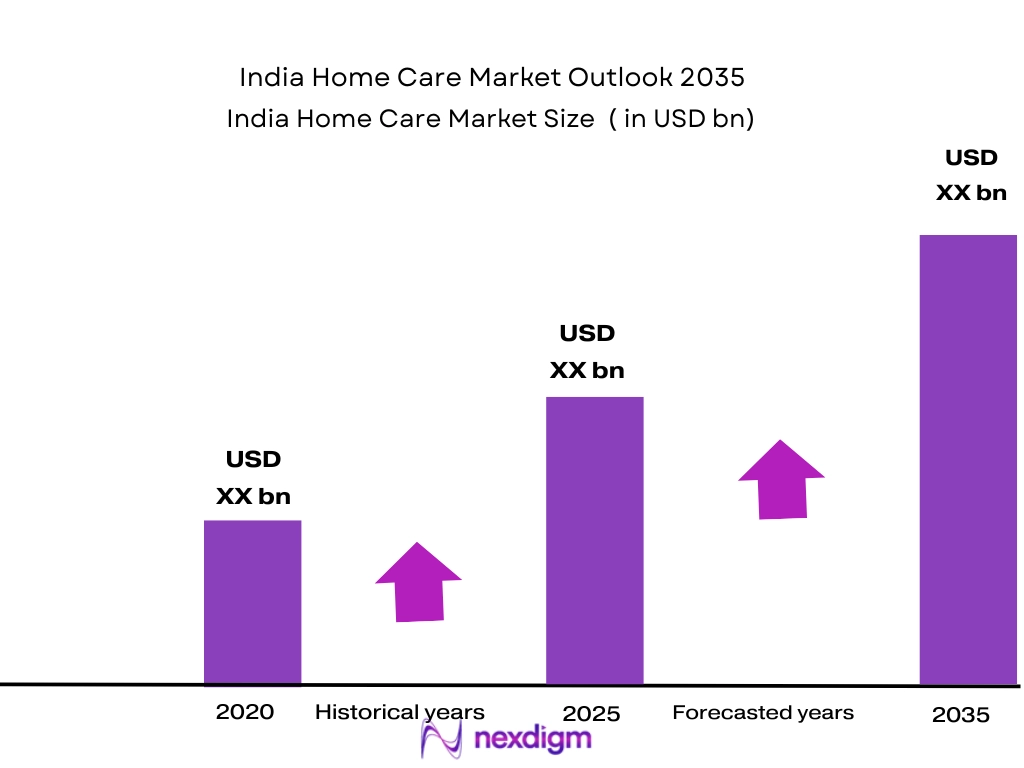
The India Home Care market is valued at USD ~ billion, based on data for 2025. The market growth is predominantly driven by increasing urbanization, a rising middle-class population, and growing awareness regarding hygiene and cleanliness. Additionally, the expanding availability of home care products through both traditional and online retail channels contributes significantly to this market’s expansion. The demand for a wide variety of cleaning products such as surface cleaners, air fresheners, and laundry detergents is fuelling the market’s upward trajectory.
Major cities like Mumbai, Delhi, Bangalore, and Chennai dominate the India Home Care market, primarily due to their dense population, high-income levels, and increased purchasing power. These cities have well-established retail networks, both in physical stores and through e-commerce platforms. Additionally, rural and semi-urban regions are also showing significant demand growth, driven by increasing awareness and accessibility of home care products. Government initiatives to improve hygiene standards also support the market’s expansion in both urban and rural areas.
Market Segmentation
By product type
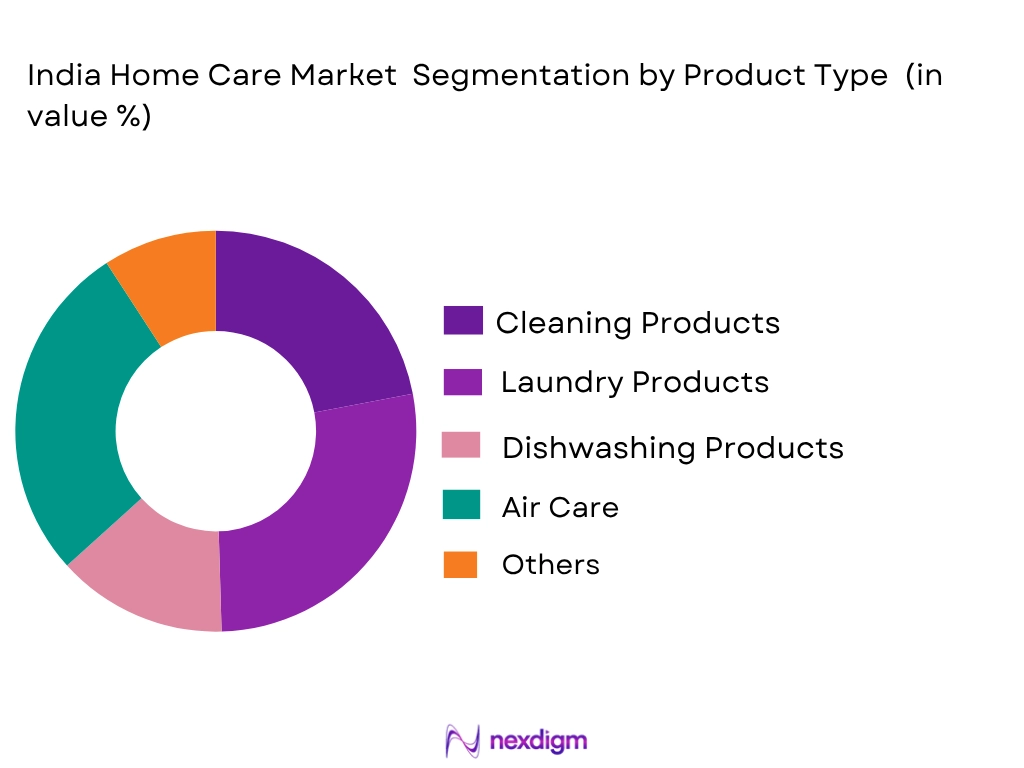
he home care market is segmented by product type into cleaning products, laundry products, air care, dishwashing products, and others. Recently, cleaning products have a dominant market share due to factors such as rising consumer demand for hygiene solutions, increasing awareness about the spread of infectious diseases, and growing urbanization. Cleaning products, especially surface cleaners and disinfectants, have gained significant traction as households and businesses alike seek ways to maintain cleanliness and ensure safety. The rise in health consciousness, coupled with innovations in formulations (e.g., eco-friendly options), has further solidified the position of cleaning products as the leading segment.
By Distribution Channel
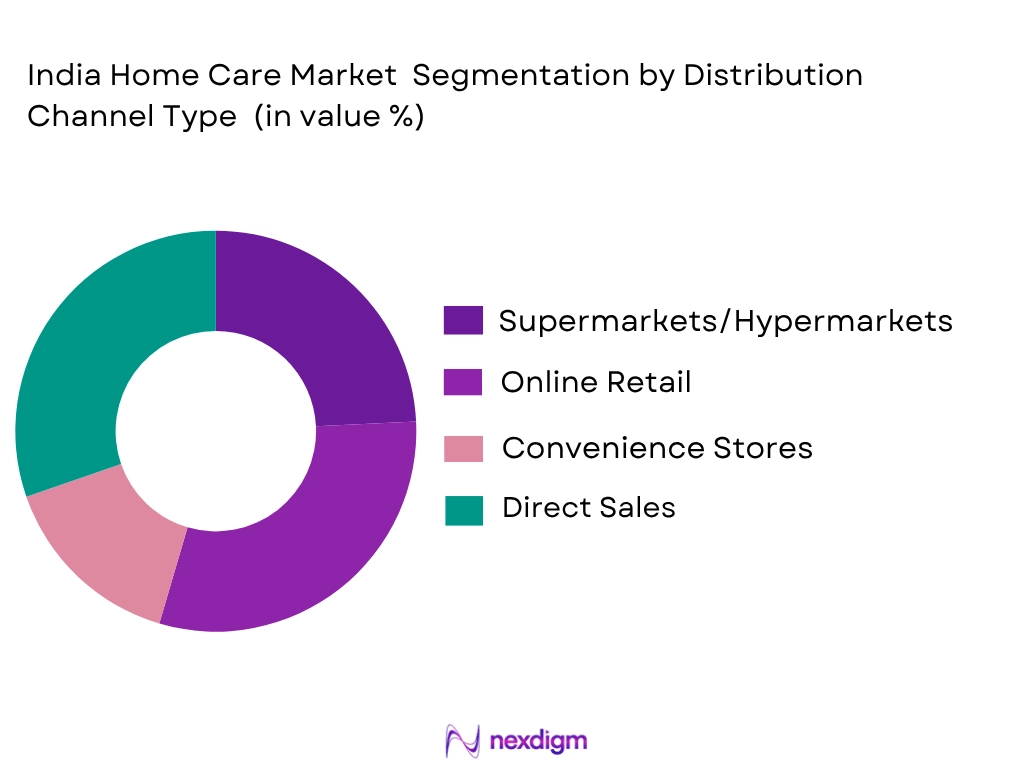
The home care market is also segmented by distribution channel into supermarkets/hypermarkets, online retail, convenience stores, direct sales, and other retail channels. Online retail has recently emerged as the dominant distribution channel, driven by the increasing trend of e-commerce shopping and the shift in consumer behavior toward convenience and accessibility. The ease of browsing products, reading reviews, and doorstep delivery has accelerated the growth of online channels, making it a preferred shopping method for many consumers. Additionally, the expansion of digital payment systems and improved logistics have made online shopping a more viable option, especially in emerging markets.
Competitive Landscape
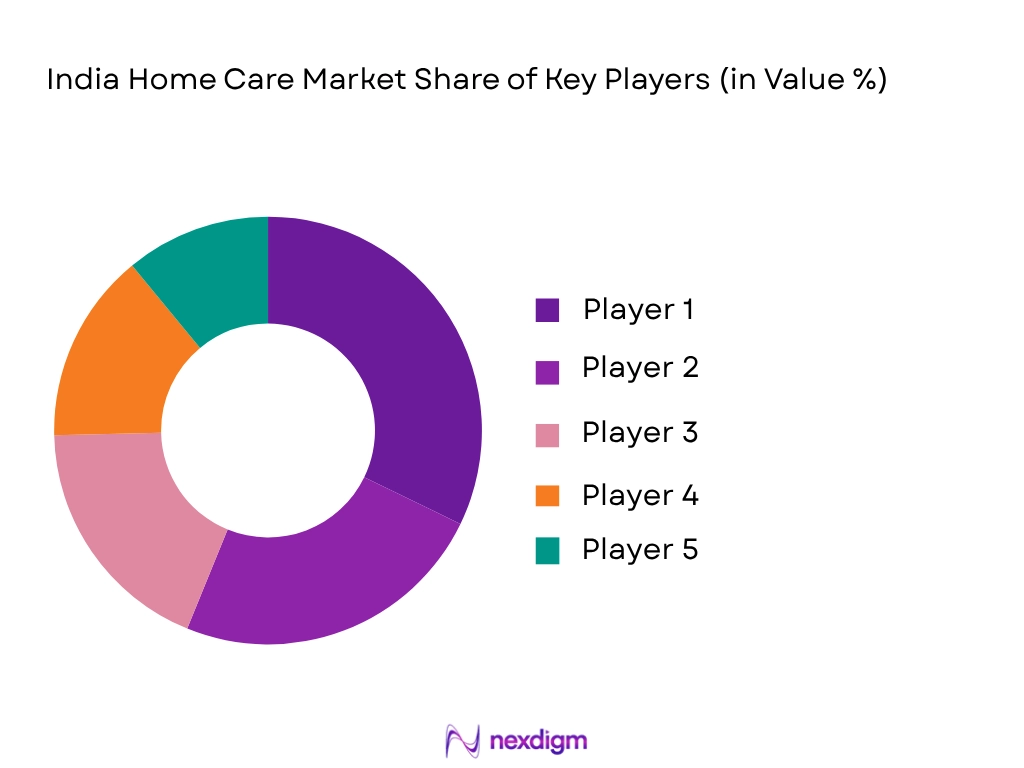
The India Home Care market is characterized by intense competition among several key players, with global brands such as Hindustan Unilever, Procter & Gamble, and Godrej Consumer Products dominating the market. Local players also hold a significant share, benefiting from their strong regional presence and consumer understanding. The market is further consolidated by the growing trend of e-commerce platforms offering home care products directly to consumers, expanding the reach of major brands.
| Company Name | Establishment Year | Headquarters | Technology Focus | Market Reach | Key Products | Revenue | Number of Caregivers |
| Portea Medical | 2013 | Bengaluru, India | ~ | ~ | ~ | ~ | ~ |
| Apollo HomeCare | 2016 | Hyderabad, India | ~ | ~ | ~ | ~ | ~ |
| HCAH India | 2012 | Gurugram, India | ~ | ~ | ~ | ~ | ~ |
| Care24 | 2014 | Mumbai, India | ~ | ~ | ~ | ~ | ~ |
| Nightingales Home Health Services | 1996 | Bengaluru, India | ~ | ~ | ~ | ~ | ~ |
India Home Care Market Analysis
Growth Drivers
Increasing Urbanization and Disposable Income
Urbanization in India has been growing steadily, with the urban population expected to reach 38% of the total population by 2025, according to the United Nations. This shift towards urban living leads to higher disposable incomes and changes in consumer behavior, driving demand for home care products. Additionally, India’s GDP per capita is expected to increase from USD 2,610 in 2022 to USD 2,836 in 2025, indicating more purchasing power for consumers. This trend of increased urbanization and rising incomes has made households more willing to spend on premium home care products.
Growing Awareness About Hygiene and Cleanliness
India’s focus on hygiene and cleanliness has been significantly boosted by government initiatives like the Swachh Bharat Mission, launched in 2014, which has increased public awareness. In urban areas, 80% of households now have access to improved sanitation, as reported by the Ministry of Housing and Urban Affairs, enhancing the demand for home care products. Public health campaigns and the impact of the COVID-19 pandemic have increased consumers’ focus on cleanliness, making disinfectants, sanitizers, and surface cleaners more essential in daily life. This awareness is reflected in the increasing market penetration of hygiene-focused home care products.
Market Challenges
Intense Price Sensitivity and Competition
Price sensitivity is one of the most significant challenges in India’s home care market. With a large portion of the population still in lower-income brackets, price remains a key decision factor. In 2022, approximately 60% of Indian consumers preferred low-cost alternatives when purchasing home care products. This intense price sensitivity puts pressure on brands to balance quality with affordability. Moreover, the competitive landscape is highly fragmented, with numerous local and international players vying for market share. Companies are forced to engage in aggressive pricing strategies to attract cost-conscious consumers, impacting overall profitability.
Regulatory Challenges and Compliance
India’s home care market faces significant regulatory challenges, especially with respect to product formulations, safety standards, and environmental guidelines. The Bureau of Indian Standards (BIS) sets stringent quality and safety standards for consumer products. Additionally, the government is intensifying scrutiny on chemical-free and sustainable product claims. Brands must navigate these regulations to ensure compliance and avoid potential legal challenges. For example, the 2020 amendment to the Consumer Protection Act, requiring detailed labeling and transparency for chemicals used in cleaning products, has placed additional operational burdens on manufacturers.
Market Opportunities
Expansion of E-commerce Platforms for Home Care Products
India’s e-commerce market is rapidly expanding, with online sales growing by 25% annually. In 2022, e-commerce sales in India were valued at USD 74 billion, with projections to reach USD 120 billion by 2025. The rise of platforms like Amazon, Flipkart, and Snapdeal has made home care products more accessible to consumers across the country. E-commerce channels have enabled even remote areas to access a variety of home care products, driving growth in the market. Furthermore, the shift towards online shopping is being supported by India’s increasing internet penetration, which was at 67% in 2023, offering immense opportunities for home care brands to tap into untapped consumer bases.
Growth in Organized Retail and Distribution Networks
India’s organized retail sector is growing rapidly, with the sector’s contribution to total retail sales expected to reach 10% in 2024. Modern retail formats such as hypermarkets, supermarkets, and department stores are expanding across tier 2 and tier 3 cities. The number of retail outlets is expected to increase by 8% annually. This development in organized retail provides home care brands with better access to a larger consumer base. With brands and distributors increasingly focusing on these emerging retail outlets, this network expansion will be crucial for increasing the market penetration of home care products.
Future Outlook
Over the next 5 years, the India Home Care market is expected to experience robust growth driven by factors such as rising disposable incomes, increasing urbanization, and the growing focus on cleanliness and hygiene in both households and commercial establishments. The demand for eco-friendly and sustainable products will also contribute to market growth as consumers become more environmentally conscious. The penetration of e-commerce platforms and the introduction of innovative home care products will further accelerate this growth.
Major Players
- Hindustan Unilever
- Procter & Gamble India
- Godrej Consumer Products Ltd.
- Marico Ltd.
- Dabur India Ltd.
- SC Johnson Professional
- Reckitt Benckiser India
- Colgate-Palmolive India
- LG Household & Health Care India
- Unicharm India Pvt Ltd.
- ITC Limited
- Amway India Enterprises
- Himalaya Wellness
- The Clorox Company
- Blue Star Ltd.
Key Target Audience
- Investments and Venture Capitalist Firms
- Government and Regulatory Bodies (Ministry of Consumer Affairs, Ministry of Health and Family Welfare)
- Retail Chains and Supermarket Chains
- E-commerce Platforms (Amazon India, Flipkart)
- Manufacturers of Home Care Products
- Distributors and Suppliers of Cleaning Products
- Chemical Manufacturers and Suppliers
- Logistics and Supply Chain Companies
Research Methodology
Step 1: Identification of Key Variables
This phase involves constructing an ecosystem map to identify the critical variables influencing the India Home Care market. It includes desk research from secondary and proprietary databases, along with primary research to define the key market drivers, such as urbanization, disposable income, and consumer trends in home care products.
Step 2: Market Analysis and Construction
Historical data is compiled and analyzed to assess the growth patterns of the market, focusing on product types, distribution channels, and end-user demographics. The market construction process includes evaluating revenue streams from major players, market penetration rates, and service quality statistics for market validation.
Step 3: Hypothesis Validation and Expert Consultation
Market hypotheses are validated through expert interviews with industry leaders, manufacturers, and suppliers of home care products. These interviews provide valuable insights into consumer behavior, market challenges, and technological advancements affecting the industry.
Step 4: Research Synthesis and Final Output
The final phase involves synthesizing data from various sources, including expert consultations, historical market data, and industry reports. This phase ensures a comprehensive, accurate, and validated analysis of the India Home Care market, providing actionable insights for stakeholders.

- Executive Summary
- Research Methodology (Market Definitions and Assumptions, Abbreviations, Market Sizing Approach, Consolidated Research Approach, Understanding Market Potential Through In-Depth Industry Interviews, Primary Research Approach, Limitations and Future Conclusions)

- Definition and Scope
- Market Dynamics Overview
- Market Genesis
- Major Players and Market Timeline
- Business Cycle and Trends
- Supply Chain and Value Chain Analysis

- Growth Drivers
Increasing Urbanization and Disposable Income
Growing Awareness About Hygiene and Cleanliness
Rising Demand for Premium and Eco-friendly Products
Shift towards Automated and Convenient Home Care Solutions - Market Challenges
Intense Price Sensitivity and Competition
Regulatory Challenges and Compliance
Dependence on Raw Material Imports
Low Awareness of Sustainable Products in Certain Regions - Opportunities
Expansion of E-commerce Platforms for Home Care Products
Growth in Organized Retail and Distribution Networks
Development of Eco-friendly and Natural Product Lines
Rising Demand for Innovative Home Care Solutions (Smart Devices, Eco-friendly Products) - Key Trends
Growth in Multi-purpose and All-in-One Products
Shift towards Eco-friendly and Sustainable Packaging
Adoption of Smart Home Cleaning Devices
Rising Preference for Non-toxic and Chemical-free Products. - Government Regulations
- SWOT Analysis
- Porter’s Five Forces

- By Value, 2020–2025
- By Volume, 2020–2025
- By Average Price, 2020–2025

- By Product Type (In Value %)
Cleaning Products
Laundry Products
Air Care
Dishwashing Products
Others - By Distribution Channel (In Value %)
Supermarkets/Hypermarkets
Online Retail
Convenience Stores
Direct Sales - By Region (In Value %)
North India
South India
East India
West India
Rest of India

- Market Share of Major Players by Value/Volume
- Market Share of Major Players by Product Type
- Cross Comparison Parameters (Company Overview, Business Strategies, Recent Developments, Strength, Weakness, Organizational Structure, Revenues, Revenues by Product Type, Number of Touchpoints, Distribution Channels, Number of Dealers and Distributors,Margins, Production Plant, Capacity, Unique Value Offering and Others)
- SWOT Analysis of Major Players
- Pricing Analysis Based on Product Categories for Major Players
- Detailed Profiles of Major Companies
Hindustan Unilever
Procter & Gamble India
Godrej Consumer Products Ltd.
Marico Ltd.
Dabur India Ltd.
SC Johnson Professional
Reckitt Benckiser India
Colgate-Palmolive India
LG Household & Health Care India
Unicharm India Pvt Ltd.
ITC Limited
Amway India Enterprises
Himalaya Wellness
The Clorox Company
Blue Star Ltd.

- Market Demand and Utilization
- Purchasing Power and Budget Allocations
- Regulatory and Compliance Requirements
- Needs, Desires, and Pain Point Analysis
- Decision-Making Process

- By Value, 2026–2035
- By Volume, 2026–2035
- By Average Price, 2026–2035


 Request a Sample
 Ask for Customization
 Get a Quote
 Enquire Now