

 Download PDF
Market Overview
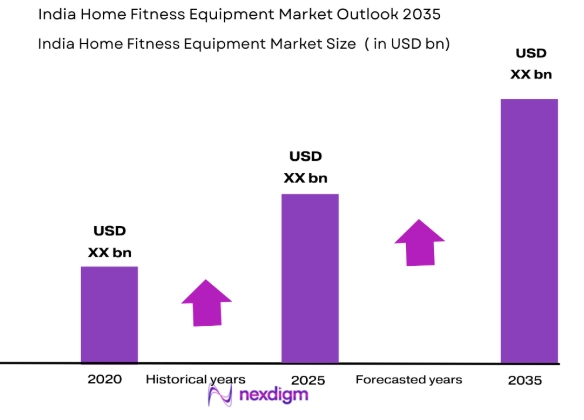
The India Home Fitness Equipment Market is experiencing significant growth, fueled by increasing health consciousness among the urban population and a rising preference for home-based workouts. The market size is expected to reach USD ~ billion by 2024, driven by growing disposable income, urbanization, and an increase in lifestyle diseases. This growth trajectory is propelled by the increasing popularity of fitness-focused apps and technology-integrated workout equipment. As consumers turn towards fitness at home, the market is expanding rapidly with a broad range of products catering to different fitness needs.
The dominant cities in the India Home Fitness Equipment Market include metropolitan areas like Delhi, Mumbai, Bangalore, Chennai, and Hyderabad. These cities have witnessed higher demand for home fitness equipment due to factors such as higher income levels, a more health-conscious population, and greater access to online retail platforms. Additionally, urbanization and increased awareness about fitness, especially during the COVID-19 pandemic, have further propelled demand. The growing trend of working professionals seeking convenient fitness solutions is also contributing to the dominance of these urban areas.
Market Segmentation
By Product Type
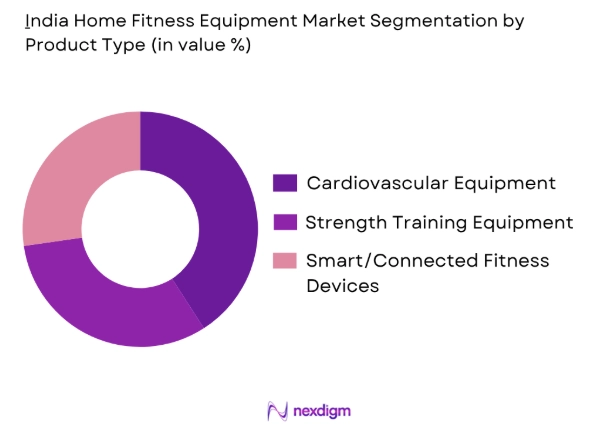
India’s home fitness equipment market is segmented into cardiovascular equipment, strength training equipment, and smart/connected fitness devices. Among these, cardiovascular equipment, especially treadmills and exercise bikes, holds a dominant position in the market due to their long-standing popularity and effectiveness in weight loss and cardiovascular health improvement. Treadmills have become a staple in many households, as they cater to individuals who prefer indoor running or walking. The continuous innovation in cardio machines, incorporating smart features such as app synchronization and health tracking, further supports the segment’s dominance.
By Technology Category
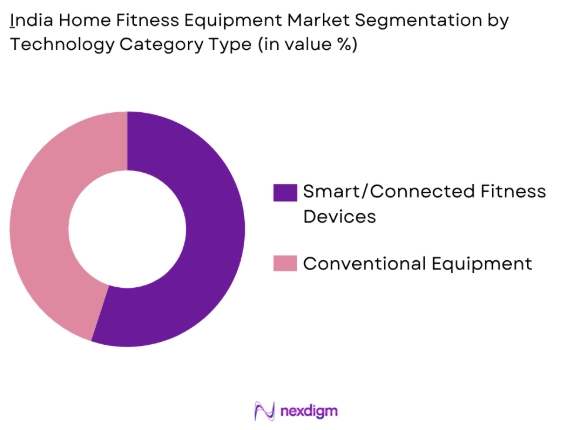
The home fitness equipment market in India is also segmented based on technology into conventional and smart/connected fitness devices. The smart/connected devices segment is expected to dominate the market due to the increasing adoption of technology-driven fitness solutions. Devices like smart treadmills, bikes, and fitness trackers that sync with apps and provide real-time feedback have gained immense popularity. With the rise of digital fitness and virtual training programs, consumers are increasingly investing in equipment that offers connectivity features and personalized workout experiences.
Competitive Landscape
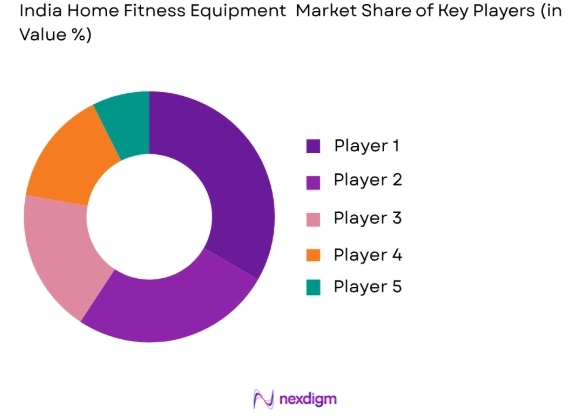
The India Home Fitness Equipment Market is dominated by several key players offering a wide range of products across various price points. Companies like Durafit, Powermax, and Fitline have a significant presence in the market, with a diverse portfolio of cardiovascular and strength training equipment. Global brands like ProForm and Nautilus also contribute to the competition with their high-end, feature-rich products. The market is also witnessing the entry of new players offering affordable and space-efficient equipment to cater to the growing demand in tier-2 and tier-3 cities.
| Company Name | Establishment Year | Headquarters | Product Portfolio | Distribution Channels | Key Strength |
| Durafit | 2015 | Mumbai, India | ~ | ~ | ~ |
| Powermax | 2002 | Mumbai, India | ~ | ~ | ~ |
| Fitline | 2008 | Pune, India | ~ | ~ | ~ |
| ProForm | 1977 | USA | ~ | ~ | ~ |
| Nautilus | 1970 | USA | ~ | ~ | ~ |
India Home Fitness Equipment Market Analysis
Growth Drivers
Health Consciousness and Preventive Wellness
The rising awareness regarding health issues has been a key factor driving the growth of the home fitness equipment market. India has witnessed a significant rise in lifestyle diseases, with approximately 77 million adults living with diabetes in 2022, according to the World Health Organization (WHO). In response, the Indian government has been promoting preventive health measures, leading to increased investments in wellness. In 2023, the Indian government allocated INR 5,000 crore to promote preventive healthcare initiatives. This increased awareness among the urban population about the importance of physical activity and fitness has led to a greater demand for home fitness solutions. Additionally, India’s growing healthcare expenditure, projected at INR 6.5 trillion in 2024, reflects the country’s shift towards better health and wellness practices. \
Work-from-Home and Hybrid Lifestyle Trends
The work-from-home trend, which surged during the COVID-19 pandemic, has become a permanent feature for many professionals. This has contributed significantly to the demand for home fitness equipment. In 2023, India had approximately 17 million remote workers, a number projected to rise by 30% in the coming years, according to the Ministry of Electronics and Information Technology. The hybrid work model allows for greater flexibility, encouraging individuals to incorporate fitness routines into their daily schedules. Additionally, India’s urban population is seeing a 15% rise in per capita income over the past few years, leading to higher disposable income and a growing appetite for home fitness solutions. These factors have created a conducive environment for the expansion of the home fitness equipment market, as consumers increasingly seek convenient ways to maintain their health while working remotely.
Challenges
High Capex Sensitivity and Affordability Threshold
One of the key challenges in the home fitness equipment market is the high capital expenditure (CapEx) associated with purchasing fitness equipment. For instance, high-quality treadmills can cost between INR 25,000 and INR 150,000. While urban areas may have a greater capacity to invest in such equipment, affordability remains a challenge in tier-2 and tier-3 cities, where the average household income is still below INR 5 lakhs annually. In 2023, 58% of Indian households had an annual income below INR 6 lakh, which indicates a significant price sensitivity among the majority of the population. Furthermore, the 2023 Global Consumer Survey found that 45% of Indians consider the cost of fitness equipment as a major deterrent to purchase. This affordability gap poses a challenge to broader market penetration, particularly in lower-income demographics.
Space Constraints and Product Suitability
In urban India, space constraints remain a major issue when it comes to purchasing home fitness equipment. According to the 2022 Census of India, 77% of Indian urban households live in 1-2 bedroom apartments with an average size of 600-1,000 square feet. This has led to a growing preference for compact and multi-functional fitness equipment that can be easily stored. However, many of the popular fitness machines, such as large treadmills and ellipticals, occupy a significant amount of space. As urbanization continues to rise, particularly in metro cities, space constraints will likely hinder the growth of larger equipment categories, forcing consumers to opt for smaller, more compact solutions. Additionally, the limited availability of space often results in fitness equipment being purchased as a secondary priority, rather than a core component of an individual’s lifestyle, thus limiting the market’s growth potential.
Opportunities
Digital Fitness Integration & Subscription Models
The growing integration of digital fitness solutions into home workout regimes presents a significant opportunity for the market. As of 2023, the Indian fitness app market had over 100 million active users, and this number is projected to grow further as more individuals opt for digital solutions for their fitness needs. The trend of subscription-based fitness apps, such as Cult.fit and HealthifyMe, is gaining momentum. These platforms offer personalized fitness plans, virtual training, and community engagement, providing consumers with a comprehensive fitness experience from home. With the increasing penetration of smartphones and internet connectivity—India has an internet penetration rate of 67% as of 2023—there is a clear opportunity for home fitness equipment companies to integrate digital solutions with their products, tapping into the growing demand for convenience and personalized fitness experiences.
Localized Manufacturing & Make in India Momentum
The “Make in India” initiative, launched by the Government of India, is encouraging the local manufacturing of fitness equipment, which will reduce import dependency and make products more affordable. As of 2023, the Indian government has allocated INR 10,000 crore to support the local manufacturing sector, and the fitness equipment sector stands to benefit significantly from this push. India’s growing manufacturing capability, coupled with cheaper labor costs, is making it an attractive destination for fitness equipment brands looking to produce locally. This local manufacturing trend is also fostering innovation, with several Indian startups introducing fitness products tailored to the specific needs of Indian consumers. This presents a significant opportunity for both global and local brands to establish a stronger presence in India by offering more affordable, customized fitness solutions.
Future Outlook
Over the next few years, the India Home Fitness Equipment Market is expected to experience robust growth, driven by the increasing penetration of fitness technology, the expansion of e-commerce, and the growing demand for convenient home fitness solutions. The market will likely see more innovations, such as AI-integrated workout equipment and virtual fitness platforms, offering personalized workout experiences. Additionally, rising health concerns and the growing number of urban fitness enthusiasts will continue to contribute to the market’s positive outlook.
Major Players
- Durafit Fitness Pvt. Ltd.
- Powermax Fitness (I) Pvt. Ltd.
- Fitline Retails Pvt. Ltd.
- Hercules Fitness
- Jerai Fitness Pvt. Ltd.
- Nortus Fitness
- BullrocK Fitness
- Into Wellness Pvt. Ltd.
- Universal Gym & Fitness Equipment
- Technogym S.p.A.
- Life Fitness
- Precor Inc.
- Peloton Interactive Inc.
- ICON Health & Fitness
- Afton Fitness
Key Target Audience
- Investments and Venture Capitalist Firms
- Government and Regulatory Bodies
- Home Fitness Equipment Manufacturers
- Retail Chains
- Online Retail Platforms
- Fitness App Developers
- Corporate Wellness Programs
- Insurance Companies
Research Methodology
Step 1: Identification of Key Variables
The initial step involves identifying and mapping out all the crucial variables affecting the Indian home fitness equipment market. This is achieved through extensive desk research, including secondary data analysis and proprietary databases. The goal is to understand the key factors driving growth, including health consciousness, technological adoption, and shifting consumer behavior.
Step 2: Market Analysis and Construction
In this phase, historical data is gathered and analyzed. This includes assessing the market size and penetration of fitness equipment categories such as cardio and strength training, alongside pricing analysis. Additionally, data will be compiled to analyze the geographical distribution of the market, specifically focusing on tier-1, tier-2, and tier-3 cities.
Step 3: Hypothesis Validation and Expert Consultation
To validate the findings, consultations are held with industry experts, including manufacturers, distributors, and technology partners. These consultations offer firsthand insights into current market trends, challenges, and consumer preferences, which are integral in refining market estimates and confirming the accuracy of the research data.
Step 4: Research Synthesis and Final Output
The final stage of the methodology involves synthesizing all gathered data into a comprehensive analysis. Insights from both secondary research and expert consultations are integrated to provide a detailed and validated report on the India Home Fitness Equipment Market.

- Executive Summary
- Research Methodology (Market Definitions and Assumptions, Abbreviations, India specific Market Sizing Approach, Primary and Secondary Data Sources, Consolidated Research Model, Forecasting Techniques, Limitations and Future Scope)

- Definition and Scope
- Market Genesis and Adoption Curve in India
- Growth Logic and Behavioral Drivers
- Market Ecosystem Dynamics

- Growth Drivers
Health Consciousness and Preventive Wellness
Work‑from‑Home and Hybrid Lifestyle Trends
Shift from Gym Memberships to Home Fitness Solutions
Advancements in Smart Fitness Technology
Customization & Personalization Demand - Challenges
High Capex Sensitivity and Affordability Threshold
Space Constraints and Product Suitability
Supply Chain and After‑Sales Support Bottlenecks
Import Dependency and Pricing Volatility - Opportunities
Digital Fitness Integration & Subscription Models
Compact & Space‑Saving Modular Solutions
Localized Manufacturing & Make in India Momentum
Corporate Wellness Partnerships
Tier‑2/3 Penetration Strategy - Trends
Connected Fitness and Data Ecosystems
Subscription + Hardware Bundles
Gamification & Virtual Workout Experiences
AI‑Driven Personal Training Integration - Swot Analysis
- Porter’s Five Forces

- By Market Value, 2020-2025
- By Unit Sales Volume, 2020-2025
- By Average Selling Price (ASP) Dynamics, 2020-2025
- By Regional Market Share, 2020-2025

- By Product (In Value %)
cardiovascular equipment
strength training equipment
smart/connected fitness devices
- By Technology Category (In Value %)
Smart/Connected
Conventional - By Price Tier (In Value %)
Economy
Mid‑Range
Premium - By Distribution Channel (In Value %)
E‑Commerce Platforms
Specialty Fitness Stores
Mass Retail / Sporting Goods Outlets
Direct OEM & Subscription Bundles
Value Retail and Aggregators - By Consumer Demographic (In Value %)
Urban Millennials
Gen X & Boomers
Female Fitness Segment
Working Professionals
Tier‑2+ City Consumers

- Market Share Analysis
- Cross‑Comparison Parameters (Cardio vs Strength vs Smart,
Price Positioning Bands, Distribution Channel Penetration, Connected/SaaS Offerings Integration, Brand Equity & Consumer Awareness, After‑Sales Service Network Depth Retail Touchpoint Density, Consumer Satisfaction & Retention Score) - SWOT Profiling of Major Competitors
- Pricing SKU Level Benchmarking
- Profiles of Major Players
Durafit Fitness Pvt. Ltd.
Powermax Fitness (I) Pvt. Ltd.
Fitline Retails Pvt. Ltd.
Fitness World
Hercules Fitness
Jerai Fitness Pvt. Ltd.
Nortus Fitness
BullrocK Fitness
Into Wellness Pvt. Ltd.
Universal Gym & Fitness Equipment
Technogym S.p.A.
Life Fitness
Precor Inc.
Peloton Interactive Inc.
ICON Health & Fitness (iFIT)

- End User Demographics and Segmentation
- Market Demand and Utilization
- Regulatory and Compliance Requirements
- Needs, Desires, and Pain Points
- Decision-Making Proces

- By Market Value, 2026-2035
- By Unit Sales Volume, 2026-2035
- By Average Selling Price (ASP) Dynamics, 2026-2035
- By Regional Market Share, 2026-2035


 Request a Sample
 Ask for Customization
 Get a Quote
 Enquire Now