
 Download PDF
 Download PDF
Market Overview
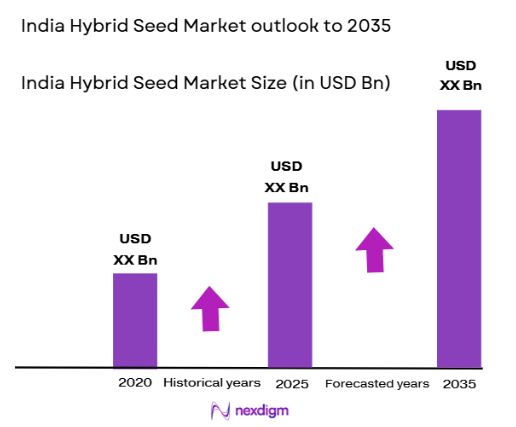
The India Hybrid Seed Market has experienced substantial growth, driven by advancements in seed technology and rising demand for high-yield crops. The market size has reached USD ~ billion, with an increasing trend toward hybrid seed adoption, especially in field crops. This growth is attributed to government initiatives, the rise in agricultural mechanization, and the integration of biotech innovations to address food security concerns. Hybrid seeds are seen as a solution to challenges such as pest resistance, higher yields, and improved quality, further propelling the market.
India, with its large agricultural base, leads the hybrid seed market. The dominance is due to a combination of favorable climatic conditions, government support for agri-tech innovations, and increasing agricultural mechanization. States like Punjab, Haryana, and Uttar Pradesh are key drivers due to their strong agricultural infrastructure and adoption of advanced farming practices. The government’s push for technological adoption in agriculture through policies and subsidies also bolsters the market’s growth in these regions.
Market Segmentation
By Product Type:
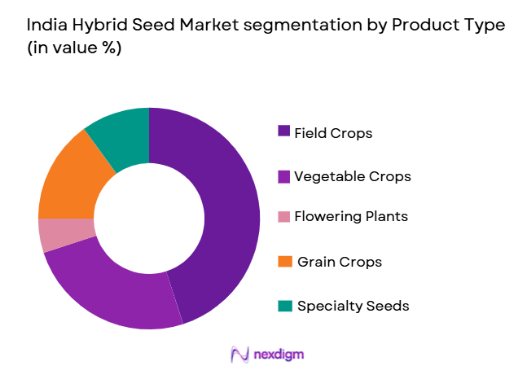
India Hybrid Seed Market is segmented by product type into field crops, vegetable crops, flowering plants, grain crops, and specialty seeds. Recently, field crops have a dominant market share due to increasing demand for cereals and pulses that are fundamental to India’s food security. The rise in mechanized farming, alongside government incentives for the adoption of hybrid varieties, has significantly contributed to the growth of field crops. Hybrid field crops such as maize, rice, and cotton have shown substantial growth in recent years due to improved yield and pest resistance traits. The demand for high-performance field crops has positioned this sub-segment at the forefront of hybrid seed market developments, making it a key contributor to the market’s expansion.
By End-User:
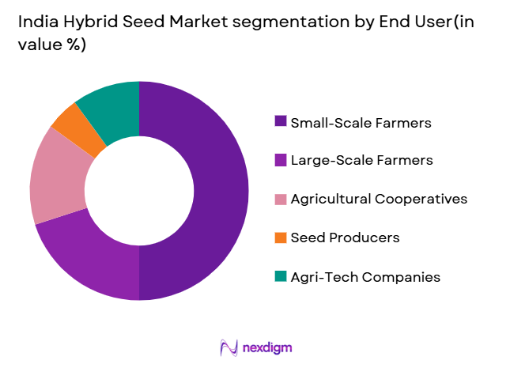
The India Hybrid Seed Market is segmented by end-user into small-scale farmers, large-scale farmers, agricultural cooperatives, seed producers, and agri-tech companies. Recently, small-scale farmers have dominated the market share. This sub-segment’s growth is fueled by the increasing availability of affordable hybrid seed options and government-supported schemes to promote agricultural productivity. Small-scale farmers benefit from the high-yielding nature of hybrid seeds, which significantly improve crop output and reduce losses. These advantages make hybrid seeds an attractive option for farmers, particularly in rural areas where traditional farming methods are prevalent. As a result, small-scale farmers represent a key segment driving hybrid seed adoption in India.
Competitive Landscape
The competitive landscape of the India Hybrid Seed Market is characterized by both global and local players, with major companies consolidating their market presence through strategic mergers, acquisitions, and investments in R&D. The market remains competitive, with a few key players holding significant influence over technology adoption and product development. Key companies are leveraging innovations in biotechnology and genetic engineering to develop more efficient, drought-resistant hybrid seeds, thereby shaping the future of agriculture in India. The market is also witnessing increased collaboration between seed producers and agri-tech firms, which has accelerated the growth of the hybrid seed sector.
| Company Name | Establishment Year | Headquarters | Technology Focus | Market Reach | Key Products | Revenue (USD Billion) |
| Mahyco | 1964 | Mumbai, India | ~ | ~ | ~ | ~ |
| Monsanto India | 2000 | Gurgaon, India | ~ | ~ | ~ | ~ |
| Syngenta India | 2000 | Bangalore, India | ~ | ~ | ~ | ~ |
| Nuziveedu Seeds | 1997 | Hyderabad, India | ~ | ~ | ~ | ~ |
| Rallis India | 1948 | Mumbai, India | ~ | ~ | ~ | ~ |
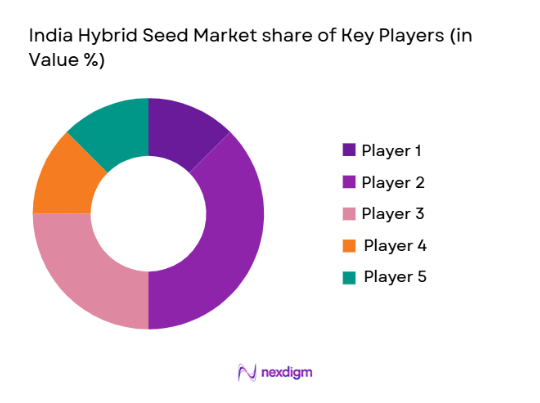
India Hybrid Seed Market Analysis
Growth Drivers
Government Support for Agricultural Advancements:
Government initiatives aimed at boosting the productivity of Indian agriculture have greatly supported the growth of the hybrid seed market. The government has introduced various schemes, such as subsidies for hybrid seed distribution and investments in agricultural infrastructure. This, in turn, has led to increased adoption of hybrid seeds, particularly in regions with substantial agricultural production. With a growing focus on food security, these policies aim to facilitate the scaling of hybrid seed use in diverse cropping systems. As the government strengthens its push for technological advancement in agriculture, hybrid seeds continue to gain prominence. Alongside these efforts, increasing research into new hybrid seed varieties has further propelled market growth.
Technological Advancements in Seed Production:
Advancements in seed technology, including genetic modification and the development of drought-resistant hybrids, are driving the market’s expansion. Biotechnology applications have enabled the creation of hybrid seeds that offer higher yields, improved pest resistance, and better adaptability to varying climatic conditions. As weather patterns become more unpredictable, the ability to produce hybrid seeds with superior resistance to pests and diseases is seen as a significant benefit for farmers. Additionally, the growing preference for mechanized farming techniques is driving demand for high-performance hybrid seeds. These technological innovations have contributed significantly to the market’s rapid growth, enabling India’s agricultural sector to meet rising food demands efficiently.
Market Challenges
High Production Costs of Hybrid Seeds:
Despite their advantages, the high cost of producing hybrid seeds remains a significant challenge. Developing hybrid seeds involves extensive research and development, coupled with the costs of genetically modifying crops for better yields and disease resistance. These factors make hybrid seeds more expensive than traditional varieties, limiting their widespread adoption among small-scale farmers. While larger farms with better financial capabilities can afford these seeds, smaller operations struggle to justify the expense, particularly in regions where agriculture is less industrialized. Additionally, there is a lack of widespread knowledge about hybrid seed benefits, further hindering adoption in certain areas.
Regulatory Hurdles and Consumer Resistance to GMOs:
Regulatory challenges and resistance from consumers pose another significant barrier to the growth of the hybrid seed market. The approval process for genetically modified seeds is often lengthy and involves stringent regulations to ensure safety and environmental sustainability. This slows down the availability of new hybrid seed varieties in the market. Moreover, public skepticism surrounding genetically modified organisms (GMOs) persists, particularly in rural areas where awareness is lower. Concerns about the safety of GMOs and their long-term effects on health and the environment contribute to resistance among both consumers and farmers. As a result, these regulatory and societal barriers hinder the growth potential of the hybrid seed market.
Opportunities
Expansion of Urban Farming:
The rise of urban farming offers significant opportunities for the hybrid seed market. With growing urbanization, limited land availability, and a rising demand for locally grown produce, hybrid seeds present an attractive solution for small-scale urban farming operations. Urban farms can benefit from the high yield and space efficiency offered by hybrid seeds. Additionally, government and private sector initiatives that promote urban farming as part of sustainable city planning are expected to drive further demand for hybrid seeds. The adoption of hybrid seeds in urban agriculture not only contributes to food security but also aligns with broader sustainability goals, making this a key opportunity for market growth.
Partnerships Between Agri-Tech Companies and Seed Producers:
The increasing collaboration between agri-tech companies and hybrid seed producers presents new opportunities for innovation and market growth. These partnerships can lead to the development of cutting-edge hybrid seed varieties that are better adapted to the evolving needs of farmers. For instance, agri-tech companies specializing in precision agriculture can work with seed producers to create hybrid seeds that are optimized for specific environmental conditions, pest resistance, or disease management. Furthermore, these collaborations could enhance the availability and distribution of hybrid seeds through technology-driven platforms, making it easier for farmers to access high-quality seeds. This growing synergy between technology and agriculture provides significant potential for market expansion.
Future Outlook
The India Hybrid Seed Market is expected to continue its robust growth over the next five years, driven by technological advancements, increased government support, and rising demand for food security. As climate change increases the need for resilient crops, hybrid seeds are poised to play a critical role in enhancing agricultural productivity. Continued investment in research and development, as well as partnerships between agri-tech firms and seed producers, will likely lead to the development of more efficient and adaptable hybrid seed varieties. Additionally, urban farming trends and increasing mechanization in rural areas are expected to drive demand further.
Major Players
- Mahyco
- Monsanto India
- Syngenta India
- Nuziveedu Seeds
- Rallis India
- DuPont India
- Kaveri Seed Company
- JK Agri Genetics
- Indo-American Hybrid Seeds
- BASF India
- SeedWorks International
- Rasi Seeds
- Chhattisgarh Hybrid Seed Co.
- Bioseed Research India
- Kaveri Seed
Key Target Audience
- Investments and venture capitalist firms
- Government and regulatory bodies
- Agri-tech companies
- Agricultural cooperatives
- Large-scale farming corporations
- Hybrid seed producers
- Agrochemical companies
- Seed distribution companies
Research Methodology
Step 1: Identification of Key Variables
The identification of key market drivers, challenges, opportunities, and trends was conducted through secondary research and expert consultations.
Step 2: Market Analysis and Construction
In-depth analysis of market data, focusing on product segments, technological advancements, and key market players, was performed to construct a detailed market model.
Step 3: Hypothesis Validation and Expert Consultation
Insights and hypotheses from initial findings were validated through discussions with industry experts and stakeholders to ensure market accuracy.
Step 4: Research Synthesis and Final Output
The research findings were synthesized, analyzed, and presented in a structured format to generate actionable insights for stakeholders.

- Executive Summary
- Research Methodology(Definitions, Scope, Industry Assumptions, Market Sizing Approach, Primary & Secondary Research Framework, Data Collection & Verification Protocol, Analytic Models & Forecast Methodology, Limitations & Research Validity Checks)

- Market Definition and Scope
- Value Chain & Stakeholder Ecosystem
- Regulatory / Certification Landscape
- Sector Dynamics Affecting Demand
- Strategic Initiatives & Infrastructure Growth

- Growth Drivers
Increase in Demand for High-Yield Crops
Rising Adoption of Precision Agriculture
Government Initiatives Supporting Seed Industry
Technological Advancements in Seed Technology
Climate Change Mitigation Strategies in Agriculture - Market Challenges
High Cost of Hybrid Seed Production
Regulatory Challenges in Genetic Engineering
Supply Chain Disruptions in Seed Distribution
Limited Availability of Hybrid Varieties for Certain Crops
Resistance to GMO-Based Seed Solutions - Market Opportunities
Emerging Demand for Drought-Resistant Hybrid Seeds
Growth in Urban Farming and Greenhouses
Partnerships Between Tech Firms and Seed Producers - Trends
Increased Investment in Seed R&D
Sustainable Hybrid Seed Solutions
Growing Preference for Organic Hybrid Seeds
Integration of Big Data in Agriculture
Rise in Seed Certification and Traceability - Government Regulations & Defense Policy
Seed Quality Control Regulations
Hybrid Seed Certification Programs
Incentives for Research in Agricultural Biotechnology - SWOT Analysis
- Stakeholder and Ecosystem Analysis
- Porter’s Five Forces Analysis
- Competition Intensity and Ecosystem Mapping

- By Market Value, 2020-2025
- By Installed Units, 2020-2025
- By Average System Price, 2020-2025
- By System Complexity Tier, 2020-2025

- By System Type (In Value%)
Field Crops
Vegetable Crops
Flowering Plants
Grain Crops
Specialty Seeds - By Platform Type (In Value%)
Direct Seed Planting
Greenhouse & Protected Cultivation
Open-field Cultivation
Hydroponic Cultivation
Urban Agriculture Platforms - By Fitment Type (In Value%)
Genetically Modified Hybrid Seeds
Non-GMO Hybrid Seeds
In-vitro Hybrid Seeds
Microbial Inoculant Hybrid Seeds
Advanced Trait Hybrid Seeds - By EndUser Segment (In Value%)
Farmers (Small-scale)
Farmers (Large-scale)
Agricultural Cooperatives
Seed Producers
Agri-tech Companies - By Procurement Channel (In Value%)
Direct Purchase
Online Marketplaces
Seed Dealers
Government Programs & Subsidies
Third-party Suppliers - By Material / Technology (in Value%)
Biotechnology
Seed Coating Technology
Cryopreservation
Genomic Selection
Molecular Breeding

- Market structure and competitive positioning
- Market share snapshot of major players
- CrossComparison Parameters (Seed Type, Technology Adoption, Procurement Channel, Fitment Type, Product Differentiation, Pricing Strategy, Distribution Network, Regulatory Compliance, Innovation Rate, Brand Loyalty)
- SWOT Analysis of Key Players
- Pricing & Procurement Analysis
- Key Players
Mahyco
Monsanto India
Nuziveedu Seeds
Syngenta India
Bayer CropScience
Rallis India
DuPont India
Kaveri Seed Company
JK Agri Genetics
Indo-American Hybrid Seeds
BASF India
SeedWorks International
Rasi Seeds
Chhattisgarh Hybrid Seed Co.
Bioseed Research India

- Farmers’ Transition to Hybrid Seed Usage
- Emerging Role of Agri-tech Firms in Hybrid Seed Distribution
- Challenges in Seed Adaptation to Local Soil Types
- Government’s Role in Promoting Hybrid Seed Accessibility

- Forecast Market Value, 2026-2035
- Forecast Installed Units, 2026-2035
- Price Forecast by System Tier, 2026-2035
- Future Demand by Platform, 2026-2035


 Request a Sample
 Ask for Customization
 Get a Quote
 Enquire Now