
 Download PDF
Market Overview
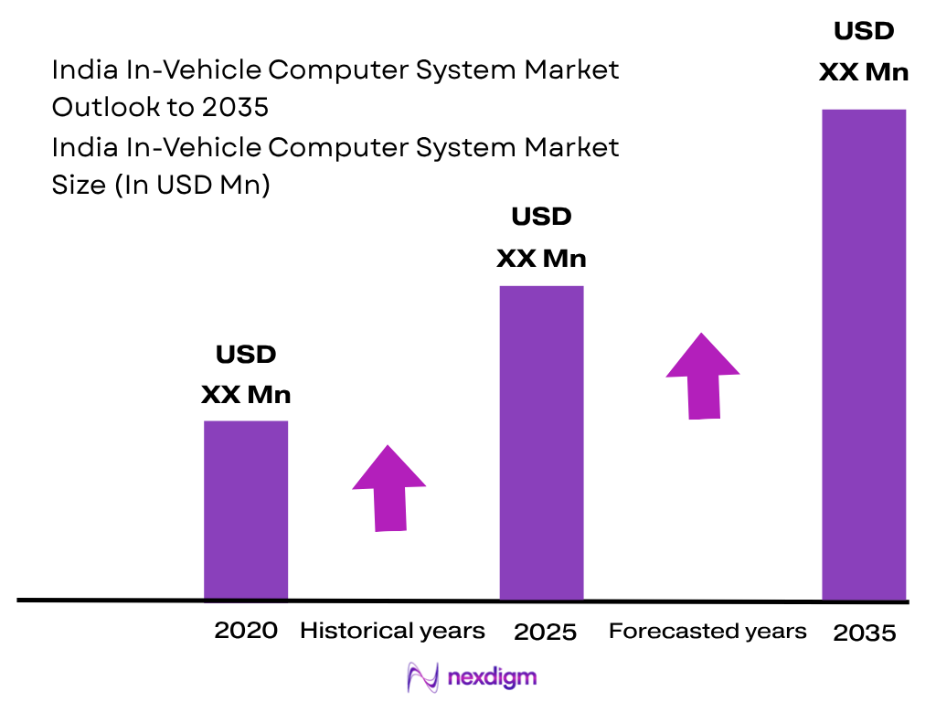
The India In-Vehicle Computer System Market is valued at approximately USD ~ million, supported by increasing integration of connected vehicle platforms, advanced driver assistance systems (ADAS), digital cockpits, and vehicle telematics solutions. The global in-vehicle computer system market was valued at USD 784 million in 2024, with growth driven by rising demand for intelligent vehicle architectures and centralized computing platforms. India’s automotive electronics ecosystem is expanding with increasing vehicle production, software-defined vehicle adoption, and localization initiatives. The market growth is further supported by rising investments in automotive semiconductor and embedded software capabilities.
The India In-Vehicle Computer System Market is primarily concentrated across automotive manufacturing and technology hubs including Pune, Bengaluru, Chennai, Gurugram, Noida, Hyderabad, and Mumbai due to the presence of vehicle OEMs, Tier-1 suppliers, semiconductor design companies, and automotive software engineering centers. Pune and Chennai dominate because of their established automotive manufacturing clusters, while Bengaluru and Hyderabad have emerged as major automotive software and embedded systems development centers. These locations benefit from skilled engineering talent, supplier networks, and increasing investments in connected vehicle technologies.
Market Segmentation
By Vehicle Type
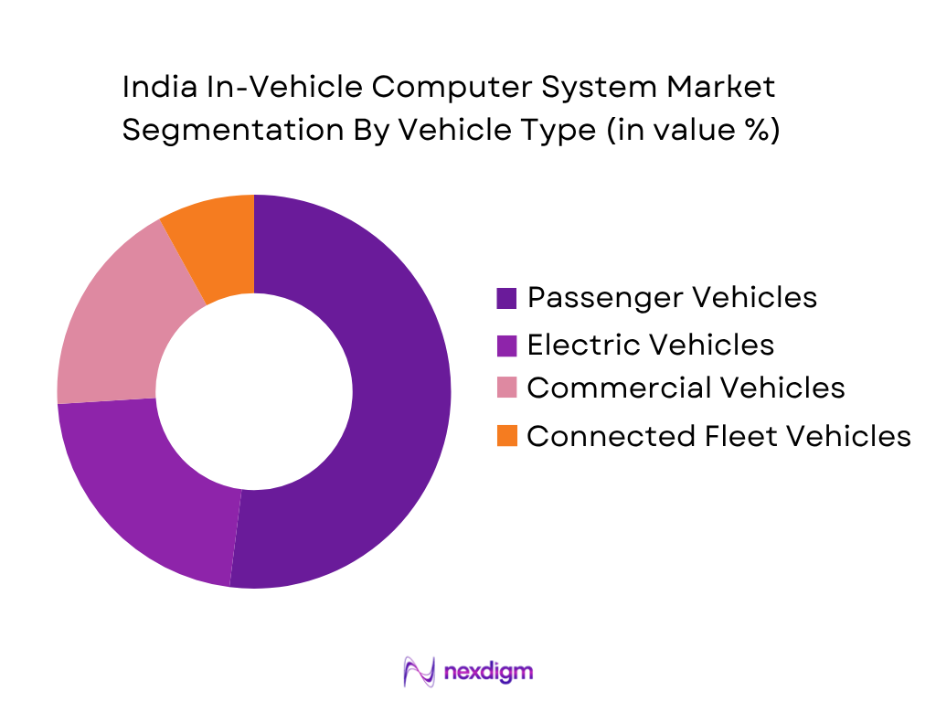
The India In-Vehicle Computer System Market is segmented by vehicle type into passenger vehicles, commercial vehicles, electric vehicles, and connected fleet vehicles. Passenger vehicles represent the dominant segment due to increasing consumer preference for premium infotainment systems, connected features, ADAS functionality, and digital cockpit technologies. Rising adoption of smart features in SUVs and premium passenger cars has accelerated the integration of advanced computing systems. OEMs are increasingly incorporating centralized vehicle computers and domain controllers to support multiple electronic functions, improving system efficiency and reducing ECU complexity. Electric vehicles also represent a rapidly expanding segment due to higher computing requirements for battery management, vehicle connectivity, and energy optimization.
By Application Type
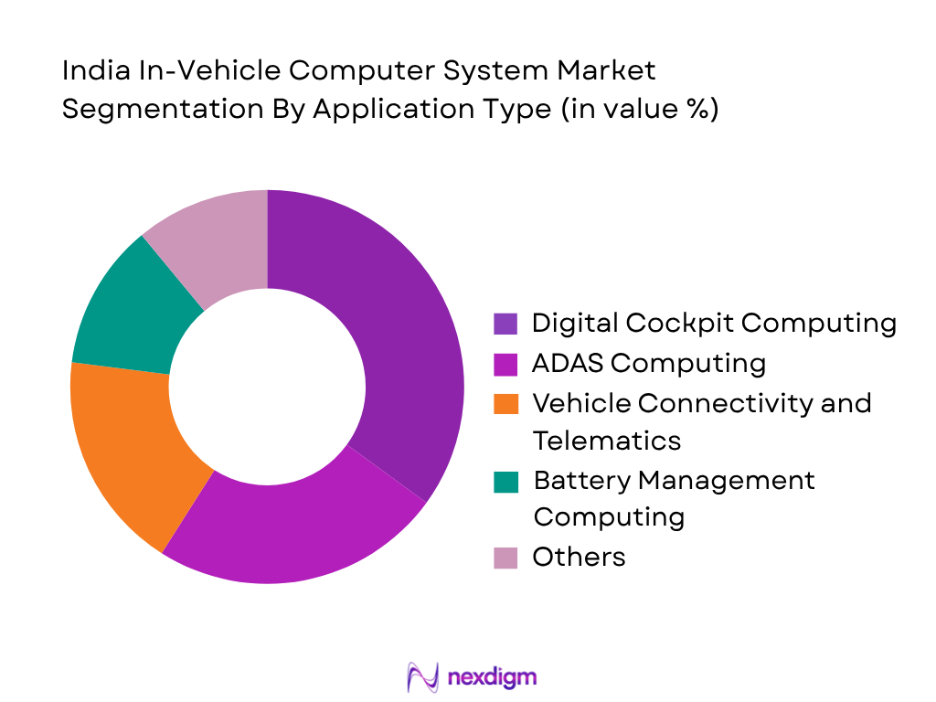
The India In-Vehicle Computer System Market is segmented by application type into digital cockpit computing, ADAS computing, vehicle connectivity and telematics processing, powertrain computing, battery management computing, and fleet analytics processing. Digital cockpit computing currently dominates the market due to increasing consumer demand for connected infotainment, navigation, voice assistance, and smartphone integration features. Passenger vehicle manufacturers are prioritizing enhanced user experiences, resulting in higher adoption of high-performance computing units capable of managing displays, connectivity, and entertainment functions. ADAS computing is witnessing rapid growth due to increasing safety requirements and the introduction of driver assistance features in mid-range and premium vehicles. Electric vehicle applications are further accelerating demand for specialized computing systems for battery monitoring and energy management.
Competitive Landscape
The India In-Vehicle Computer System Market is characterized by the presence of global automotive technology companies, semiconductor manufacturers, automotive software providers, and domestic engineering solution companies. Major players such as NVIDIA, Qualcomm, Bosch, Continental, Harman, and Aptiv are strengthening their positions through advanced vehicle computing platforms, ADAS processors, digital cockpit solutions, and connected vehicle architectures. The competitive environment is shaped by partnerships between automotive OEMs and technology providers, increasing demand for software-defined vehicles, and investments in automotive semiconductor capabilities.
| Company | Establishment Year | Headquarters | Key Product Portfolio | Automotive Computing Capability | Major Application Area | Technology Focus | India Market Presence | Strategic Advantage |
| NVIDIA | 1993 | Santa Clara, USA | ~ | ~ | ~ | ~ | ~ | ~ |
| Qualcomm | 1985 | San Diego, USA | ~ | ~ | ~ | ~ | ~ | ~ |
| Robert Bosch GmbH | 1886 | Gerlingen, Germany | ~ | ~ | ~ | ~ | ~ | ~ |
| Continental AG | 1871 | Hanover, Germany | ~ | ~ | ~ | ~ | ~ | ~ |
| HARMAN International | 1980 | Stamford, USA | ~ | ~ | ~ | ~ | ~ | ~ |
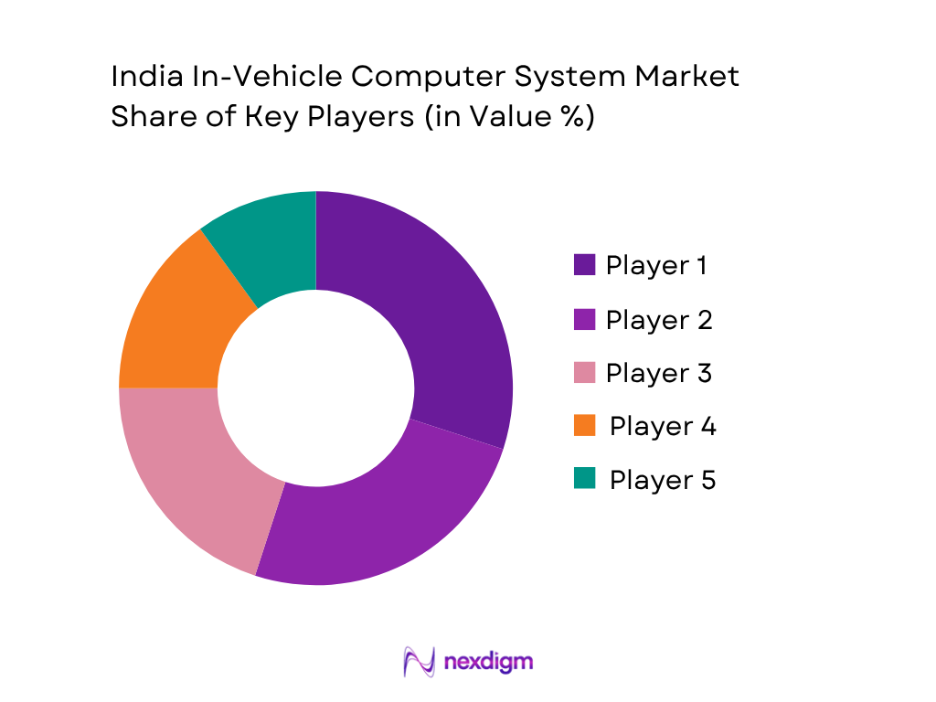
India In-Vehicle Computer System Market Analysis
Growth Drivers
Connected Vehicle Adoption and Increasing Automotive Electronics Integration
The India In-Vehicle Computer System Market is being supported by the rapid expansion of connected mobility, digital vehicle platforms, and increasing electronic content in automobiles. India recorded automobile production of more than 28 million vehicles in FY 2023-24, creating a large installed base for advanced vehicle computing applications, including infotainment processors, telematics controllers, and domain-based computing systems. The Ministry of Heavy Industries highlights that India’s automotive sector is a major manufacturing contributor, supporting a wide supplier ecosystem across vehicle components and electronics. India’s internet subscriber base exceeded 950 million users, according to the Telecom Regulatory Authority of India, strengthening the foundation for connected vehicle services requiring real-time data processing. The country’s road transport ecosystem is also expanding, with more than 146,000 kilometres of national highways reported by the Ministry of Road Transport and Highways, increasing demand for intelligent transportation technologies. Rising adoption of vehicle connectivity, digital dashboards, navigation systems, and safety technologies is encouraging OEMs to integrate higher-performance computing platforms into vehicles. The transition from conventional electronic control units toward centralized computing architectures is creating demand for automotive processors, embedded software, and vehicle operating systems across passenger and commercial vehicle segments.
Expansion of Electric Vehicle Ecosystem and Demand for Intelligent Vehicle Computing
The expansion of India’s electric mobility ecosystem is increasing demand for advanced in-vehicle computing systems required for battery monitoring, energy management, connectivity, and intelligent vehicle control. The Ministry of Heavy Industries reported that electric mobility initiatives under government programmes have supported large-scale EV adoption, with FAME II targeting support for 700,000 electric vehicles across different categories, including 700,000 e-two wheelers, 500,000 e-three wheelers, 55,000 electric four-wheelers, and 7,000 electric buses. The PM E-DRIVE scheme continues to strengthen EV ecosystem development through targeted incentives and manufacturing support. India registered more than 1 million electric vehicle sales during FY 2024-25, reflecting increased penetration of electric mobility solutions. The Government of India also notified the Scheme to Promote Manufacturing of Electric Passenger Cars in India in 2024 to attract investment and strengthen domestic EV manufacturing capabilities. As EVs require higher computing capability compared with conventional vehicles due to battery management systems, motor controllers, connected platforms, and software-based functionality, the growing electric vehicle ecosystem is creating significant opportunities for advanced automotive computing solutions.
Market Challenges
Dependence on Imported Automotive Semiconductor Components and Limited Domestic Manufacturing Capability
The India In-Vehicle Computer System Market faces supply chain challenges due to limited domestic production of advanced automotive-grade semiconductors and dependence on global semiconductor ecosystems. Automotive computing platforms require high-performance processors, microcontrollers, memory components, and system-on-chip solutions that are largely supplied through international semiconductor manufacturers. According to the Ministry of Electronics and Information Technology, India’s semiconductor and display manufacturing initiatives have received government support through the Semiconductor Mission with an approved financial outlay of INR 76,000 crore to develop domestic semiconductor capabilities. However, advanced semiconductor fabrication remains at an early development stage, creating continued dependence on imports for critical automotive computing components. India’s electronics manufacturing sector is expanding, with electronics production crossing INR 9 lakh crore, according to government estimates, but high-end automotive semiconductor manufacturing capability remains limited. Supply chain disruptions, geopolitical uncertainties, and technology transition requirements create challenges for automotive suppliers seeking reliable access to processors and computing components. These constraints increase the complexity of developing localized in-vehicle computer systems and require stronger collaboration between automotive manufacturers, semiconductor companies, and electronics suppliers.
Complexity of Automotive Software Integration and Cybersecurity Requirements
The India In-Vehicle Computer System Market faces challenges associated with increasing software complexity, cybersecurity requirements, and integration of multiple vehicle functions into centralized computing platforms. Modern vehicles increasingly depend on software for infotainment, connectivity, ADAS functionality, battery management, and remote updates, requiring advanced cybersecurity frameworks and functional safety compliance. India had more than 954 million internet subscribers according to Telecom Regulatory Authority of India data, increasing the digital connectivity environment supporting connected vehicle adoption but also expanding cybersecurity exposure. The Indian Computer Emergency Response Team reported thousands of cybersecurity incidents annually, highlighting the need for stronger protection mechanisms across connected systems. Automotive manufacturers are required to integrate secure communication protocols, encryption systems, and software validation processes while maintaining vehicle reliability. The transition from hardware-focused vehicle architecture toward software-defined vehicles requires specialized engineering capabilities in embedded software, cloud connectivity, artificial intelligence, and automotive cybersecurity. Limited availability of specialized automotive software talent and the complexity of integrating multiple technology layers remain key challenges for companies developing advanced in-vehicle computing solutions in India.
Market Opportunities
Growth of Indigenous Automotive Electronics and Semiconductor Development Ecosystem
The development of India’s domestic electronics and semiconductor ecosystem is creating opportunities for expansion of the In-Vehicle Computer System Market. The Government of India has allocated INR 76,000 crore under the India Semiconductor Mission to establish semiconductor manufacturing and strengthen the electronics supply chain. The Production Linked Incentive scheme for large-scale electronics manufacturing has supported domestic electronics production capabilities, with government data indicating significant expansion of electronics manufacturing capacity in recent years. India’s automotive industry contributes substantially to industrial output, with the Ministry of Heavy Industries identifying automobiles and auto components as important sectors for manufacturing growth. Initiatives such as Make in India, automotive component localization programmes, and semiconductor ecosystem development are encouraging domestic participation in vehicle computing hardware and embedded software solutions. Increasing investments in electronic components, chip design capabilities, and automotive software engineering create opportunities for companies developing localized vehicle computers, domain controllers, and connected vehicle platforms. As vehicle manufacturers increasingly seek supply chain resilience and regional component sourcing, India’s growing electronics ecosystem can support the development of locally integrated automotive computing solutions.
Expansion of Smart Mobility, ADAS, and Software-Defined Vehicle Adoption
The increasing adoption of smart mobility technologies and advanced vehicle intelligence systems is creating significant opportunities for the India In-Vehicle Computer System Market. India’s automotive ecosystem is transitioning toward connected, intelligent, and software-driven vehicles requiring higher computing capability. The Ministry of Road Transport and Highways continues to expand road infrastructure, with national highways exceeding 146,000 kilometres, supporting demand for advanced transportation technologies and intelligent mobility solutions. Government programmes promoting electric mobility, including FAME II and PM E-DRIVE, are accelerating the deployment of vehicles requiring advanced electronic control systems. The growing presence of electric vehicles, connected fleet operations, and digital mobility platforms is increasing demand for computing solutions capable of managing vehicle data, connectivity, safety systems, and energy optimization. Automotive manufacturers are increasingly integrating ADAS features, digital cockpits, and cloud-connected services into new vehicle platforms, creating demand for high-performance processors and automotive software platforms. The shift toward software-defined vehicles provides opportunities for technology providers to develop scalable computing architectures supporting future mobility requirements.
Future Outlook
Over the next decade, the India In-Vehicle Computer System Market is expected to experience significant expansion driven by increasing vehicle electrification, connected vehicle adoption, advancement in autonomous driving technologies, and transition toward software-defined vehicle architectures. Automotive OEMs are increasingly shifting from conventional ECU-based systems toward centralized computing platforms capable of supporting multiple vehicle functions. The market is projected to grow at a CAGR of approximately ~% during 2026-2035, supported by rising investments in automotive electronics, semiconductor localization, and intelligent mobility solutions.
Major Players
- NVIDIA
- Qualcomm
- Intel
- Robert Bosch GmbH
- Continental AG
- Aptiv
- Renesas Electronics
- NXP Semiconductors
- Texas Instruments
- STMicroelectronics
- Tata Elxsi
- KPIT Technologies
- Motherson
- Bosch Limited
- HARMAN International
Key Target Audience
- Automotive Original Equipment Manufacturers (OEMs)
- Automotive Tier-1 Electronics and System Suppliers
- Automotive Semiconductor and Processing Technology Companies
- Electric Vehicle Manufacturers and Mobility Technology Companies
- Investments and Venture Capitalist Firms
- Government and Regulatory Bodies
- Fleet Management and Connected Mobility Solution Providers
- Automotive Software and Embedded Technology Companies
Research Methodology
Step 1: Identification of Key Variables
The initial phase involves developing an ecosystem map covering major stakeholders operating within the India In-Vehicle Computer System Market. Extensive secondary research is conducted using automotive industry databases, company publications, vehicle technology reports, and regulatory sources to identify important market variables. The assessment focuses on computing architecture, vehicle integration, semiconductor dependency, application areas, and adoption trends.
Step 2: Market Analysis and Construction
This phase involves compiling historical market information related to vehicle production, connected vehicle penetration, automotive electronics adoption, and computing system deployment. The analysis evaluates demand across passenger vehicles, commercial vehicles, and electric vehicles while assessing hardware, software, and application-level revenue contribution. Bottom-up and top-down approaches are applied to estimate market size.
Step 3: Hypothesis Validation and Expert Consultation
Market assumptions are validated through discussions with automotive OEM representatives, Tier-1 suppliers, semiconductor companies, and embedded software specialists. Computer-assisted telephone interviews (CATIs) and expert consultations are conducted to understand technology adoption patterns, procurement strategies, pricing structures, and future investment priorities within the automotive computing ecosystem.
Step 4: Research Synthesis and Final Output
The final stage involves consolidating insights gathered from primary and secondary research to develop a comprehensive market assessment. Direct industry inputs are used to validate segmentation analysis, competitive positioning, technology trends, and future growth projections. The final report provides strategic insights into market opportunities, challenges, and competitive developments.

- Executive Summary
- Research Methodology (Market Definition and Scope, India In-Vehicle Computer System Classification, Automotive Computing Architecture Assessment, Vehicle Electronic Architecture Mapping, Centralized Computing System Classification, Domain Controller Technology Assessment, Zonal Computing Architecture Evaluation, Connected Vehicle Computing Framework Analysis, Electric Vehicle Computing System Assessment, Autonomous Driving Computing Application Mapping, Automotive Semiconductor Ecosystem Assessment, Embedded Software Platform Analysis, Automotive Operating System Classification, Vehicle Data Processing Architecture Assessment, OEM and Tier Supplier Ecosystem Mapping)

- Definition and Scope
- India In-Vehicle Computer System Industry Evolution and Development of Automotive Computing Ecosystem
- Automotive In-Vehicle Computer System Architecture, Hardware Structure and Software Integration Framework
- India In-Vehicle Computer System Value Chain Analysis
- India In-Vehicle Computer System Supply Chain Analysis
- Vehicle Computer Hardware, Automotive SoC, ECU Consolidation, Domain Controller, Connectivity Module and Software Platform Ecosystem Analysis
- Computing System Integration Assessment Across Internal Combustion Engine Vehicles, Hybrid Vehicles and Electric Vehicles

- Growth Drivers (Increasing Connected Vehicle Adoption, Expansion of Electric Vehicle Manufacturing, Rising Premium Vehicle Penetration, Growing ADAS Integration, Development of Software-Defined Vehicles, Increasing Automotive Electronics Localization, Rising Demand for Vehicle Data Processing Capabilities)
- Market Challenges (Dependence on Imported Automotive Semiconductors, High Cost of Advanced Computing Platforms, Automotive Software Development Complexity, Cybersecurity Risks in Connected Vehicles, Limited Domestic Automotive Chip Manufacturing Capability, Integration Challenges Across Vehicle Platforms)
- Market Opportunities (Indigenous Automotive Computing Platform Development, Expansion of EV Computing Systems, Growth of Autonomous Mobility Applications, Automotive AI Computing Solutions, Vehicle Data Monetization Platforms, Expansion of Domestic Automotive Semiconductor Ecosystem)
- Market Trends (Software-Defined Vehicle Adoption, Centralized Vehicle Computing Architecture, AI-Based Automotive Processing, Digital Cockpit Expansion, OTA Software Update Capability, Cloud-Connected Vehicle Platforms, Automotive Cybersecurity Integration)
- Regulatory and Standards Landscape (Automotive Electronics Localization Policies, Production Linked Incentive Scheme for Automotive Components, Semiconductor Mission Initiatives, Automotive Safety Regulations, Connected Vehicle Compliance Requirements, Functional Safety Standards, Automotive Cybersecurity Standards)
- SWOT Analysis
- Porter’s Five Forces Analysis
- PESTLE Analysis
- Stakeholder Ecosystem
- Competition Ecosystem

- By Market Value (2020-2025)
- By In-Vehicle Computer System Installation Volume (2020-2025)
- By Passenger Vehicle In-Vehicle Computing System Deployment Volume (2020-2025)
- By Commercial Vehicle In-Vehicle Computing System Deployment Volume (2020-2025)
- By Electric Vehicle Computing System Deployment Volume (2020-2025)
- By Connected Vehicle Computing Platform Deployment Volume (2020-2025)
- By Advanced Driver Assistance System Computing Deployment Volume (2020-2025)

- By Computing Architecture Type (In Value %)
Centralized Vehicle Computing Systems
Domain Controller-Based Computing Systems
Cockpit Domain Controllers
ADAS Domain Controllers
Powertrain Domain Controllers
Body Control Domain Controllers
Zonal Computing Systems
Distributed ECU-Based Computing Systems
High-Performance Vehicle Computing Platforms - By Vehicle Type (In Value %)
Passenger Cars
Hatchbacks
Sedans
SUVs
Premium Passenger Vehicles
Commercial Vehicles
Light Commercial Vehicles
Medium Commercial Vehicles
Heavy Commercial Vehicles
Buses and Fleet Vehicles
Electric Vehicles
Electric Two-Wheelers
Electric Passenger Vehicles
Electric Commercial Vehicles - By Application Type (In Value %)
Digital Cockpit Computing
Advanced Driver Assistance System Computing
Vehicle Connectivity and Telematics Processing
Powertrain Control Computing
Battery Management System Computing
Electric Motor Control Computing
Vehicle Safety and Control Processing
Autonomous Driving Computing
Fleet Management and Vehicle Analytics Processing - By Processing Technology (In Value %)
Microcontroller Unit (MCU)-Based Automotive Computing
Microprocessor Unit (MPU)-Based Automotive Computing
System-on-Chip (SoC)-Based Automotive Platforms
GPU Integrated Automotive Computing Systems
Artificial Intelligence Accelerator-Based Computing Systems
Neural Processing Unit (NPU)-Enabled Vehicle Computing Systems - By Sales Channel (In Value %)
Automotive OEM Supply Network
Tier-1 Automotive Electronics Suppliers
Automotive Software Solution Providers
Fleet Management Solution Providers
Aftermarket Automotive Electronics Providers - By Region (In Value %)
North India
South India
West India
East India

- Market Share of Major Players (By Revenue, Vehicle Computing Architecture, Vehicle Segment, Application Type, OEM Partnerships, Software Platform Integration, Semiconductor Platform Usage, Geographic Presence)
- Cross Comparison Parameters (Automotive Computing Architecture Capability, Automotive SoC Integration Capability, ADAS Processing Performance, Vehicle Software Platform Compatibility, AI Computing Capability, OEM Integration Network Strength, Functional Safety Compliance Capability, Automotive Cybersecurity Technology Capability)
- SWOT Analysis of Major Players
- Pricing and System Category Benchmarking
- Detailed Profiles of Major Companies
NVIDIA – Automotive AI Computing Platforms, Autonomous Driving Computers and Vehicle Processing Solutions
Qualcomm – Snapdragon Ride Platforms, Automotive SoCs and Connected Vehicle Computing Solutions
Intel – Automotive Computing Platforms and Vehicle AI Processing Technologies
Robert Bosch GmbH – Vehicle Electronics, Domain Controllers and Automotive Computing Systems
Continental AG – Automotive Software Platforms, Vehicle Computers and Electronic Architecture Solutions
Aptiv – Vehicle Computing Platforms, Smart Vehicle Architecture and Automotive Software Solutions
Renesas Electronics – Automotive Microcontrollers, SoCs and Embedded Computing Solutions
NXP Semiconductors – Automotive Processors, Vehicle Networking and Computing Platforms
Texas Instruments – Automotive Processors, Embedded Computing and Vehicle Electronics Solutions
STMicroelectronics – Automotive Semiconductor Solutions and Vehicle Computing Components
Tata Elxsi – Automotive Software Engineering, Digital Cockpit and Vehicle Computing Solutions
KPIT Technologies – Automotive Software Platforms and Connected Vehicle Solutions
Motherson – Automotive Electronics Integration and Vehicle System Solutions
Bosch Limited – Automotive Electronics, Embedded Systems and Computing Solutions in India
HARMAN International – Connected Vehicle Platforms, Digital Cockpit and Automotive Computing Solutions

- End User Segmentation Assessment
- Passenger Vehicle Manufacturers Analysis
- Electric Vehicle Manufacturers Analysis
- Commercial Vehicle Manufacturers Analysis
- Fleet Operators and Mobility Service Provider Analysis
- Automotive Tier-1 Supplier Analysis
- Automotive Software Developer Analysis
- Vehicle Owner and Connected Vehicle User Analysis
- Automotive Repair and Service Network Analysis

- By Market Value (2026-2035)
- By In-Vehicle Computer System Installation Volume (2026-2035)
- By Passenger Vehicle Computing System Deployment Volume (2026-2035)
- By Commercial Vehicle Computing System Deployment Volume (2026-2035)
- By Electric Vehicle Computing System Deployment Volume (2026-2035)
- By Advanced Driver Assistance System Computing Deployment Volume (2026-2035)


 Request a Sample
 Ask for Customization
 Get a Quote
 Enquire Now