

 Download PDF
 Download PDF
Market Overview
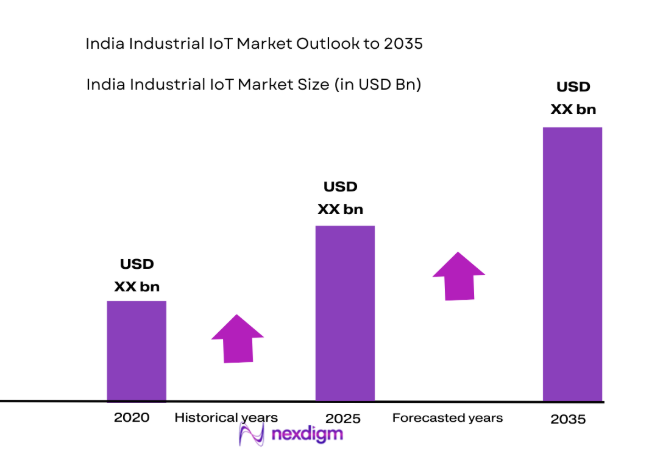
India Industrial IoT market reached approximately USD ~ Billion based on a recent historical assessment supported by technology industry data published by organizations such as the International Data Corporation and India’s Ministry of Electronics and Information Technology. Rapid expansion of smart manufacturing programs, industrial automation investments, and digital factory initiatives significantly drive market expansion. Manufacturing companies increasingly deploy connected sensors, predictive maintenance platforms, and industrial data analytics systems to improve operational efficiency, minimize equipment downtime, and enhance productivity across heavy industries, automotive manufacturing, and energy infrastructure operations nationwide.
Major industrial hubs including Bengaluru, Pune, Chennai, Hyderabad, and Ahmedabad dominate the India Industrial IoT market due to strong manufacturing ecosystems and large industrial clusters. These cities host advanced automotive manufacturing facilities, semiconductor production units, industrial automation engineering firms, and large technology companies developing Industrial IoT platforms. Availability of skilled engineering talent, strong digital infrastructure, and proximity to electronics manufacturing clusters further strengthen these locations as key centers for industrial digital transformation, enabling large-scale adoption of connected factory technologies across multiple industrial sectors.
Market Segmentation
By Product Type
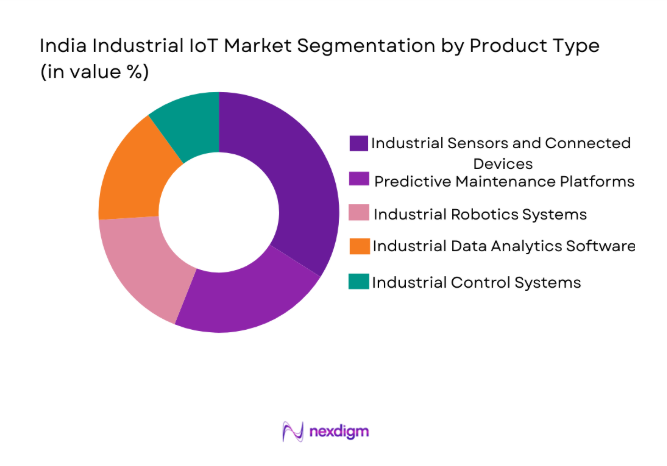
India Industrial IoT market is segmented by product type into industrial sensors and connected devices, predictive maintenance platforms, industrial robotics systems, industrial data analytics software, and industrial control systems. Recently, industrial sensors and connected devices has a dominant market share due to widespread deployment across manufacturing facilities for real-time monitoring of machinery, temperature, vibration, and production processes. Industrial operators increasingly depend on connected sensor networks to capture operational data that supports predictive maintenance and automated decision making. Rapid expansion of smart factories, automotive manufacturing plants, and energy infrastructure installations strengthens demand for sensor networks capable of collecting high volumes of operational data. Industrial sensors remain the foundation of Industrial IoT architecture because they provide the first layer of digital connectivity required for advanced analytics, automation, and intelligent manufacturing operations.
By Platform Type
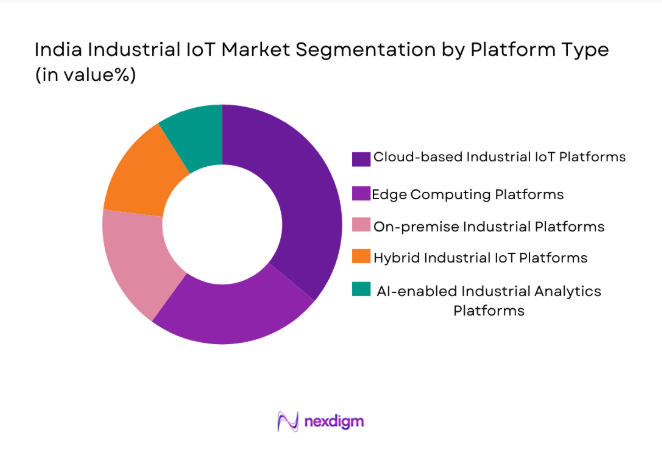
India Industrial IoT market is segmented by platform type into cloud-based Industrial IoT platforms, edge computing platforms, on-premise industrial platforms, hybrid Industrial IoT platforms, and AI-enabled industrial analytics platforms. Recently, cloud-based Industrial IoT platforms has a dominant market share due to scalability advantages, centralized data management, and the ability to integrate multiple factory locations within unified industrial monitoring systems. Industrial enterprises increasingly adopt cloud infrastructure to manage large volumes of operational data generated by connected machines and sensors across distributed manufacturing facilities. Cloud platforms enable advanced analytics, artificial intelligence-driven predictive maintenance, and centralized equipment monitoring, which significantly improves production efficiency. Strong investments from technology companies providing industrial cloud infrastructure further strengthen cloud platform adoption across manufacturing, energy, logistics, and heavy engineering industries.
Competitive Landscape
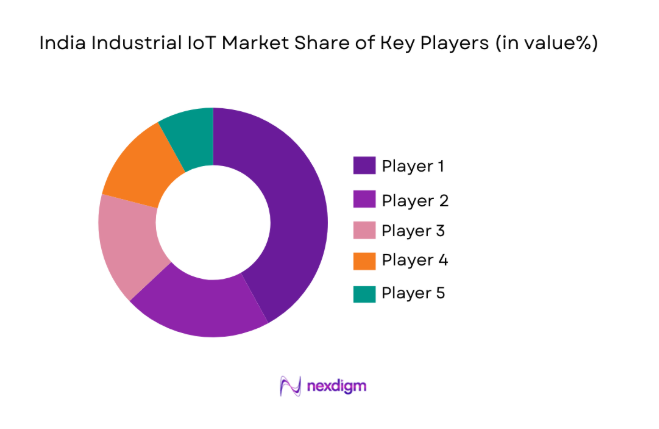
The India Industrial IoT market demonstrates a moderately consolidated competitive structure where global industrial automation companies and domestic technology service providers compete to supply connected manufacturing solutions. Large multinational technology firms provide industrial automation hardware, cloud platforms, and data analytics software while Indian technology companies contribute system integration services and industrial digital transformation consulting. Strategic partnerships between automation equipment manufacturers and cloud computing companies strengthen industrial IoT ecosystems. Continuous investment in smart factory infrastructure and predictive maintenance technologies further intensifies competition among leading Industrial IoT platform providers operating across India’s industrial sectors.
| Company Name | Establishment Year | Headquarters | Technology Focus | Market Reach | Key Products | Revenue | Industrial IoT Deployment Capability |
| Siemens AG | 1847 | Munich, Germany | ~ | ~ | ~ | ~ | ~ |
| ABB Ltd. | 1988 | Zurich, Switzerland | ~ | ~ | ~ | ~ | ~ |
| Schneider Electric | 1836 | Rueil-Malmaison, France | ~ | ~ | ~ | ~ | ~ |
| Honeywell International | 1906 | Charlotte, USA | ~ | ~ | ~ | ~ | ~ |
| Cisco Systems | 1984 | California, USA | ~ | ~ | ~ | ~ | ~ |
India Industrial IoT Market Analysis
Growth Drivers
Expansion of Smart Manufacturing and Industry 4.0 Initiatives
Manufacturing industries across India increasingly adopt smart factory technologies capable of connecting machines production lines and industrial assets through advanced sensor networks and industrial data platforms. Government manufacturing programs supporting industrial modernization encourage factories to deploy digital monitoring systems predictive maintenance platforms and automated process control technologies. Industrial companies seek to reduce equipment downtime optimize energy consumption and improve production quality through real time machine monitoring. Industrial IoT technologies therefore become a critical infrastructure layer supporting digital transformation of manufacturing facilities. Automotive manufacturers electronics producers and heavy engineering industries implement smart production lines capable of collecting operational data continuously across assembly plants. Industrial sensors and edge computing devices transmit production data into centralized platforms where analytics software identifies performance inefficiencies and potential equipment failures. Industrial operators therefore gain the ability to predict maintenance needs before machinery breakdown occurs which significantly reduces production disruptions. Global industrial automation companies actively supply smart factory platforms and integrated Industrial IoT architectures that connect machines robotics systems and quality monitoring equipment into unified digital ecosystems.
Growing Deployment of Predictive Maintenance Technologies Across Industrial Infrastructure
Industrial companies increasingly adopt predictive maintenance platforms powered by Industrial IoT sensors artificial intelligence analytics and machine learning algorithms capable of detecting early equipment failure indicators. Predictive maintenance solutions analyze operational data such as temperature vibration pressure and power consumption generated by connected industrial equipment. These data streams enable analytics platforms to identify abnormal equipment behavior and forecast maintenance requirements before critical failures occur. Manufacturing plants energy infrastructure facilities oil refineries and logistics hubs rely heavily on predictive maintenance technologies to prevent costly operational disruptions. Industrial operators use predictive analytics dashboards to monitor thousands of machines simultaneously across production plants and industrial facilities. Real time monitoring enables engineering teams to schedule maintenance activities proactively instead of reacting after equipment breakdown occurs. Predictive maintenance therefore reduces operational costs extends equipment lifespan and improves overall production efficiency. Industrial enterprises investing heavily in digital transformation programs consider predictive maintenance technologies a central component of their Industrial IoT implementation strategies.
Market Challenges
High Capital Investment Requirements for Industrial IoT Infrastructure Deployment
Industrial IoT implementation requires significant upfront investment in hardware software connectivity infrastructure and integration services which creates financial barriers for many manufacturing companies. Industrial facilities must install extensive sensor networks industrial gateways edge computing devices and advanced networking equipment capable of transmitting large volumes of operational data. Deployment also requires integration of new digital platforms with legacy manufacturing systems which often demands complex engineering modifications. Industrial companies frequently invest in cloud infrastructure data analytics platforms and cybersecurity frameworks necessary to manage connected industrial environments safely. Smaller manufacturing firms sometimes delay Industrial IoT adoption because financial returns from digital transformation investments may take several years to materialize. Industrial automation hardware and specialized sensor equipment further increase capital requirements for large scale deployments. Skilled workforce training and change management initiatives also require additional investment before organizations can fully benefit from Industrial IoT capabilities. These financial barriers slow adoption rates particularly among mid sized industrial manufacturers operating with limited technology investment budgets.
Cybersecurity Risks Associated with Connected Industrial Systems and Critical Infrastructure
Industrial IoT platforms connect thousands of machines sensors and operational control systems through digital networks which significantly expands potential cybersecurity attack surfaces. Industrial facilities managing critical infrastructure such as energy grids manufacturing plants and transportation systems must protect operational technology networks from cyber intrusions. Cybersecurity breaches affecting industrial control systems can disrupt production processes damage critical equipment and cause severe financial losses. Industrial companies therefore invest heavily in secure communication protocols encryption technologies and network monitoring systems designed to protect connected industrial devices. Cyber attackers increasingly target operational technology environments because many legacy industrial systems were originally designed without strong cybersecurity frameworks. Integrating modern cybersecurity systems into older industrial infrastructure often requires complex engineering modifications and specialized security expertise. Industrial operators must continuously monitor network activity and update security frameworks to defend against evolving cyber threats targeting connected manufacturing systems.
Opportunities
Expansion of Private Industrial 5G Networks for Smart Factory Connectivity
Industrial enterprises increasingly deploy private 5G networks inside manufacturing facilities to support high speed connectivity for thousands of connected machines robots and sensors. Private 5G infrastructure provides low latency communication essential for real time industrial automation and machine coordination across production lines. Industrial robots automated guided vehicles and smart quality inspection systems rely on stable wireless communication capable of supporting rapid data exchange between devices. Private industrial networks also enable flexible factory layouts because machines can communicate wirelessly without depending on complex wired infrastructure. Technology companies collaborate with telecom operators to deploy specialized industrial 5G networks designed for manufacturing environments. These networks enable continuous data collection from production equipment which strengthens predictive maintenance analytics and operational monitoring platforms. Smart factories therefore achieve greater operational visibility and production flexibility through wireless industrial connectivity infrastructure.
Growth of Digital Twin Technologies for Industrial Simulation and Operational Optimization
Digital twin technology enables industrial companies to create virtual replicas of manufacturing equipment production facilities and supply chain systems within advanced simulation environments. Industrial IoT sensors continuously feed real world operational data into digital twin platforms which replicate equipment performance within software models. Engineers analyze these digital simulations to identify operational inefficiencies evaluate maintenance scenarios and test process improvements before implementing changes within physical factories. Digital twins also support advanced product design processes by simulating manufacturing workflows and machine performance conditions. Manufacturing companies increasingly adopt digital twin technology to optimize production efficiency reduce waste and accelerate product development cycles. Integration between Industrial IoT sensor networks and digital twin platforms significantly improves accuracy of industrial simulations. As manufacturing companies pursue advanced automation strategies digital twin technologies create substantial opportunities for technology providers developing simulation software and industrial analytics platforms.
Future Outlook
India Industrial IoT market is expected to experience sustained expansion as manufacturing companies accelerate digital transformation initiatives across production facilities and industrial infrastructure. Increasing adoption of smart factory technologies predictive maintenance platforms and connected sensor networks will strengthen Industrial IoT deployment across automotive electronics energy and heavy engineering industries. Government industrial modernization initiatives and digital manufacturing policies further encourage adoption of connected factory systems. Expansion of industrial 5G connectivity artificial intelligence analytics and edge computing platforms will continue enhancing the capabilities of Industrial IoT ecosystems across India’s industrial landscape.
Major Players
- Siemens AG
- ABB Ltd.
- Schneider Electric
- Honeywell International
- Cisco Systems
- IBM Corporation
- Bosch Group
- Intel Corporation
- Rockwell Automation
- Tata Consultancy Services
- Wipro Limited
- HCL Technologies
- Tech Mahindra
- Hitachi Ltd.
- Accenture
Key Target Audience
- Manufacturing Companies
- Industrial Automation Equipment Manufacturers
- Industrial IoT Platform Providers
- Energy and Utilities Companies
- Logistics and Transportation Operators
- Investments and Venture Capitalist Firms
- Government and Regulatory Bodies
Research Methodology
Step 1: Identification of Key Variables
The research process begins with identifying critical variables influencing the India Industrial IoT market including industrial automation adoption technology investments manufacturing digitalization and industrial connectivity infrastructure. These variables help define market boundaries and segment structures.
Step 2: Market Analysis and Construction
Extensive secondary research and industry data sources are analyzed to construct the market framework. Market value estimation integrates technology deployment data industrial investment trends and digital infrastructure adoption across major manufacturing sectors.
Step 3: Hypothesis Validation and Expert Consultation
Industry experts technology providers industrial automation engineers and enterprise technology decision makers validate market assumptions. Their insights help refine market segmentation competitive landscape evaluation and adoption patterns across different industrial sectors.
Step 4: Research Synthesis and Final Output
Collected data undergoes triangulation through cross verification across industry databases corporate financial reports and government publications. The final output synthesizes validated insights into a structured market intelligence report.

- Executive Summary
- Research Methodology
(Definitions, Scope, Industry Assumptions, Market Sizing Approach, Primary & Secondary Research Framework, Data Collection & Verification Protocol, Analytic Models & Forecast Methodology, Limitations & Research Validity Checks)

- Market Definition and Scope
- Value Chain & Stakeholder Ecosystem
- Regulatory / Certification Landscape
- Sector Dynamics Affecting Demand
- Strategic Initiatives & Infrastructure Growth

- Growth Drivers
Expansion of Industry 4.0 and Smart Manufacturing Programs
Growing Adoption of Predictive Maintenance Technologies
Government Initiatives such as Digital India and Make in India
Increasing Deployment of Industrial Robotics and Automation
Expansion of Industrial 5G Networks and Edge Computing - Market Challenges
High Initial Capital Investment for Industrial IoT Deployment
Cybersecurity Risks in Connected Industrial Systems
Integration Challenges with Legacy Industrial Infrastructure
Shortage of Skilled Workforce for Industrial Digitalization
Data Management and Interoperability Issues - Market Opportunities
Expansion of AI-driven Industrial Automation Solutions
Growing Demand for Digital Twins in Manufacturing
Increasing Deployment of Industrial Private 5G Networks - Trends
Rising Adoption of Edge AI for Real-time Industrial Analytics
Integration of Digital Twins for Factory Simulation
Rapid Expansion of Connected Industrial Sensors
Growth of Private Industrial 5G Networks
Increasing Industrial Data Platform Adoption - Government Regulations
Industrial Data Protection and Cybersecurity Guidelines
Electronics Manufacturing and Localization Policies
Smart Manufacturing and Industrial Digitization Programs

- By Market Value 2020-2025
- By Installed Units 2020-2025
- By Average System Price 2020-2025
- By System Complexity Tier 2020-2025

- By System Type (In Value%)
Industrial Sensors and Connected Devices
Industrial Robotics and Automation Systems
Predictive Maintenance Platforms
Industrial Data Analytics and Monitoring Systems
Industrial Control and Edge Computing Systems - By Platform Type (In Value%)
Cloud-based Industrial IoT Platforms
Edge Computing Platforms
On-premise Industrial Data Platforms
Hybrid Industrial IoT Platforms
AI-enabled Industrial Analytics Platforms - By Fitment Type (In Value%)
Retrofitted Industrial IoT Systems
Embedded Smart Manufacturing Systems
Standalone Industrial Monitoring Devices
Integrated Industrial Automation Solutions
Modular Industrial IoT Infrastructure - By EndUser Segment (In Value%)
Manufacturing Industries
Energy and Utilities
Oil and Gas Operations
Logistics and Transportation Infrastructure
Mining and Heavy Engineering Industries - By Procurement Channel (In Value%)
Direct Technology Vendor Procurement
System Integrators and Automation Providers
Industrial Equipment OEM Partnerships
Government Industrial Digitization Programs
Technology Distributors and Industrial IT Providers - By Material / Technology (in Value%)
Industrial Connectivity Technologies (5G, LPWAN)
Artificial Intelligence and Machine Learning Systems
Industrial Sensors and Embedded Electronics
Industrial Cloud Computing Infrastructure
Digital Twin and Simulation Technologies

- Market Share Analysis
- CrossComparison Parameters
(System Type, Platform Type, Procurement Channel, EndUser Segment, Fitment Type) - SWOT Analysis of Key Competitors
- Pricing & Procurement Analysis
- Porter’s Five Forces
- Key Players
Cisco Systems
Siemens AG
ABB Ltd.
Schneider Electric
Honeywell International
Bosch Group
Intel Corporation
Rockwell Automation
HCL Technologies
Tata Consultancy Services
Wipro Limited
Tech Mahindra
Accenture
IBM Corporation
Hitachi Ltd.

- Manufacturing Companies Deploying Smart Factory Infrastructure
- Energy and Utilities Operators Implementing Smart Monitoring Systems
- Logistics Companies Integrating IoT-enabled Fleet Tracking
- Oil and Gas Firms Adopting Predictive Maintenance Platforms

- Forecast Market Value 2026-2035
- Forecast Installed Units 2026-2035
- Price Forecast by System Tier 2026-2035
- Future Demand by Platform 2026-2035


 Request a Sample
 Ask for Customization
 Get a Quote
 Enquire Now