
 Download PDF
Market Overview
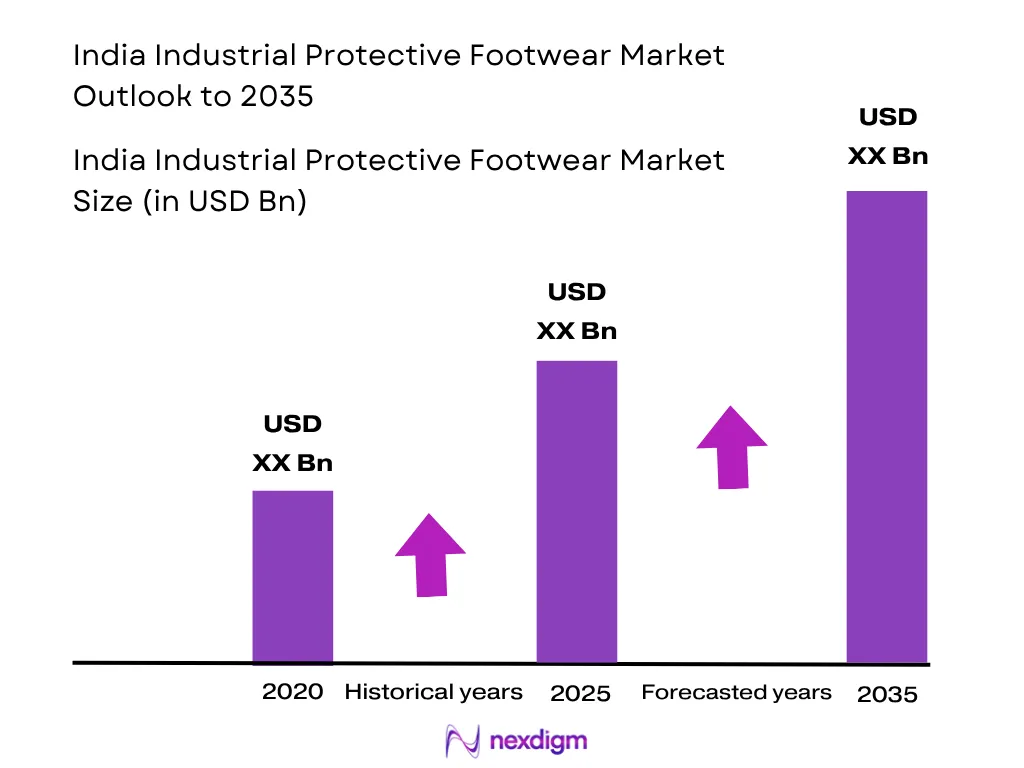
The Indian industrial protective footwear market is valued at USD ~ billion, driven by rapid industrialisation, infrastructure growth, and stringent workplace safety regulations. The increasing emphasis on worker safety in sectors like manufacturing, construction, and mining has boosted demand for industrial footwear. With regulations like OSHA and BIS safety standards, industries are moving towards compliance, which propels market expansion. This demand is expected to continue growing as new projects are initiated and existing industries expand across India.
India’s industrial protective footwear market is dominated by cities with high industrial output, such as Mumbai, Delhi, Chennai, and Pune. These locations are home to large-scale manufacturing, construction, and mining activities, creating a high demand for safety footwear. Mumbai, being an economic hub, has a significant contribution to the demand due to its vast port activities and industrial sectors. Additionally, Chennai and Pune, known for automotive manufacturing and IT hubs, also drive a substantial portion of the market share.
Market Segmentation
By Product Type
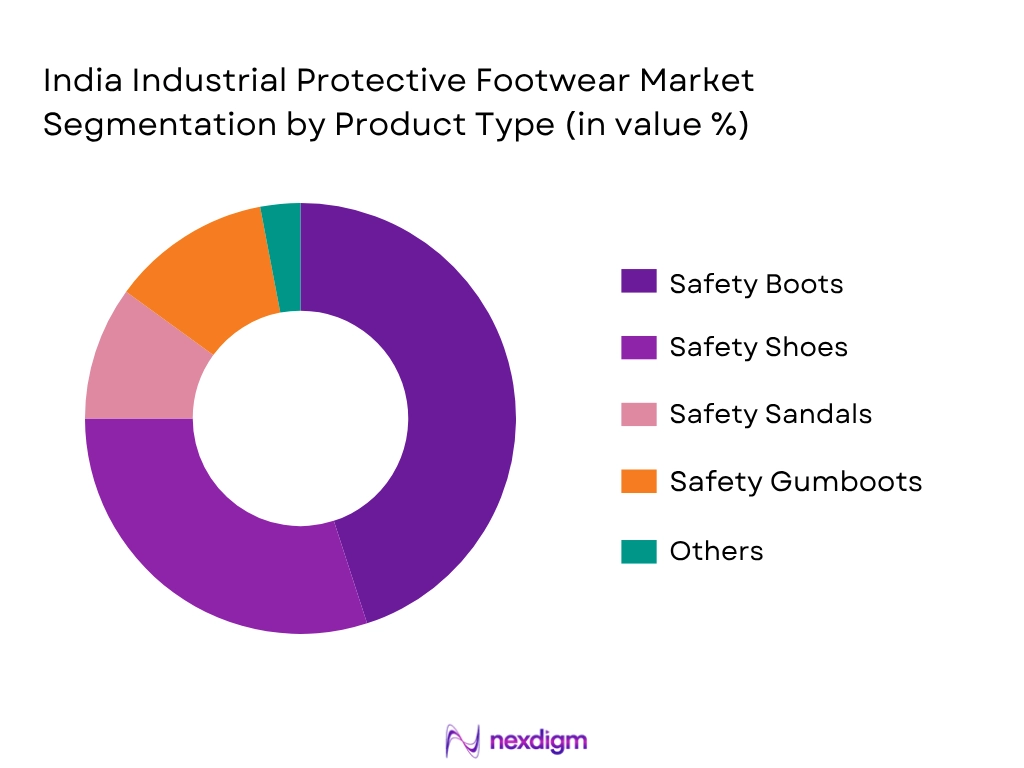
The India industrial protective footwear market is segmented into safety boots, safety shoes, safety sandals, safety gumboots, and others. Safety boots dominate the market due to their robust protection and adaptability in heavy industries such as construction and mining. Their high demand is driven by the need for ankle support and enhanced durability in hazardous environments, especially in sectors like oil and gas, chemicals, and manufacturing. The durability of safety boots in challenging conditions has made them the preferred choice for workers.
By Material
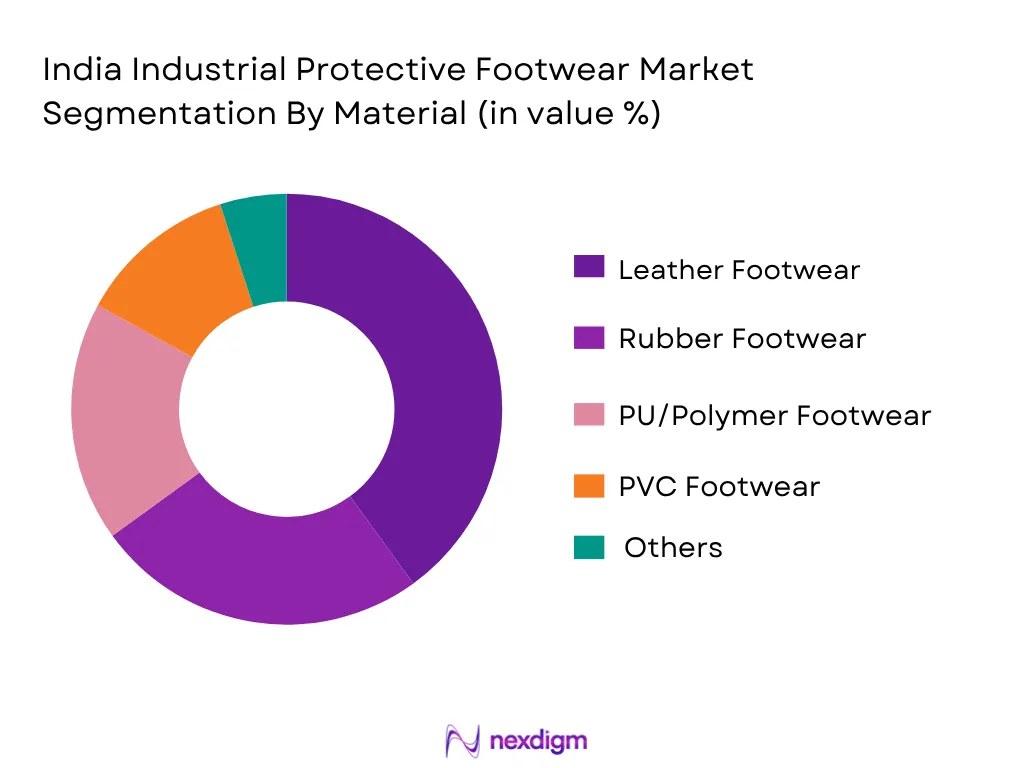
The market is also segmented based on material into leather, rubber, PU/polymer, PVC, and others. Leather footwear holds the largest share due to its longevity, superior comfort, and high resistance to wear and tear. Leather shoes are widely preferred in the manufacturing and construction industries where heavy-duty protection is crucial. Furthermore, leather footwear offers breathability and comfort, which is essential for prolonged use in industrial environments, leading to its dominance.
Competitive Landscape
The India industrial protective footwear market is consolidated with several dominant players contributing to its growth. Major players include global brands and strong local manufacturers, who collectively hold substantial market influence. Leading brands, such as Bata, Liberty Safety Shoes, and Hillson Footwear, continue to drive innovation and expansion across diverse industrial sectors. These companies excel due to strong distribution networks, product certification, and the ability to adapt to changing safety standards. The competitive landscape shows an increasing focus on technology-driven products, such as smart safety footwear.
| Company | Establishment Year | Headquarters | Production Capacity | Product Portfolio | Distribution Network | Quality Certifications | Technology Integration |
| Bata Industrials India | 1931 | India | ~ | ~ | ~ | ~ | ~ |
| Liberty Safety Shoes | 1954 | India | ~ | ~ | ~ | ~ | ~ |
| Hillson Footwear Pvt. Ltd | 1976 | India | ~ | ~ | ~ | ~ | ~ |
| Allen Cooper | 2000 | India | ~ | ~ | ~ | ~ | ~ |
| JCB Safety Footwear | 1945 | India | ~ | ~ | ~ | ~ | ~ |
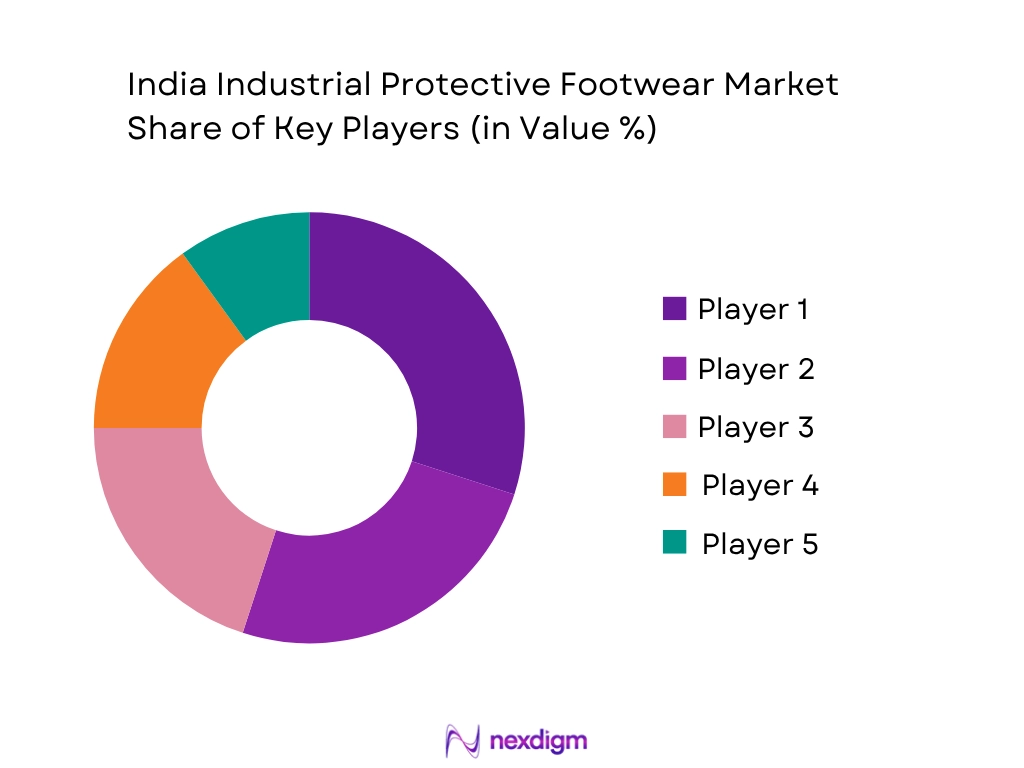
India Industrial Protective Footwear Market Analysis
Growth Drivers
Rapid Industrialization and Infrastructure Expansion
India’s rapid industrialization and infrastructure expansion significantly contribute to the demand for industrial protective footwear. The industrial output of India is projected to grow, with manufacturing and construction sectors playing a key role. According to the World Bank, India’s manufacturing sector is expected to contribute nearly 18% to the country’s GDP by 2024, translating to increased construction activities and more industrial workers requiring protective footwear. Moreover, the Indian government’s Infrastructure Investment Trusts (InvITs) have mobilized over INR 1.5 trillion for infrastructure projects, further amplifying the demand for safety gear across various sectors. Increased infrastructure spending is creating more high-risk work environments that demand specialized safety footwear to ensure worker protection.
Stringent Workplace Safety Regulations and Standards
The implementation of stringent workplace safety regulations drives the demand for industrial protective footwear. India’s Occupational Health and Safety (OHS) regulations are aligned with international standards, such as the BIS IS 15298 safety standards. The government has increased focus on compliance to ensure the safety of workers in hazardous industries like construction, mining, and chemicals. As of 2024, the Ministry of Labour and Employment reports significant efforts to enhance safety standards. The implementation of these standards has led to higher demand for certified safety footwear, as industries aim to reduce accidents and comply with legal requirements. The growing scrutiny on worker safety aligns with the expansion of industrial sectors and heightens the need for protective gear.
Market Challenges
Volatile Raw Material Costs (Leather, Rubber)
The volatility in raw material prices, especially leather and rubber, presents a challenge for the India industrial protective footwear market. Leather, a primary material for safety boots and shoes, saw a price surge of 20% in 2024 due to global supply chain disruptions and increasing demand in the automotive and apparel industries. Similarly, rubber prices have been affected by changes in global oil prices, impacting the production of rubber footwear. According to the Indian Rubber Dealers Association, rubber prices surged by 15% in early 2024 due to price hikes in global crude oil markets, creating challenges for manufacturers to maintain profitability while meeting increasing demand for industrial footwear.
Competition from Unorganized and Low-Cost Manufacturers
The Indian industrial protective footwear market faces substantial competition from unorganized and low-cost manufacturers. These manufacturers, typically based in small-scale industries, offer lower-priced alternatives that do not meet international safety standards. With the labor-intensive production process, these manufacturers contribute to a significant portion of the footwear market but hinder growth in the organized segment. In 2024, the unorganized sector accounts for about 40% of the total market for industrial safety footwear. Despite the price advantage, concerns about quality and certification lead to challenges in the overall market growth. The government’s efforts to bring more industries under formal regulations are gradually addressing this issue, but it remains a barrier to higher growth.
Market Opportunities
Untapped Demand in Tier-2/3 Cities and SMEs
A significant opportunity exists in Tier-2 and Tier-3 cities as well as Small and Medium Enterprises (SMEs). These cities and businesses are undergoing rapid industrialization, with growing manufacturing sectors in places like Jaipur, Ahmedabad, and Ludhiana. According to the Indian Ministry of Industry and Commerce, these areas account for a rising share of India’s industrial output. The industrial workforce in these regions is expanding, increasing the demand for protective footwear. As these regions continue to develop, local companies are gradually recognizing the need for workplace safety, presenting a major opportunity for footwear manufacturers to expand their presence and address the safety footwear gap. In fact, 2024 saw an increase in sales of safety footwear in these regions by over 15% as manufacturing activity grows.
Export Opportunities to Developing Markets
India’s industrial protective footwear market has considerable export potential, particularly to developing markets in the Middle East and Africa. In 2024, India’s exports of industrial safety footwear were valued at USD 225 million, with demand rising due to the growth in industries like construction and oil & gas in these regions. The Middle East, with its extensive construction sector, and Africa, experiencing infrastructure development, present promising markets for India’s footwear exports. The Indian government’s focus on improving international trade relations, including the signing of Free Trade Agreements (FTAs) with several countries, is expected to further enhance export growth. India’s well-established manufacturing infrastructure and competitive pricing make it an attractive source of protective footwear in emerging markets.
Future Outlook
Over the next decade, the India industrial protective footwear market is poised for continued growth, driven by increasing industrial activities, safety regulations, and consumer awareness regarding workplace safety. The demand for advanced, lightweight, and ergonomic footwear will see significant increases, especially with the rise of e-commerce platforms for safety gear. As industries expand across Tier-2 and Tier-3 cities, the market will experience deeper penetration, along with rising demand from sectors like oil & gas and chemicals.
Major Players
- Bata Industrials India
- Liberty Safety Shoes
- Hillson Footwear Pvt. Ltd
- Allen Cooper (Superhouse Group)
- JCB Safety Footwear (Trident Group)
- Mallcom India Ltd
- Tiger Safety Shoes (Honeywell Safety Products)
- Acme Safetywears Ltd
- Red Chief (Liberty Group)
- Safari Pro Safety Shoes
- Karam Industries
- Greaves PFA (Greaves Cotton)
- Perf Safety (Amit Gramodyog)
- Relaxo Safety (Relaxo Footwear)
- Cougar Safety Shoes
Key Target Audience
- Manufacturers and Supplier
- Government and Regulatory Bodies
- Investments and Venture Capitalist Firms
- Industrial Sector Companies
- Distributors and Retailers
- E-commerce Platforms
- Exporters and Importers
- Health and Safety Consultants.
Research Methodology
Step 1: Identification of Key Variables
The first step involves identifying all the critical variables that influence the market. This will include stakeholder identification, market size determination, and the various product types. Extensive desk research will utilize secondary data sources like government reports and proprietary industry databases.
Step 2: Market Analysis and Construction
In this phase, historical data is compiled to evaluate the market’s evolution. We will also analyze the ratio of footwear segments, focusing on their market penetration and revenue generation. The data will be processed to provide accurate insights into market dynamics.
Step 3: Hypothesis Validation and Expert Consultation
To validate the market hypotheses, expert interviews will be conducted with professionals from the footwear industry. Their insights will offer practical and financial perspectives, enriching the data accuracy. The consultation will cover production techniques, supply chain dynamics, and emerging trends.
Step 4: Research Synthesis and Final Output
The final phase involves synthesizing the collected data into a comprehensive report. Interactions with key market players will complement bottom-up data gathering, ensuring high accuracy and providing an exhaustive overview of the market’s future trajectory.

- Executive Summary
- Research Methodology (Market Definitions and Assumptions, Abbreviations, Market Sizing Approach, Consolidated Research Methodology, Primary Research Approach, Data Collection Methods, Limitations and Assumptions)

- Definition and Scope
- Industry Genesis and Evolution
- Timeline of Major Players
- Business Cycle and Industry Maturity
- Supply Chain and Value Chain Analysis
- Industry Safety Standards & Certification Framework

- Growth Drivers(Rapid industrialization and infrastructure expansion, Stringent workplace safety regulations and standards, Growing manufacturing, construction and mining sectors)
- Market Challenges (Volatile raw material costs (leather, rubber), Competition from unorganized and low-cost manufacturers, Counterfeit and non-certified safety footwear, Distribution and supply chain inefficiencies, Skilled labor shortages in manufacturing)
- Opportunities(Untapped demand in Tier-2/3 cities and SMEs, Export opportunities to developing markets (Middle East, Africa), Innovation in sustainable and ergonomic footwear, Customized safety solutions for industry-specific needs)
- Trends (Demand for lightweight, ergonomic and specialized designs, Growth of e-commerce channels for safety gear, Adoption of smart and sensor-enabled safety footwear, Emphasis on sustainable materials)
- Government Regulation(Safety standards, Occupational health and safety legislation compliance)
- SWOT Analysis (Market-level)
- Stakeholder Ecosystem (Manufacturers, Distributors, Regulators, End-users)
- Porter’s Five Forces Analysis
- Competitive Landscape

- By Value (2020-2025)
- By Volume (2020-2025)
- By Average Selling Price Trends (2020-2025)
- By Channel Sales Breakdown (2020-2025)

- By Product Type (In Value %)
Safety Boots
Safety Shoes
Safety Sandals
Safety Gumboots - By Material (In Value %)
Leather Footwear
Rubber Footwear
PU/Polymer Footwear
PVC Footwear - By End-Use Industry (In Value %)
Construction & Infrastructure
Manufacturing (Automotive, Electronics, etc.)
Mining & Metals
Oil & Gas & Petrochemicals
Chemicals & Pharmaceuticals
Food & Beverage
Transportation & Logistics
Healthcare
Hospitality - By Distribution Channel (In Value %)
Offline
Online - By Region (In Value %)
Northern India
Western India
Southern India
Eastern India
Central India

- Market Share of Major Players (by Value/Volume, By Product Category)
- Competitive Positioning Metrics (Capacity, Distribution Coverage, Compliance Certification Count, SKU Breadth, Price Band Position)
- Cross Comparison Parameters (Company Overview, Business Strategies, Recent Developments, Strengths, Weaknesses, Distribution Network, Number of Dealers/Distributors, Production Capacity, Certifications/Quality Standards, Product Portfolio & Technology, Unique Value Proposition)
- SWOT Analysis of Major Players
- Pricing Analysis (SKU-level) for Major Players
- Detailed Company Profiles of Key Players
Bata Industrials India
Liberty Safety Shoes
Hillson Footwear Pvt. Ltd
Allen Cooper (Superhouse Group)
Safari Pro Safety Shoes
Karam Industries
JCB Safety Footwear (Trident Group)
Mallcom India Ltd
Tiger Safety Shoes (Honeywell Safety Products)
Acme Safetywears Ltd
Red Chief (Liberty Group)
Relaxo Safety (Relaxo Footwear)
Greaves PFA (Greaves Cotton)
Perf Safety (Amit Gramodyog)
Cougar Safety Shoes

- Demand and Utilization Patterns (industry-wise consumption)
- Purchasing Power and Safety Budget Allocations
- Compliance and Certification Requirements by Sector
- Needs, Pain Points and Buying Criteria (comfort, durability, certification)
- Decision-Making Process (Procurement hierarchy, influencers)

- By Value (2026-2035)
- By Volume (2026-2035)
- By Average Price Trend Forecast (2026-2035)


 Request a Sample
 Ask for Customization
 Get a Quote
 Enquire Now