

 Download PDF
Market Overview
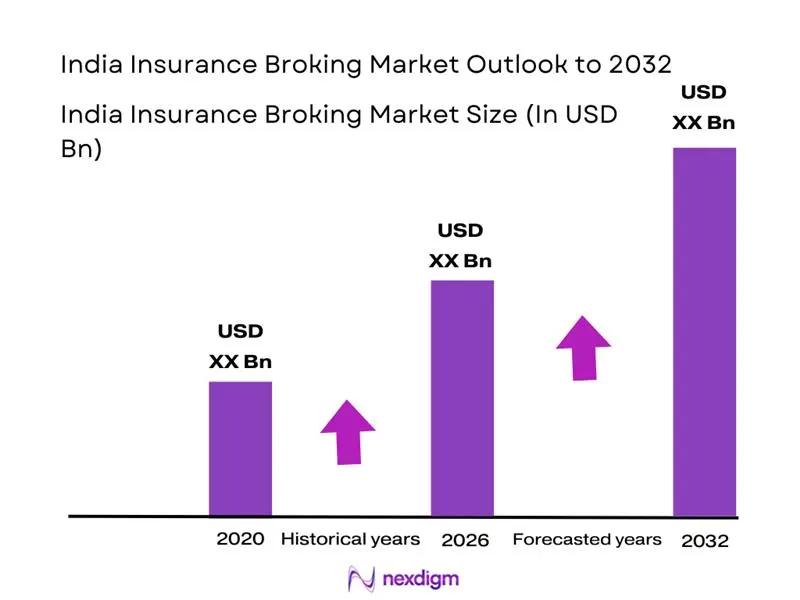
The India Insurance Broking Market is valued at approximately ~ in terms of Gross Written Premium (GWP) facilitated, based on aggregated data from Insurance Regulatory and Development Authority of India annual reports and disclosures from leading brokers. Brokerage revenue pool stands at nearly ~, driven by increasing insurance penetration, rising corporate risk coverage, and expansion of health insurance. Growth is supported by rising policy issuance volumes and strong premium flows across general and group insurance segments.
Major urban centers such as Mumbai, Delhi, Bengaluru, and Gurugram dominate the India Insurance Broking Market due to concentration of corporate headquarters, BFSI hubs, and large industrial clusters. These cities host multinational broker offices and reinsurers, enabling access to large-ticket corporate insurance deals. Additionally, proximity to regulators and insurers enhances operational efficiency and fosters ecosystem-driven growth in these regions.
Market Segmentation
By Type of Broker
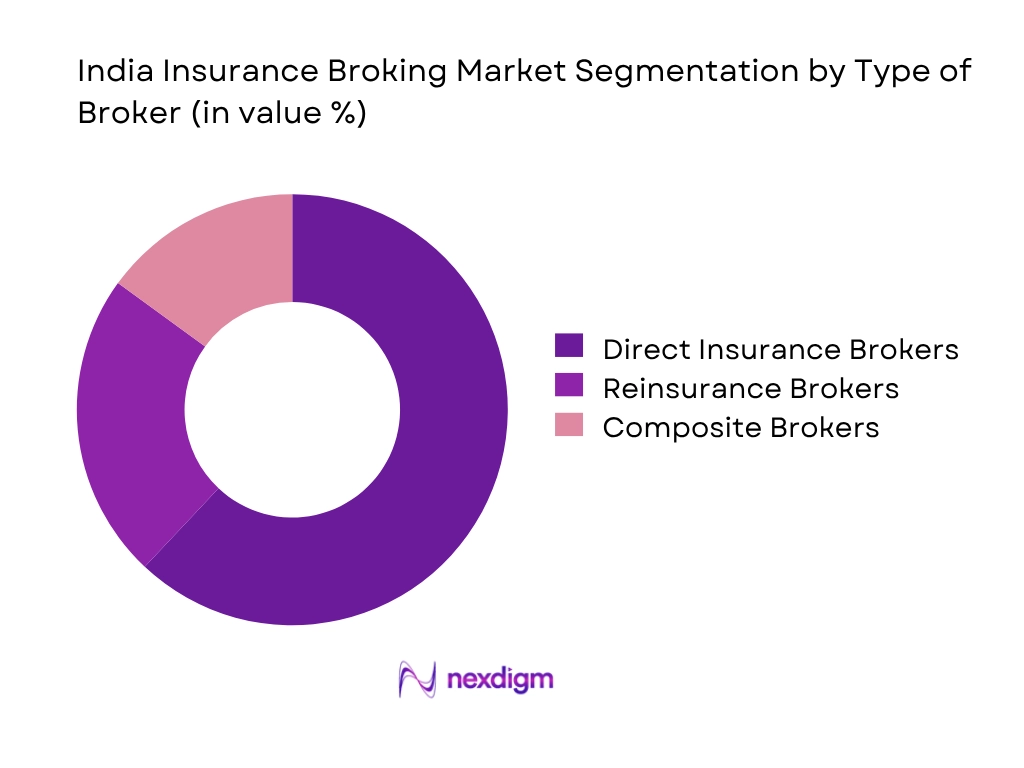
The India Insurance Broking Market is segmented by type of broker into Direct Insurance Brokers, Reinsurance Brokers, and Composite Brokers. Direct insurance brokers dominate the market due to their extensive engagement with corporate and retail clients across life, health, and general insurance. Their ability to provide end-to-end advisory services, claims assistance, and product customization drives strong demand. Additionally, regulatory ease compared to reinsurance broking and increasing SME penetration have further strengthened their position. With rising awareness among retail consumers and corporates seeking tailored risk solutions, direct brokers continue to lead the market landscape.
By Line of Business
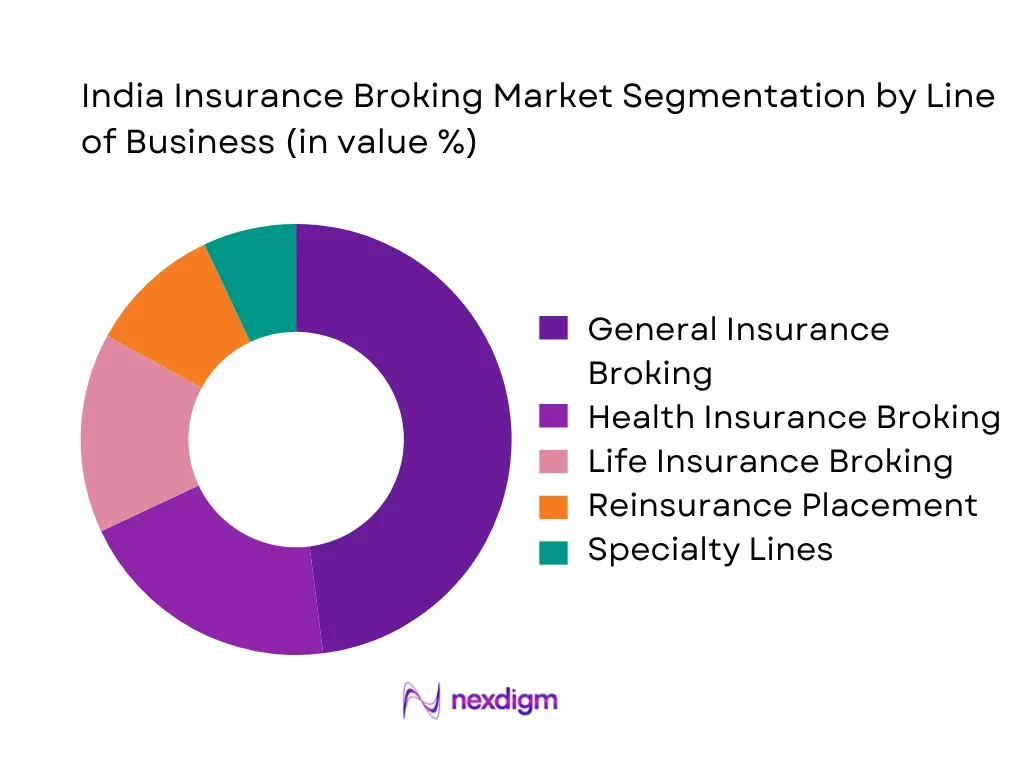
The market is segmented by line of business into Life Insurance Broking, General Insurance Broking, Health Insurance Broking, Specialty Lines, and Reinsurance Placement. General insurance broking holds the dominant share due to strong demand from corporates for property, liability, marine, and motor insurance solutions. The rise in infrastructure projects, logistics expansion, and regulatory mandates for coverage have significantly boosted this segment. Additionally, brokers play a critical role in underwriting complex risks and negotiating premiums, making them indispensable for general insurance placement. Increasing awareness of risk mitigation strategies among enterprises continues to fuel growth in this segment.
Competitive Landscape
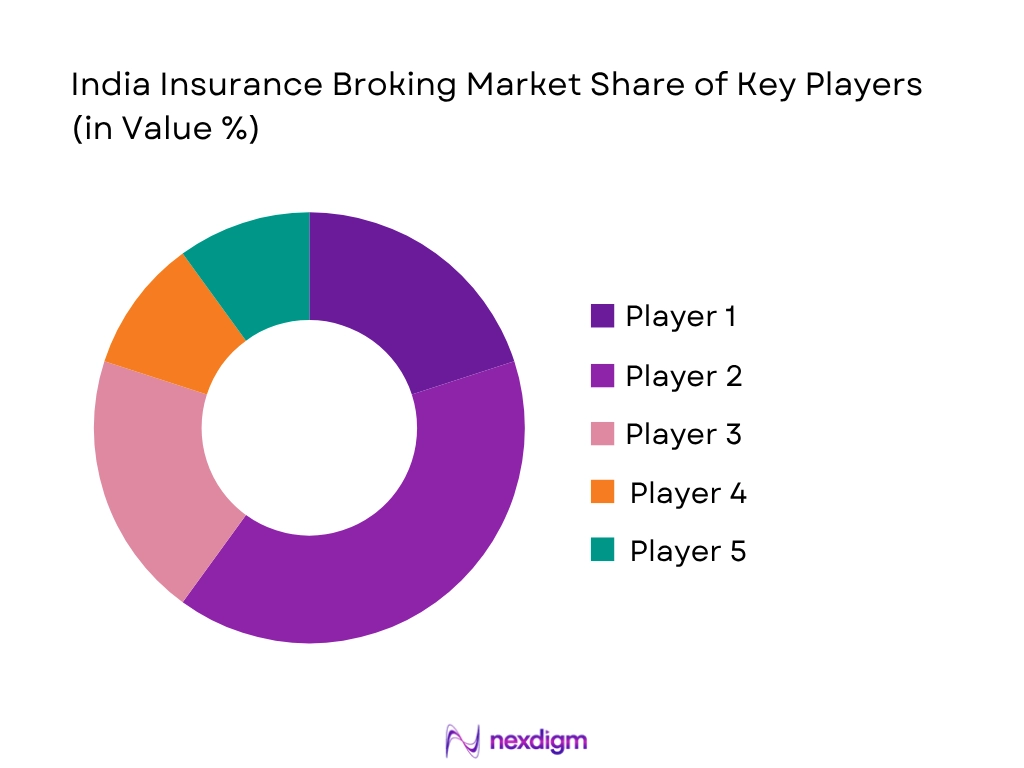
The India Insurance Broking Market is moderately consolidated, with a mix of global broking giants and strong domestic players competing for market share. Global firms bring advanced risk advisory capabilities and international expertise, while domestic brokers leverage local relationships and SME penetration. The competitive intensity is driven by digital transformation, strategic partnerships with insurers, and expansion into niche segments such as cyber and climate risk insurance.
| Company | Established | Headquarters | GWP Facilitated | Client Base Type | Digital Capability | Industry Expertise | Geographic Presence | Claims Support Strength |
| Marsh India Insurance Brokers Pvt. Ltd. | 2002 | Mumbai | ~ | ~ | ~ | ~ | ~ | ~ |
| Aon India Insurance Brokers Pvt. Ltd. | 2003 | Mumbai | ~ | ~ | ~ | ~ | ~ | ~ |
| Willis Towers Watson India Insurance Brokers Pvt. Ltd. | 2004 | Mumbai | ~ | ~ | ~ | ~ | ~ | ~ |
| Howden India Insurance Brokers Pvt. Ltd. | 2003 | Mumbai | ~ | ~ | ~ | ~ | ~ | ~ |
| Policybazaar Insurance Brokers Pvt. Ltd. | 2008 | Gurugram | ~ | ~ | ~ | ~ | ~ | ~ |
India Insurance Broking Market Dynamics
Growth Drivers
Insurance Penetration Percentage
India’s insurance penetration continues to strengthen, supported by macroeconomic expansion and financial inclusion initiatives. India’s GDP reached USD 3.57 trillion, reflecting rising income levels and financial awareness. The Insurance Regulatory and Development Authority of India reported total insurance premiums crossing INR 8.7 trillion, indicating broader adoption of insurance products. Additionally, over 80 crore bank accounts under Pradhan Mantri Jan Dhan Yojana have enabled access to financial services, indirectly boosting insurance reach. Increasing urbanization, with 35 crore urban population, further supports insurance demand, strengthening the broking ecosystem.
Corporate Risk Awareness Index
Corporate risk awareness in India is rising significantly due to economic expansion and regulatory requirements. India’s merchandise exports reached USD 437 billion, increasing exposure to global risks such as supply chain disruptions and liability coverage needs. Additionally, India recorded over 63 million MSMEs, many of which are increasingly adopting insurance for business continuity. The growth in infrastructure spending, exceeding INR 10 trillion under the National Infrastructure Pipeline, further necessitates complex insurance solutions, driving demand for brokers who provide advisory and risk mitigation services.
Market Challenges
Commission Caps
Commission caps imposed by the Insurance Regulatory and Development Authority of India limit revenue generation for brokers, impacting profitability. India’s insurance industry operates under regulated commission structures, where insurers reported expense ratios under strict monitoring. With total insurance premiums exceeding INR 8.7 trillion, capped commissions restrict the proportional income brokers can earn. Additionally, India’s financial sector contributes over USD 1 trillion to GDP, highlighting the scale of regulated financial intermediation. These caps create challenges for brokers in scaling operations, investing in technology, and maintaining service quality while complying with regulatory frameworks.
Regulatory Compliance Costs
Regulatory compliance costs remain a major challenge due to stringent licensing and reporting requirements. Brokers must adhere to capital requirements and periodic filings mandated by IRDAI, increasing operational expenditure. India’s formal financial system processes transactions exceeding INR 1,000 trillion annually, necessitating robust compliance frameworks. Additionally, over 1,500 insurance intermediaries operate under strict governance, requiring investments in compliance systems and personnel. The implementation of data protection norms and digital reporting further increases costs, especially for smaller brokers, limiting their ability to compete with larger, well-capitalized players.
Opportunities
Embedded Insurance Growth Rate
Embedded insurance is gaining traction due to rapid digital adoption and expanding e-commerce ecosystem. India’s digital economy is projected at USD 1 trillion, with over 850 million internet users. Additionally, Unified Payments Interface transactions crossed 13 billion monthly transactions, indicating strong digital engagement. This ecosystem enables seamless integration of insurance products into consumer journeys such as travel, e-commerce, and fintech platforms, creating significant opportunities for brokers to partner with digital platforms and expand distribution channels.
Digital Broker Platforms Adoption
Adoption of digital broker platforms is accelerating due to increased internet penetration and mobile usage. India has over 750 million smartphone users and more than 850 million internet users, enabling widespread access to digital insurance services. Additionally, digital payments volume exceeding INR 2,000 trillion annually reflects strong consumer trust in online platforms. Government initiatives like Digital India further promote digital infrastructure, encouraging brokers to adopt technology-driven solutions for policy distribution, claims management, and customer engagement, enhancing operational efficiency and expanding reach across Tier-2 and Tier-3 markets.
Future Outlook
Over the next few years, the India Insurance Broking Market is expected to witness strong expansion driven by increasing insurance penetration, regulatory push from Insurance Regulatory and Development Authority of India, and rapid digitalization across distribution channels. The market is projected to grow at a CAGR of approximately 12–14%, supported by rising health insurance demand, SME adoption, and embedded insurance models. The integration of InsurTech platforms and API-driven ecosystems will significantly enhance broker capabilities, enabling faster policy issuance and improved customer experience. Additionally, emerging segments such as cyber insurance, climate risk coverage, and parametric insurance are expected to create new revenue streams. Increasing participation from global brokers and consolidation within domestic players will further intensify competition and innovation in the market.
Major Players
- Marsh India Insurance Brokers Pvt. Ltd.
- Aon India Insurance Brokers Pvt. Ltd.
- Willis Towers Watson India Insurance Brokers Pvt. Ltd.
- Howden India Insurance Brokers Pvt. Ltd.
- J.B. Boda Insurance Surveyors & Loss Assessors Pvt. Ltd.
- Anand Rathi Insurance Brokers Ltd.
- Prudent Insurance Brokers Pvt. Ltd.
- K.M. Dastur Reinsurance Brokers Pvt. Ltd.
- Global Insurance Brokers Pvt. Ltd.
- Mahindra Insurance Brokers Ltd.
- India Insure Risk Management & Insurance Broking Services Pvt. Ltd.
- Securenow Insurance Broker Pvt. Ltd.
- Policybazaar Insurance Brokers Pvt. Ltd.
- Risk Care Insurance Broking Services Pvt. Ltd.
- Spa Insurance Brokers Pvt. Ltd.
Key Target Audience
- Insurance Companies
- Insurance Brokers & Intermediaries
- Reinsurance Companies
- Corporate Risk Management Departments
- SMEs Seeking Insurance Advisory
- InsurTech Companies & Digital Platforms
- Investments and Venture Capitalist Firms
- Government and Regulatory Bodies
Research Methodology
Step 1: Identification of Key Variables
The research begins with mapping the India Insurance Broking ecosystem, identifying stakeholders such as brokers, insurers, reinsurers, and corporate clients. Secondary research from IRDAI reports, company filings, and industry databases is used to determine key variables like GWP, brokerage revenue, and client mix influencing the market.
Step 2: Market Analysis and Construction
Historical data is analyzed to construct market size using a bottom-up approach, aggregating premium facilitated by brokers and commission structures. Trends such as digital adoption, SME penetration, and line-of-business contribution are evaluated to ensure robust market modeling.
Step 3: Hypothesis Validation and Expert Consultation
Primary interviews with broker executives, insurance companies, and industry experts are conducted to validate assumptions. These interactions provide insights into commission trends, regulatory challenges, and emerging opportunities, ensuring data accuracy and reliability.
Step 4: Research Synthesis and Final Output
All findings are synthesized using triangulation methods combining primary and secondary research. Final outputs include validated market size, segmentation, competitive landscape, and future projections, ensuring comprehensive and actionable insights.

- Executive Summary
- Research Methodology (Market Definitions and Assumptions, IRDAI Regulatory Framework Consideration, Broker Classification Criteria, Premium Flow Mapping Approach, Market Sizing via Gross Written Premium (GWP), Commission Pool Estimation, Primary Expert Interviews with Brokers/Insurers, Data Triangulation Using Insurer Filings, Limitations and Forecasting Assumptions)

- Definition and Scope
- Evolution of Insurance Broking in India
- Regulatory Landscape and Licensing Framework
- Market Ecosystem
- Value Chain Analysis
- Role of Brokers in Insurance Penetration Expansion
- Digital Transformation in Insurance Distribution

- Growth Drivers
Insurance Penetration Percentage
Corporate Risk Awareness Index
Regulatory Push via IRDAI
Rise in Health Insurance Demand
Growth in SME Insurance Adoption - Market Challenges
Commission Caps
Regulatory Compliance Costs
Low Retail Awareness
Insurer Direct Channel Competition
Talent Retention in Advisory Roles - Opportunities
Embedded Insurance Growth Rate
Digital Broker Platforms Adoption
Cyber Insurance Demand Growth
Reinsurance Market Expansion
Cross-Selling Ratio Improvement - Market Trends
Shift to Fee-Based Advisory Models
Digital Broker Platforms
API-led Insurance Distribution
Data-Driven Risk Assessment
ESG-linked Insurance Products - Regulatory Framework
- Value Chain Margin Analysis
- Porter’s Five Forces Analysis

- By Gross Written Premium Facilitated, 2020–2025
- By Brokerage/Commission Revenue, 2020–2025
- By Number of Licensed Brokers, 2020–2025
- By Policies Placed Through Brokers, 2020–2025

- By Type of Broker (in Value %)
Direct Insurance Brokers
Reinsurance Brokers
Composite Brokers - By Line of Business (in Value %)
Life Insurance Broking
General Insurance Broking
Health Insurance Broking
Specialty Lines
Reinsurance Placement - By Client Type (in Value %)
Corporate Clients
SMEs
Retail/Individual Clients
Government & PSU Accounts
Insurtech Partnerships - By Distribution Channel (in Value %)
Offline Advisory & Relationship-Based Sales
Digital Platforms/Online Aggregation
Bancassurance Tie-ups via Brokers
Embedded Insurance via Ecosystem Partners
Tele-Sales and Assisted Digital Channels - By Industry Vertical Served (in Value %)
BFSI Sector
Manufacturing & Infrastructure
Healthcare & Pharmaceuticals
IT & ITES
Logistics & Transportation
Energy & Power
Retail & E-commerce - By Geography (in Value %)
North India
South India
West India
East India
Tier-2 & Tier-3 Cities Penetration

- Market Share Analysis (By Brokerage Revenue and GWP Placement, %)
- Cross Comparison Parameters (Company Overview, GWP Facilitated, Brokerage Revenue, Commission Yield %, Client Portfolio Mix, Industry Vertical Expertise, Digital Platform Capability, Claims Settlement Support Efficiency, Number of Corporate Clients, Geographic Presence, Strategic Partnerships, Employee Strength, Compliance Track Record, Product Specialization, Value-Added Risk Advisory Services)
- Competitive Strategies
- Pricing & Commission Analysis
- Detailed Profiles of Major Companies
Marsh India Insurance Brokers Pvt. Ltd.
Aon India Insurance Brokers Pvt. Ltd.
Willis Towers Watson India Insurance Brokers Pvt. Ltd.
Howden India Insurance Brokers Pvt. Ltd.
J.B. Boda Insurance Surveyors & Loss Assessors Pvt. Ltd.
Anand Rathi Insurance Brokers Ltd.
Prudent Insurance Brokers Pvt. Ltd.
K.M. Dastur Reinsurance Brokers Pvt. Ltd.
Global Insurance Brokers Pvt. Ltd.
Mahindra Insurance Brokers Ltd.
India Insure Risk Management & Insurance Broking Services Pvt. Ltd.
Securenow Insurance Broker Pvt. Ltd.
Policybazaar Insurance Brokers Pvt. Ltd.
Risk Care Insurance Broking Services Pvt. Ltd.
Spa Insurance Brokers Pvt. Ltd.

- Corporate Insurance Buying Behavior
- SME Insurance Adoption Trends
- Retail Customer Behavior
- Decision-Making Process
- Pain Points Analysis
- Broker Selection Criteria

- By Gross Written Premium Facilitated, 2026–2032
- By Brokerage/Commission Revenue, 2026–2032
- By Number of Licensed Brokers, 2026–2032
- By Policies Placed Through Brokers, 2026–2032


 Request a Sample
 Ask for Customization
 Get a Quote
 Enquire Now