

 Download PDF
Market Overview
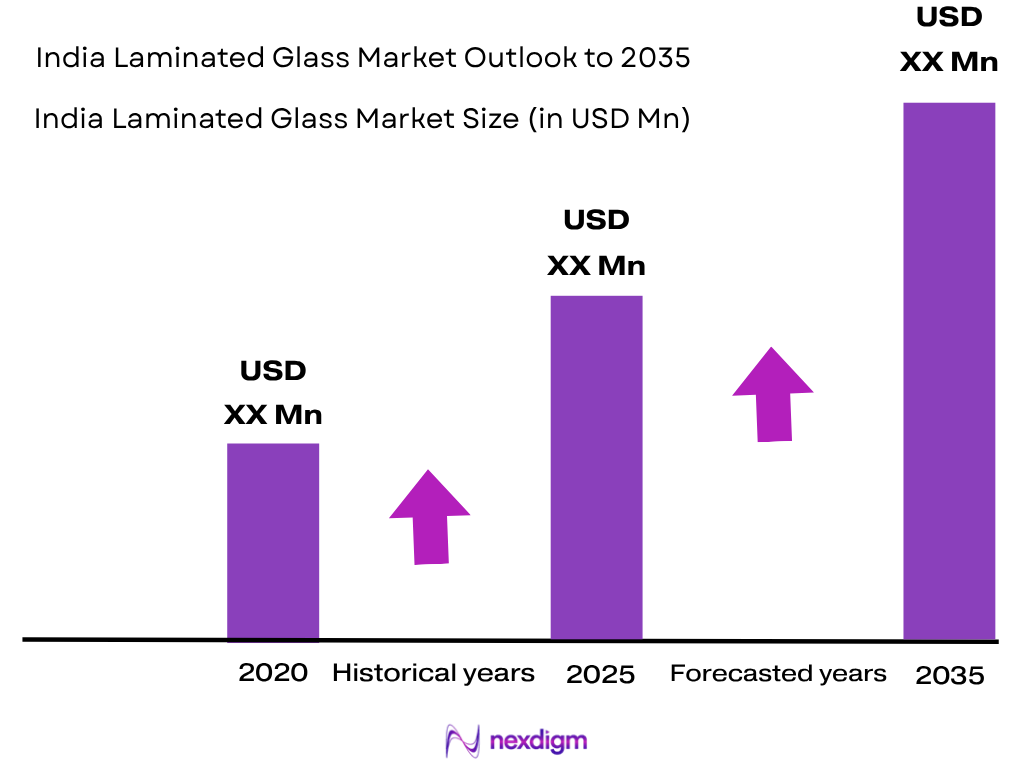
The India laminated glass market is valued at ~USD XX billion, based on a five-year historical analysis, supported by increasing adoption in automotive safety glazing, commercial construction, and infrastructure projects. The market expansion is driven by demand for safety glass solutions that provide impact resistance, noise reduction, and UV protection. India’s construction sector remains a major demand contributor, while automotive manufacturers increasingly integrate laminated windshields and advanced glazing systems in passenger vehicles. The global laminated glass market was valued at USD 31.68 billion in 2024, indicating strong downstream demand across construction and mobility applications.
India’s laminated glass demand is concentrated in metropolitan construction and automotive hubs including Mumbai, Delhi NCR, Bengaluru, Chennai, Pune, and Ahmedabad due to high commercial real estate development, automobile manufacturing clusters, and infrastructure investments. Mumbai and Delhi NCR generate demand from premium residential, commercial towers, and transportation projects, while Chennai and Pune benefit from automotive manufacturing ecosystems. Cities with expanding smart-city infrastructure and green building adoption continue to support demand for safety and energy-efficient glazing solutions.
Market Segmentation
By Application Type
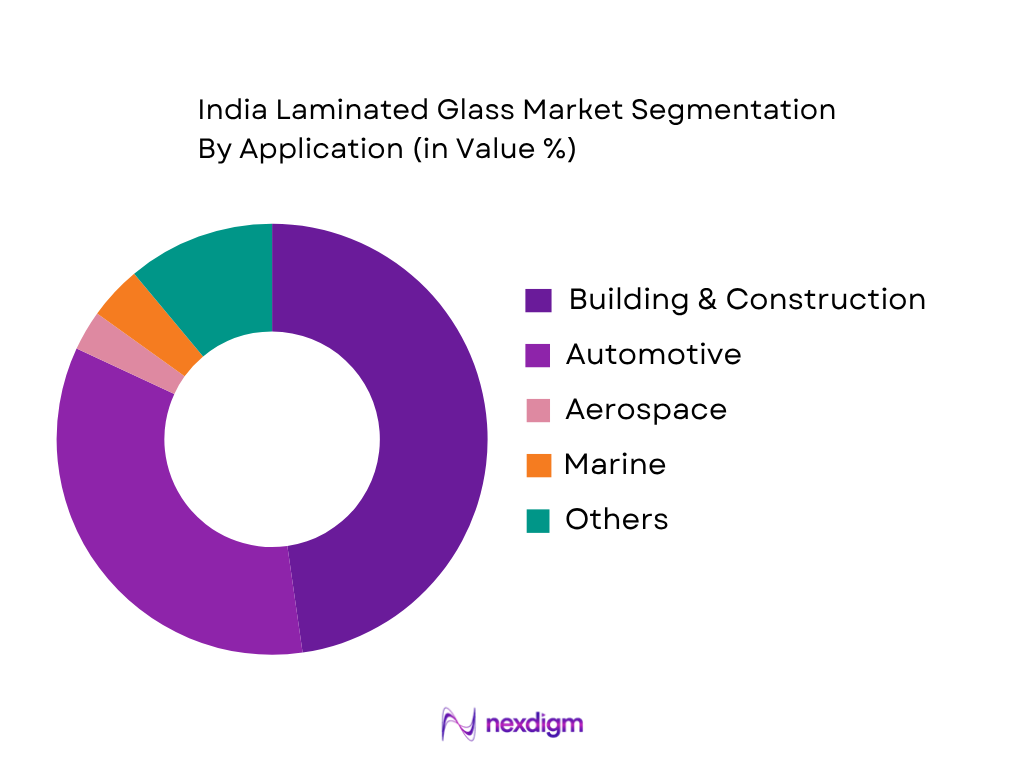
The India laminated glass market is segmented into building & construction, automotive, aerospace, marine, security & defense, and solar applications. Building and construction represents the dominant segment due to rising usage of safety glazing in commercial buildings, high-rise structures, airports, metro stations, and premium residential projects. Laminated glass is increasingly preferred because it maintains structural integrity after impact, improves acoustic insulation, and supports energy-efficient building designs. Government-led infrastructure expansion, urban redevelopment projects, and increasing adoption of green building standards are strengthening demand from architectural applications. Automotive is another significant segment due to mandatory safety requirements and increasing penetration of premium vehicles equipped with laminated windshields.
By Glass Type
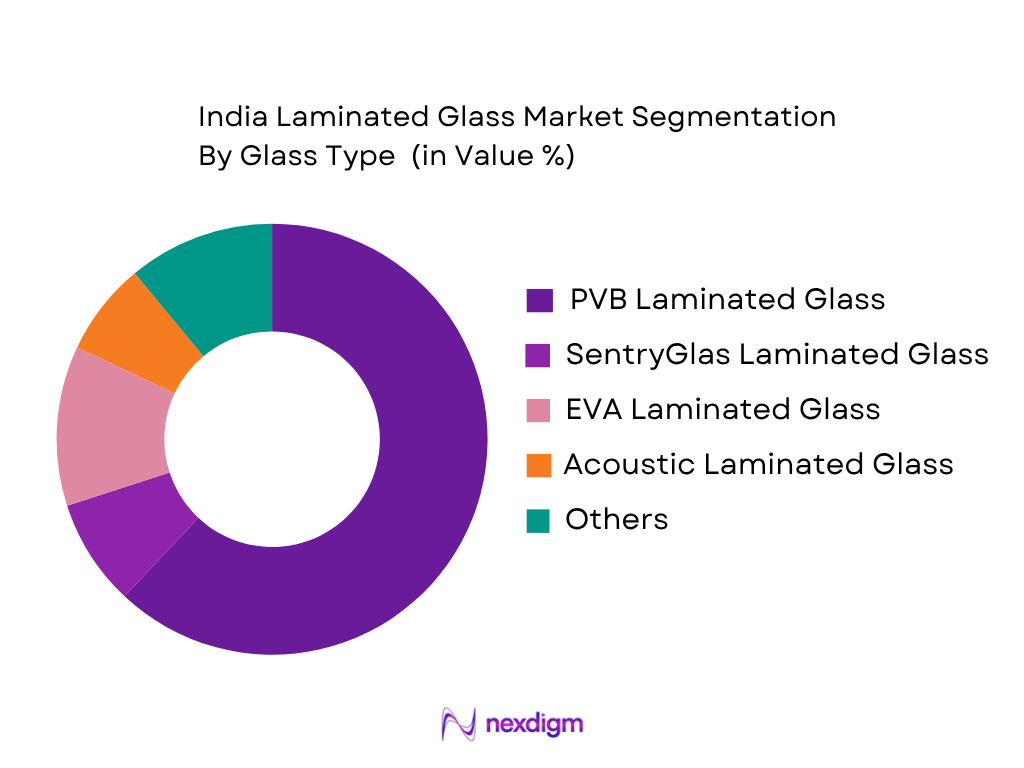
The India laminated glass market is segmented by glass type into PVB laminated glass, SentryGlas laminated glass, EVA laminated glass, acoustic laminated glass, bullet-resistant laminated glass, and decorative laminated glass. PVB laminated glass dominates due to its extensive application in automotive windshields and architectural safety glazing. Polyvinyl butyral interlayers provide strong adhesion, transparency, impact resistance, and passenger protection, making them the preferred solution for vehicle manufacturers and building developers. Automotive safety regulations and increasing consumer preference for enhanced vehicle protection continue to support PVB adoption. Acoustic laminated glass is gaining traction in urban markets due to rising concerns regarding traffic noise and demand for sound-insulated residential and commercial spaces.
Competitive Landscape
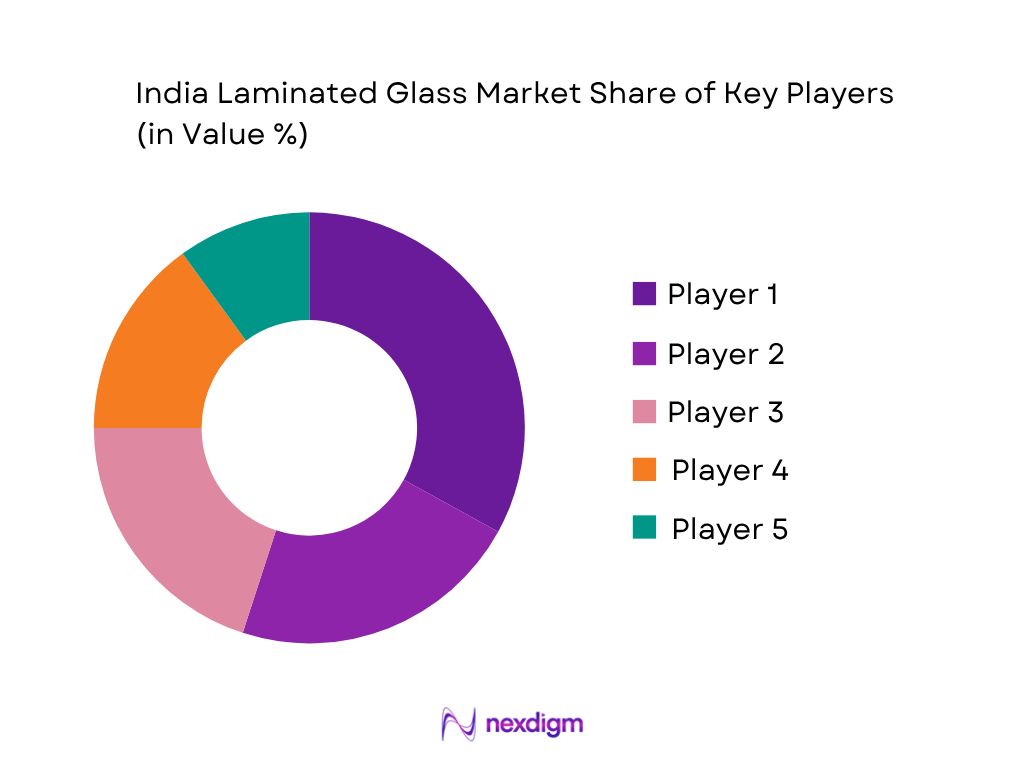
The India laminated glass market is moderately consolidated, with major domestic and international glass manufacturers competing through product innovation, manufacturing capacity expansion, automotive OEM partnerships, and architectural glazing solutions. Companies such as Asahi India Glass, Saint-Gobain India, and Gold Plus Glass have established strong positions through integrated production capabilities and extensive distribution networks. The market is influenced by demand from automotive manufacturers, infrastructure developers, real estate companies, and specialized safety-glass processors.
| Company | Establishment Year | Headquarters | Automotive Laminated Glass Capability | Architectural Laminated Glass Portfolio | Manufacturing & Processing Network | Key Technologies | Major End-Use Industries |
| Asahi India Glass Ltd. (AIS) | 1984 | Gurugram, India | ~ | ~ | ~ | ~ | ~ |
| Saint-Gobain India Pvt. Ltd. | 1996 | Chennai, India | ~ | ~ | ~ | ~ | ~ |
| Gold Plus Glass Industry Ltd. | 1985 | New Delhi, India | ~ | ~ | ~ | ~ | ~ |
| Guardian Glass India | 1932 | Auburn Hills, USA | ~ | ~ | ~ | ~ | ~ |
| AGC Glass India (AGC Inc.) | 1907 | Tokyo, Japan | ~ | ~ | ~ | ~ | ~ |
India Laminated Glass Market Analysis
Growth Drivers
Increasing Automotive Safety Glass Adoption
The adoption of laminated glass in automotive applications is supported by the expansion of vehicle production, safety regulations, and the transition toward advanced glazing systems. India produced approximately 28.43 million vehicles across categories in the financial year 2023-24, according to the Society of Indian Automobile Manufacturers (SIAM), creating sustained demand for windshield and side-window safety glass solutions. The Indian automotive sector also recorded passenger vehicle production of more than 4.7 million units during the same period, strengthening demand for PVB-based laminated glass. The growing electric vehicle ecosystem further supports adoption, as electric vehicles require lightweight, acoustic, and solar-control glazing solutions to improve efficiency and passenger comfort. The Ministry of Heavy Industries reported that more than 1.5 million electric vehicles had been supported under government incentive programs, increasing demand for advanced automotive components. Laminated glass manufacturers are benefiting from increased integration of acoustic PVB layers, UV protection, and impact-resistant glazing technologies across passenger vehicles, commercial vehicles, and premium segments. The expansion of automotive manufacturing clusters in Maharashtra, Tamil Nadu, Gujarat, and Karnataka continues to improve access to OEM supply chains and glass processing facilities.
Expansion of Commercial Real Estate Development
Commercial construction growth is strengthening demand for laminated glass through increased usage in façades, curtain walls, skylights, office buildings, airports, and high-rise developments. India’s construction sector remains one of the largest contributors to infrastructure development, supported by government infrastructure programs and urban expansion initiatives. The World Bank reported that India’s urban population exceeded 510 million people, increasing requirements for modern commercial spaces, transportation hubs, and urban infrastructure. The Indian government allocated ₹11.11 lakh crore for capital expenditure in the Union Budget 2024-25, supporting construction activity across highways, railways, airports, and urban infrastructure projects where safety glazing applications are increasingly specified. Green building adoption is also accelerating demand for energy-efficient laminated glazing, with organizations such as the Indian Green Building Council certifying thousands of sustainable projects across commercial and residential categories. Laminated glass provides advantages including solar control, acoustic insulation, safety performance, and improved building envelope efficiency, making it increasingly preferred for modern architectural applications.
Market Challenges
High Manufacturing Energy Consumption
Laminated glass production requires significant energy input due to glass melting, tempering, heating, and autoclave processing operations. The energy-intensive nature of glass manufacturing creates cost pressure, particularly during periods of electricity price volatility and increasing industrial decarbonization requirements. India’s industrial sector consumed more than 50% of the country’s total electricity demand according to energy statistics published by government agencies, highlighting the importance of energy efficiency for manufacturing industries. The glass industry faces additional pressure as manufacturers invest in cleaner production technologies to reduce emissions from high-temperature furnaces. The International Energy Agency has identified industrial heat processes as a major contributor to global energy consumption, creating pressure for manufacturers to adopt alternative fuels, waste heat recovery systems, and improved furnace technologies. Laminated glass producers also face challenges associated with maintaining consistent quality while reducing energy consumption, as variations in temperature control can impact optical clarity, adhesion strength, and durability. Smaller processors may face difficulties adopting advanced energy-efficient equipment due to high capital requirements.
Dependence on Imported Specialty Interlayers
The Indian laminated glass industry faces supply chain challenges due to dependence on imported specialty interlayer materials such as advanced PVB, SentryGlas, and acoustic films. Specialty interlayers require specific chemical formulations and manufacturing capabilities that remain concentrated among global suppliers. India imported significant quantities of specialty polymers and chemical materials, with polymer imports remaining important for multiple downstream manufacturing industries. According to government trade data, India’s chemical and allied product imports remained above USD 60 billion during recent years, reflecting dependence on international supply chains for specialized materials. Fluctuations in global logistics, foreign exchange movements, and raw material availability can affect procurement timelines for laminated glass manufacturers. Advanced applications such as bullet-resistant glazing, acoustic glazing, and structural glazing require high-performance interlayers with strict technical specifications, increasing qualification requirements. Domestic development of interlayer manufacturing capabilities remains limited compared with established global production hubs, creating challenges for supply security and cost stability. Manufacturers are therefore focusing on supplier diversification, local partnerships, and technology development to reduce dependency.
Market Opportunities
Electric Vehicle Windshield Expansion
The growth of electric vehicles in India creates significant opportunities for laminated glass manufacturers through increased demand for lightweight, acoustic, and solar-control windshield solutions. Electric vehicles generate lower engine noise compared with internal combustion vehicles, increasing the importance of acoustic laminated glass to improve cabin comfort. India recorded more than 1.5 million electric vehicle registrations supported through national incentive programs, according to government transport data, indicating expanding adoption of electric mobility solutions. The government’s Electric Mobility Promotion Scheme and production-linked incentive programs continue supporting domestic EV manufacturing and component development. Automotive manufacturers are increasingly incorporating advanced glazing technologies, including thinner laminated glass, heat-reflective coatings, and integrated sensor-compatible windshields. Major automobile manufacturing states such as Maharashtra, Tamil Nadu, Gujarat, and Karnataka are developing EV production ecosystems, supporting demand for specialized automotive glass suppliers. The opportunity extends beyond passenger vehicles to electric buses, commercial fleets, and emerging mobility solutions requiring enhanced safety and durability.
Energy Efficient Building Glazing
Energy-efficient building applications represent a major opportunity for laminated glass due to increasing demand for sustainable construction materials, improved thermal performance, and green building certification requirements. India’s rapid urbanization and infrastructure expansion are increasing the need for modern glazing systems in commercial complexes, airports, metro stations, and residential developments. The Ministry of Housing and Urban Affairs reported continued expansion of urban infrastructure programs, including Smart Cities Mission projects covering 100 cities, creating demand for advanced building materials. Green building organizations in India have certified thousands of projects incorporating energy-saving construction solutions, including high-performance glazing systems. Laminated glass enables improved acoustic control, UV protection, occupant safety, and daylight optimization, making it suitable for sustainable architectural applications. Rising temperatures and increasing cooling demand in commercial buildings are encouraging developers to adopt solar-control and low-energy glazing solutions. Domestic manufacturing expansion in architectural glass processing is expected to support wider adoption of laminated glass across premium residential, commercial, and infrastructure projects.
Future Outlook
The India laminated glass market is expected to experience sustained growth over the next decade due to increasing infrastructure development, rising automotive safety requirements, and adoption of energy-efficient building materials. Growth will be supported by smart-city projects, premium commercial construction, electric vehicle expansion, and demand for advanced safety glazing solutions. Technological advancements in acoustic glass, security glazing, and solar-integrated laminated glass are expected to create additional opportunities for manufacturers.
Major Players
- Asahi India Glass Limited
- Saint-Gobain India
- Gold Plus Glass Industry
- Guardian Glass
- AGC Inc.
- Sisecam India
- Fuyao Glass Industry Group
- Nippon Sheet Glass
- Borosil Renewables
- Glass Wall Systems India
- Modi Guard
- HNG Float Glass
- Fuso Glass India
- Gujarat Guardian
- Triveni Glass
Key Target Audience
- Automotive OEM manufacturers
- Architectural glass processors and fabricators
- Real estate developers and construction companies
- Infrastructure development companies
- Investments and venture capitalist firms
- Government and regulatory bodies (Ministry of Road Transport and Highways, Bureau of Indian Standards, Ministry of Housing and Urban Affairs)
- Solar module manufacturers
- Defense and security equipment manufacturers
Research Methodology
Step 1: Identification of Key Variables
The initial phase involves mapping the India laminated glass ecosystem, including manufacturers, automotive OEMs, construction companies, processors, suppliers, and end-use industries. Secondary research is conducted to identify demand drivers, production capabilities, regulatory factors, and application-specific trends influencing market development.
Step 2: Market Analysis and Construction
Historical market information is analyzed through supply-side and demand-side assessment approaches. Production capacity, application penetration, consumption patterns, and industry performance indicators are evaluated to construct a comprehensive market framework.
Step 3: Hypothesis Validation and Expert Consultation
Market assumptions are validated through discussions with industry stakeholders, including glass manufacturers, automotive suppliers, construction professionals, and processing companies. These interactions provide operational insights regarding product adoption, customer preferences, and competitive dynamics.
Step 4: Research Synthesis and Final Output
The final stage integrates primary and secondary findings to develop market estimates, segmentation analysis, competitive benchmarking, and future projections. Data triangulation ensures consistency across industry variables and application segments.

- Executive Summary
- Research Methodology (Market Definitions and Assumptions, Market Classification and Scope, Laminated Glass Demand Assessment, Architectural Glass Consumption Mapping, Automotive Safety Glass Demand Analysis, Interlayer Material Assessment, PVB EVA and Ionoplast Technology Mapping, Domestic Glass Manufacturing Capacity Assessment, Import Dependency Analysis, Glass Processing and Fabrication Capability Assessment, Construction Sector Demand Evaluation, Automotive OEM Demand Assessment, Infrastructure Project Pipeline Analysis, Application-Level Demand Assessment, Primary Industry Interviews, Top-Down Market Sizing, Bottom-Up Manufacturer Revenue Assessment, Trade Flow Analysis, Demand-Supply Gap Assessment, Data Triangulation, Forecasting Framework)

- Definition and Scope
- India Laminated Glass Industry Evolution
- India Laminated Glass Value Chain Analysis
- India Laminated Glass Supply Chain Analysis
- Government Infrastructure Development Analysis

- Growth Drivers (Increasing Automotive Safety Glass Adoption, Expansion of Commercial Real Estate Development, Growth of Green Building Certifications, Rising Demand for Acoustic Glazing Solutions, Increasing Infrastructure Investment, Expansion of Metro Rail Networks, Growth of Electric Vehicle Manufacturing, Rising Security Glass Requirements, Smart City Development Projects)
- Market Challenges (High Manufacturing Energy Consumption, Dependence on Imported Specialty Interlayers, Raw Material Price Volatility, Limited Recycling Infrastructure, Complex Fabrication Requirements, High Initial Investment for Processing Facilities, Competition from Tempered Glass, Quality Control Requirements, Supply Chain Constraints, Skilled Workforce Availability Challenges)
- Market Opportunities (Electric Vehicle Windshield Expansion, Smart Glass Integration, Energy Efficient Building Glazing, Hurricane and Impact Resistant Glass Applications, Security and Defense Glass Demand, Acoustic Architectural Glass Growth, Sustainable Glass Recycling Technologies, Infrastructure Replacement Demand, Solar Laminated Glass Applications, Domestic Interlayer Manufacturing)
- Market Trends (Green Building Glass Adoption, Acoustic Laminated Glass Growth, Smart Laminated Glass Integration, Lightweight Automotive Glass Solutions, Solar Control Laminated Glass Demand, Energy Efficient Building Materials, Security Glazing
- Adoption, Premium Architectural Glass Applications, EV-Specific Glass Technologies)
- Government Regulations and Standards (BIS Safety Glass Standards, Automotive Safety Regulations, National Building Code Requirements, Green Building Certification Requirements, Infrastructure Safety Standards, Automotive Windshield Standards, Fire Safety Glass Requirements, Solar Glass Quality Standards)
- SWOT Analysis
- Porter’s Five Forces Analysis
- PESTLE Analysis
- Stakeholder Ecosystem
- Competition Ecosystem

- By Market Value (2020-2025)
- By Laminated Glass Production Volume (2020-2025)
- By Architectural Laminated Glass Consumption Volume (2020-2025)
- By Automotive Laminated Glass Consumption Volume (2020-2025)
- By Domestic Laminated Glass Manufacturing Capacity (2020-2025)

- By Application Type (In Value %)
Building and Construction
Residential Buildings
Commercial Buildings
High-Rise Buildings
Institutional Buildings
Retail and Hospitality Infrastructure
Automotive
Passenger Vehicles
Commercial Vehicles
Electric Vehicles
Luxury Vehicles
Rail Transportation
Metro Rail Systems
Railway Coaches
Stations and Transit Infrastructure
Aerospace Applications
Marine Applications
Security and Defense Applications
Blast Resistant Glass
Security Glazing Systems
Solar and Energy Applications
Solar PV Laminated Glass
Energy Efficient Glazing Systems - By Glass Type (In Value %)
PVB Laminated Glass
Clear PVB Laminated Glass
Colored PVB Laminated Glass
Acoustic PVB Laminated Glass
Solar Control PVB Laminated Glass
EVA Laminated Glass
Photovoltaic EVA Laminated Glass
Decorative EVA Laminated Glass
SentryGlas Laminated Glass
High Strength Structural Laminated Glass - By Interlayer Material (In Value %)
Polyvinyl Butyral (PVB)
Ethylene Vinyl Acetate (EVA)
Ionoplast Interlayers
Thermoplastic Polyurethane (TPU)
Specialty Acoustic Interlayers - By End-Use Industry (In Value %)
Real Estate and Construction
Automotive Manufacturing
Transportation Infrastructure
Renewable Energy
Defense and Security
Marine Industry
Aerospace Industry
Industrial Applications - By Region (In Value %)
North India
Delhi NCR
Uttar Pradesh
Haryana
Punjab
Maharashtra

- Market Share of Major Players (By Revenue, Production Capacity, Product Category, Application Segment, Distribution Network, Manufacturing Footprint)
- Cross Comparison Parameters (Laminated Glass Production Capacity, PVB and EVA Processing Capability, Automotive OEM Supply Relationship, Architectural Project Portfolio, Security Glass Manufacturing Capability, Geographic Distribution Network, Advanced Glass Technology Portfolio, Research and Development Capability)
- SWOT Analysis of Major Players
- Detailed Profiles of Major Companies
Saint-Gobain India
Asahi India Glass Limited
Tata Glass
Gold Plus Glass Industry
Guardian Glass India
Gujarat Guardian Limited
Sisecam India
Borosil Renewables
HNG Float Glass
SCHOTT India
Fuyao Glass India
AGC Glass India
Modiguard
Gold Plus Automotive Glass
Viridian Glass India

- Consumption Behavior Assessment
- Demographic and Regional Demand Trends
- Product Attribute Preference Analysis
- Architectural Glass Distributor Channel Analysis
- Direct Manufacturer Procurement
- Dealer and Fabricator Network Assessment

- By Market Value (2026-2035)
- By Laminated Glass Production Volume (2026-2035)
- By Architectural Laminated Glass Consumption Volume (2026-2035)
- By Automotive Laminated Glass Consumption Volume (2026-2035)
- By Domestic Laminated Glass Manufacturing Capacity (2026-2035)


 Request a Sample
 Ask for Customization
 Get a Quote
 Enquire Now