
 Download PDF
 Download PDF
Market Overview
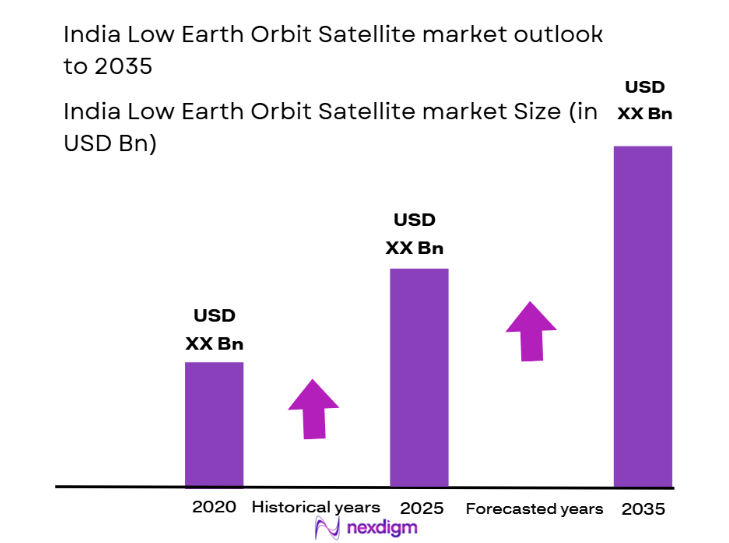
The India Low Earth Orbit Satellite market is valued at approximately USD ~ billion, based on a recent historical assessment. The market is primarily driven by increasing demand for satellite services across telecommunications, defense, and environmental sectors. A significant factor fueling growth is the Indian government’s initiatives to enhance digital infrastructure and expand satellite communication networks. Technological advancements, such as the miniaturization of satellite components and the reduction in satellite launch costs, further contribute to the market’s positive outlook. By 2026, the market is anticipated to reach USD ~ billion, reflecting continued growth.
India is a global leader in the Low Earth Orbit Satellite market due to its established space infrastructure, spearheaded by the Indian Space Research Organisation (ISRO). India’s strategic geographic location also provides a competitive advantage in serving a broad market, including neighboring regions in Asia and beyond. Cities like Bengaluru, which is home to ISRO, and other space hubs such as Hyderabad and New Delhi, drive technological innovation. Furthermore, India’s burgeoning private sector, including companies like Bharti Airtel and Reliance Jio, plays a pivotal role in satellite communications, adding to the nation’s dominance in the sector.
Market Segmentation
By Product Type
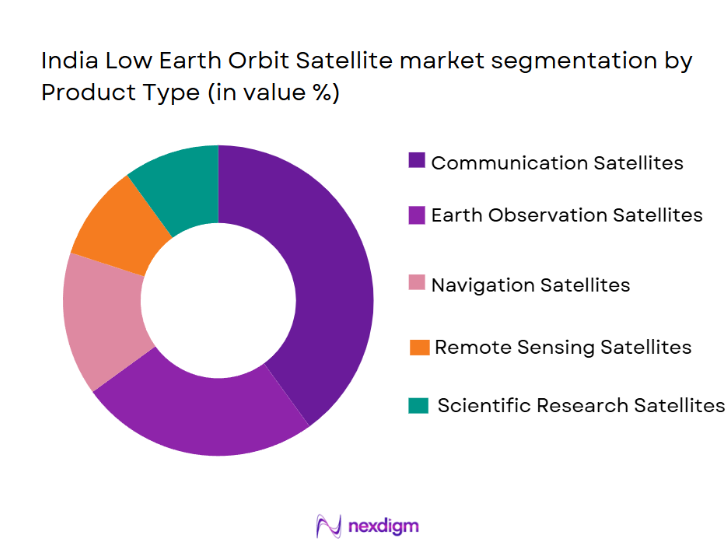
The India Low Earth Orbit Satellite market is segmented by product type into communication satellites, earth observation satellites, navigation satellites, remote sensing satellites, and scientific research satellites. Recently, communication satellites have a dominant market share due to the significant rise in demand for internet services, particularly in rural areas. These satellites are critical for providing high-speed internet access and telecommunication services. Government initiatives like BharatNet, along with the rapid growth in mobile connectivity, especially in remote and underserved regions, continue to fuel the demand for communication satellites. This has led to their dominant share in the overall market.
By Platform Type
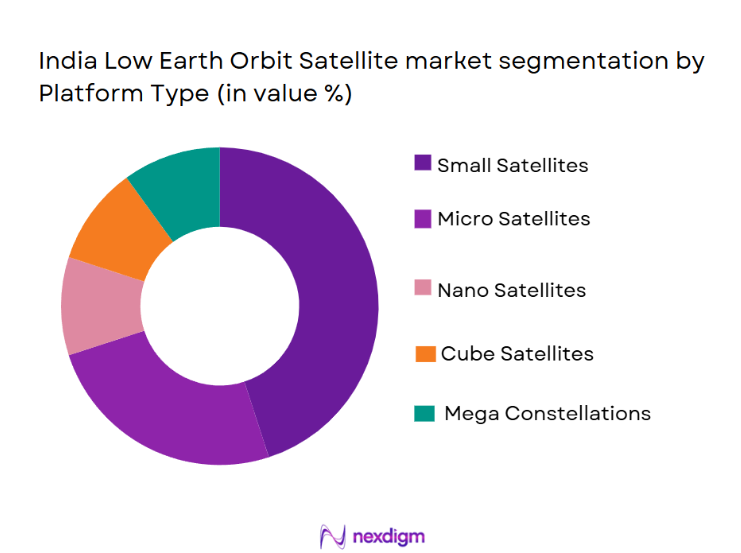
The India Low Earth Orbit Satellite market is segmented by platform type into small satellites, micro satellites, nano satellites, cube satellites, and mega constellations. The small satellite segment leads the market due to its lower cost and shorter development timelines compared to larger traditional satellites. These cost-effective satellites are particularly popular among emerging satellite service providers and startups. Small satellites are versatile and can be deployed for a range of applications, such as telecommunications, weather monitoring, and environmental surveillance, making them a dominant force in the market.
Competitive Landscape
The competitive landscape in the India Low Earth Orbit Satellite market is dynamic, marked by both government agencies and private players actively investing in satellite technology and infrastructure. The market has seen significant consolidation, with major satellite operators partnering with technological innovators to advance satellite communication systems. Leading players such as ISRO, SpaceX, and Bharti Airtel have significantly expanded their satellite deployments and infrastructure. Additionally, new entrants are also entering the space, driven by the growing demand for satellite-based internet services and government funding initiatives.
| Company Name | Establishment Year | Headquarters | Technology Focus | Market Reach | Key Products | Revenue (USD) | Market-Specific Parameter |
| Indian Space Research Organisation (ISRO) | 1969 | Bengaluru, India | ~ | ~ | ~ | ~ | ~ |
| Bharti Airtel | 1995 | New Delhi, India | ~ | ~ | ~ | ~ | ~ |
| SpaceX | 2002 | Hawthorne, USA | ~ | ~ | ~ | ~ | ~ |
| Reliance Jio | 2007 | Mumbai, India | ~ | ~ | ~ | ~ | ~ |
| OneWeb | 2012 | London, UK | ~ | ~ | ~ | ~ | ~ |
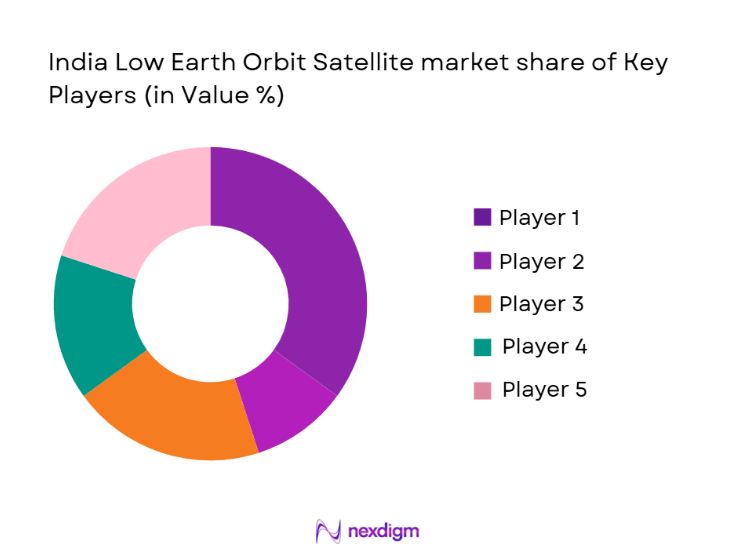
India Low Earth Orbit Satellite Market Analysis
Growth Drivers
Increased Demand for Satellite-Based Services
The demand for satellite services in India is rising due to the increasing need for high-speed internet, especially in rural areas. This is largely driven by the expanding population and growing digital economy, where seamless communication and data transfer are essential. The Indian government’s push to improve broadband connectivity, through initiatives like BharatNet, further supports the demand for satellite communication services. As a result, the Low Earth Orbit satellite market is poised for continued growth, attracting investments from both public and private sectors.
Technological Advancements in Satellite Manufacturing
The continuous advancement in satellite technology is a key growth driver for the India Low Earth Orbit Satellite market. The development of small, cost-effective satellites has made space-based solutions more affordable for a broader range of industries. The miniaturization of satellite components and advancements in propulsion systems, along with the increasing reliance on data-driven solutions across various sectors, are making satellite services more accessible and efficient. This is expected to fuel demand for Low Earth Orbit satellites, particularly in applications like telecommunication and environmental monitoring.
Market Challenges
High Initial Investment and Capital Constraints
One of the significant challenges faced by the India Low Earth Orbit Satellite market is the high capital investment required for satellite development and infrastructure. While advancements in satellite technology are making the systems more affordable, the initial costs involved in launching and maintaining a satellite remain a barrier for many players, particularly new entrants. This challenge is compounded by the limited availability of funding and a lack of adequate financial support for private sector players, especially smaller organizations seeking to deploy satellite constellations.
Regulatory and Geopolitical Risks
The Low Earth Orbit satellite market in India faces challenges related to regulatory constraints and geopolitical risks. Satellite operators mustcomply withvarious licensing requirements and regulatory frameworks enforced by agencies like the Department of Space and the Indian government. Additionally, geopolitical tensions could disrupt the satellite services, as the space industry is often impacted by international political relations, leading to risks for companies operating in global markets. These factors create uncertainty, which could hinder the growth of the market in the long term.
Opportunities
Growing Adoption of Satellite Internet in Rural Areas
The increasing digital divide between urban and rural areas presents a significant opportunity for the India Low Earth Orbit Satellite market. The government’s emphasis on connecting rural India through affordable internet services, particularly in remote areas, is expected to boost demand for satellite-based broadband services. Moreover, international players like SpaceX and OneWeb are targeting India for satellite internet services, which will enhance the market’s growth opportunities in the coming years.
Development of Small Satellite Constellations
The development of small satellite constellations provides a huge opportunity for the India Low Earth Orbit Satellite market. By launching a network of small satellites, companies can reduce costs and improve the reliability of satellite services. This will also create more opportunities for businesses and startups to enter the market and offer specialized satellite-based solutions. With the increasing demand for real-time data and connectivity, the small satellite market in India is expected to experiencestrong growth.
Future Outlook
The future outlook for the India Low Earth Orbit Satellite market is optimistic, with significant growth expected over the next five years. Technological innovations, such as the development of smaller, more cost-effective satellites, are expected to increase satellite deployments, particularly in the communication and environmental sectors. The Indian government’s push for space exploration and digital infrastructure is likely to continue driving growth. Additionally, the expansion of private satellite operators and the rise of satellite-based internet services will further contribute to the market’s positive trajectory.
Major Players
- Indian Space Research Organisation (ISRO)
- Bharti Airtel
- SpaceX
- Reliance Jio
- OneWeb
- Hughes Communications India
- Tata Communications
- Satcom India
- Globalstar India
- Inmarsat India
- SES Networks
- O3b Networks
- Telesat
- Planet Labs
- LeoSat Enterprises
Key Target Audience
- Investments and venture capitalist firms
- Government and regulatory bodies
- Satellite communication providers
- Telecommunication service providers
- Satellite manufacturers
- Aerospace companies
- Satellite service operators
- Commercial and defense space organizations
Research Methodology
Step 1: Identification of Key Variables
Key market variables such as demand drivers, growth patterns, and industry challenges are identified through initial desk research and expert interviews.
Step 2: Market Analysis and Construction
A detailed market analysis is conducted based on historical data, current market trends, and demand-supply dynamics. Forecast models are built to predict future trends and market growth.
Step 3: Hypothesis Validation and Expert Consultation
A set of hypotheses regarding market growth is validated through discussions with industry experts, manufacturers, and stakeholders to ensure accuracy.
Step 4: Research Synthesis and Final Output
The research is synthesized into a comprehensive report, consolidating all findings, insights, and data into a final output for stakeholders.

- Executive Summary
- Research Methodology (Definitions, Scope, Industry Assumptions, Market Sizing Approach, Primary & Secondary Research Framework, Data Collection & Verification Protocol, Analytic Models & Forecast Methodology, Limitations & Research Validity Checks)

- Market Definition and Scope
- Value Chain & Stakeholder Ecosystem
- Regulatory / Certification Landscape
- Sector Dynamics Affecting Demand
- Strategic Initiatives & Infrastructure Growth

- Growth Drivers
Increased Demand for Communication and Data Connectivity
Advancements in Satellite Manufacturing Technology
Government Initiatives and Funding for Space Missions - Market Challenges
High Capital Investment and Funding Constraints
Technological Barriers and Complexity in Satellite Design
Geopolitical Risks and Regulatory Challenges - Market Opportunities
Emerging Private Sector Investments in Satellite Technology
Growing Demand for Earth Observation Data
Development of Low-cost Small Satellites for Emerging Markets - Trends
Integration of AI and Machine Learning in Satellite Operations
Collaborations Between Private and Government Space Agencies
Miniaturization and Cost Reduction in Satellite Technology - Government Regulations
Regulatory Framework for Satellite Launch and Operations
Licensing Requirements for Satellite Operators
Government Policies on Space Exploration and Satellite Data Access

- By Market Value 2020-2025
- By Installed Units 2020-2025
- By Average System Price 2020-2025
- By System Complexity Tier 2020-2025

- By System Type (In Value%)
Communication Satellites
Earth Observation Satellites
Navigation Satellites
Remote Sensing Satellites
Scientific Research Satellites - By Platform Type (In Value%)
Small Satellites
Micro Satellites
Nano Satellites
Cube Satellites
Mega Constellations - By Fitment Type (In Value%)
Commercial Satellites
Military Satellites
Government Satellites
Research & Development Satellites
Private Sector Satellites - By EndUser Segment (In Value%)
Telecommunications
Defense & Security
Agriculture & Environmental Monitoring
Space Exploration & Research
Weather & Climate Forecasting - By Procurement Channel (In Value%)
Direct Sales
Government Contracts
Commercial Space Ventures
Public-Private Partnerships
Research Institutions & Universities

- Market Share Analysis
- CrossComparison Parameters (System Type, Platform Type, Fitment Type, End-User Segment, Procurement Channel)
- SWOT Analysis of Key Competitors
- Pricing & Procurement Analysis
- Porter’s Five Forces
- Key Players
Indian Space Research Organisation (ISRO)
OneWeb India
Bharti Airtel
Tata Communications
Globalstar India
Reliance Jio
Inmarsat India
Hughes Communications India
Satellogic
SpaceX India
Amazon Kuiper
O3b Networks
Telesat India
Astra Space
Planet Labs

- Telecommunication Sector’s Contribution to Satellite Growth
- Defense Sector’s Increasing Demand for Secure Communications
- Agricultural Sector Adoption of Satellite Technologies for Monitoring
- Environmental and Weather Forecasting Sector’s Role in Satellite Expansion

- Forecast Market Value 2026-2035
- Forecast Installed Units 2026-2035
- Price Forecast by System Tier 2026-2035
- Future Demand by Platform 2026-2035


 Request a Sample
 Ask for Customization
 Get a Quote
 Enquire Now