
 Download PDF
Market Overview
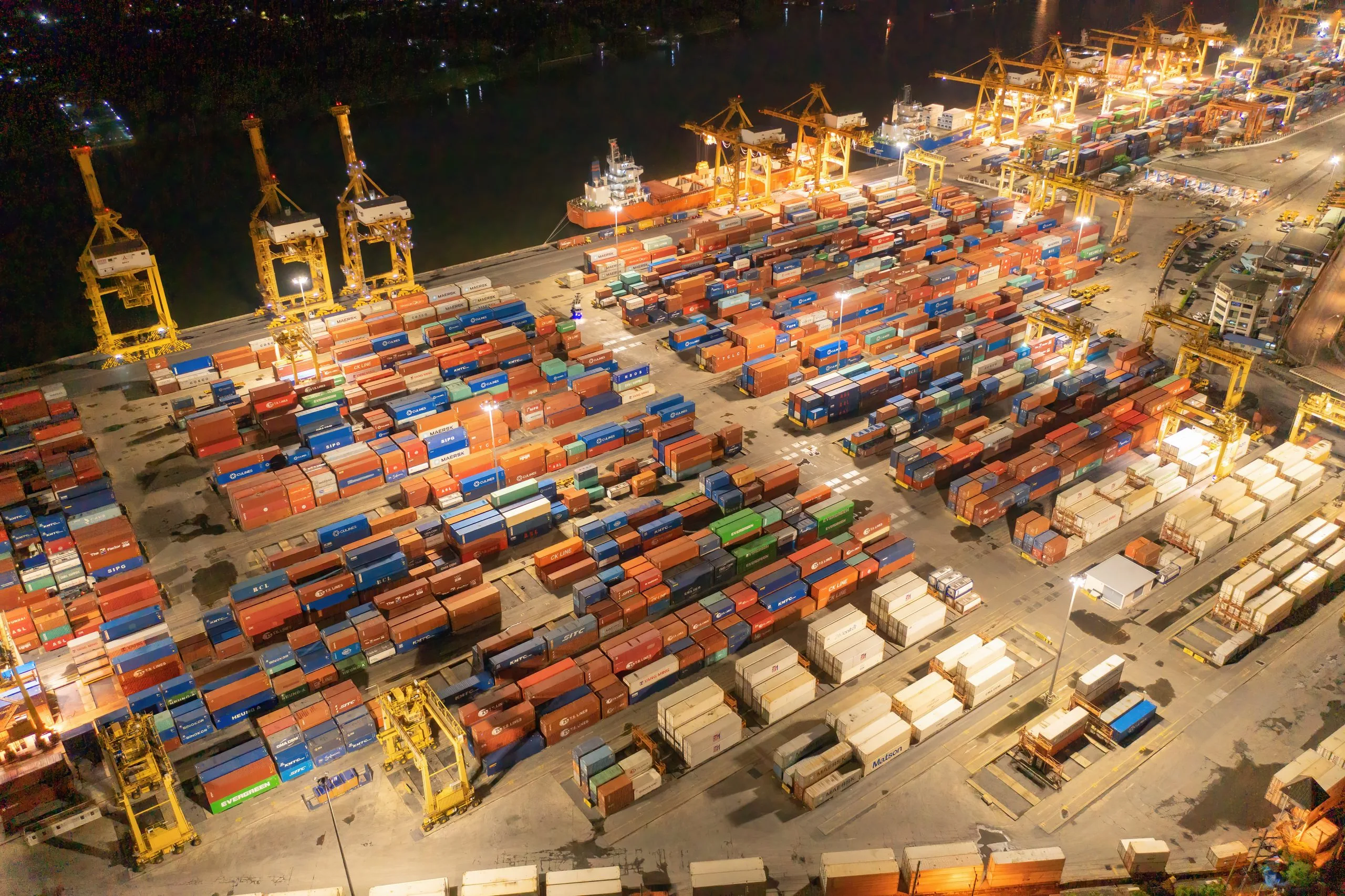
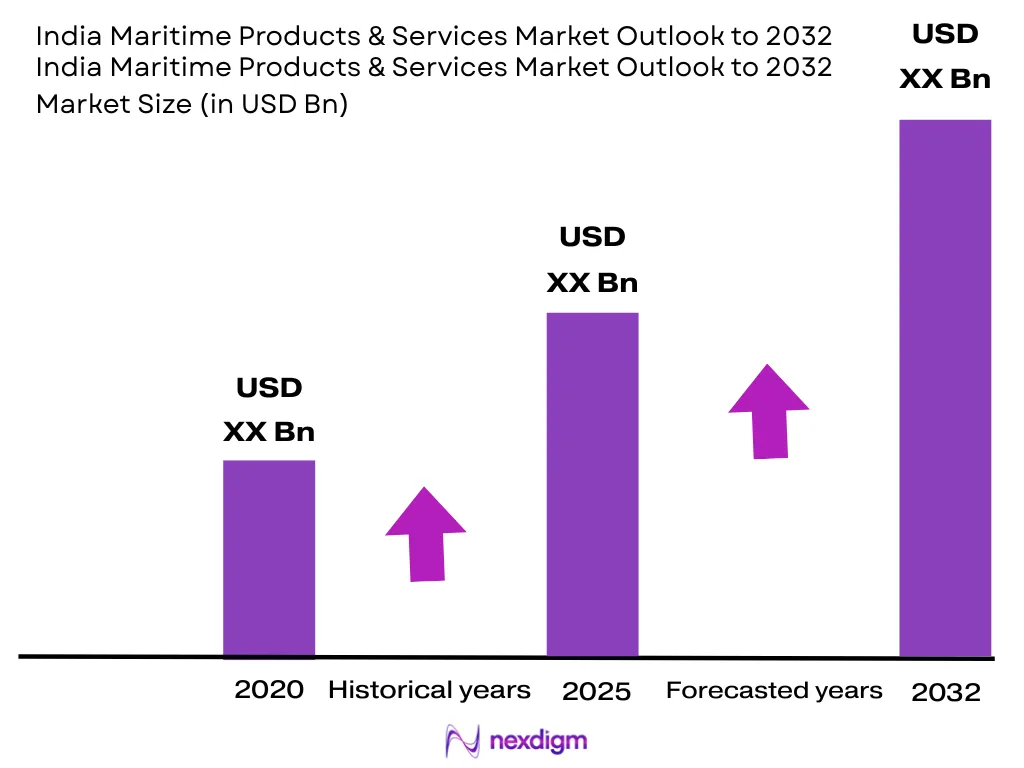
The India maritime products and services market was valued at USD ~ billion in 2024 and is projected to expand at a CAGR of ~% during the 2026–2032 forecast period. According to data published by the Ministry of Ports, Shipping and Waterways and the Directorate General of Shipping, India operates 12 major ports and more than 200 notified minor and intermediate ports along a coastline of approximately 7,500 kilometres, handling more than 1.4 billion metric tonnes of cargo annually across bulk, container, liquid, and breakbulk categories. India’s maritime sector accounts for more than 95 percent of the country’s trade volume and approximately 70 percent of trade value, underscoring the strategic and economic significance of the sector to the national economy. Data from the Indian Ports Association and industry bodies indicates that cargo throughput, port capacity investments, shipbuilding orders, and maritime services revenues continue to grow steadily, supported by the government’s flagship Sagarmala Programme, rising EXIM trade volumes, expanding coastal shipping networks, and robust private sector investment in port infrastructure. Growth is further supported by India’s accelerating Blue Economy agenda, growing defence naval shipbuilding pipeline, expansion of inland waterway freight capacity, and increasing adoption of digital port management and smart logistics technologies across India’s major maritime hubs.
Market Segmentation
By Product and Service Type
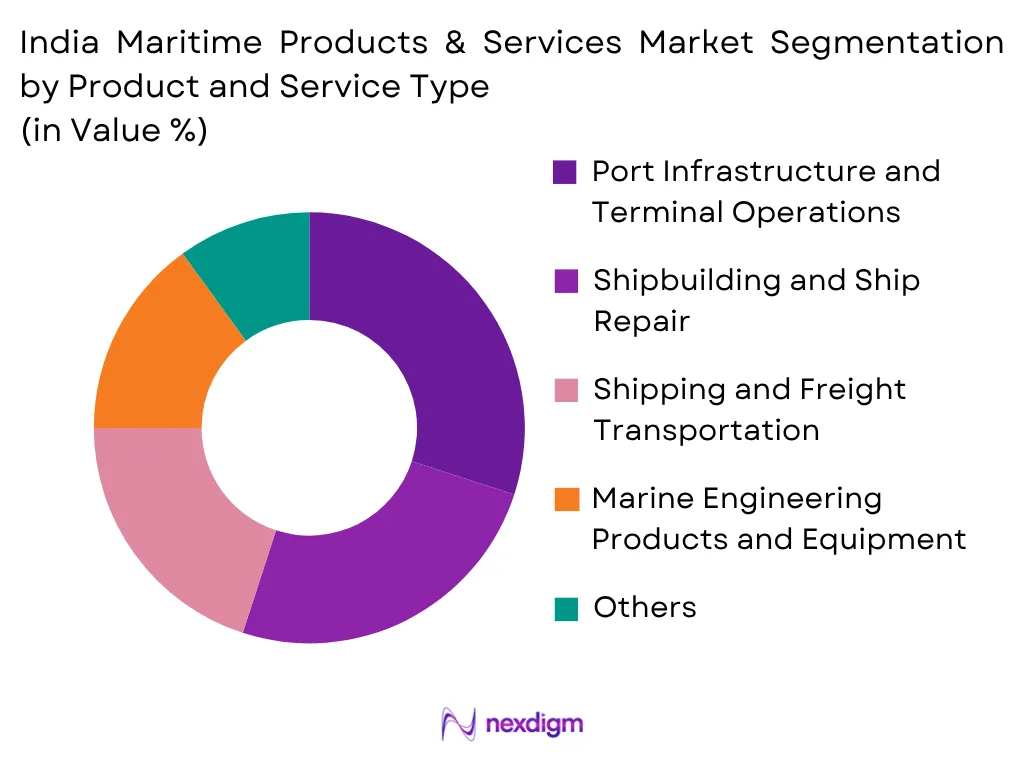
Port infrastructure and terminal operations dominate the India maritime products and services market by revenue, reflecting the country’s ongoing and substantial investment in port capacity expansion, terminal modernisation, and multi-modal logistics connectivity under the Sagarmala Programme. India’s 12 major ports, administered by the respective Port Authorities under the Major Port Authorities Act 2021, continue to expand their combined capacity through greenfield terminal development, deepening of navigational channels, procurement of modern cargo handling equipment, and construction of logistics parks and coastal economic zones. Private sector participation has grown substantially, with Adani Ports and SEZ Limited emerging as the country’s largest private port operator with a capacity exceeding 600 million metric tonnes across its nationwide port network. JSW Infrastructure and DP World have also expanded their India port footprints significantly. The growing importance of container throughput, with JNPA and Mundra Port competing as the country’s largest container gateways, has driven investments in automated stacking cranes, terminal operating systems, and digital gate management. Shipbuilding and ship repair services constitute the second-largest segment by value, with Cochin Shipyard, Mazagon Dock Shipbuilders, and Garden Reach Shipbuilders anchoring domestic defence and commercial vessel construction. Continuous investments in dry dock expansion, vessel design capabilities, advanced marine engineering, and green shipbuilding technologies are further strengthening the segment’s contribution to total maritime market revenues.
By End-Use Sector
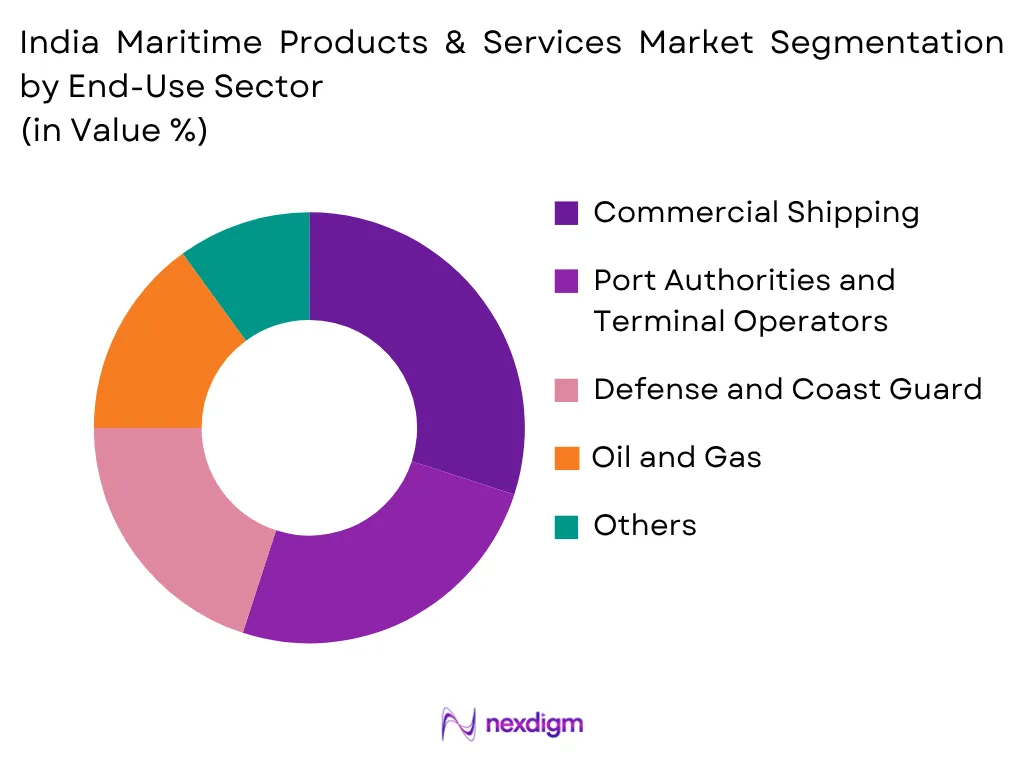
Commercial shipping and port-related services account for the largest share of maritime market revenues in India, driven by the country’s position as one of the world’s largest importers of crude oil, coal, fertilisers, and containers, and one of the leading exporters of iron ore, petroleum products, engineering goods, and agricultural commodities. India’s dependence on maritime trade for both energy security and merchandise trade sustains continuous and large-scale demand for port handling, freight transportation, bunkering, logistics, and ship management services throughout the year. The oil and gas sector represents the second-largest demand driver, with offshore exploration and production activities in the Mumbai High, Krishna-Godavari Basin, and deepwater blocks of the east and west coasts sustaining consistent demand for offshore support vessels, marine engineering equipment, subsea services, and specialised offshore logistics. The defence sector is emerging as a fast-growing end-use segment, with the Indian Navy and Indian Coast Guard executing a large and growing fleet modernisation and expansion program aligned with India’s strategic maritime interests in the Indian Ocean Region. Inland waterways transport is gaining momentum as a lower-cost and more fuel-efficient alternative to road and rail freight, supported by the Inland Waterways Authority of India’s National Waterways expansion program, which targets the development of 111 national waterways across the country.
Competitive Landscape
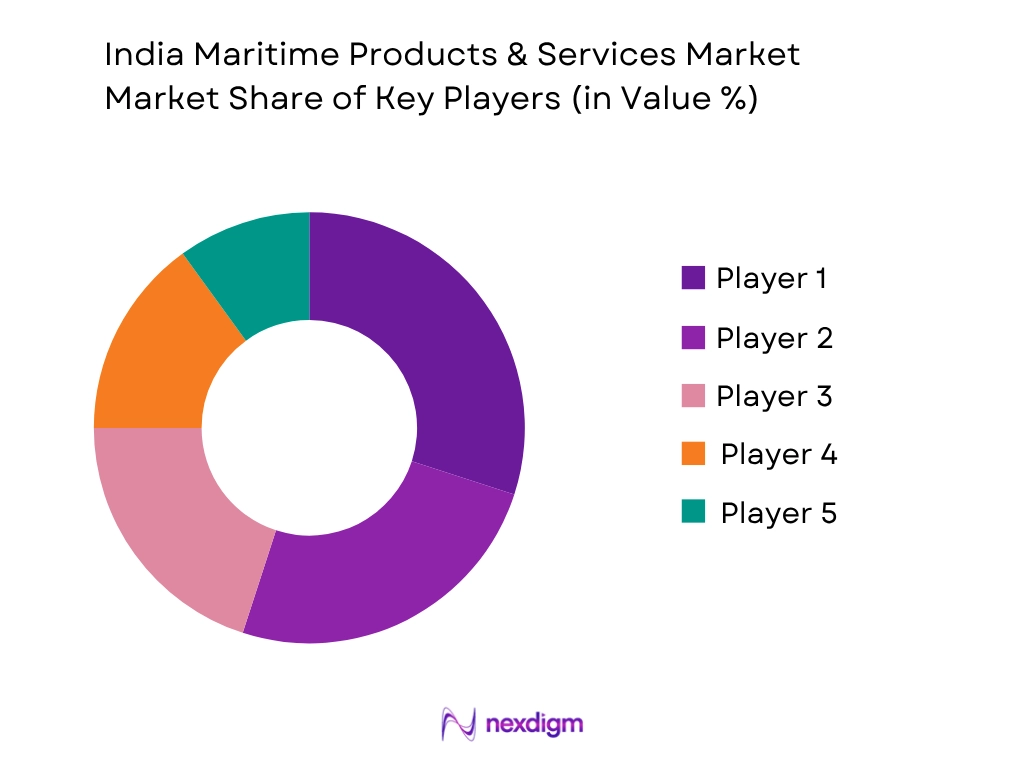
The India maritime products and services market is moderately consolidated across its core segments, with large government-owned shipyards and port operators competing alongside fast-growing private sector infrastructure companies and specialised maritime service providers. Public sector entities including Cochin Shipyard, Mazagon Dock Shipbuilders, Garden Reach Shipbuilders, the Shipping Corporation of India, and the Dredging Corporation of India maintain dominant positions in defence shipbuilding, government fleet operations, and strategic port dredging. The private sector is led by Adani Ports and SEZ Limited in port infrastructure, while international maritime service providers including Wilhelmsen Ships Service, Bureau Veritas, and Lloyd’s Register maintain strong positions in ship management, marine surveys, and classification services. Continuous investments in port automation, green shipbuilding, digital fleet management, and offshore service capabilities remain key competitive differentiators across the market.
| Company | Establishment Year | Headquarters | Primary Service Focus | Operational Facilities
|
Export and International Presence | Fleet or Capacity Scale | Sustainability Programs | Key Contract Portfolio |
| Cochin Shipyard Limited (CSL) | 1972 | ~ | ~ | ~ | ~ | ~ | ~ | ~ |
| Mazagon Dock Shipbuilders (MDL) | 1774 | ~ | ~ | ~ | ~ | ~ | ~ | ~ |
| Adani Ports and SEZ (APSEZ) | 1998 | ~ | ~ | ~ | ~ | ~ | ~ | ~ |
| Shipping Corporation of India (SCI) | 1961 | ~ | ~ | ~ | ~ | ~ | ~ | ~ |
| Dredging Corporation of India (DCI) | 1976 | ~ | ~ | ~ | ~ | ~ | ~ | ~ |
India Maritime Products & Services Market Analysis
Growth Drivers
Sagarmala Programme and Port-Led Development
The Government of India’s Sagarmala Programme, launched by the Ministry of Ports, Shipping and Waterways, represents the most comprehensive and ambitious port-led development initiative in India’s post-independence history and continues to be one of the primary structural growth drivers for the maritime products and services market. The programme encompasses more than 800 projects across port modernisation, port connectivity enhancement, port-linked industrialisation, and coastal community development, with a total investment outlay exceeding INR 5.5 lakh crore across its multi-phase implementation timeline. Port modernisation projects under Sagarmala have significantly increased the cargo handling capacity and operational efficiency of India’s 12 major ports, which the Indian Ports Association reports now handle more than 800 million metric tonnes of cargo annually across major ports alone. The programme has catalysed substantial private sector investment in greenfield port terminals, container facilities, liquid cargo jetties, and ro-ro berths at both major and minor ports, with private port operators including Adani Ports, JSW Infrastructure, DP World, and PSA International expanding their India footprints considerably. Port connectivity improvements linking major ports to dedicated freight corridors, national highways, and inland container depots have reduced total logistics costs and transit times, making Indian ports more competitive relative to alternative regional transshipment hubs. The programme also supports the development of 14 coastal economic zones and industrial clusters adjacent to major ports, intended to generate manufacturing-led cargo demand and attract export-oriented industries. The Ministry of Ports, Shipping and Waterways has indicated continued prioritisation of port capacity expansion, dredging, and logistics integration under Sagarmala Phase II, providing a sustained multi-year investment pipeline that will drive maritime infrastructure equipment procurement, engineering services, IT systems integration, and port operations management demand well into the forecast period.
Rising India EXIM Trade Volumes and Cargo Throughput Growth
India’s sustained growth as a global trading nation is creating continuous and expanding demand for maritime products and services across port operations, shipping, freight forwarding, and logistics management. The Ministry of Commerce and Industry data indicates India’s merchandise trade has consistently exceeded USD 1.1 trillion annually in recent years, with the country importing substantial volumes of crude oil, coal, fertilisers, liquefied natural gas, electronic goods, and edible oils, while exporting petroleum products, engineering goods, chemicals, pharmaceuticals, textiles, and agricultural commodities. The International Monetary Fund projects India’s nominal GDP to surpass USD 5 trillion by the end of the forecast period, implying continued strong growth in merchandise imports and exports that will translate directly into higher cargo throughput at Indian ports, greater demand for freight transportation services, expanding container terminal capacity requirements, and increased bunkering and marine logistics activity. The World Bank’s Logistics Performance Index has consistently identified India’s maritime logistics infrastructure as a priority area for improvement, supporting government policy commitment to sustained port investment. India’s growing integration into global supply chains, particularly in the electronics manufacturing, pharmaceutical export, and automotive sectors, is further increasing the sophistication and volume of containerised and specialised cargo handled at Indian ports. The expansion of India’s free trade agreement network, including agreements with the UAE, Australia, and ongoing negotiations with the European Union and the United Kingdom, is expected to further stimulate bilateral trade flows that rely predominantly on maritime transportation. These trade dynamics create robust and sustained demand for port handling equipment, shipping services, marine engineering products, freight forwarding platforms, and customs technology solutions throughout the forecast period.
Market Challenges
High Logistics Costs and Port Inefficiency at Legacy Infrastructure
India’s maritime sector continues to face a structurally significant challenge in the form of high overall logistics costs, with the World Bank and NITI Aayog estimating India’s logistics cost as a percentage of GDP at approximately 13 to 14 percent, significantly higher than the 8 to 10 percent typical of developed maritime economies such as the United States, Germany, and Japan. A substantial component of this logistics cost premium is attributable to port-related inefficiencies at several major legacy ports, including inadequate draft depths restricting access for ultra-large container vessels, outdated cargo handling equipment with lower productivity rates compared to leading Asian competitor ports, limited digital integration between port systems and customs clearance platforms, and fragmented land-side connectivity creating truck congestion at port gates. The average vessel turnaround time at several Indian major ports remains above the benchmarks set by comparable Asian ports in Singapore, Malaysia, and Sri Lanka, increasing vessel operating costs for shipping lines and reducing the attractiveness of Indian ports as transshipment hubs. Although Sagarmala-funded modernisation has improved operational metrics at several ports, the pace of legacy infrastructure upgradation remains constrained by land acquisition challenges, multi-stakeholder coordination requirements between port trusts, railways, and highways authorities, and financing limitations at government-owned port entities. These inefficiencies increase the landed cost of imported goods and reduce the export competitiveness of Indian manufacturers, creating economic pressure for accelerated maritime infrastructure modernisation. While these challenges represent operational headwinds for end-users, they simultaneously create significant market opportunity for port technology providers, equipment manufacturers, logistics automation companies, and engineering consultancies offering productivity-enhancing solutions.
Limited Domestic Shipbuilding Scale and Dependence on Foreign Flag Tonnage
India’s domestic shipbuilding industry, despite possessing capable public sector shipyards and a growing private yard ecosystem, continues to face a structural competitiveness challenge relative to the dominant global shipbuilding nations of China, South Korea, and Japan, which together account for more than 90 percent of global new vessel construction orders by tonnage. Indian shipyards currently hold a global market share of less than one percent by tonnage delivered, reflecting constraints including higher construction costs, longer delivery timelines, limited access to competitive ship financing, restricted availability of domestically manufactured marine equipment and components, and a historically smaller pool of technically skilled marine engineering talent compared to established Asian shipbuilding nations. The consequence of this limited domestic shipbuilding scale is that India’s commercial shipping industry relies predominantly on foreign-built and foreign-flag vessels for deep-sea international trade, with the Shipping Corporation of India and private Indian shipping companies operating fleets that fall well short of the tonnage required to carry even a moderate share of India’s own import and export cargo. The Ministry of Ports, Shipping and Waterways acknowledges that Indian shipping companies carry less than 10 percent of India’s total sea-borne trade, resulting in significant annual outflows of freight payments to foreign shipping lines. The government has introduced the Shipbuilding Financial Assistance Policy and the Shipbuilding Credit Linked Capital Subsidy Scheme to bridge the cost competitiveness gap between Indian and foreign shipyards, and the Make in India initiative specifically targets shipbuilding as a priority sector. However, translating policy intent into large-scale order books and internationally competitive delivery performance remains a medium-term challenge that requires sustained investment in shipyard infrastructure, skilled workforce development, domestic marine equipment manufacturing, and international marketing capabilities.
Market Opportunities
Defence Naval Shipbuilding and Coast Guard Fleet Expansion
India’s ambitious naval modernisation and expansion program, driven by the Indian Navy’s Maritime Capability Perspective Plan and the Ministry of Defence’s Aatmanirbhar Bharat defence procurement policy, represents one of the largest and most strategically important growth opportunities for the domestic maritime products and services industry over the forecast period. The Indian Navy has articulated a long-term fleet expansion target toward a 175-plus ship and submarine force structure, requiring the construction of aircraft carriers, destroyers, frigates, corvettes, submarines, offshore patrol vessels, landing ships, and a wide range of auxiliary and support vessels over the coming decade. The government’s policy of mandatory indigenous design and construction for defence vessels, enforced through the Defence Acquisition Procedure and the categorisation of warship programs as Make in India projects, ensures that this large defence capital expenditure flows predominantly to domestic shipyards including Mazagon Dock Shipbuilders, Garden Reach Shipbuilders and Engineers, Cochin Shipyard, and Hindustan Shipyard. The Indian Coast Guard similarly operates a substantial and ongoing fleet expansion program, requiring offshore patrol vessels, fast patrol boats, hovercrafts, and pollution control vessels. Beyond direct vessel construction, the naval shipbuilding program creates cascading demand for domestic marine engineering equipment, combat management systems, propulsion technologies, deck machinery, anchoring systems, and communication and navigation electronics, creating significant opportunities for Indian component manufacturers and technology integrators seeking to develop naval-grade supply capabilities. Additionally, India is actively pursuing naval export opportunities, with the Ministry of Defence supporting the export of indigenously designed patrol vessels, fast interceptor boats, and offshore support vessels to partner nations in Southeast Asia, Africa, and the Indian Ocean Region, creating a nascent but growing maritime export revenue stream.
Inland Waterways Development and Coastal Shipping Expansion
The development of India’s inland waterways network and the expansion of coastal shipping represent two of the most capital-efficient and environmentally advantageous growth opportunities available to the maritime sector over the forecast period. The Inland Waterways Authority of India (IWAI) has declared 111 waterways as National Waterways under the National Waterways Act 2016, with the flagship National Waterway 1 on the Ganga-Bhagirathi-Hooghly river system between Allahabad and Haldia already operational for commercial cargo movement. The World Bank-funded Jal Marg Vikas Project is upgrading NW-1 infrastructure including jetties, navigational locks, river information systems, and multimodal terminals, while new national waterways in Kerala, Assam, and Goa are being developed for both commercial and passenger services. Inland water transport offers a cost advantage of approximately 30 to 40 percent relative to road freight and 20 to 30 percent relative to rail freight on comparable corridors, making it an economically compelling alternative for bulk commodities including coal, fertilisers, food grains, cement, and construction materials. The transition of even a modest share of India’s total freight from road to inland waterways would require a substantial fleet of inland vessels, navigation aids, jetty infrastructure, vessel maintenance facilities, and waterway management technology, creating large addressable markets for domestic shipbuilders, engineering companies, and maritime service providers. Simultaneously, the Ministry of Ports, Shipping and Waterways is implementing the National Perspective Plan for Coastal Shipping, including the promotion of roll-on roll-off services between major ports and the development of passenger-cum-cargo ferry services along the coastline, creating new vessel procurement, port facility, and marine service requirements that expand the total addressable market for the maritime sector.
Future Outlook
The India maritime products and services market is expected to witness sustained and broad-based growth throughout the forecast period, supported by rising EXIM trade volumes, continued Sagarmala Programme investment, accelerating naval and coast guard fleet modernisation, inland waterways development, and increasing private sector participation in port infrastructure. Maritime companies are increasingly investing in port automation technologies, green shipbuilding, LNG and alternative fuel bunkering infrastructure, digital fleet management systems, and multimodal logistics integration. Growing demand for offshore energy services, cruise infrastructure, ship repair and maintenance, and maritime cybersecurity solutions is expected to create additional revenue opportunities across both established and emerging service segments. Continued investments in domestic marine equipment manufacturing, skilled seafarer training, and alignment with IMO decarbonisation mandates will further strengthen the long-term competitiveness of India’s maritime industry.
Major Players
- Cochin Shipyard Limited (CSL)
- Mazagon Dock Shipbuilders Limited (MDL)
- Garden Reach Shipbuilders and Engineers (GRSE)
- Adani Ports and SEZ Limited (APSEZ)
- JSW Infrastructure Limited
- Shipping Corporation of India (SCI)
- Essar Ports Limited
- Dredging Corporation of India (DCI)
- ABG Shipyard
- Sembcorp Marine India
- Wilhelmsen Ships Service India
- Drydocks World India
- Bureau Veritas Marine India
- Lloyd’s Register India
- Tolani Shipping Company
Key Target Audience
- Shipbuilders and Ship Repair Yards
- Port Operators and Terminal Management Companies
- Shipping Lines and Fleet Operators
- Marine Engineering Equipment Manufacturers and Suppliers
- Offshore Oil and Gas Operators and Service Companies
- Maritime Logistics and Freight Forwarding Companies
- Investments and Venture Capitalist Firms
- Government and Regulatory Bodies (Ministry of Ports, Shipping and Waterways, Directorate General of Shipping (DGS), Inland Waterways Authority of India (IWAI), Indian Ports Association (IPA))
Research Methodology
Step 1: Identification of Key Variables
The research begins by identifying the major stakeholders across the India maritime products and services value chain, including shipbuilders, port operators, shipping companies, marine equipment manufacturers, offshore service providers, freight forwarders, maritime insurers, and regulatory authorities. Extensive secondary research is conducted using Ministry of Ports, Shipping and Waterways publications, Directorate General of Shipping data, Indian Ports Association reports, industry association databases, company reports, and proprietary databases to establish the key variables influencing market performance.
Step 2: Market Analysis and Construction
Historical market information is compiled and evaluated to estimate the overall market size, port throughput, vessel fleet composition, maritime services revenue, equipment procurement trends, and growth across major maritime segments. Both demand-side and supply-side indicators are analyzed using bottom-up and top-down market sizing approaches to ensure comprehensive market coverage across port infrastructure, shipbuilding, shipping services, offshore support, and inland waterways segments.
Step 3: Hypothesis Validation and Expert Consultation
Preliminary market estimates and analytical assumptions are validated through Computer Assisted Telephone Interviews (CATIs) and structured discussions with port authority officials, shipyard executives, shipping company management, marine equipment suppliers, offshore project managers, maritime legal experts, and naval procurement specialists. These interviews provide valuable on-ground commercial and operational insights that strengthen the reliability of market estimates.
Step 4: Research Synthesis and Final Output
The final stage integrates primary research findings with secondary information to develop a comprehensive assessment of market size, segmentation, competitive landscape, end-user procurement behaviour, and future opportunities. Multiple validation techniques, including data triangulation across government port statistics, vessel registry data, cargo throughput records, and industry revenue disclosures, are employed to ensure the consistency, accuracy, and credibility of the final market report.

- Executive Summary
- Research Methodology (Market Definitions and Assumptions, Abbreviations, Market Taxonomy, Market Sizing Approach, Top-Down Analysis, Bottom-Up Analysis, Demand-Side Assessment, Supply-Side Assessment, Primary Industry Interviews, Secondary Research Validation, Data Triangulation, Forecasting Framework, Limitations and Future Conclusions)

- Definition and Scope
- Market Evolution and Industry Genesis
- Timeline of Major Industry Developments
- Industry Value Chain Analysis
- Supply Chain Analysis

- Growth Drivers (Sagarmala Programme and Port-Led Development, Rising India-EXIM Trade Volumes, Expansion of Major and Minor Ports, Make in India and Aatmanirbhar Bharat Shipbuilding Push, Growing Coastal Shipping and Inland Waterways Usage, Defence Naval Shipbuilding Expansion, Blue Economy Policy Framework, Rising Offshore Oil and Gas Activity)
- Market Challenges (Aging Port Infrastructure at Legacy Ports, High Logistics Cost Relative to GDP, Dependence on Foreign Flag Vessels for Deep-Sea Trade, Limited Domestic Shipbuilding Scale Compared to China, South Korea and Japan, Skilled Seafarer and Marine Engineer Shortage, Regulatory Fragmentation Across Central and State Maritime Bodies, Environmental Compliance Costs Under IMO Regulations, Dredging and Draft Depth Constraints at Several Major Ports)
- Market Opportunities (Sagarmala Phase II Port Modernisation, Inland Waterway Freight Transition, Green Shipping and LNG Bunkering Infrastructure, Maritime Cluster Development at GIFT City and Chennai, Cruise Tourism Infrastructure Development, Blue Economy Expansion Into Deep-Sea Mining and Aquaculture, Defence Shipbuilding Export Opportunities, Digital Port and Smart Logistics Investment)
- Market Trends (Automation and Digitisation of Port Operations, Green Shipping and Alternative Fuel Adoption, Coastal Shipping Policy Incentives, Integrated Multimodal Logistics Hubs, Maritime Cybersecurity Investment, Remote Vessel Monitoring and IoT Fleet Management, Floating Storage and Offshore Energy Infrastructure, Ship Recycling and Alang Yard Modernisation)
- Government Regulations (Merchant Shipping Act 1958 and Amendments, Major Port Authorities Act 2021, Directorate General of Shipping (DGS) Regulations, Indian Coast Guard Act, Customs Act for Port Clearances, EXIM Policy and Cabotage Law, International Maritime Organization (IMO) MARPOL Compliance, SOLAS Safety Standards, International Ship and Port Facility Security (ISPS) Code, Ship Recycling Convention Compliance)
- Port Infrastructure and Capacity Analysis (Major Port Capacity and Utilisation, Minor and Private Port Expansion, Container Terminal Throughput, Bulk and Liquid Cargo Handling Capacity, Draft Depth and Channel Dredging Status, Multi-Modal Logistics Park Integration, Port Connectivity Rail and Road Links)
- Shipping Fleet Analysis (Indian-Flag Fleet Composition, Foreign-Flag Fleet Dependency, Fleet Age Profile, Tonnage Growth, Coastal Vessel Fleet, Inland Waterways Fleet Expansion, Defence and Coast Guard Fleet Modernisation)
- Seasonal and Trade Cycle Analysis (Monsoon Season Impact on Port Operations, Pre-Festive Export and Import Peaks, Agricultural Commodity Export Cycles, Crude Oil Import Seasonal Patterns, Fishing Season Impact on Coastal Vessel Operations, LNG and Coal Import Cycles)
- Bunkering and Marine Fuel Analysis (High Sulphur Fuel Oil (HSFO) Consumption, Very Low Sulphur Fuel Oil (VLSFO) Transition, LNG Bunkering Infrastructure Development, Methanol and Green Ammonia Bunker Readiness, Bunkering Port Competitiveness)
- Innovation Landscape (Port Automation and AI-Driven Terminal Management, Blockchain-Based Trade Documentation, Digital Twin for Vessel Maintenance, Autonomous Vessel Technology, Electric and Hybrid Inland Vessels, Remote Port Surveys)
- Sustainability Analysis (IMO 2050 Decarbonisation Roadmap Compliance, Carbon Intensity Indicator (CII) Adoption, Ship Energy Efficiency Management Plans (SEEMP), Ballast Water Management, Ship Recycling Under Hong Kong Convention, Green Port Certification, Mangrove and Marine Ecosystem Protection)
- SWOT Analysis
- Porter’s Five Forces Analysis
- PESTLE Analysis
- Stakeholder Ecosystem
- Competition Ecosystem

- By Market Value (2020-2025)
- By Volume of Cargo Handled (2020-2025)
- By Average Revenue Per Vessel or Port Call (2020-2025)

- By Product and Service Type (In Value %)
Shipbuilding and Ship Repair
Port Infrastructure and Terminal Operations
Shipping and Freight Transportation
Marine Engineering Products and Equipment
Offshore Oil and Gas Support Services
Maritime Logistics and Freight Forwarding
Marine Insurance and Financial Services
Maritime IT, Navigation and Communication Systems - By Vessel Type (In Value %)
Bulk Carriers
Container Vessels
Tankers (Crude Oil and Product)
Offshore Support Vessels (OSVs)
Passenger and Ro-Ro Vessels
Fishing and Coastal Vessels
Dredgers and Specialized Vessels
Inland Waterways Vessels - By End-Use Sector (In Value %)
Defense and Coast Guard
Oil and Gas
Commercial Shipping
Fishing Industry
Inland Waterways Transport
Cruise and Passenger Ferry
Port Authorities and Terminal Operators
Marine Research and Oceanography - By Service Type (In Value %)
Ship Management and Crew Services
Port and Terminal Operations
Dry Docking and Ship Repair
Marine Surveys and Inspections
Bunkering Services
Towage and Salvage Services
Freight Forwarding and Customs Clearance
Maritime Legal and Arbitration Services
- By Port and Coastal Region (In Value %)
West Coast (Mumbai, JNPA, Mundra, Kandla, Mormugao, New Mangalore, Cochin)
East Coast (Chennai, Vizag, Paradip, Ennore, Kolkata-Haldia)
Andaman and Nicobar Islands
Lakshadweep and Island Territories
Inland Waterways (National Waterways NW-1 to NW-111)

- Market Share Analysis (By Value, Volume, Product Category, Service Type, Port Region)
- Cross Comparison Parameters (Shipbuilding Tonnage Capacity, Port Handling Capacity, Fleet Size Under Management, Service Network Coverage Across Indian Coastline, Annual New Vessel Deliveries, Offshore Project Portfolio, Defence Contract Track Record, Technology and Digital Investment)
- SWOT Analysis of Major Players
- Pricing Analysis (By Service Type, Vessel Class, Port Location, Contract Duration, Value-Added Services)
- Detailed Profiles of Major Companies
Cochin Shipyard Limited (CSL)
Mazagon Dock Shipbuilders Limited (MDL)
Garden Reach Shipbuilders and Engineers (GRSE)
Adani Ports and SEZ Limited (APSEZ)
JSW Infrastructure Limited
Shipping Corporation of India (SCI)
Essar Ports Limited
Dredging Corporation of India (DCI)
ABG Shipyard
Sembcorp Marine India
Wilhelmsen Ships Service India
Drydocks World India
Bureau Veritas Marine India
Lloyd’s Register India
Tolani Shipping Company

- End-User Procurement Pattern Analysis (Procurement Frequency, Vessel and Equipment Preference, Service Partner Selection, Seasonal Procurement Behavior, Fleet Capital Expenditure Cycles)
- Demographic and Sectoral Buyer Analysis (Shipping Companies, Port Operators, Oil and Gas Companies, Defence Procurement, Fishing Cooperatives, Inland Waterway Operators, Freight Forwarders)
- Capital Expenditure and Operational Expenditure Analysis
- Premium vs Standard Product and Service Preference Analysis
- Vendor and Service Provider Loyalty Analysis
- Regulatory Compliance-Driven Purchase Behaviour
- Product and Service Attribute Preference Analysis (Quality Certifications, Delivery Lead Time, After-Sales Support, Price Competitiveness, Technical Expertise, Regulatory Compliance Track Record, Financial Stability of Vendor)
- Domestic vs Imported Equipment Preference
- Digital vs Traditional Procurement Behaviour
- Customer Pain Point Analysis
- Procurement Decision-Making Process

- By Market Value (2026-2032)
- By Volume Consumption (2026-2032)
- By Average Selling Price (2026-2032)


 Request a Sample
 Ask for Customization
 Get a Quote
 Enquire Now