

 Download PDF
 Download PDF
Market Overview
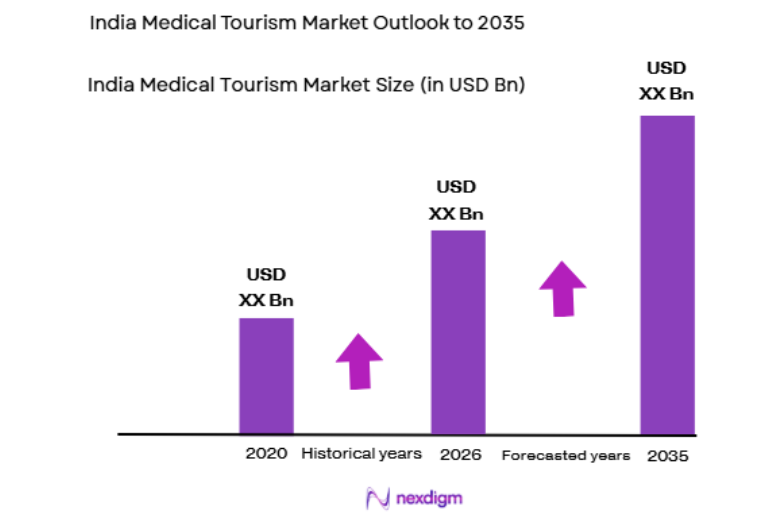
Based on a recent historical assessment, the India Medical Tourism market generated approximately USD ~ billion according to healthcare sector analyses referenced by the Ministry of Tourism and the Federation of Indian Chambers of Commerce and Industry. Growth is driven by internationally accredited hospitals, competitive treatment pricing, advanced surgical infrastructure, and highly trained medical specialists. Increasing international patient inflow for cardiac surgery, orthopedic procedures, organ transplantation, fertility treatments, and cosmetic surgery further strengthens India’s position as a preferred global healthcare destination.
Major metropolitan healthcare hubs including Chennai, Mumbai, Delhi NCR, Hyderabad, and Bengaluru dominate the India Medical Tourism market due to the presence of internationally accredited multi-specialty hospitals and advanced medical research institutions. These cities offer integrated healthcare ecosystems with tertiary hospitals, diagnostic laboratories, and rehabilitation centers. Strong international air connectivity, multilingual medical professionals, and well-developed hospitality infrastructure enable these cities to efficiently support international patient treatment and recovery services.
Market Segmentation
By Treatment Type
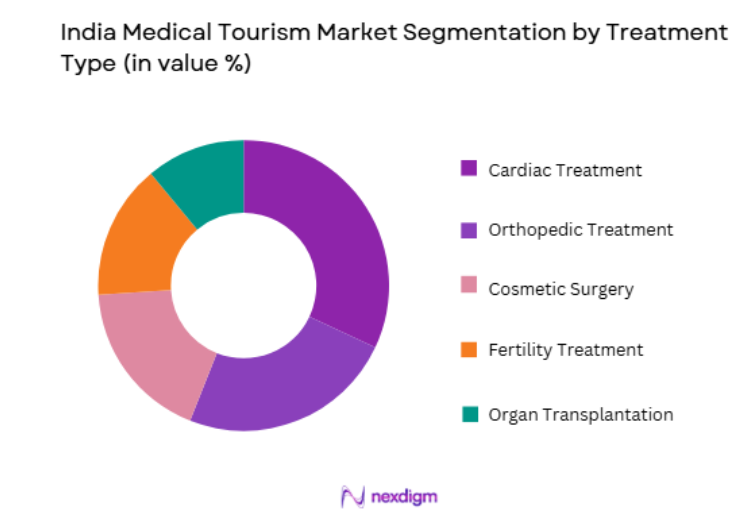
India Medical Tourism market is segmented by product type into cardiac treatment, orthopedic treatment, cosmetic surgery, fertility treatment, and organ transplantation. Recently, cardiac treatment has a dominant market share due to factors such as strong hospital specialization, internationally recognized cardiac institutes, and high success rates in complex procedures such as coronary bypass surgery and heart valve replacement. Major Indian hospitals operate specialized cardiac centers equipped with hybrid operating theatres, advanced imaging systems, and post-operative care units capable of treating international patients requiring high-precision procedures. Skilled cardiac surgeons trained in global medical institutions perform large volumes of complex surgeries every year, strengthening international patient confidence.
By Service Provider
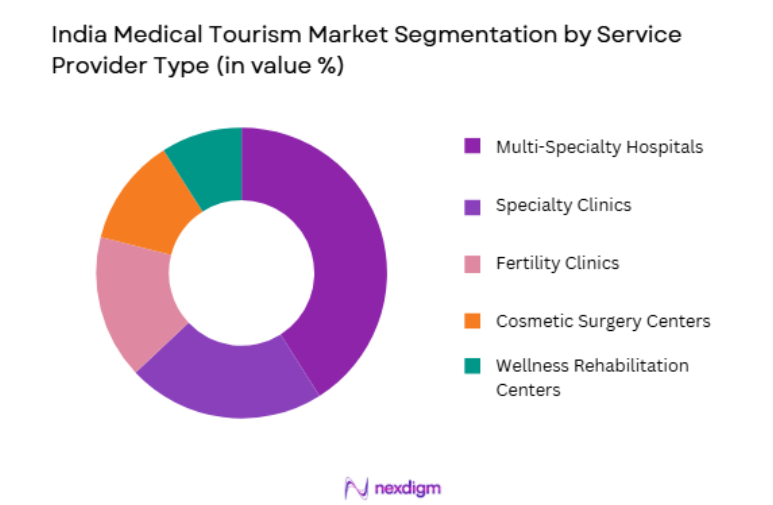
India Medical Tourism market is segmented by service provider into multi-specialty hospitals, specialty clinics, fertility clinics, cosmetic surgery centers, and wellness rehabilitation centers. Recently, multi-specialty hospitals have a dominant market share due to factors such as integrated treatment capabilities, internationally accredited medical facilities, and specialized departments capable of handling complex surgical procedures across multiple medical disciplines. These hospitals operate dedicated international patient departments that coordinate visa assistance, treatment planning, accommodation arrangements, and post-treatment rehabilitation programs for overseas patients. Advanced diagnostic laboratories, robotic surgery systems, and intensive care facilities allow hospitals to manage high-risk medical procedures requiring multidisciplinary expertise. Large hospital networks also maintain partnerships with international insurance providers and healthcare facilitators that connect global patients with treatment providers in India.
Competitive Landscape
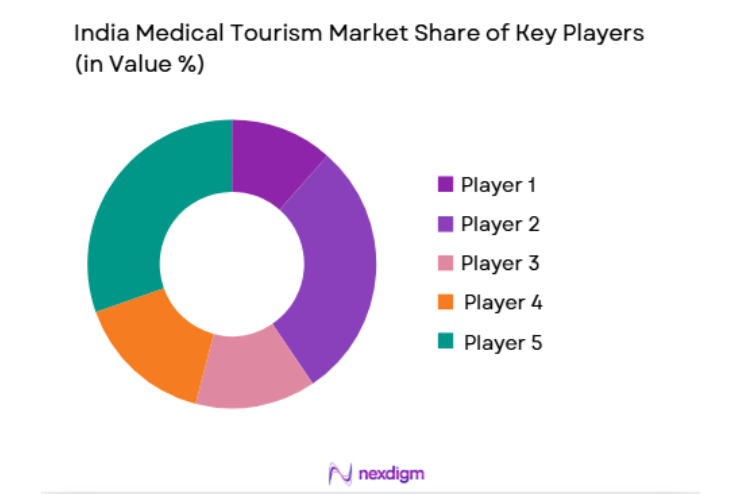
The India Medical Tourism market demonstrates moderate consolidation with several large hospital networks dominating international patient inflows through specialized treatment centers and advanced surgical technologies. Major healthcare providers differentiate themselves through internationally accredited facilities, highly specialized surgical expertise, and integrated patient coordination services that combine medical treatment with travel and hospitality support.
| Company Name | Establishment Year | Headquarters | Technology Focus | Market Reach | Key Products | Revenue | International Patient Services |
| Apollo Hospitals | 1983 | Chennai, India | ~ | ~ | ~ | ~ | ~ |
| Fortis Healthcare | 1996 | Gurugram, India | ~ | ~ | ~ | ~ | ~ |
| Max Healthcare | 2001 | New Delhi, India | ~ | ~ | ~ | ~ | ~ |
| Narayana Health | 2000 | Bengaluru, India | ~ | ~ | ~ | ~ | ~ |
| Medanta Hospital | 2009 | Gurugram, India | ~ | ~ | ~ | ~ | ~ |
India Medical Tourism Market Analysis
Growth Drivers
Global Cost Advantage and High Quality Surgical Expertise Attracting International Patients
India’s medical tourism sector is expanding rapidly due to the country’s strong global cost advantage combined with highly skilled medical professionals capable of performing complex procedures across multiple specialties. Medical treatments in India are significantly more affordable compared with healthcare services in developed economies while maintaining internationally recognized standards of clinical quality and patient safety. Hospitals across India employ surgeons and specialists trained in international healthcare institutions who perform high volumes of advanced procedures including cardiac bypass surgery, orthopedic joint replacement, organ transplantation, oncology therapies, and minimally invasive surgical procedures using advanced robotic systems and modern diagnostic technologies. International accreditation organizations certify several Indian hospitals, strengthening global confidence in the quality of healthcare services offered within the country. Dedicated international patient departments assist overseas visitors with travel planning, visa documentation, accommodation arrangements, and post-treatment recovery programs which improve the overall healthcare experience for international patients seeking treatment in India. Global healthcare costs in developed regions continue rising due to high insurance expenses and hospital treatment charges, encouraging patients from Africa, the Middle East, Europe, and Southeast Asia to travel abroad for affordable medical care. Medical travel facilitators and healthcare tourism agencies further support this trend by connecting international patients with specialized hospitals in India that provide treatment packages combining surgery, hospitalization, and recovery services. Hospitals also utilize digital teleconsultation systems that allow doctors to evaluate international patients remotely before travel and provide follow-up consultations after procedures are completed.
Expansion of Accredited Hospital Infrastructure and Integrated Healthcare Tourism Services
The rapid expansion of internationally accredited hospital infrastructure across India represents another major growth driver for the medical tourism industry as healthcare providers invest heavily in advanced medical campuses designed to serve international patients. Large hospital networks operate modern facilities equipped with advanced surgical theaters, diagnostic imaging centers, intensive care units, and specialized treatment departments capable of managing complex medical conditions across cardiology, oncology, orthopedics, neurology, and transplant surgery. These hospitals maintain international accreditation standards that enhance their credibility among global patients seeking treatment abroad. Healthcare providers also integrate hospitality services such as multilingual patient support teams, travel coordination departments, and concierge services that assist international visitors throughout their treatment journey. Strategic partnerships between hospitals, travel agencies, and hospitality providers allow patients to receive coordinated medical tourism packages that combine healthcare treatment with accommodation and recovery support. Government programs promoting healthcare tourism also contribute to industry growth by marketing India as a global destination for affordable high quality medical services. Medical visa programs facilitate international patient travel by simplifying immigration procedures for individuals visiting India for treatment and enabling caregivers to accompany patients during recovery periods. Hospitals continue investing in advanced clinical technologies including robotic surgical systems and precision diagnostic equipment that improve treatment outcomes and enhance India’s reputation for medical excellence.
Market Challenges
Complex International Patient Regulations and Cross Border Healthcare Coordination
One of the most significant challenges facing the India Medical Tourism market involves regulatory complexities associated with international patient travel, healthcare documentation requirements, and cross border medical service coordination. Patients traveling to India for treatment must comply with visa procedures, medical documentation verification, and immigration regulations that may vary depending on their country of origin and the type of treatment required. Hospitals must verify patient medical histories and diagnostic reports before performing complex procedures to ensure treatment eligibility and patient safety. Coordinating treatment schedules with international travel arrangements can also create logistical challenges that affect patient planning and hospital resource allocation. Healthcare providers must maintain specialized administrative teams capable of managing international patient records, travel documentation, and communication across different languages and healthcare systems. Insurance coverage policies also differ significantly between countries, which can complicate reimbursement procedures for patients seeking treatment abroad. Many international patients pay for treatment directly because global insurance providers may not fully cover medical tourism procedures. Hospitals must therefore maintain transparent pricing systems and financial coordination processes to manage international patient billing and payment procedures. Differences in medical regulations and healthcare standards between countries can also create uncertainty regarding treatment documentation and follow-up care requirements once patients return home.
Uneven Distribution of Advanced Healthcare Infrastructure Across Regions
Another important challenge affecting the India Medical Tourism market is the uneven distribution of advanced healthcare infrastructure across different regions of the country which limits the expansion of medical tourism services beyond a few metropolitan healthcare hubs. International patients primarily travel to major cities where internationally accredited hospitals and specialized surgical centers are concentrated. Many regional hospitals and smaller healthcare facilities lack the advanced diagnostic equipment, specialized surgical technologies, and internationally trained medical professionals required to perform complex procedures for international patients. This concentration of advanced medical services in limited geographic areas can create capacity constraints for hospitals receiving high volumes of international patients. Infrastructure limitations such as transportation connectivity, hospital accommodation capacity, and post-treatment rehabilitation facilities may also affect the overall experience for international visitors seeking treatment in India. Expanding advanced healthcare infrastructure to additional regions would allow India to distribute medical tourism demand more effectively and attract a larger global patient base.
Opportunities
Growth of Specialized Centers of Excellence and Advanced Surgical Technologies
The continued development of specialized medical treatment centers supported by advanced surgical technologies presents a significant opportunity for the India Medical Tourism market as hospitals increasingly focus on complex medical procedures that attract international patients seeking high quality treatment. Hospitals are establishing centers of excellence for cardiology, oncology, orthopedics, neurology, and organ transplantation where multidisciplinary medical teams deliver specialized treatment services supported by modern clinical technologies. Robotic surgery systems, minimally invasive surgical techniques, and high precision diagnostic imaging equipment enable doctors to perform complex procedures with greater accuracy and shorter recovery times. These technological advancements strengthen India’s reputation as a destination for advanced medical treatment while improving clinical outcomes for international patients. Hospitals are also investing in research and clinical training programs that enhance surgical expertise and expand specialized treatment capabilities across multiple medical disciplines. As medical technology continues advancing globally, the ability of Indian hospitals to adopt innovative surgical techniques will play an important role in attracting international patients requiring complex healthcare procedures.
Expansion of Integrated Wellness Tourism and Post Treatment Recovery Programs
The integration of wellness tourism services with modern medical treatment represents another major opportunity for the India Medical Tourism market because international patients increasingly seek holistic healthcare experiences that combine surgery with recovery focused wellness programs. India has a strong heritage of traditional wellness therapies including Ayurveda, yoga, and naturopathy which complement modern medical treatments and support patient recovery following surgical procedures. Hospitals and wellness resorts are collaborating to offer integrated healthcare packages that include medical treatment, physiotherapy rehabilitation, nutritional therapy, and wellness based recovery programs designed to accelerate patient healing. International patients recovering from orthopedic surgery, cardiac procedures, or cosmetic treatments often prefer destinations where they can access therapeutic wellness services alongside clinical care. The availability of specialized rehabilitation centers and wellness resorts allows patients to receive comprehensive recovery support after medical procedures.
Future Outlook
The India Medical Tourism market is expected to expand significantly over the next five years as healthcare providers continue investing in advanced hospital infrastructure and specialized treatment programs. Robotic surgery, precision diagnostics, and AI-enabled healthcare systems will further enhance treatment quality. Government initiatives promoting healthcare tourism and simplified medical visa programs will encourage international patient inflow. Rising global healthcare costs and increasing awareness of India’s medical expertise will continue strengthening demand for medical tourism services.
Major Players
- Apollo Hospitals
- Fortis Healthcare
- Max Healthcare
- Narayana Health
- Medanta Hospital
- Manipal Hospitals
- Artemis Hospitals
- Global Hospitals
- Aster DM Healthcare
- BLK-Max Super Speciality Hospital
- Kokilaben Dhirubhai Ambani Hospital
- Wockhardt Hospitals
- Yashoda Hospitals
- MGM Healthcare
- Asian Heart Institute
Key Target Audience
- Hospitals and healthcare providers
- Medical tourism facilitators
- Pharmaceutical companies
- Diagnostic laboratory networks
- Healthcare technology providers
- Investments and venture capitalist firms
- Government and regulatory bodies
- Health insurance companies
Research Methodology
Step 1: Identification of Key Variables
Key market variables including international patient inflow, hospital infrastructure capacity, specialized treatment availability, healthcare tourism policies, and global healthcare cost comparisons were identified through analysis of healthcare industry reports and government tourism datasets.
Step 2: Market Analysis and Construction
The market structure was constructed by evaluating medical tourism services across treatment categories including cardiac surgery, orthopedic procedures, cosmetic surgery, fertility treatments, and organ transplantation services provided by multi-specialty hospitals and specialized clinics.
Step 3: Hypothesis Validation and Expert Consultation
Industry hypotheses were validated through consultation with hospital administrators, healthcare tourism facilitators, international patient coordinators, and medical specialists to confirm emerging trends and treatment demand patterns within the India Medical Tourism market.
Step 4: Research Synthesis and Final Output
Validated findings were synthesized through comparative analysis of hospital networks, patient treatment flows, and healthcare infrastructure expansion trends to produce a comprehensive and evidence based assessment of the India Medical Tourism market.

- Executive Summary
- Research Methodology (Definitions, Scope, Industry Assumptions, Market Sizing Approach, Primary & Secondary Research Framework, Data Collection & Verification Protocol, Analytic Models & Forecast Methodology, Limitations & Research Validity Checks)

- Market Definition and Scope
- Value Chain & Stakeholder Ecosystem
- Regulatory / Certification Landscape
- Sector Dynamics Affecting Demand

- Growth Drivers
Cost effective medical procedures compared with developed healthcare markets
Availability of highly skilled doctors and internationally accredited hospitals
Government initiatives promoting India as a global medical tourism destination - Market Challenges
Visa and travel related regulatory complexities for international patients
Perception challenges related to healthcare quality and safety standards
Competition from other global medical tourism destinations - Market Opportunities
Expansion of specialized treatment centers attracting international patients
Integration of healthcare services with hospitality and wellness tourism
Growth of digital platforms connecting global patients with Indian hospitals - Trends
Rising demand for advanced surgical procedures and organ transplant services
Integration of wellness tourism such as Ayurveda and holistic healthcare with medical travel - Government Regulations
Medical Visa policies facilitating entry for international patients
Accreditation standards under National Accreditation Board for Hospitals
Government programs promoting healthcare tourism infrastructure - SWOT Analysis
- Porter’s Five Forces

- By Market Value, 2020-2025
- By Installed Units, 2020-2025
- By Average System Price, 2020-2025
- By System Complexity Tier, 2020-2025

- By System Type (In Value%)
Cardiac Treatment Medical Tourism
Orthopedic Treatment Medical Tourism
Oncology Treatment Medical Tourism
Cosmetic and Plastic Surgery Tourism
Fertility Treatment Medical Tourism - By Platform Type (In Value%)
Hospital Based Medical Tourism Programs
Medical Tourism Facilitator Platforms
Government Medical Tourism Promotion Programs
Digital Medical Tourism Booking Platforms
Integrated Healthcare Travel Service Platforms - By Fitment Type (In Value%)
Direct Hospital Medical Tourism Packages
Medical Tourism Agency Managed Services
Online Healthcare Travel Booking Platforms
International Patient Assistance Services - By End User Segment (In Value%)
International Patients Seeking Specialized Treatment
Patients Seeking Elective Cosmetic Procedures
Patients Seeking Fertility and Reproductive Treatments

- Market Share Analysis
- Cross Comparison Parameters (Treatment Cost Competitiveness, Hospital Accreditation Standards, International Patient Support Services, Medical Specialization Availability, Post Treatment Care Programs)
- SWOT Analysis of Key Competitors
- Pricing & Procurement Analysis
- Key Players
Apollo Hospitals Enterprise
Fortis Healthcare
Max Healthcare Institute
Narayana Health
Manipal Hospitals
Aster DM Healthcare
Medanta The Medicity
KIMS Healthcare
Yashoda Hospitals
Artemis Hospitals
BLK Max Super Speciality Hospital
Kokilaben Dhirubhai Ambani Hospital
Rainbow Children’s Hospitals
HCG Cancer Centres
Global Hospitals

- International patients traveling to India for affordable high quality surgeries
- Patients seeking fertility treatments due to advanced reproductive technologies
- Cosmetic surgery patients attracted by competitive pricing and skilled surgeons
- Patients combining medical treatment with wellness and recovery tourism

- Forecast Market Value, 2026-2035
- Forecast Installed Units, 2026-2035
- Price Forecast by System Tier, 2026-2035
- Future Demand by Platform, 2026-2035


 Request a Sample
 Ask for Customization
 Get a Quote
 Enquire Now