
 Download PDF
Market Overview
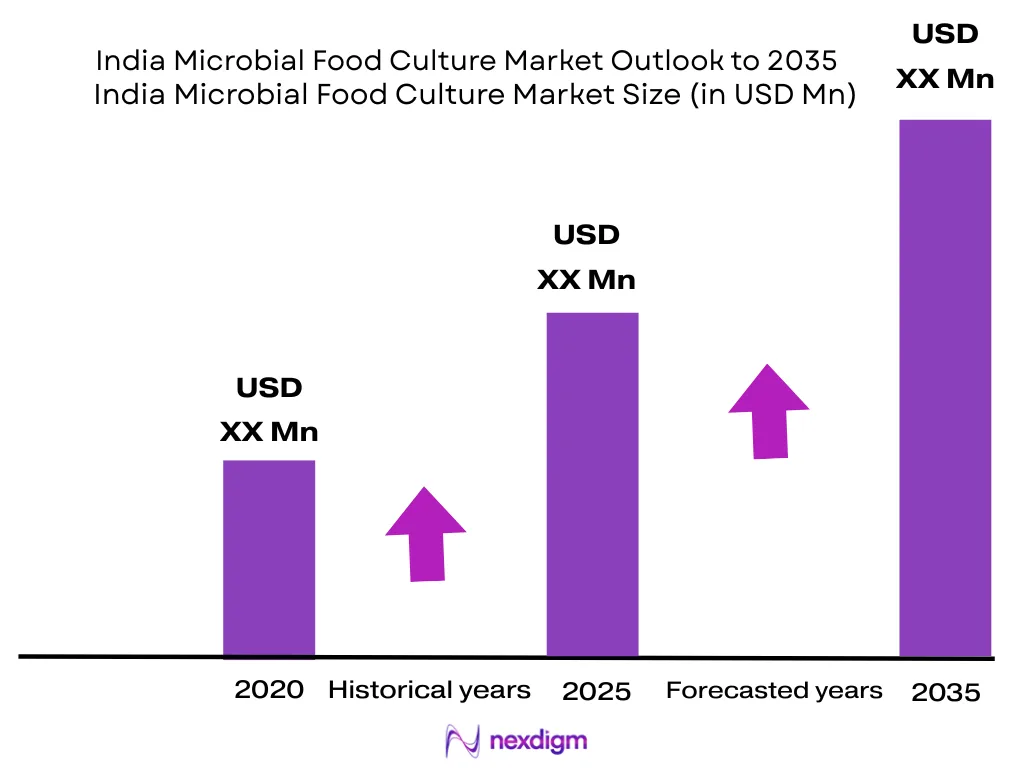
The India Microbial Food Culture Market is valued at approximately USD ~ million, based on historical industry analysis, and is forecast to expand at a CAGR of % during 2026–2035. Demand is supported by milk production of 230.58 million tonnes in 2022–23 and 239.30 million tonnes in 2023–24, alongside growing production of curd, yoghurt, cheese, fermented beverages, bakery products and packaged batters. Commercial cultures improve fermentation consistency, texture, flavour, safety and shelf stability across these applications. Delhi NCR, Mumbai, Bengaluru, Chennai, Hyderabad, Pune, Ahmedabad and Kolkata are prominent consumption and processing centres due to their concentration of organized dairies, food manufacturers, cold-chain facilities, modern retailers and food-service businesses. Maharashtra, Gujarat, Karnataka, Tamil Nadu and Uttar Pradesh also dominate industrial adoption because they contain established dairy and food-processing clusters. India produced 230.58 million tonnes of milk in 2022–23 and 239.30 million tonnes in 2023–24, providing processors in these regions with a large fermentation substrate base.
Market Segmentation
By Culture Type
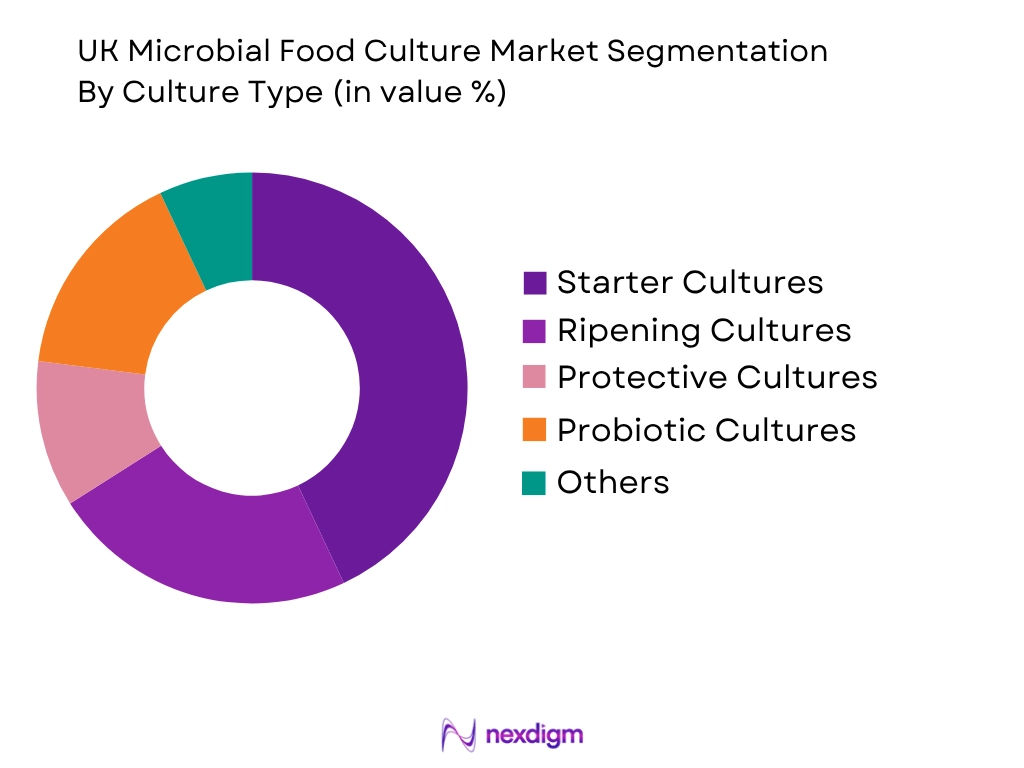
The India Microbial Food Culture Market is segmented by culture type into starter cultures, adjunct and ripening cultures, protective cultures and probiotic cultures. Starter cultures hold the dominant market share because they are essential for initiating controlled fermentation in curd, yoghurt, cheese, cultured milk, fermented batter and bakery products. They provide predictable acidification, texture, flavour and production time, allowing processors to reduce variation associated with spontaneous fermentation. India’s extensive dairy industry creates particularly strong demand for lactic acid bacteria used in fresh fermented dairy products. Starter cultures are also easier to integrate into established processing lines than specialized ripening or protective cultures. Direct-vat inoculation formats further support adoption because they reduce the need to maintain mother cultures at processing plants. Probiotic cultures are gaining commercial relevance in functional dairy products and nutritional foods, but they require additional strain documentation, viability testing and regulatory compliance. FSSAI regulations specify permitted probiotic microorganisms and establish viability-related requirements for foods containing added probiotic ingredients.
By Application
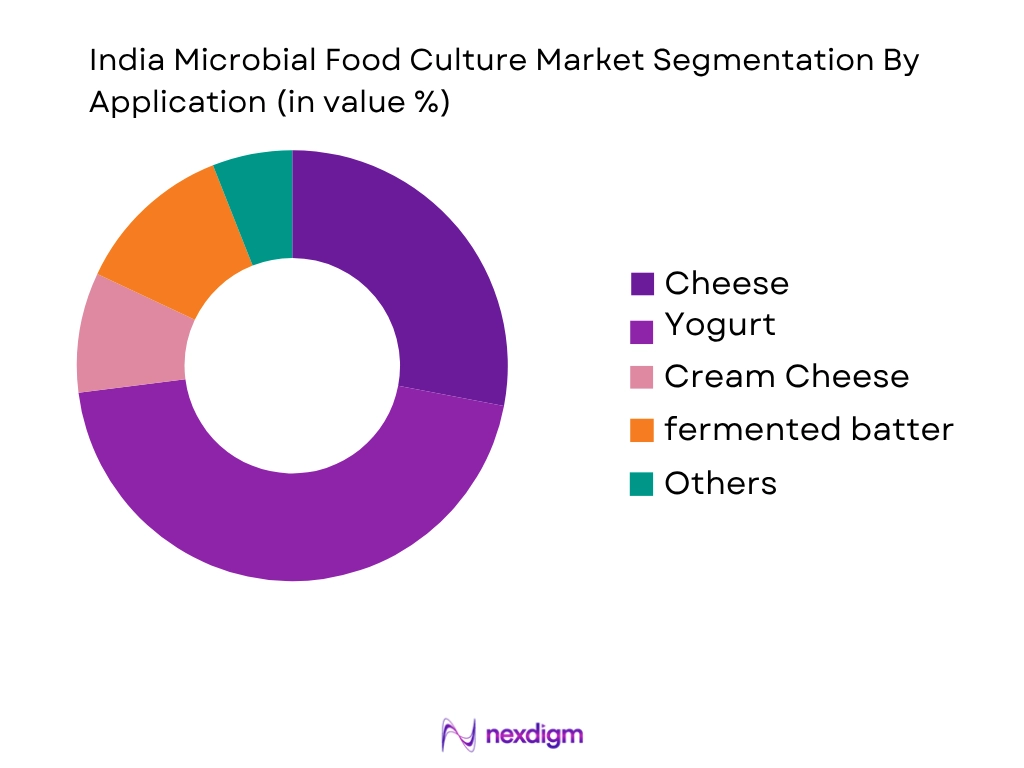
The India Microbial Food Culture Market is segmented by application into dairy products, bakery products, fermented beverages, meat and seafood products, fermented vegetables and cereal- and pulse-based foods. Dairy products hold the dominant market share due to the widespread consumption and industrial production of curd, yoghurt, buttermilk, cheese, cultured butter and probiotic milk beverages. India’s milk output increased from 230.58 million tonnes in 2022–23 to 239.30 million tonnes in 2023–24, creating a large raw-material base for fermented dairy processing. Dairy cultures also perform multiple functions, including acidification, texture development, flavour formation, spoilage control and probiotic delivery. The presence of national dairy cooperatives, private processors, regional brands and local dairies broadens the customer base for culture suppliers. Cereal- and pulse-based applications are developing around packaged idli, dosa, dhokla and other fermented batters. However, these products still rely partly on spontaneous or carried-over fermentation, making commercial culture penetration less mature than in organized dairy manufacturing.
Competitive Landscape
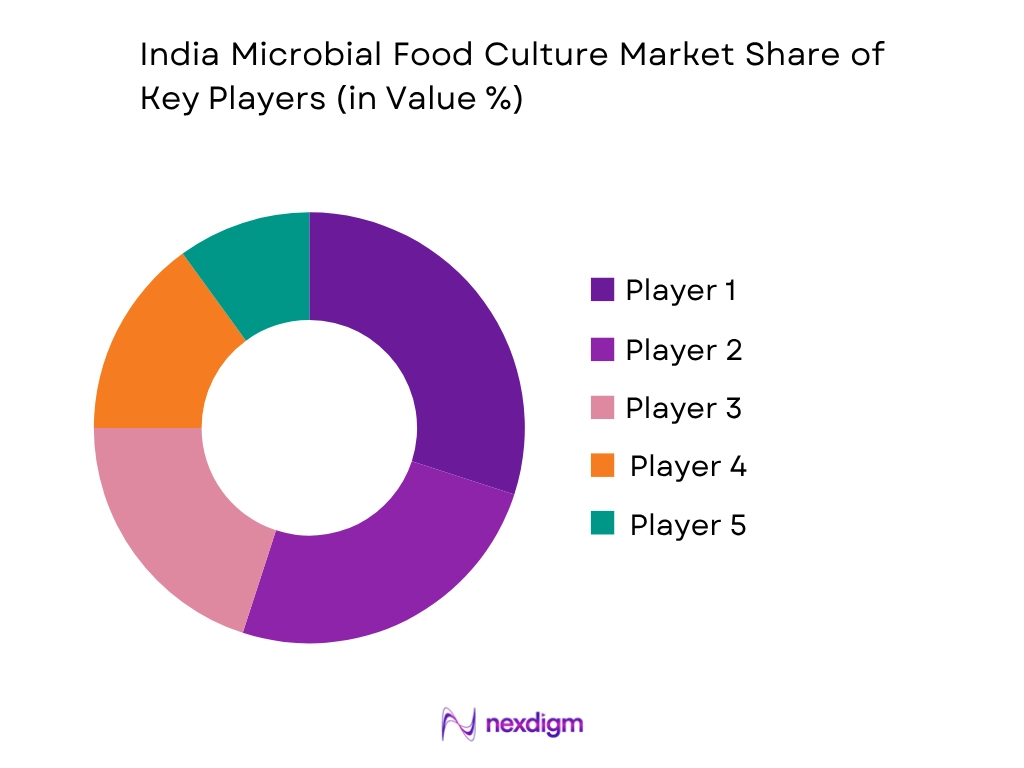
The India Microbial Food Culture Market includes multinational bioscience companies, specialist fermentation businesses and ingredient suppliers serving industrial dairy, bakery, beverage and nutritional-food manufacturers. Competition is shaped by culture-strain libraries, application expertise, technical support, production reliability, cold-chain capability and relationships with large processors. IFF markets fresh fermented, dairy and probiotic cultures, while dsm-firmenich provides food, taste, texture and health solutions. Lallemand develops and markets yeasts, bacteria and specialty microbial ingredients, including dairy-ripening and bioprotective cultures.
| Major Player | Establishment Year | Headquarters | Principal Culture Portfolio | Major Applications | Culture Format | Technical Capability | India Market Presence | Strategic Strength |
| Novonesis | 2024 as merged entity | Lyngby, Denmark | ~ | ~ | ~ | ~ | ~ | ~ |
| International Flavors & Fragrances | 1958 | New York, United States | ~ | ~ | ~ | ~ | ~ | ~ |
| dsm-firmenich | 2023 as merged entity | Kaiseraugst, Switzerland and Maastricht, Netherlands | ~ | ~ | ~ | ~ | ~ | ~ |
| Lallemand | 1915 | Montreal, Canada | ~ | ~ | ~ | ~ | ~ | ~ |
| Lesaffre | 1853 | Marcq-en-Barœul, France | ~ | ~ | ~ | ~ | ~ | ~ |
India Microbial Food Culture Market Analysis
Growth Drivers
Expansion of Dairy and Fermented-Food Production
India’s large dairy-production base is a primary growth driver for microbial food cultures because starter cultures, protective cultures and probiotic strains are essential inputs for standardized curd, yoghurt, cheese, fermented milk, buttermilk and other value-added dairy products. The Department of Animal Husbandry and Dairying recorded Indian milk production at 239.30 million tonnes during 2023–24, while daily per-capita milk availability reached 471 grams. India also retained the first position globally in milk production. This volume creates a substantial addressable processing base for manufacturers supplying lactic acid bacteria, yeast cultures, mould cultures and direct-vat inoculation systems. Even a modest shift from loose milk and household fermentation toward packaged products increases the requirement for cultures capable of producing repeatable acidity, flavour, texture and shelf stability. The sector is supported by India’s wider economic capacity: World Bank data placed the country’s 2024 population at 1,450,935,791, gross domestic product at USD 3.91 trillion and gross domestic product per person at USD 2,694.7. These indicators support higher aggregate food consumption and a gradual transition toward packaged, branded and convenience-oriented foods. India’s dairy-processing ecosystem is also gaining external-market exposure. The Agricultural and Processed Food Products Export Development Authority reported exports of 113,350.36 metric tonnes of dairy products during 2024–25, reaching the United Arab Emirates, Saudi Arabia, Bahrain, the United States and Egypt. Export production requires tighter microbiological consistency, strain documentation, contaminant control and batch reproducibility than informal fermentation, thereby strengthening demand for validated commercial cultures. The opportunity extends beyond conventional yoghurt. Indian processors can apply microbial cultures to cultured butter, sour cream, fresh cheese, ripened cheese, probiotic beverages, lactose-reduced products and regionally adapted fermented dairy foods. Rising milk availability enables factories to separate larger volumes for value-added conversion rather than relying exclusively on liquid milk sales. In this environment, culture suppliers that can demonstrate compatibility with Indian milk composition, variable seasonal solids, local processing temperatures and desired sensory profiles are positioned more strongly than suppliers offering generic strains. Dairy production therefore supports the microbial food culture market through three linked mechanisms: a large fermentation substrate base, expanding industrial conversion of milk and stricter quality requirements associated with organized domestic distribution and exports.
Urbanization and Industrial Food Processing
India’s continuing urbanization is increasing demand for packaged fermented foods with predictable taste, convenient formats and controlled shelf life, directly supporting industrial microbial food cultures. World Bank data show that India had 1,450,935,791 residents in 2024, creating one of the world’s largest food-consumption systems. The World Bank also reported that Indian towns and cities are moving toward accommodating 600 million residents, compared with the much smaller urban base recorded in the previous population census. Although this projection is not used as a market forecast, the current demographic scale demonstrates why processors are expanding urban manufacturing and distribution capacity. Urban households generally depend more heavily on organized retail, refrigerated delivery, food-service outlets and packaged products than households producing fermented foods at home. Consequently, curd, yoghurt, cultured beverages, cheese, sourdough products, fermented batters, pickled vegetables and plant-based fermented products must retain consistent acidity, viscosity and flavour across high-volume batches. Commercial starter cultures reduce dependence on uncontrolled back-slopping and help processors limit spoilage organisms, fermentation delays and inconsistent texture. Industrial momentum reinforces this demand. Results of the Annual Survey of Industries released by the Ministry of Statistics and Programme Implementation in September 2024 showed that India’s organized factory sector generated gross value added of ₹21,97,05,605 lakh in 2022–23 and employed 22.14 lakh more people than in 2018–19. Food products were identified among the principal industries supporting industrial output. The survey also showed that Maharashtra, Gujarat, Tamil Nadu, Karnataka and Uttar Pradesh were the five largest state contributors to manufacturing gross value added, while Tamil Nadu, Maharashtra, Gujarat, Uttar Pradesh and Karnataka led manufacturing employment. These states contain major dairy, bakery, beverage and processed-food clusters, providing logical concentration points for microbial-culture distribution, technical support laboratories and application centres. India’s 2024 gross domestic product of USD 3.91 trillion and gross domestic product growth of 6.5 percentage points further indicate an economy capable of supporting modern food factories, refrigerated logistics, quality laboratories and automated fermentation systems. Urban demand does not merely increase finished-food volumes; it changes technical specifications. Retail chains require longer distribution windows, food-service operators require stable performance across outlets, and manufacturers require cultures that work reliably in larger tanks. This creates demand for concentrated frozen cultures, freeze-dried cultures, protective cultures, bacteriophage-management programs and application-specific blends. Urbanization therefore drives the market by moving fermentation from variable household practice toward standardized industrial processing, where microbial cultures become controlled production inputs rather than incidental biological agents.
Market Challenges
Culture Stability, Safety and Regulatory Compliance
Maintaining microbial viability while meeting Indian food-safety requirements is a major technical challenge for suppliers and food processors. Food cultures are living biological systems whose performance can change with storage temperature, moisture exposure, oxygen, bacteriophage contamination, raw-material composition and processing conditions. A starter culture that performs correctly in laboratory trials may acidify slowly or produce a different texture when used with milk containing seasonal variations in fat, protein, antibiotic residues or microbial load. These risks become commercially significant in India because the underlying dairy stream reached 239.30 million tonnes in 2023–24, while daily per-capita milk availability reached 471 grams. The scale means that a culture-performance failure can affect large production batches and multiple distribution territories. Regulatory requirements add another layer of complexity. In August 2024, the Food Safety and Standards Authority of India re-operationalized provisions governing health supplements, nutraceuticals, prebiotic foods and probiotic foods. Probiotic products generally need scientifically identified microorganisms and viable counts that remain adequate through the recommended consumption period; applicable FSSAI provisions use a benchmark of 100,000,000 colony-forming units, expressed as 10⁸ CFU, in the recommended daily serving unless a lower level is specifically substantiated. Suppliers therefore must support strain identity, safety documentation, storage conditions, enumeration methods and stability evidence instead of providing only a generic fermentation organism. FSSAI also issued an updated microbiological standards appendix in November 2024, reinforcing sampling and testing expectations for regulated food categories. These controls are relevant because microbial food cultures must introduce beneficial organisms without bringing pathogens, toxins, antibiotic-resistance concerns or undeclared contaminants into the product. Compliance becomes harder when cultures pass through multiple distributors, remain in storage outside validated temperature ranges or are handled by small processors without dedicated microbiology laboratories. The challenge extends to bacteriophage control in dairy plants. Repeated use of the same starter strain can allow strain-specific phages to accumulate in production environments, causing delayed acidification or complete fermentation failure. Processors consequently need culture rotation, sanitation segregation, air-flow management and phage-resistant strain systems. India’s large processing geography increases the complexity of delivering those services consistently. Culture suppliers must provide local troubleshooting, validated transport packaging, lot-level traceability and rapid replacement capability. These requirements create a technical barrier for smaller suppliers and informal processors, but they also favour providers with documented quality systems and application support. The market challenge is therefore not insufficient biological potential; it is maintaining identical microbial performance from manufacture through transportation, industrial fermentation and the end of the finished product’s declared storage period.
Fragmented Processing and Limited Technical Capability
India’s fragmented food-processing structure limits uniform adoption of standardized microbial cultures, particularly outside major dairy and packaged-food clusters. Commercial cultures require controlled storage, accurate dosing, hygienic inoculation, fermentation monitoring and trained interpretation of pH, acidity, temperature and microbial-count results. Large processors can maintain these systems through quality laboratories and automated tanks, but smaller units often operate with basic equipment and rely on inherited fermentation practices. The Ministry of Food Processing Industries reported in its 2025 sector material that more than 98 out of every 100 food-processing units belong to the unregistered segment, while large and medium enterprises account for approximately 2 out of every 100 units. The same material indicated that the larger organized segment contributes between 60 and 65 units out of every 100 units of production value, demonstrating a pronounced capability gap between numerous small establishments and a limited number of industrial processors. This imbalance directly affects microbial-culture demand. Thousands of small dairies, bakeries, batter manufacturers and vegetable fermenters may recognize the value of controlled fermentation but lack blast freezers, dosing equipment, sterile preparation areas or microbiologists capable of selecting and handling strains. The challenge is magnified by geographic dispersion. India’s 2024 population of 1,450,935,791 was distributed across urban centres, small towns and extensive rural production regions. A culture that must remain frozen or refrigerated may pass through long transport routes before reaching a processor, and exposure during transfer can lower viability even when the product appears physically intact. Industrial concentration also matters. Annual Survey of Industries results published in 2024 identified Maharashtra, Gujarat, Tamil Nadu, Karnataka and Uttar Pradesh as the five leading states for manufacturing gross value added; together, the five contributed more than 54 units out of every 100 units of national manufacturing gross value added. The same group, with a slightly different order, accounted for approximately 55 out of every 100 manufacturing workers. Technical service networks and qualified food professionals are therefore concentrated in established states, while emerging processors in other regions can face slower access to troubleshooting and strain-development expertise. Culture suppliers must often explain inoculation calculations, rehydration procedures, bacteriophage control and sanitation fundamentals before they can sell advanced products. This raises the non-price burden of customer acquisition and after-sales support even though culture dosage may be small relative to finished-product volume. Fragmentation also makes demand forecasting difficult because many processors purchase irregularly, change recipes seasonally or use commercial cultures only for premium product lines. The result is a two-speed market: sophisticated processors adopt application-specific cultures and digital process control, while smaller businesses continue with uncontrolled starter carryover. Closing this gap requires simplified ambient-stable cultures, smaller validated packs, regional technical centres and instructions adapted to local operating conditions.
Market Opportunities
Diversification into Value-Added Fermented Dairy Products
India’s milk-production scale creates a substantial opportunity to diversify from liquid milk into higher-value fermented products that require specialized microbial cultures. The country produced 239.30 million tonnes of milk during 2023–24, and daily availability reached 471 grams per person. This base provides processors with enough raw material to expand production of yoghurt, probiotic fermented milk, cultured buttermilk, fresh cheese, ripened cheese, sour cream, cultured butter and regional fermented dairy formulations without depending solely on additional milk collection. Microbial-culture suppliers can benefit because each product requires a different biological function. Thermophilic cultures support yoghurt processing; mesophilic cultures are used in cultured cream and several cheese types; adjunct cultures influence flavour development; protective cultures suppress spoilage organisms; and probiotic strains add specified viable microorganisms to finished foods. The opportunity is supported by organized export activity rather than speculative future demand. The Agricultural and Processed Food Products Export Development Authority recorded Indian dairy-product exports of 113,350.36 metric tonnes during 2024–25. Export destinations included the United Arab Emirates, Saudi Arabia, Bahrain, the United States and Egypt. International distribution exposes Indian processors to longer transport routes and more demanding buyer specifications, encouraging the use of cultures with validated acidification curves, robust texture formation and improved post-acidification control. The export figure also demonstrates that Indian dairy companies already possess channels through which differentiated fermented products can be introduced after technical and regulatory validation. Domestic economic conditions provide an additional enabling base. India recorded gross domestic product of USD 3.91 trillion in 2024, gross domestic product per person of USD 2,694.7 and an annual output increase of 6.5 percentage points. These indicators support investment in organized production, cold storage and product development, while the population of 1,450,935,791 provides sufficient scale for processors to develop separate formulations for mass retail, food service, children, elderly consumers and region-specific preferences. Culture companies can capture this opportunity by creating blends adapted to buffalo milk, cow milk and mixed-milk systems, rather than transferring formulations designed for different international raw-material profiles. Buffalo milk’s composition can require different acidification and texture-management strategies, particularly in high-solids products. Indian applications also need compatibility with cardamom, mango, spices, salt and other flavour systems frequently used in local cultured products. The strongest opportunity is therefore not simply increased yoghurt output. It is the proliferation of product varieties, textures, fermentation durations, nutritional positioning and distribution formats, each of which increases demand for specialized strains and technical formulation support. Current milk and export volumes demonstrate that the substrate, manufacturing base and trade channels needed for this diversification are already present.
Rural Fermentation Networks and Decentralized Processing
Rural India offers a significant expansion opportunity for microbial food cultures because much of the country’s milk and agricultural raw material originates outside major urban processing centres. Commercial cultures can enable rural dairies, farmer organizations, cooperatives and micro-processing units to convert perishable milk, cereals and vegetables into standardized fermented foods closer to the point of production. The opportunity is supported by India’s 239.30 million tonnes of milk produced during 2023–24 and daily milk availability of 471 grams per person. This volume is generated through a geographically dispersed production system rather than a small number of industrial farms, creating potential for decentralized curd, buttermilk, cheese and fermented beverage units. India’s total population reached 1,450,935,791 in 2024, and a substantial portion remained outside the largest metropolitan markets. Rural processing can therefore serve both local consumption and supply to nearby towns while reducing dependence on transporting all raw milk over long distances. Standardized cultures are particularly useful in these settings because ambient microbial populations and inherited starter practices may produce variable fermentation times and inconsistent acidity. Direct-set freeze-dried cultures, including formulations designed for small batch sizes, can help rural processors reproduce product quality without maintaining mother cultures across multiple cycles. Current industrial concentration indicates the scale of the untapped geographic opportunity. Manufacturing data released by the Ministry of Statistics and Programme Implementation in 2024 showed that the leading five states contributed more than 54 out of every 100 units of manufacturing gross value added, while the five largest manufacturing-employment states accounted for approximately 55 out of every 100 workers. This concentration means many districts outside established manufacturing clusters have comparatively limited access to fermentation technology, culture distributors and microbiological support. Expanding regional application laboratories, distributor cold storage and training partnerships can therefore broaden the addressable market without relying on forecasts. The opportunity also extends beyond dairy. Millet batters, rice-and-pulse batters, fermented cereal beverages, pickles, vegetable ferments and region-specific products can benefit from selected lactic acid bacteria and yeast cultures. Culture-controlled processing can shorten variability in fermentation, limit undesirable gas production and improve batch consistency while retaining traditional sensory characteristics. India’s macroeconomic capacity supports the development of such networks: gross domestic product reached USD 3.91 trillion in 2024, while output expanded by 6.5 percentage points. Suppliers can participate through small culture packs, ambient-stable formats, vernacular operating protocols and mobile technical services rather than depending exclusively on large factory contracts. Rural expansion should not be treated as a simple extension of metropolitan distribution. It requires cultures tolerant of wider operating-temperature ranges, packaging that protects viability through multi-stage logistics and process instructions suitable for basic fermentation vessels. Current production volumes and geographic concentration show that rural processing represents a practical pathway for extending commercial culture adoption into a much larger number of food-producing districts.
Future Outlook
The India Microbial Food Culture Market is expected to record sustained expansion during 2026–2035 as organized dairy processing, packaged fermented foods and functional nutrition become more prominent. Manufacturers will increasingly replace variable spontaneous fermentation with validated cultures that provide consistent acidification, flavour, texture and microbial safety. Demand will also broaden beyond conventional curd and yoghurt into cheese, sourdough, plant-based foods, fermented batters and probiotic beverages.
Major Players
- Novonesis
- International Flavors & Fragrances
- dsm-firmenich
- Lallemand
- Lesaffre
- Kerry Group
- Sacco System
- CSK Food Enrichment
- Dalton Biotecnologie
- Biochem
- Mediterranea Biotecnologie
- LB Bulgaricum
- Angel Yeast
- Meito Sangyo
- Morinaga Milk Industry
Key Target Audience
- Dairy and fermented-food manufacturers
- Bakery and packaged-batter manufacturers
- Probiotic food and functional-nutrition companies
- Food-ingredient distributors and importers
- Cold-chain and food-logistics operators
- Investments and venture capitalist firms
- Government and regulatory bodies
- Private-equity firms and strategic food-industry investors
Research Methodology
Step 1: Identification of Key Variables
The initial phase involves developing an ecosystem map covering culture manufacturers, importers, distributors, dairy processors, bakery companies, fermented-food manufacturers and regulatory bodies. Secondary and proprietary databases are reviewed to identify the variables affecting demand, including processed-food output, fermentation applications, culture formats, regulatory requirements and end-user adoption.
Step 2: Market Analysis and Construction
Historical market information is organized by culture type, microorganism, application and customer category. The analysis evaluates culture consumption among dairy, bakery, beverage, nutritional-food and packaged-batter manufacturers. Revenue is constructed using culture volumes, average commercial realization, import flows, local supply and estimated consumption by organized processors.
Step 3: Hypothesis Validation and Expert Consultation
Preliminary hypotheses are validated through computer-assisted telephone interviews with culture suppliers, ingredient distributors, dairy technologists, fermentation specialists, production managers and quality-control professionals. These discussions examine purchasing practices, application trends, culture dosages, customer conversion rates, technical barriers and competitive positioning across different food-processing categories.
Step 4: Research Synthesis and Final Output
The final phase triangulates information obtained from manufacturers, distributors, processors, government publications and trade data. Bottom-up estimates are compared with supply-side calculations to identify inconsistencies. Segment shares, competitive profiles, growth drivers and forecasts are then reviewed to produce a consolidated and internally consistent market assessment.

- Executive Summary
- Research Methodology (Market Definitions and Assumptions, Culture Classification Framework, Microorganism Mapping, Fermented Food Category Mapping, FSSAI Probiotic and Functional Food Review, Dairy Standard Review, Strain Safety Assessment, Market Sizing Approach, Top-Down Analysis, Bottom-Up Analysis, Demand-Side Assessment, Supply-Side Assessment, Primary Industry Interviews, Data Triangulation, Forecasting Framework, Limitations and Future Conclusions)

- Definition and Scope
- Market Evolution and Industry Genesis
- Timeline of Major Industry Developments
- Role of Microbial Cultures in India’s Food Processing Sector
- Starter Culture, Probiotic and Protective Culture Ecosystem

- Growth Drivers (Large Milk Production Base, Organised Dairy Processing, Dahi and Lassi Consumption, Packaged Fermented Foods, Probiotic Product Development, Traditional Batter Commercialisation, Bakery Expansion, Plant-Based Fermentation, Functional Food Demand)
- Market Challenges (FSSAI Documentation, Strain Approval, Cold Chain, Culture Viability, Bacteriophage Risk, Unorganised Fermentation, Raw Milk Variability, Cost Sensitivity, Skilled Workforce Constraints)
- Market Opportunities (Protective Cultures, Probiotic Strains, Traditional Fermentation Standardisation, Millet Fermentation, Plant-Based Cultures, Local Strain Development, Encapsulation, Domestic Production, SME Culture Packs)
- Market Trends (Multi-Strain Blends, Phage-Robust Cultures, Clean-Label Biopreservation, High-Protein Dairy, Traditional Food Standardisation, Millet Fermentation, Digital Monitoring, Precision Fermentation)
- Government Regulations (FSSAI Probiotic Food Standards, Permitted Microorganisms, Functional and Health Claims, Fermented Milk Standards, Labelling, Viable Count Requirements, Product Approval, FoSCoS Registration)
- SWOT Analysis
- Porter’s Five Forces Analysis
- PESTLE Analysis

- By Market Value (2020-2025)
- By Consumption Volume (2020-2025)
- By Starter Culture Demand (2020-2025)

- By Culture Type (In Value %)
Starter Cultures
Probiotic Cultures
Protective Cultures
Biopreservation Cultures
Adjunct Cultures - By Dairy Application (In Value %)
Dahi
Set Curd
Cup Curd
Yogurt
Greek-Style Yogurt - By Distribution Channel (In Value %)
Direct Sales to Dairy Manufacturers
Culture House Key Account Sales
Dairy Ingredient Distributors
Specialty Food Ingredient Distributors
Probiotic Ingredient Distributors - By Region (In Value %)
North India
West India
South India
East India
Central India
Northeast India

- Market Share of Major Players (By Value, Volume, Culture Type, Microorganism Type, Application, End User, Region, Distribution Channel, Imported versus Domestic Portfolio)
- Cross Comparison Parameters (Starter Culture Portfolio Breadth, Probiotic Strain Library Strength, Protective Culture and Biopreservation Capability, FSSAI Documentation and Strain-Approval Support, Dairy and Traditional Fermented Food Application Expertise, Phage-Robust Culture Rotation Capability, India Cold-Chain and Technical Service Footprint, Plant-Based and Millet Fermentation Capability)
- SWOT Analysis of Major Players
- Detailed Profiles of Major Companies
Novonesis India
International Flavors & Fragrances India
dsm-firmenich India
Lallemand India
Kerry Ingredients India
Sacco System India
CSK Food Enrichment India
Bioprox India
Dalton Biotecnologie India
ADM Biotics India
Probi India
BioGaia India
Advanced Enzyme Technologies
HiMedia Laboratories
AB Mauri India

- Dairy Processor Analysis
- Dahi and Yogurt Manufacturer Analysis
- Lassi and Chaas Manufacturer Analysis
- Cheese Manufacturer Analysis
- Traditional Batter Manufacturer Analysis
- Bakery and Sourdough Manufacturer Analysis

- By Market Value (2026-2035)
- By Consumption Volume (2026-2035)
- By Starter Culture Demand (2026-2035)


 Request a Sample
 Ask for Customization
 Get a Quote
 Enquire Now